Nedarim 57a: Talmud study for Daf Yomi
Study the Talmud for Daf Yomi with scanned pages, Hebrew text, English translations from Sefaria and AI-generated French translations.
Passage selection and English or AI-generated French translation are available where the scan has annotations. Daf Study is independent of Torah-Box and Sefaria.
Browse Nedarim · נדרים · All tractatesNedarim 57a text and translations
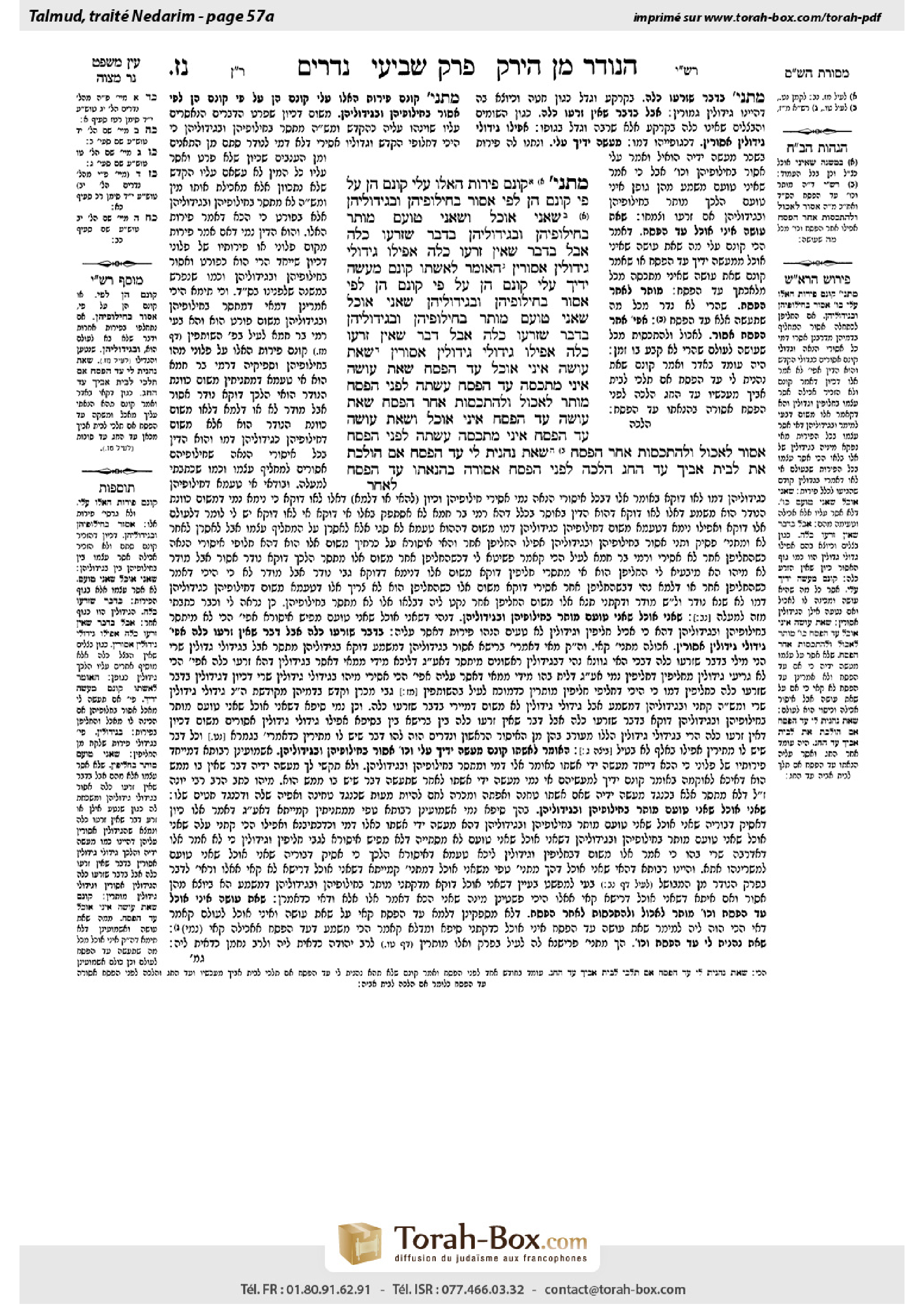
This page of Nedarim includes the Aramaic text and an English translation, alongside the scan above.
נדרים נ״ז א · Aramaic and Hebrew text
מַתְנִי׳ ״קֻוֽנָּם פֵּירוֹת הָאֵלּוּ עָלַי״, ״קֻוֽנָּם הֵן עַל פִּי״, ״קֻוֽנָּם הֵן לְפִי״ — אָסוּר בְּחִילּוּפֵיהֶן וּבְגִידּוּלֵיהֶן. ״שֶׁאֲנִי אוֹכֵל״, וְ״שֶׁאֲנִי טוֹעֵם — מוּתָּר בְּחִילּוּפֵיהֶן וּבְגִידּוּלֵיהֶן, בְּדָבָר שֶׁזַּרְעוֹ כָּלֶה. אֲבָל בְּדָבָר שֶׁאֵין זַרְעוֹ כָּלֶה — אֲפִילּוּ גִּידּוּלֵי גִידּוּלִין אֲסוּרִין.
הָאוֹמֵר לְאִשְׁתּוֹ ״קֻוֽנָּם מַעֲשֵׂה יָדַיִךְ עָלַי״, ״קֻוֽנָּם הֵן עַל פִּי״, ״קֻוֽנָּם הֵן לְפִי״ — אָסוּר בְּחִילּוּפֵיהֶן וּבְגִידּוּלֵיהֶן. ״שֶׁאֲנִי אוֹכֵל״, ״שֶׁאֲנִי טוֹעֵם״ — מוּתָּר בְּחִילּוּפֵיהֶן וּבְגִידּוּלֵיהֶן, בְּדָבָר שֶׁזַּרְעוֹ כָּלֶה. אֲבָל דָּבָר שֶׁאֵין זַרְעוֹ כָּלֶה — אֲפִילּוּ גִּידּוּלֵי גִידּוּלִין אֲסוּרִין.
״שֶׁאַתְּ עוֹשָׂה אֵינִי אוֹכֵל עַד הַפֶּסַח״, ״שֶׁאַתְּ עוֹשָׂה אֵינִי מִתְכַּסֶּה עַד הַפֶּסַח״, עָשְׂתָה לִפְנֵי הַפֶּסַח — מוּתָּר לֶאֱכוֹל וּלְהִתְכַּסּוֹת אַחַר הַפֶּסַח. ״שֶׁאַתְּ עוֹשָׂה עַד הַפֶּסַח אֵינִי אוֹכֵל״, וְ״שֶׁאַתְּ עוֹשָׂה עַד הַפֶּסַח אֵינִי מִתְכַּסֶּה״, עָשְׂתָה לִפְנֵי הַפֶּסַח — אָסוּר לֶאֱכוֹל וּלְהִתְכַּסּוֹת אַחַר הַפֶּסַח. ״שֶׁאַתְּ נֶהֱנֵית לִי עַד הַפֶּסַח אִם הוֹלֶכֶת אַתְּ לְבֵית אָבִיךְ עַד הֶחָג״, הָלְכָה לִפְנֵי הַפֶּסַח — אֲסוּרָה בַּהֲנָאָתוֹ עַד הַפֶּסַח.
Nedarim 57a · English translation
MISHNA: For one who says: This produce is konam upon me, or it is konam upon my mouth, or it is konam to my mouth, it is prohibited to partake of the produce, or of its replacements, or of anything that grows from it. If he says: This produce is konam for me, and for that reason I will not eat it, or for that reason I will not taste it, it is permitted for him to partake of its replacements or of anything that grows from it. This applies only with regard to an item whose seeds cease after it is sown. However, with regard to an item whose seeds do not cease after it is sown, e.g., bulbs, which flower and enter into a foliage period and repeat the process, it is prohibited for him to partake even of the growths of its growths, as the original, prohibited item remains intact.
For one who says to his wife: Your handicraft is konam upon me, or it is konam upon my mouth, or it is konam to my mouth, it is prohibited to benefit from her handicraft, and from their replacements and anything that grows from them. However, if he said to his wife: Your handicraft is konam for me only in the sense that I will not eat from your handicraft, or that I will not taste from your handicraft, it is permitted for him to benefit from their replacements and anything that grows from them. This applies only with regard to an item whose seeds cease after it is sown. However, with regard to an item whose seeds do not cease after it is sown, it is prohibited for him to benefit even from the growths of their growths.
If the husband said: From that which you prepare, I will not eat until Passover, or, with that which you prepare, I will not cover myself until Passover, then, if she prepared it before Passover, it is permitted for him to eat or to cover himself with them after Passover. If, however, he said: From that which you prepare until Passover, I will not eat, or from that which you prepare until Passover, I will not cover myself, then, if she prepared it before Passover, it is prohibited for him to eat or cover himself with it after Passover. If he said to her: Benefit from me until Passover if you go to your father’s house from now until the festival of Sukkot is forbidden for you, and she went to his house before Passover, it is prohibited for her to derive benefit from him until Passover.
Text from Sefaria: William Davidson Edition - Vocalized Aramaic (CC BY NC); William Davidson Edition - English (CC BY NC).