Pesachim 121b: Talmud study for Daf Yomi
Study the Talmud for Daf Yomi with scanned pages, Hebrew text, English translations from Sefaria and AI-generated French translations.
Passage selection and English or AI-generated French translation are available where the scan has annotations. Daf Study is independent of Torah-Box and Sefaria.
Browse Pesachim · פסחים · All tractatesPesachim 121b text and translations
This page of Pesachim includes the Aramaic text and an English translation, alongside the scan above.
פסחים קכ״א ב · Aramaic and Hebrew text
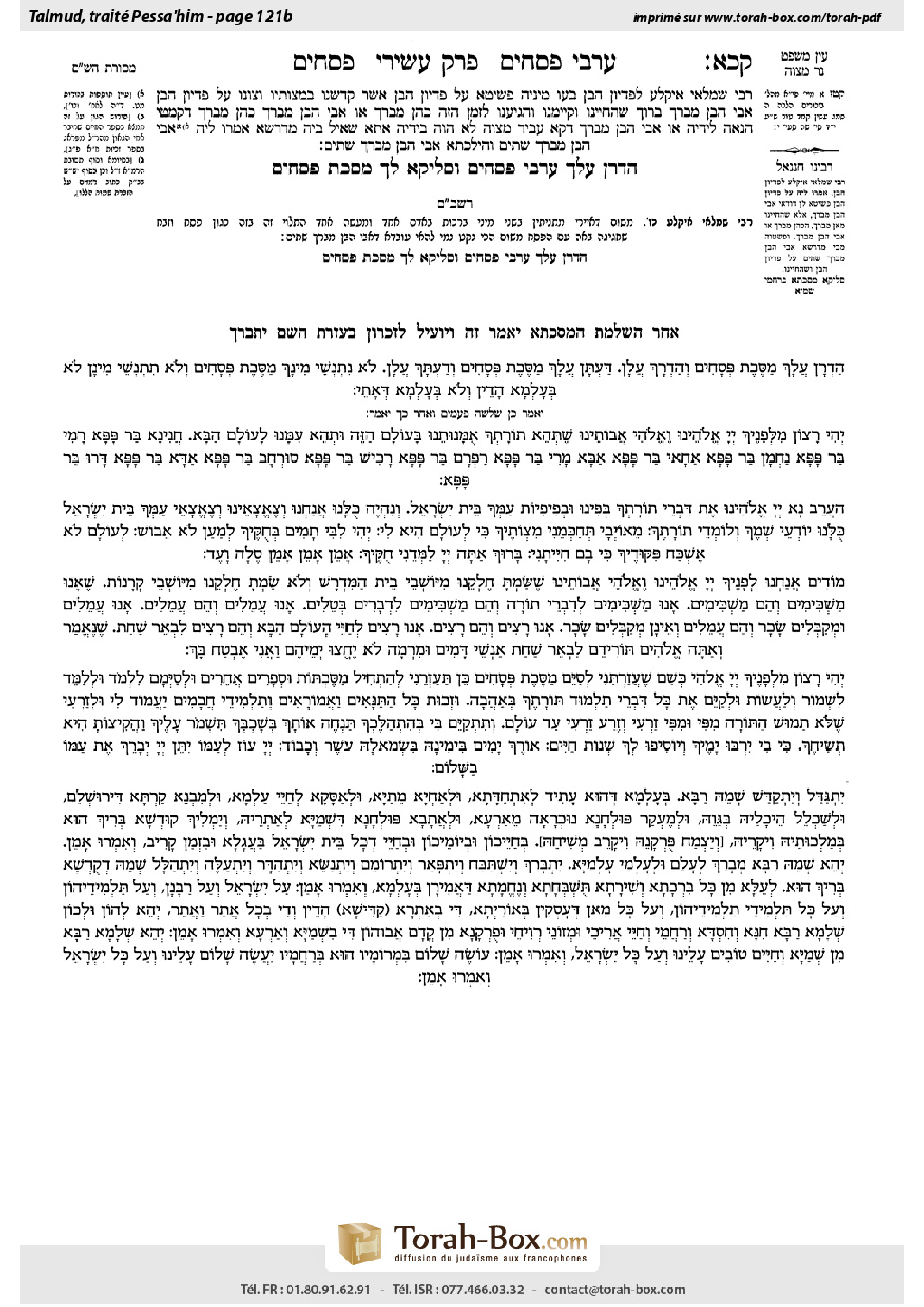
רַבִּי שִׂמְלַאי אִיקְּלַע לְפִדְיוֹן הַבֵּן, בְּעוֹ מִינֵּיהּ: פְּשִׁיטָא עַל פִּדְיוֹן הַבֵּן ״אֲשֶׁר קִדְּשָׁנוּ בְּמִצְוֹתָיו וְצִוָּנוּ עַל פִּדְיוֹן הַבֵּן״ — אֲבִי הַבֵּן מְבָרֵךְ. ״בָּרוּךְ ... שֶׁהֶחֱיָינוּ וְקִיְּימָנוּ וְהִגִּיעָנוּ לַזְּמַן הַזֶּה״, כֹּהֵן מְבָרֵךְ, אוֹ אֲבִי הַבֵּן מְבָרֵךְ?
כֹּהֵן מְבָרַךְ — דְּקָמָטֵי הֲנָאָה לִידֵיהּ, אוֹ אֲבִי הַבֵּן מְבָרֵךְ — דְּקָא עָבֵיד מִצְוָה? לָא הֲוָה בִּידֵיהּ, אֲתָא שְׁאֵיל בֵּיהּ מִדְרְשָׁא. אֲמַרוּ לֵיהּ: אֲבִי הַבֵּן מְבָרֵךְ שְׁתַּיִם. וְהִלְכְתָא: אֲבִי הַבֵּן מְבָרֵךְ שְׁתַּיִם.
הֲדַרַן עֲלָךְ עַרְבֵי פְסָחִים וּסְלִיקָא לַהּ מַסֶּכֶת פְּסָחִים
Pesachim 121b · English translation
The Gemara discusses another case concerning the order of the blessings: Rabbi Simlai attended a redemption of the firstborn son. The celebrants raised a dilemma before him with regard to the blessings. First they noted that it is obvious that the blessing over the redemption of a firstborn son, which is: Who sanctified us with His mitzvot and commanded us over the redemption of the firstborn son, is certainly recited by the father of the son, as he is the one obligated to redeem his son. However, with regard to the second blessing: Blessed are You, Lord our God, King of the universe, Who has given us life [sheheḥeyanu], sustained us, and brought us to this time, does the priest recite this blessing, or does the father of the son recite it?
The Gemara explains the two sides of the dilemma. It can be suggested that the priest recites the blessing, as he benefits from the five sela he receives when the boy is redeemed. The blessing of sheheḥiyanu is generally recited by the one who receives the benefit. Or, perhaps the father of the son recites sheheḥeyanu, as he is the one who performs the mitzva. Rabbi Simlai did not have an answer readily available, and he went to ask this question in the study hall. The scholars said to him that the father of the son recites the two blessings: Over the redemption of the son and sheheḥeyanu. The Gemara concludes: And the halakha is that the father of the son recites two blessings.
Text from Sefaria: William Davidson Edition - Vocalized Aramaic (CC BY NC); William Davidson Edition - English (CC BY NC).