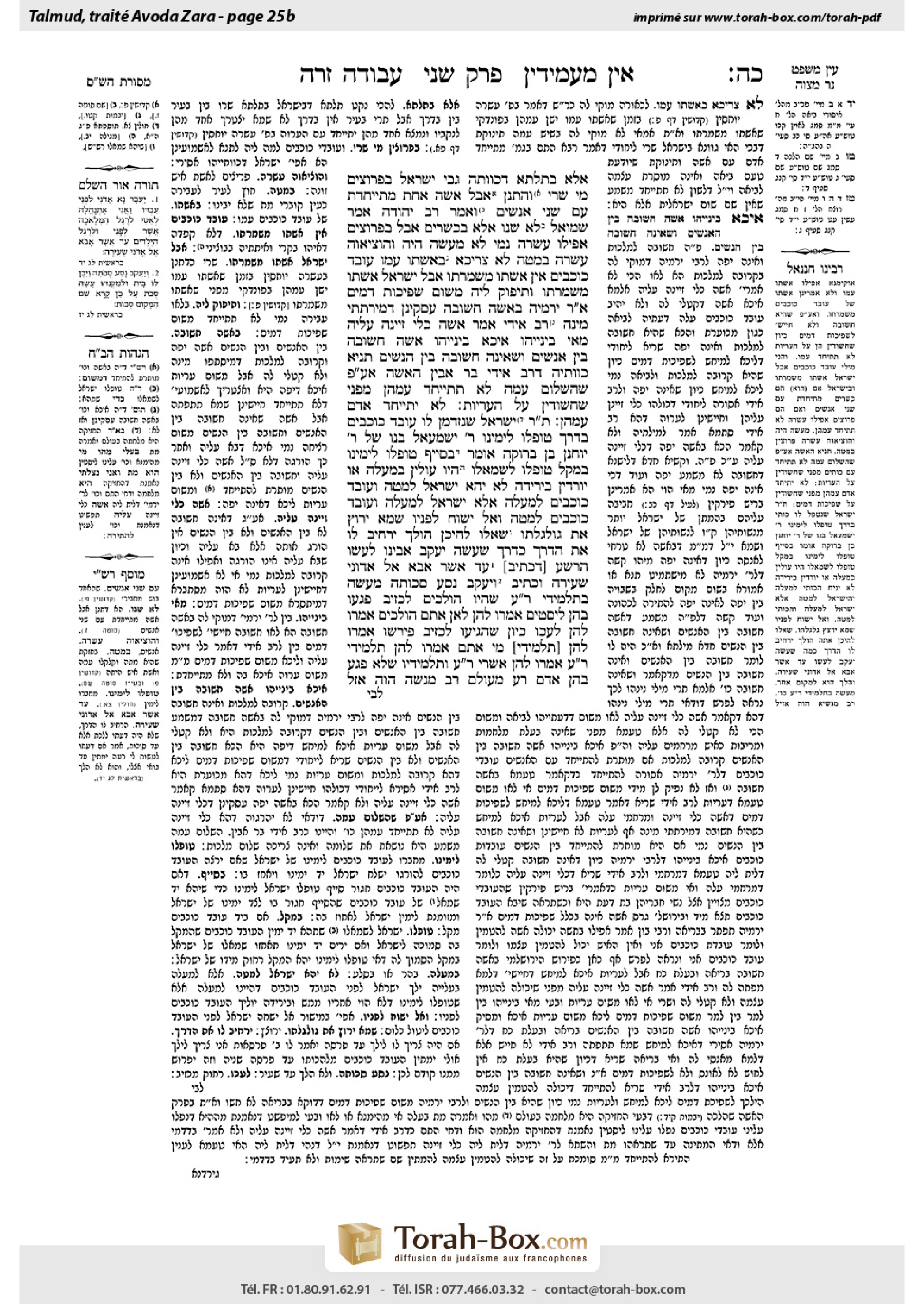
Avodah Zarah 25b: Talmud study for Daf Yomi
Study the Talmud for Daf Yomi with scanned pages, Hebrew text, English translations from Sefaria and AI-generated French translations.
Passage selection and English or AI-generated French translation are available where the scan has annotations. Daf Study is independent of Torah-Box and Sefaria.
Browse Avodah Zarah · עבודה זרה · All tractatesAvodah Zarah 25b text and translations
This page of Avodah Zarah includes the Aramaic text, an English translation and an AI-generated French translation, alongside the scan above.
עבודה זרה כ״ה ב · Aramaic and Hebrew text
אֶלָּא בִּתְלָתָא. דִּכְוָותַהּ גַּבֵּי יִשְׂרָאֵל, בִּפְרוּצִים מִי שְׁרֵי? וְהָתְנַן: ״אֲבָל אִשָּׁה אַחַת מִתְיַיחֶדֶת עִם שְׁנֵי אֲנָשִׁים״, וְאָמַר רַב יְהוּדָה אָמַר שְׁמוּאֵל: לֹא שָׁנוּ אֶלָּא בִּכְשֵׁרִים, אֲבָל בִּפְרוּצִים אֲפִילּוּ עֲשָׂרָה נָמֵי לָא. מַעֲשֶׂה הָיָה וְהוֹצִיאוּהָ עֲשָׂרָה בְּמִטָּה!
לָא, צְרִיכָא בְּאִשְׁתּוֹ עִמּוֹ. גּוֹי אֵין אִשְׁתּוֹ מְשַׁמַּרְתּוֹ, אֲבָל יִשְׂרָאֵל אִשְׁתּוֹ מְשַׁמַּרְתּוֹ.
וְתִיפּוֹק לֵיהּ מִשּׁוּם שְׁפִיכוּת דָּמִים! אָמַר רַבִּי יִרְמְיָה: בְּאִשָּׁה חֲשׁוּבָה עָסְקִינַן, דְּמִירַתְתִי מִינַּהּ. רַב אִידִי אָמַר: אִשָּׁה כְּלֵי זַיְינָהּ עָלֶיהָ.
מַאי בֵּינַיְיהוּ? אִיכָּא בֵּינַיְיהוּ: אִשָּׁה חֲשׁוּבָה בֵּין אֲנָשִׁים, וְשֶׁאֵינָהּ חֲשׁוּבָה בֵּין הַנָּשִׁים.
תַּנְיָא כְּוָותֵיהּ דְּרַב אִידִי בַּר אָבִין: הָאִשָּׁה, אַף עַל פִּי שֶׁהַשָּׁלוֹם עִמָּהּ, לֹא תִּתְיַיחֵד עִמָּהֶן, מִפְּנֵי שֶׁחֲשׁוּדִין עַל הָעֲרָיוֹת.
לֹא יִתְיַיחֵד אָדָם עִמָּהֶן. תָּנוּ רַבָּנַן: יִשְׂרָאֵל שֶׁנִּזְדַּמֵּן לוֹ גּוֹי בַּדֶּרֶךְ — טוֹפְלוֹ לִימִינוֹ. רַבִּי יִשְׁמָעֵאל בְּנוֹ שֶׁל רַבִּי יוֹחָנָן בֶּן בְּרוֹקָה אוֹמֵר: בְּסַיִיף — טוֹפְלוֹ לִימִינוֹ, בְּמַקֵּל — טוֹפְלוֹ לִשְׂמֹאלוֹ.
הָיוּ עוֹלִין בְּמַעֲלֶה אוֹ יוֹרְדִין בִּירִידָה, לֹא יְהֵא יִשְׂרָאֵל לְמַטָּה וְגוֹי לְמַעְלָה, אֶלָּא יִשְׂרָאֵל לְמַעְלָה וְגוֹי לְמַטָּה, וְאַל יָשׁוּחַ לְפָנָיו, שֶׁמָּא יָרוֹץ אֶת גּוּלְגׇּלְתּוֹ.
שְׁאָלוֹ לְהֵיכָן הוֹלֵךְ — יַרְחִיב לוֹ אֶת הַדֶּרֶךְ, כְּדֶרֶךְ שֶׁעָשָׂה יַעֲקֹב אָבִינוּ לְעֵשָׂו הָרָשָׁע, דִּכְתִיב: ״עַד אֲשֶׁר אָבֹא אֶל אֲדֹנִי שֵׂעִירָה״,
וּכְתִיב: ״וְיַעֲקֹב נָסַע סֻכֹּתָה״.
מַעֲשֶׂה בְּתַלְמִידֵי רַבִּי עֲקִיבָא שֶׁהָיוּ הוֹלְכִים לִכְזִיב, פָּגְעוּ בָּהֶן לִיסְטִים, אָמְרוּ לָהֶן: לְאָן אַתֶּם הוֹלְכִים? אָמְרוּ לָהֶן: לְעַכּוֹ. כֵּיוָן שֶׁהִגִּיעוּ לִכְזִיב, פֵּירְשׁוּ. אָמְרוּ לָהֶן: תַּלְמִידֵי מִי אַתֶּם? אָמְרוּ לָהֶן: תַּלְמִידֵי רַבִּי עֲקִיבָא. אָמְרוּ לָהֶן: אַשְׁרֵי רַבִּי עֲקִיבָא וְתַלְמִידָיו שֶׁלֹּא פָּגַע בָּהֶן אָדָם רַע מֵעוֹלָם.
רַב מְנַשֶּׁה הֲוָה אָזֵל
Avodah Zarah 25b · English translation
Rather, the mishna is referring to a case in which a woman secludes herself with three gentiles. The Gemara asks: Is this permitted in the corresponding situation involving Jews steeped in sexual immorality? But didn’t we learn in a mishna (Kiddushin 80b): But one woman may be secluded with two men; and Rav Yehuda says that Shmuel says: They taught this halakha only with regard to men of fit morals; but with regard to those steeped in sexual immorality, she may not be secluded even with ten men. There was an incident where ten men carried a woman out of the city on a bier, as though she were dead, and they engaged in intercourse with her.
The Gemara answers: No, the ruling of the mishna here is necessary in a case where the gentile’s wife is with him. The difference between the two rulings is that in the case of a gentile, it is assumed that his wife does not guard him against sinning with another, but with regard to a Jew, his wife does guard him against sinning with another.
§ The mishna teaches that a woman may not seclude herself with a gentile due to the concern that they might engage in illicit sexual relations. The Gemara challenges: And let us derive that a woman may not seclude herself with a gentile due to the concern about bloodshed. The Gemara cites two responses. Rabbi Yirmeya says: We are dealing with a distinguished woman, whom gentiles will not kill, as they are fearful of her status. Nevertheless, there is a concern with regard to illicit sexual relations. Rav Idi bar Avin says: A woman carries her weapons upon her. In other words, there is no need to be concerned that a woman might be killed by gentiles; rather, the very fact that she is a woman protects her, as they would most likely rape her and not kill her.
The Gemara asks: What is the practical difference between these two answers? The Gemara answers: The difference between them is with regard to a woman who is distinguished among men due to her political position, but is not distinguished among the women, i.e., she is unattractive. According to Rabbi Yirmeya, there is no concern that she will be killed, as she is distinguished, nor is there a concern that they will engage in illicit sexual relations. Therefore, it would be permitted for her to seclude herself with them. By contrast, as Rav Idi bar Avin stated his explanation in general terms, he evidently holds that the concern of illicit sexual relations always applies, regardless of the woman’s appearance.
The Gemara notes that it is taught in a baraita in accordance with the opinion of Rav Idi bar Avin: With regard to a woman, even though her protection accompanies her, i.e., she is not in danger of being killed, she may not seclude herself with gentiles because they are suspected of engaging in forbidden sexual relations.
§ The mishna further teaches that a person may not seclude himself with gentiles because they are suspected of bloodshed. The Sages taught: A Jew who encounters a gentile on the road and continues his travels with him should position the gentile to his right, so that the Jew’s dominant hand is closest to the gentile, which will enable him to defend himself against a potential attack. Rabbi Yishmael, son of Rabbi Yoḥanan ben Beroka, says: If the gentile is armed with a sword, the Jew positions him to his right, because a blade is usually carried on one’s left side. But if the gentile is armed with a stick, the Jew should steer him to his left, as a stick is usually carried in one’s right hand. By walking on the same side as the gentile’s weapon, the Jew can best prevent him from drawing it.
The Gemara continues: If the Jew and gentile were ascending an incline or descending a decline, the Jew should not be positioned below while the gentile is above, so that the gentile will not have the advantage of height if he decides to attack. Rather, the Jew should be located above while the gentile is below. And the Jew should not bend down before him, lest the gentile break his skull.
Furthermore, if the gentile asks him where he is going, the Jew should extend the journey when relating his destination to him, i.e., he should claim that he is traveling to a place beyond his actual destination, in the manner that Jacob our father did to the wicked Esau. As it is written that Jacob said to Esau: “Let my lord pass over before his servant and I will journey on gently, according to the pace of the cattle that are before me and according to the pace of the children, until I come unto my lord unto Seir” (Genesis 33:14).
The Gemara continues: And it is written subsequently: “And Jacob journeyed to Succoth, and built himself a house” (Genesis 33:17). Rather than meeting Esau in Seir, Jacob traveled to the nearer location of Succoth. Telling a gentile that one is traveling to a farther destination might cause the gentile to defer his attack due to the assumption that he has a longer period of time to plan and execute it. As a result of the delay, the Jew has a better chance of reaching his true destination safely.
The Gemara illustrates this idea through a relevant story. An incident occurred involving several students of Rabbi Akiva who were traveling to Keziv. Along the way, bandits encountered them and said to them: Where are you going? Rabbi Akiva’s students said to them: To Akko. Once they reached Keziv, Rabbi Akiva’s students separated from the bandits. At this point the bandits said to them: Whose students are you? The students said to the bandits: We are students of Rabbi Akiva. The bandits said to them: Fortunate are Rabbi Akiva and his students, as they were never harmed by an evil person. The bandits were impressed with the wisdom that the students demonstrated in evading harm.
The Gemara relates another incident: Rav Menashe was traveling
Avodah Zarah 25b · Traduction française (IA)
En réalité, la michna fait référence à un cas où une femme se retrouve seule avec trois non-Juifs. La Guemara pose la question : Cette situation est-elle permise dans le cas où un Juif dépravé sexuellement est impliqué ? Mais n’avons-nous pas appris dans une michna (Kiddushin 80b) : Une seule femme peut être seule avec deux hommes ; et Rav Yéhuda dit que Shmuel dit : Cette halakha a été enseignée uniquement concernant des hommes de bonne moralité ; mais concernant ceux dépravés sexuellement, elle ne doit pas être seule même avec dix hommes. Il y avait un cas où dix hommes portaient une femme hors de la ville sur une civière, comme si elle était morte, et ils ont eu des relations sexuelles avec elle.
La Guemara répond : Non, la décision de la michna ici est nécessaire dans un cas où la femme du non-Juif est avec lui. La différence entre les deux décisions réside dans le fait que dans le cas d’un non-Juif, on suppose que sa femme ne le surveille pas contre les relations sexuelles avec une autre personne, tandis que concernant un Juif, sa femme le surveille contre les relations sexuelles avec une autre personne.
§ La michna enseigne qu'une femme ne doit pas se retrouver seule avec un non-Juif en raison de la crainte qu'ils puissent avoir des relations sexuelles illégales. La Guemara questionne : Et si nous déduisions qu'une femme ne doit pas se retrouver seule avec un non-Juif en raison de la crainte de la violence. La Guemara cite deux réponses. Rabbi Yirméya dit : Nous parlons d'une femme distinguée, que les non-Juifs ne tueront pas, car ils craignent son statut. Cependant, il y a une crainte concernant les relations sexuelles illégales. Rav Idi bar Avin dit : Une femme porte ses armes sur elle. En d'autres termes, il n'y a pas besoin de craindre qu'une femme puisse être tuée par des non-Juifs ; plutôt, le fait qu'elle soit une femme la protège, car ils la violeraient probablement et non la tuerait.
La Guemara pose la question : Quelle est la différence pratique entre ces deux réponses ? La Guemara répond : La différence réside dans le cas d'une femme distinguée parmi les hommes en raison de sa position politique, mais pas parmi les femmes, c'est-à-dire qu'elle est peu attrayante. Selon Rabbi Yirméya, il n'y a pas de crainte qu'elle soit tuée, car elle est distinguée, ni de crainte qu'ils aient des relations sexuelles illégales. Par conséquent, il serait permis qu'elle se retrouve seule avec eux. En revanche, comme Rav Idi bar Avin a formulé son explication de manière générale, il semble qu'il considère que la crainte des relations sexuelles illégales s'applique toujours, indépendamment de l'apparence de la femme.
La Guemara note que cela est enseigné dans une baraïta conformément à l'opinion de Rav Idi bar Avin : Concernant une femme, même si sa protection l'accompagne, c'est-à-dire qu'elle n'est pas en danger de mort, elle ne doit pas se retrouver seule avec des non-Juifs car ils sont suspects de relations sexuelles interdites.
§ La michna enseigne également qu'une personne ne doit pas se retrouver seule avec des non-Juifs car ils sont suspects de violence. Les Sages ont enseigné : Un Juif qui rencontre un non-Juif sur la route et continue son voyage avec lui doit placer le non-Juif à sa droite, de sorte que la main dominante du Juif soit la plus proche du non-Juif, ce qui lui permettra de se défendre contre une attaque potentielle. Rabbi Yishmael, fils de Rabbi Yoḥanan ben Beroka, dit : Si le non-Juif est armé d'une épée, le Juif le place à sa droite, car une lame est généralement portée sur le côté gauche. Mais si le non-Juif est armé d'une baguette, le Juif doit le diriger à sa gauche, car une baguette est généralement portée sur le côté droit. En marchant du même côté que l'arme du non-Juif, le Juif peut mieux l'empêcher de la sortir.
La Guemara continue : Si le Juif et le non-Juif montaient une pente ou descendaient une déclivité, le Juif ne devrait pas être placé en dessous tandis que le non-Juif est au-dessus, de sorte que le non-Juif ne puisse pas avoir l'avantage de la hauteur s'il décide d'attaquer. Au contraire, le Juif devrait être placé au-dessus tandis que le non-Juif est en dessous. Et le Juif ne devrait pas se baisser devant lui, de peur que le non-Juif lui casse la tête.
De plus, si le non-Juif lui demande où il va, le Juif devrait prolonger le voyage lorsqu'il lui dit sa destination, c'est-à-dire qu'il devrait affirmer qu'il voyage vers un lieu plus éloigné que sa destination réelle, dans le style que notre père Jacob a utilisé avec le méchant Ésaü. Comme il est écrit que Jacob dit à Ésaü : « Que mon seigneur passe avant son serviteur, et je marcherai doucement, selon la vitesse des bêtes qui sont devant moi et selon la vitesse des enfants, jusqu'à ce que je vienne à mon seigneur à Séir » (Genèse 33:14).
La Guemara continue : Et il est écrit ensuite : « Et Jacob marcha à Succoth, et il construisit lui-même une maison » (Genèse 33:17). Plutôt que de rencontrer Ésaü à Séir, Jacob a voyagé vers le lieu plus proche de Succoth. Dire à un non-Juif qu'on voyage vers une destination plus éloignée pourrait causer au non-Juif de différer son attaque en raison de l'idée qu'il a plus de temps pour planifier et exécuter son attaque. En raison du délai, le Juif a une meilleure chance d'atteindre sa destination réelle en sécurité.
La Guemara illustre cette idée à travers une histoire pertinente. Un incident s'est produit concernant plusieurs élèves de Rabbi Akiva qui voyageaient vers Keziv. Sur le chemin, ils ont rencontré des bandits qui leur ont demandé : Où allez-vous ? Les élèves de Rabbi Akiva ont répondu : À Akko. Une fois qu'ils ont atteint Keziv, les élèves de Rabbi Akiva se sont séparés des bandits. À ce moment-là, les bandits ont dit à eux : Qui sont vos maîtres ? Les élèves ont répondu aux bandits : Nous sommes les élèves de Rabbi Akiva. Les bandits ont dit à eux : Heureux sont Rabbi Akiva et ses élèves, car ils n'ont jamais été blessés par un mauvais homme. Les bandits ont été impressionnés par la sagesse que les élèves ont démontrée pour éviter les dangers.
La Guemara rapporte un autre incident : Rav Menashe voyageait
Traduction française générée par IA à partir de l’édition anglaise de Sefaria. Vérifie toujours un passage avec le texte source.
Text from Sefaria: William Davidson Edition - Vocalized Aramaic (CC BY NC); William Davidson Edition - English (CC BY NC).