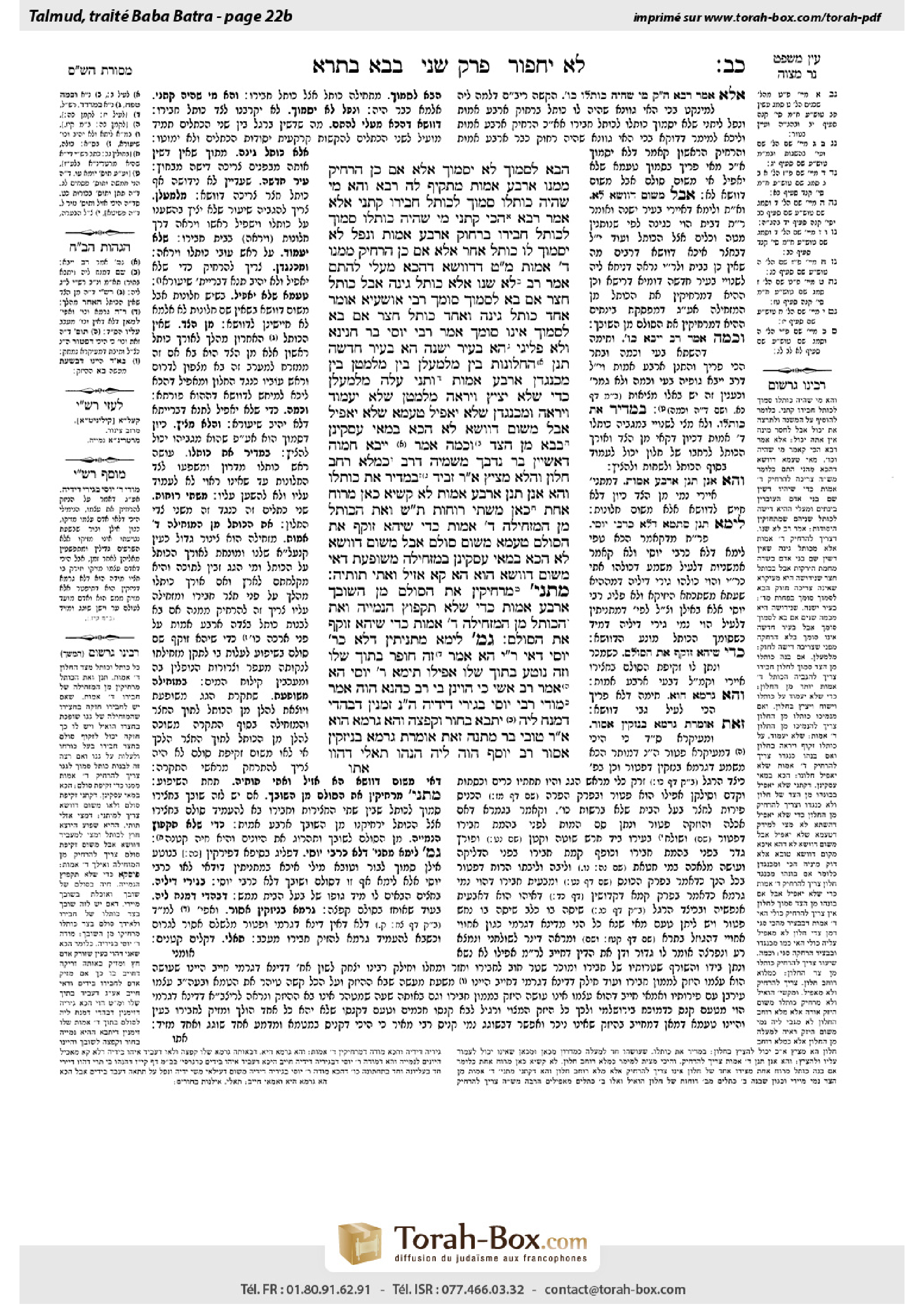
Bava Batra 22b: Talmud study for Daf Yomi
Study the Talmud for Daf Yomi with scanned pages, Hebrew text, English translations from Sefaria and AI-generated French translations.
Passage selection and English or AI-generated French translation are available where the scan has annotations. Daf Study is independent of Torah-Box and Sefaria.
Browse Bava Batra · בבא בתרא · All tractatesBava Batra 22b text and translations
This page of Bava Batra includes the Aramaic text, an English translation and an AI-generated French translation, alongside the scan above.
בבא בתרא כ״ב ב · Aramaic and Hebrew text
הַבָּא לִסְמוֹךְ, לֹא יִסְמוֹךְ אֶלָּא אִם כֵּן הִרְחִיק מִמֶּנּוּ אַרְבַּע אַמּוֹת. מַתְקֵיף לַהּ רָבָא: וְהָא ״מִי שֶׁהָיָה כּוֹתְלוֹ סָמוּךְ לְכוֹתֶל חֲבֵירוֹ״ קָתָנֵי!
אֶלָּא אָמַר רָבָא, הָכִי קָתָנֵי: מִי שֶׁהָיָה כּוֹתְלוֹ סָמוּךְ לְכוֹתֶל חֲבֵירוֹ בְּרָחוֹק אַרְבַּע אַמּוֹת, וְנָפַל, לֹא יִסְמוֹךְ לוֹ כּוֹתֶל אַחֵר – אֶלָּא אִם כֵּן הִרְחִיק מִמֶּנּוּ אַרְבַּע אַמּוֹת. מַאי טַעְמָא? דְּדַוְושָׁא דְּהָכָא מְעַלֵּי לְהָתָם.
אָמַר רַב: לֹא שָׁנוּ אֶלָּא כּוֹתֶל גִּינָה, אֲבָל כּוֹתֶל חָצֵר – אִם בָּא לִסְמוֹךְ, סוֹמֵךְ. רַבִּי אוֹשַׁעְיָא אוֹמֵר: אֶחָד כּוֹתֶל גִּינָּה וְאֶחָד כּוֹתֶל חָצֵר – אִם בָּא לִסְמוֹךְ, אֵינוֹ סוֹמֵךְ.
אָמַר רַבִּי יוֹסֵי בַּר חֲנִינָא: וְלָא פְּלִיגִי – הָא בְּעִיר יְשָׁנָה, הָא בְּעִיר חֲדָשָׁה.
תְּנַן: הַחַלּוֹנוֹת, בֵּין מִלְּמַעְלָן בֵּין מִלְּמַטָּן בֵּין מִכְּנֶגְדָּן – אַרְבַּע אַמּוֹת. וְתָנֵי עֲלַהּ: מִלְּמַעְלָן – כְּדֵי שֶׁלֹּא יָצִיץ וְיִרְאֶה, מִלְּמַטָּן – שֶׁלֹּא יַעֲמוֹד וְיִרְאֶה, וּמִכְּנֶגְדָּן – שֶׁלֹּא יַאֲפִיל.
טַעְמָא שֶׁלֹּא יַאֲפִיל, אֲבָל מִשּׁוּם דַּוְושָׁא לָא! הָכָא בְּמַאי עָסְקִינַן – בְּבָא מִן הַצַּד.
וְכַמָּה? אָמַר יֵיבָא, חֲמוּהּ דְּאַשְׁיָין בַּר נִדְבָּךְ, מִשְּׁמֵיהּ דְּרַב: כִּמְלֹא רֹחַב חַלּוֹן. וַהֲלֹא מֵצִיץ! אָמַר רַב זְבִיד: בְּמַדִּיר אֶת כּוֹתְלוֹ.
וְהָא אֲנַן תְּנַן: אַרְבַּע אַמּוֹת! לָא קַשְׁיָא: כָּאן מֵרוּחַ אַחַת, כָּאן מִשְׁתֵּי רוּחוֹת.
תָּא שְׁמַע: וְאֶת הַכּוֹתֶל מִן הַמַּזְחֵילָה אַרְבַּע אַמּוֹת, כְּדֵי שֶׁיְּהֵא זוֹקֵף אֶת הַסּוּלָּם. טַעְמָא מִשּׁוּם סוּלָּם, אֲבָל מִשּׁוּם דַּוְושָׁא לָא! הָכָא בְּמַאי עָסְקִינַן – בְּמַזְחֵילָה מְשׁוּפַּעַת, דְּאִי מִשּׁוּם דַּוְושָׁא הוּא – הָא קָא אָזֵיל וְאָתֵי תּוּתֵיהּ.
מַתְנִי׳ מַרְחִיקִין אֶת הַסּוּלָּם מִן הַשּׁוֹבָךְ אַרְבַּע אַמּוֹת, כְּדֵי שֶׁלֹּא תִּקְפּוֹץ הַנְּמִיָּיה. וְאֶת הַכּוֹתֶל מִן הַמַּזְחֵילָה אַרְבַּע אַמּוֹת, כְּדֵי שֶׁיְּהֵא זוֹקֵף אֶת הַסּוּלָּם.
גְּמָ׳ לֵימָא מַתְנִיתִין דְּלָא כְּרַבִּי יוֹסֵי? דְּאִי רַבִּי יוֹסֵי, הָא אָמַר: זֶה חוֹפֵר בְּתוֹךְ שֶׁלּוֹ, וְזֶה נוֹטֵעַ בְּתוֹךְ שֶׁלּוֹ!
אֲפִילּוּ תֵּימָא רַבִּי יוֹסֵי, הָא אָמַר רַב אָשֵׁי: כִּי הֲוֵינַן בֵּי רַב כָּהֲנָא, הֲוָה אָמַר: מוֹדֵי רַבִּי יוֹסֵי בְּגִירֵי דִידֵיהּ; הָכָא נָמֵי, זִמְנִין דְּבַהֲדֵי דְּמַנַּח לֵיהּ – יָתְבָא בְּחוֹר וְקָפְצָה. וְהָא גְּרָמָא הוּא! אָמַר רַב טוֹבִי בַּר מַתְנָה, זֹאת אוֹמֶרֶת: גְּרָמָא בְּנִיזָּקִין אָסוּר.
רַב יוֹסֵף הֲוָה לֵיהּ הָנְהוּ תָּאלֵי, דַּהֲווֹ
Bava Batra 22b · English translation
One who comes to place a wall close to his neighbor’s wall may place that wall close to the neighbor’s wall only if he distances his wall four cubits from the existing wall. Accordingly, the mishna is discussing one constructing a wall close to his neighbor’s wall the first time. Rava objects to this explanation: But the mishna teaches: One whose wall was near the wall of another, which indicates that there had already been a wall there.
Rather, Rava said that this is what the mishna is teaching: In a case of one whose wall was near the wall of another at a distance of four cubits and it fell, he may not place another wall close to his neighbor’s wall unless he distances the wall four cubits from it. What is the reason that this distance must be observed? The reason is that walking here benefits there, i.e., the ground is strengthened by people walking on the land in the area between the walls.
Rav says: They taught that one must leave a space of four cubits between his wall and that of his neighbor only if he builds it alongside the wall of his neighbor’s garden, where people do not usually walk due to the seeds. But with regard to the wall of a courtyard, where people walk, if he comes to place his wall close by, he may place it close by. By contrast, Rabbi Oshaya says: With regard to both the wall of a garden and the wall of a courtyard, if one comes to place his wall close by, he may not place his wall close by.
Rabbi Yosei bar Ḥanina said: And the two amora’im do not disagree, as they are referring to different cases. This statement of Rav is referring to an old city, whose ground is well trodden and stable, and that statement of Rabbi Oshaya is referring to a new city, where even the wall of a courtyard requires walking on its adjacent ground to strengthen it.
With regard to the claim that the halakha of the mishna is due to the need for space for people to walk on the ground between the walls, the Gemara asks: We learned in the mishna: And one who desires to build a wall opposite the windows of a neighbor’s house must distance the wall four cubits from the windows, whether above, below, or opposite. And it is taught in a baraita with regard to this ruling: Concerning the requirement of a distance above, the wall must be high enough so that one cannot peer into the window and see into the window; concerning the requirement of a distance below, the wall must be low so that he will not be able to stand on top of it and see into the window; and concerning the requirement of a distance opposite, one must distance the wall from the windows so that it will not darken his neighbor’s house by blocking the light that enters the house through the window.
The Gemara analyzes this statement: The reason that distance is required opposite the window is so that he will not darken his neighbor’s house by blocking the light that enters the house through the window, but it is not due to the fact that walking will strengthen the ground. The Gemara answers: With what are we dealing here? We are dealing with a wall that is positioned to the side, i.e., perpendicular to the wall with the window in it, and therefore it blocks the light from entering the house through the window but does not prevent walking along the length of the neighbor’s wall.
The Gemara asks: And how far must one distance his wall if it is perpendicular to the other wall? Yeiva, the father-in-law of Ashyan bar Nidbakh, says in the name of Rav: As much as the full width of the window. The Gemara asks: But why is this sufficient? Can’t he still peer into the window if he is that close? Rav Zevid says: This is referring to one who slopes his wall, i.e., he fashions an incline on the upper surface of the wall so that he will not be able to stand on top of it and look through the window.
The Gemara asks: But didn’t we learn in the mishna that one must keep the wall four cubits away from the window? The Gemara answers: This is not difficult; here, he builds the wall on one side of the window, whereas there, in the mishna, he builds walls on two sides of the window. In the latter case, if he builds the walls any closer he will block the light from entering the house through the window even if they are perpendicular.
The Gemara suggests: Come and hear a further difficulty from the mishna below with regard to the claim that the requisite gap between the walls is for the purpose of walking, as the mishna teaches: And one must distance his wall four cubits from a roof gutter so that his neighbor can lean a ladder in the empty space to clean and repair the gutter. The Gemara analyzes this statement: The reason this distance is required is due to the fact that he will be able to lean a ladder, but it is not due to the fact that walking will strengthen the ground. The Gemara answers: With what are we dealing here? We are dealing with a sloping roof gutter, which protrudes beyond the boundary of the wall. As in this case, if the reason for distancing the wall is due to walking, one can walk back and forth beneath it. Nevertheless, a distance of four cubits from the roof gutter is required so that repairs can be performed.
MISHNA: One must distance his ladder four cubits from a neighbor’s dovecote so that a mongoose will not be able to jump from the ladder to the dovecote and devour the birds. And one must distance his wall four cubits from a roof gutter, so that the neighbor can lean a ladder in the empty space to clean and repair the gutter.
GEMARA: Let us say that the mishna is not in accordance with the opinion of Rabbi Yosei, as, if it were in accordance with the opinion of Rabbi Yosei, doesn’t he say with regard to planting a tree next to a neighbor’s cistern: This one digs within his land, and that one plants within his land, and neither individual need consider what is happening in the property of the other?
The Gemara answers: You may even say that the mishna follows the opinion of Rabbi Yosei, as didn’t Rav Ashi say: When we were studying in the study hall of Rav Kahana, he would say to us that Rabbi Yosei concedes with regard to his arrows, i.e., he concedes that one must distance himself if his actions will cause damage to his neighbor. Here too, sometimes when he places the ladder, the mongoose might be sitting in a hole and will immediately jump up and climb the ladder to the dovecote. The Gemara challenges: But that is indirect damage, as he is not the immediate cause. Rav Tovi bar Mattana said: That is to say that it is prohibited to cause even indirect damage.
The Gemara relates: Rav Yosef had certain small palm trees [talei], and
Bava Batra 22b · Traduction française (IA)
Celui qui vient construire un mur près du mur de son voisin peut construire ce mur près du mur de son voisin uniquement s'il éloigne son mur de quatre coudées du mur existant. Ainsi, la mitsna discute d'une personne qui construit un mur près du mur de son voisin la première fois. Rava s'oppose à cette explication : Mais la mitsna enseigne : Celui dont le mur était proche du mur d'un autre, ce qui indique qu'il y avait déjà un mur là.
Au contraire, Rava dit que c'est ce que la mitsna enseigne : Dans le cas d'une personne dont le mur était proche du mur d'un autre à une distance de quatre coudées et qu'il s'est effondré, il ne peut pas construire un autre mur près du mur de son voisin à moins qu'il ne maintienne ce mur à quatre coudées de distance. Quelle est la raison pour laquelle cette distance doit être respectée ? La raison est que la marche ici bénéficie là, c'est-à-dire que le sol est renforcé par la marche des gens sur le terrain entre les murs.
Rav dit : Ils ont enseigné que l'on doit laisser un espace de quatre coudées entre son mur et celui de son voisin uniquement si l'on construit à côté du mur du jardin de son voisin, où les gens ne marchent généralement pas en raison des semences. Mais concernant le mur d'un cour, où les gens marchent, si l'on vient construire son mur à proximité, il peut le construire à proximité. À l'inverse, Rabbi Oshaya dit : Concernant à la fois le mur d'un jardin et le mur d'un cour, si l'on vient construire son mur à proximité, il ne peut pas le construire à proximité.
Rabbi Yosei bar Ḥanina dit : Et les deux amora’im ne s'opposent pas, car ils parlent de cas différents. Cette déclaration de Rav concerne une ville ancienne, dont le sol est bien piétiné et stable, et celle de Rabbi Oshaya concerne une ville nouvelle, où même le mur d'un cour nécessite de marcher sur le sol adjacent pour le renforcer.
Concernant l'argument selon lequel la halakha de la mitsna est due à la nécessité d'espace pour que les gens marchent sur le sol entre les murs, la Guemara pose la question : Nous avons appris dans la mitsna : Et celui qui veut construire un mur opposé aux fenêtres de la maison d'un voisin doit maintenir le mur à quatre coudées de distance des fenêtres, qu'au-dessus, en dessous ou en face. Et il est enseigné dans une baraïta concernant cette décision : Concernant la distance au-dessus, le mur doit être suffisamment haut pour que l'on ne puisse pas regarder dans la fenêtre et voir à l'intérieur ; concernant la distance en dessous, le mur doit être suffisamment bas pour que l'on ne puisse pas s'y tenir et voir dans la fenêtre ; et concernant la distance en face, l'on doit maintenir le mur à distance des fenêtres afin qu'il ne trouble pas la maison du voisin en bloquant la lumière qui entre dans la maison par la fenêtre.
La Guemara analyse cette déclaration : La raison pour laquelle une distance est requise en face de la fenêtre est afin qu'il ne trouble pas la maison du voisin en bloquant la lumière qui entre dans la maison par la fenêtre, mais ce n'est pas en raison du fait que la marche renforce le sol. La Guemara répond : Avec quels objets sommes-nous en train de parler ? Nous parlons d'un mur qui est positionné à côté, c'est-à-dire perpendiculaire au mur avec la fenêtre, et donc il bloque la lumière qui entre dans la maison par la fenêtre mais ne bloque pas la marche le long du mur du voisin.
La Guemara pose la question : Et à quelle distance doit-on maintenir son mur si celui-ci est perpendiculaire à l'autre mur ? Yeiva, le beau-père d'Ashyan bar Nidbakh, dit en nom de Rav : Autant que la largeur complète de la fenêtre. La Guemara pose la question : Mais pourquoi cela suffit-il ? Ne peut-il pas encore regarder dans la fenêtre s'il est aussi proche ? Rav Zevid dit : Il s'agit d'une personne qui incline son mur, c'est-à-dire qu'il façonne une pente sur la surface supérieure du mur afin qu'il ne puisse pas s'y tenir et regarder à travers la fenêtre.
La Guemara pose la question : Mais n'avons-nous pas appris dans la mitsna que l'on doit maintenir le mur à quatre coudées de la fenêtre ? La Guemara répond : Ce n'est pas difficile ; ici, il construit le mur sur un côté de la fenêtre, tandis que là, dans la mitsna, il construit des murs sur les deux côtés de la fenêtre. Dans ce dernier cas, si l'on construit les murs plus près, même s'ils sont perpendiculaires, ils bloqueront la lumière qui entre dans la maison par la fenêtre.
La Guemara suggère : Viens entendre une difficulté supplémentaire concernant la mitsna ci-dessous concernant l'affirmation que l'espace requis entre les murs est pour la marche, car la mitsna enseigne : Et l'on doit maintenir son mur à quatre coudées d'une gouttière de toit afin que le voisin puisse poser une échelle dans l'espace vide pour nettoyer et réparer la gouttière. La Guemara analyse cette déclaration : La raison pour laquelle cette distance est requise est en raison du fait qu'il pourra poser une échelle, mais pas en raison du fait que la marche renforce le sol. La Guemara répond : Avec quels objets sommes-nous en train de parler ? Nous parlons d'une gouttière de toit inclinée, qui dépasse au-delà de la limite du mur. Comme dans ce cas, si la raison de maintenir la distance est due à la marche, on peut marcher dessous. Cependant, une distance de quatre coudées de la gouttière de toit est requise afin de permettre les réparations.
MITSVA : On doit placer son échelle à quatre coudées d'un poulaire de son voisin afin qu'un mangouste ne puisse pas sauter de l'échelle au poulaire et dévorer les oiseaux. Et on doit placer son mur à quatre coudées d'une gouttière de toit, afin que le voisin puisse poser une échelle dans l'espace vide pour nettoyer et réparer la gouttière.
GUEMARA : Disons que la mitsva n'est pas en accord avec l'opinion de Rabbi Yosei, car, si elle l'était, ne dit-il pas concernant la plantation d'un arbre à côté d'un cistern de son voisin : Celui-ci creuse dans son terrain, et celui-là plante dans son terrain, et aucun des deux ne doit considérer ce qui se passe dans la propriété de l'autre ?
La Guemara répond : On pourrait même dire que la Michna suit l'opinion du Rabbi Yosei, comme n’a pas dit Rav Ashi : Quand nous étudiions dans la salle d'étude de Rav Kahana, il nous disait que le Rabbi Yosei reconnaît, en ce qui concerne ses flèches, c'est-à-dire qu'il reconnaît qu'il faut s'éloigner si ses actions peuvent causer un préjudice à son voisin. Ici aussi, parfois quand il place l'échelle, un mangouste pourrait être assis dans un trou et monter immédiatement sur l'échelle pour atteindre le colombier. La Guemara conteste : Mais cela est un préjudice indirect, car il n'est pas la cause immédiate. Rav Tovi bar Mattana a dit : Cela signifie qu'il est interdit de causer même un préjudice indirect.
La Guemara rapporte : Rav Yosef avait certaines petites palmeraies [talei], et
Traduction française générée par IA à partir de l’édition anglaise de Sefaria. Vérifie toujours un passage avec le texte source.
Text from Sefaria: William Davidson Edition - Vocalized Aramaic (CC BY NC); William Davidson Edition - English (CC BY NC).