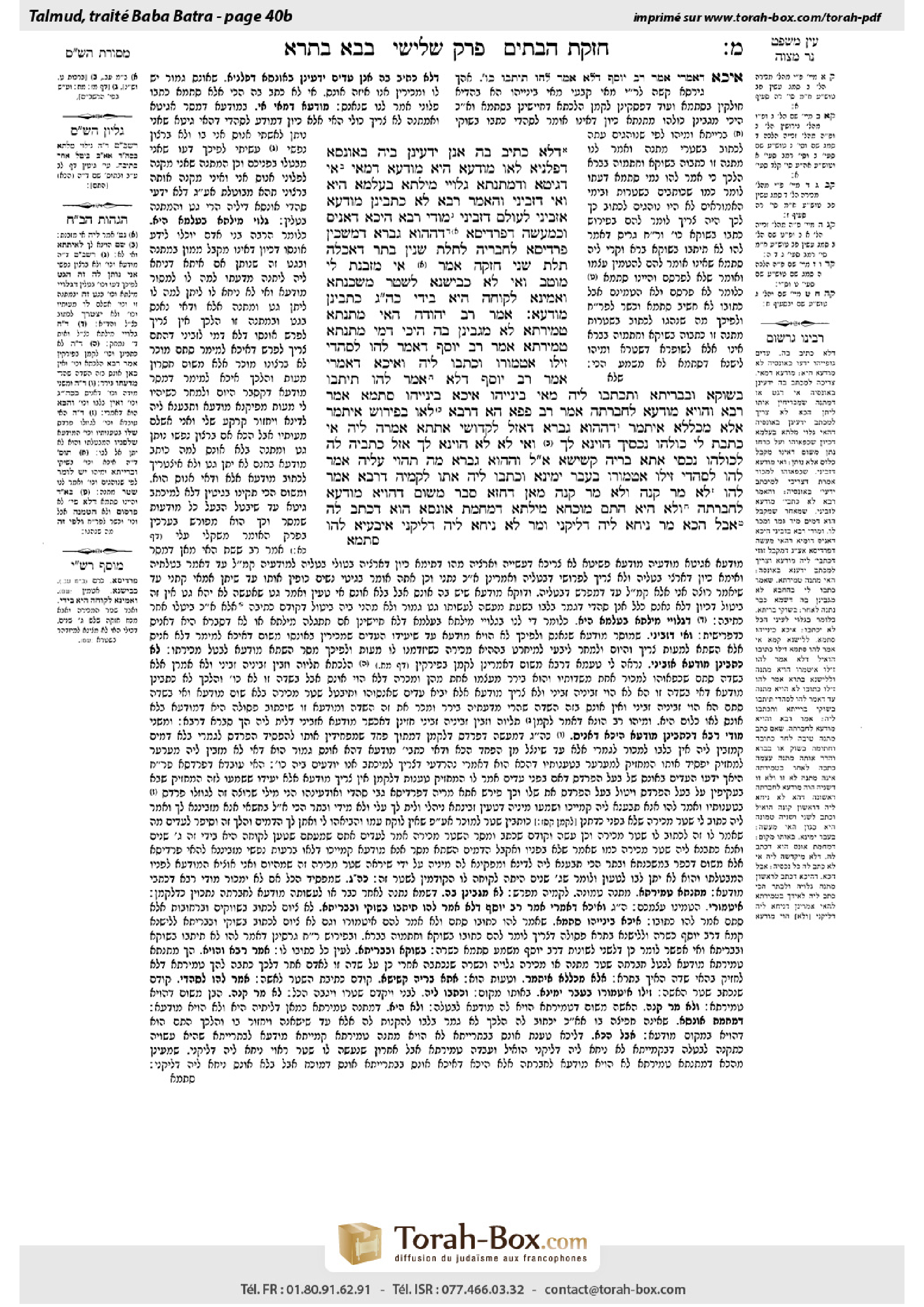
Bava Batra 40b: Talmud study for Daf Yomi
Study the Talmud for Daf Yomi with scanned pages, Hebrew text, English translations from Sefaria and AI-generated French translations.
Passage selection and English or AI-generated French translation are available where the scan has annotations. Daf Study is independent of Torah-Box and Sefaria.
Browse Bava Batra · בבא בתרא · All tractatesBava Batra 40b text and translations
This page of Bava Batra includes the Aramaic text, an English translation and an AI-generated French translation, alongside the scan above.
בבא בתרא מ׳ ב · Aramaic and Hebrew text
דְּלָא כְּתִיב בָּהּ: ״אֲנַן יָדְעִינַן בֵּיהּ בְּאוּנְסָא דִפְלָנְיָא״ – לָאו מוֹדָעָא הִיא.
מוֹדָעָא דְמַאי? אִי דְּגִיטָּא וּדְמַתַּנְתָּא – גַּלּוֹיֵי מִילְּתָא בְּעָלְמָא הִיא! וְאִי דִּזְבִינֵי, וְהָאָמַר רָבָא: לָא כָּתְבִינַן מוֹדָעָא אַזְּבִינֵי!
לְעוֹלָם דִּזְבִינֵי; מוֹדֵי רָבָא הֵיכָא דַּאֲנִיס – וּכְמַעֲשֶׂה דְּפַרְדֵּיסָא; דְּהָהוּא גַּבְרָא דְּמַשְׁכֵּין פַּרְדֵּיסָא לְחַבְרֵיהּ לִתְלָת שְׁנִין. בָּתַר דְּאַכְלַהּ תְּלָת שְׁנֵי חֲזָקָה, אֲמַר: אִי מְזַבְּנַתְּ לִי – מוּטָב, וְאִי לָא – כָּבֵישְׁנָא לִשְׁטַר מַשְׁכַּנְתָּא, וְאָמֵינָא: ״לְקוּחָה הִיא בְּיָדִי״. כְּהַאי גַּוְונָא כָּתְבִינַן מוֹדָעָא.
אָמַר רַב יְהוּדָה: הַאי מַתַּנְתָּא טְמִירְתָּא – לָא מַגְבֵּינַן בַּהּ. הֵיכִי דָּמֵי מַתַּנְתָּא טְמִירְתָּא? אָמַר רַב יוֹסֵף, דְּאָמַר לְהוּ לְסָהֲדִי: ״זִילוּ אִטַּמּוּרוּ וְכִתְבוּ לֵיהּ״. וְאִיכָּא דְּאָמְרִי: אָמַר רַב יוֹסֵף, דְּלָא אָמַר לְהוּ: ״תִּיתְּבוּ בְּשׁוּקָא וּבְבָרָיָתָא וְתִכְתְּבוּ לֵיהּ״. מַאי בֵּינַיְיהוּ? אִיכָּא בֵּינַיְיהוּ סְתָמָא.
אָמַר רָבָא: וְהָוְיָא מוֹדָעָא לַחֲבֶרְתַּהּ. אָמַר רַב פָּפָּא: הָא דְּרָבָא – לָאו בְּפֵירוּשׁ אִיתְּמַר, אֶלָּא מִכְּלָלָא אִיתְּמַר.
דְּהָהוּא גַּבְרָא דַּאֲזַל לְקַדּוֹשֵׁי אִתְּתָא, אֲמַרָה לֵיהּ: ״אִי כָּתְבַתְּ לִי כּוּלְּהוּ נִכְסָיךְ – הָוֵינָא לָךְ, וְאִי לָא – לָא הָוֵינָא לָךְ״. אֲזַל כַּתְבֵיהּ לַהּ לְכוּלְּהוּ נִכְסֵי. אֲתָא בְּרֵיהּ קַשִּׁישָׁא, אֲמַר לֵיהּ: ״וְהָהוּא גַּבְרָא – מָה תִּהְוֵי עֲלֵיהּ?״ אֲמַר לְהוּ לְסָהֲדֵי: ״זִילוּ אִטַּמּוּרוּ בַּעֲבַר יַמִּינָא, וְכִתְבוּ לֵיהּ״. אֲתוֹ לְקַמֵּיהּ דְּרָבָא, אֲמַר לְהוּ: לָא מָר קְנָה, וְלָא מָר קְנָה.
מַאן דַּחֲזָא, סָבַר – מִשּׁוּם דְּהָוְיָא מוֹדָעָא לַחֲבֶרְתַּהּ. וְלָא הִיא; הָתָם – מוֹכְחָא מִילְּתָא דְּמֵחֲמַת אוּנְסָא הוּא דִּכְתַב לַהּ; אֲבָל הָכָא – מָר נִיחָא לֵיהּ דְּלִיקְנֵי, וּמָר לָא נִיחָא לֵיהּ דְּלִיקְנֵי.
אִיבַּעְיָא לְהוּ:
Bava Batra 40b · English translation
that does not have written in it the formulation: We are aware of so-and-so’s duress, i.e., we are aware of the nature of the coercion that forced him to enter this arrangement against his will, is not a valid preemptive declaration.
For what type of transaction is the preemptive declaration being stated? If one were to say that it is a preemptive declaration for a bill of divorce or for a gift, the preemptive declaration is merely revealing the matter. Since these actions can’t take place unless he desires it, it is sufficient that he stated that he does not desire them, and he need not specify a particular reason for nullifying them. And if it is for a sale, but doesn’t Rava say: We do not write a preemptive declaration for a sale?
The Gemara answers: Actually, it is referring to a preemptive declaration for a sale, as Rava concedes in a case where one was compelled to act due to a threat of monetary loss, as with the incident of the orchard, as there was a certain man who mortgaged his orchard to another for three years. After he worked and profited from it for the three years necessary for establishing the presumption of ownership, he said: If you sell the orchard to me, it is well. And if not, then I will hide the mortgage document and I will say that this land is purchased and that is why it is in my possession, and you will receive no payment for the orchard. In a case like this, we write a preemptive declaration. The declaration states that he does not actually desire to sell his property but was forced to do so.
§ Rav Yehuda says: With regard to this document detailing a concealed gift, we do not collect with it. The Gemara clarifies: What are the circumstances of a concealed gift? Rav Yosef said: It is referring to a case in which the giver said to witnesses: Go and hide and write a document for the recipient of this gift. And there are those who say that Rav Yosef said: It is referring to a case in which the giver did not say to witnesses: Sit outdoors in the marketplace and write it for him. The Gemara asks: What is the difference between the two versions of Rav Yosef’s statement? The Gemara answers: The difference between the two versions is in a case where his instructions were without specification, i.e., he did not tell them to write the document in private or in public.
Rava said: But a concealed gift is effective as a preemptive declaration for another gift. In other words, if he first gave an item as a concealed gift to one person, and then he gave this item as a gift to someone else, the second gift is null and void. Rav Pappa said: This ruling of Rava was not stated explicitly; rather, it was stated by inference, and he did not, in fact, hold accordingly.
Rav Pappa explains the inference: As there was a certain man who went to betroth a woman. She said to him: If you write a document signing over all of your property to me, then I will be your wife, and if not, I will not be your wife. He went and wrote a document signing over all of his property to her. His eldest son came and said to him: And that man, i.e., me, what will become of him if you give all of your property to this woman? The father said to two witnesses: Go hide in Avar Yemina and write a document for the son, giving him the father’s property as a gift. Later, the witnesses came before Rava. He said to them: This Master, i.e., the son, did not acquire the property and that Master, i.e., the wife, did not acquire it either. The son did not acquire the property because it was a concealed gift.
The Gemara explains why the wife does not acquire it as well. One who observed this incident assumed that Rava invalidated the wife’s acquisition because the concealed gift to his son was a preemptive declaration to the other gift, but that is not so. There, in the case of the woman and the son, the matter is self-evident that he wrote a document signing over his property to her because of duress, as she had told him that she would not marry him otherwise; but here, in a typical case of giving one person a concealed gift and then giving a public gift to another, that is not the case. It is possible that it is simply amenable to him that this Master, i.e., the one to whom he gave it publicly, should acquire the gift, and it is not amenable to him that this Master, i.e., the one to whom he gave it privately, should acquire the gift. Consequently, an incorrect inference was drawn concerning Rava’s opinion.
A dilemma was raised before the Sages:
Bava Batra 40b · Traduction française (IA)
celui qui n’a pas inscrit dans ce document la formulation : Nous sommes conscients de la contrainte de telle ou telle personne, c’est-à-dire que nous sommes conscients de la nature de la coercition qui l’a poussé à entrer dans cet arrangement contre son gré, n’est pas une déclaration préventive valide.
Pour quel type de transaction la déclaration préventive est-elle émise ? Si l’on disait qu’il s’agit d’une déclaration préventive pour un acte de divorce ou pour un don, la déclaration préventive est simplement une révélation de la situation. Puisque ces actions ne peuvent avoir lieu que s’il y consent, il suffit qu’il ait déclaré qu’il ne consent pas à ces actions, et il n’est pas nécessaire de spécifier une raison particulière pour annuler ces actions. Et si c’est pour une vente, mais ne Rava pas dire : Nous n’écrivons pas de déclaration préventive pour une vente ?
Le Guemara répond : En réalité, il s’agit d’une déclaration préventive pour une vente, comme Rava le reconnaît dans le cas où l’on a été contraint à agir en raison d’une menace de perte financière, comme dans l’incident du verger, comme il y avait un certain homme qui avait hypothéqué son verger à un autre pendant trois ans. Après avoir travaillé et profité de ce verger pendant les trois ans nécessaires pour établir la présomption de propriété, il a dit : Si tu me vends le verger, c’est bien. Et si ce n’est pas le cas, alors je cacherai le document d’hypothèque et je dirai que cette terre est achetée et c’est pourquoi elle est en mon possession, et tu ne recevras pas de paiement pour le verger. Dans un cas comme celui-ci, nous écrivons une déclaration préventive. La déclaration indique qu’il ne désire pas réellement vendre sa propriété mais a été contraint à le faire.
§ Rav Yehuda dit : Concernant ce document mentionnant un don caché, nous ne le recueillons pas. Le Guemara précise : Quelles sont les circonstances d’un don caché ? Rav Yosef dit : Il s’agit d’un cas où le donneur a dit aux témoins : Allez vous cacher et écrivez un document pour le bénéficiaire de ce don. Et certains disent que Rav Yosef a dit : Il s’agit d’un cas où le donneur n’a pas dit aux témoins : Asseyez-vous dans la place du marché et écrivez-le pour lui. Le Guemara pose la question : Quelle est la différence entre les deux versions de l’affirmation de Rav Yosef ? Le Guemara répond : La différence entre les deux versions réside dans le cas où ses instructions étaient sans précision, c’est-à-dire qu’il n’a pas dit aux témoins d’écrire le document en privé ou en public.
Rava dit : Mais un don caché est efficace comme une déclaration préventive pour un autre don. En d’autres termes, si l’on donnait d’abord un objet comme don caché à une personne, et ensuite l’objet comme don à une autre personne, le second don est nul. Rav Pappa dit : Cette décision de Rava n’a pas été formulée explicitement ; plutôt, elle a été formulée par déduction, et en réalité, il ne tenait pas à cette opinion.
Rav Pappa explique l'inférence : Il y avait un certain homme qui allait se fiancer avec une femme. Elle lui a dit : Si tu écris un document transférant toute ta propriété à moi, alors je serai ta femme, et si ce n'est pas le cas, je ne serai pas ta femme. Il est allé et a écrit un document transférant toute sa propriété à elle. Son fils aîné est venu et lui a dit : Et cet homme, c'est-à-dire moi, que deviendra-t-il si tu donnes toute ta propriété à cette femme ? Le père a dit à deux témoins : Allez vous cacher à Avar Yemina et écrivez un document pour le fils, lui donnant la propriété du père en don. Plus tard, les témoins sont venus devant Rava. Il a dit aux témoins : Ce maître, c'est-à-dire le fils, n'a pas acquis la propriété et ce maître, c'est-à-dire la femme, n'a pas acquis la propriété non plus. Le fils n'a pas acquis la propriété car c'était un don caché.
Le Guemara explique pourquoi la femme n'acquiert pas non plus. Celui qui a observé cet incident a supposé que Rava a invalidé l'acquisition de la femme parce que le don caché à son fils était une déclaration préventive pour l'autre don, mais ce n'est pas le cas. Là, dans le cas de la femme et du fils, la situation est évidente qu'il a écrit un document transférant sa propriété à elle en raison de contrainte, comme elle lui avait dit qu'elle ne se marierait pas autrement ; mais ici, dans un cas typique de don à une personne en secret et de don public à une autre, ce n'est pas le cas. Il est possible qu'il soit simplement acceptable qu'un tel maître, c'est-à-dire celui à qui il a donné en public, acquière le don, et il n'est pas acceptable qu'un tel maître, c'est-à-dire celui à qui il a donné en secret, acquière le don. Ainsi, une déduction incorrecte a été tirée concernant l'opinion de Rava.
Un dilemme a été soulevé devant les Sages :
Traduction française générée par IA à partir de l’édition anglaise de Sefaria. Vérifie toujours un passage avec le texte source.
Text from Sefaria: William Davidson Edition - Vocalized Aramaic (CC BY NC); William Davidson Edition - English (CC BY NC).