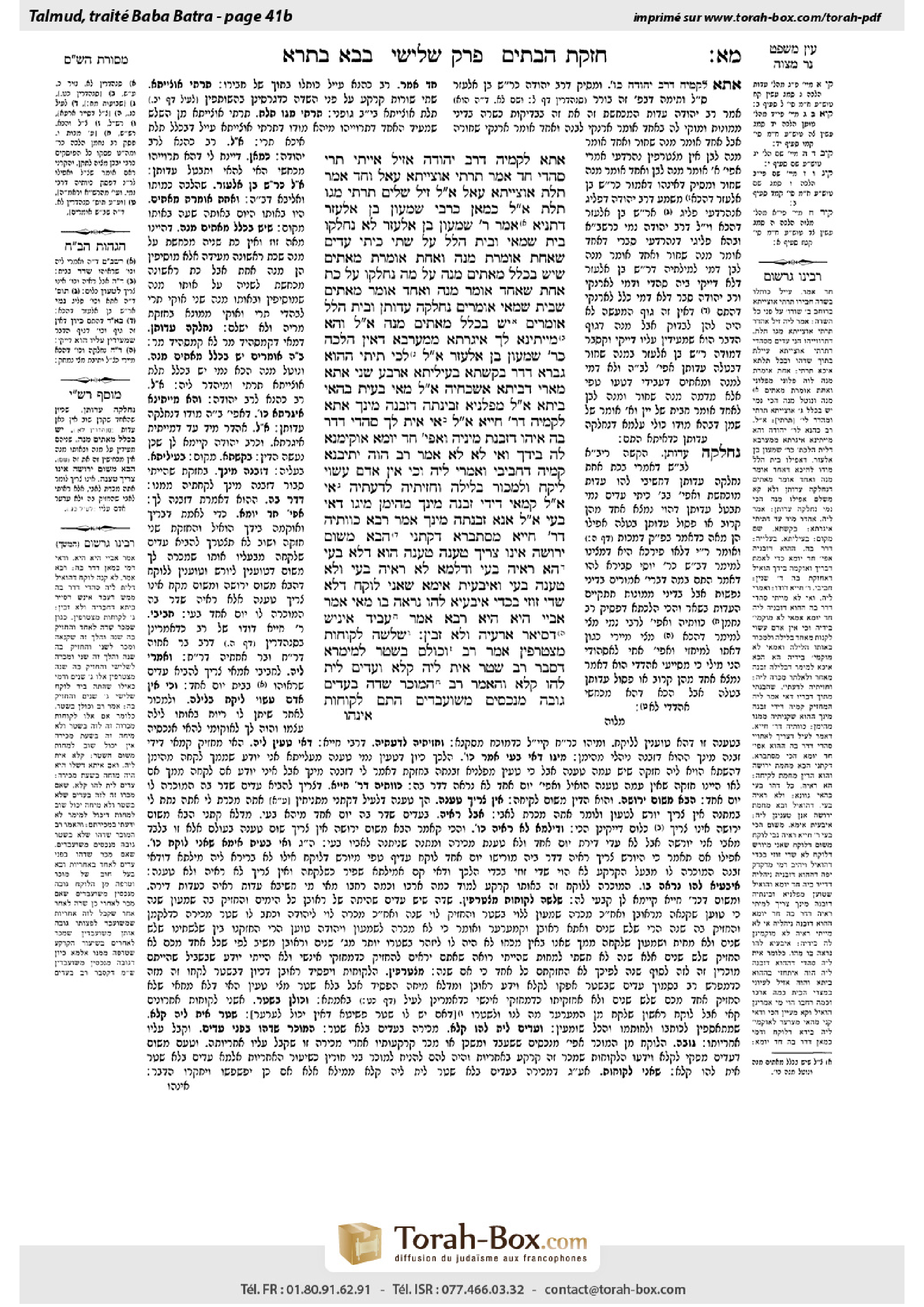
Bava Batra 41b: Talmud study for Daf Yomi
Study the Talmud for Daf Yomi with scanned pages, Hebrew text, English translations from Sefaria and AI-generated French translations.
Passage selection and English or AI-generated French translation are available where the scan has annotations. Daf Study is independent of Torah-Box and Sefaria.
Browse Bava Batra · בבא בתרא · All tractatesBava Batra 41b text and translations
This page of Bava Batra includes the Aramaic text, an English translation and an AI-generated French translation, alongside the scan above.
בבא בתרא מ״א ב · Aramaic and Hebrew text
אֲתָא לְקַמֵּיהּ דְּרַב יְהוּדָה. אָזֵיל אַיְיתַי תְּרֵי סָהֲדֵי, חַד אָמַר: תַּרְתֵּי אוּצְיָיתָא עָאל, וְחַד אָמַר: תְּלָת אוּצְיָיתָא עָאל. אֲמַר לֵיהּ: זִיל שַׁלֵּים תַּרְתֵּי מִגּוֹ תְּלָת.
אֲמַר לֵיהּ: כְּמַאן? כְּרַבִּי שִׁמְעוֹן בֶּן אֶלְעָזָר – דְּתַנְיָא, אָמַר רַבִּי שִׁמְעוֹן בֶּן אֶלְעָזָר: לֹא נֶחְלְקוּ בֵּית שַׁמַּאי וּבֵית הִלֵּל עַל שְׁתֵּי כִּיתֵּי עֵדִים – שֶׁאַחַת אוֹמֶרֶת מָנֶה, וְאַחַת אוֹמֶרֶת מָאתַיִם – שֶׁיֵּשׁ בִּכְלַל מָאתַיִם מָנֶה.
עַל מָה נֶחְלְקוּ? עַל כַּת אַחַת – שֶׁאֶחָד אוֹמֵר מָנֶה, וְאֶחָד אוֹמֵר מָאתַיִם; שֶׁבֵּית שַׁמַּאי אוֹמְרִים: נֶחְלְקָה עֵדוּתָן, וּבֵית הִלֵּל אוֹמְרִים: יֵשׁ בִּכְלַל מָאתַיִם מָנֶה.
אֲמַר לֵיהּ: וְהָא מַיְיתִינָא לָךְ אִיגַּרְתָּא מִמַּעְרְבָא, דְּאֵין הֲלָכָה כְּרַבִּי שִׁמְעוֹן בֶּן אֶלְעָזָר! אֲמַר לֵיהּ: לְכִי תַּיְתֵי.
הָהוּא גַּבְרָא, דְּדָר בְּקַשְׁתָּא בְּעִילִּיתָא אַרְבַּע שְׁנֵי. אֲתָא מָארֵי דְבֵיתָא, אַשְׁכְּחֵיהּ. אֲמַר לֵיהּ: מַאי בָּעֵית בְּהַאי בֵּיתָא? אֲמַר לֵיהּ: מִפְּלָנְיָא זְבֵינְתַּהּ, דְּזַבְנַהּ מִינָּךְ. אֲתָא לְקַמֵּיהּ דְּרַבִּי חִיָּיא, אֲמַר לֵיהּ: אִי אִית לָךְ סָהֲדֵי דְּדָר בָּהּ אִיהוּ דִּזְבַנְתְּ מִינֵּיהּ, וַאֲפִילּוּ חַד יוֹמָא – אוֹקֵימְנָא לַהּ בִּידָךְ; וְאִי לָא – לָא.
אָמַר רַב: הֲוָה יָתֵיבְנָא קַמֵּיהּ דְּחַבִּיבִי, וַאֲמַרִי לֵיהּ: וְכִי אֵין אָדָם עָשׂוּי לִיקַּח וְלִמְכּוֹר בַּלַּיְלָה? וַחֲזִיתֵיהּ לְדַעְתֵּיהּ, אִי אָמַר לֵיהּ: קַמַּאי דִּידִי זַבְנַהּ מִינָּךְ – מְהֵימַן, מִיגּוֹ דְּאִי בָּעֵי אֲמַר לֵיהּ: אֲנָא זְבֵנְתַּהּ מִינָּךְ.
אָמַר רָבָא: כְּווֹתֵיהּ דְּרַבִּי חִיָּיא מִסְתַּבְּרָא, דְּקָתָנֵי: הַבָּא מִשּׁוּם יְרוּשָּׁה – אֵינוֹ צָרִיךְ טַעֲנָה. טַעֲנָה הוּא דְּלָא בָּעֵי, הָא רְאָיָה בָּעֵי.
וְדִלְמָא לָא רְאָיָה בָּעֵי, וְלָא טַעֲנָה בָּעֵי! וְאִיבָּעֵית אֵימָא: שָׁאנֵי לוֹקֵחַ – דְּלָא שָׁדֵי זוּזִי בִּכְדִי.
אִיבַּעְיָא לְהוּ: נִרְאָה בּוֹ, מַאי? אָמַר אַבָּיֵי: הִיא הִיא. רָבָא אָמַר: עֲבִיד אִינִישׁ דְּסָיַאר אַרְעֵיהּ וְלָא זָבֵין.
שְׁלֹשָׁה לָקוֹחוֹת מִצְטָרְפִין. אָמַר רַב: וְכוּלָּם בִּשְׁטָר.
לְמֵימְרָא דְּסָבַר רַב: שְׁטָר אִית לֵיהּ קָלָא, וְעֵדִים לֵית לְהוּ קָלָא? וְהָאָמַר רַב: הַמּוֹכֵר שָׂדֶה בְּעֵדִים, גּוֹבֶה מִנְּכָסִים מְשׁוּעְבָּדִים! הָתָם, לָקוֹחוֹת
Bava Batra 41b · English translation
Rav Kahana came before Rav Yehuda. Rav Kahana’s neighbor went and brought two witnesses. One said: Rav Kahana entered two rows into his neighbor’s land, and one said: Rav Kahana entered three rows into his neighbor’s land. Rav Yehuda said to Rav Kahana: Go and pay two out of the three that your neighbor is claiming by moving the wall two rows into your property.
Rav Kahana said to Rav Yehuda: In accordance with whose opinion are you ruling that the testimony of witnesses who contradict each other is valid? Is it in accordance with the opinion of Rabbi Shimon ben Elazar? As it is taught in a baraita that Rabbi Shimon ben Elazar said: Beit Shammai and Beit Hillel did not disagree with regard to two sets of witnesses, where one set says that a litigant owes one hundred dinars and one set says that he owes two hundred. In such a case, everyone agrees that two hundred includes one hundred, and he is liable to pay one hundred.
With regard to what did Beit Shammai and Beit Hillel disagree? They disagree with regard to one set of witnesses, where one witness says that a litigant owes one hundred dinars and one witness says that he owes two hundred; as in such a case, Beit Shammai say that their testimony is divided, and they do not combine to form a set of witnesses, and Beit Hillel say that two hundred includes one hundred, and they combine to form a set of witnesses. Rav Kahana assumed that Rav Yehuda based his ruling on Rabbi Shimon ben Elazar’s interpretation of the opinion of Beit Hillel.
Rav Kahana then said to Rav Yehuda: How can you rely on this opinion? But I can bring you a letter from the West, Eretz Yisrael, stating that the halakha is not in accordance with the opinion of Rabbi Shimon ben Elazar, and that in fact Beit Hillel also disqualify two witnesses in such a case. Rav Yehuda said to Rav Kahana: I will accept that ruling when you will bring such a letter. Until then, I stand by my ruling.
§ The Gemara relates: There was a certain man who resided in a loft in Kashta for four years. At the end of that period, the prior owner of the house came and found him there. The prior owner said to him: What do you want with this house of mine? The possessor said to him: I purchased it from so-and-so, who purchased it from you. The possessor came before Rabbi Ḥiyya, who said to him: If you have witnesses who will testify that he, from whom you purchased the house, resided in it, even if there is testimony that he resided in it for only one day, I will establish it in your possession, but if there is no testimony to his having resided there then I will not establish it in your possession, and it will revert back to its prior owner.
Rav said: I was sitting before my uncle [deḥavivi], Rabbi Ḥiyya, and I said to him: But isn’t it common for a person to purchase a house and sell it immediately during the same night? It is possible that the seller purchased and sold the house without witnesses who saw him residing in it. And I saw that Rabbi Ḥiyya’s opinion was that if the possessor said to the claimant: The one who sold it to me purchased it from you in my presence, this claim is deemed credible, since if the possessor wanted to, he could have said to the prior owner of the house: I purchased it from you.
Rava said: It stands to reason that the halakha is in accordance with the opinion of Rabbi Ḥiyya, as the mishna (41a) teaches: In the case of land that comes as an inheritance, one is not required to make a claim as to how the land came into his benefactor’s possession when one’s ownership of the land is challenged. This indicates that it is a claim that he does not need, but he does need proof that it had been in the possession of his ancestors.
The Gemara rejects the inference from the mishna: But perhaps he does not need proof and does not need a claim. The only reason that the mishna mentions that he does not need a claim is to clarify that this does not fall into the category of a possession that is not accompanied by a claim. Therefore, one cannot infer from the ruling of that mishna what the halakha should be in this case. And if you wish, say instead that although the inference from the mishna is correct, it is not relevant to this case, as the case of a buyer is different, since he would not throw money away for nothing. The fact that he purchased the house indicates that he must have ascertained that the seller had a right to it.
A dilemma was raised before the Sages: If the seller was seen in the house, what is the halakha? Is this sufficient proof that he had purchased the house? Abaye said: It is identical to testimony that he had resided there. Rava said: This does not constitute proof, as a person is apt to survey [desayyar] land and ultimately not purchase it.
§ The Gemara issues a ruling concerning the establishment of the presumption of ownership. Three buyers combine to establish the presumption of ownership. If one purchased a field and sold it to another, who then sold it to a third party, and in total, the three of them worked and profited from the field for three years, the third one has established the presumption of ownership. Rav says: And this is the halakha only if they all purchased the land with a bill of sale. As a result of the bill of sale, the prior owner will know that it is not the case that each of them worked and profited from the field for only one year and abandoned it, which would explain why he did not bother to lodge a protest.
The Gemara asks: Is this to say that Rav holds that a bill of sale generates publicity, but witnesses do not generate publicity? But doesn’t Rav say that with regard to one who sells a field in the presence of witnesses, and that field is later seized by the creditors of the seller, the buyer collects from the liened property that the seller had sold to others, to be reimbursed for his seized field? If not for the fact that the sale in the presence of witnesses generates publicity, those who later purchased land from the seller would not have been aware that the property they are purchasing is liened to the first buyer. The Gemara answers: There, with regard to buyers,
Bava Batra 41b · Traduction française (IA)
Rav Kahana est venu devant Rav Yehuda. Le voisin de Rav Kahana est allé apporter deux témoins. L'un a dit : Rav Kahana a planté deux rangées dans la terre de son voisin, et l'autre a dit : Rav Kahana a planté trois rangées dans la terre de son voisin. Rav Yehuda a dit à Rav Kahana : Allez et payez deux des trois que votre voisin réclame en déplaçant le mur de deux rangées dans votre propriété.
Rav Kahana a dit à Rav Yehuda : Sur quel avis vous basez-vous pour dire que le témoignage de témoins qui s'opposent est valide ? Sur l'avis de Rabbi Shimon ben Elazar ? Comme il est enseigné dans une baraïta que Rabbi Shimon ben Elazar a dit : Beit Shammai et Beit Hillel n'ont pas eu de désaccord concernant deux ensembles de témoins, où l'un dit qu'un litigeur doit cent drachmes et l'autre dit qu'il doit deux cents. Dans ce cas, tout le monde convient que deux cents incluent cent, et il est tenu de payer cent.
Concernant quel point Beit Shammai et Beit Hillel ont-ils eu un désaccord ? Ils ont eu un désaccord concernant un seul ensemble de témoins, où un témoin dit qu'un litigeur doit cent drachmes et un autre témoin dit qu'il doit deux cents. Dans ce cas, Beit Shammai disent que leur témoignage est divisé, et ils ne forment pas un ensemble de témoins, et Beit Hillel disent que deux cents incluent cent, et ils forment un ensemble de témoins. Rav Kahana a supposé que Rav Yehuda basait son jugement sur l'interprétation de Rabbi Shimon ben Elazar concernant l'avis de Beit Hillel.
Rav Kahana a ensuite dit à Rav Yehuda : Comment pouvez-vous vous appuyer sur cet avis ? Mais je peux vous apporter une lettre du West, Eretz Yisrael, indiquant que la halakha n'est pas en conformité avec l'avis de Rabbi Shimon ben Elazar, et que, en fait, Beit Hillel rejettent également deux témoins dans ce cas. Rav Yehuda a dit à Rav Kahana : Je l'accepterai lorsque vous me présenterez une telle lettre. Jusqu'à ce que cela arrive, je reste sur mon jugement.
§ La Guemara rapporte : Il y avait un certain homme qui habitait dans un grenier à Kashta pendant quatre ans. À la fin de cette période, l'ancien propriétaire de la maison est venu le trouver et lui a dit : Qu'est-ce que tu veux avec cette maison à moi ? Le possesseur lui a répondu : J'ai acheté cela à tel et tel, qui l'a acheté à toi. Le possesseur est venu devant Rabbi Ḥiyya, qui lui a dit : Si vous avez des témoins qui témoigneront qu'il, de qui vous avez acheté la maison, habitait là, même s'il y a un témoignage qu'il y a habité pendant seulement un jour, je l'établirai en votre possession, mais si il n'y a pas de témoignage de son habitation là, je ne l'établirai pas en votre possession, et il reviendra à son ancien propriétaire.
Rav a dit : Je me trouvais devant mon oncle [deḥavivi], Rabbi Ḥiyya, et j'ai dit à lui : Mais n'est-ce pas commun qu'une personne achète une maison et la vend immédiatement pendant la même nuit ? Il est possible que le vendeur ait acheté et vendu la maison sans témoins qui aient vu qu'il y habitait. Et j'ai vu que l'avis de Rabbi Ḥiyya était que si le possesseur a dit au réclamant : Celui qui m'a vendu la maison l'a acheté de toi devant moi, cette réclamation est considérée comme crédible, car si le possesseur voulait, il aurait pu dire à l'ancien propriétaire de la maison : J'ai acheté cela de toi.
Rava a dit : Il est logique que la halakha soit en conformité avec l'avis de Rabbi Ḥiyya, comme la mitsva (41a) enseigne : Dans le cas d'une terre qui vient en héritage, on n'est pas tenu de faire une réclamation concernant la manière dont la terre est entrée en possession de son bénéficiaire quand sa propriété de la terre est contestée. Cela indique qu'il s'agit d'une réclamation qu'il n'a pas besoin, mais qu'il a besoin de preuve qu'elle avait été en possession de ses ancêtres.
La Guemara rejette l'inférence tirée de la mitsva : Mais peut-être qu'il n'a pas besoin de preuve et n'a pas besoin de réclamation. La seule raison pour laquelle la mitsva mentionne qu'il n'a pas besoin de réclamation est pour clarifier que cela ne tombe pas dans la catégorie d'une possession qui n'est pas accompagnée d'une réclamation. Par conséquent, on ne peut pas inférer de la décision de cette mitsva ce que la halakha devrait être dans ce cas. Et si vous le souhaitez, dites plutôt que bien que l'inférence tirée de la mitsva soit correcte, elle n'est pas pertinente pour ce cas, car le cas d'un acheteur est différent, car il ne jette pas de l'argent par les fenêtres. Le fait qu'il ait acheté la maison indique qu'il a dû s'assurer que le vendeur avait le droit à cette propriété.
Un dilemme a été soulevé devant les Sages : Si le vendeur a été vu dans la maison, quelle est la halakha ? Est-ce une preuve suffisante qu'il a acheté la maison ? Abaye a dit : C'est identique à un témoignage qu'il y avait habité. Rava a dit : Cela ne constitue pas une preuve, car une personne a tendance à examiner une terre et finalement ne l'achète pas.
§ La Guemara rend un jugement concernant l'établissement de la présomption de propriété. Trois acheteurs combinés établissent la présomption de propriété. Si l'un a acheté un champ et l'a vendu à un autre, qui l'a ensuite vendu à un troisième, et en totalité, les trois ont travaillé et bénéficié du champ pendant trois ans, le troisième établit la présomption de propriété. Rav dit : Et c'est la halakha seulement si ils ont tous acheté la terre avec un contrat de vente. En raison du contrat de vente, le propriétaire précédent saura qu'il n'est pas le cas que chacun d'eux ait travaillé et bénéficié du champ pendant seulement un an et l'ait abandonné, ce qui explique pourquoi il n'a pas eu l'envie de protester.
Le Guemara pose la question : Est-ce que cela signifie que Rav affirme que l'acte de vente produit une publicité, mais que les témoins ne produisent pas de publicité ? Mais ne dit-il pas que dans le cas d'une personne qui vend un champ en présence de témoins, et que ce champ est ultérieurement saisi par les créanciers du vendeur, l'acheteur récupère sur la propriété liée que le vendeur a vendu à d'autres, afin de se faire rembourser son champ saisi ? Si ce n'était pas pour le fait que la vente en présence de témoins produit une publicité, ceux qui achètent ultérieurement un terrain auprès du vendeur ne seraient pas conscients que la propriété qu'ils achètent est liée au premier acheteur. Le Guemara répond : Là, concernant les acheteurs,
Traduction française générée par IA à partir de l’édition anglaise de Sefaria. Vérifie toujours un passage avec le texte source.
Text from Sefaria: William Davidson Edition - Vocalized Aramaic (CC BY NC); William Davidson Edition - English (CC BY NC).