Chagigah 23b: Talmud study for Daf Yomi
Study the Talmud for Daf Yomi with scanned pages, Hebrew text, English translations from Sefaria and AI-generated French translations.
Passage selection and English or AI-generated French translation are available where the scan has annotations. Daf Study is independent of Torah-Box and Sefaria.
Browse Chagigah · חגיגה · All tractatesChagigah 23b text and translations
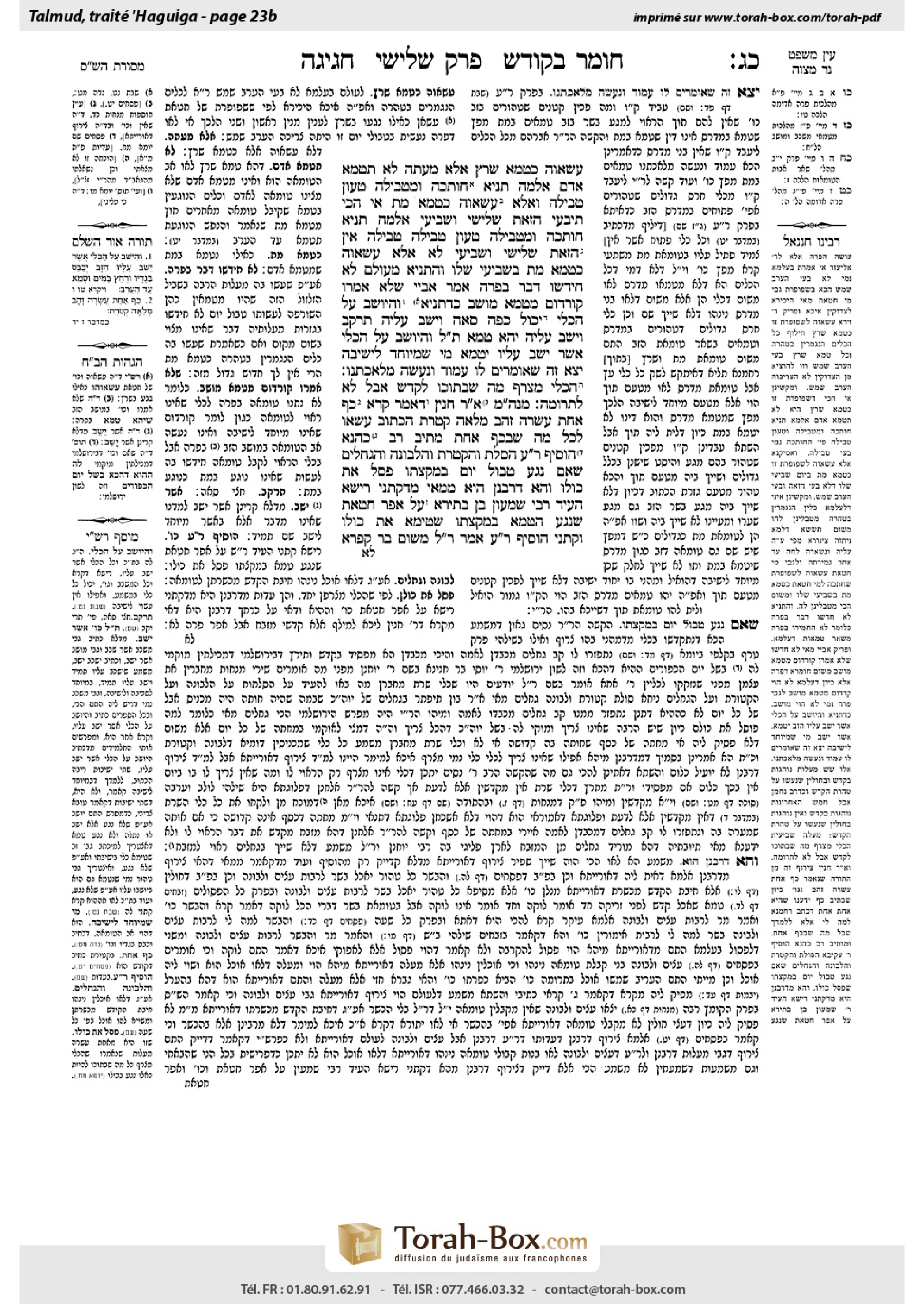
This page of Chagigah includes the Aramaic text, an English translation and an AI-generated French translation, alongside the scan above.
חגיגה כ״ג ב · Aramaic and Hebrew text
עֲשָׂאוּהָ כִּטְמֵא שֶׁרֶץ.
אֶלָּא מֵעַתָּה, לֹא תְּטַמֵּא אָדָם, אַלְּמָה תַּנְיָא: חוֹתְכָהּ וּמַטְבִּילָהּ — טָעוּן טְבִילָה! וְאֶלָּא: עֲשָׂאוּהָ כִּטְמֵא מֵת. אִי הָכִי תִּיבְעֵי הַזָּאַת שְׁלִישִׁי וּשְׁבִיעִי,
אַלְּמָה תַּנְיָא: חוֹתְכָהּ וּמַטְבִּילָהּ — טָעוּן טְבִילָה. טְבִילָה אִין, הַזָּאַת שְׁלִישִׁי וּשְׁבִיעִי לָא! אֶלָּא: עֲשָׂאוּהָ כִּטְמֵא מֵת בִּשְׁבִיעִי שֶׁלּוֹ,
וְהָתַנְיָא: מֵעוֹלָם לֹא חִידְּשׁוּ דָּבָר בַּפָּרָה.
אָמַר אַבָּיֵי: שֶׁלֹּא אָמְרוּ קוּרְדּוֹם מְטַמֵּא מוֹשָׁב. כִּדְתַנְיָא: ״וְהַיּוֹשֵׁב עַל הַכְּלִי״. יָכוֹל כָּפָה סְאָה וְיָשַׁב עָלֶיהָ, תַּרְקַב וְיָשַׁב עָלֶיהָ — יְהֵא טָמֵא,
תַּלְמוּד לוֹמַר: ״וְהַיּוֹשֵׁב עַל הַכְּלִי אֲשֶׁר יֵשֵׁב עָלָיו ... יִטְמָא״ — מִי שֶׁמְיוּחָד לִישִׁיבָה, יָצָא זֶה, שֶׁאוֹמְרִים לוֹ: עֲמוֹד וְנַעֲשֶׂה מְלַאכְתֵּנוּ.
הַכְּלִי מְצָרֵף מַה שֶּׁבְּתוֹכוֹ לַקֹּדֶשׁ, אֲבָל לֹא לַתְּרוּמָה. מְנָא הָנֵי מִילֵּי? אָמַר רַבִּי חָנִין, דְּאָמַר קְרָא: ״כַּף אַחַת עֲשָׂרָה זָהָב מְלֵאָה קְטֹרֶת״, הַכָּתוּב עֲשָׂאוֹ לְכׇל מַה שֶּׁבַּכַּף — אַחַת.
מֵתִיב רַב כָּהֲנָא: הוֹסִיף רַבִּי עֲקִיבָא הַסֹּלֶת, וְהַקְּטֹרֶת, וְהַלְּבוֹנָה, וְהַגֶּחָלִים, שֶׁאִם נָגַע טְבוּל יוֹם בְּמִקְצָתוֹ — פָּסַל אֶת כּוּלּוֹ.
וְהָא דְּרַבָּנַן הִיא. מִמַּאי, מִדְּקָתָנֵי רֵישָׁא: הֵעִיד רַבִּי שִׁמְעוֹן בֶּן בְּתֵירָא עַל אֵפֶר חַטָּאת שֶׁנָּגַע הַטָּמֵא בְּמִקְצָתוֹ — שֶׁטִּימֵּא אֶת כּוּלּוֹ, וְקָתָנֵי: הוֹסִיף רַבִּי עֲקִיבָא!
אָמַר רֵישׁ לָקִישׁ מִשּׁוּם בַּר קַפָּרָא:
Chagigah 23b · English translation
as they treated the tube with severity as though it had been rendered impure by contact with a dead creeping animal. Therefore, in not requiring the setting of the sun they made it noticeable that they were opposed to the Sadducees.
The Gemara raises a difficulty. However, if that is so, that the tube is treated as if defiled by a creeping animal, it should not render a person impure, as something defiled by a creeping animal is impure to the first degree of ritual impurity, which cannot impart ritual impurity to people. Why, then, is it taught in a baraita: The one who cuts and immerses the tube for the red heifer ashes requires immersion himself, which shows that the tube does defile people? But rather, say that they treated it as something made impure by contact with a corpse, for such objects do defile people as well. The Gemara asks: If that is so, the tube should also require the sprinkling of the water of purification on the third and seventh days of its purification, like all things defiled by a corpse.
Why, then, is it taught in a baraita: The one who cuts and immerses it requires immersion, which indicates that immersion for the tube, yes, this is required, but sprinkling of the third and the seventh day, no. Rather, you must say that they treated it as something made impure by contact with a corpse that is already in its seventh day, after its sprinklings, when it is still impure and imparts impurity to those who touch it, but requires only immersion and no further sprinkling.
The Gemara asks: But isn’t it taught in a baraita: The Sages never made any innovations in the halakhot of impurity with regard to the red heifer procedure. In other words, although the Sages added stringencies to the red heifer procedure, they never created new halakhot for it that do not exist elsewhere in other areas of halakha. We have said that the tube is treated as if it had had contact with a corpse even though it did not; this is an innovation that is not found anywhere else.
The Gemara answers: Abaye said: When they said that the Sages did not make innovations, they were not referring to something of this nature, but meant that they did not say that a spade upon which a zav sits can become impure as a seat. They thereby preserved the basic halakhot of impurity, as it is taught in a baraita: It states with regard to a zav: “And he who sits on any object whereon the zav sits shall wash his clothes and bathe himself in water, and be unclean until the evening” (Leviticus 15:6). One might have thought that if a zav turned over a vessel used to measure a se’a and sat on it, or if he turned over a vessel used to measure a tarkav, i.e., a half-se’a, and sat on it, that the vessel should be rendered impure as a seat upon which a zav sat.
The baraita concludes: Therefore, the verse states: “And he who sits on any object whereon the zav sits…and be unclean until the evening” (Leviticus 15:6). The wording of the verse indicates that it is speaking of an object that is designated for sitting, i.e., upon which people generally sit, excluding such a vessel for which we would say to someone sitting on it: Stand up, so we can do our work. A spade and a measuring bowl, then, are not subject to the impurity of the seat of a zav, even if a zav sat on them. Rather, they are considered to be on the lower level of impurity transmitted through simple contact with a zav. The same halakha was applied to the vessels used in preparation of the red heifer; the Sages did not add stringency and decree that a vessel not generally used for sitting should be considered as the seat of a zav.
§ The mishna states: A vessel combines all the food that is in it with regard to sacrificial food but not with regard to teruma. The Gemara asks: From where are these matters derived? What is the source for this stringency? Rabbi Ḥanin said: The verse states with regard to the sacrificial donations of the tribal princes: “One golden pan of ten shekels, full of incense” (Numbers 7:14), which teaches us that the verse treats everything inside the pan as one unit, even if the items are not attached to each other.
Rav Kahana raised an objection against this based on the mishna that teaches (Eduyyot 8:1): Rabbi Akiva added to the list of items that are considered combined when in the same vessel fine flour, incense, frankincense, and coals, saying that if one who immersed himself that day but has not waited until sunset touched a part of the contents of a vessel containing these substances, all of the vessel’s contents are disqualified, as the vessel combines them.
Isn’t this halakha that these substances are considered combined by rabbinic law? From where do we know that this is so? From the fact that it teaches in the first clause of that mishna: Rabbi Shimon ben Beteira testified with regard to ashes of purification in a vessel that if an impure person or object touched part of it, it renders all of it impure. The purification ashes of the red heifer are neither food nor a sacrificial item, so Rabbi Ḥanin’s verse does not apply to the ashes, and the vessel certainly does not combine the ashes together by Torah law, but by rabbinic law. And it is taught immediately following this: Rabbi Akiva added, which shows that Rabbi Akiva’s halakha, like the previous halakha, deals with an additional level of impurity instituted by the Sages rather than a Torah law.
Reish Lakish said in the name of Bar Kappara:
Chagigah 23b · Traduction française (IA)
car ils traitaient le tube avec sévérité, comme s'il avait été rendu impur par contact avec un animal rampant mort. Ainsi, en ne demandant pas la mise en place du coucher du soleil, ils faisaient comprendre qu'ils étaient opposés aux Sadducéens.
La Guemara soulève une difficulté. Cependant, si c'est ainsi, que le tube est traité comme s'il avait été rendu impur par contact avec un animal rampant, il ne devrait pas rendre une personne impure, car une chose rendue impure par contact avec un animal rampant est impure au premier degré de l'impureté rituelle, ce qui ne peut pas transmettre l'impureté aux personnes. Pourquoi alors est-il enseigné dans une baraïta : celui qui coupe et immerge le tube pour les cendres de la vache rousse doit s'immerger lui-même, ce qui montre que le tube rend effectivement impur les personnes ? Mais plutôt, disons qu'ils le traitaient comme si cela avait été rendu impur par contact avec un cadavre, car de tels objets rendent également impurs les personnes. La Guemara demande : Si c'est ainsi, le tube devrait aussi nécessiter le sprinkling de l'eau de purification aux troisième et septième jours de sa purification, comme toutes les choses rendues impures par contact avec un cadavre.
Pourquoi alors est-il enseigné dans une baraïta : celui qui coupe et immerge le tube doit s'immerger lui-même, ce qui indique que l'immergence du tube, oui, cela est requis, mais le sprinkling des troisième et septième jours, non. Mais plutôt, tu dois dire qu'ils le traitaient comme si cela avait été rendu impur par contact avec un cadavre qui est déjà au septième jour, après ses sprinklings, quand il est encore impur et transmet l'impureté à ceux qui le touchent, mais nécessite seulement l'immergence et pas de sprinkling supplémentaire.
La Guemara demande : N'est-ce pas enseigné dans une baraïta : les Sages n'ont jamais introduit d'innovations dans les halakhot de l'impureté concernant la procédure de la vache rousse. En d'autres termes, bien que les Sages aient ajouté des stringences à la procédure de la vache rousse, ils n'ont jamais créé de nouvelles halakhot pour cela qui n'existent pas ailleurs dans d'autres domaines de la halakha. Nous avons dit que le tube est traité comme s'il avait eu contact avec un cadavre même s'il n'en avait pas eu, ce qui est une innovation qui n'est pas trouvée ailleurs.
La Guemara répond : Abaye dit : Quand ils ont dit que les Sages n'ont pas introduit d'innovations, ils ne faisaient pas référence à quelque chose de ce genre, mais voulaient dire qu'ils n'ont pas dit qu'un pelle sur laquelle un zav s'est assis puisse devenir impur comme un siège. Ils ont ainsi préservé les halakhot fondamentales de l'impureté, comme il est enseigné dans une baraïta : il est dit concernant un zav : « Et celui qui s'assied sur tout objet sur lequel le zav s'est assis doit laver ses vêtements et se laver avec de l'eau, et être impur jusqu'au soir » (Lévitique 15:6). On aurait pu penser que si un zav a retourné un récipient utilisé pour mesurer un se'a et s'est assis dessus, ou s'il a retourné un récipient utilisé pour mesurer un tarkav, c'est-à-dire un demi-se'a, et s'est assis dessus, que le récipient devrait être rendu impur comme un siège sur lequel un zav s'est assis.
La baraïta conclut : Ainsi, le verset dit : « Et celui qui s'assied sur tout objet sur lequel le zav s'est assis… et être impur jusqu'au soir » (Lévitique 15:6). Le texte du verset indique qu'il s'agit d'un objet désigné pour s'asseoir, c'est-à-dire sur lequel les gens s'assient généralement, excluant un tel récipient pour lequel on dirait à quelqu'un s'assoyant dessus : « Debout, afin que nous puissions faire notre travail ». Une pelle et un bol de mesure, alors, ne sont pas soumis à l'impureté du siège d'un zav, même si un zav s'y est assis. Ils sont considérés comme étant au niveau inférieur d'impureté transmise par simple contact avec un zav. La même halakha a été appliquée aux récipients utilisés dans la préparation de la vache rousse ; les Sages n'ont pas ajouté de stringence et ne décrétèrent pas que un récipient non généralement utilisé pour s'asseoir devrait être considéré comme le siège d'un zav.
§ La mitsna dit : Un récipient combine toutes les aliments qui y sont contenus concernant les aliments sacrés mais pas concernant la terouma. La Guemara demande : D'où sont dérivés ces points ? Quelle est la source de cette stringence ? Rabbi Ḥanin dit : Le verset dit concernant les dons sacrés des princes tribaux : « Une cuillère d'or de dix shekels, pleine de parfum » (Nb 7:14), ce qui nous enseigne que le verset considère tout ce qui est à l'intérieur de la cuillère comme une unité, même si les objets ne sont pas attachés les uns aux autres.
Rav Kahana a soulevé une objection contre cela, basée sur la mitsna qui enseigne (Eduyyot 8:1) : Rabbi Akiva a ajouté à la liste des objets considérés comme combinés lorsqu'ils sont dans le même récipient, la farine fine, le parfum, le santal et les braises, disant que si celui qui s'est immergé ce jour-là mais n'a pas attendu jusqu'au coucher du soleil touche une partie des contenants d'un récipient contenant ces substances, tout le contenu du récipient est disqualifié, car le récipient les combine.
N'est-ce pas cette halakha que ces substances sont considérées comme combinées par la loi rabbinique ? D'où savons-nous que c'est ainsi ? De la constatation que la mitsna enseigne : Rabbi Shimon ben Beteira a témoigné concernant les cendres de purification dans un récipient que si une personne ou un objet impur touche une partie d'entre elles, cela rend tout le récipient impur. Les cendres de purification de la vache rousse ne sont ni de la nourriture ni un objet sacré, donc la parole du verset de Rabbi Ḥanin ne s'applique pas aux cendres, et le récipient ne combine certainement pas les cendres ensemble par la loi de la Torah, mais par la loi rabbinique. Et il est immédiatement enseigné après cela : Rabbi Akiva a ajouté, ce qui montre que la halakha de Rabbi Akiva, comme la précédente, traite d'un niveau supplémentaire d'impureté institué par les Sages plutôt qu'une loi de la Torah.
Reish Lakish a dit en nom de Bar Kappara :
Traduction française générée par IA à partir de l’édition anglaise de Sefaria. Vérifie toujours un passage avec le texte source.
Text from Sefaria: William Davidson Edition - Vocalized Aramaic (CC BY NC); William Davidson Edition - English (CC BY NC).