Gittin 2a: Talmud study for Daf Yomi
Study the Talmud for Daf Yomi with scanned pages, Hebrew text, English translations from Sefaria and AI-generated French translations.
Passage selection and English or AI-generated French translation are available where the scan has annotations. Daf Study is independent of Torah-Box and Sefaria.
Browse Gittin · גיטין · All tractatesGittin 2a text and translations
This page of Gittin includes the Aramaic text, an English translation and an AI-generated French translation, alongside the scan above.
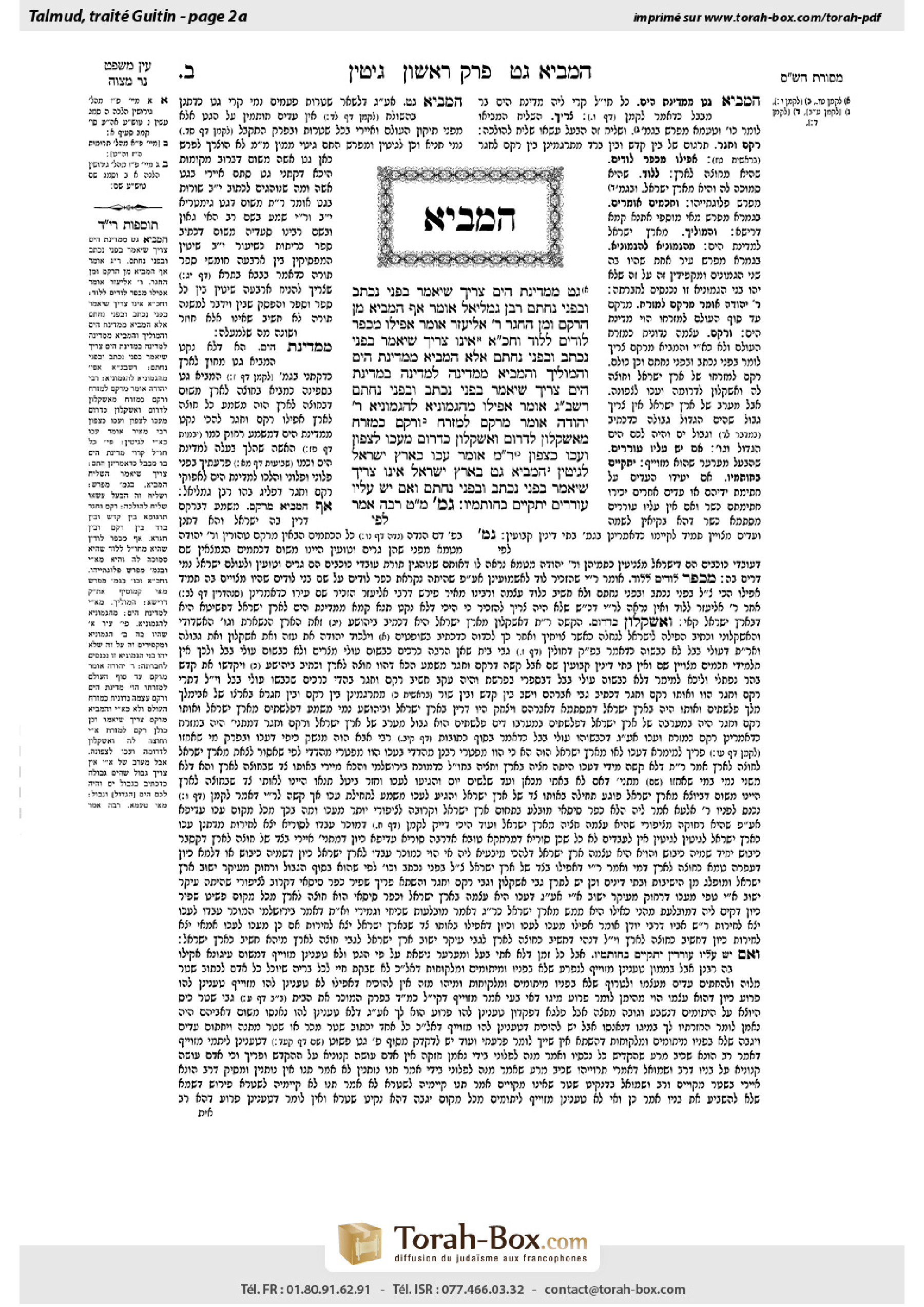
גיטין ב׳ א · Aramaic and Hebrew text
הַמֵּבִיא גֵּט מִמְּדִינַת הַיָּם, צָרִיךְ שֶׁיֹּאמַר בְּפָנַי נִכְתַּב וּבְפָנַי נֶחְתַּם.
רַבָּן גַּמְלִיאֵל אוֹמֵר: אַף הַמֵּבִיא מִן הָרְקָם וּמִן הַחֶגֶר. רַבִּי אֱלִיעֶזֶר אוֹמֵר: אֲפִילּוּ מִכְּפַר לוּדִּים לְלוֹד.
וַחֲכָמִים אוֹמְרִים: אֵינוֹ צָרִיךְ שֶׁיֹּאמַר ״בְּפָנַי נִכְתַּב וּבְפָנַי נֶחְתַּם״, אֶלָּא הַמֵּבִיא מִמְּדִינַת הַיָּם וְהַמּוֹלִיךְ. וְהַמֵּבִיא מִמְּדִינָה לִמְדִינָה בִּמְדִינַת הַיָּם, צָרִיךְ שֶׁיֹּאמַר ״בְּפָנַי נִכְתַּב וּבְפָנַי נֶחְתַּם״. רַבָּן שִׁמְעוֹן בֶּן גַּמְלִיאֵל אוֹמֵר: אֲפִילּוּ מֵהֶגְמוֹנְיָא לְהֶגְמוֹנְיָא.
רַבִּי יְהוּדָה אוֹמֵר: מֵרְקָם לַמִּזְרָח, וּרְקָם – כַּמִּזְרָח; מֵאַשְׁקְלוֹן לַדָּרוֹם וְאַשְׁקְלוֹן – כַּדָּרוֹם; מֵעַכּוֹ לַצָּפוֹן, וְעַכּוֹ – כַּצָּפוֹן. רַבִּי מֵאִיר אוֹמֵר: עַכּוֹ – כְּאֶרֶץ יִשְׂרָאֵל לְגִיטִּין.
הַמֵּבִיא גֵּט בְּאֶרֶץ יִשְׂרָאֵל, אֵינוֹ צָרִיךְ שֶׁיֹּאמַר ״בְּפָנַי נִכְתַּב וּבְפָנַי נֶחְתַּם״. וְאִם יֵשׁ עָלָיו עוֹרְרִים, יִתְקַיֵּים בְּחוֹתְמָיו.
גְּמָ׳ מַאי טַעְמָא? רַבָּה אָמַר:
Gittin 2a · English translation
MISHNA: An agent who brings a bill of divorce [get] from a husband to his wife from a country overseas, i.e., from outside of Eretz Yisrael to Eretz Yisrael, is required to state the following formula when he hands over the bill of divorce: This bill of divorce was written in my presence and it was signed in my presence.
Rabban Gamliel says: Even one who brings a bill of divorce from Rekem or from Ḥeger, which are on the periphery of Eretz Yisrael, must make this declaration. Rabbi Eliezer says: Even one who brings a bill of divorce from the village of Ludim to Lod must also make this declaration, despite the fact that these places are only a short distance apart. The reason is that the village of Ludim was not part of the main area settled by Jews in Eretz Yisrael.
And the Rabbis say that one is required to say: It was written in my presence and it was signed in my presence, only if he brings a bill of divorce from a country overseas to Eretz Yisrael, and the same applies to one who delivers a bill of divorce from Eretz Yisrael to a country overseas. And likewise an agent who brings a bill of divorce from one region to another region within the overseas countries is also required to say: It was written in my presence and it was signed in my presence. Rabban Shimon ben Gamliel says: This halakha applies not only to an agent who brings a bill of divorce from one country to another, but even to one who takes it from one district [hegmonya] to another district in the same country.
Rabbi Yehuda says: With regard to the borders of Eretz Yisrael, from Rekem eastward is considered to be part of the overseas country, and Rekem itself is like east of Eretz Yisrael, i.e., it is outside of Eretz Yisrael. From Ashkelon southward is outside of Eretz Yisrael, and Ashkelon itself is like south of Eretz Yisrael. Likewise, from Akko northward is outside of Eretz Yisrael, and Akko itself is like north of Eretz Yisrael. Rabbi Meir says: Akko is like Eretz Yisrael with regard to the halakhot of bills of divorce.
One who brings a bill of divorce from one place to another within Eretz Yisrael is not required to say: It was written in my presence and it was signed in my presence. And if there are those who contest it, i.e., if the husband objects by saying that the bill of divorce is a forgery, it should be ratified through its signatories. The court must authenticate the signatures of the witnesses in order to ratify the document.
GEMARA: The mishna teaches that one who brings a bill of divorce from a country overseas to Eretz Yisrael must say: It was written in my presence and it was signed in my presence. The Gemara asks: What is the reason for this declaration? Rabba says:
Gittin 2a · Traduction française (IA)
MICHNA : Un agent qui apporte un acte de divorce [get] d'un mari à sa femme d'un pays éloigné, c'est-à-dire d'extérieur à Eretz Yisrael vers Eretz Yisrael, doit déclarer la formule suivante lorsqu'il remet l'acte de divorce : Cet acte de divorce a été rédigé devant moi et il a été signé devant moi.
Rabban Gamliel dit : Même celui qui apporte un acte de divorce de Rekem ou de Ḥeger, qui sont aux confins d'Eretz Yisrael, doit faire cette déclaration. Rabbi Eliezer dit : Même celui qui apporte un acte de divorce de la ville de Ludim à Lod doit aussi faire cette déclaration, malgré le fait que ces lieux sont seulement à courte distance l'un de l'autre. La raison est que la ville de Ludim n'était pas partie de la zone principale habitée par les Juifs en Eretz Yisrael.
Et les Rabbins disent qu'il faut dire : Il a été rédigé devant moi et il a été signé devant moi, uniquement si l'on apporte un acte de divorce d'un pays éloigné vers Eretz Yisrael, et cela s'applique de même à celui qui remet un acte de divorce d'Eretz Yisrael vers un pays éloigné. De même, un agent qui apporte un acte de divorce d'une région à une autre région au sein des pays éloignés doit aussi dire : Il a été rédigé devant moi et il a été signé devant moi. Rabban Shimon ben Gamliel dit : Cette halakha s'applique non seulement à un agent qui apporte un acte de divorce d'un pays à un autre, mais aussi à celui qui le transporte d'une district [hegmonya] à une autre district dans le même pays.
Rabbi Yehuda dit : En ce qui concerne les frontières d'Eretz Yisrael, à l'est de Rekem est considéré comme faisant partie du pays éloigné, et Rekem lui-même est comme à l'est d'Eretz Yisrael, c'est-à-dire en dehors d'Eretz Yisrael. Au sud d'Ashkelon est en dehors d'Eretz Yisrael, et Ashkelon elle-même est comme au sud d'Eretz Yisrael. De même, au nord d'Akko est en dehors d'Eretz Yisrael, et Akko lui-même est comme au nord d'Eretz Yisrael. Rabbi Meir dit : Akko est considéré comme faisant partie d'Eretz Yisrael en ce qui concerne les halakhot des actes de divorce.
Celui qui apporte un acte de divorce d'un lieu à un autre au sein d'Eretz Yisrael n'est pas tenu de dire : Il a été rédigé devant moi et il a été signé devant moi. Et si des personnes contestent cela, c'est-à-dire si le mari objecte en disant que l'acte de divorce est un faux, il doit être validé par les signataires. Le tribunal doit authentifier les signatures des témoins afin de valider le document.
GUEMARA : La mishna enseigne que celui qui apporte un acte de divorce d'un pays éloigné vers Eretz Yisrael doit dire : Il a été rédigé devant moi et il a été signé devant moi. La Guemara pose la question : Quelle est la raison de cette déclaration ? Rabba dit :
Traduction française générée par IA à partir de l’édition anglaise de Sefaria. Vérifie toujours un passage avec le texte source.
Text from Sefaria: William Davidson Edition - Vocalized Aramaic (CC BY NC); William Davidson Edition - English (CC BY NC).