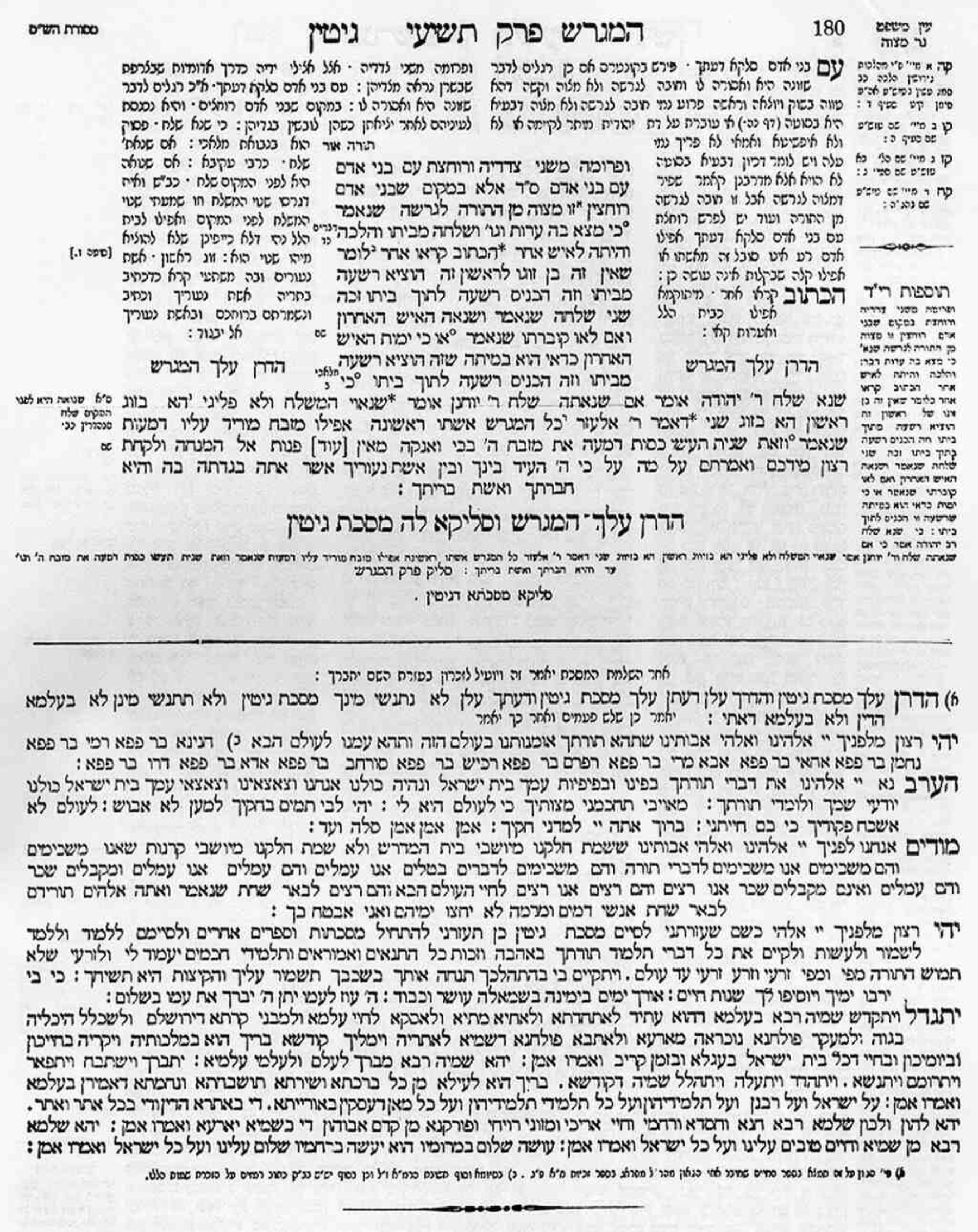
Gittin 90b: Talmud study for Daf Yomi
Study the Talmud for Daf Yomi with scanned pages, Hebrew text, English translations from Sefaria and AI-generated French translations.
Passage selection and English or AI-generated French translation are available where the scan has annotations. Daf Study is independent of Torah-Box and Sefaria.
Browse Gittin · גיטין · All tractatesGittin 90b text and translations
This page of Gittin includes the Aramaic text, an English translation and an AI-generated French translation, alongside the scan above.
גיטין צ׳ ב · Aramaic and Hebrew text
וּפְרוּמָה מִשְּׁנֵי צְדָדֶיהָ, וְרוֹחֶצֶת עִם בְּנֵי אָדָם.
״עִם בְּנֵי אָדָם״ סָלְקָא דַּעְתָּךְ?! אֶלָּא בִּמְקוֹם שֶׁבְּנֵי אָדָם רוֹחֲצִין.
זוֹ – מִצְוָה מִן הַתּוֹרָה לְגָרְשָׁהּ, שֶׁנֶּאֱמַר: ״כִּי מָצָא בָהּ עֶרְוַת וְגוֹ׳ וְשִׁלְּחָהּ מִבֵּיתוֹ״. ״וְהָלְכָה וְהָיְתָה לְאִישׁ אַחֵר״ – הַכָּתוּב קְרָאוֹ ״אַחֵר״, לוֹמַר: שֶׁאֵין זֶה בֶּן זוּגוֹ לָרִאשׁוֹן – זֶה הוֹצִיא רְשָׁעָה מִבֵּיתוֹ, וְזֶה הִכְנִיס רְשָׁעָה לְתוֹךְ בֵּיתוֹ.
זָכָה שֵׁנִי – שִׁלְּחָהּ, שֶׁנֶּאֱמַר: ״וּשְׂנֵאָהּ הָאִישׁ הָאַחֲרוֹן״. וְאִם לָאו – קוֹבַרְתּוֹ, שֶׁנֶּאֱמַר: ״אוֹ כִי יָמוּת הָאִישׁ הָאַחֲרוֹן״ – כְּדַאי הוּא בְּמִיתָה; שֶׁזֶּה הוֹצִיא רְשָׁעָה מִבֵּיתוֹ, וְזֶה הִכְנִיס רְשָׁעָה לְתוֹךְ בֵּיתוֹ.
״כִּי שָׂנֵא שַׁלַּח״ – רַבִּי יְהוּדָה אוֹמֵר: אִם שְׂנֵאתָהּ – שַׁלַּח. רַבִּי יוֹחָנָן אוֹמֵר: שָׂנאוּי הַמְשַׁלֵּחַ.
וְלָא פְּלִיגִי: הָא בְּזוּג רִאשׁוֹן, הָא בְּזוּג שֵׁנִי.
דְּאָמַר רַבִּי אֶלְעָזָר: כׇּל הַמְגָרֵשׁ אִשְׁתּוֹ רִאשׁוֹנָה – אֲפִילּוּ מִזְבֵּחַ מוֹרִיד עָלָיו דְּמָעוֹת, שֶׁנֶּאֱמַר: ״וְזֹאת שֵׁנִית תַּעֲשׂוּ, כַּסּוֹת דִּמְעָה אֶת מִזְבַּח ה׳, בְּכִי וַאֲנָקָה מֵאֵין עוֹד פְּנוֹת אֶל הַמִּנְחָה, וְלָקַחַת רָצוֹן מִיֶּדְכֶם. וַאֲמַרְתֶּם: עַל מָה? עַל כִּי ה׳ הֵעִיד בֵּינְךָ וּבֵין אֵשֶׁת נְעוּרֶיךָ, אֲשֶׁר אַתָּה בָּגַדְתָּה בָּהּ, וְהִיא חֲבֶרְתְּךָ וְאֵשֶׁת בְּרִיתֶךָ״.
הֲדַרַן עֲלָךְ הַמְגָרֵשׁ וּסְלִיקָא לַהּ מַסֶּכֶת גִּיטִּין
Gittin 90b · English translation
and with her garment open from both sides, and bathing with men, and ignores it.
The Gemara asks: Can it enter your mind that the baraita is referring to a wife who bathes with men? Even a man of the lowest moral character would not allow his wife to act in this manner. Rather, the baraita means that she bathes in a place where men often bathe.
The baraita continues: With regard to this kind of wife, it is a mitzva by Torah law to divorce her, as it is stated: “Because he has found some unseemly matter in her, and he writes her a scroll of severance, and gives it in her hand, and he sends her out of his house…And she goes and becomes another [aḥer] man’s wife” (Deuteronomy 24:1–2). The verse called the second husband aḥer, other, to state that this man is not a peer of the first husband. They are morally distinct, as that first husband evicted a wicked woman from his house and this second man introduced a wicked woman into his house.
If the second man merits, he will send her out, as it is stated in the following verse: “And the latter husband hates her…and he sends her out of his house” (Deuteronomy 24:3). And if not, she will bury him, as it is stated in the same verse: “Or if the latter husband dies.” It is appropriate for him to receive the punishment of death, as that first man evicted a wicked woman from his house and this second husband introduced a wicked woman into his house.
§ The prophet Malachi states in rebuke of those who divorce their wives: “For I hate sending away, says the Lord, the God of Israel” (Malachi 2:16). Rabbi Yehuda says: The verse means that if you hate your wife, send her away. Do not continue living with a woman whom you hate. Rabbi Yoḥanan says: The verse means that one who sends his wife away is hated by God.
And the Gemara explains that they do not disagree. This statement is with regard to a first marriage, i.e., one should tolerate his first wife and not divorce her, and that statement is with regard to a second marriage, in which case the husband should divorce his wife if he hates her.
As Rabbi Elazar says: With regard to anyone who divorces his first wife, even the altar sheds tears over him, as it is stated: “And this further you do: You cover the altar of the Lord with tears, with weeping, and with sighing, insomuch that He does not regard the offering anymore, nor does He receive it with goodwill from your hand. Yet you say: What for? Because the Lord has been witness between you and the wife of your youth, against whom you have dealt treacherously, though she is your companion, and the wife of your covenant” (Malachi 2:13–14). Clearly one should not divorce the wife of his youth, i.e., his first wife, as one who does so is hated by God for divorcing the woman to whom he was bound in companionship and covenant.
Gittin 90b · Traduction française (IA)
et son vêtement ouvert des deux côtés, et se baigne avec des hommes, et l'ignore.
La Guemara demande : Pourrais-tu penser que la baraïta parle d'une épouse qui se baigne avec des hommes ? Même un homme de la plus basse moralité ne permettrait pas à sa femme de s'engager dans une telle conduite. En réalité, la baraïta signifie qu'elle se baigne dans un lieu où les hommes se baignent souvent.
La baraïta continue : En ce qui concerne ce genre d'épouse, il est un mitsva selon la halakha de l'écarter, car il est dit : « Parce qu'il a trouvé quelque chose de déshonneste en elle, et il écrit un rouleau de séparation, et le lui donne, et il l'envoie hors de sa maison… Et elle sort et devient la femme d'un autre [aḥer] homme » (Deutéronome 24:1–2). La parole a appelé le second époux aḥer, autre, pour indiquer que cet homme n'est pas un égal du premier époux. Ils sont moralement distincts, car le premier époux a expulsé une femme mauvaise de sa maison et ce second homme a introduit une femme mauvaise dans sa maison.
Si le second homme mérite, il l'expulsera, comme il est dit dans la verset suivant : « Et le second époux la déteste… et il l'envoie hors de sa maison » (Deutéronome 24:3). Et si ce n'est pas le cas, elle le fera mourir, comme il est dit dans le même verset : « Ou si le second époux meurt ». Il est approprié qu'il reçoive la peine de mort, car le premier homme a expulsé une femme mauvaise de sa maison et ce second époux a introduit une femme mauvaise dans sa maison.
§ Le prophète Malachie déclare en réprobation de ceux qui divorcent leurs épouses : « Car je hais l'expulsion, dit l'Éternel, Dieu d'Israël » (Malachie 2:16). Rabbi Yéhuda dit : La parole signifie que si tu hais ta femme, expulse-la. Ne continue pas à vivre avec une femme que tu hais. Rabbi Yoḥanan dit : La parole signifie que celui qui expulse sa femme est haï par Dieu.
Et la Guemara explique qu'ils ne sont pas en désaccord. Cette déclaration est concernant un premier mariage, c'est-à-dire qu'on devrait tolérer sa première épouse et ne pas la divorcer, et cette déclaration est concernant un second mariage, dans lequel cas le mari devrait divorcer sa femme s'il la hait.
Comme Rabbi Eléazar dit : Concernant quiconque divorce sa première épouse, même l'autel pleure sur lui, comme il est dit : « Et cela tu fais encore : Tu recouvre l'autel de l'Éternel de larmes, de larmes et de soupirs, jusqu'à ce qu'Il ne regarde plus l'offrande, ni ne l'accepte avec bonheur de ta main. Cependant tu dis : Pourquoi ? Parce que l'Éternel a été témoin entre toi et la femme de ta jeunesse, contre laquelle tu as agi trahisement, bien qu'elle soit ta compagne et la femme de ton alliance » (Malachie 2:13–14). Il est clair qu'on ne devrait pas divorcer la femme de sa jeunesse, c'est-à-dire sa première épouse, car celui qui le fait est haï par Dieu pour divorcer la femme à laquelle il était lié par la compagne et l'alliance.
Traduction française générée par IA à partir de l’édition anglaise de Sefaria. Vérifie toujours un passage avec le texte source.
Text from Sefaria: William Davidson Edition - Vocalized Aramaic (CC BY NC); William Davidson Edition - English (CC BY NC).