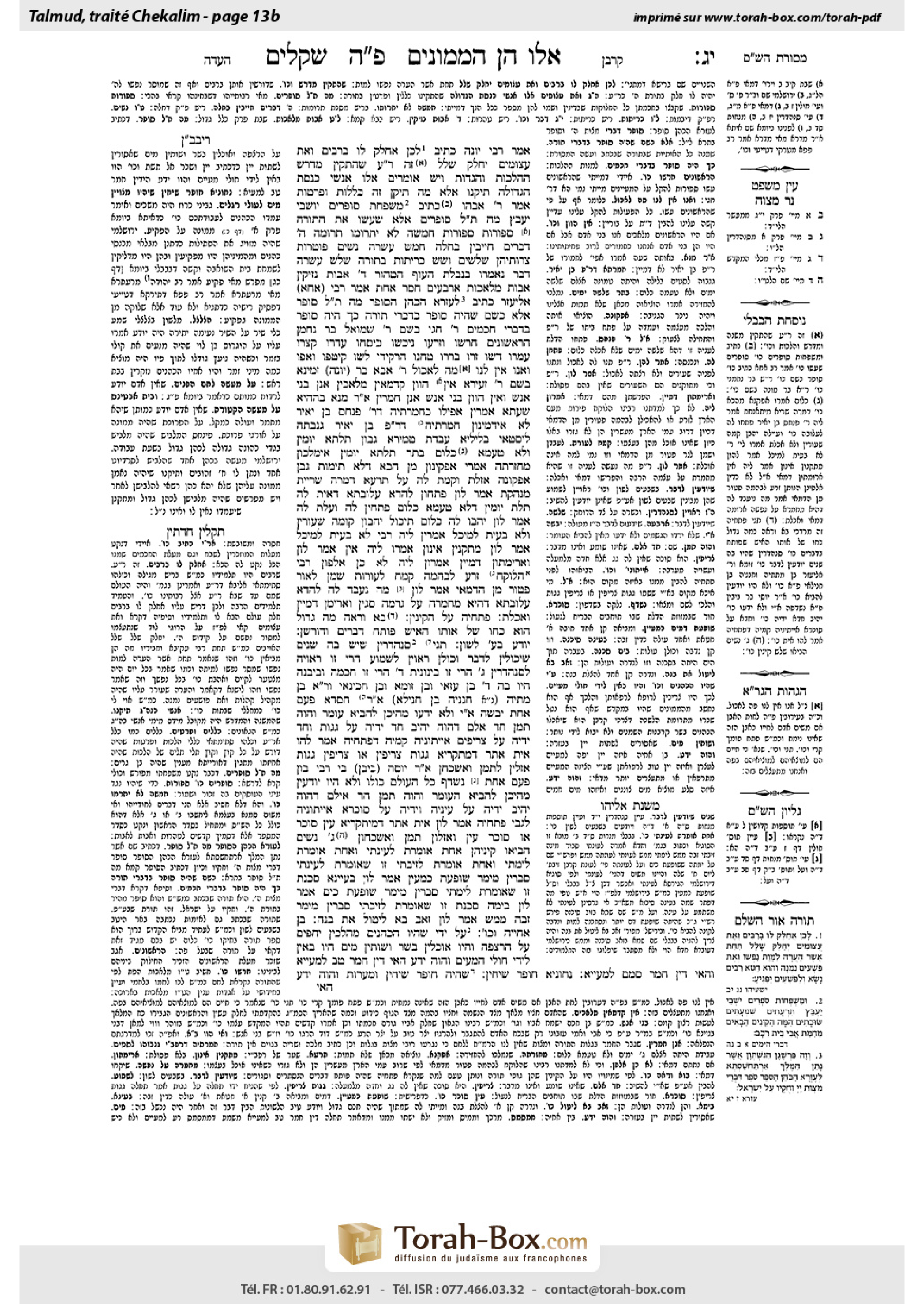
Shekalim 13b: Talmud study for Daf Yomi
Study the Talmud for Daf Yomi with scanned pages, Hebrew text, English translations from Sefaria and AI-generated French translations.
Passage selection and English or AI-generated French translation are available where the scan has annotations. Daf Study is independent of Torah-Box and Sefaria.
Browse Shekalim · שקלים · All tractatesShekalim 13b text and translations
This page of Shekalim includes the Aramaic text and an English translation, alongside the scan above.
שקלים י״ג ב · Aramaic and Hebrew text
אָמַר רִבִּי יוֹנָה. כְּתִיב לָכֵן אֲחַלֶּק לוֹ בָרַבִּים וְאֶת עֲצוּמִים יְחַלֵּק שָׁלָל. זֶה רִבִּי עֲקִיבָה שֶׁהִתְקִין מִדְרַשׁ הֲלָכוֹת וְהַגָּדוֹת. וְיֵשׁ אוֹמְרִים. אֵילּוּ אַנְשֵׁי כְנֶסֶת הַגְּדוֹלָה. מַה שֶׁהִתְקִין זֶה כְלָלִין וּפְרָטִין.
אָמַר רִבִּי אַבָּהוּ. כְּתִיב מִשְׁפְּחוֹת סוֹפְרִים יֹוֹשְׁבֵי יַעְבֵּץ. מַה תַלְמוּד לוֹמַר סוֹפְרִים. אֶלָּא שֶׁעָשׂוּ אֶת הַתּוֹרָה סְפוּרוֹת סְפוּרוֹת. חֲמִשָּׁה לֹא יִתְרוֹמוּ. חֲמִשָּׁה דְבָרִים חַיָיבִין בַּחַלָּה חֲמֵשׁ עֶשְׂרֵה נָשִׁים פּוֹטְרוֹת צָרוֹתֵיהֶן. שְׁלשִׁים וָשֵׁשׁ כְּרֵיתוֹת בַּתּוֹרָה. שְׁלשָׁה עָשָׂר דָּבָר בְּנִבְלַת הָעוֹף הַטָּהוֹר. אַרְבַּע אֲבוֹת נְזִיקִין. אֲבוֹת מְלָאכוֹת אַרְבָּעִים חָסֵר אֶחָת.
אָמַר רִבִּי אָחָא. כְּתִיב לְעֶזְרָא הַכֹּהֵן הַסּוֹפֵר. מַה תַלְמוּד לוֹמַר סוֹפֵר. אֶלָּא כְשֵׁם שֶׁהָיָה סוֹפֵר בְּדִבְרֵי תוֹרָה כָּךְ הָיָה סוֹפֵר בְּדִבְרֵי חֲכָמִים.
רִבִּי חַגַּיי בְשֵׁם רִבִּי שְׁמוּאֵל בַּר נַחָמָן. הָרִאשׁוֹנִים חָרְשׁוּ וְזָרְעוּ נִיכְּשׁוּ כִּיסְּחוּ עִידְּרוּ קָצְרוּ עִימִּירוּ דָּשׁוּ זָרוּ בָּרְרוּ טָחֲנוּ הִרְקִידוּ לָשׁוּ קִיטִּיפוּ וְאָפוּ. וְאָנוּ אֵין לָנוּ פֶּה לוֹכַל. רִבִּי אַבָּא בַּר זְמִינָא בְשֵׁם רִבִּי זְעוּרָא. אִין הֲווֹן קַדְמָאֵיי מַלְאָכִין אֲנָן בְּנֵי אֵינַשׁ. וְאִין הֲווֹן בְּנֵי אֵנַשׁ אֲנָן חֲמָרִין. אָמַר רִבִּי מָנָא. בְּהַהִיא שַׁעְתָּא אָמְרִין. אֲפִילוּ לַחֲמַרְתֵּיהּ דְּרִבִּי פִינְחָס בֶּן יָאִיר לָא אִידְמִינָן.
חֲמַרְתֵּיהּ דְּרִבִּי פִינְחָס בֶּן יָאִיר גְּנַבְתָהּ לִיסְטָאֵי בַלֵּילִיָּא. עֲבְדַּת טְמִירָא גַבּוֹן תְּלָתָא יוֹמִין וְלֹא טַעֲמָה כְלוּם. בְּתַר תְלָתָה יוֹמִין אִימְלָכוּן מַחְזַרְתָּהּ. אָמְרוּן. אַפְקוּנַהּ מִן הָכָא דְלָא תֵימוּת גָּבָּן. אַפְקוּנַהּ. אָזְלַת וְקָמַת לָהּ עַל תִּרְעָא דָמָרָהּ. שְׁרִיַית מְנַהֲקָה. אֲמַר לוֹן. פָּתְחוּן לָהָדָא עֲלִיבְתָא דְּאִית לָהּ תְּלָתָא יוֹמִין דְּלָא טַעֲמָה כְלוּם. פָּתְחוּן לָהּ וְעָלַת לָהּ. אֲמַר לוֹן. יְהָבוּ לָהּ תֵּיכוּל. יְהָבוּן קוֹמָהּ סְעָרִין וְלָא בָעַת מִיכוּל. אָמְרוּן לֵיהּ. רִבִּי. לָא בָעַת מִיכוּל. אֲמַר לוֹן. מְתַקְּנִין אִינּוּן. אָמְרוּ לֵיהּ. אִין. אֲמַר לוֹן. וָאַרִימִיתוּן דְּמַיִין. אָמְרוּן לֵיהּ. לֹא כֵן אַלְפָּן רִבִּי. הַלּוֹקֵחַ זֶרַע לִבְהֵמָה קֶמַח לְעוֹרוֹת שֶׁמֶן לָאוֹר פָּטוּר מִן הַדְּמַאי. אֲמַר לוֹן. מַה נַעֲבִיד לָהָדָא עֲלִיבְתָא דְּהִיא מַחְמְרָה עָל גַּרְמָהּ סַגִּין. וָאַרִימוֹן דְּמַיִין וְאָכְלָת.
פְּתַחְיָה עַל הַקִּינִּים. בּוֹא וּרְאֵה מַה גָדוֹל הוּא כוֹחוֹ שֶׁלְאוֹתוֹ הָאִישׁ שֶׁהוּא פּוֹתֵחַ דְבָרִים וְדוֹרְשָׁן וְיוֹדֵעַ בְּשִׁבְעִים לָשׁוֹן. תַּנֵּי. סַנְהֶדְרִין שֶׁיֵּשׁ בָּהּ שְׁנַיִם שֶׁיּוֹדְעִין לְדַבֵּר וְכוּלָּן רְאוּיִין לִשְׁמוֹעַ הֲרֵי זוֹ רְאוּיָה לְסַנְהֶדְרִין. שְׁלֹשָׁה הֲרֵי זוֹ בֵינוֹנִית. אַרְבָּעָה הֲרֵי זוֹ חֲכָמָה. וּבְיַבְנֶה הָיוּ בָהּ אַרְבָּעָה. בֶּן עַזַּאי וּבֶן זוֹמָא בֶּן חֲכִינַאִי וְרִבִּי אֶלְעָזָר בֶּן מַתְיָה.
אָמַר רַב חִסְדָּא. פַּעַם אַחַת יָבְשָׁה אֶרֶץ יִשְׂרָאֵל (וְקָלְטוּ לְגַגּוֹת צְרִיפִין.) [וְלֹא יָדְעוּ מֵהֵיכָן לְהָבִיא. וַהֲוָה תַמָּן חַד אִלֵּם דַּהֲוַה יְהִיב חַד יָדֵיהּ עַל גַּגּוֹת וְחָדָא יָדֵיהּ עַל צְרִיפָא. אַיְתוּנֵיהּ קַמֵּיהּ דִּפְתַחָא. אֲמַר לָהוּ. אִי אֲתַר דְּמִיתְקָרֵי גַגּוֹת צְרִיפִין אוֹ צְרִיפִין גַּגּוֹת. אָזְלִין לְתַּמָּן וְאַשְׁכְּחוֹן.] אָמַר רִבִּי יוֹסֵה בֵּירִבִּי בּוּן. פַּעַם אַחַת נִשְׂדַף כָּל הָעוֹלָם כּוּלּוֹ וְלֹא הָיוּ יוֹדְעִין מֵאֵיכָן לְהָבִיא. וַהֲוָוה תַמָּן חַד אִילֵּם וַהֲוָה יְהִיב יָדֵיהּ עַל עֵיְינֵיהּ וְיָדֵ͏יהּ עַל סוֹכְרָא. אַיְיתוּנֵיהּ גַּבֵּי פְתַחְיָה. אֲמַר לוֹן. אִית אֲתַר דְּמִיתְקָרֵי עֵין סוֹכֵר אוֹ סוֹכֵר עַיִן. וְאָזְלוֹן תַּמָּן וְאַשְׁכְּחוֹן.
שָׁלֹשׁ נָשִׁים הֵבִיאוּ קִינֵּיהֶן. אַחַת אוֹמֶרֶת. לְעֵינָתִי. וְְְאַחַת אוֹמֶרֶת לְיַמָּתִי. וְאַחַת אוֹמֶרֶת. לְזִיבָתִי. זוֹ שֶׁאָמְרָה. לְעֵינָתִי. סָבְרִין מֵימַר. שׁוֹפַעַת כְמַעֲיָין. אֲמַר לוֹן. בְּעֵיְינָהּ סְכָנָת. זוֹ שֶׁאָמְרָה. לְיַמָּתִי. סָבְרִין מֵימַר. שׁוֹפַעַת כַּיָּם. אֲמַר לוֹן. בְּיַמָּהּ סְכָנָת. זוֹ שֶׁאָמְרָה. לְזִיבָתִי. סָבְרִין מֵימַר. זָבָה מַמָּשׁ. אֲמַר לוֹן. זְאֵב בָּא לִיטּוֹל אֶת בְּנָהּ.
בֶּן אֲחִיָיה עַל חוֹלֵי מֵיעַיִם. עַל יְדֵי שֶׁהָיוּ הַכֹּהֲנִים מְהַלְּכִין יְחֵיפִים עַל הָרִצְפָּה וְהָיוּ אוֹכְלִין בָּשָׂר וְשׁוֹתִין מַיִם הָיוּ בָאִין לִידֵי חוֹלֵי מֵיעַיִם. וַהֲוָה יְדַע אֲהֵיי דֵין חֲמַר טַב לִמְעַיָיא. וְהֵיי דֵין חֲמַר סְמַס לִמְעַיָיא.
נְחוּנְיָיה חוֹפֵר שִׁיחִין. שֶׁהָיָה חוֹפֵר שִׁיחִין וּמְעָרוֹת. וַהֲוָה יְדַע הֵיי דֵין כֵּיף מְקוֹרֵר מַיָא וְהֵיי דֵין כֵּיף אִית בֵּיהּ שַׁרְבְּרוּבֵי וְעַד מַטֵּי הֵן שַׁרְבְּרוּבִיתֵיהּ מַטָיָיה. אָמַר רִבִּי אָחָא. וּמֵת [בְּנוֹ] בַצָּמָא. אָמַר רִבִּי חֲנִינָה. מָאן דְּאָמַר דְּרַחֲמָנָא וַותְרָן יִתְוַותְרוּן בְּנֵי מָעוֹי. אֶלָּא מַאֲרִיךְ רוּחֵיהּ וְגָבֵי דִידֵיהּ. אָמַר רִבִּי אָחָא כְּתִיב וּסְבִיבָיו נִשְׂעֲרָה מְאֹד. מְדַקְדֵּק עִמָּהֶן כְּחוּט הַשְּׂעָרָה. אָמַר רִבִּי יוֹסֵה. לֹא מִטַּעַם הַזֶּה. אֶלָּא מִן מַה דִכְתִיב וְנוֹרָא [הוּא] עַל כָּל סְבִיבָיו. מוֹרָאוֹ עַל הַקְּרוֹבִים יוֹתֵר מִן הָרְחוֹקִים.
Shekalim 13b · English translation
Rebbi Jonah said, it is written 53:12. The verse continues: For he offered himself to death and counted the sinners. This applies to R. Aqiba who was a martyr and organized religious tradition in a systematic corpus.: Therefore, I shall distribute to him in public, and with the powerful he shall have part in booty, that is Rebbi Aqiba who organized interpretation of Scripture, practice, and homiletics. But some say, this refers to the men of the Great Assembly, who organized principles and details.
Rebbi Abbahu said, it is written. 2:55. The families of counters, dwellers of Yabeṣ. Why does the verse say, counters? Because they formulated the teaching numbers, numbers. “Five shall not lift heave.1:1.” “Fifteen women free their co-wives.1:1.” “Thirty-six extirpations in the Torah.1:1.” “Thirteen matters about the carcass of a pure bird.1:1.” “Four main categories of torts.1:1.” “Thirty-nine categories of work.”
Rebbi Aḥa said, for Ezra the priest, the counter7:11.. But just as he was counting in the Torah so he was counting in the words of the Sages, to fix the text of Scriptures by noting the number of occurrences of certain forms, is attributed to Ezra in Megillah4:1 (47d l. 49), Babli Megillah3a. Similarly, the fixation of mishnaiot by numbers is attributed to him..
Rebbi Ḥaggai in the name of Rebbi Samuel bar Naḥman. The earlier generations ploughed, and sowed, and weeded, and trimmed, and hoed, cut, made sheaves, threshed, winnowed, milled, sifted, made dough, kneaded, and baked. But we do not even have a mouth to eat. 1:3, Notes 131–137 (ד). Rebbi Abba bar Zemina said in the name of Rebbi Ze`ira: If the earlier generations were angels, we are men; if they were men, we are donkeys. Rebbi Mana said, at that moment without suspecting that it was not tithed. they said, we are not even comparable to the she-ass of Rebbi Phineas ben Yair.
Robbers stole the she-ass of Rebbi Phineas ben Yair at night. She was hidden with them for three days during which she did not eat anything. After three days, they took counsel to return her. They said, remove her lest she die with us. They let her out; she returned to her master’s door and started braying. He said to them, open to that poor creature because for three days now she did not taste anything. They opened for her and she entered. He said to them, give her something to eat. They put oats before her but she did not eat. They said to him, rabbi, she does not want to eat. He asked them, did you put it in order? They said: Yes. He asked them, did you remove its demay? They said, did the rabbi not teach us: “He who buys seeds for animals, flour for tanning, oil for lighting, is free from demay”? He said to them, what can we do with this poor creature since she is very restrictive for herself? They removed the demay and she ate.
Petaḥiah of the nests. Come and see how great the power of this man was, for he “had original ideas and explained them, and he knew seventy languages2:2 and Neḥemiah7:7 in the list of returnees from Babylonia one finds Mordecai Bilshan, where the traditional interpretation is to consider the second name not as an independent (Babylonian) name but an epithet “linguist” of Mordecai. (In modern Hebrew, by mispronunciation “linguist” is balshan.) A linguist is a person who knows the languages of all of the 70 peoples enumerated in Gen. 7..” It was stated: A Synhedrion of which two know how to speak17b, the reference is not to the Synhedrion as Supreme Court but to any court of criminal jurisdiction. and all of them are able to hear is acceptable as Synhedrion. Three is average, four is wise, and in Jabneh there were four, Ben Azzai and Ben Zoma, Ben Ḥanikai and Rebbi Eleazar ben Matthew.
Rav Ḥisda said, once the Land of Israel was dry (and they collected from Gaggot-Ṣerifin10:2. Ṣerifin probably is Serafand in the plain NE of Jerusalem..) [and they did not know from where to bring which must be brought from the produce of the Land. Babli Menaḥot64b.. There was there a mute person who put one hand on roofs and another on a shed. They brought him before Petaḥiah, who told them, is there a place called Gaggot-Ṣerifin or Ṣerifin-Gaggot? They went there and found.] Rebbi Yose ben Rebbi Abun said, once the entire world was burned and they did not know from where to bring. There was there a mute person who put one of his hands over his eyes and one hand on a door lock. They brought him before Petaḥiah, who told them, is there a place called `Ein-Sokher or Sokher-Ayin. They went there and found.
Three women brought their nests, one bird is to be an elevation offering and the other a purification offering. As thanksgiving offerings both birds are elevation offerings.. One said, לְעֵינָתִי; and one said, לְיַמָּתִי, and one said, לְזִיבָתִי. About the one who said לְעֵינָתִי, they wanted to say, her menstrual flow is like a well. He said, she was dangerously sick in her eye. About the one who said לְיַמָּתִי, they wanted to say, her menstrual flow is like the sea. He said, she was in danger on the sea. About the one who said לְזִיבָתִי, they wanted to say, she was really a zavah it is asserted here that after the alef became silent it also could not carry a separate vowel. Therefore זְאֵב “wolf” became זֵאב and since the ־ֵ was pronounced as η, it sounded like זִיב. More than 70 languages, the administrator of nests had to know all local dialects.. He told them, a wolf came to snatch her son.
“Ben Aḥiyyah for indigestion.” Since the Cohanim were walking barefoot on the floor, and were eating meat, and drinking water, they got indigestion. He knew which wine was good for the intestines and which was noxious for intestines.
“Onias the digger of ditches.” He was digging ditches and caves for pilgrims to the Temple. and knew which rock cools the water and which rock was dry and how far its dryness extended. Rebbi Aḥa said, but (he) [his son] died of thirst. 3:9 (Note 124, צ). Rebbi Ḥanina said, anybody who says that the All-Merciful is indulgent, his intestines shall dissolve themselves; for He is forbearing and then collects His due. Rebbi Aḥa said, it is written 50:3., His surroundings are very hairy. He is exact with them like a hair’s width. Rebbi Yose said, not because of this reason, but because what is written 89:8., He is awesome on His surroundings, His fear on those near Him is greater than those far away.
Text from Sefaria: The Jerusalem Talmud, edition by Heinrich W. Guggenheimer. Berlin, De Gruyter, 1999-2015 (CC BY); The Jerusalem Talmud, translation and commentary by Heinrich W. Guggenheimer. Berlin, De Gruyter, 1999-2015 (CC BY).