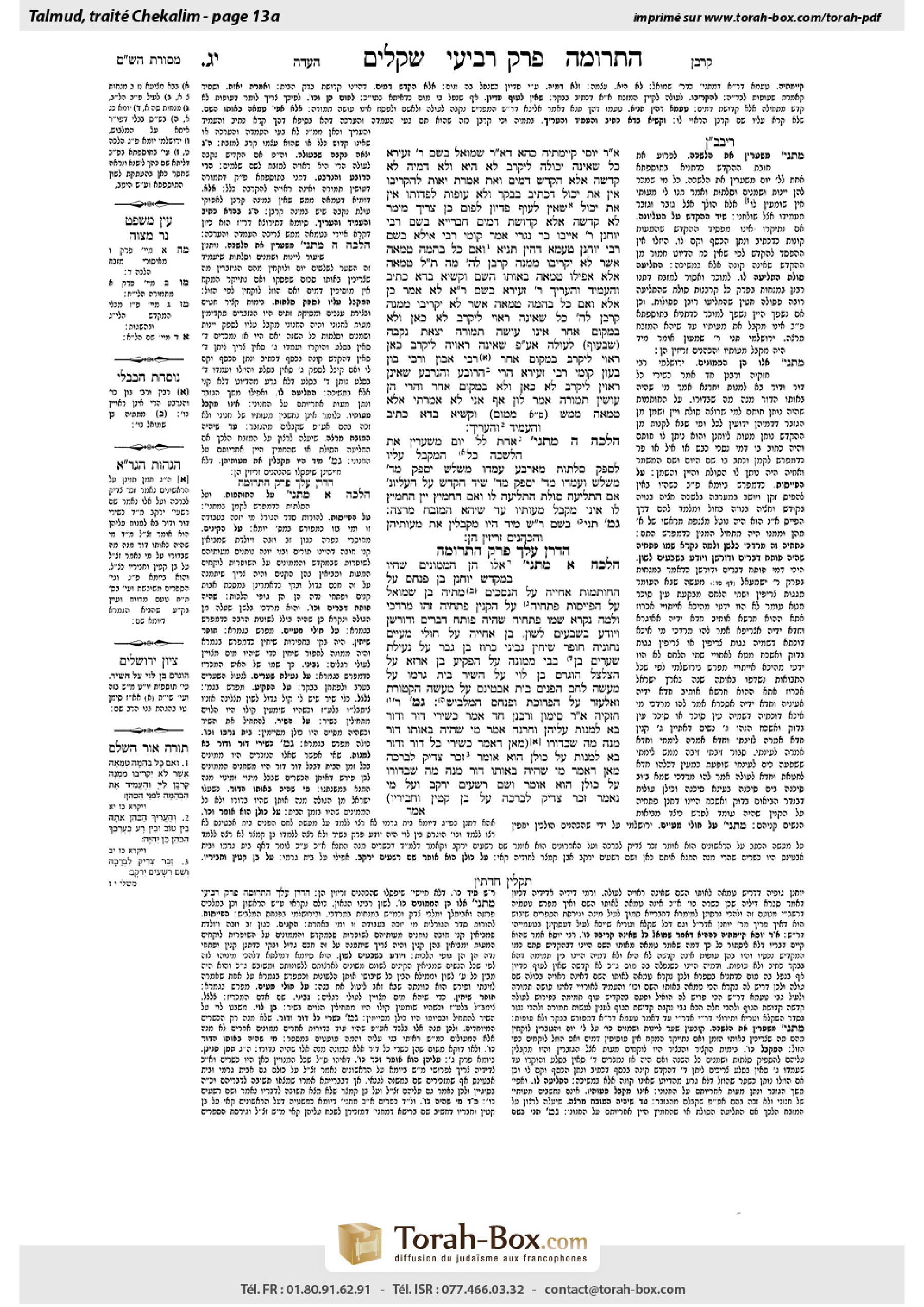
Shekalim 13a: Talmud study for Daf Yomi
Study the Talmud for Daf Yomi with scanned pages, Hebrew text, English translations from Sefaria and AI-generated French translations.
Passage selection and English or AI-generated French translation are available where the scan has annotations. Daf Study is independent of Torah-Box and Sefaria.
Browse Shekalim · שקלים · All tractatesShekalim 13a text and translations
This page of Shekalim includes the Aramaic text and an English translation, alongside the scan above.
שקלים י״ג א · Aramaic and Hebrew text
רִבִּי אַבָּהוּ בְשֵׁם רִבִּי שִׁמְעוֹן בֶּן לָקִישׁ. טַעֲמֵיהּ דְּרִבִּי לָעְזָר. דַּבֵּר אֶל אַהֲרֹן וְאֶל בָּנָיו וגו׳. אֲשֶׁר יַקְרִיב לַיי לְעוֹלָה. הַכֹּל קָרֵב עוֹלָה. לִרְצוֹנְכֶם תָּמִים זָכָר. יָכוֹל אֲפִילוּ עוֹפוֹת. תַּלָמוּד לוֹמַר בַּבָּקָר. לֹא עוֹפוֹת. רִבִּי יִרְמְיָה וְרִבִּי בּוּן בַּר חִיָיה הֲווֹן יָתְבִין וְאָמְרִין. תַּמָּן אָמַר רִבִּי יוֹחָנָן. טַעֲמֵיהּ דְּרִבִּי שִׁמְעוֹן. שֶׁכֵּן נְקֵיבָה שֶׁבָּעוֹף כְשֵׁירָה לָבוֹא עוֹלָה. וְהָכָא הוּא אָמַר הָכֵן. אָמַר רִבִּי יוֹסֵה. קִיַימְתִּיהָ כָּהִיא דְאָמַר רִבִּי שְׁמוּאֵל בְּשֵׁם רִבִּי זְעוּרָה. כָּל שֶׁאֵינָהּ יְכוֹלָה לִקָּרֵב לֹא הִיא וְלֹא דָמֶיהָ לֹא קָדְשָׁה אֶלָּא הֶקְדֵּשׁ דָּמִים. וְאָמַרְתָּ יְאוּת. לְהַקְרִיבוֹ אֵין אַתְּ יָכוֹל. דִּכְתִיב בַּבָּקָר. לֹא עוּפוֹת. לִפְדוֹתוֹ אֵין אַתְּ יָכוֹל. שֶׁאֵין לָעוֹף פִּדְיוֹן. לְפוּם כֵּן צָרַךְ מֵימַר. לֹא קָדְשָׁה אֶלָּא קְדוּשַׁת דָּמִים.
חֲבֵרַיָיא בְשֵׁם רִבִּי יוֹחָנָן. רִבִּי אַיְיבוֹ בַּר נַגָּרִי אָמַר קוֹמֵי רִבִּי אִילָא בְשֵׁם רִבִּי יוֹחָנָן. טַעֲמָא דְהֵין תַּנָּיָיא. וְאִם כָּל בְּהֵמָה טְמֵיאָה אֲשֶׁר לֹא יַקְרִיבוּ מִמֶּנָּה קָרְבָּן לַיי. מַה תַלְמוּד לוֹמַר טְמֵאָה. אֶלָּא אֲפִילוּ טְמֵיאָה בְאוֹתוֹ הַשֵּׁם. וְקַשְׁיָא. בְּדָא כְתִיב וְהֶעֱמִיד וְהֶעֱרִיךְ. רִבִּי זְעוּרָא בְשֵׁם רִבִּי אֶלְעָזָר. לֹא אָמַר כֵן אֶלָּא וְאִם כָּל בְּהֵמָה טְמֵאָה אֲשֶׁר לֹא יַקְרִיבוּ מִמֶּנָּה קָרְבָּן לַיי. כָּל שֶׁאֵינָהּ רְאוּיָה לִיקָּרֵב לֹא כָאן וְלֹא בְמָקוֹם אַחֵר אֵינָהּ עוֹשָׂה תְמוּרָה. יָצָאת נְקֵיבָה שֶׁבָּעוֹף שֶׁאַף עַל פִּי שֶׁאֵינָהּ רְאוּיָה לִיקָּרֵב כָּאן רְאוּיָה לִיקָּרֵב בְּמָקוֹם אַחֵר. רִבִּי בּוּן וְרִבִּי בּוּן בְּעוֹן קוֹמֵי רִבִּי זְעוּרָה. הֲרֵי הַרוֹבַע וְהַנִּרְבַּע הֲרֵי אֵינָן רְאוּיִין לִיקָּרֵב לֹא כָאן וְלֹא בְמָקוֹם אַחֵר וַהֲרֵי הֵן עוֹשִׂין תְּמוּרָה. אָמַר לוֹן. אַף אֲנִי לֹא אָמַרְתִּי אֶלָּא טְמֵאָה מַמָּשׁ. וְקַשְׁיָא. בְּדָא כְתִיב וְהֶעֱמִיד וְהֶעֱרִיךְ.
משנה: אַחַת לִשְׁלֹשִׁים יוֹם מְשַׁעֲרִין אֶת הַלִּשְׁכָּה. כָּל הַמְקַבֵּל עָלָיו לְסַפֵּק סְלָתוֹת מֵאַרְבַּע עָמְדוּ מִשָּׁלֹשׁ יְסַפֵּק מֵאַרְבַּע. מִשָּׁלֹשׁ וְעָמְדוּ מֵאַרְבַּע יְסַפֵּק מֵאַרְבַּע שֶׁיַּד הֶקְדֵּשׁ עַל הָעֶלְיוֹנָה. אִם הִתְלִיעָה סוֹלֶת הִתְלִיעָה לוֹ וְאִם הֶחְמִיץ יַיִן הֶחְמִיץ לוֹ. אֵינוֹ מְקַבֵּל אֶת מְעוֹתָיו עַד שֶׁיְּהֵא הַמִּזְבֵּחַ מְרַצֶּה:
הלכה: תַּנֵּי בְשֵׁם רִבִּי שִׁמְעוֹן. מִיַּד הָיוּ מְקַבְּלִין אֶת מָעוֹתָיו. וְהַכֹּהֲנִים זְרִיזִין הֵן.
משנה: אֵילּוּ הֵן הַמְמוּנִּין שֶׁהָיוּ בַּמִּקְדָּשׁ. יוֹחָנָן בֶּן פִּינְחָס עַל הַחוֹתָמוֹת. אֲחִיָיה עַל הַנְּסָכִים. מַתְיָה בֶּן שְׁמוּאֵל עַל הַפְּיָיסוֹת. פְּתַחְיָה עַל הַקִּינִּים פְּתַחְיָה זֶה מָרְדְּכָי. וְלָמָּה נִקְרָא שְׁמוֹ פְּתַחְיָה שֶׁהָיָה פּוֹתֵחַ בִּדְבָרִים וְדוֹרְשָׁן וְיוֹדֵעַ בְּשִבְעִים לָשׁוֹן. בֶּן אֲחִיָיה עַל חוֹלֵי מֵעַיִם. נְחוּנְיָיה חוֹפֵר שִׁיחִין. גְּבִינֵי כָרוֹז. בֶּן גֶּבֶר עַל נְעִילַת שְׁעָרִים. בֶּן בֵּבָי מְמוּנֶּה עַל הַפָּקִיעַ .בֶּן אַרְזָה עַל הַצִּלְצָל. הוּגְדַּס בֶּן לֵוִי עַל הַשִּׁיר. בֵּית גַּרְמוּ עַל מַעֲשֵׂה לֶחֶם הַפָּנִים. בֵּית אַבְטִינָס עַל מַעֲשֵׂה הַקְּטֹרֶת. אֶלְעָזָר עַל הפָּרוֹכוֹת וּפִנְחָס הַמַּלְבִּישׁ.
הלכה: אֵילּוּ הֵן הַמְמוּנִּין שֶׁהָיוּ בַּמִּקְדָּשׁ כול׳. רִבִּי חִזְקִיָּה אָמַר. רִבִּי סִימוֹן וְרַבָּנִן. חַד אָמַר. כְּשֵׁירֵי דּוֹר וָדוֹר בָּא לִמְנוֹת [עֲלֵיהֶן]. וְחוֹרָנָה אָמַר. מִי שֶׁהָיָה בְאוֹתוֹ הַדּוֹר מָנָה מַה שֶׁבְּדוֹרוֹ. מָאן דְּאָמַר. כְּשֵׁירֵי כָּל דּוֹר וָדוֹר בָּא לִמְנוֹת. עַל כּוּלָּן הוּא אוֹמֵר. זֵיכֶר צַדִּיק לִבְרָכָה. מָאן דְּאָמַר. מִי שֶׁהָיָה בְאוֹתוֹ הַדּוֹר מָנָה מַה שֶׁבְּדוֹרוֹ. עַל כּוּלָּן הוּא אוֹמֵר. וְשֵׁם רְשָׁעִים יִרְקָב. וְעַל מִי נֶאֱמַר זֵיכֶר צַדִּיק לִבְרָכָה. עַל בֶּן קָטִין וַחֲבֵירָיו.
אָמַר רִבִּי יוֹנָה. כְּתִיב לָכֵן אֲחַלֶּק לוֹ בָרַבִּים וְאֶת עֲצוּמִים יְחַלֵּק שָׁלָל. זֶה רִבִּי עֲקִיבָה שֶׁהִתְקִין מִדְרַשׁ הֲלָכוֹת וְהַגָּדוֹת. וְיֵשׁ אוֹמְרִים. אֵילּוּ אַנְשֵׁי כְנֶסֶת הַגְּדוֹלָה. מַה שֶׁהִתְקִין זֶה כְלָלִין וּפְרָטִין.
Shekalim 13a · English translation
Rebbi Abbahu in the name of Rebbi Simeon ben Laqish. The reason of Rebbi Eleazar: 22:18–19.Speak to Aaron and to his sons, etc., who would sacrifice to the Eternal as elevation sacrifice; everything may be brought as elevation sacrifice, by your volition, unblemished, male. I could think that this includes birds. The verse says, in cattle, not birds7(20), Wayyiqra I Parshata6(3)]. In addition, since Lev. 1:14–17 is addressed to the individual, but Lev. 22:18–19 to the public, it is inferred that birds as elevation offerings are possible only to the individual; the public is restricted to four-legged animals. Since a gift to the Temple is a gift to the public, birds given to the Temple as part of an estate may not be sacrificed.. Rebbi Jeremiah and Rebbi Abun bar Ḥiyya were sitting and saying, there said Rebbi Joḥanan said, the reason of Rebbi Simeon is that we find that a female is qualified as elevation offering of a bird 1:3,10, but not for birds, 1:14 (Sifra Wayyiqra I Parshata6(2,5). Argument missing in B.. And here, he says so? Rebbi Yose said, I confirmed it following what Rebbi Samuel said in the name of Rebbi Ze`ira: Anything which could be sacrificed neither itself nor its money’s worth is sanctified only as money’s worth. And you are saying, this is correct. You cannot sacrifice it, for it is written in cattle. You cannot redeem it since birds cannot be redeemed.12:1. Not only birds, but also dedicated wine and flour cannot be redeemed since the rules of redemption in Lev. 27 are formulated referring to four-legged animals only.
The colleagues in the name of Rebbi Joḥanan; Rebbi Ayvo bar Nagari said before Rebbi Ila in the name of Rebbi Joḥanan. The reason of this Tanna: But if any impure animal from which no sacrifice to the Eternal may be offered 27:11.. Why does the verse say, impure? But even impure for this denomination. This is difficult; about this is written, he shall stand, he shall appraise 27:12.? Rebbi Ze`ira in the name of Rebbi Eleazar did not say so but, but if any impure animal from which no sacrifice to the Eternal may be offered; anything which could be sacrificed neither here nor at any other place does not effect substitution. This excludes the female of a bird which even though it cannot be sacrificed here is fit to be sacrificed at another place. Rebbi Abbin and Rebbi Abun asked before Rebbi Ze`ira: Are there not the animals used for active or passive bestiality, which can be sacrificed neither here nor at any other place, and they effect substitution1:12 states that dedicating such an animal, while sinful, is equivalent to dedicating an unblemished animal which after dedication becomes blemished; all rules of me`ilah do apply and it may be redeemed only after it develops a permanent bodily defect.? He said to them, also I did speak only about really impure ones. This is difficult; about this is written, he shall stand, he shall appraise 27:12.?
MISHNAH: Once every thirty days one sets the prices for the office. Anyone who accepts to supply fine flour at a rate of four of flour for one tetradrachma., if the going rate goes up to three he has to supply at the rate of four; if at the rate of three and the going rate went down to four he has to supply at four since the hand of the sanctuary is privileged. If the flour turned out worm-infected, it was infected in his possession; and if the wine turned into vinegar it was vinegar in his possession. He is not paid until the altar did atone.
HALAKHAH: It was stated in the name of Rebbi Simeon: he receives his money immediately, for the priests are quick.
MISHNAH: These are the appointees who were in the Sanctuary: Joḥanan ben Phineas of the seals. 15:1–12). The “seal” (or ”signature”) is a ticket stamped with one of different stamps. The worshipper buys the ticket from the keeper of seals and delivers it to the keeper of libations who then gives him the correct amount to give to the officiating priests., Aḥiyya of the libations, Mathew ben Samuel of the lotteries Chapter 2., Petaḥiah of the nests. Petaḥiah is Mordecai. Why was he called Petaḥiah? For he had original ideas and explained them, and he knew seventy languages2:2 and Neḥemiah7:7 in the list of returnees from Babylonia one finds Mordecai Bilshan, where the traditional interpretation is to consider the second name not as an independent (Babylonian) name but an epithet “linguist” of Mordecai. (In modern Hebrew, by mispronunciation “linguist” is balshan.) A linguist is a person who knows the languages of all of the 70 peoples enumerated in Gen. 7..
Ben Aḥiyyah for indigestion; Onias the digger of ditches, Gabinius the herald, Ben Gever for locking the doors, Ben Bevai for the oakum. Ben Arza for the cymbal, Hugdas ben Levi for the song. The family Garmu for the shew-bread, the family Eutinos for producing the incense. Eleazar for the gobelins, and Phineas the clothier.
HALAKHAH: (Notes 238,239), where all textual variants are noted.“These are the appointees who were in the Sanctuary.” Rebbi Ḥizqiah said, Rebbi Simon and the rabbis. One said, he comes to enumerate the qualified ones of every generation. But the other said, he who was in a generation enumerated what was in his generation. He who said, he comes to enumerate the qualified ones of every generation, about all of them he says, the remembrance of the just is for blessing. 10:3.. He who said, he who was in a generation enumerated what was in his generation, about all of them he says, but the name of evildoers shall rot. About whom was said, the remembrance of the just is for blessing? About Ben Qaṭin3:11. and his kind.
Rebbi Jonah said, it is written 53:12. The verse continues: For he offered himself to death and counted the sinners. This applies to R. Aqiba who was a martyr and organized religious tradition in a systematic corpus.: Therefore, I shall distribute to him in public, and with the powerful he shall have part in booty, that is Rebbi Aqiba who organized interpretation of Scripture, practice, and homiletics. But some say, this refers to the men of the Great Assembly, who organized principles and details.
Text from Sefaria: The Jerusalem Talmud, edition by Heinrich W. Guggenheimer. Berlin, De Gruyter, 1999-2015 (CC BY); The Jerusalem Talmud, translation and commentary by Heinrich W. Guggenheimer. Berlin, De Gruyter, 1999-2015 (CC BY).