Shekalim 14b: Talmud study for Daf Yomi
Study the Talmud for Daf Yomi with scanned pages, Hebrew text, English translations from Sefaria and AI-generated French translations.
Passage selection and English or AI-generated French translation are available where the scan has annotations. Daf Study is independent of Torah-Box and Sefaria.
Browse Shekalim · שקלים · All tractatesShekalim 14b text and translations
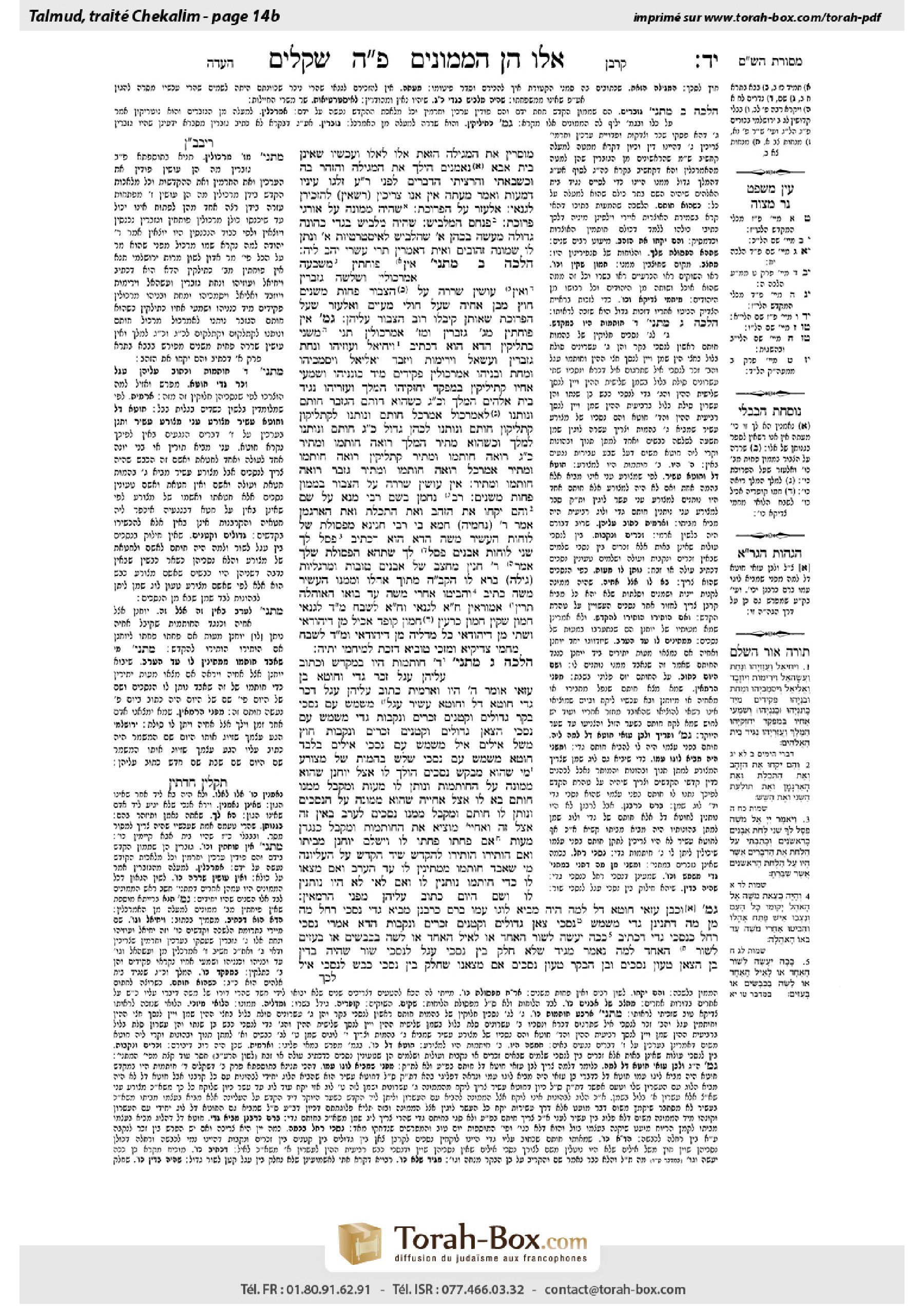
This page of Shekalim includes the Aramaic text and an English translation, alongside the scan above.
שקלים י״ד ב · Aramaic and Hebrew text
אָמַר רִבִּי יוֹסֵה. מָצָאתִי תִינּוֹק אֶחָד מִשֶּׁלְּבֵּית אַבְטִינָס. אָמַרְתִּי לוֹ. בְּנִי. מֵאֵי זֶה מִשְׁפָּחָה אַתְּ. אָמַר לִי. מִמִּשְׁפַּחַת פְּלוֹנִית. אָמַרְתִּי לוֹ. בְּנִי. אֲבוֹתֶיךְ לְפִי שֶׁנִּתְכַּוְונוּ לְרַבּוֹת כְּבוֹדָן וּלְמָעֵט כְּבוֹד שָׁמַיִם לְפִיכָךְ כְּבוֹדָם נִתְמָעֵט וּכְבוֹד שָׁמַיִם נִתְרַבָּה. אָמַר רִבִּי עֲקִיבָה. שָׂח לִי שִׁמְעוֹן בֶּן לוּגה. מְלַקֵּט הָיִיתִי עֲשָׂבִים אֲנִי וְתִינּוֹק אֶחָד מִשֶּׁלְּבֵּית אַבְטִינָס. וְרָאִיתִי אוֹתוֹ שֶׁבָּכָה וְרָאִיתִי אוֹתוֹ שֶׁשָּׂחַק. אָמַרְתִּי לוֹ. בְּנִי. לָמָּה בָכִיתָה. אָמַר לִי. עַל כְּבוֹד בֵּית אַבָּא שֶׁנִּתְמָעֵט. וְלָמָּה שָׂחַקְתָּה. אָמַר לִי. עַל הַכָּבוֹד הַמְתוּקָּן לַצַּדִּיקִים לְעָתִיד לְבוֹא. [וּמָה רָאִיתָ.] הֲרֵי מַעֲלֶה עָשָׁן לְנֶגְדִּי. נוֹמֵיתִי לוֹ. בְּנִי. הַרְאֵהוּ לִי. אָמַר לִי. רִבִּי. מְסוֹרֶת בְּיָדִי מֵאֲבוֹתַיי שֶׁלֹּא לְהַרְאוֹתוֹ לְבִירְיָיה. אָמַר רִבִּי יוֹחָנָן בֶּן נוּרִי. פָּגַע בִּי זָקֵן [אֶחָד] מִשֶּׁלְבֵּית אַבְטִינָס [וּמְגִילַּת סַמָּנִים בְיָדוֹ.] אָמַר לִי. רִבִּי. לְשֶׁעָבַר הָיוּ בֵית אַבָּא צְנוּעִין וְהָיוּ מוֹסְרִין אֶת הַמְגִילָּה הַזֹּאת אֵילּוּ לָאֵילּוּ. וְעַכְשָׁיו שֶׁאֵינָן נֶאֱמָנִין הֵילָךְ אֶת הַמְגִילָּה והִיזָּהֵר בָּהּ. וּכְשֶׁבָּאתִי וְהִרְצֵיתִי הַדְּבָרִים לִפְנֵי רִבִּי עֲקִיבָה זָלְגוּ עֵינָיו דְּמָעוֹת וְאָמַר. מֵעַתָּה אֵין אָנוּ צְרִיכִין לְהַזְכִּירָן לִגְנַאי.
אֶלְעָזָר עַל הַפָּרוֹכוֹת. שֶׁהָיָה מְמוּנֶּה עַל אוֹרְגֵי פְרָכוֹת. פִּנְחָס הַמַּלְבִּישׁ. שֶׁהָיָה מַלְבִּישׁ בִּגְדֵי כְהוּנָה גְּדוֹלָה. מַעֲשֶׂה בְכֹהֵן אֶחָד שֶׁהִלְבִּישׁ לְאִיסְטְרַטְיוֹט אֶחָד וְנָתָן לוֹ שְׁמוֹנָה זְהוּבִין. וְאִית דְּאָמְרִין. תְּרֵי עָשָׂר יְהִב לֵיהּ.
משנה: אֵין פּוֹחֲתִין מִשִּׁבְעָה מַרְכּוֹלִין וּשְׁלשָׁה גִּיזְבָּרִין. וְאֵין עוֹשִׂין שְׂרָרָה עַל הַצִּבּוּר בְּמָמוֹן פָּחוּת מִשְּׁנַיִם. חוּץ מִבֶּן אֲחִיָּה שֶׁעַל חוֹלֵי מֵעַיִם וְאֶלְעָזָר שֶׁעַל הַפָּרוֹכוֹת שֶׁאוֹתָן קִיבְּלוּ הַצִּיבּוּר עֲלֵיהֶן:
הלכה: אֵין פּוֹחֲתִין מִשְּׁלֹשָׁה גִּזְבָּרִין וּמִשִּׁבְעָה מַרְכּוֹלִין. תַּנֵּי. מִשְּׁנֵי כַּתֹלִיקִין. הָדָא הִיא דִכְתִיב וִיחִיאֵל וְעוזִיָּהו וּמַחַת גִּזְבְּרִין. וַעֲשָׂאֵל וִירִימוֹת וְיוֹזָבָד וֶאֱלִיאֵל וּסְמַכְיָהוּ וּמַחַת וּבְנָיָהוּ מַרְכּוֹלִין. פְּקִידִים מִיַּד כָּונַנְיָהוּ וְשִׁמְעִי אָחִיו קַתיֹלִיקִין. בְּמִפְקַד יְחִזְקִיָּהוּ הַמֶּלֶךְ וַעֲזַרְיָהוּ נְגִיד בֵּית הָאֱלֹהִים. הַמֶּלֶךְ וְכֹהֵן גָּדוֹל.
כְּשֶׁהוּא חוֹתֵם הַגִּיזְבָּר חוֹתֵם וְנוֹתְנוֹ לָאֲמַרְכָּל. מַרְכָּל חוֹתֵם וְנוֹתְנוֹ לְקַתֹילִיקוֹס. קַתֹילִיקוֹן חוֹתֵם וְנוֹתְנוֹ לְכֹהֵן גָּדוֹל. כֹּהֵן גָּדוֹל חוֹתֵם וְנוֹתְנוֹ לַמֶּלֶךְ. וּכְשֶׁהוּא מַתִּיר הַמֶּלֶךְ רוֹאֶה חוֹתָמוֹ וּמַתִּיר. כֹּהֵן גָּדוֹל רוֹאֶה חוֹתָמוֹ וּמַתִּיר. קַתֹילִיקָיס רוֹאֶה חוֹתָמוֹ וּמַתִּיר. מַרְכָּל רוֹאֶה חוֹתָמוֹ וּמַתִּיר. גִּיזְבָּר רוֹאֶה חוֹתָמוֹ וּמַתִּיר.
אֵין עוֹשִׂין שְׂרָרָה עַל הַצִּיבּוּר בְּמָמוֹן פָּחוּת מִשְּׁנַיִם. רִבִּי נַחְמָן בְשֵׁם רִבִּי מָנָא. עַל שֵׁם וְהֵם יִקְחוּ אֶת הַזָּהָב וְאֶת הַתְּכֵלֶת וְאֶת הָאַרְגָּמָן.
אָמַר רִבִּי חָמָא בֵּירִבִּי חֲנִינָה. מִפְּסוֹלֶת הַלּוּחוֹת הֶעֱשִׁיר מֹשֶׁה. הָדָא הוּא דִכְתִיב פְּסָל לְךָ שְׁנֵי לוּחוֹת אֲבָנִים. פְּסָל לְךָ שֶׁתְּהֵא הַפְּסוֹלֶת שֶׁלָּךָ. אָמַר רִבִּי חָנִין. מַחְצֵב שֶׁלְאֲבָנִים טוֹבוֹת וּמַרְגָּלִיוֹת בָּרָא לוֹ הַקָּדוֹשּׁ בָּרוּךְ הוּא מִתּוֹךְ אֳהָלוֹ וּמִמֶּנּוּ הֶעֱשִׁיר מֹשֶׁה.
כְּתִיב וְהִבִּיטוּ אַחֲרֵי מֹשֶׁה עַד בּוֹאוֹ הָאֹהֱלָה. תְּרֵין אֲמוֹרִין. חַד אָמַר לִגְנַאי. וְחַד אָמַר לִשְׁבָח. מָאן דָּאָמַר לִגְנַאי. חֲמוּן שֻׁקִּין חֲמוּן כָּרְעִין חֲמוּן קּוּפְדָּן. אֲכִיל מִן דִּיהוּדָאֵי וְשָׁתִי מִן דִּיהוּדָאֵי. כָּל מִדְּלֵיהּ מִן דִּיהוּדָאֵי. וּמָאן דָּאָמַר לִשְׁבָח. מֵחְמֵי צַדִּיקַיָּא וּמַזְכִּי [טוֹבִיָּא דִּזְכָת לְמֵחְמֵי יָתֵיהּ.]
משנה: אַרְבָּעָה חוֹתָמוֹת הָיוּ בַּמִּקְדָּשׁ וְכָתוּב עֲלֵיהֶן עֵגֶל זָכָר גְּדִי וְחוֹטֵא. בֶּן עַזַּאי אוֹמֵר חֲמִשָּׁה הָיוּ וַאֲרָמִית כָּתוּב עֲלֵיהֶן עֵגֶל דָכָר גְּדִי חוֹטֵא דַּל וְחוֹטֵא עָשִׁיר. עֵגֶל מְשַׁמֵּשׁ עִם נִסְכֵּי בָּקָר גְּדוֹלִים וּקְטַנִּים זְכָרִים וּנְקֵבוֹת. גְּדִי מְשַׁמֵּשׁ עִם נִיסְכֵּי צֹאן גְּדוֹלִים וּקְטַנִּים זְכָרִים וּנְקֵיבוֹת חוּץ מִשֶּׁל אֵילִים. אַיִל מְשַׁמֵּשׁ עִם נִיסְכֵּי אֵילִים בִּלְבָד. חוֹטֵא מְשַׁמֵּשׁ עִם נִיסְכֵּי שָׁלֹשׁ בְּהֵמוֹת שֶׁל מְצוֹרָע: מִי שֶׁהוּא מְבַקֵּשׁ נְסָכִים הוֹלֵךְ לוֹ אֵצֶל יוֹחָנָן שֶׁהוּא מְמוּנֶּה עַל הַחוֹתָמוֹת נוֹתֵן לוֹ מָעוֹת וּמְקַבֵּל מִמֶּנּוּ חוֹתָם. בָּא לוֹ אֵצֶל אֲחִיָיה שֶׁהוּא מְמוּנֶּה עַל הַנְּסָכִים וְנוֹתֵן לוֹ חוֹתָם וּמְקַבֵּל מִמֶּנּוּ נְסָכִים. וְלָעֶרֶב בָּאִין זֶה אֵצֶל זֶה וַאֲחִיָיה מוֹצִיא אֶת הַחוֹתָמוֹת וּמְקַבֵּל כְּנֶגְדָּן מָעוֹת. אִם פָּחֲתוּ פָחֲתוֹ לוֹ וִישַׁלֵּם יוֹחָנָן מִבֵּיתוֹ. וְאִם הוֹתִירוּ הוֹתִירוּ לַהֶקְדֵּשׁ שֶׁיַּד הֶקְדֵּשׁ לָעֶלְיוֹנָה: מִי שֶׁאָבַד חוֹתָמוֹ מַמְתִּינִין לוֹ עַד הָעֶרֶב. אִם מָצְאוּ לוֹ כְּדֵי חוֹתָמוֹ נוֹתְנִין לוֹ. וְאִם לָאו לֹא הָיוּ נוֹתְנִין לוֹ. וְשֵׁם הַיּוֹם כָּתוּב עֲלֵיהֶן מִפְּנֵי הָרַמָּאִין:
הלכה: וּכְבֶן עַזַּאי חוֹטֵא [דָּל] לָמָּה. הָיָה מֵבִיא לוּגוֹ עִמּוֹ. בְּרַם כְּרַבָּנִן מֵבִיא גְדִי. נִיסְכֵי רָחֵל מַה. מִן מַה דְתַנִּינָן. גְּדִי מְשַׁמֵּשׁ נִיסְכֵּי צֹאן גְּדוֹלִים וּקְטַנִּים זְכָרִים וּנְקֵבוֹת. הָדָא אָמְרָה. נִיסְכֵּי רָחֵל כְנִיסְכֵּי גְדִי. כְּתִיב כָּכָה יֵּעָשֶׂה לַשּׁוֹר הָאֶחָד אוֹ לָאַיִל הָאֶחָד אוֹ לַשֶּׂה בַכְּבָשִׂים אוֹ בָעִזִּים. מַגִּיד שֶׁלֹּא חִלֵּק בֵּין נִיסְכֵּי עֵגֶל לְנִיסְכֵּי שׁוֹר. שֶׁהָיָה בְדִין. בֶּן הַצֹּאן טָעוּן נְסָכִים [וּ]בֶן הַבָּקָר טָעוּן נְסָכִים. אִם מָצָאנוּ שֶׁחִלֵּק בֵּין נִיסְכֵּי כֶּבֶשׂ לְנִיסְכֵּי אַיִל לְכָךְ נַחֲלוֹק בֵּין נִיסְכֵּי עֵגֶל לְנִיסְכֵּי שׁוֹר. תַּלְמוּד לוֹמַר כָּכָה יֵּעָשֶׂה לַשּׁוֹר הָאֶחָד. מַגִּיד שֶׁלֹּא חִלֵּק בֵּין נִיסְכֵּי עֵגֶל לְנִיסְכֵּי שׁוֹר. אוֹ לָאַיִל לָמָּה נֶאֱמַר. שֶׁהָיָה בְדִין. אִם מָצָאנוּ שֶׁחִלֵּק בֵּין נִיסְכֵּי בֶּן שָׁנָה לְנִסְכֵּי בֶּן שְׁתַּיִם לְכָךְ נַחֲלוֹק בֵּין נִיסְכֵּי שְׁתַּיִם לְנִיסְכֵּי שָׁלֹשׁ. תַּלְמוּד לוֹמַר אוֹ לָאַיִל הָאֶחָד. אוֹ לַשֶּׂה בַּכְּשָׂבִים. לָמָּה נֶאֱמַר. שֶׁהָיָה בְדִין. אִם מָצָאנוּ שֶׁחִלֵּק בֵּין נִיסְכֵּי כֶבֶשׂ לְנִיסְכֵּי אַיִל לְכָךְ נַחֲלוֹק בֵּין נִיסְכֵּי כִשְׂבָּה לְנִיסְכֵּי רָחֵל. תַּלְמוּד לוֹמַר אוֹ לַשֶּׂה בַּכְּשָׂבִים. אוֹ בָעִזִּים. לָמָּה נֶאֱמַר. שֶׁהָיָה בְדִין. אִם מָצָאנוּ שֶׁחִלֵּק בֵּין נִיסְכֵּי כֶבֶשׂ לְנִיסְכֵּי אַיִל לְכָךְ נַחֲלוֹק בֵּין נִיסְכֵּי גְדִי לְנִיסְכֵּי תַּיִשׁ. תַּלְמוּד לוֹמַר אוֹ בָעִזִּים. הִקִּישׁ קָטָן שֶׁבָּעִזִּים לְגָדוֹל שֶׁבַּתְּיָישִׁים. מַה זֶה בִּשְׁלֹשֶׁת לוּגִּין אַף זֶה בִּשְׁלֹשֶׁת לוּגִּין.
Shekalim 14b · English translation
Rebbi Yose said, I found a child of the family Eutinos. I said to him, my son, from which family are you? he told me, from family X. I said to him, my son, because your forefathers intended to increase their prestige and to decrease Heaven’s prestige, therefore their prestige was diminished and Heaven’s prestige increased. Rebbi Aqiba said, Simeon ben Lagos told me, I was collecting herbs, I and a youth from the family Eutinos, when I saw him crying and laughing. I said to him, my son, why did you cry? He said to me, about the prestige of my family which is diminished. And why did you laugh? About the glory prepared for the Just in the future world. [What did you see?] There is smoke-creating herb before me! I said to him, my son, show it to me. He answered me, I have a tradition from my ancestors not to show it to any creature.’ Rebbi Joḥanan ben Nuri said, I met an old man from the family Eutinos [who held a scroll about chemicals.]. He said to me, ‘Rabbi. In the past my family were humble, and transmitting this scroll one to the other. But now they are not trustworthy; here the scroll is yours and take care of it.’ When I came and repeated these words before Rebbi Aqiba, his tears flowed and he said, from now on we do not have to mention them for shame.
“Eleazar for the gobelins,” he was appointed to oversee the weavers of the gobelins. “Phineas the clothier.” He clothed the garments of the High Priesthood. It happened that a Cohen dressed a general who gave him 8 pieces of gold, and some say, he gave him twelve.
MISHNAH: One does not appoint less than seven overseers and three treasurers, and one does not appoint less than two persons to an executive office spending money, except Ben Aḥiyyah for indigestion and Eleazar for the gobelins, for these the public accepted.
HALAKHAH: “One does not appoint less than three treasurers and seven overseers.” It was stated: And two καθολικοί. That is what is written 31:13, misquoted (but less badly than in B.) Description of Ezekias’s Temple organization., and Yeḥiel, and Uzziahu, and Maḥat, treasurers; and Asael, and Yerimot, and Yozavad, and Eliel, and Samkhiahu, and Maḥat, and Conaiahu, overseers, officers supervised by Konaniahu and his brother Simei, katholikoi; appointed by King Yeḥizkiahu and Azariahu the governor of God’s House, King and High Priest.
When he seals, the treasurer seals and gives it to the overseer. The overseer seals and gives it to the katholikos. The katholikos seals and gives it to the High Priest. The High Priest seals and gives it to the King. And if the break the seals, the King sees his seal and breaks it. The High Priest sees his seal and breaks it. The katholikos sees his seal and breaks it. The overseer sees his seal and breaks it. The treasurer sees his seal and breaks it.
“One does not appoint less than two persons to an executive office spending money.” Rebbi Naḥman in the name of Rebbi Mana: Following 28:5. they should take8b. the gold, and the blue wool, and the purple wool.
38a, Tanḥuma Eqev(9), Ex. rabba46(2). Rebbi Ḥama ben Rebbi Ḥanina said, Moses got rich from the refuse of the tablets. That is what is written 34:1., cut for yourself two stone tablets. Cut for yourself, the refuse shall be yours. Rebbi Ḥanin said, The Holy One, praise to Him, created a quarry of precious stones and pearls in his tent, and from this Moses got rich.
26, Babli Qiddušin33b. A slightly differently arranged text is Bikkurim3:3. This text shows that the corrector’s addition [in brackets] is from B; it is missing in the Yerushalmi sources and M. It is written 33:8., they looked after Moses until he reached the Tent. Two Amoraim, one says for shame, the other one says for praise. He who says for shame, “look at the thigh, look at the feet, look at his flesh. He eats from the Jews, and drinks from the Jews, everything he has is from the Jews.” He who says for praise, to see the just ones is meritorious [great for one who was worthy to see him.]
MISHNAH: Four stamps. 15:1–16.) were in the Temple; on them was written calf, ram, lamb, sinner. Ben Azzai says, there were five, and Aramaic was written on them, calf, ram, lamb, poor sinner, rich sinner. “Calf” serves for the libations of cattle, large or small, male or female of flour, half a hin olive oil and half a hin wine. An ephah is 3 seah; in the Roman system (Mishnah Kelim17:11) a cadus of about 38 l. A hin is half a seah; half a hin is a Roman congius of about 3.2 l. The basic fluid measure is the log(sextarius) of about .53 l; half a hin are 6 log.. “Lamb” serves for the libations of sheep and goats, large or small, male or female of flour, 1/4 hin(3 log) each of oil and wine., except for rams. “Ram” only serves for the libations with a ram of flour, 1/3 hin(4 log) each of oil and wine. A ram is a male sheep older than 13 months (Mishnah Parah1:3). “Sinner” serves for the three animals of the sufferer from skin disease of oil, in total 3/10 of an ephah of flour, 10 log of oil, and 9 log of wine. As explained in the Halakhah, the anonymous majority holds that the poor healed sufferer from skin disease, who had to bring only one sheep, buys the ticket for the sheep and brings the extra log of oil with him. Since skin disease led to social ostracism, it is not mentioned on the ticket..
If somebody needs libations he goes to Joḥanan who is overseeing the stamps, gives him the money, and receives a ticket from him. He goes to Aḥiyya who is overseeing the libations, gives him the ticket, and receives the libations from him. In the evening they come together, Aḥiyya produces the tickets and receives money correspondingly. If there was a deficit, it is his deficit and Joḥanan has to pay from his own. But if there was excess it belongs to the Temple since the hand of the Temple is privileged.
If somebody lost his ticket, one lets him wait until the evening. If they find for him corresponding to his ticket one gives to him; otherwise one does not give to him. The date was written on it because of the tricksters.
HALAKHAH: And following Ben Azzai, why the [poor] sinner? He brought his log with him, and following the rabbis he brings a lamb. What are the libations for a mother sheep? Since we stated, “ ‘lamb’ serves for the libations of sheep and goats, large or small, male or female,” this implies that the libations of a mother sheep are like the libations of a lamb. It is written. 15:11., so you shall do for one bull, or for one ram, or an animal from sheep or goats.107. This tells that He did not differentiate between libations for a calf and libations for a bull. Since one could argue, an animal from the flock needs libations, a bovine animal needs libations. Since we find that He distinguished between the libations for a sheep and the libations for a ram, so we should differentiate between libations for a calf and libations for a bull. The verse says, so you shall do for one bull; this implies that He did not distinguish between libations for a calf and libations for a bull. Why was it said, or for a ram? Since one could argue, if we find that He differentiated between libations for a yearling and libations for a two-year old, so we should differentiate between libations for a two-years old and a three-years old. The verse says, or for one ram. Why was it said, or for an animal from sheep? Since one could argue, if we find that He differentiated between libations for a sheep and libations for a ram, so we should differentiate between libations for a young female sheep and libations for a mother sheep. The verse says, or for an animal from sheep. Why was it said, or a goat? Since one could argue, if we find that He differentiated between libations for a sheep and libations for a ram, so we should differentiate between libations for a kid goat and libations for a bellwether. The verse says, or for a goat, it compared the smallest kid goat to the largest bellwether. Since one needs three log, so the other needs three log.
Text from Sefaria: The Jerusalem Talmud, edition by Heinrich W. Guggenheimer. Berlin, De Gruyter, 1999-2015 (CC BY); The Jerusalem Talmud, translation and commentary by Heinrich W. Guggenheimer. Berlin, De Gruyter, 1999-2015 (CC BY).