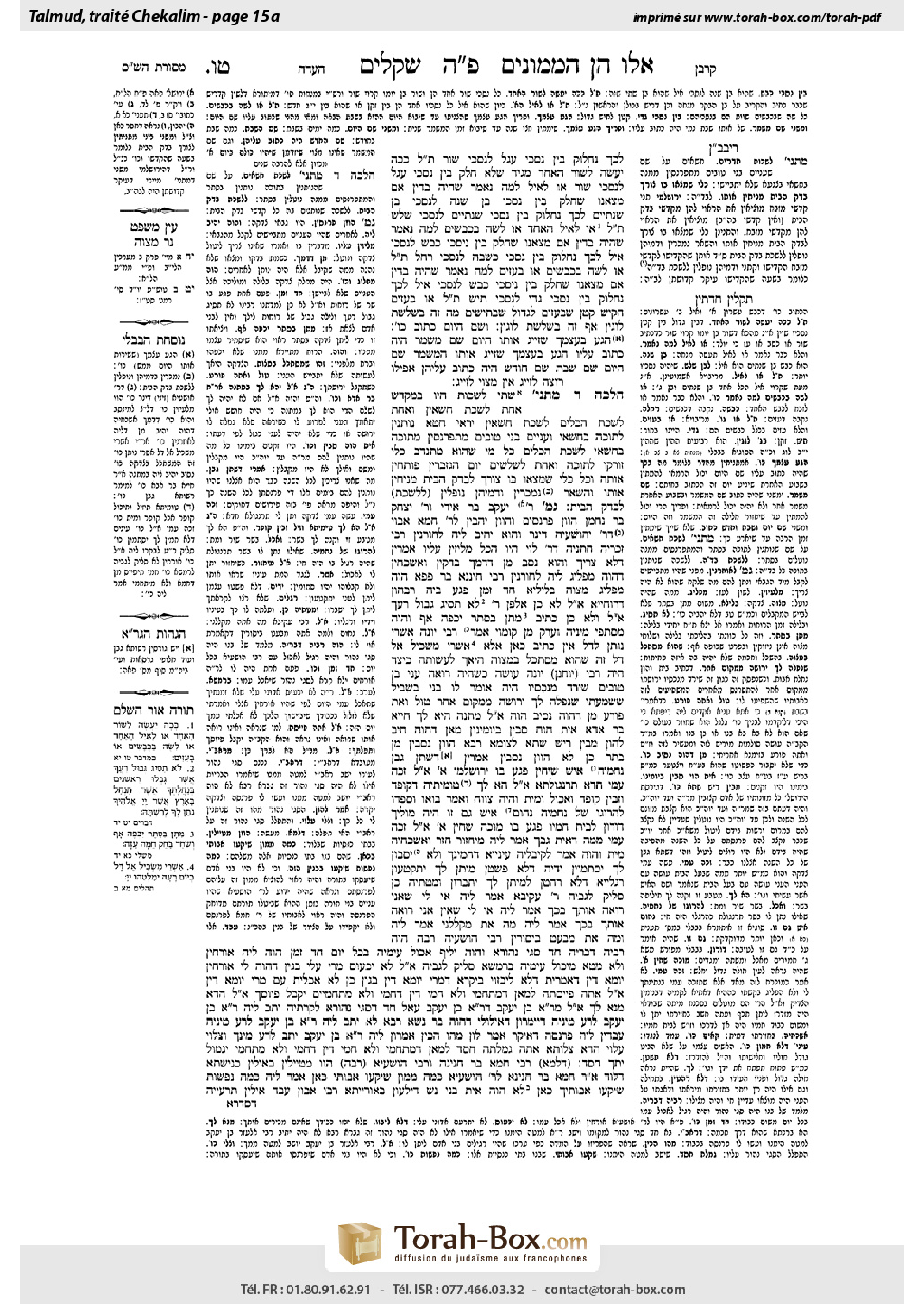
Shekalim 15a: Talmud study for Daf Yomi
Study the Talmud for Daf Yomi with scanned pages, Hebrew text, English translations from Sefaria and AI-generated French translations.
Passage selection and English or AI-generated French translation are available where the scan has annotations. Daf Study is independent of Torah-Box and Sefaria.
Browse Shekalim · שקלים · All tractatesShekalim 15a text and translations
This page of Shekalim includes the Aramaic text and an English translation, alongside the scan above.
שקלים י״ה א · Aramaic and Hebrew text
הלכה: וּכְבֶן עַזַּאי חוֹטֵא [דָּל] לָמָּה. הָיָה מֵבִיא לוּגוֹ עִמּוֹ. בְּרַם כְּרַבָּנִן מֵבִיא גְדִי. נִיסְכֵי רָחֵל מַה. מִן מַה דְתַנִּינָן. גְּדִי מְשַׁמֵּשׁ נִיסְכֵּי צֹאן גְּדוֹלִים וּקְטַנִּים זְכָרִים וּנְקֵבוֹת. הָדָא אָמְרָה. נִיסְכֵּי רָחֵל כְנִיסְכֵּי גְדִי. כְּתִיב כָּכָה יֵּעָשֶׂה לַשּׁוֹר הָאֶחָד אוֹ לָאַיִל הָאֶחָד אוֹ לַשֶּׂה בַכְּבָשִׂים אוֹ בָעִזִּים. מַגִּיד שֶׁלֹּא חִלֵּק בֵּין נִיסְכֵּי עֵגֶל לְנִיסְכֵּי שׁוֹר. שֶׁהָיָה בְדִין. בֶּן הַצֹּאן טָעוּן נְסָכִים [וּ]בֶן הַבָּקָר טָעוּן נְסָכִים. אִם מָצָאנוּ שֶׁחִלֵּק בֵּין נִיסְכֵּי כֶּבֶשׂ לְנִיסְכֵּי אַיִל לְכָךְ נַחֲלוֹק בֵּין נִיסְכֵּי עֵגֶל לְנִיסְכֵּי שׁוֹר. תַּלְמוּד לוֹמַר כָּכָה יֵּעָשֶׂה לַשּׁוֹר הָאֶחָד. מַגִּיד שֶׁלֹּא חִלֵּק בֵּין נִיסְכֵּי עֵגֶל לְנִיסְכֵּי שׁוֹר. אוֹ לָאַיִל לָמָּה נֶאֱמַר. שֶׁהָיָה בְדִין. אִם מָצָאנוּ שֶׁחִלֵּק בֵּין נִיסְכֵּי בֶּן שָׁנָה לְנִסְכֵּי בֶּן שְׁתַּיִם לְכָךְ נַחֲלוֹק בֵּין נִיסְכֵּי שְׁתַּיִם לְנִיסְכֵּי שָׁלֹשׁ. תַּלְמוּד לוֹמַר אוֹ לָאַיִל הָאֶחָד. אוֹ לַשֶּׂה בַּכְּשָׂבִים. לָמָּה נֶאֱמַר. שֶׁהָיָה בְדִין. אִם מָצָאנוּ שֶׁחִלֵּק בֵּין נִיסְכֵּי כֶבֶשׂ לְנִיסְכֵּי אַיִל לְכָךְ נַחֲלוֹק בֵּין נִיסְכֵּי כִשְׂבָּה לְנִיסְכֵּי רָחֵל. תַּלְמוּד לוֹמַר אוֹ לַשֶּׂה בַּכְּשָׂבִים. אוֹ בָעִזִּים. לָמָּה נֶאֱמַר. שֶׁהָיָה בְדִין. אִם מָצָאנוּ שֶׁחִלֵּק בֵּין נִיסְכֵּי כֶבֶשׂ לְנִיסְכֵּי אַיִל לְכָךְ נַחֲלוֹק בֵּין נִיסְכֵּי גְדִי לְנִיסְכֵּי תַּיִשׁ. תַּלְמוּד לוֹמַר אוֹ בָעִזִּים. הִקִּישׁ קָטָן שֶׁבָּעִזִּים לְגָדוֹל שֶׁבַּתְּיָישִׁים. מַה זֶה בִּשְׁלֹשֶׁת לוּגִּין אַף זֶה בִּשְׁלֹשֶׁת לוּגִּין.
הַגַּע עַצְמָךְ שֶׁזִּיוֵוג אוֹתוֹ הַיּוֹם. שֵׁם מִשְׁמָר הָיָה כָתוּב עָלָיו. הַגַּע עַצְמָךְ שֶׁזִּיוֵוג אוֹתוֹ הַמִּשְׁמָר. שֵׁם הַיּוֹם שֵׁם שַׁבָּת שֵׁם חוֹדֶשׁ הָיָה כָתוּב עֲלֵיהֶן. אֲפִילוּ לְזַוֵּיג אֵינוֹ מָצוּי לְזַוֵּיג.
משנה: שְׁתֵּי לְשָׁכוֹת הָיוּ בַּמִּקְדָּשׁ אַחַת לִשְׁכַּת חֲשָׁאִים וְאַחַת לִשְׁכַּת הַכֵּלִים. לִשְׁכַּת חֲשָׁאִים יְִרֵיאֵי חֵטְ נוֹתְנִים לְתוֹכָהּ בַּחֲשַׁאי וַעֲנִיִּים בְּנֵי טוֹבִים מִתְפַּרְנְסִין מִתּוֹכָהּ בַּחֲשַׁאי. לִשְׁכַּת הַכֵּלִים כָּל מִי שֶׁהוּא מִתְנַדֵּב כֶּלִי זוֹרְקוֹ לְתוֹכָהּ. וְאַחַת לִשְׁלֹשִׁים יוֹם הַגִּיזְבָּרִין פּוֹתְחִין אוֹתָהּ. כְּלִי שֶׁמּוֹצְאִין בּוֹ צוֹרֶךְ לְבֶדֶק הַבַּיִת מַנִּיחִין אוֹתוֹ. וְהַשְּׁאָר נִמְכָּרִין וּדְמִיהֶן נוֹפְלִין לְלִשְׁכַּת בֶּדֶק הַבַּיִת:
הלכה: רִבִּי יַעֲקֹב בַּר אִידִי וְרִבִּי יִצְחָק בַּר נַחְמָן הֲווֹן פַּרְנָסִין וַהֲווֹן יְהָבִין לְרִבִּי חָמָא אֲבוֹי דְרִבִּי הוֹשַׁעְיָה דֵינָר וְהוּא יְהִיב לֵיהּ לְחוֹרָנִין. רִבִּי זְכַרְיָה חַתְנֵיהּ דְּרִבִּי לִֵוי הָיוּ הַכֹּל מְלִיזִין עָלָיו. אָמְרִין דְּלָא צָרִיךְ וְהוּא נְסַב. מִן דִּדְמָךְ בָּדְקוֹן וְאַשְׁכְּחוֹן דַּהֲוָה מַפְלִיג לֵיהּ לְחוֹרָנִין.
רִבִּי חִינְנָא בַּר פַּפָּא הֲוָה מַפְלִיג מִצְוָה בַלַּיְלִיָא. חַד זְמַן פְּגַע בֵּיהּ רַבְּהוֹן דְּרוּחַיָיא. אֲמַר לֵיהּ. לֹא כֵן אַלְפָּן רִבִּי. לֹא תַּשִּׂיג גְּבוּל רֵעֲךָ. אֲמַר לֵיהּ. וְלֹא כֵן כְּתִיב מַתָּן בַּסֵּתֶר יִכְפֶּה אָף. וַהֲוָה מִיסְתָּפֵי מִינֵּיהּ וַעֲרַק מִן קוֹמוֹי.
אָמַר רִבִּי יוֹנָה. אַשְׁרֵי נוֹתֵן לַדָּל אֵין כָּתוּב כָּאן אֶלָּא אַשְׁרֵי מַשְׂכִּיל אֶל דָּל. זֶה שֶׁהוּא מִסְתַּכֵּל בַּמִּצְוָה הֵיאַךְ לַעֲשׂוֹתָהּ. כֵּיצַד הָיָה רִבִּי יוֹנָה עוֹשֶׂה. כְּשֶׁהָיָה רוֹאֶה בֶן טוֹבִים שֶׁיָּרַד מִנְּכָסָיו הָיָה אוֹמֵר לוֹ. בְּנִי. בִּשְׁבִיל שֶׁשָּׁמַעְתִּי שֶׁנָּפְלָה לָךְ יְרוּשָׁה מִמָּקוֹם אַחֵר. טוֹל וְאַתְּ פּוֹרֵעַ. מִן דַּהֲוָה נְסִיב הֲוָה אֲמַר לֵיהּ. מַתָּנָה.
אָמַר רִבִּי חִיָיה בַּר אָדָא. אִית הֲוָה סַבִּין בְּיוֹמֵינָן. מָאן דַּהֲוָה יְהִיב לוֹן מִבֵּין רֵישׁ שָׁתָּא לְצוֹמָא רַבָּא הֲווּן נָסְבִין. מִן בָּתָר כֵּן לָא הֲווּן נָסְבִין. אָמְרִין דְּשֻׁתָן גַּבָּן.
נְחֶמְיָה אִישׁ שִׁיחִין פָּגַע בּוֹ יְרוּשׁלְמִי אֶחָד. אֲמַר לֵיהּ. זְכֵה עִימִּי חָדָא תַּרְנוּגְלָא. אֲמַר לֵיהּ. הֵא לָךְ טִימִיתֵהּ קוּפָּד. וּזְבַן קוּפָּד וְאָכַל וָמִית. וַהֲוָה צְוַוח וְאָמַר. בּוֹאוּ וְסִפְדּוּ לָהֲרוּגוֹ שֶׁלְנְחֶמְיָה.
נָחוּם אִשׁ גִּמְזוֹ הָיָה מוֹלִיךְ דּוֹרוֹן לְבֵית חָמִיו. פָּגַע בּוֹ מוּכֵּי שְׁחִין אֶחָד. אֲמַר לוֹ. זְכֵה עִימִּי מִמָּה דְאִית גַּבָּךְ. אֲמַר לֵיהּ. מִיחְזָר. חֲזַר וְאַשְׁכְּחֵיהּ מִית. וַהֲוָה אֲמַר לְקִיבְּלֵיהּ. עֵיינֵיהּ דַּחֲמִינָךְ וְלָא יְהָבוֹן לָךְ יִסְתַּמְיָין. יָדַיָיא דְלָא פָשְׁטָן מִיתֵּן לָךְ יִתְקַטְּעָן. רַגְלַיָיא דְּלָא רָהֲטָן לְמִיתֵּן לָךְ יְתַבְּרָן. וּמַטְּתֵיהּ כֵּן. סְלִיק לְגַבֵּיהּ רִבִּי עֲקִיבָה. אָמַר לֵיהּ. אִי לִי שֶׁאֲנִי רוֹאֶה אוֹתָךְ כֵּן. אָמַר לֵיהּ. אִי לִי שֶׁאֵין אֲנִי רוֹאֶה אוֹתָךְ כֵּן. אָמַר לֵיהּ. מָה אַתְּ מְקַלְלֵינִי. אָמַר לֵיהּ. וּמָה אַתְּ מְבָעֵט בַּיִּיסוּרִין.
רִבִּי הוֹשַׁעְיָה רַבָּה הֲוָה רַבֵּיהּ דִּבְרֵיהּ חַד דְּסַגִּי נְהוּרָא וַהֲוָה יְלִיף אֲכִיל עִימֵּיהּ בְּכָל יוֹם. חַד זְמַן הֲוָה לֵיהּ אוֹרְחִין וְלָא מְטָא מֵיכוֹל עִימֵּיהּ. בְּרוּמְשָׁא סְלִיק לְגַבֵּיהּ. אָמַר לֵיהּ. לֹא יִכְעוֹס מָרִי עָלַיי. בְּגִין דַּהֲוָה לִי אוֹרְחִין יוֹמָא דֵין. [דְּאָמְרִית דְּלָא לִיבְזוּי בִּיקָרָא דְמָרִי יוֹמָא דֵין בְּגִין לֹא אָכְלִית עִם מָרִי יוֹמָא דֵין.] אַמַר לֵיהּ. אַתָּה פִּיַיסְתָּה לְמָאן דְּמִיתְחֲמֵי וְלָא חֲמִי. דֵּין דַּחֲמִי וְלָא מִיתְחֲמֵי יְקַבֵּל פִּיּוּסָךְ. אַמַר לֵיהּ. הָדָא מְנָא לָךְ. אַמַר לֵיהּ. מֵרִבִּי אֱלִיעֶזֶר בֶּן יַעֲקֹב. [דְּ]רִבִּי אֱלִיעֶזֶר בֶּן יַעֲקֹב עָאַל חַד דְּסַגִּי נְהוּרָה לְקַרְתֵּיהּ. יְתַב לֵיהּ רִבִּי לִיעֶזֶר בֶּן יַעֲקֹב לְרַע מִינֵּיהּ. דְּיֵימְרוּן דְּאִילוּלֵי דְּהוּא בַּר נַשָּׁא רַבָּא לָא יְתַב לֵיהּ רִבִּי לִיעֶזֶר בֶּן יַעֲקֹב לְרַע מִינֵּיהּ. עַבְדּוּן לֵיהּ פַּרְנָסָה דְאִיקָר. אֲמַר לוֹן. מָהוּ הָכֵין. אָמְרוֹן לֵיהּ. רִבִּי אֱלִיעֶזֶר בֶּן יַעֲקֹב יְתִיב לְרַע מִינָּךְ. וּצְלוֹי עֲלוֹי הָדָא צְלוּתָא. אַתָּה גָמַלְתָּה חֶסֶד לְמָאן דְּמִיתְחֲמֵי וְלָא חֲמִי. דֵּין דַּחֲמִי וְלָא מִיתְחֲמֵי יִגְמוֹל יָתָךְ חֶסֶד.
דְּלֹמָא. רִבִּי חָמָא בַּר חֲנִינָה ורִבִּי הוֹשַׁעְיָה הֲווּן מְטַיְילִין בְּאִילֵּין כְּנִישְׁתָּא דְּלוֹד. אָמַר רִבִּי חָמָא בַּר חֲנִינָה לְרִבִּי הוֹשַׁעְיָה. כַּמָּה מָמוֹן שִׁיקְּעוּ אֲבוֹתַיי כָאן. אָמַר לֵיהּ. כַּמָּה נְפָשׁוֹת שִׁיקְּעוּ אֲבוֹתֶיךָ כָאן. לָא הֲוָוה אִית בְּנֵי נַשׁ דְּיִלְעוּן בְּאוּרַיְתָא.
רִבִּי אָבוּן עֲבַד אִילֵּין תַּרְעַיָיה דְּסִדְרָא רַבָּא. אֲתָא רִבִּי מָנָא לְגַבֵּיהּ. אַמַר לֵיהּ. חֲמִי מָה עַבְדִּית. אַמַר לֵיהּ. וַיִּשְׁכַּח יִשְׂרָאֵל אֶת עוֹשֵׂהוּ וַיִּבֶן הֵיכָלוֹת. לָא הֲוָה בְּנֵי נַשׁ דְּיִלְעוּן בְּאוֹרַיְתָא.
Shekalim 15a · English translation
HALAKHAH: And following Ben Azzai, why the [poor] sinner? He brought his log with him, and following the rabbis he brings a lamb. What are the libations for a mother sheep? Since we stated, “ ‘lamb’ serves for the libations of sheep and goats, large or small, male or female,” this implies that the libations of a mother sheep are like the libations of a lamb. It is written. 15:11., so you shall do for one bull, or for one ram, or an animal from sheep or goats.107. This tells that He did not differentiate between libations for a calf and libations for a bull. Since one could argue, an animal from the flock needs libations, a bovine animal needs libations. Since we find that He distinguished between the libations for a sheep and the libations for a ram, so we should differentiate between libations for a calf and libations for a bull. The verse says, so you shall do for one bull; this implies that He did not distinguish between libations for a calf and libations for a bull. Why was it said, or for a ram? Since one could argue, if we find that He differentiated between libations for a yearling and libations for a two-year old, so we should differentiate between libations for a two-years old and a three-years old. The verse says, or for one ram. Why was it said, or for an animal from sheep? Since one could argue, if we find that He differentiated between libations for a sheep and libations for a ram, so we should differentiate between libations for a young female sheep and libations for a mother sheep. The verse says, or for an animal from sheep. Why was it said, or a goat? Since one could argue, if we find that He differentiated between libations for a sheep and libations for a ram, so we should differentiate between libations for a kid goat and libations for a bellwether. The verse says, or for a goat, it compared the smallest kid goat to the largest bellwether. Since one needs three log, so the other needs three log.
Think of it, if he matched it with that day! The name of the watch was written on it. Think of it, if he matched the watch. The name of the day, the week, and the month was written on them; then it is impossible to match.
MISHNAH: Two lodges were in the Temple, one the silence lodge and one the vessel lodge. The silence lodge: Silently did sin-fearing people contribute there and poor people from good families were supported from there in silence. The vessel lodge: Anybody who vowed a vessel throws it in there. Once in 30 days the treasurers open it. Any vessel which they deem is needed for the upkeep of the Temple they keep, but the remainder is sold and their proceeds belong to the lodge of upkeep of the Temple.
HALAKHAH: 8:9, Notes 149–167 (פ). Also there exists a Genizah text from here to Chapter 7 (ג). Rebbi Jacob bar Idi and Rebbi Isaac bar Naḥman were providers and gave a denar to Rebbi Ḥama the father of Rabbi Oshaia, but he gave it away to others. All were saying evil things about Rebbi Zachariah, the son-in-law of Rebbi Levi; they said that he was taking while he did not need it. When he died, they checked and found that he was splitting it up for others.
Rebbi Ḥinena bar Pappos used to distribute his charity in the night. Once the prince of spirits encountered him. He said to him, did not our teacher teach us: Do not displace your neighbour’s boundaries. 19:14.? He said to him, but is it not written, a gift in secret appeases anger. 21:14.? He was afraid of him and fled from him.
Rebbi Jonah said, it is not written, “hail to him who gives to the needy,“ but: hail to him who is considerate to the needy 41:2.; this refers to him who fulfills this commandment intelligently. How did Rebbi Jonah do it? When he saw a son of a prominent family who had lost his property, he used to say to him: My son, since I heard that an inheritance fell to you at another place, take and you will pay back. When he had taken it, he said to him, it is a gift.
Rebbi Ḥiyya bar Ada said, in our days there were old people who used to take if somebody gave to them between New Year’s Day and the Great Fastday. After that, they were not taking. They said, there is permission for us.
Neḥemiah from Shiḥin met a Jerusalemite who said to him, acquire merit by giving me a chicken. He said to him, here is its value, go buy red meat; he bought, ate and died. He said, come and eulogize him whom Neḥemiah killed.
Naḥum from Gimzo was carrying a gift to the house of his father-in-law when he met a person afflicted with boils who asked him, acquire merit from what you have on you. He said to him, when I shall return. He returned and found him dead. He said before him, his eyes which saw you and did not give to you shall go blind, his hands which did not stretch out to give to you shall be cut off, his feet which did not run to give to you shall be broken. This happened to him. Rebbi Aqiba came to visit him and said, woe to me that I see you in this state. He answered, woe to me that I do not see you in this state. He asked, why do you curse me? He answered, why are you contemptuous of suffering?
The teacher of the great Rebbi Hoshaia’s son was blind and he used to invite him to eat with him every day. One day there were guests and he did not ask him to eat with him. In the evening, he went to him and said: Please, Sir, do not be angry with me. [Since I had guests, I did not want risking injuring the Sir’s honor, therefore I did not eat with you today.] He said to him, you assuaged him who is seen but does not see; may He be appeased by you Who sees but is not seen. He asked him, from where do you have this? He said, from Rebbi Eliezer ben Jacob. For there came a blind man to Rebbi Eliezer ben Jacob’s town; Rebbi Eliezer ben Jacob sat below him so that they should say if he were not a great person, Rebbi Eliezer ben Jacob would not sit below him. They provided for him in honor. He asked them, what is this? They told him, because Rebbi Eliezer ben Jacob sat below you. He prayed for him the following prayer: You did a good deed for one who is seen but does not see; He Who sees but is not seen may be appeased by you and do good for you.
Clarification. Rebbi Ḥama bar Ḥanina and Rebbi Hoshaiah were strolling through the synagogue of Lod. Rebbi Ḥama bar Ḥanina said to Rebbi Hoshaiah: How much money did my forefathers invest here! He answered him: How many souls did your forefathers invest here, there is no one in here who studies Torah!
Rebbi Abun made doors for the main house of study. Rebbi Mana came to him; he said to him, look what I did. He told him, Israel forgot its Creator and built palaces8:14.. Were there no people who study Torah?
Text from Sefaria: The Jerusalem Talmud, edition by Heinrich W. Guggenheimer. Berlin, De Gruyter, 1999-2015 (CC BY); The Jerusalem Talmud, translation and commentary by Heinrich W. Guggenheimer. Berlin, De Gruyter, 1999-2015 (CC BY).