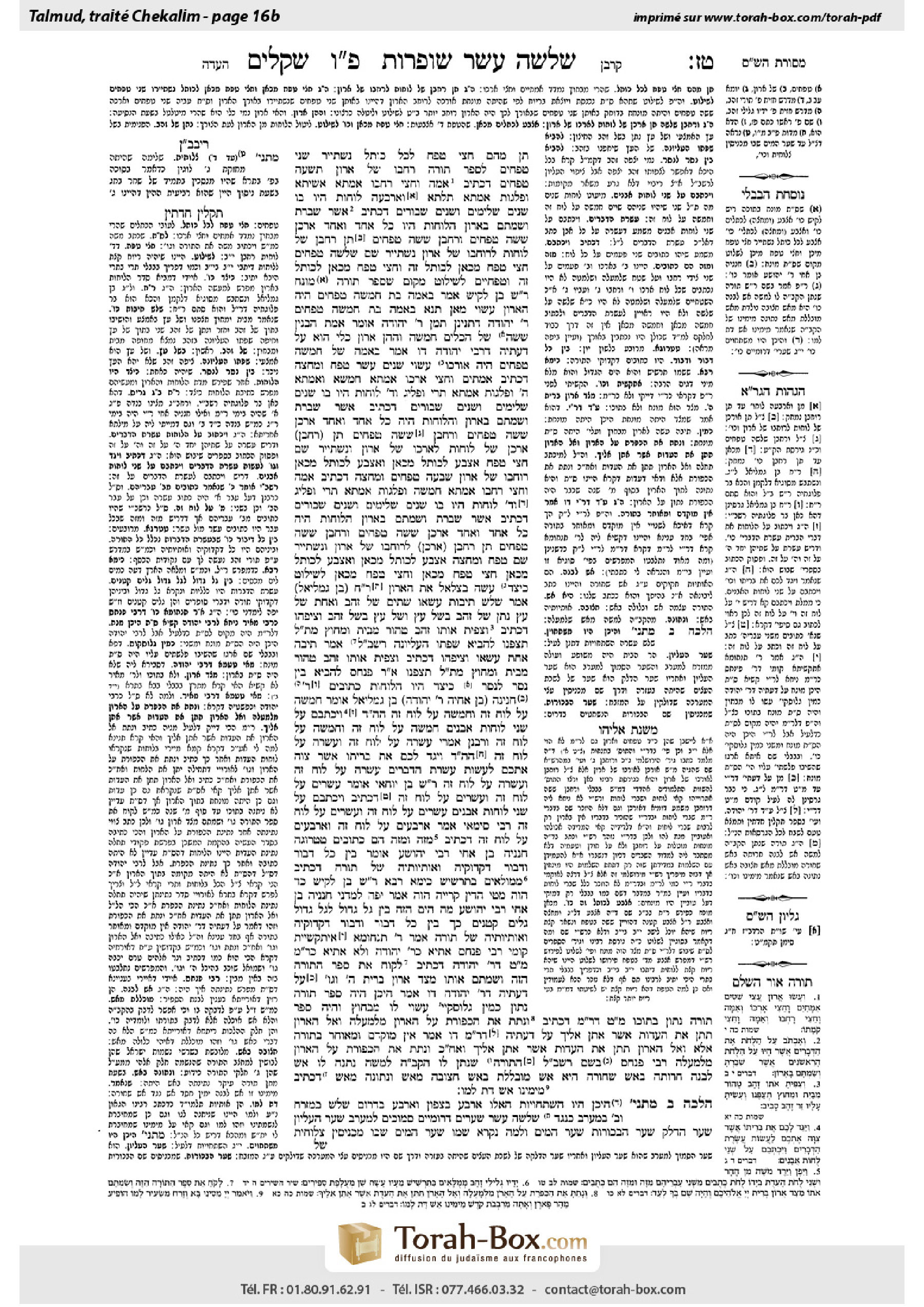
Shekalim 16b: Talmud study for Daf Yomi
Study the Talmud for Daf Yomi with scanned pages, Hebrew text, English translations from Sefaria and AI-generated French translations.
Passage selection and English or AI-generated French translation are available where the scan has annotations. Daf Study is independent of Torah-Box and Sefaria.
Browse Shekalim · שקלים · All tractatesShekalim 16b text and translations
This page of Shekalim includes the Aramaic text and an English translation, alongside the scan above.
שקלים י״ו ב · Aramaic and Hebrew text
אָמַר רִבִּי יוֹחָנָן. בָּאַמָּה שֶׁל שִׁשָּׁה טְפָחִים הָיָה הָאָרוֹן עָשׂוּי. מְָאן תַּנָּא. בָּאַמָּה שֶׁל שִׁשָּׁה טְפָחִים. רִבִּי מֵאִיר [הִיא. דִּתְנָן. רִבִּי מֵאִיר אוֹמֵר. כָּל הָאַמּוֹת הוּא כְבִנְיָינוֹת. רִבִּי יְהוּדָה אוֹמֵר. אַמַּת הַבִּנְיָין שִׁשָּׁה. שֶׁל כֵּלִים חֲמִשָּׁה.] עַל דַּעְתֵּיהּ דְּרִבִּי מֵאִיר דּוּ אָמַר. בָּאַמָּה שֶׁל שִׁשָּׁה טְפָחִים הָיָה הָאָרוֹן עָשׂוּי. אוֹרְכּוֹ שֶׁלְאָרוֹן חַמִּשָּׁה עָשָׂר טֶפַח. דִּכְתִיב אַמָּתַיִם וָחֵצִי אָרְכּוֹ. אַמְתָּא אֲשִׁיתָא וְאַמְתָּא אֲשִׁיתָא וּפַלְגּוּת אַמְתָּא תְּלָתָא. וְאַרְבָּעָה לוֹחוּת הָיוּ בּוֹ. שְׁנַיִם שְׁלֵימִים וּשְׁנַיִם שְׁבוּרִים. דִּכְתִיב אֲשֶׁר שִׁבַּרְתָּ וְשַׂמְתָּם בָּאָרוֹן. הַלּוּחוֹת הָיוּ כָּל אֶחָד וְאֶחָד אָרְכּוֹ שִׁשָּׁה טְפָחִים וְרָחְבּוֹ (שְׁלֹשָׁה) [שִׁשָּׁה.] וְתֵן אוֹרְכָן שֶׁל לוּחוֹת (לְרוֹחְבוֹ) [לְאָרְכּוֹ] שֶׁלְאָרוֹן נִשְׁתַּיֵיר שָׁם שְׁלֹשָׁה טְפָחִים. (תְּנֵם לְאִיסְטְּוָוה) [תֵּן מֵהֶם חֲצִי טֶפַח לְכָל כּוֹתֶל נִשְׁתַּיֵיר שְׁנֵי טְפָחִים לְסֵפֶר תּוֹרָה.] רָחְבּוֹ שֶׁלְאָרוֹן תִשְׁעָה טְפָחִים. דִּכְתִיב אַמָּה וָחֵצִי רָחְבּוֹ. אַמְתָּא אֲשִׁיתָא וּפַלְגּוּת אַמְתָּא תְּלָתָא. וְאַרְבָּעָה לוֹחוּת הָיוּ בּוֹ. שְׁנַיִם שְׁלֵימִים וּשְׁנַיִם שְׁבוּרִים. דִּכְתִיב אֲשֶׁר שִׁבַּרְתָּ וְשַׂמְתָּם בָּאָרוֹן. הַלּוּחוֹת הָיוּ כָּל אַחַת וְאַחַת אָרְכָּן שִׁשָּׁה טְפָחִים וְרָחְבָּן (שְׁלֹשָׁה) [שִׁשָּׁה.] תֵּן אָרְכָּן שֶׁלְלוּחוֹת לְרוֹחְבוֹ שֶׁלְאָרוֹן נִשְׁתַּיֵיר שָׁם שְׁלֹשָׁה טְפָחִים חֲצִי טֶפַח מִיכָּן וַחֲצִי טֶפַח מִיכָּן לְשִׁילּוּט. וּמְקוֹם שֶׁמַּנִּיחִין בּוֹ סֵפֶֶר תוֹרָה טְפָחַיִים.
רִבִּי שִׁמְעוֹן בֶּן לָקִישׁ אָמַר. בָּאַמָּה שֶׁלְחֲמִשָּׁה טְפָחִים הָיָה הָאָרוֹן עָשׂוּי. מָאן תַּנָּא. בָּאַמָּה שֶׁלְחֲמִשָּׁה טְפָחִים. רִבִּי יְהוּדָה. דְּתַנִּינָן תַּמָּן. רִבִּי יְהוּדָה אוֹמֵר. אַמַּת הַבִּנְיָין שִׁשָּׁה טְפָחִים וְשֶׁלְכֵּלִים חֲמִשָּׁה. וְהָהֵן אָרוֹן כֶּלִי הוּא. עַל דַּעְתֵּיהּ דְּרִבִּי יוּדָה דּוּ אָמַר. בָּאַמָּה שֶׁלְחֲמִשָּׁה טְפָחִים הָיָה אָרְכּוֹ שֶׁלְאָרוֹן עָשׂוּי. שְׁנֵים עָשָׂר טֶפַח וּמֶחֱצָה. דִּכְתִיב אַמָּתַיִם וָחֵצִי אָרְכּוֹ. אַמְתָּא חֲמִשָּׁה וְאַמְתָּא חֲמִשָּׁה וּפַלְגּוּת אַמְתָּא תְּרֵיי וּפְלִיג. וְאַרְבָּעָה לוֹחוּת הָיוּ בוֹ. שְׁנַיִם שְׁלֵימִים וּשְׁנַיִם שְׁבוּרִים. דִּכְתִיב אֲשֶׁר שִׁבַּרְתָּ וְשַׂמְתָּם בָּאָרוֹן. וְהַלּוּחוֹת הָיוּ כָּל אֶחָד וְאֶחָד אָרְכָּן שִׁשָּׁה טְפָחִים וְרָחְבָּן שְׁלֹשָׁה. תֵּן רָחְבָּן שֶׁלְלוּחוֹת לְאוֹרְכּוֹ שֶׁלְאָרוֹן וְנִשְׁתַּיֵיר שָׁם חֲצִי טֶפַח. אֶצְבַּע לִכְתָלִים מִיכָּן וְאֶצְבַּע לִכְתָלִים מִיכָּן. רָחְבּוֹ שֶׁלְאָרוֹן שִׁבְעָה טְפָחִים וּמֶחֱצָה. דִּכְתִיב אַמָּה וָחֵצִי רָחְבּוֹ. אַמְתָּא חֲמִשָּׁה וּפַלְגּוּת אַמְתָּא תְּרֵיי וּפְלִיג. וְאַרְבָּעָה לוֹחוּת הָיוּ בוֹ. שְׁנַיִם שְׁלֵימִים וּשְׁנַיִם שְׁבוּרִים. דִּכְתִיב אֲשֶׁר שִׁבַּרְתָּ וְשִׂמְתָּם בָּאָרוֹן. הַלּוּחוֹת הָיוּ כָּל אֶחָד וְאֶחָד אָרְכָּן שִׁשָּׁה טְפָחִים וְרָחְבָּן שְׁלֹשָׁה. תֵּן אָרְכָן שֶׁלְלוּחוֹת לְרָחְבּוֹ שֶׁלְאָרוֹן וְנִשְׁתַּיֵיר שָׁם טֶפַח וּמֶחֱצָה. אֶצְבַּע לִכְתָלִים מִיכָּן וְאֶצְבַּע לִכְתָלִים מִיכָּן. חֲצִי טֶפַח מִיכָּן וַחֲצִי טֶפַח מִיכָּן לְשִׁילּוּט.
כֵּיצַד עָשָׂה בְצַלְאֵל אֶת הָאָרוֹן. רִבִּי חֲנִינָה אָמַר. שָׁלֹשׁ תֵּיבוֹת עֲשָׂאוֹ שְׁתַּיִם שֶׁלְזָהָב וְאַחַת שֶׁלְעֵץ. נָתַן (שֶׁלְעֵץ בְּשֶׁלְזָהָב וְ)שֶׁלְזָהָב בְּשֶׁלְעֵץ [וְשֶׁל עֵץ בְּשֶׁלְזָהָב]. וְצִיפָּהוּ. דִּכְתִיב וְצִפִּיתָ אוֹתוֹ זָהָב טָהוֹר מִבַּיִת וּמִחוּץ. מַה תַלְמוּד לוֹמַר תְּצַפֶּנּוּ. לְהָבִיא שְׂפָתוֹ הָעֶלְיוֹנָה. רִבִּי שִׁמְעוֹן בֶּן לָקִישׁ אָמַר. תֵּיבָה אַחַת עֲשָׂאוֹ וְצִיפָּהוּ. דִּכְתִיב וְצִפִּיתָ אוֹתוֹ זָהָב טָהוֹר מִבַּיִת וּמִחוּץ. מַה תַלְמוּד לוֹמַר תְּצַפֶּנּוּ. אָמַר רִבִּי פִינְחָס לְהָבִיא בֵין נֶסֶר לְנֶסֶר.
כֵּיצד הָיוּ הַלּוּחוֹת כְּתוּבִים. רִבִּי חֲנַנְיָה בֶּן גַּמְלִיאֵל אוֹמֵר. חֲמִשָּׁה עַל לוּחַ זֶה וַחֲמִשָּׁה עַל לוּחַ זֶה. הָדָא הוּא דִּכְתִיב וַיִּכְתְּבֵם עַל שְׁנֵי לוּחוֹת אֲבָנִים. חֲמִשָּׁה עַל לוּחַ זֶה וַחֲמִשָּׁה עַל לוּחַ זֶה. וְרַבָּנִן אָמְרִין. עֲשָׂרָה עַל לוּחַ זֶה וַעֲשָׂרָה עַל לוּחַ זֶה. הָדָא הוּא דִּכְתִיב וַיַּגֵּד לָכֶם אֶת בְּרִיתוֹ אֲשֶׁר צִוָּה אֶתְכֶם לַעֲשׂוֹת עֲשֶׂרֶת הַדְּבָרִים. עֲשָׂרָה עַל לוּחַ זֶה וַעֲשָׂרָה עַל לוּחַ זֶה. רִבִּי שִׁמְעוֹן בֶּן יוֹחַי אָמַר. עֶשְׂרִים עַל לוּחַ זֶה וְעֶשְׂרִים עַל לוּחַ זֶה. דִּכְתִיב וַיִּכְתְּבֵם עַל שְׁנֵי לוּחוֹת אֲבָנִים. עֶשְׂרִים עַל לוּחַ זֶה וְעֶשְׂרִים עַל לוּחַ זֶה. רִבִּי סִימַאי אָמַר. אַרְבָּעִים עַל לוּחַ זֶה וְאַרְבָּעִים עַל לוּחַ זֶה. מִזֶּה וּמִזֶּה הֵם כְּתוּבִים. טֶטְרַגוֹנָה. חֲנַנְיָה בֶּן אֲחִי רִבִּי יְהוֹשֻׁעַ אוֹמֵר. בֵּין כָל דִּיבּוּר וְדִיבּוּר דִּיקְדּוּקֶיהָ וְאוֹתוֹתֶיהָ שֶׁלְתּוֹרָה. מְמוּלָּאִים בַּתַּרְשִׁישׁ. כְּיַמָּא רַבָּא. רִבִּי שִׁמְעוֹן בֶּן לָקִישׁ כַּד הֲוָה מַטֵּי הָדֵין קִרְיָיא הֲוָה אֲמַר. יָפֶה לִימְּדֵנִי חֲנַנְיָה בֶּן אֲחִי רִבִּי יְהוֹשֻׁעַ. מַה הַיָּם הַזֶּה בֵּין גַּל גָּדוֹל לְגַל [גָּדוֹל] גַּלִּים קְטַנִּים כָּךְ בֵּין כָּל דִּיבֵּר וְדִיבֵּר דִּיקְדּוּקֶיהָ וְאוֹתוֹתֶיהָ שֶׁלְתּוֹרָה.
אָמַר רִבִּי תַנְחוּמָא. אִיתְקַשְׁיָית קוֹמֵי רִבִּי פִינְחָס. אַתְיָא כְרִבִּי יוּדָה וְלָא אַתְיָא כְרִבִּי מֵאִיר. מַה טַעֲמֵיהּ דְּרִבִּי יוּדָה. לָקוֹחַ אֵת סֵפֶר הַתּוֹרָה הַזֹּאת וְשַׂמְתֶּם אוֹתוֹ מִצַּד אֲרוֹן בְּרִית יְי וגו׳. עַל דַּעְתֵּיהּ דְּרִבִּי יוּדָה דוּ אָמַר. אֵיכָן הָיָה סֵפֶר תּוֹרָה נָתוּן. כְּמִין גְּלוֹסֳּקוֹס עָשָׂה לוֹ מִבַּחוּץ וְהָיָה סֵפֶר תּוֹרָה נָתוּן לְתוֹכוֹ. מַה טַעֲמֵיהּ דְּרִבִּי מֵאִיר. וְנָתַתָּה אֶת הַכַּפּוֹרֶת עַל הָאָרוֹן מִלְמָעְלָה וגו׳. עַל דַּעְתֵּיהּ דְּרִבִּי מֵאִיר דוּ אָמַר. אֵין מוּקְדָּם וּמְאוּחַר בַּתּוֹרָה. אֶלָּא וְאֶל הָאָרוֹן תִּתֵּן אֵת הָעֵדוּת אֲשֶׁר אֶתֵּן אֵלֶיךָ. וְאַחַר כָּךְ וְנָתַתָּה אֶת הַכַּפֹּרֶת עַל הָאָרוֹן מִלְמָעְלָה. רִבִּי פִינְחָס בְשֵׁם רִבִּי שִׁמְעוֹן בֶּן לָקִישׁ. הַתּוֹרָה שֶׁנָּתַן לוֹ הַקָּדוֹשׁ בָּרוךְ הוּא לְמֹשֶׁה נְתָנָהּ לוֹ אֵשׁ לְבָנָה חָרוּתָה בְאֵשׁ שְׁחוֹרָה. הִיא אֵשׁ מוּבְלֶלֶת בְאֵשׁ חֲצוּבָה מֵאֵשׁ וּנְתוּנָה מֵאֵשׁ. הָדָא הוּא דִכְתִיב מִימִינוֹ אֵשְׁ דָּת לָמוֹ.
משנה: הֵיכָן הָיוּ הַהִשְׁתַּחֲוִיּוֹת הָאֵילּוּ. אַרְבַּע בַּצָּפוֹן וְאַרְבַּע בַּדָּרוֹם שָׁלשׁ בַּמִּזְרָח וּשְׁתַּיִם בַּמַּעֲרָב כְּנֶגֶד שְׁלֹשָׁה עָשָׂר שְׁעָרִים שְׁעָרִים דְּרוֹמִיִּים סְמוּכִין לַמַּעֲרָב שַׁעַר הָעֶלְיוֹן שַׁעַר הַדֶּלֶק שַׁעַר הַבְּכוֹרוֹת שַׁעַר הַמָּיִם. וְלָמָּה נִקְרָא שְׁמוֹ שַׁעַר הַמַּיִם שֶׁבּוֹ מַכְנִיסִין צְלוֹחִית שֶׁל מַיִם שֶׁל נִסּוּךְ חַמַּיִם בֶּחָג. רִבִּי אֱלִיעֶזֶר בֶּן יַעֲקֹב אוֹמֵר בּוֹ הַמַּיִם מְפַכִּים עֲתִידִין לִהְיוֹת יוֹצְאִין מִתַּחַת מִפְתַּן הַבַּיִת. לְעוּמָּתָן בַּצָּפוֹן סְמוּכִין בַּמַּעֲרָב שַׁעַר יְכָנְיָה שַׁעַר הַקָּרְבָּן שַׁעַר הַנָּשִׁים שַׁעַר הַשִּׁיר. וְלָמָּה נִקְרָא שְׁמוֹ שַׁעַר יְכָנְיָה שֶׁבּוֹ יָצָא יְכָנְיָה בְּגָלוּתוֹ. שֶׁבַּמִּזְרָח שַׁעַר נִיקָנוֹר וּשְׁנֵי פִשְׁפְּשִׁין הָיוּ לוֹ אֶחָד בִּימִינוֹ וְאֶחָד בִּשְׂמֹאלוֹ. וּשְׁנַיִם בַּמַּעֲרָב וְלֹא הָיָה לָהֶם שֵׁם:
Shekalim 16b · English translation
Rebbi Joḥanan said, the Ark was made with a cubit of six hand-breadths. Who stated “a cubit of six hand-breadths“? This is Rebbi Meןr’s. [As we have stated17:10.: “Rebbi Meןr says, all cubits were of buildings; Rebbi Jehudah says, the cubit of buildings six, of vessels five.”] According to Rebbi Meןr who says that the Ark was made with a cubit of six hand-breadths, the length of the Ark was fifteen cubits, as it is written 25:10.: Its length two cubits and a half. Each cubit was six and half a cubit three. Four tablets were in it, two whole ones and two broken ones, as it is written. 10:2.: Which you broke and put into the Ark. Each of the tablets was six hand-breadths in length and three in width. Put the widths of the tablets in the length of the Ark, there were three hand-breadths left. Apply them to the cylinder. [On each side half a hand-breadth to have a handle, and two hand-breadths as place to put there the Torah scroll.] The width of the Ark was nine hand-breadths, as it is written: A cubit and half a cubit. A cubit six and half a cubit three. Four tablets were in it, two whole ones and two broken ones. Each of the tablets was six hand-breadths in length and three in width. Put the lengths of the tablets in the length of the Ark, there were three hand-breadths left. On each side half a hand-breadth to have a handle, and two hand-breadths as a place to put there the Torah scroll.
Rebbi Simeon ben Laqish said, the Ark was made using a cubit of five hand-breadths. Who stated “a cubit of five hand-breadths”? This is Rebbi Jehudah. As we have stated there17:10.: “Rebbi Jehudah says, the builders’ cubit was of six hand-breadths, but that of vessels five hand-breadths.” And the Ark is a vessel. According to Rebbi Jehudah who says that the Ark was made with a cubit of five hand-breadths, the length of the Ark was twelve and one half cubits, as it is written 25:10.: Its length two cubits and a half. Each cubit was five and half a cubit two and one half. Four tablets were in it, two whole ones and two broken ones, as it is written. 10:2.: Which you broke and put into the Ark. Each of the tablets was six hand-breadths in length and three in width. Put the width of the tablets in the length of the Ark, there remains there half a handbreadth. One finger’s thickness for the wall on either side. The width of the Ark was seven and a half hand-breadths, as it is written, Its width a cubit and half a cubit. A cubit five and half a cubit two and a half. Four tablets were in it, two whole ones and two broken ones, as it is written. 10:2.: Which you broke and put into the Ark.. Each of the tablets was six hand-breadths in length and three in width. Put the lengths of the tablets in the width of the Ark, there was one and a half hand-breadths left. . One finger’s thickness for the wall on either side and on each side half a hand-breadth to have a handle.
How did Beṣalel make the Ark? Rebbi Ḥanina said, he made three boxes, two of gold and one of wood. He put (the one of wood inside one of gold and) one of gold inside the one of wood, [and the one of wood inside the other one of gold] and covered it, as is written25:11. As usual, the proof is by the part of the verse not quoted: You shall cover it, with pure gold inside and out you shall cover it, implying separate covers.: You shall cover it with pure gold inside and out. Why does the verse say, you shall cover it? To include the upper rim. Rebbi Simeon ben Laqish said, he made one box and gilded it, as is written: You shall cover it with pure gold inside and out. Why does the verse say, you shall cover it? Rebbi Phineas said, also between the planks.
How were the tablets written? Rebbi Ḥanania ben Gamliel says, five on one tablet each. But the rabbis say, ten on each tablet, as it is written. 4:13.: He informed you of His covenant which He had commanded you to do, the ten words, ten on each tablet. Rebbi Simeon ben Yoḥai said, twenty on each tablet, as it is written: He informed you of His covenant which He had commanded you to do, the ten words, twenty on each tablet. Rebbi Simai says, forty on each tablet, as it is written, on each side they were written 32:15., a square. Ḥananiah, the son of Rebbi Joshua’s brother, says: Between every two commandments, the details and the letters [of the Torah] were written. Filled with tarsis. 5:14. His hands are golden cylinders, inlaid with tarsis, the cylinders being Torah scrolls (Cant. rabba5:12). The Palestinian Targum to Ex. 28:20, 39:13 translates taršiš by כְּרוֹם יַמָּא רַבָּא ”the color of the Great Sea.“ One may assume that the scribe of the Yerushalmi did not understand the Greek χρω̅μα “color” and shortened it to .כְּ. The Targum to Cant. translates taršiš by the Syriac/Pahlevi word פֵּירוֹזַג (Farsi פירוזה) “turquoise”. The sentence is missing in the Genizah text and in B., like the Great Sea. When Rebbi Simeon ben Laqish had occasion to discuss this verse, he said, Ḥananiah, the son of Rebbi Joshua’s brother, did teach us correctly. Just as in the sea there are small waves between a large wave and the next, so between any two commandments there are the details and the letters of the Torah.
Rebbi Tanḥuma said, I asked before Rebbi Phineas: It is acceptable following Rebbi Jehudah, it is not acceptable following Rebbi Meןr. What is the reason of Rebbi Jehudah? To take this Torah scroll and put it next to the side of the Ark of the Eternal’s covenant. 31:26., etc In the opinion of Rebbi Jehudah, who said, where the Torah scroll was put? They made for it a kind of case outside and the Torah scroll was put into it. What is the reason of Rebbi Meןr? You should put the cover on top of the Ark 25:21.. In the opinion of Rebbi Meןr who says that there is no earlier and later in the Torah, in the Ark you shall put the testimony that I shall give to you 25:16., and after that, you should put the cover on top of the Ark. Rebbi Phineas in the name of Rebbi Simeon ben Laqish: The Torah which the Holy One, Praise to Him, gave to Moses, was white fire engraved in black fire. It was fire mixed with fire; hewn from fire, given from fire: That is what is written33:2.: From His right hand, the fiery law to them.
MISHNAH: Where were these prostrations? Four in the North, four in the South, three in the East, and two in the West, corresponding to the thirteen gates.
The Southern gates close to the West: the Upper Gate, the Fuel Gate, the Firstborns’ Gate, the Water gate. And why was it called Water Gate? For there they bring in the phial of water for the water libation on Tabernacles. Rebbi Eliezer ben Jacob said, the water will drizzle in the future from under the threshold. 47:1–5.
Opposite them in the North, close to the West, the Jechoniah and Chronicles, Koniahu in Jeremiah, Jechoniah in Esther. gate, the Sacrifice gate, the Women’s gate, the Song’s gate. And why was it called the Jechoniah gate? For through it Jechoniah left in his deportation35b.. In the East the Nikanor gate3:8, Notes 317 ff., which had two small entrances, one to the right and one to the left. And two in the West which had no names.
Text from Sefaria: The Jerusalem Talmud, edition by Heinrich W. Guggenheimer. Berlin, De Gruyter, 1999-2015 (CC BY); The Jerusalem Talmud, translation and commentary by Heinrich W. Guggenheimer. Berlin, De Gruyter, 1999-2015 (CC BY).