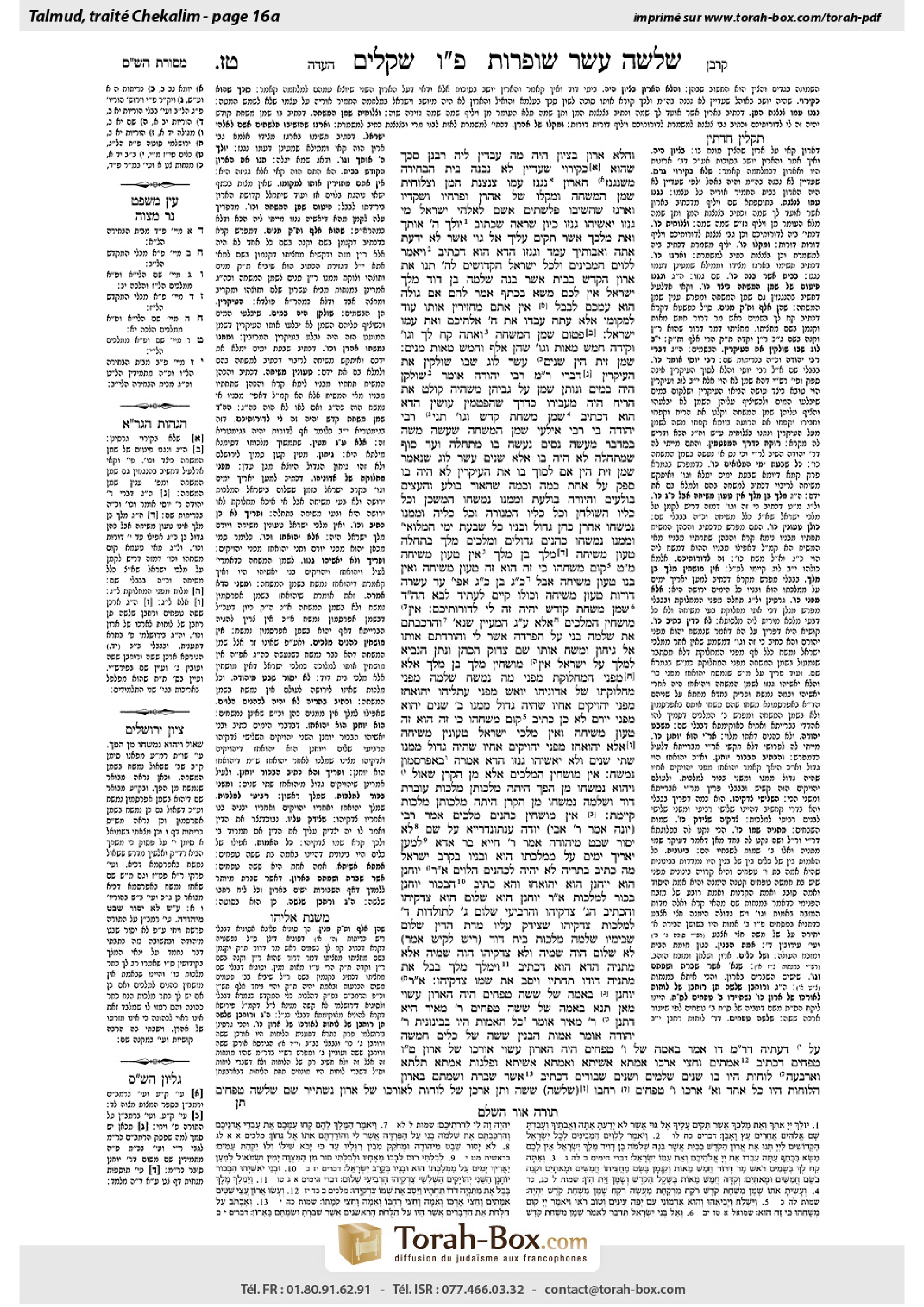
Shekalim 16a: Talmud study for Daf Yomi
Study the Talmud for Daf Yomi with scanned pages, Hebrew text, English translations from Sefaria and AI-generated French translations.
Passage selection and English or AI-generated French translation are available where the scan has annotations. Daf Study is independent of Torah-Box and Sefaria.
Browse Shekalim · שקלים · All tractatesShekalim 16a text and translations
This page of Shekalim includes the Aramaic text and an English translation, alongside the scan above.
שקלים י״ו א · Aramaic and Hebrew text
תַּנֵּי. רִבִּי יוּדָה בֶּן לָקִישׁ אָמַר. שְׁנֵי אֲרוֹנוֹת הָיוּ מְהַלְּכִין עִם יִשְׂרָאֵל בַּמִּדְבָּר. אֶחָד שֶׁהָיְתָה הַתּוֹרָה נְתוּנָה בְתוֹכוֹ. וְאֶחָד שֶׁהָיוּ שִׁבְרֵי הַלּוּחוֹת נְתוּנִין בְתוֹכוֹ. זֶה שֶׁהָיְתָה הַתּוֹרָה נְתוּנָה בְתוֹכוֹ הָיָה מוּנַח בְּאֹהֵל מוֹעֵד. הָדָא הִיא דִכְתִיב וַאֲרוֹן בְּרִית יְי וּמֹשֶׁה לֹא מָשׁוּ מִקֶּרֶב הַמַּחֲנֶה. זֶה שֶׁהָיוּ שִׁבְרֵי הַלּוּחוֹת בְתוֹכוֹ הָיָה נִכְנַס וְיוֹצֵא עִמָּהֶן וּפְעָמִים הוּא מַתְרֶה עִמָּהֶן. וְרַבָּנִן אָמְרֵי. אָרוֹן אֶחָד הָיָה וּפַעַם אַחַת יָצָא בִימֵי עֵלִי וְנִשְׁבָּה. קִרְיָיה מְסַיֵיעַ לְהוֹן לְרַבָּנִן. אוֹי לָנוּ מִי יַצִּילֵנוּ מִיַּד הָאֱלֹהִים הָאַדִּירִים הָאֵלֶּה. מִילָּה דְלָא חֲמוּן מִן יוֹמֵיהוֹן. קִרְיָיה מְסַיֵיעַ לְרִבִּי יוּדָה בֶּן לָקִישׁ. וַיֹּאמֶר שָׁאוּל לַאֲחִיָּה הַגִּישָׁה אֲרוֹן הָאֱלֹהִים. וַהֲלֹא אָרוֹן בְּקִרְיַת יְעָרִים הָיָה. מָה עָבְדוּן לֵיהּ רַבָּנִן. הַגִּישָׁה אֵלַי הַצִּיץ. קִרְיָיא מְסַיֵיעַ לְרִבִּי יוּדָה בֶּן לָקִישׁ. הָאָרוֹן וְיִשְׂרָאֵל וִיהוּדָה יֹשְׁבִים בַּסּוּכּוֹת. וַהֲלֹא אָרוֹן בְּצִיּוֹן הָיָה. מָה עָבְדוּן לֵיהּ רַבָּנִן. סְכָךְ שֶׁהוּא כְקִירוּי. שֶׁאַדַּיִין לֹא נִבְנֶה בֵית הַבְּחִירָה.
מִשֶּׁנִּגְנַז הָאָרוֹן נִגְנַז עִמּוֹ צִנְצֶנֶּת הַמָּן וּצְלוֹחִית שֶׁמֶן הַמִּשְׁחָה וּמַקְלוֹ שֶׁלְאַהֲרוֹן וּפְרָחָיו וּשְׁקֵידָיו וְאַרְגָּז שֶׁהֵשִׁיבוּ פְלִשְׁתִּים אָשָׁם לֵאלֹהֵי יִשְׂרָאֵל. מִי גְנָזוֹ. יֹאשִׁיָּהוּ גְנָזוֹ. כֵּיוָן שֶׁרָאָה שֶׁכָּתוּב יוֹלֵךְ יְי אוֹתְךָ וְאֶת מַלְכְּךָ אֲשֶׁר תָּקִים עָלֶיךָ אֶל גּוֹי אֲשֶׁר לֹא יָדַעְתָּ אַתָּה וַאֲבֹתֶיךָ. עָמַד וּגְנָזוֹ. הָדָא הוּא דִכְתִיב וַיֹּאמֶר לַלְוִיִּם הַמְּבִינִים לְכָל יִשְׂרָאֵל הַקְּדוֹשִׁים לַיי תְּנוּ אֶת אֲרוֹן הַקּוֹדֶשׁ בַּבַּיִת אֲשֶׁר בָּנָה שְׁלֹמֹה בֶן דָּוִד מֶלֶךְ יִשְׂרָאֵל אֵין לָכֶם מַשָּׂא בַּכָּתֵף. אָמַר לָהֶן. אִם גּוֹלֶה הוּא עִמָּכֶם לְבָבֶל עוֹד אֵין אַתֶּם מַחֲזִירִין אוֹתוֹ לִמְקוֹמוֹ. אֶלָּא עַתָּה עִבְדוּ אֶת יְי אֱלֹהֵיכֶם וְאֵת עַמּוֹ יִשְׂרָאֵל.
פִּיטּוּם שֶׁמֶן הַמִּשְׁחָה וְאַתָּה קַח לְךָ בְּשָׂמִים רֹאשׁ וגו׳ וְקִדָּה חֲמֵשׁ מֵאוֹת וגו׳. שֶׁהֵן אֶלֶף וַחֲמֵשׁ מֵאוֹת מָנִים. שֶׁמֶן זַיִת הִין. שֶׁהֵן שְׁנֵים עָשָׂר לוֹג שֶׁבּוֹ שׁוֹלְקִין אֶת הָעִיקָּרִין. דִּבְרֵי רִבִּי מֵאִיר. רִבִּי יְהוּדָה אוֹמֵר. שׁוֹלְקָן הָיָה בַמַּיִם וְנוֹתֵן שֶׁמֶן עַל גַּבֵּיהֶן. מִשֶּׁהָיָה קוֹלֵט אֶת הָרֵיחַ הָיָה מַעֲבִירוֹ כַּדֶרֶךְ שֶׁהַפַּטָּמִין עושין. הָדָא הוּא דִכְתִיב שֶׁמֶן מִשְׁחַת קוֹדֶשׁ וגו׳.
תַּנֵּי רִבִּי יוּדָה בֵּירִבִּי אִילְעַאי. שֶׁמֶן הַמִּשְׁחָה שֶׁעָשָׂה מֹשֶׁה בַמִּדְבָּר מַעֲשֵׂה נִיסִּים נַעֲשׂוּ בוֹ מִתְּחִילָּה וְעַד סוֹף. שֶׁמִּתְּחִילָּה לֹא הָיָה בוֹ אֶלָּא שְׁנֵים עָשָׂר לוֹג. שֶׁנֶּאֱמַר שֶׁמֶן זַיִת הִין. אִם לָסוּךְ בּוֹ אֶת (הֶעֵצִים) [הָעִיקָּרִים] לֹא הָיָה בוֹ סָפַק. עַל אַחַת כַּמָּה וְכַמָּה שֶׁהָאוֹר בּוֹלֵעַ וְהָעֵצִים בּוֹלְעִין וְהַיּוֹרָה בוֹלַעַת. וּמִמֶּנּוּ נִמשְׁחוּ הַמִּשְׁכָּן וְכָל כֵּלָיו. הַשֻּׁלְחָן וְכָל כֵּלָיו. הַמְּנוֹרָה וְכָל כֵּלֶיהָ. וּמִמֶּנּוּ נִמשְׁחוּ אַהֲרֹן כֹהֵן גָּדוֹל וּבָנָיו כָּל שִׁבְעַת יְמֵי הַמִּילּוּאִים. מִמֶּנּוּ נִמְשְׁחוּ כֹּהֲנִים גְּדוֹלִים וּמְלָכִים. מֶלֶךְ בַּתְּחִילָּה טָעוּן מְשִׁיחָה. מֶלֶךְ בֶּן מֶלֶךְ אֵינוֹ טָעוּן מְשִׁיחָה. [מַאי טַעֲמָא. קוּם מָשְׁחֵיהוּ כִּי זֶה הוּא. זֶה טָעוּן מְשִׁיחָה וְאֵין בְּנוֹ טָעוּן מְשִׁיחָה.] אֲבָל כֹּהֵן גָּדוֹל בֶּן כֹּהֵן גָּדוֹל אֲפִילוּ עַד עֲשָׂרָה דוֹרוֹת טְעוֹנִין מְשִׁיחָה. וְכולּוֹ קַיָים לְעָתִיד לָבוֹא. הֲדָא הוּא דִכְתִיב שֶׁמֶן מִשְׁחַת קוֹדֶשׁ יִהְיֶה זֶה לִי לְדוֹרוֹתֵיכֶם.
אֵין מוֹשְׁחִין מְלָכִים אֶלָּא עַל גַּבֵּי הַמַּעַיָין. הָדָא הוּא דִכְתִיב וְהִרְכַּבְתֶּם אֶת שְׁלֹמֹה בְנִי עַל הַפִּרְדָּה אֲשֶׁר לִי וְהוֹרַדְתֶּם אוֹתוֹ אֶל גִּחוֹן. וּמָשַׁח אֹתוֹ שָׁם צָדוֹק הַכֹּהֵן וְנָתָן הַנָּבִיא לְמֶלֶךְ עַל יִשְׂרָאֵל. אֵין מוֹשְׁחִין (מְלָכִים) [מֶלֶךְ בֶּן מֶלֶךְ] אֶלָּא מִפְּנֵי הַמַּחֲלוֹקֶת. מִפְּנֵי מַה נִמְשַׁח שְׁלֹמֹה. מִפְּנֵי מַחֲלוֹקָתוֹ שֶׁלָּאֲדוֹנִיָּהוּ. יוֹאָשׁ מִפְּנֵי עֲתַלְיָה. יֵהוּא מִפְּנֵי יוֹרָם. לֹא כֵן כָּתוּב קוּם מְשָׁחֵהוּ כִּי זֶה הוּא. זֶה טָעוּן מְשִׁיחָה וְאֵין מַלְכֵי יִשְׂרָאֵל טְעוּנִין מְשִׁיחָה. אֶלָּא יְהוֹאָחָז מִפְּנֵי יְהוּיָקִים אָחִיו שֶׁהָיָה גָדוֹל מִמֶּנּוּ שְׁתֵּי שָׁנִים. וְלֹא יִאשִׁיָּהוּ גְּנָזוֹ. הָדָא אָמְרָה. בְּאַפֵּירְסָמוֹן מְשָׁחוֹ. אֵין מוֹשְׁחִין מְלָכִים אֶלָּא מִן הַקֶּרֶן. שָׁאוּל וְיֵהוּא נִמְשְׁחוּ מִן הַפָּךְ. שֶׁהָיְתָה מַלְכוּתָן מַלְכוּת עוֹבֶרֶת. דָּוִד וּשְׁלֹמֹה נִמְשְׁחוּ מִן הַקֶּרֶן. שֶׁהָיְתָה מַלְכוּתָן מַלְכוּת קַיֶימֶת. אֵין מוֹשְׁחִין כֹּהֲנִים מְלָכִים. אָמַר רִבִּי יוּדָן עַנְתּוֹנְדְרַיָיא. עַל שֵׁם לֹא יָסוּר שֵׁבֶט מִיהוּדָה. אָמַר רִבִּי חִיָיה בַּר אָדָא. לְמַעַן יַאֲרִיךְ יָמִים עַל מַמְלַכְתּוֹ הוּא וּבָנָיו בְּקֶרֶב יִשְׂרָאֵל. מַה כְתִיב בַּתְרֵיהּ. לֹא יִהְיֶה לַכֹּהֲנִים הַלְוִיִּם.
אָמַר רִבִּי יוֹחָנָן. הוּא יוֹחָנָן הוּא יְהוֹאָחָז. וְהָא כְתִיב הַבְּכוֹר יוֹחָנָן. בְּכוֹר לַמַּלְכוּת. אָמַר רִבִּי יוֹחָנָן. הוּא שַׁלּוּם הוּא צִדְקִיָּהוּ. וְהָכְתִיב הַשְּׁלִישִׁי צִדְקִיָּהוּ וְהָרְבִיעִי שַׁלּוּם. שְׁלִישִׁי לְתוֹלְדוֹת רְבִיעִי לַמַּלְכוּת. צִדְקִיָּהוּ שֶׁצִּידֵּק עָלָיו מִידַּת הַדִּין. שַׁלּוּם שֶׁבְּיָמָיו שָׁלְמָה מַלְכוּת בֵּית דָּוִד. לָא שַׁלּוּם הֲוָה שְׁמֵיהּ וְלָא צִדְקִיָּהוּ הֲוָה שְׁמֵיהּ אֶלָּא מַתַּנְיָה. הָדָא הוּא דִכְתִיב וַיַּמְלֵךְ מֶלֶךְ בָּבֶל אֶת מַתַּנְיָה דוֹדוֹ תַּחְתָּיו וַיַּסֵּב אֶת שְׁמוֹ צִדְקִיָּהוּ.
אָמַר רִבִּי יוֹחָנָן. בָּאַמָּה שֶׁל שִׁשָּׁה טְפָחִים הָיָה הָאָרוֹן עָשׂוּי. מְָאן תַּנָּא. בָּאַמָּה שֶׁל שִׁשָּׁה טְפָחִים. רִבִּי מֵאִיר [הִיא. דִּתְנָן. רִבִּי מֵאִיר אוֹמֵר. כָּל הָאַמּוֹת הוּא כְבִנְיָינוֹת. רִבִּי יְהוּדָה אוֹמֵר. אַמַּת הַבִּנְיָין שִׁשָּׁה. שֶׁל כֵּלִים חֲמִשָּׁה.] עַל דַּעְתֵּיהּ דְּרִבִּי מֵאִיר דּוּ אָמַר. בָּאַמָּה שֶׁל שִׁשָּׁה טְפָחִים הָיָה הָאָרוֹן עָשׂוּי. אוֹרְכּוֹ שֶׁלְאָרוֹן חַמִּשָּׁה עָשָׂר טֶפַח. דִּכְתִיב אַמָּתַיִם וָחֵצִי אָרְכּוֹ. אַמְתָּא אֲשִׁיתָא וְאַמְתָּא אֲשִׁיתָא וּפַלְגּוּת אַמְתָּא תְּלָתָא. וְאַרְבָּעָה לוֹחוּת הָיוּ בּוֹ. שְׁנַיִם שְׁלֵימִים וּשְׁנַיִם שְׁבוּרִים. דִּכְתִיב אֲשֶׁר שִׁבַּרְתָּ וְשַׂמְתָּם בָּאָרוֹן. הַלּוּחוֹת הָיוּ כָּל אֶחָד וְאֶחָד אָרְכּוֹ שִׁשָּׁה טְפָחִים וְרָחְבּוֹ (שְׁלֹשָׁה) [שִׁשָּׁה.] וְתֵן אוֹרְכָן שֶׁל לוּחוֹת (לְרוֹחְבוֹ) [לְאָרְכּוֹ] שֶׁלְאָרוֹן נִשְׁתַּיֵיר שָׁם שְׁלֹשָׁה טְפָחִים. (תְּנֵם לְאִיסְטְּוָוה) [תֵּן מֵהֶם חֲצִי טֶפַח לְכָל כּוֹתֶל נִשְׁתַּיֵיר שְׁנֵי טְפָחִים לְסֵפֶר תּוֹרָה.] רָחְבּוֹ שֶׁלְאָרוֹן תִשְׁעָה טְפָחִים. דִּכְתִיב אַמָּה וָחֵצִי רָחְבּוֹ. אַמְתָּא אֲשִׁיתָא וּפַלְגּוּת אַמְתָּא תְּלָתָא. וְאַרְבָּעָה לוֹחוּת הָיוּ בּוֹ. שְׁנַיִם שְׁלֵימִים וּשְׁנַיִם שְׁבוּרִים. דִּכְתִיב אֲשֶׁר שִׁבַּרְתָּ וְשַׂמְתָּם בָּאָרוֹן. הַלּוּחוֹת הָיוּ כָּל אַחַת וְאַחַת אָרְכָּן שִׁשָּׁה טְפָחִים וְרָחְבָּן (שְׁלֹשָׁה) [שִׁשָּׁה.] תֵּן אָרְכָּן שֶׁלְלוּחוֹת לְרוֹחְבוֹ שֶׁלְאָרוֹן נִשְׁתַּיֵיר שָׁם שְׁלֹשָׁה טְפָחִים חֲצִי טֶפַח מִיכָּן וַחֲצִי טֶפַח מִיכָּן לְשִׁילּוּט. וּמְקוֹם שֶׁמַּנִּיחִין בּוֹ סֵפֶֶר תוֹרָה טְפָחַיִים.
Shekalim 16a · English translation
8:3 (Notes 43–130,ס), where all references to the Babli are given. It was stated: “Rebbi Jehudah ben Laqish says, two arks were travelling with Israel in the desert; one in which the Torah was deposited and one in which the broken pieces of the tablets were deposited. The one in which the Torah was deposited was put into the Tent of Meeting; that is what is written. 14:44.: Moses and the Ark of the Eternal’s covenant did not move from the camp. The one in which the broken pieces of the tablets were deposited was going out and coming in with them. #82, referring to Num. 10.33.. But the Rabbis say, it was only one, and once it went out in the days of Eli and was taken prisoner. A verse supports the Rabbis: Woe to us, who will save us from this mighty god5:8.? A word which shows that they never had seen it before. A verse supports Rebbi Jehudah ben Laqish. Saul said to Aḥiya: present God’s Ark14:18.. But was the Ark not at Qiryat Ye`arim? What do the rabbis do with it? ‘Present to me the High Priest’s diadem Chapter 7, not “ephod” following LXX and many moderns.’ Another verse supports Rebbi Jehudah ben Laqish: The Ark, Israel, and Jehudah, dwell in huts 11:11.. Was the Ark not in Zion? What do the rabbis with it? The straw roof cover that was in the walls, since the Temple was not yet built.
When the ark was hidden, there were hidden with it the flask of Manna, the bottle of anointing oil, Aaron’s staff with its almonds and flowers, and the chest which the Philistines returned as a reparation sacrifice for Israel’s God. Who hid it? Josiah hid it. When he saw that it was written: The Eternal will lead you and your king whom you will have put above you, to a people whom neither you nor your fathers had known, he started and hid it. That is what is written: He said to the Levites, who instruct all of Israel, the ones holy to the Eternal, put the Ark into the House that Salomon, son of David, King of Israel, built; you do not have to carry it on your shoulder.” He said, if it is exiled with you to Babylonia, you will never return it to its place. But now, serve the Eternal, your God, and his people Israel.
The preparation of the anointing oil. Take for yourself select spices, etc. and cassia 500, etc., altogether 1500 parts. And olive oil one hin, that is twelve log, in which the roots were cooked, the words of Rebbi Meןr. Rebbi Jehudah says, he cooked them in water, then poured the oil on them, and when it had absorbed the fragrance one removed it, just as the perfumers do. That is what is written: holy anointing oil, etc.
3:3 (ה). Rebbi Jehudah bar Ilay stated: The anointing oil made by Moses in the desert was from the start to the end a work of wonders, since there were only twelve log to start with, as it was said, and olive oil one hin. It would not have been enough to rub the wooden planks with it; so much more since the fire swallows, wood absorbs, and the kettle absorbs! From it the Tabernacles and all its vessels were anointed, the table and its vessels, the candelabrum and all its vessels. From it Aaron and his sons were anointed all of the seven days of induction, from it all high priests and kings were anointed. A king who is first needs anointing, a king who is a king’s son does not need anointing. [What is the reason? Do anoint him, for this one is it. 17:20., this one needs anointing but his son does not need anointing.] But a High Priest who is the son of a High Priest needs anointing, even for ten generations. Nevertheless, it is all there for the future; that is what is written 30:31., a holy anointing oil will this be for Me, for all your generations.
One anoints kings only at a spring, as it was said. 1:33–34.: Let Solomon, my son, ride on my mule and take him down to the Giḥon; there Ṣadoq the priest and Nathan the prophet shall anoint him as king over Israel. One anoints (kings) [kings sons of kings] only because of disputes. Why was Solomon anointed? Because of the dispute of Adoniahu, Joash because of Athaliah, Jehu because of Joram. Is it not written. 17:20., do anoint him, for this one is it, this one needs anointing, but the kings of Israel do not need anointing? But Joaḥaz because of his brother Joiakim who was two years his elder. But did not Josiah hide it? That means that they anointed with balsamum. One anoints kings only from a horn. Saul and Jehu were anointed from a can because their kingdom was temporary; David and Solomon were anointed from a horn because their kingdom was permanent. One does not anoint priests as kings. Rebbi Jehudah Antordiya said, because. 49:10. the scepter shall not be removed from Jehudah. Rebbi Ḥiyya bar Ada said, because of. 17:20. he shall have many days of his kingdom, he and his sons in the midst of Israel. What is written after that? The levitic Cohanim should not. 18:1..
Rebbi Joḥanan said, Joḥanan is Joaḥaz. But is it not written: The first born Joḥanan. 3:15., the first in kingdom. Rebbi Joḥanan said, Shallum is Sedekiah. But is it not written,. 3:15. the third Sedekiah, the fourth Shallum? Sedekiah, the third in birth, the fourth in kingdom. Sedekiah, because he accepted the judgment on himself, Shallum, because in his days the dynasty of David was completed. His name was neither Shallum nor Sedekiah but Mattaniah. That is what is written 24:17.: The king of Babylon made his uncle Mattaniah king in his stead and changed his name into Sedekiah.
Rebbi Joḥanan said, the Ark was made with a cubit of six hand-breadths. Who stated “a cubit of six hand-breadths“? This is Rebbi Meןr’s. [As we have stated17:10.: “Rebbi Meןr says, all cubits were of buildings; Rebbi Jehudah says, the cubit of buildings six, of vessels five.”] According to Rebbi Meןr who says that the Ark was made with a cubit of six hand-breadths, the length of the Ark was fifteen cubits, as it is written 25:10.: Its length two cubits and a half. Each cubit was six and half a cubit three. Four tablets were in it, two whole ones and two broken ones, as it is written. 10:2.: Which you broke and put into the Ark. Each of the tablets was six hand-breadths in length and three in width. Put the widths of the tablets in the length of the Ark, there were three hand-breadths left. Apply them to the cylinder. [On each side half a hand-breadth to have a handle, and two hand-breadths as place to put there the Torah scroll.] The width of the Ark was nine hand-breadths, as it is written: A cubit and half a cubit. A cubit six and half a cubit three. Four tablets were in it, two whole ones and two broken ones. Each of the tablets was six hand-breadths in length and three in width. Put the lengths of the tablets in the length of the Ark, there were three hand-breadths left. On each side half a hand-breadth to have a handle, and two hand-breadths as a place to put there the Torah scroll.
Text from Sefaria: The Jerusalem Talmud, edition by Heinrich W. Guggenheimer. Berlin, De Gruyter, 1999-2015 (CC BY); The Jerusalem Talmud, translation and commentary by Heinrich W. Guggenheimer. Berlin, De Gruyter, 1999-2015 (CC BY).