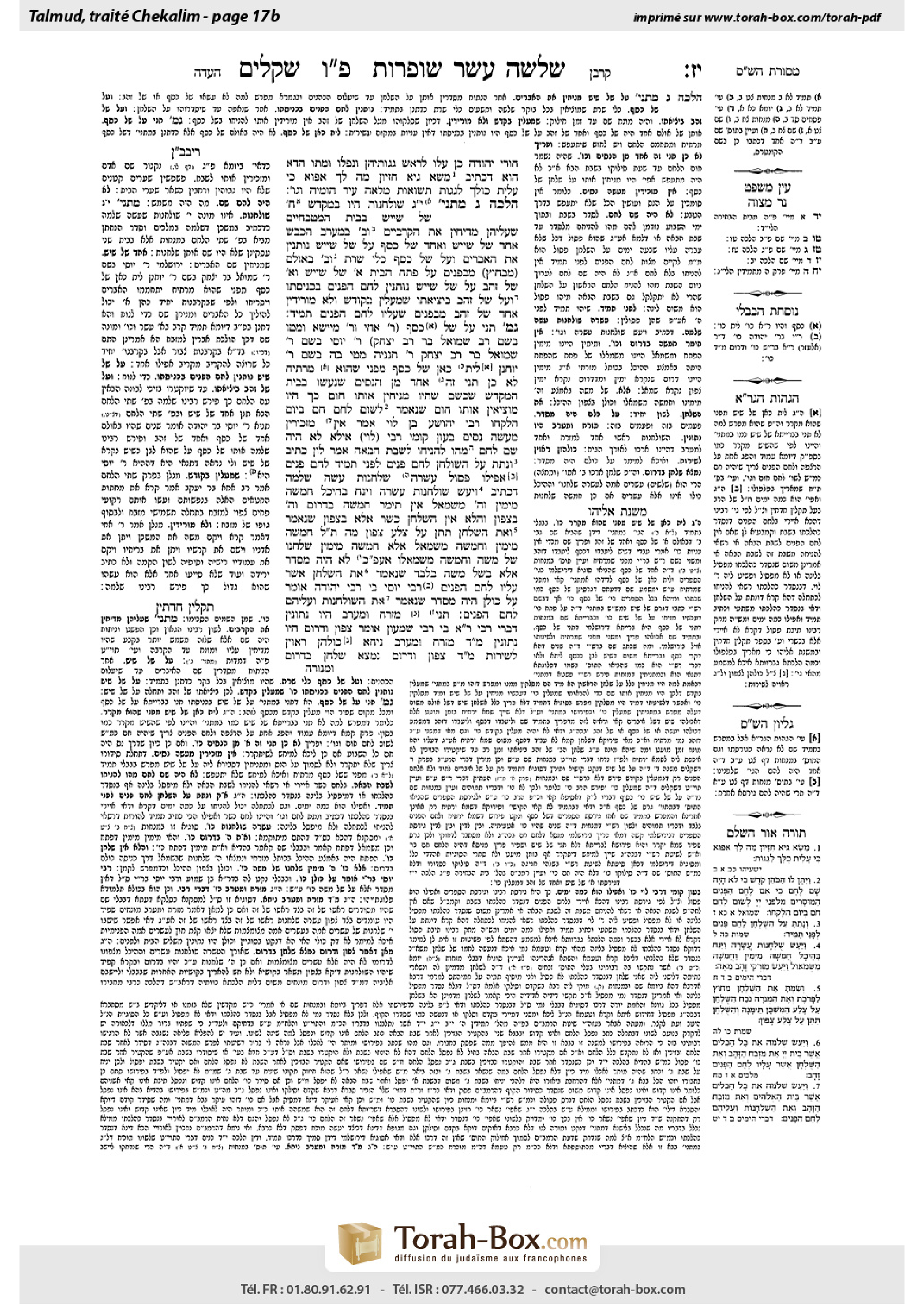
Shekalim 17b: Talmud study for Daf Yomi
Study the Talmud for Daf Yomi with scanned pages, Hebrew text, English translations from Sefaria and AI-generated French translations.
Passage selection and English or AI-generated French translation are available where the scan has annotations. Daf Study is independent of Torah-Box and Sefaria.
Browse Shekalim · שקלים · All tractatesShekalim 17b text and translations
This page of Shekalim includes the Aramaic text and an English translation, alongside the scan above.
שקלים י״ז ב · Aramaic and Hebrew text
אַתְּ מוֹצֵא. בְּשָׁעָה שֶׁעָלָה נְבוּכַדְנֶצַּר לְכָאן בָּא וְיָשַׁב לוֹ בְדִיפְנֵי שֶׁלְאַנְטִוֹכִיָּה וְיָצָאָה סַנְהֶדְרִין גְּדוֹלָה לִקְרָאתוֹ וְאָמְרָה לוֹ. הִגִּיעַ זְמַן הַבַּיִת הַזֶּה לִיחָרֵב. אָמַר לָהֶן. אוֹתוֹ שֶׁהִמְלַכְתִּי אוֹתוֹ עֲלֵיכֶם תְּנוּהוּ לִי וַאֲנִי הוֹלֵךְ לִי. בָּאוּ וְאָמְרוּ לִיהוֹיָכִין מֶלֶךְ יְהוּדָה. נְבוּכַדְנֶצַּר בָּעֵי לָךְ. כֵּיוָן שֶׁשָּׁמַע מֵהֶן כָּךְ נָטַל מַפְתֵּיחוֹת שֶׁלְבֵית הַמִּקְדָּשׁ. עָלָה לְגַגּוֹ שֶׁלְהֵיכָל. אָמַר לָפָנָיו. רִבּוֹנוֹ שֶׁלְעוֹלָם. לִכְשֶׁעָבַר הָיִינוּ נֶאֱמָנִין לָךְ וְהָיוּ מַפְתֵּיחוֹתֵיךָ מְסוּרִין לָנוּ. עַכְשָׁיו שֶׁאֵין אָנוּ נֶאֱמָנִין הֲרֵי מַפְתֵּחוֹתֵיךָ מְסוּרִין לָךְ. תְּרֵין אֲמוֹרִין. חַד אָמַר. זְרָקָן וְעוֹד לֹא יָרְדוּ. וְחוֹרָנָה אָמַר. רָאָה כְמִין יָד נוֹטַלְּתַן מִיָּדוֹ. כֵּיוָן שֶׁרָאוּ כָּל חוֹרֵי יְהוּדָה כֵן עָלוּ לְרֹאשׁ גַּגּוֹתֵיהֶן וְנָפְלוּ וָמֵתוּ. הָדָא הוּא דִכְתִיב מַשָּׂא גֵּיא חִיזָּיוֹן מַה לָּךְ אֵיפוֹא כִּי עָלִית כּוּלָּךְ לַגַּגּוֹת. תְּשׁוּאוֹת מְלֵאָה עִיר הוֹמִיָּה וגו׳.
משנה: שְׁלֹשָׁה עָשָׂר שׁוּלְחָנוֹת הָיוּ בַּמִּקְדָּשׁ שְׁמוֹנֶה שֶׁל שַׁיִישׁ בְּבֵית הַמִּטְבְּחַיִם שֶׁעֲלֵיהֶן מְדִיחִין אֶת הַקְּרָבַיִים. וּשְׁנַיִם בְּמַעֲרַב הַכֶּבֶשׁ אֶחָד שֶׁל שַׁיִישׁ וְאֶחָד שֶׁל כֶּסֶף עַל שֶׁל שַׁיִישׁ נוֹתְנִין אֶת הָאֵיבָרִין וְעַל שֶׁל כֶּסֶף כְּלֵי שָׁרֵת. וּשְׁנַיִם בָּאוּלָם מִבִּפְנִים עַל פֶּתַח הַבַּיִת אֶחָד שֶׁל שַׁיִישׁ וְאֶחָד שֶׁל זָהָב. עַל שֶׁל שַׁיִישׁ נוֹתְנִים לֶחֶם הַפָּנִים בִּכְנִיסָתוֹ וְעַל שֶׁל זָהָב בִּיצִיאָתוֹ שֶׁמַּעֲלִין בַּקֹּדֶשׁ וְלֹא מוֹרִידִין. אֶחָד שֶׁל זָהָב מִבִּפְנִים שֶׁעָלָיו לֶחֶם הַפָּנִים תָּמִיד:
הלכה: תַּנֵּי. עַל שֶׁלְכֶּסֶף. רִבִּי יוֹסֵי בְשֵׁם רִבִּי שְׁמוּאֵל בַּר רַב יִצְחָק. רִבִּי חֲנַנְיָה מַטֵּי בָהּ מִשְּׁמֵיהּ דְּרִבִּי יוֹחָנָן. לֵית כָּאן שֶׁלְכֶּסֶף מִפְּנֵי שֶׁהוּא מַרְתִּיחַ. לֹא כֵן תַּנֵּי. זֶה אֶחָד מִן הַנִּיסִּים שֶׁנַּעֲשׂוּ בְבֵית הַמִּקְדָּשׁ. שֶׁכְּשֵׁם שֶׁהָיוּ מַנִּיחִין אוֹתוֹ חוֹם כָּךְ הָיוּ מוֹצִאִין אוֹתוֹ חוֹם. [שֶׁנֶּאֱמַר] לָשׁוּם לֶחֶם חוֹם כְּיוֹם הִלָּקְחוֹ. רִבִּי יְהוֹשֻׁעַ בֶּן לֵוִי אָמַר. אֵין מַזְכִּירִין מַעֲשֶׂה נִיסִּים. בְּעוֹן קוֹמֵי רִבִּי אִילָא. לֹא הָיָה שָׁם לֶחֶם מָהוּ לְהַנִּיחוֹ לַשַּׁבָּת הַבָּאָה. אֲמַר לוֹן. כְּתִיב וְנָתַתָּה עַל הַשּׁוּלְחָן לֶחֶם פָּנִים לְפָנַיי תָּמִיד. לֶחֶם פָּנִים אֲפִילוּ פָסוּל.
עֲשָׂרָה שׁוּלְחָנוֹת עָשָׂה שְׁלֹמֹה. וַיַּעַשׂ שׁוּלְחָנוֹת עֲשָׂרָה וַיַּנַּח בַּהֵיכָל חֲמִשָּׁה מִיָּמִין וַחֲמִשָּׁה מִשְּׂמֹאל. אִין תֵּימַר. חֲמִשָּׁה בַדָּרוֹם וַחֲמִשָּׁה בַצָּפוֹן. וַהֲלֹא אֵין הַשּׁוּלְחָן כָּשֵׁר אֶלָּא בַצָּפוֹן. שֶׁנֶּאֱמַר וְאֶת הַשֻּׁלְחָן תִּתֵּן עַל צֶלַע צָפוֹן. מַה תַלָמוּד לוֹמַר. חֲמִשָּׁה מִיָּמִין וַחֲמִשָּׁה מִשְּׂמֹאל. אֶלָּא חֲמִשָּׁה מִיָּמִין שֻׁלְחֲנוּ שֶׁלְמֹשֶׁה וַחֲמִשָּׁה מִשְּׂמאֹלוֹ. אַף עַל פִּי כֵן לֹא הָיָה מְסַדֵּר אֶלָּא שֶׁלְמֹשֶׁה בִּלְבַד. שֶׁנֶּאֱמַר אֶת הַשּׁוּלְחָן אֲשֶׁר עָלָיו לֶחֶם הַפָּנִים. רִבִּי יוֹסֵי בֵּירִבִּי יְהוּדָה אוֹמֵר. עַל כּוּלָּם הָיָה מְסַדֵּר. שֶׁנֶּאֱמַר אֶת הַשּׁוּלְחָנוֹת וַעֲלֵיהֶם לֶחֶם הַפָּנִים. תַּנֵּי. מִזְרַח וּמַעֲרָב הָיוּ נְתוּנִין. דִּבְרֵי רִבִּי. רִבִּי אֶלְעָזָר בֵּירִבִּי שִׁמְעוֹן אוֹמֵר. צָפוֹן וְדָרוֹם הָיוּ נְתוּנִין. מָאן דְּאָמַר. מִזְרַח וּמַעֲרָב. נִיחָא. כּוּלְּהֹן רְאוּיִין לְשֵׁירוּת. מָאן דְּאָמַר. צָפוֹן וְדָרוֹם. נִמְצָא שׁוּלְחָן בַדָּרוֹם וּמְנוֹרָה בַצָּפוֹן. וְהָא תַנֵּי. הַשֻּׁלְחָן הָיָה נָתוּן מֵחֲצִי הַבַּיִת וְלִפְנִים מָשׁוּךְ מִן הַכּוֹתֶל כִּשְׁתֵּי אַמּוֹת כְּלַפֵּי הַצָּפוֹן וּמְנוֹרָה כְנֶגְדּוֹ בְדָרוֹם. מִזְבַּח הַזָּהָב הָיָה נָתוּן בְאֶמְצַע הַבַּיִת חוֹלֵק אֶת הַבַּיִת מֵחֶצְיוֹ וְלִפְנִים מָשׁוּךְ קִימְעָא כְּלַפֵּי הַצָּפוֹן. וְכוּלְּהֹם הָיוּ נְתוּנִין מִשְּׁלִישׁ הַבַּיִת וְלִפְנִים.
Shekalim 17b · English translation
19(6). For the first part, cf. also Gen. rabba94, end. The text cannot be considered as historical reconstruction; it is part of an attempt to project the rabbinic establishment of the time as dominating factor inherited from Moses, prophets, and kings. You are finding that when Nebuchadnezzar campaigned here, he came and sat in Daphne of Antiochia. The Great Synhedrion went to him and said to him, did the time come that this House be destroyed? He said to them, give me the one which I made king over you and I will depart. They came and said to Jehoiachin, the king of Judea, Nebuchadnezzar wants you. 29a, where the two Amoraic statements are combined into one (and the language of B is adjusted to fit the language there.) When he heard this from them, he took the keys of the Temple and climbed to the roof of the Temple. He said before Him: Master of the world! In the past we were trustworthy for You and Your keys were handed to us. Now that we are not trustworthy for You, Your keys are handed to You. Two Amoraim, One said, he threw them upwards and they never returned. The other said, He saw that something like a hand came and took them from him. When all the freeholders of Jehudah heard this, they climbed to the tops of their roofs, fell down, and died. That is what is written22:1., Saying about the valley of vision: Why are you doing this, that you climbed on all roofs, the noisy, full, humming city.
MISHNAH: There were thirteen tables in the Temple. Eight marble ones in the slaughterhouse on which one was soaking the intestines 1:9,13.. Two West of the ramp, one of marble and one of silver. On the marble one they put the limbs, on the silver one the vessels of service. And two in the vestibule inside, near the entrance to the Temple Hall, one of marble and one of gold. On the marble one they put the shew-bread when it was brought in, and on the golden one when it was brought out, for one increases in holiness and does not decrease service. Since it was laying during the week on the golden table inside, it could not be deposited on a table of lesser value. Babli Menaḥot99b.. And a golden one inside on which the shew-bread was permanently 25:30..
HALAKHAH: It was stated, “on the silver one” refers. In the Babli version, there were no marble tables, only silver ones. In the Yerushalmi version, it either can mean that in the vestibule there was a silver table instead of the marble one mentioned in the Mishnah, or that the sentence is not from a baraita, but a quote from the Mishnah, implying that according to R. Joḥanan there was no silver table at all in the Temple, and that wine and flour offerings also had to be kept cool.. Rebbi Yose in the name of Rebbi Samuel bar Rav Isaac; Rebbi Ḥananiah brought it in the name of Rebbi Joḥanan: There was none of silver because it heats31b.. But did we not state21a, in the name of R. Joshua ben Levi., this is one of the wonders which happened in the Temple, that just as they were putting it down hot, so they were removing it hot, [as it is written], to put hot bread as on the day it was removed. 21:7. The implication is that a warm silver table would be more appropriate for the shew bread than a cold marble one.. Rebbi Joshua ben Levi said, one does not mention wonders60a, Yebamot121b, Ḥulin43a.. They asked before Rebbi Ila: If they did not have bread, may they leave it for the coming week24:8), if there was no replacement available is it better to leave the table empty or leave the old bread in its place.? He said to them, it is written 25:30.: you shall put on the table the shew-bread before Me permanently. The shew-bread, even disqualified24:9), it must be eaten on the day it becomes available and will be disqualified the next morning, to be burned. But this rule does not apply to bread never removed from the Sanctuary..
Solomon made ten tables: Solomon made ten tables and deposited them in the Temple Hall, five to the right and five to the left 4:8.. If you would say, five to the North and five to the South, but the table is only qualified in the North, as it is said, and the table put on the North side 26:35.. Why does the verse say, five to the right and five to the left? Five to the right of Moses’s table, and five to its left. Nevertheless, only Moses’s alone was used, as it is said 7:49., the table on which is the shew-bread. Rebbi Yose ben Rebbi Jehudah says, all of them were used, for it is said 4:19., the tables on which the shew-bread is. It was stated: They were put East and West, the words of Rebbi. Rebbi Eleazar ben Rebbi Simeon says, they were put North and South. He who says East and West is understandable; all of them are proper for Service 40:24, the candelabrum at the South side, standing East-West, opposite the table.. He who says, North and South, would then not the table be in the South and the candelabrum in the North? But was it not stated, the table was in the middle of the Temple, more to the inside, about two cubits away from the wall to the North, and opposite it the candelabrum in the South 99a.. The golden altar was in the middle of the Temple, dividing the Temple, inside, a little bit drawn to the North. All were put inside of a third of the Temple.
Text from Sefaria: The Jerusalem Talmud, edition by Heinrich W. Guggenheimer. Berlin, De Gruyter, 1999-2015 (CC BY); The Jerusalem Talmud, translation and commentary by Heinrich W. Guggenheimer. Berlin, De Gruyter, 1999-2015 (CC BY).