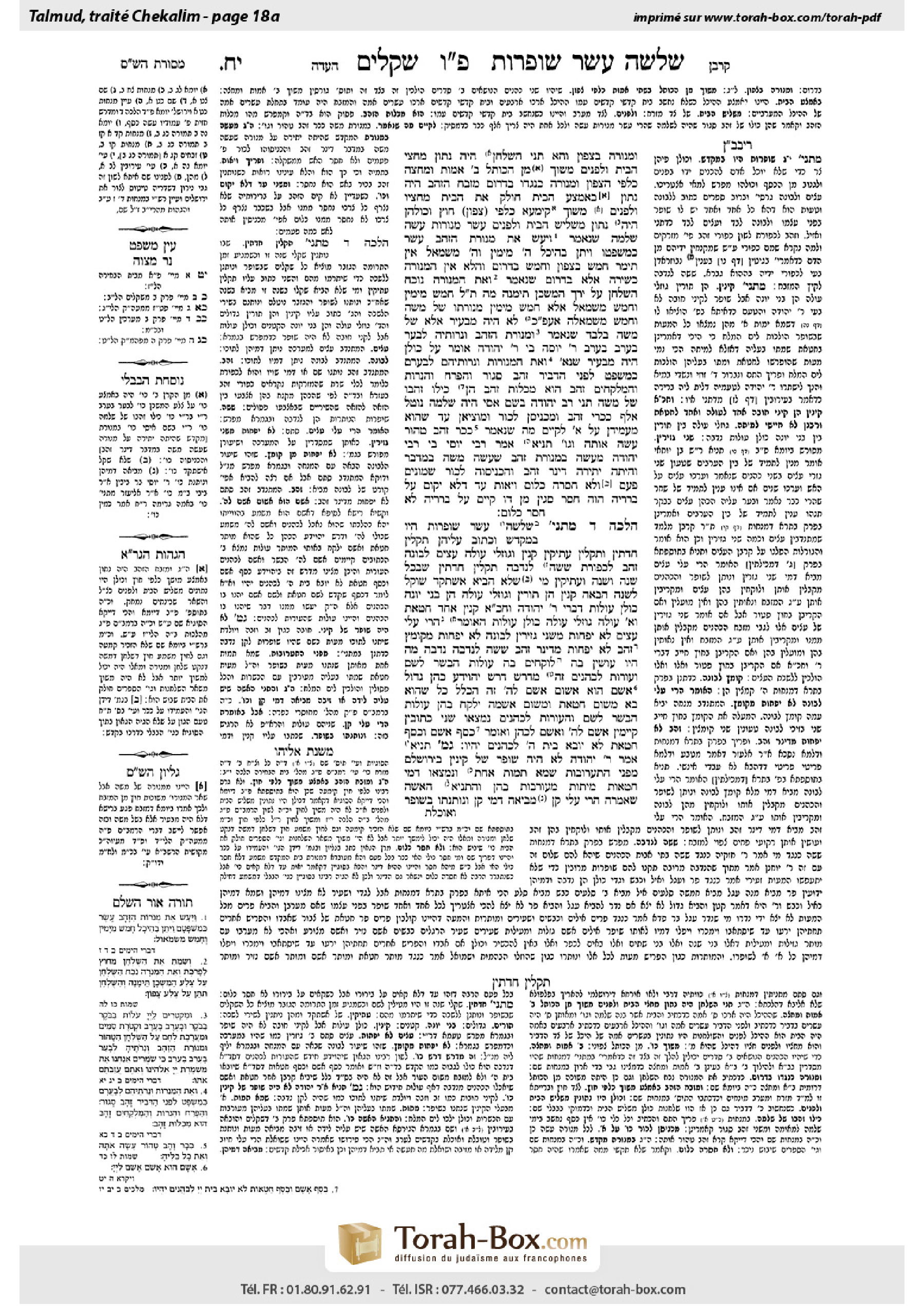
Shekalim 18a: Talmud study for Daf Yomi
Study the Talmud for Daf Yomi with scanned pages, Hebrew text, English translations from Sefaria and AI-generated French translations.
Passage selection and English or AI-generated French translation are available where the scan has annotations. Daf Study is independent of Torah-Box and Sefaria.
Browse Shekalim · שקלים · All tractatesShekalim 18a text and translations
This page of Shekalim includes the Aramaic text and an English translation, alongside the scan above.
שקלים י״ח א · Aramaic and Hebrew text
עֲשָׂרָה שׁוּלְחָנוֹת עָשָׂה שְׁלֹמֹה. וַיַּעַשׂ שׁוּלְחָנוֹת עֲשָׂרָה וַיַּנַּח בַּהֵיכָל חֲמִשָּׁה מִיָּמִין וַחֲמִשָּׁה מִשְּׂמֹאל. אִין תֵּימַר. חֲמִשָּׁה בַדָּרוֹם וַחֲמִשָּׁה בַצָּפוֹן. וַהֲלֹא אֵין הַשּׁוּלְחָן כָּשֵׁר אֶלָּא בַצָּפוֹן. שֶׁנֶּאֱמַר וְאֶת הַשֻּׁלְחָן תִּתֵּן עַל צֶלַע צָפוֹן. מַה תַלָמוּד לוֹמַר. חֲמִשָּׁה מִיָּמִין וַחֲמִשָּׁה מִשְּׂמֹאל. אֶלָּא חֲמִשָּׁה מִיָּמִין שֻׁלְחֲנוּ שֶׁלְמֹשֶׁה וַחֲמִשָּׁה מִשְּׂמאֹלוֹ. אַף עַל פִּי כֵן לֹא הָיָה מְסַדֵּר אֶלָּא שֶׁלְמֹשֶׁה בִּלְבַד. שֶׁנֶּאֱמַר אֶת הַשּׁוּלְחָן אֲשֶׁר עָלָיו לֶחֶם הַפָּנִים. רִבִּי יוֹסֵי בֵּירִבִּי יְהוּדָה אוֹמֵר. עַל כּוּלָּם הָיָה מְסַדֵּר. שֶׁנֶּאֱמַר אֶת הַשּׁוּלְחָנוֹת וַעֲלֵיהֶם לֶחֶם הַפָּנִים. תַּנֵּי. מִזְרַח וּמַעֲרָב הָיוּ נְתוּנִין. דִּבְרֵי רִבִּי. רִבִּי אֶלְעָזָר בֵּירִבִּי שִׁמְעוֹן אוֹמֵר. צָפוֹן וְדָרוֹם הָיוּ נְתוּנִין. מָאן דְּאָמַר. מִזְרַח וּמַעֲרָב. נִיחָא. כּוּלְּהֹן רְאוּיִין לְשֵׁירוּת. מָאן דְּאָמַר. צָפוֹן וְדָרוֹם. נִמְצָא שׁוּלְחָן בַדָּרוֹם וּמְנוֹרָה בַצָּפוֹן. וְהָא תַנֵּי. הַשֻּׁלְחָן הָיָה נָתוּן מֵחֲצִי הַבַּיִת וְלִפְנִים מָשׁוּךְ מִן הַכּוֹתֶל כִּשְׁתֵּי אַמּוֹת כְּלַפֵּי הַצָּפוֹן וּמְנוֹרָה כְנֶגְדּוֹ בְדָרוֹם. מִזְבַּח הַזָּהָב הָיָה נָתוּן בְאֶמְצַע הַבַּיִת חוֹלֵק אֶת הַבַּיִת מֵחֶצְיוֹ וְלִפְנִים מָשׁוּךְ קִימְעָא כְּלַפֵּי הַצָּפוֹן. וְכוּלְּהֹם הָיוּ נְתוּנִין מִשְּׁלִישׁ הַבַּיִת וְלִפְנִים.
עֶשֶׂר מְנוֹרוֹת עָשָׂה שְׁלֹמֹה. [שֶׁנֶּאֱמַר] וַיַּעַשׂ אֶת מְנוֹרוֹת הַזָּהָב עֶשֶׂר כְּמִשְׁפָּטוֹ. אּין תֵּימַר. חָמֵשׁ בַּצָּפוֹן וְחָמֵשׁ בַּדָּרוֹם. וַהֲלֹא אֵין הַמְּנוֹרָה כְשֵׁירָה אֶלָּא בַדָּרוֹם. שֶׁנֶּאֱמַר וְאֶת הַמְּנוֹרָה נֹכַח הַשֻּׁלְחָן עַל יֵרַךְ הַמִּשְׁכָּן תֵּימָנָה. מַה תַלָמוּד לוֹמַר. חָמֵשׁ מִיָּמִין וְחָמֵשׁ מִשְּׂמֹאל. אֶלָּא חָמֵשׁ מִיָּמִין מְנוֹרָתוֹ שֶׁלְמֹשֶׁה וְחָמֵשׁ מִשְּׂמאֹלָהּ. אַף עַל פִּי כֵן לֹא הָיָה מַבְעִיר אֶלָּא שֶׁלְמֹשֶׁה בִּלְבַד. שֶׁנֶּאֱמַר וּמְנוֹרַת הַזָּהָב וְנֵרוֹתֶיהָ לְבָעֵר בָּעֶרֶב בָּעֶרֶב. רִבִּי יוֹסֵה בֵּירִבִּי יְהוּדָה אוֹמֵר. עַל כּוּלָּם הָיָה מַבְעִיר. שֶׁנֶּאֱמַר וְאֶת הַמְּנוֹרוֹת וְנֵרוֹתֵיהֶם לְבַעֲרָם כַּמִּשְׁפָּט לִפְנֵי הַדְּבִיר זָהָב סָגוּר. וְהַפֶּרַח וְהַנֵּרוֹת וְהַמֶּלְקָחַיִם זָהָב הוּא מִכְלוֹת זָהָב. הֵן כִּילוּ זְהָבוֹ שֶׁלְשְׁלֹמֹה. רַב יְהוּדָה בְשֵׁם אַסִּי. הָיָה שְׁלֹמֹה נוֹטֵל אֶלֶף כִּכְּרֵי זָהָב וּמַכְנִיסָן (לָאוֹר) [לַכּוּר] וּמוֹצִיאָן עַד שֶׁהוּא מַעֲמִידָן עַל אֶחָד. לְקַיֵים מַה שֶׁנֶּאֱמַר כִּכָּר זָהָב טָהוֹר עָשָׂה אוֹתָהּ וגו׳. תַּנֵּי. אָמַר רִבִּי יוֹסֵי בֵּירִבִּי יְהוּדָה. מַעֲשֶׂה בִמְנוֹרַת זָהָב שֶׁעָשָׂה מֹשֶׁה בַמִּדְבָּר וְהָיְתָה יְתֵירָה דֵינָר זָהָב. וְהִכְנִיסוּהָ לַכּוּר שְׁמוֹנִים פַּעַם וְלֹא חָסְרָה כְלוּם. וְיֵאוּת. עַד דְּלֹא יְקוּם עַל בְּרָרֵיהּ הֲוָה חָסֵר סַגִּין. מִן דּוּ קַיָים עַל בְּרָרֵיהּ לֹא חָסֵר כְּלוּם.
משנה: שְׁלֹשָׁה עָשָׂר שׁוֹפָרוֹת הָיוּ בַּמִּקְדָּשׁ וְכָתוּב עֲלֵיהֶן תִּקְלִין חַדְתִּין וְתִקְלִין עַתִּיקִין קִינִּין וְגוֹזְלֵי עוֹלָה עֵצִים לְבוֹנָה זָהָב לַכַּפֹּרֶת. שִׁשָּׁה לִנְדָבָה. תִּקְלִין חַדְתִּין שֶׁבְּכָל שָׁנָה וְשָׁנָה. וְעַתִּיקִין מִי שֶׁלֹּא הֵבִיא אֶשְׁתָּקַד שׁוֹקֵל לְשָׁנָה הַבָּאָה. קִינִּין הֵן תּוֹרִין. וְגוֹזְלֵי עוֹלָה הֵן בְּנֵי יוֹנָה. כּוּלָּן עוֹלוֹת דִּבְרֵי רַבִּי יְהוּדָה. וַחֲכָמִים אוֹמְרִים קִינִּין אֶחָד חַטָּאת וְאֶחָד עוֹלָה. גּוֹזְלֵי עוֹלָה כּוּלָּן עוֹלוֹת: הָאוֹמֵר הֲרֵי עָלַי עֵצִים לֹא יִפְחוֹת מִשְּׁנֵי גִּיזְירִין. לְבוֹנָה לֹא יִפְחוֹת מִקּוֹמֶץ. זָהָב לֹא יִפְחוֹת מִדִּינַר זָהָב. שִׁשָּׁה לִנְדָבָה. נְדָבָה מֶה הָיוּ עוֹשִׂין בָּהּ לוֹקְחִין בָּהּ עוֹלוֹת הַבָּשָׂר לַשֵּׁם וְהָעוֹרוֹת לַכֹּהֲנִים. זֶה מִדְרָשׁ דָּרַשׁ יְהוֹיָדָע כֹּהֵן גָּדוֹל אָשָׁם הוּא אָֹשׂם אָשַׁם לַיְיָ. זֶה הַכְּלָל כֹּל שֶׁהוּא בָּא מִשֵּׁם חֵטְא וּמִשֵּׁם אַשְׁמָה יִלָּקַח בּוֹ עוֹלוֹת הַבָּשָׂר לַשֵּׁם וְהָעוֹרוֹת לַכֹּהֲנִים. נִמְצְאוּ שְׁנֵי כְּתוּבִין קַיָימִין אָשָׁם לַיי וְאָשָׁם לַכֹּהֵן. וְאוֹמֵר כֶּסֶף אָשָׁם וְכֶסֶף חַטָּאוֹת לֹא יוּבָא בֵּית יי לַכֹּהֲנִים יִהְיוּ:
הלכה: תַּנֵּי. אָמַר רִבִּי יְהוּדָה. וְלֹא הָיָה שׁוֹפָר שֶׁלְקִינִּים בִּירוּשָׁלַיִם מִפְּנֵי הַתַּעֲרוֹבֶת. שֶׁמָּא תָמוּת אַחַת מֵהֶן וְנִמְצְאוּ דְמֵי חַטָּאוֹת מֵיתוֹת מְעוּרָבוֹת בָּהֶן. [וְהָ]תַנֵּי. הָאִשָּׁה שֶׁאָמְרָה. הֲרֵי עָלַי קַן. מֵבִיאָה דְמֵי קַן וְנוֹתְנָתוֹ בַשּׁוֹפָר וְאוֹכֶלֶת בַקֳּדָשִׁים וְאֵינָהּ חוֹשֶׁשֶׁת שֶׁמָּא נִתְעַצֵּל כֹּהֵן. וְאֵין הַכֹּהֵן חוֹשֵׁשׁ שֶׁמָּא דְמֵי חַטָּאוֹת מֵיתוֹת מְעוּרָבוֹת בָּהֶן. [כִּי קָאָמְרִינָן. בְּחַטָּאת שֶׁמֵּתוּ בַעֲלֵיהֶן וַדַּאִי. וְאִי אָמְרִינָן. נִבְרוֹר ד׳ זוּזֵי וְנַשְׁדֵּי בִּנְהָרָא וְאִידָּךְ לִישְׁתְּרוּ. הָא אָמְרִינָן בָעָלְמָא. רִבִּי יְהוּדָה לֵית לֵיהּ בְּרֵירָה.]
Shekalim 18a · English translation
Solomon made ten tables: Solomon made ten tables and deposited them in the Temple Hall, five to the right and five to the left 4:8.. If you would say, five to the North and five to the South, but the table is only qualified in the North, as it is said, and the table put on the North side 26:35.. Why does the verse say, five to the right and five to the left? Five to the right of Moses’s table, and five to its left. Nevertheless, only Moses’s alone was used, as it is said 7:49., the table on which is the shew-bread. Rebbi Yose ben Rebbi Jehudah says, all of them were used, for it is said 4:19., the tables on which the shew-bread is. It was stated: They were put East and West, the words of Rebbi. Rebbi Eleazar ben Rebbi Simeon says, they were put North and South. He who says East and West is understandable; all of them are proper for Service 40:24, the candelabrum at the South side, standing East-West, opposite the table.. He who says, North and South, would then not the table be in the South and the candelabrum in the North? But was it not stated, the table was in the middle of the Temple, more to the inside, about two cubits away from the wall to the North, and opposite it the candelabrum in the South 99a.. The golden altar was in the middle of the Temple, dividing the Temple, inside, a little bit drawn to the North. All were put inside of a third of the Temple.
Solomon made ten candelabra, [as it is said], he made the ten candelabra according to its rules. 4:7. In the other two sources correctly “their rules”, and they add the end of the verse, to which the next argument refers: and put them in the Temple Hall, five to the right and five to the left. Cf. Babli Menaḥot98b–99a.. If you would say, five to the North and five to the South, but the candelabrum is only qualified in the South, as it is said, and the candelabrum opposite the table on the South side 26:35.. Why does the verse say, five to the right and five to the left? Five to the right of Moses’s candelabrum, and five to its left. Nevertheless, only Moses’s alone was kindled, as it is said13:11, showing actual practice.\, and the golden candelabrum and its lights to kindle evening by evening. Rebbi Yose ben Rebbi Jehudah says, all of them were kindled, for it is said. 4:20–21., the candelabra and their lights, to kindle them regularly in the Temple Hall, closed gold4:4, Note 101., and the flower. 8:4 but not in the original instructions, Ex. 25:31–40., and the lights, and the pincers of gold, this uses up the gold. These used up Solomon’s gold. Rav Jehudah in the name of Assi: Solomon took 1’000 talents of silver, put them repeatedly into the (fire) [smelting furnace] until they were reduced to one, to fulfill what is written 37:24., from one talent of pure gold he made it. It was stated, Rebbi Yose ben Rebbi Jehudah said, 4:4, Notes 107–108. it happened that the golden candelabrum which Moses made in the desert was in excess of one gold denar, and they returned it to the fire eighty times and it did not lose anything. This is correct. Before it is refined it loses a lot, once it is refined it will not miss anything.
MISHNAH: Thirteen horns were in the Temple, and it was written on them: New sheqalim, and old sheqalim, nests In all cases, two birds are required, one as purification and one as elevation offering, following different rules., young birds for elevation sacrifices, wood, and incense, gold for the cover, and six for voluntary gifts. New sheqalim for the current year, and old ones, one who did not bring the past year, gives it for the next one are given for current use; sheqalim for past years are treated directly as remainders from that year (Mishnah 4:3)..
“Nests” are turtle doves and “young birds as elevation offerings” are pigeons, all for elevation offerings, the words of Rebbi Jehudah, the woman after childbirth (Lev. 12:8), the poor person healed from skin disease (Lev. 14:22), the male healed from gonorrhea (Lev. 15:14) and the female from flux (Lev. 15:29), personally deliver the birds to the Cohen who thereby is assured that the person is alive. As a consequence, for him the money deposited for “nests” is for elevation sacrifices; the distinction from “young birds for elevation offerings” only is in the amount of money required and the kind of birds bought. Mishnah 7 was explained following the Sages in Mishnah 8.. But the Sages say, of “nests” one is a purification offering and one an elevation offering; “young birds as elevation offerings” are all elevation offerings. If one says, “I am obligated for wood logs”, he may not give less than for two logs; “incense”, he may not give less than for a fistful; “gold”, he may not give less than for a gold denar. “Six for voluntary gifts.” What did they do with this? One buys with it elevation offerings; the flesh is for the Eternal and the skins are for the Cohanim. This explanation did Jehoyada the High Priest explain: It is a reparation offering, repairing, a reparation offering for the Eternal 5:19.; this is the principle: Elevation offerings should be bought from anything coming because of sin or reparation; the flesh is for the Eternal and the skins are for the Cohanim. It turns out that both parts of the verse are fulfilled, a reparation offering for the Eternal and reparation for the Cohanim. And it says, money for reparation offerings and money for purification offerings are not to be brought to the Eternal’s House, it shall be for the Cohanim 12:17. The money is not for the Cohanim but the Cohanim receive the skins of the animals bought with the excess monies..
HALAKHAH: It was stated55a. This paragraph is two texts in one. The Yerushalmi text is that of the scribe of the Leiden manuscript; the Babli text (Yoma55b) is reproduced in Babylonian Aramaic in B and the corrector’s text given in brackets here.: “Rebbi Jehudah said, there was no horn for nests in Jerusalem because of mix-up.” Maybe one of them would die and it turn out that moneys of dying purification sacrifices were mixed up in them55b. An animal dedicated as a purification sacrifice whose owner died between dedication and sacrifice cannot be used for anything, but it has to be let to die (Mishnah Temurah4:1). Moneys dedicated for a purification sacrifice under the same circumstances have to be destroyed; in Israel this means to be thrown into the Dead Sea. R. Jehudah holds that such money mixed up with other moneys makes everything unusable and worthless.. [But did we not state] (It was stated): A woman who said, I have to bring a nest, brings the money for the nest and puts it in the horn, and eats from sancta without worry. And the Cohen does not worry that maybe moneys of dying purification sacrifices are mixed up in them unless a sundown was preceded by her sacrifice. (Therefore ג reads “gets up in the morning and eats.”) The statement implies that the horn for nests was emptied several times every hour and any money deposited there immediately used for the required sacrifice. This makes R. Jehudah’s objection moot; practice follows the Mishnah.
In Babylonia, the Galilean explanation was rejected (Yoma55b); therefore, the baraita is read as a question, and an objection to R. Jehudah.
Babli Eruvin32a, Menaḥot27a.. [For what we are saying is about purification sacrifices whose owner certainly died. We could say, let us choose two zuz and throw them into the River, then the remainder should be permitted, but do we not say in general that Rebbi Jehudah does not accept retroactive choices?]
Text from Sefaria: The Jerusalem Talmud, edition by Heinrich W. Guggenheimer. Berlin, De Gruyter, 1999-2015 (CC BY); The Jerusalem Talmud, translation and commentary by Heinrich W. Guggenheimer. Berlin, De Gruyter, 1999-2015 (CC BY).