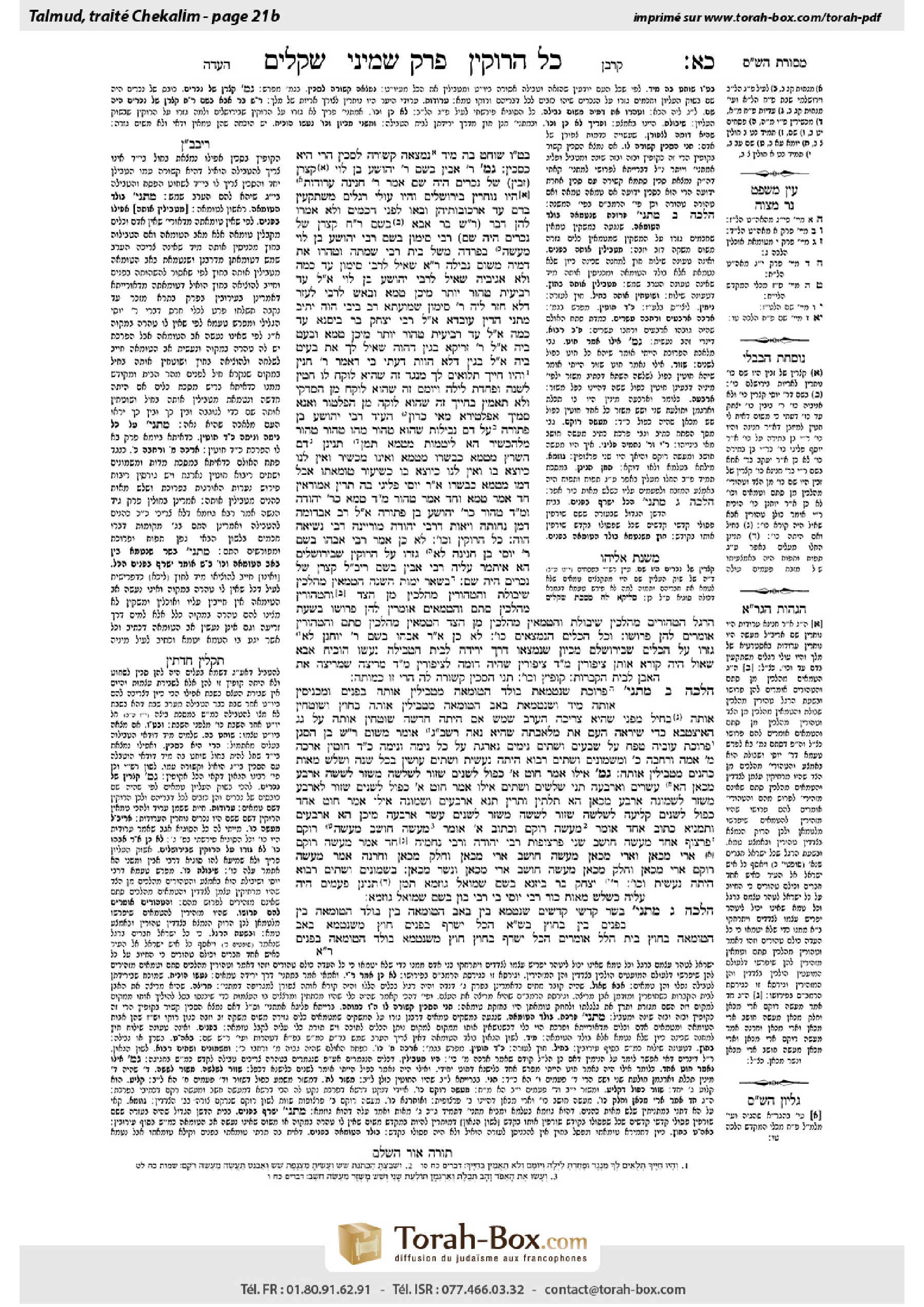
Shekalim 21b: Talmud study for Daf Yomi
Study the Talmud for Daf Yomi with scanned pages, Hebrew text, English translations from Sefaria and AI-generated French translations.
Passage selection and English or AI-generated French translation are available where the scan has annotations. Daf Study is independent of Torah-Box and Sefaria.
Browse Shekalim · שקלים · All tractatesShekalim 21b text and translations
This page of Shekalim includes the Aramaic text and an English translation, alongside the scan above.
שקלים כ״א ב · Aramaic and Hebrew text
משנה: כָּל הָרוּקִּין הַנִּמְצָאִין בִּירוּשָׁלַיִם טְהוֹרִין חוּץ מִשֶּׁל שׁוּק הָעֶלְיוֹן דִּבְרֵי רִבִּי מֵאִיר. רִבִּי יוֹסֵי אוֹמֵר בִּשְׁאָר כָּל יְמוֹת הַשָּׁנָה שֶׁבָּאֶמְצַע טְמֵאִין שֶׁבַּצְּדָדִין טְהוֹרִין. וּבִשְׁעַת הָרֶגֶל שֶׁבָּאֶמְצַע טְהוֹרִין שֶׁבַּצְּדָדִין טְמֵאִין שֶׁמִּפְּנֵי שֶהַמּוּעָטִין מִסְתַּלְּקִין לַצְּדָדִין: כָּלַ הַכֵּלִים הַנִּמְצָאִין בִּירוּשָׁלַיִם דֶּרֶךְ יְרִידָה לְבֵית הַטְּבִילָה טְמֵאִין וְדֶרֶךְ עֲלִיָּה טְהוֹרִין שֶׁלֹּא כִּירִידָתָן עֲלִיָיתָן דִּבְרֵי רִבִּי מֵאִיר. רִבִּי יוֹסֵי אוֹמֵר כּוּלָּן טְהוֹרִין חוּץ מִן הַסַּל וְהַמַּגְרֵיפָה הַמְיוּחָדִין לַקְּבָרוֹת: סַכִּין שֶׁנִּמְצֵאת בְּאַרְבָּעָה עָשָׂר שׁוֹחֵט בָּהּ מִיָּד. בִּשְׁלְֹשָׁה עָשָׂר שׁוֹנֶה וּמַטְבִּיל. קוֹפִיץ בֵּין בָּזֶה וּבֵין בָּזֶה שׁוֹנֶה וּמַטְבִּיל. חָל אַרְבָּעָה עָשָׂר לִהְיוֹת בְּשַׁבָּת שׁוֹחֵט בָּהּ מִיָּד. בַּחֲמִשָּׁה עָשָׂר שׁוֹחֵט בָּהּ מִיָּד. נִמְצֵאת קְשׁוּרָה לְסַכִּין הֲרֵי זוֹ כַּסַּכִּין:
הלכה: כָּל הָרוּקִּין כול׳. רִבִּי אַבִּין בְּשֵׁם רִבִּי יְהוֹשֻׁעַ בֶּן לֵוִי. קַצְרָן שֶׁלְגּוֹיִם הָיָה שָׁם. אָמַר רִבִּי חֲנִינָה. עֲרוּדוֹת הָיוּ נוֹחֲרִין בִּירוּשָׁלִַם וְהָיוּ עוֹלֵי רְגָלִים מִשְׁתַּקְּעִין בַּדָּם עַד אַרְכּוּבוֹתֵיהֶן. [וּבָאוּ לִפְנֵי חֲכָמִים וְלֹא אָמְרוּ לָהֶם דָּבָר.] רִבִּי שִׁמְעוֹן בַּר אַבָּא בְשֵׁם רִבִּי חֲנִינָה. קַצְרָן שֶׁלְגּוֹיִם הָיָה שָׁם.
רִבִּי סִימוֹן בְּשֵׁם רִבִּי יְהוֹשֻׁעַ בֶּן לֵוִי. מַעֲשֶׂה בְפִרְדָה מִשֶּׁלְבֵּית רִבִּי שֶׁמֵּתָה וְטִיהֲרוּ אֶת דָּמֶיהָ מִשֵׁם נְבֵילָה. רִבִּי אֶלְעָזָר שְׁאִיל לְרִבִּי סִימוֹן. עַד כַּמָּה. וְלֹא אַגִּיבֵיהּ. שְׁאִיל לְרִבִּי יְהוֹשֻׁעַ בֶּן לֵוִי. אָמַר לֵיהּ. עַד רְבִיעִית טָהוֹר. יוֹתֵר מִיכֵּן טָמֵא וּבְאַשׁ לְרִבִּי לָעְזָר דְּלָא חֲזַר לֵיהּ רִבִּי שִׁמְעוֹן שְׁמוּעֲתָא. רַב בֵּיבַי הֲוָה יְתִיב מַתְנֵי הָדֵין עוֹבְדָא. אֲמַר לֵיהּ רִבִּי יִצְחָק בַּר בִּיסְנָא. עַד רְבִיעִית טָהוֹר. יוֹתֵר מִיכֵּן טָמֵא. וּבְעִט בֵּיהּ. אֲמַר לֵיהּ רִבִּי זְרִיקָן. בְּגִין דְּהוּא שְׁאַל לָךְ אַתְּ בָּעִיט בֵּיהּ. אֲמַר לֵיהּ. [בְּגִין] דְלָא הֲוָות דַּעְתִּי בִּי. דְּאָמַר רִבִּי חָנִין. וְהָיוּ חַיֶּיךָ תְּלוּיִים לְךָ מִנֶּגֶד. זֶה שֶׁהוּא לוֹקֵחַ לוֹ חִטִּים לַשָּׁנָה. וּפָחַדְתָּ לַיְלָה וְיוֹמָם. זֶה שֶׁהוּא לוֹקֵחַ מִן הַסִּידָקִי. וְלֹא תַאֲמִין בְּחַיֶּיךָ. זֶה שֶׁהוּא לּוֹקֵחַ מִן הַפַּלְטָר. וַאֲנָא סְמִיךְ לְפַלְטֵירָא. מַאי כְדוֹן. הֵעִיד רִבִּי יְהוֹשֻׁעַ בֶּן פְּתִירָא עַל דַּם נְבֵילוֹת שֶׁהוּא טָהוֹר. מָהוּ טָהוֹר. טָהוֹר מִלְּהַכְשִׁיר. הָא לְטַמּוֹת מְטַמֵּא. תַּמָּן תַּנִּינָן. דַּם הַשֶּׁרֶץ מְטַמֵּא כִּבְשָׂרוֹ. מְטַמֵּא וְאֵינוֹ מַכְשִׁיר. וְאֵין לָנוּ כַּיּוֹצֵא בוֹ. אֵין לָנוּ כַּיּוֹצֵא בוֹ שִׁיעוּר טוּמְאָתוֹ. אֲבָל דָּמוֹ מְטַמֵּא כִּבְשָׂרוֹ. אָמַר רַב יוֹסֵף. מָאן דְּאָמַר טָמֵא. כְּרִבִּי יְהוּדָה. וּמָאן דְּאָמַר טָהוֹר. כְּרִבִּי יְהוֹשֻׁעַ בֶּן בָּתִירָה. אָמַר לֵיהּ רַב אֲבוּדָמָא נְחוּתָא. וְיָאוּת. רִבִּי יוּדָה מוֹדִיָינֵיהּ דְּנָשִׂיָיא הֲוָה.
לֹא כֵן אָמַר רִבִּי אַבָּהוּ בְשֵׁם רִבִּי יוֹסֵי בֶּן חֲנִינָה. לֹא גָזְרוּ עַל הָרוּקִּים שֶׁבִּירוּשָׁלִַם. [הָא אִיתְמַר] עֲלֵיהּ. רִבִּי אַבִּין בְּשֵׁם רִבִּי יְהוֹשֻׁעַ בֶּן לֵוִי. קַצְרָן שֶׁלְגּוֹיִם הָיָה שָׁם. בִּשְׁאָר יְמוֹת הַשָּׁנָה הַטְּמֵאִים מְהַלְּכִין שִׁיבּוֹלֶת וְהַטְּהוֹרִין מְהַלְּכִין מִן הַצַּד. וְהַטְּהוֹרִין מְהַלְּכִין סְתָם וְהַטְּמֵאִים אוֹמְרִים לָהֶם. פְּרוּשׁוּ. בִּשְׁעַת הָרֶגֶל הַטְּהוּרִין מְהַלְּכִין שִׁיבּוֹלֶת וְהַטְּמֵאִין מְהַלְּכִין מִן הַצַּד. וְהַטְּמֵאִים מְהַלְּכִין סְתָם וְהַטְּהוֹרִין אוֹמְרִין לָהֶן. פְּרוּשׁוּ.
לֹא כֵן אָמַר רִבִּי אַבָּהוּ בְשֵׁם רִבִּי יוֹחָנָן. לֹא גָזְרוּ עַל הַכֵּלִים שֶׁבִּירוּשָׁלִַם. מִכֵּיוָן שֶׁנִּמְצְאוּ דֶּרֶךְ יְרִידָה לְבֵית טְבִילָה נַעֲשׂוּ הוֹכִיחַ.
אַבָּא שָׁאוּל הָיָה קוֹרֵא אוֹתָן צִפּוֹרֶן. מָאן דְּאָמַר צִפּוֹרֶן. שֶׁהוּא דוֹמֶה לַצִּיפּוֹרֶן. מָאן דְּאָמַר מְרִיצָה. שֶׁהִיא מְרִיצָה אֶת הָאֶבֶן [לְבֵית הַקְּבָרוֹת.]
תַּנֵּי. הַסַּכִּין קְשׁוּרָה לוֹ הֲרֵי זוֹ כְמוֹתָהּ.
משנה: פָּרוֹכֶת שֶׁנִּיטְמֵאת בִּוְלַד הַטּוּמְאָה מַטְבִּילִין אוֹתָהּ בִּפְנִים וּמַכְנִיסִין אוֹתָהּ מִיָּד. וְאֶת שֶׁנִּיטְמֵאת בְּאַב הַטּוּמְאָה מַטְבִּילִין אוֹתָהּ בַּחוּץ וְשׁוֹטְחִין אוֹתָהּ בַּחֵיל מִפְּנֵי שֶׁהִיא צְרִיכָה הַעֲרֵב שֶׁמֶשׁ. אִם הָיְתָה חֲדָשָׁה שׁוֹטְחִין אוֹתָהּ עַל גַּג הָאִיצְטָבַא כְּדֵי שֶׁיִּרְאוּ הָעָם אֶת מְלַאכְתָּהּ שֶׁהִיא נָאָה: רַבָּן שִׁמְעוֹן בֶּן גַּמְלִיאֵל אוֹמֵר מִשֵּׁם רַבִּי שִׁמְעוֹן בֶּן הַסְּגַן פָּרוֹכֶת עוֹבְיָהּ טֶפַח עַל שִׁבְעִים וּשְׁתַּיִם נִימִים נֶאֱרֶגֶת עַל כָּל נִימָה וְנִימָה עֶשְׂרִים וְאַרְבָּעָה חוּטִין. אָרְכָּהּ אַרְבָּעִים אַמָּה וְרָחְבָּהּ עֶשְׂרִים וּמִשְּׁמוֹנִים וּשְׁתֵּי רִבּוֹא הָיְתָה נַעֲשֵׂית. וּשְׁתַּיִם עוֹשִׂין בְּכָל שָׁנָה וּשְׁלֹשׁ מֵאוֹת כֹּהֲנִים מַטְבִּילִין אוֹתָהּ:
הלכה: אִילּוּ אָמַר חוּט. אֶחָד. כָּפוּל. לִשְׁנַיִם. שָׁזוּר. לִשְׁלֹשָׁה. מָשְׁזָר. לְשִׁשָּׁה. אַרְבַּע מִיכָּן. הָא עֶשְׂרִים וְאַרְבָּעָה. תַּנֵּי. שְׁלֹשִׁים וּשְׁנַיִם. אִילּוּ אָמַר חוט. אֶחָד. כָּפוּל. לִשְׁנַיִם. שָׁזוּר. לְאַרְבַּע. מָשְׁזָר. לִשְׁמוֹנָה. אַרְבָּעָה מִיכָּן. הָא תַלְתִּין וּתְרֵיי. תַּנֵּי. אַרְבָּעִים וּשְׁמוֹנָה. אִילּוּ אָמַר חוט. אֶחָד. כָּפוּל. לִשְׁנַיִם. קְלִיעָה. לִשְׁלֹשָׁה. שָׁזוּר. לְשִׁשָּׁה. מָשְׁזָר. לִשְׁנֵים עָשָׂר. אַרְבָּעָה מִיכָּן. הָא אַרְבָּעִין וּתְמַנְיָא.
כָּתוּב אֶחָד אוֹמֵר. מַעֲשֵׂה רוֹקֵם. וְכָתוּב אַחֵר אוֹמֵר. מַעֲשֵׂה חוֹשֵׁב. מַעֲשֵׂה רוֹקֵם. פְּרָצוֹף אֶחָד. מַעֲשֵׂה חוֹשֵׁב. שְׁנֵי פְּרָצוֹפּוֹת. רִבִּי יוּדָה וְרִבִּי נְחֶמְיָה. חַד אָמַר. מַעֲשֵׂה רוֹקֵם אֲרִי מִיכָּן וַאֲרִי מִיכָּן. מַעֲשֵׂה חוֹשֵׁב. אֲרִי מִיכָּן וְחָלַק מִיכָּן. וְחוֹרָנָה אָמַר. מַעֲשֵׂה רוֹקֵם. אֲרִי מִיכָּן וְחָלַק מִיכָּן. מַעֲשֵׂה חוֹשֵׁב. אֲרִי מִיכָּן וְנֶשֶׁר מִיכָּן.
(תַּנֵּי.) בִּשְּׁמוֹנִים וּשְׁתַּים רִיבּוֹא הָיְתָה נַעֲשֵׂית. רִבִּי יִצְחָק בַּר בִּסְנָא בְשֵׁם שְׁמוּאֵל. גְּזוּמָא. תַּמָּן תַּנִּינָן. פְּעָמִים עָלָיו כִּשְׁלשׁ מֵאוֹת כּוֹר. רִבִּי יוֹסֵי בֵּירִבִּי בּוּן בְּשֵׁם שְׁמוּאֵל. גְּזוּמָא.
משנה: בְּשַׂר קָדְשֵׁי קָדָשִׁים שֶׁנִּיטְמָא בֵּין בְּאַב הַטּוּמְאָה בְּין בִּוְלַד הַטּוּמְאָה בֵּין בִּפְנִים בֵּין בַּחוּץ בֵּית שַׁמַּאי אוֹמְרִים הַכֹּל יִשָּׂרֵף בִּפְנִים חוּץ מִשֶּׁנִּטְמָא בְּאַב הַטּוּמְאָה בַּחוּץ. בֵּית הִלֵּל אוֹמְרִים הַכֹּל יִשָּרֵף בַּחוּץ חוּץ מִשֶּׁנִּיטְמָא בִּוְלַד הַטּוּמְאָה בִּפְנִים: רִבִּי אֱלִיעֶזֶר אוֹמֵר שֶׁנִּיטְמָא בְּאַב הַטּוּמְאָה בֵּין בִּפְנִים בֵּין בַּחוּץ יִשָּרֵף בַּחוּץ. שֶׁנִּיטְמָא בִּוְלַד הַטּוּמְאָה בֵּין בִּפְנִים בֵּין בַּחוּץ יִשָּׂרֵף בִּפְנִים. רִבִּי עֲקִיבָה אוֹמֵר מְקוֹם טוּמְאָתוֹ שָׁם שְׂרֵיפָתוֹ:
Shekalim 21b · English translation
MISHNAH: All spittle4:5). By rabbinic usage, all Gentiles are considered to be in this category. In Jerusalem, where people are used to eat sancta the entire year according to R. Meïr, or on the holidays according to R. Yose, one may assume that impure people are careful not to contaminate their pure neighbors. This is a reconstruction by authors living two generations after the destruction of the Temple. found in Jerusalem is pure except on the Upper Market, the words of Rebbi Meïr. Rebbi Yose says, on all other days of the year, those in the middle of the road are impure, and those on the sides pure. On holidays, those in the middle of the road are pure and those on the sides impure since the minority will remove themselves to the sides.
All implements which are found in Jerusalem on the road descending to the place of immersion are impure, on the way ascending they are pure since they were brought down on a way different from that on which they were brought up, the words of Rebbi Meïr. Rebbi Yose says, all are pure except the bag and the rake set apart for graves.
If a knife was found on the Fourteenth sacrifice. Even though the previous Mishnah stated that all implements found in Jerusalem are presumed to be pure, for use on sancta one is restrictive and requires immersion in a miqweh and waiting for the following sundown. The only time this requirement is waived is the 14 of Nisan, the day of mass slaughter, where it is presumed that every knife which is qualified to be used for ritual slaughter was immersed in a miqweh the previous day., one may slaughter with it immediately; on the Thirteenth one has to repeat and immerse.. A dagger. in either case one has to repeat and immerse. If the Fourteenth falls on a Sabbath, one may slaughter with it immediately; on the Fifteenth one may slaughter with it immediately. If it was tied to a knife its status is that of the knife.
HALAKHAH: “All spittle,” etc. Rebbi Abbin in the name of Rebbi Joshua ben Levi: A Gentile fortification”. The Babli text reads קצרן “their laundry”. was there. Rebbi Ḥanina said, they were stabbing wild donkeys in Jerusalem and the feet of the pilgrims were immersed in blood up to their knee joints 11:26–28), this does not extend to their blood, which does not cause impurity. Gentile circus games have no impact on purity in Jerusalem (except for the removal of the carcasses which must be done by Gentiles.) Babli Menaḥot103b.. [They came before the Sages who did not tell them anything.] Rebbi Simeon bar Abba in the name of Rebbi Ḥanina: A Gentile fortification was there.
8, Notes 51–62. Rebbi Simon in the name of Rebbi Joshua ben Levi: It happened that a mule of Rebbi’s household died and they declared its blood pure regarding the carcass. Rebbi Eleazar asked Rebbi Simon, how much? He did not take notice of him. He asked Rebbi Joshua ben Levi who told him, it is pure up to a quartarius. More than that is impure. Rebbi Eleazar felt badly that Rebbi Simon had not repeated the tradition to him. Rav Bevai was sitting stating this occurrence. Rebbi Isaac bar Bisna asked him, is it pure up to a quartarius; more than that impure? He was unfriendly to him. Rebbi Zeriqa asked him, because he asked you, you were unfriendly to him? He answered him, because my mind was not clear, as Rebbi Ḥanin said, . 28:66.your life will hang far from you, that is one who buys a year’s supply of wheat, you will be fearful night and day, that is one who buys from the Saracen, and you will not believe in your survival, that is one who buys from the retail store, and I am dependent on retail stores. What about it? “Rebbi Joshua ben Bathyra testified about blood of carcasses that it is pure.8:1.” What means pure? It is pure in that it does not prepare, but for impurity it makes impure. There, we have stated “The blood of a crawling animal is like its flesh, it makes impure but does not prepare. Nothing else is like this,6:5.” in the amount needed for impurity but its blood makes impure like its flesh. Rav Joseph said, he who says “impure” follows Rebbi Jehudah; he who said “pure” follows Rebbi Joshua ben Bathyra. Rav Eudaimon the emigrant said to him, this is correct. Rebbi Jehudah was the instructor of the Patriarch.
Did not Rebbi Abbahu say in the name of Rebbi Yose ben Ḥanina, they did not decide about spittle in Jerusalem be considered potentially impure because they touched spittle of unknown provenience, in contrast to all places in the Holy Land outside of Jerusalem (Mishnah Ṭahorot4:5), since the number of people whose impurity is caused by their own body is minuscule. Then why is the Upper Market in Jerusalem excluded? Babli Pesaḥim19b.? [Was it not said] about this, Rebbi Abbin in the name of Rebbi Joshua ben Levi: A Gentile fortification”. The Babli text reads קצרן “their laundry”. was there? In the remainder of the days of a year the impure ones are walking on the path and the pure ones are walking on the shoulder. The pure ones walk without saying anything, the impure ones tell them, keep apart. During a holiday the pure ones are walking on the path and the impure ones are walking on the shoulder. The impure ones walk without saying anything, the pure ones tell them, keep apart.
But did not Rebbi Abbahu say in the name of Rebbi Joḥanan, they did not decide about vessels in Jerusalem? Since they were found on the road descending to the place of immersion, it is proof.
Abba Shaul used to call it and according to the second opinion used exclusively for the gravedigger’s (or burial cave excavator’s) hoe. “fingernail” since it is shaped like a fingernail. He who said מְרִיצָה because it quickly dispatches the stone [to the cemetery.]
It was stated: If he knife was tied to it its status is that of the knife; cf. Note 43..
MISHNAH: If a gobelin became impure by derivative impurity, one immersed it inside and brought it back immediately. But if by original impurity, one immersed it outside and spread it out in the ante-court because it requires sundown. If it was new, one spreads it out on the roof of the stoa so the people could see its workmanship, which was beautiful.
Rabban Simeon ben Gamliel says in the name of Rebbi Simeon, the son of the Executive Officer of the Temple: The thickness of a gobelin was a hand-width. It was woven on 72 strings and each string was composed of 24 threads 26:31), and each kind was twined of six threads.. Its length 40 cubits and its width 20 cubits; it was made for 820’000 {denar}. Two were made every year and 300 Cohanim were immersing it.
HALAKHAH: If it had said “thread”, one, “double”, two, “twisted”, three, “entwined”, six used in the biblical text for all woven textiles used in the Temple (except the garments of the simple priests) means a multiply twisted string. Since there are other words available for small numbers of threads, entwined must designate heavy strings.. There are four kinds, this makes 24. It was stated 32. If it had said “thread”, one, “double”, two, “twisted”, four, “entwined”, eight. There are four kinds, this makes 32. It was stated 48. If it had said “thread”, one, “double”, two, “plaited” three, “twisted”, six, “entwined”, twelve. There are four kinds, this makes 48.
72b.“One verse says embroidered work 26:36., and one verse says, intelligent work 26:31.. Embroidered work, one face, intelligent work, two faces.” Rebbi Jehudah and Rebbi Nehemiah, one said embroidered work, a lion on each side, intelligent work, a lion on one side and nothing on the other side. The other one said, embroidered work, a lion on one side and nothing on the other side, intelligent work, a lion on one side and an eagle on the other side.
(It was stated:) 5, p. 261) also sees here a sign that the statement was not part of the original Galilean Mishnah. “It was made for 820’000 {denar}.” Rebbi Isaac bar Bisna in the name of Samuel: exaggerated. There, we have stated2:2, describing the amount of ashes accumulated on the altar at the end of a night. B quotes the entire Mishnah.: “Sometimes there was on it about 300 kor29a, Ḥulin90b..” Rebbi Yose ben Rebbi Abun in the name of Samuel: exaggerated.
MISHNAH: Flesh of most holy sacrifices which became impure either by original impurity or by derivative impurity, whether inside or outside, the House of Shammai are saying that everything has to be burned inside except what became impure outside by original impurity. The House of Hillel are saying that everything has to be burned outside except what became impure inside by derivative impurity.
Rebbi Eliezer says, what became impure by original impurity, whether inside or outside, shall be burned outside. But what became impure by derivative impurity, whether inside or outside, shall be burned inside. Rebbi Aqiba said, the place of its impurity is the place of its burning 6:23, as explained in Sifra Saw Pereq8(5–6), where also additional opinions of RR. Meïr and Jehudah are reported..
Text from Sefaria: The Jerusalem Talmud, edition by Heinrich W. Guggenheimer. Berlin, De Gruyter, 1999-2015 (CC BY); The Jerusalem Talmud, translation and commentary by Heinrich W. Guggenheimer. Berlin, De Gruyter, 1999-2015 (CC BY).