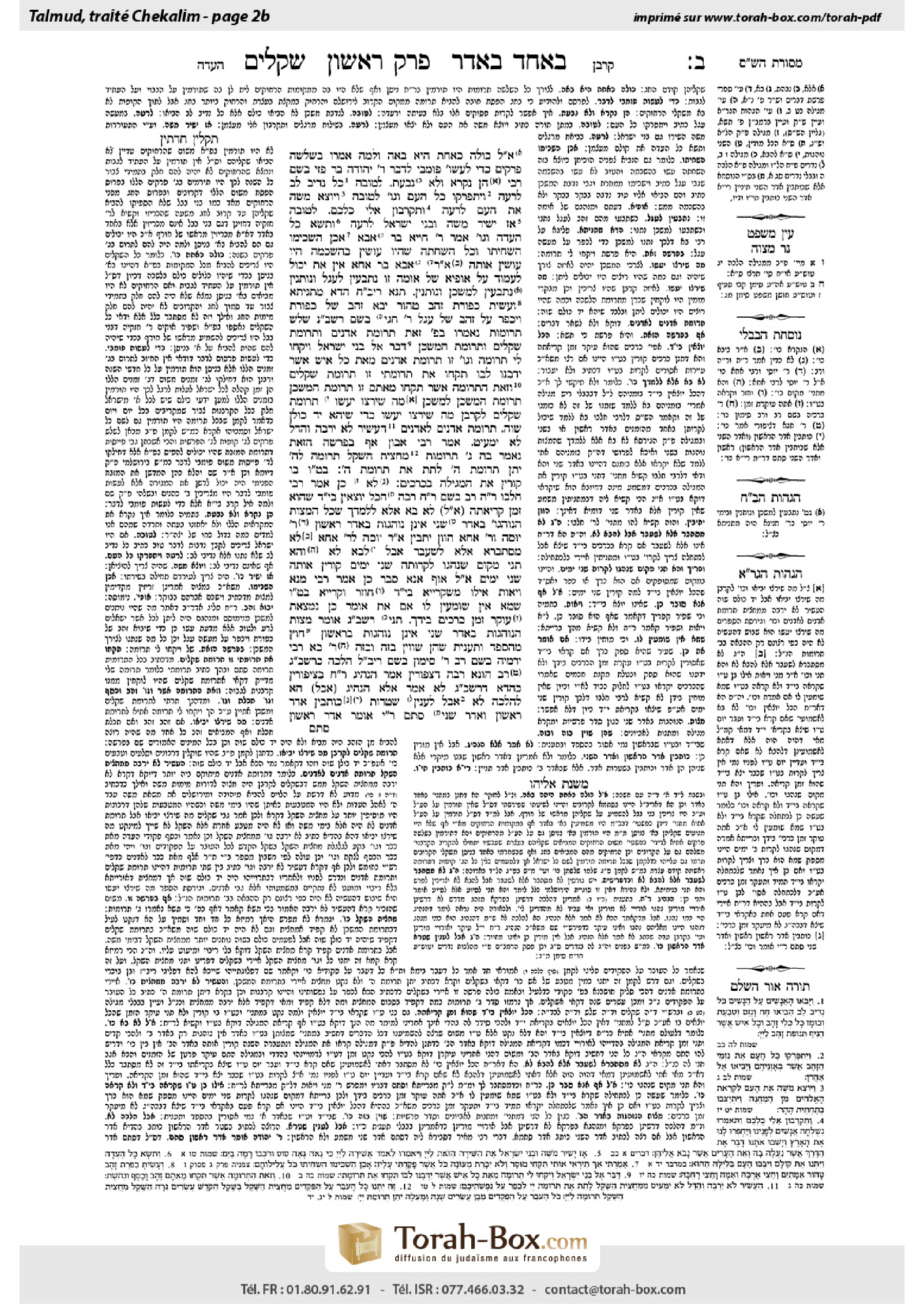
Shekalim 2b: Talmud study for Daf Yomi
Study the Talmud for Daf Yomi with scanned pages, Hebrew text, English translations from Sefaria and AI-generated French translations.
Passage selection and English or AI-generated French translation are available where the scan has annotations. Daf Study is independent of Torah-Box and Sefaria.
Browse Shekalim · שקלים · All tractatesShekalim 2b text and translations
This page of Shekalim includes the Aramaic text and an English translation, alongside the scan above.
שקלים ב׳ ב · Aramaic and Hebrew text
רִבִּי חִזְקִיָּה שָׁאַל. מֵעַתָּה בְּנֵי בָבֵל מַשְׁמִעִין עַל שִׁיקְלֵיהֶן מֵרֹאשׁוֹ שֶׁלְחוֹדֶשׁ. לֹא כְּדֵי שֶׁיָּבִיאוּ יִשְׂרָאֵל שִׁקְלֵיהֶן בְּעוֹנָתָן וְתִיתָּרֵם תְּרוּמַת הַלִּישְׁכָּה מִן הַחֲדָשָׁה בִזְמַנָּהּ בְּאֵחָד בְּנִיסָן. הָתִיב רִבִּי עוּלָּא קוֹמֵי רִבִּי מָנָא. וְהָא תַנִּינָן. בִּשְׁלשָׁה פְּרָקִים בַּשָּׁנָה תּוֹרְמִין אֶת הַלִּשְׁכָּה בְּפַרְסְ הַפֶּסַח בְּפַרְסְ הָעֲצֶרֶת בְּפַרְסְ הַחַג. אָמַר לֵיהּ. נֵימַר. אִילֵּין דִּקְרֵיבִין בִּפְרֹס הַפֶּסַח. אִילֵּין דִּרְחִיקִין בִּפְרֹס הָעֲצֶרֶת. וְאֵילִּין דִּרְחִיקִין מִינְּהוֹן בִּפְרֹס הַחַג. אָמַר לֵיהּ. כּוּלָּהּ כְּאַחַת הָיְתָה בָּאָה. וְלָמָּה אָמְרוּ בִּשְׁלשָׁה פְּרָקִים. כְּדֵי לַעֲשׂוֹת פּוֹמְפֵּי לַדָּבָר.
רִבִּי יְהוּדָה בַּר פָּזִי בְשֵׁם רִבִּי. הֵן נִקְרָא וְלֹא נִבְהַת. לְטוֹבָה כֹּל נְדִיב לֵב. לְרָעָה וַיִּתְפָּרְקוּ כָּל הָעָם אֶת נִזְמֵי הַזָּהָב אֲשֶׁר בְּאָזְנֵיהֶם. לטוֹבָה וַיּוֹצֵא מֹשֶׁה אֶת הָעָם. לְרָעָה וַתִּקְרְבוּן אֵלַי כּוּלְּכֶם. לְטוֹבָה אָז יָשִׁיר מֹשֶׁה וּבְנֵי יִשְׂרָאֵל. לְרָעָה וַיִּשָּׂא כָּל הָעֵדָה וַיִּתְּנוּ אֶת קוֹלָם. אָמַר רִבִּי חִיָיא בַּר בָּא. אָכֵן הִשְׁכִּימוּ הִשְׁחִיתוּ. כָּל הַשְׁחָתָה שֶׁהָיוּ עוֹשִׂין בְּהַשְׁכָּמָה הָיוּ עוֹשִׂין אוֹתָהּ. אָמַר רִבִּי בָּא בַּר אָחָא. אֵין אַתְּ יָכוֹל לַעֲמוֹד עַל אוֹפִי שֶׁלְּאוּמָּה הַזֹּאת. נִתְבָּעִין לָעֶגֶל וְנוֹתְנִין. נִתְבָּעִין לַמִּשְׁכָּן וְנוֹתְנִין. תַּנָּה רִבִּי יוֹסֵה בֶּן חֲנִינָה הָדָא מַתְנִיתָא. וְעָשִׂיתָ כַפּוֹרֶת זָהָב טָהוֹר. יָבוֹא זָהָב שֶׁלְכַּפֹּרֶת וִיכַפֵּר עַל זְהָבוֹ שֶׁלְעֶגֶל.
רִבִּי חַגַּי בְשֵׁם רִבִּי שְׁמוּאֵל בַּר נַחְמָן. שָׁלֹשׁ תְּרוּמוֹת נֶאֶמְרוּ בַפָּרָשָׁה הַזֹּאת. תְּרוּמַת אֲדָנִים וּתְרוּמַת שְׁקָלִים וּתְרוּמַת הַמִּשְׁכָּן. דַּבֵּר אֶל בְּנֵי יִשְׂרָאֵל וְיִקְחוּ לִי תְּרוּמָה זוֹ תְרוּמַת אֲדָנִים. מֵאֵת כָּל אִישׁ אֲשֶׁר יִדְּבֶנּוּ לִבּוֹ תִּקְחוּ אֶת תְּרוּמָתִי. זוֹ תְרוּמַת שְׁקָלִים. וְזֹאת הַתְּרוּמָה אֲשֶׁר תִּקְחוּ מֵאִתָּם זוֹ תְרוּמַת הַמִּשְׁכָּן. תְּרוּמַת הַמִּשְׁכָּן לַמִּשְׁכָּן. מַה שֶׁיִּרְצוּ יַעֲשׂוּ. תְּרוּמַת שְׁקָלִים לְקָרְבָּן. מַה שֶׁיִּרְצוּ יַעֲשׂוּ. כְּדֵי שֶׁתְּהֵא יַד כּוּלָּן שָׁוָוה. תְּרוּמַת אֲדָנִים [לָאֲדָנִים]. הֶעָשִׁיר לֹא יַרְבֶּה וְהַדַּל לֹא יַמְעִיט. אָמַר רִבִּי אָבוּן. אַף בַּפָּרָשָׁה הַזֹּאת נֶאֶמְרוּ בָהּ שָׁלֹשׁ תְּרוּמוֹת.
בַּחֲמִשָּׁה עָשָׂר בּוֹ קוֹרִין אֶת הַמְּגִילָּה בַּכְּרַכִּים. לֹא כֵן אָמַר רִבִּי חֶלְבּוֹ רַב חוּנָה רַב בְּשֵׁם רִבִּי חִיָיה רַבָּה. הַכֹּל יוֹצְאֵין בְּאַרְבָּעָה עָשָׂר שֶׁהוּא זְמַן קְרִיאָתָהּ. לֹא בָא אֶלָּא לְלַמְּדָךְ [שֶׁכָל] (שֶׁ)הַמִּצְוֹת נוֹהֲגוֹת בַּאֲדָר הַשֵּׁינִי [נוֹהֲגוֹת בַּאֲדָר הָרִאשׁוֹן]. רִבִּי יוֹסֵה וְרִבִּי אָחָא הֲווֹן יְתִיבִין. אָמַר רִבִּי יוֹסֵה לְרִבִּי אָחָא. לֹא מִסְתַּבְּרָא לַשֶּׁעָבַר אֶלָּא לָבֹא. וְהָא תַנֵּי. מְקוֹם שֶׁנָּהֲגוּ לִקְרוֹתָהּ שְׁנֵי יָמִים קוֹרִין אוֹתָהּ שְׁנֵי יָמִים. אָמַר לֵיהּ. אוֹף אֲנָא סְבַר כֵּן. אָמַר רִבִּי מָנָא. וְיֵאוּת. אִילּוּ מִשֶּׁקְּרָיָיהּ בָּאַרְבָּעָה עָשָׂר חוֹזֵר וּקְרָיָיא בַּחֲמִשָּׁה עָשָׂר שֶׁמָּא אֵין שׁוֹמְעִין לוֹ. אִם אוֹמֵר אַתְּ כֵּן נִמְצֶאתָ עוֹקֵר זְמַן כַּרַכִין בְּיָדֶיךָ.
תַּנֵּי. רַבָּן שִׁמְעוֹן בֶּן גַּמְלִיאֵל אוֹמֵר. מִצְוֹת נוֹהֲגוֹת בָּאֲדַר שֵׁינִי אֵינָן נוֹהֲגוֹת בָּאֲדַר הָרִאשׁוֹן חוּץ מִן הֶסְפֵּד וּמִן הַתַּעֲנִית שֶׁהֵן שָׁוִין בָזֶה וּבָזֶה. רִבִּי בָּא רִבִּי יִרְמְיָה בְשֵׁם רַב רִבִּי סִימוֹן בְּשֵׁם רִבִּי יְהוֹשֻׁעַ בֶּן לֵוִי. הֲלָכָה כְרַבָּן שִׁמְעוֹן בֶּן גַּמְלִיאֵל. רִבִּי חוּנָה רַבָּהּ דְּצִיפּרִין אָמַר. הִנְהִיג רִבִּי חֲנִינָה בְצִיפּוֹרִין כְּהָדָא דְרַבָּן שִׁמְעוֹן בֶּן גַּמְלִיאֵל. לֹא אָמַר אֶלָּא הִנְהִיג. הָא לַהֲלָכָה לֹא.
אֲבָל לְעִנְיָין שְׁטָרוֹת כּוֹתְבִין אֲדָר הָרִאשׁוֹן וַאֲדָר הַשֵּׁינִי. אֶלָּא שֶׁכּוֹתְבִין אֲדָר הַשֵּׁינִי תִינְיָין. רִבִּי יוּדָה אוֹמֵר. אֲדָר הַשֵּׁינִי כוֹתֵב וְדַיּוֹ.
Shekalim 2b · English translation
Rebbi Ḥisqiah asked: But then the people in Babylonia proclaim about sheqalim on the start of the month. Was it not so that Israel should bring their sheqalim in time and it should be disbursed from the new contributions to the treasury on time on the First of Nisan? Rebbi Ulla asked before Rebbi Mana: Did we not state, “three times a year one disburses from the treasury, half a month before, “one half”, meaning half a month before the holiday indicated (Halakhah 3:1, Tosephta 2:1). Passover, before Pentecost, before Tabernacles.” He told him, we may say, before Passover, from those near; before Pentecost, from those farther away, before Tabernacles, from those still farther away. He answered him, it was collected all at one time. And why did they say, “three times a year”? To make a procession. of the occasion.
Rebbi Jehudah bar Pazi in the name of Rebbi: May one read this and not be ashamed? In a good sense, every one of goodwill 35:5.; in a bad sense, all the people took off the gold rings in their ears 32:3.. In a good sense, Moses led the people out 19:1.; in a bad sense, all of you ganged up against me. 1:22.. In a good sense, then Moses and the Children of Israel sang 15:1.; in a bad sense, the entire congregation started wailing. 14:1.. Rebbi Ḥiyya bar Abba said, indeed they got up early to destroy. 3:7.. Any destructive action they made early in the morning. Rebbi Abba bar Aḥa said, one cannot understand the character of this people; they are asked for the {golden} calf and are giving, for the Sanctuary and are giving. Rebbi Yose ben Ḥanina stated this baraita: You shall make a cover of pure gold 25:17., may the gold of the cover come and atone for the gold of the calf.
Rebbi Ḥaggai in the name of Rebbi Samuel bar Naḥman. Three contributions are mentioned in the paragraph 25:2–3, as explained in the text., the contribution for the bases 38:27–28, the silver contributed by half-sheqalim contributed by a head tax according to Ex. 30:11–16 was used to cast the bases, hooks, and covers, for the poles for the posts securing the sanctuary and its gobelins., the contribution for sheqalim, and the contribution for the Sanctuary. Speak to the Children of Israel, they shall take for me a contribution, that is the contribution for the bases. From any man of goodwill take my contribution, this refers to the contribution for sheqalim. This is the contribution which you shall take from them, that is the contribution for the Sanctuary. The contribution for the Sanctuary is for the Sanctuary, they may use it in any way they want. The contribution for sheqalim is for sacrifices, they may use it in any way they want, so that everybody’s part of it be the same. The contribution for the bases [is for the bases], the rich may not increase and the poor may not decrease 30:15.. Rebbi Abun said, also in this paragraph 30:11–16. The expression תְּרוּמָה לַיי or תְּרומַת יי appears in vv.. 13,14,15 Babli Megillah29b. are three contributions mentioned.
“On the fifteenth of this month one reads the Esther scroll in fortified places.” But did not Rebbi Ḥelbo, Rav Ḥuna, Rav in the name of the Elder Rabbi Ḥiyya, say: Everybody may fulfill his obligation on the Fourteenth, which is the time of its reading? It only comes to teach you that (the obligations apply to the Second Adar) [all obligations which apply to the Second Adar apply to the First Adar.] Rebbi Yose and Rebbi Aḥa were sitting together. Rebbi Yose said to Rebbi Aḥa, it only is reasonable for the past, not for the future; as it was stated, at a place where one is used to read it both days one reads it both days. He said to him, I also am of this opinion. Rebbi Mana said, this is correct. If one read it on the Fourteenth and then wants to read it on the Fifteenth, would one not listen to him? If you are saying otherwise, you would eliminate the time of the fortified places with your hands.
1:7, 71a line 14 (מ). It was stated: Rabban Simeon ben Gamliel says, Obligations which apply to the Second Adar do not apply to the First Adar except for eulogy and for fasting which are equal for both1:6, Babli Megillah 6b.. Rebbi Abba, Rebbi Jeremiah in the name of Rav, Rebbi Simeon in the name of Rebbi Joshua ben Levi: Practice follows Rabban Simeon ben Gamliel. Rebbi Ḥuna, the rabbi of Sepphoris said, Rebbi Ḥanina made it a custom in Sepphoris following Rabban Simeon ben Gamliel. He only said custom, therefore not as practice.
But in matters of documents one writes the First Adar, the Second Adar. only that for the Second Adar one writes תִינייָן. Rebbi Jehudah says, the Second Adar one writes, and it is enough(and Tosephta Megillah1:6). In the anonymous opinion (ascribed in B to R. Meïr), for both months one writes Adar, but the second one is qualified by “second” (in Aramaic, the language of contracts in both Talmudim.) R. Jehudah agrees that “Adar” alone means the First Adar in an intercalary year, but the Second may be indicated by a single letter ת֗, first letter of the Aramaic word “second”..
Text from Sefaria: The Jerusalem Talmud, edition by Heinrich W. Guggenheimer. Berlin, De Gruyter, 1999-2015 (CC BY); The Jerusalem Talmud, translation and commentary by Heinrich W. Guggenheimer. Berlin, De Gruyter, 1999-2015 (CC BY).