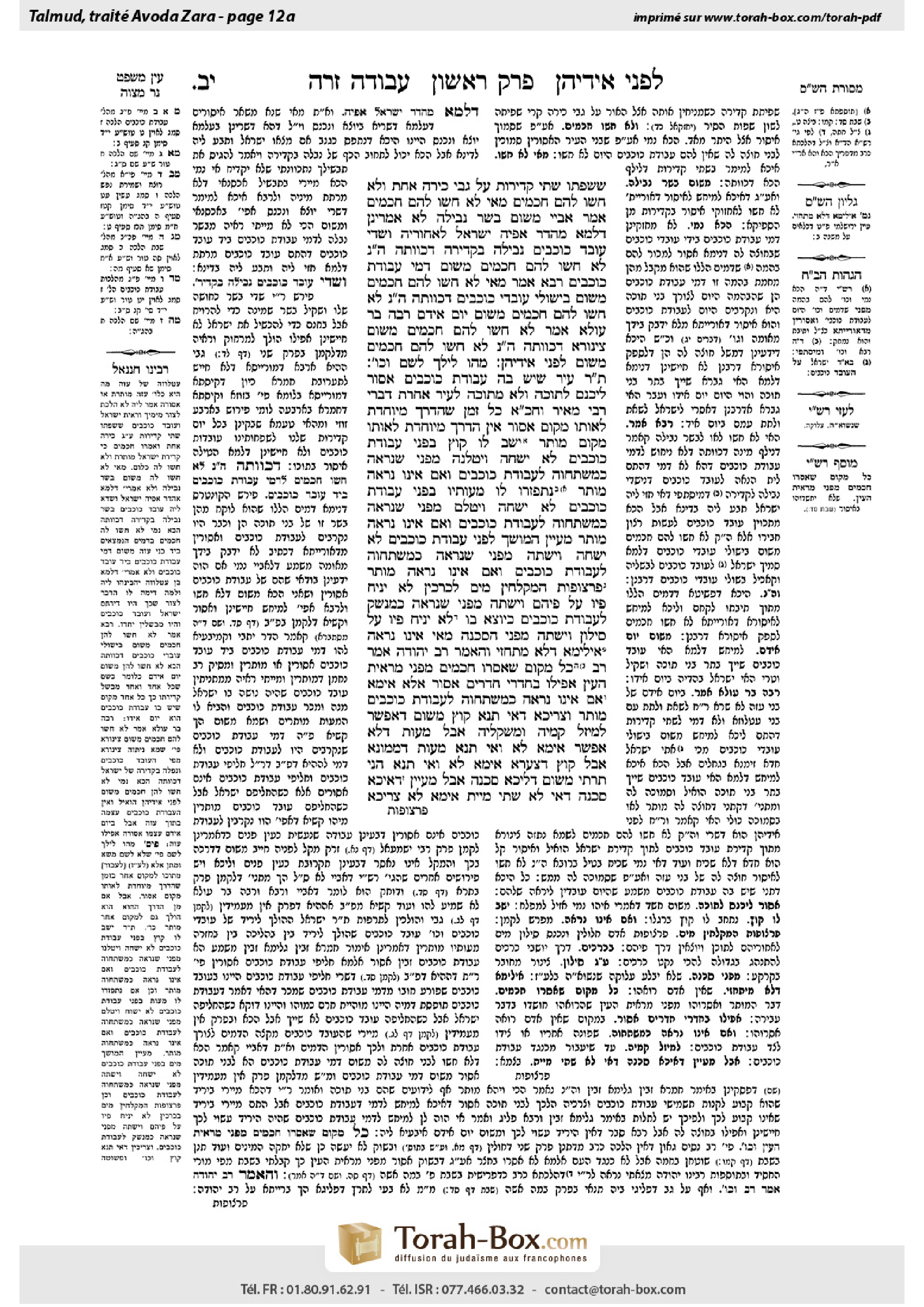
Avodah Zarah 12a: Talmud study for Daf Yomi
Study the Talmud for Daf Yomi with scanned pages, Hebrew text, English translations from Sefaria and AI-generated French translations.
Passage selection and English or AI-generated French translation are available where the scan has annotations. Daf Study is independent of Torah-Box and Sefaria.
Browse Avodah Zarah · עבודה זרה · All tractatesAvodah Zarah 12a text and translations
This page of Avodah Zarah includes the Aramaic text, an English translation and an AI-generated French translation, alongside the scan above.
עבודה זרה י״ב א · Aramaic and Hebrew text
שֶׁשָּׁפְתוּ שְׁתֵּי קְדֵירוֹת עַל גַּבֵּי כִּירָה אַחַת? וְלֹא חַשּׁוּ לָהֶם חֲכָמִים! מַאי ״לֹא חַשּׁוּ לָהֶם חֲכָמִים״?
אָמַר אַבָּיֵי: מִשּׁוּם בְּשַׂר נְבֵילָה לָא אָמְרִינַן, דִּלְמָא מַהְדַּר אַפֵּיהּ יִשְׂרָאֵל לַאֲחוֹרֵיהּ וְשָׁדֵי גּוֹי נְבֵילָה בִּקְדֵירָה, דִּכְוָותַהּ הָכָא נָמֵי לֹא חַשּׁוּ לָהֶם חֲכָמִים מִשּׁוּם דְּמֵי עֲבוֹדָה זָרָה.
רָבָא אָמַר: מַאי ״לֹא חַשּׁוּ לָהֶם חֲכָמִים״? מִשּׁוּם בִּישּׁוּלֵי גוֹיִם.
דִּכְוָותַהּ, הָכָא נָמֵי, לֹא חַשּׁוּ לָהֶם חֲכָמִים מִשּׁוּם יוֹם אֵידָם.
רַבָּה בַּר עוּלָּא אָמַר: לֹא חַשּׁוּ לָהֶם חֲכָמִים מִשּׁוּם צִינּוֹרָא.
דִּכְוָותַהּ, הָכָא נָמֵי, לֹא חַשּׁוּ לָהֶם חֲכָמִים מִשּׁוּם לִפְנֵי אֵידֵיהֶן.
מַהוּ לֵילֵךְ לְשָׁם וְכוּ׳. תָּנוּ רַבָּנַן: עִיר שֶׁיֵּשׁ בָּהּ עֲבוֹדָה זָרָה — אָסוּר לִיכָּנֵס לְתוֹכָהּ, וְלֹא מִתּוֹכָהּ לְעִיר אַחֶרֶת, דִּבְרֵי רַבִּי מֵאִיר. וַחֲכָמִים אוֹמְרִים: כׇּל זְמַן שֶׁהַדֶּרֶךְ מְיוּחֶדֶת לְאוֹתוֹ מָקוֹם — אָסוּר, אֵין הַדֶּרֶךְ מְיוּחֶדֶת לְאוֹתוֹ מָקוֹם — מוּתָּר.
יָשַׁב לוֹ קוֹץ בִּפְנֵי עֲבוֹדָה זָרָה — לֹא יִשְׁחֶה וְיִטְלֶנָּה, מִפְּנֵי שֶׁנִּרְאֶה כְּמִשְׁתַּחֲוֶה לַעֲבוֹדָה זָרָה, וְאִם אֵינוֹ נִרְאֶה — מוּתָּר. נִתְפַּזְּרוּ לוֹ מְעוֹתָיו בִּפְנֵי עֲבוֹדָה זָרָה — לֹא יִשְׁחֶה וְיִטְּלֵם, מִפְּנֵי שֶׁנִּרְאֶה כְּמִשְׁתַּחֲוֶה לַעֲבוֹדָה זָרָה, וְאִם אֵינוֹ נִרְאֶה — מוּתָּר.
מַעְיָין הַמּוֹשֵׁךְ לִפְנֵי עֲבוֹדָה זָרָה — לֹא יִשְׁחֶה וְיִשְׁתֶּה, מִפְּנֵי שֶׁנִּרְאֶה כְּמִשְׁתַּחֲוֶה לַעֲבוֹדָה זָרָה, וְאִם אֵינוֹ נִרְאֶה — מוּתָּר. פַּרְצוּפוֹת הַמְקַלְּחִין מַיִם לִכְרַכִּין — לֹא יַנִּיחַ פִּיו עַל פִּיהֶם וְיִשְׁתֶּה, מִפְּנֵי שֶׁנִּרְאֶה כִּמְנַשֵּׁק לַעֲבוֹדָה זָרָה. כַּיּוֹצֵא בּוֹ — לֹא יַנִּיחַ פִּיו עַל סִילוֹן וְיִשְׁתֶּה, מִפְּנֵי הַסַּכָּנָה.
מַאי ״אֵינוֹ נִרְאֶה״? אִילֵּימָא דְּלָא מִתְחֲזֵי, וְהָאָמַר רַב יְהוּדָה אָמַר רַב: כׇּל מָקוֹם שֶׁאָסְרוּ חֲכָמִים מִפְּנֵי מַרְאִית הָעַיִן, אֲפִילּוּ בְּחַדְרֵי חֲדָרִים אָסוּר! אֶלָּא אֵימָא: אִם אֵינוֹ נִרְאֶה כְּמִשְׁתַּחֲוֶה לַעֲבוֹדָה זָרָה — מוּתָּר.
וּצְרִיכָא, דְּאִי תְּנָא קוֹץ, מִשּׁוּם דְּאֶפְשָׁר לְמֵיזַל קַמֵּיהּ וּמִשְׁקְלֵיהּ, אֲבָל מָעוֹת דְּלָא אֶפְשָׁר — אֵימָא לָא.
וְאִי תְּנָא מָעוֹת — דְּמָמוֹנָא, אֲבָל קוֹץ דְּצַעֲרָא — אֵימָא לָא. וְאִי תְּנָא הָנֵי תַּרְתֵּי — מִשּׁוּם דְּלֵיכָּא סַכָּנָה, אֲבָל מַעְיָין דְּאִיכָּא סַכָּנָה, דְּאִי לָא שָׁתֵי מָיֵית — אֵימָא לָא. צְרִיכָא.
Avodah Zarah 12a · English translation
place two pots on one stove, and yet the Sages were not concerned and did not issue a prohibition with regard to the meat that was in the pot belonging to the Jew, despite the fact that forbidden food was in close proximity to the permitted food? Similarly, in this case as well, the Sages were not concerned about the bazaar’s proximity to Gaza and did not prohibit engaging in business there. The Gemara asks: What did he mean in stating: The Sages were not concerned, with regard to the meat, and how does that case relate the issue here?
Abaye said: The Sages were not concerned with regard to the possibility of eating the meat of an unslaughtered animal carcass. We do not say: Cooking in this manner is prohibited since perhaps the Jew will turn his face and at that moment the gentile will throw meat of an animal carcass into his pot. Here too, in the corresponding situation, although the permitted and prohibited places are in close proximity, the Sages were not concerned about engaging in business transactions in the bazaar of Gaza, even due to the possibility that money associated with idol worship would end up in the hands of the Jews. If the money were for the purchase of an animal used as an offering for idolatry, those coins would be prohibited by Torah law. Nevertheless, the Sages were not concerned about this possibility, just as they were not concerned that the gentile might add his meat to the Jew’s pot.
Rava said that there is a different explanation. The Sages were not lenient in the face of a potential violation of Torah law, but were lenient in a case where it was rabbinic law that might be violated. As for Rabbi Ḥanina’s comparison to pots in Tyre, there is no concern that a gentile might throw his meat into the pot of a Jew, as he would derive no benefit from doing so and would be afraid that the Jew might see him. By contrast, here the gentile is engaged in business. Rather, what is it that the Sages were not concerned about in the case of the pots? Although the gentile is cooking food next to the Jew, there is no concern with regard to the possibility that the gentile might cook the Jew’s food, causing the latter to violate the rabbinic prohibition against eating food cooked by gentiles.
Rava concludes: Here too, in the corresponding situation, it is referring to a case where the coins were the gentile’s own money. The Sages were not concerned about engaging in business transactions in the bazaar of Gaza, even due to the possibility that the Jew might be engaging in business with residents of Gaza on their festival day, which would be a violation of rabbinic law.
Rabba bar Ulla says: Even if the concern in the case of the pots applied only to the gentile cooking the Jew’s food, not the consumption of non-kosher meat, with regard to the bazaar the halakha would not be comparably lenient. The reason is the Jew need only stir the coals once to ensure that the food in his pot is not considered cooked by a gentile, an option that does not apply here. Rather, in the case mentioned by Rabbi Ḥanina, the Sages were not concerned with regard to the possibility that food might splatter [tzinnora] from the gentile’s pot into the Jew’s pot. This is an especially lenient case, both because this is an unlikely possibility and because that small amount of food would be nullified by a majority of the Jew’s food.
Rabba bar Ulla concludes: Here too, in the corresponding situation, the Sages were not concerned about engaging in business transactions in the bazaar of Gaza with regard to the days before the festival of Gaza. This is an analogous case to that of the splattered food, as it is outside the festival in both time and place.
§ The mishna teaches: What is the halakha with regard to traveling there, a place that is celebrating a pagan festival? If the road leads only to that place, it is prohibited, but if the road leads to another place as well, it is permitted. In this connection, the Gemara cites a related baraita. The Sages taught: In the case of a city in which there is active idol worship, i.e., its residents are worshipping their idol on that day, it is prohibited to enter the city, and one may not leave it for another city; this is the statement of Rabbi Meir. And the Rabbis say: As long as the road is designated only for that place, it is prohibited to enter the city. But if the road is not designated for only that place, it is permitted.
The baraita continues: If a thorn became imbedded in one’s foot while he was standing before an object of idol worship, he may not bend down and remove the thorn, because he appears to be bowing down to the object of idol worship; but if he is not seen, it is permitted. If one’s coins were scattered while he is before an object of idol worship, he may not bend down and pick them up, because he appears to be bowing down to the object of idol worship; but if he is not seen, it is permitted.
Likewise, if there is a spring that runs before an object of idol worship, one may not bend down and drink from it, because he appears to be bowing down to the object of idol worship; but if he is not seen, it is permitted. With regard to figures of human faces [partzufot] that spray water in the cities, i.e., fountains, one may not place his mouth on the mouths of the figures and drink, because he appears to be kissing the object of idol worship. Similarly, one may not place his mouth on a pipe [sillon] and drink, here due to the danger that this practice poses.
The Gemara asks: What does the baraita mean when it states: If he is not seen? If we say it means that he is not seen by others, doesn’t Rav Yehuda say that Rav says: Wherever the Sages prohibited an action due to the appearance of prohibition, it is prohibited even in the innermost chambers where no one will see it, as the Sages did not distinguish between different circumstances in such cases. Accordingly, the fact that he is not seen by anyone should make no difference with regard to whether or not the action is prohibited. Rather, say: If he is not seen as one who bows down to an object of idol worship, i.e., he turns his side or back to the idol, then it is permitted.
The Gemara comments: And it is necessary for the baraita to list all of these cases, notwithstanding their similarity. As, if it had taught only the case of the thorn, one might have thought that bending down to remove a thorn is prohibited because it is possible to walk past the figure, and only then take out the thorn. But in the case of the coins, where it is not possible to collect them elsewhere, you might say that it is not prohibited to pick them up.
And furthermore, if the baraita had taught only the case of the coins, one might have thought that the reason for the stringent ruling is that the loss is purely financial. But in the case of the thorn, which causes him pain, you might say that it is not prohibited to remove it. And finally, if the baraita had taught only these two cases, one might have thought that they are prohibited because there is no danger if the action is not performed on the spot. But in the case of the spring, where there is an element of danger, that if he does not drink he might die, one could say that it is not prohibited. Therefore, it is necessary to state each example.
Avodah Zarah 12a · Traduction française (IA)
On place deux pots sur une même cuisinière, et pourtant les Sages n'ont pas eu d'inquiétude et n'ont pas émis une interdiction concernant la viande qui était dans le pot appartenant au Juif, malgré le fait que des aliments interdits étaient proches de la nourriture permise ? De même, dans ce cas également, les Sages n'ont pas eu d'inquiétude concernant la proximité du marché avec Gaza et n'ont pas interdit d'y faire des affaires. La Guemara demande : De quoi l'homme voulait-il parler lorsqu'il disait : Les Sages n'ont pas eu d'inquiétude, concernant la viande, et comment ce cas est-il lié à celui-ci ?
Abaye dit : Les Sages n'ont pas eu d'inquiétude concernant la possibilité de manger la viande d'un cadavre non sacrifié. Nous ne disons pas : La cuisson de cette manière est interdite, car peut-être le Juif tournera son visage et à ce moment-là le Gentil jetera de la viande d'un cadavre dans son pot. Ici aussi, dans le cas correspondant, bien que les lieux permis et interdits soient proches l'un de l'autre, les Sages n'ont pas eu d'inquiétude concernant les transactions commerciales dans le marché de Gaza, même en raison de la possibilité que de l'argent lié à l'idolâtrie puisse finir entre les mains des Juifs. Si cet argent était destiné à l'achat d'un animal utilisé comme offrande pour l'idolâtrie, ces pièces seraient interdites par la Loi juive. Cependant, les Sages n'ont pas eu d'inquiétude à ce sujet, tout comme ils n'ont pas eu d'inquiétude que le Gentil puisse ajouter sa viande au pot du Juif.
Rava dit que l'explication est différente. Les Sages n'étaient pas lenifiants face à un potentiel délit de la Loi juive, mais étaient lenifiants dans un cas où une violation de la loi rabbinique pouvait avoir lieu. En ce qui concerne la comparaison de Rabbi Ḥanina aux pots de Tyr, il n'y a pas d'inquiétude que le Gentil jette sa viande dans le pot du Juif, car il ne tirerait aucun avantage de le faire et serait craint que le Juif le voie. En revanche, ici le Gentil est engagé dans des affaires. Plutôt, de quoi les Sages n'ont-ils pas eu d'inquiétude dans le cas des pots ? Bien que le Gentil cuisine à côté du Juif, il n'y a pas d'inquiétude concernant la possibilité que le Gentil cuisine la nourriture du Juif, causant ainsi que ce dernier viole l'interdiction rabbinique de manger des aliments cuits par les Gentils.
Rava conclut : Ici aussi, dans le cas correspondant, il s'agit d'un cas où les pièces étaient l'argent propre du Gentil. Les Sages n'ont pas eu d'inquiétude concernant les transactions commerciales dans le marché de Gaza, même en raison de la possibilité que le Juif puisse être engagé dans des affaires avec les habitants de Gaza lors de leur fête, ce qui serait une violation de la loi rabbinique.
Rabba bar Ulla dit : Même si l'inquiétude dans le cas des pots s'appliquait uniquement à la cuisson par le Gentil de la nourriture du Juif, pas à la consommation de viande non-kosher, concernant le marché la halakha ne serait pas aussi leniente. La raison est que le Juif a besoin de remuer les braises une seule fois pour s'assurer que la nourriture dans son pot n'est pas considérée comme cuite par un Gentil, une option qui ne s'applique pas ici. Plutôt, dans le cas mentionné par Rabbi Ḥanina, les Sages n'ont pas eu d'inquiétude concernant la possibilité que la nourriture s'éparpille [tzinnora] du pot du Gentil dans le pot du Juif. C'est un cas particulièrement lenient, à la fois parce que cette possibilité est peu probable et parce que cette petite quantité de nourriture serait annulée par la majorité de la nourriture du Juif.
Rabba bar Ulla conclut : Ici aussi, dans la situation correspondante, les Sages ne s'occupaient pas des transactions commerciales dans le marché de Gaza concernant les jours avant la fête de Gaza. C'est un cas analogue à celui de la nourriture éparpillée, car il est en dehors de la fête à la fois en temps et en lieu.
§ La mitsva enseigne : Quelle est la halakha concernant le voyage là-bas, un lieu qui célèbre une fête païenne ? Si le chemin mène uniquement à ce lieu, il est interdit, mais si le chemin mène à un autre lieu également, il est permis. À ce sujet, la Guemara cite une baraïta liée. Les Sages enseignèrent : Dans le cas d'une ville où il y a une idolâtrie active, c'est-à-dire où ses habitants adorent leur idole ce jour-là, il est interdit d'entrer dans la ville et on ne peut pas en sortir pour une autre ville ; c'est la déclaration de Rabbi Meir. Et les Rabbins disent : Tant que le chemin est désigné uniquement pour ce lieu, il est interdit d'entrer dans la ville. Mais si le chemin n'est pas désigné uniquement pour ce lieu, il est permis.
La baraïta continue : Si un épine s'est enfoncée dans le pied d'une personne pendant qu'il était devant un objet d'idolâtrie, il ne peut pas se baisser pour retirer l'épine, car il semble se prosterner devant l'objet d'idolâtrie ; mais s'il n'est pas vu, cela est permis. Si les pièces d'une personne sont dispersées pendant qu'il est devant un objet d'idolâtrie, il ne peut pas se baisser pour les ramasser, car il semble se prosterner devant l'objet d'idolâtrie ; mais s'il n'est pas vu, cela est permis.
De même, si un puits coule devant un objet d'idolâtrie, on ne peut pas se baisser pour boire, car cela semble se prosterner devant l'objet d'idolâtrie ; mais s'il n'est pas vu, cela est permis. Concernant les figures de visages humains [partzufot] qui projettent de l'eau dans les villes, c'est-à-dire les fontaines, on ne peut pas placer sa bouche sur les bouches des figures pour boire, car cela semble embrasser l'objet d'idolâtrie. De même, on ne peut pas placer sa bouche sur un tuyau [sillon] pour boire, ici en raison du danger que cette pratique représente.
La Guemara demande : De quoi la baraïta veut-elle dire lorsqu'elle dit : S'il n'est pas vu ? Si nous disons qu'il signifie qu'il n'est pas vu par les autres, n'est-ce pas que Rav Yehuda dit que Rav dit : Partout où les Sages ont interdit une action en raison de l'apparence d'une interdiction, cela est interdit même dans les chambres les plus intimes où personne ne le verra, car les Sages n'ont pas distingué entre les circonstances dans tels cas. Ainsi, le fait qu'il ne soit pas vu par personne ne devrait pas faire de différence concernant l'interdiction ou non de l'action. Plutôt, disons : S'il n'est pas vu comme celui qui se prosterne devant un objet d'idolâtrie, c'est-à-dire s'il tourne son côté ou son dos à l'idole, alors cela est permis.
La Guemara commente : Il est nécessaire que la baraïta énumère tous ces cas, même s'ils sont semblables. En effet, si elle avait enseigné seulement le cas de l'épine, on aurait pu penser que se baisser pour enlever une épine est interdit, car il est possible de passer à côté de la figure et de retirer l'épine plus tard. Mais dans le cas des pièces, où il n'est pas possible de les récupérer ailleurs, on pourrait dire qu'il n'est pas interdit de les ramasser.
Et de plus, si la baraïta avait enseigné seulement le cas des pièces, on aurait pu penser que la stricte interdiction est due au fait que la perte est purement financière. Mais dans le cas de l'épine, qui cause une douleur, on pourrait dire qu'il n'est pas interdit de la retirer. Et enfin, si la baraïta avait enseigné seulement ces deux cas, on aurait pu penser qu'ils sont interdits parce qu'il n'y a pas de danger si l'action n'est pas effectuée sur place. Mais dans le cas de la source, où il y a un élément de danger, à savoir que s'il ne boit pas, il pourrait mourir, on pourrait dire qu'il n'est pas interdit. Par conséquent, il est nécessaire d'énoncer chaque exemple.
Traduction française générée par IA à partir de l’édition anglaise de Sefaria. Vérifie toujours un passage avec le texte source.
Text from Sefaria: William Davidson Edition - Vocalized Aramaic (CC BY NC); William Davidson Edition - English (CC BY NC).