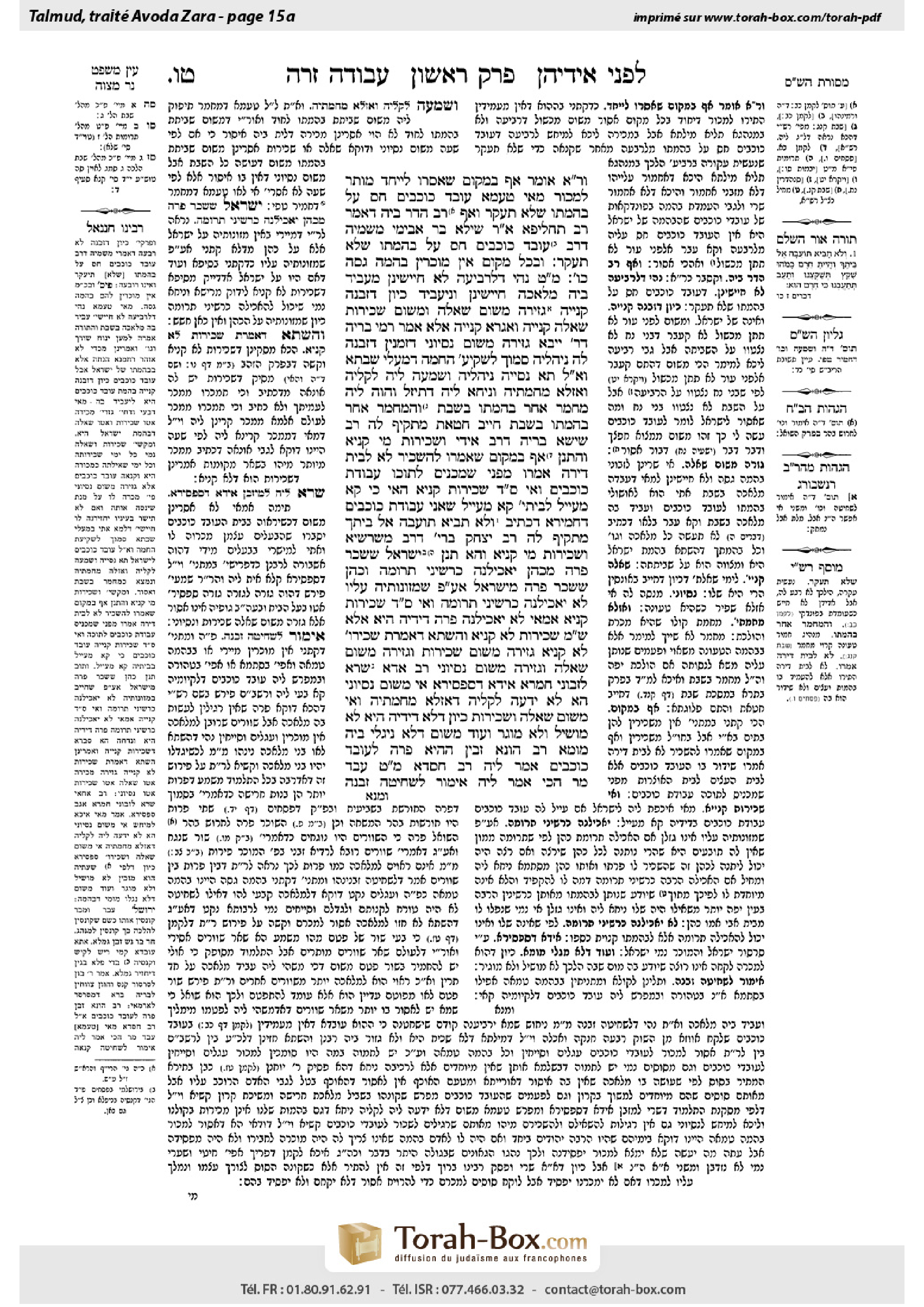
Avodah Zarah 15a: Talmud study for Daf Yomi
Study the Talmud for Daf Yomi with scanned pages, Hebrew text, English translations from Sefaria and AI-generated French translations.
Passage selection and English or AI-generated French translation are available where the scan has annotations. Daf Study is independent of Torah-Box and Sefaria.
Browse Avodah Zarah · עבודה זרה · All tractatesAvodah Zarah 15a text and translations
This page of Avodah Zarah includes the Aramaic text, an English translation and an AI-generated French translation, alongside the scan above.
עבודה זרה י״ה א · Aramaic and Hebrew text
וְרַבִּי אֶלְעָזָר אוֹמֵר: אַף בְּמָקוֹם שֶׁאָסְרוּ לְיַיחֵד, מוּתָּר לִמְכּוֹר. מַאי טַעְמָא? גּוֹי חָס עַל בְּהֶמְתּוֹ שֶׁלֹּא תֵּעָקֵר. וְאַף רַב הֲדַר בֵּיהּ, דְּאָמַר רַב תַּחְלִיפָא אָמַר רַב שֵׁילָא בַּר אֲבִימִי מִשְּׁמֵיהּ דְּרַב: גּוֹי חָס עַל בְּהֶמְתּוֹ שֶׁלֹּא תֵּעָקֵר.
וּבְכׇל מָקוֹם אֵין מוֹכְרִין בְּהֵמָה גַּסָּה כּוּ׳. מַאי טַעְמָא? נְהִי דְּלִרְבִיעָה לָא חָיְישִׁינַן, מֶעְבַּיד בַּיהּ מְלָאכָה חָיְישִׁינַן.
וְנֶיעְבֵּיד, כֵּיוָן דְּזַבְנַהּ קַנְיַיהּ! גְּזֵירָה מִשּׁוּם שְׁאֵלָה וּמִשּׁוּם שְׂכִירוּת.
שַׁאֲלַהּ קַנְיַיהּ, וְאַגְרַהּ קַנְיַיהּ!
אֶלָּא אָמַר רָמֵי בְּרֵיהּ דְּרַב יֵיבָא: גְּזֵירָה מִשּׁוּם נִסְיוֹנֵי, דְּזִמְנִין דְּזַבְּנַהּ לַהּ נִיהֲלֵיהּ סָמוּךְ לִשְׁקִיעַת הַחַמָּה דְּמַעֲלֵי שַׁבְּתָא, וַאֲמַר לֵיהּ: ״תָּא נַסְּיַיהּ נִיהֲלֵיהּ״, וְשָׁמְעָה לֵיהּ לְקָלֵיהּ וְאָזְלָא מֵחֲמָתֵיהּ, וְנִיחָא לֵיהּ דְּתֵיזִיל, וְהָוֵה לֵיהּ מְחַמֵּר אַחֵר בְּהֶמְתּוֹ בְּשַׁבָּת, וְהַמְחַמֵּר אַחֵר בְּהֶמְתּוֹ בְּשַׁבָּת חַיָּיב חַטָּאת.
מַתְקֵיף לַהּ רַב שִׁישָׁא בְּרֵיהּ דְּרַב אִידִי: וּשְׂכִירוּת מִי קָנְיָא? וְהָתְנַן: אַף בְּמָקוֹם שֶׁאָמְרוּ לְהַשְׂכִּיר — לֹא לְבֵית דִּירָה אָמְרוּ, מִפְּנֵי שֶׁמַּכְנִיס לְתוֹכוֹ עֲבוֹדָה זָרָה. וְאִי סָלְקָא דַעְתָּךְ שְׂכִירוּת קָנְיָא, הַאי כִּי קָא מְעַיֵּיל — לְבֵיתֵיהּ קָא מְעַיֵּיל!
שָׁאנֵי עֲבוֹדָה זָרָה דַּחֲמִירָא, דִּכְתִיב: ״וְלֹא תָבִיא תוֹעֵבָה אֶל בֵּיתֶךָ״.
מַתְקֵיף לַהּ רַב יִצְחָק בְּרֵיהּ דְּרַב מְשַׁרְשְׁיָא: וּשְׂכִירוּת מִי קָנְיָא? וְהָא תְּנַן: יִשְׂרָאֵל שֶׁשָּׂכַר פָּרָה מִכֹּהֵן — יַאֲכִילֶנָּה כַּרְשִׁינֵּי תְרוּמָה, וְכֹהֵן שֶׁשָּׂכַר פָּרָה מִיִּשְׂרָאֵל, אַף עַל פִּי שֶׁמְּזוֹנוֹתֶיהָ עָלָיו — לָא יַאֲכִילֶנָּה כַּרְשִׁינֵּי תְרוּמָה.
וְאִי סָלְקָא דַעְתָּךְ שְׂכִירוּת קָנְיָא, אַמַּאי לָא יַאֲכִילֶנָּה? פָּרָה דִּידֵיהּ הִיא! אֶלָּא שְׁמַע מִינַּהּ שְׂכִירוּת לָא קָנְיָא. וְהַשְׁתָּא דְּאָמְרַתְּ שְׂכִירוּת לָא קָנְיָא, גְּזֵירָה מִשּׁוּם שְׂכִירוּת, וּגְזֵירָה מִשּׁוּם שְׁאֵלָה, וּגְזֵירָה מִשּׁוּם נִסְיוֹנֵי.
רַב אַדָּא שְׁרָא לְזַבּוֹנֵי חֲמָרָא אַיְּדָא דְּסַפְסִירָא, אִי מִשּׁוּם נִסְיוֹנֵי — הָא לָא יָדְעָה לְקָלֵיהּ דְּאָזְלָא מֵחֲמָתֵיהּ, וְאִי מִשּׁוּם שְׁאֵלָה וּשְׂכִירוּת — כֵּיוָן דְּלָא דִּידֵיהּ הִיא לָא מוֹשֵׁיל וְלָא מוֹגַר, וְעוֹד — מִשּׁוּם דְּלָא נִיגַלֵּי בֵּיהּ מוּמָא.
רַב הוּנָא זַבֵּין הָהִיא פָּרָה לְגוֹי. אֲמַר לֵיהּ רַב חִסְדָּא: מַאי טַעְמָא עֲבַד מָר הָכִי? אֲמַר לֵיהּ: אֵימוֹר לִשְׁחִיטָה זַבְנַהּ.
Avodah Zarah 15a · English translation
And Rabbi Elazar says: Even in a place where they prohibited leaving an animal in seclusion with a gentile, it is permitted to sell it to a gentile. What is the reason? Once the animal is sold to the gentile, there is no concern that he will engage in bestiality. This is because a gentile spares his own animal from bestiality, as he does not want it to become sterile through this practice. By contrast, it is prohibited to leave one’s animal in seclusion with a gentile, as he would have no such compunction with regard to an animal belonging to others. The Gemara notes: And even Rav retracted his opinion; as Rav Taḥlifa says that Rav Sheila bar Avimi says in the name of Rav: A gentile spares his animal, as he does not want it to become sterile.
§ The mishna teaches: But in every place one may not sell to gentiles large livestock, calves, or foals, whether these animals are whole or damaged. The Gemara explains: What is the reason? The Gemara explains: Granted, we are not concerned about the gentile engaging in bestiality with the animal, but we are concerned about him putting the animal to work on Shabbat.
The Gemara expresses puzzlement: And let the gentile put it to work. Why should one be concerned about this possibility? Since he bought it, he acquires it and may put it to work on Shabbat, as it no longer belongs to the Jew. The Gemara answers: Selling it is prohibited by rabbinic decree due to the concern of lending and due to the concern of leasing the animal to the gentile, as in those cases the animal would be performing work on Shabbat when it is owned by a Jew.
The Gemara raises a further difficulty: But during that time period, the act of borrowing the animal causes the gentile to temporarily acquire it, and likewise, by leasing the animal, he temporarily acquires it. Why, then, is it a problem if the gentile puts the animal to work on Shabbat?
Rather, Rami, son of Rav Yeiva, said: Selling is prohibited by rabbinic decree due to the concern with regard to testing. As at times, one sells an animal to a gentile when it is close to sunset of Shabbat eve, and one says to him: Go and test the animal, and it hears the voice of its Jewish owner and walks because of his command. And it is beneficial to the Jewish seller that the animal should walk, as he wants to demonstrate to the gentile that it is fit for labor. And in this manner, he is considered one who drives his laden animal on Shabbat. And one who drives his laden animal on Shabbat is liable to bring a sin-offering.
Rav Sheisha, son of Rav Idi, objects to the Gemara’s assumption that leasing confers ownership. And by leasing an item, does one actually acquire it? But didn’t we learn in the mishna (21a): Even in a place with regard to which the Sages said that it is permitted for a Jew to rent a house to a gentile, they did not say that one may rent it for use as a residence, because the gentiles will bring objects of idol worship into it? The objection is as follows: And if it enters your mind to say that through leasing one acquires an item or property, then when this gentile brings the idols into the house he brings them into his own house. Why, then, is it prohibited for a Jew to rent a residence to a gentile?
The Gemara answers: Idol worship is different, as it is a particularly severe prohibition, and therefore even an item that does not entirely belong to a Jew is treated with great stringency. As it is written: “And you shall not bring an abomination into your house” (Deuteronomy 7:26), and this house still retains the name of its Jewish owner.
Rav Yitzḥak, son of Rav Mesharshiyya, also objects to the Gemara’s assumption that leasing confers ownership. And by leasing an item, does one actually acquire it? But didn’t we learn in a mishna (Terumot 11:9): An Israelite who rented a cow from a priest may feed it vetches of teruma, as the animal belongs to a priest; and conversely, a priest who rented a cow from an Israelite, although the responsibility to feed it is incumbent upon him, he may not feed it vetches of teruma, as it does not belong to him.
And if it enters your mind to say that through leasing one acquires the item, why can’t the priest feed it vetches of teruma? After all, it is currently his own cow. Rather, learn from here that one does not acquire an item through leasing. The Gemara comments: And now that you have said that one does not acquire an item through leasing, and therefore an animal that was leased to a gentile still belongs to the Jew, the original proposal can be accepted: The reason that one cannot sell large livestock to gentiles is a rabbinic decree due to the concern of leasing, and a decree due to the concern of lending the animal to the gentile, and also a decree due to the concern of testing.
§ The Gemara relates: Rav Adda permitted the owners of a donkey to sell their donkey to gentiles by means of a Jewish middleman [desafseira]. He reasoned as follows: If the concern is due to testing, in this case the animal does not recognize the voice of the middleman so that it would walk because of him. And if the concern is due to lending and leasing, since the donkey is not his, that middleman would neither lend nor lease it. Additionally, the middleman would not lease or lend the animal because he wants to sell it and does not want any blemish to be revealed in it.
The Gemara relates: Rav Huna sold a certain cow to a gentile. Rav Ḥisda said to him: What is the reason that the Master acted in that manner? Rav Huna said to him: I can say that he purchased it in order to slaughter it, not to use it for labor.
Avodah Zarah 15a · Traduction française (IA)
Et le maître Eléazar dit : Même dans un lieu où on interdit de laisser un animal seul avec un non-Juif, il est permis de le vendre à un non-Juif. Pourquoi ? Parce que, une fois que l'animal est vendu au non-Juif, on n'a plus à craindre qu'il engage en bestialité. Cela est dû au fait qu'un non-Juif prend soin de son propre animal de ne pas devenir stérile par cette pratique. En revanche, il est interdit de laisser son animal seul avec un non-Juif, car il n'aurait pas cette pudeur envers un animal appartenant à autrui. La Guemara note : Et même Rav a rétracté son opinion ; car Rav Taḥlifa dit que Rav Sheila bar Avimi dit au nom de Rav : Un non-Juif prend soin de son animal, car il ne veut pas qu'il devienne stérile.
§ La Michna enseigne : Mais dans tout lieu, on ne peut pas vendre à des non-Juifs des grandes bêtes, des veaux ou des poulains, qu'ils soient entiers ou abîmés. La Guemara explique : Pourquoi ? Bien que nous ne soyons pas inquiets que le non-Juif engage en bestialité avec l'animal, nous sommes inquiets qu'il l'utilise le sabbat.
La Guemara exprime une perplexité : Et que le non-Juif l'utilise. Pourquoi s'inquiéter de cette possibilité ? Parce qu'il l'a acheté, il l'acquiert et peut l'utiliser le sabbat, car il n'appartient plus au Juif. La Guemara répond : La vente est interdite par un décret rabbinique en raison de la crainte de prêter et en raison de la crainte de louer l'animal au non-Juif, car dans ces cas, l'animal effectuerait un travail le sabbat quand il appartient à un Juif.
La Guemara soulève une difficulté supplémentaire : Mais durant cette période, l'acte de prêter l'animal fait que le non-Juif l'acquiert temporairement, de même que par la location. Pourquoi, alors, est-ce un problème si le non-Juif utilise l'animal le sabbat ?
Plutôt, Rami, fils de Rav Yéiva, dit : La vente est interdite par un décret rabbinique en raison de la crainte liée à l'essai. Car parfois, on vend un animal à un non-Juif quand il est proche du coucher du soleil du soir de sabbat, et on dit à lui : Va et teste l'animal, et il entend la voix de son propriétaire juif et marche à cause de sa commande. Et c'est bénéfique pour le vendeur juif que l'animal marche, car il veut montrer au non-Juif qu'il est apte au travail. Et ainsi, il est considéré comme celui qui fait marcher son animal chargé le sabbat. Et celui qui fait marcher son animal chargé le sabbat est tenu de présenter un sacrifice expiatoire.
Rav Sheisha, fils de Rav Idi, s'oppose à l'hypothèse de la Guemara selon laquelle la location confère l'acquisition. Et par la location d'un objet, acquiert-on réellement cet objet ? Mais n'avons-nous pas appris dans la Michna (21a) : Même dans un lieu où les Sages ont dit qu'il est permis à un Juif de louer une maison à un non-Juif, ils n'ont pas dit qu'on puisse la louer pour en faire une résidence, car les non-Juifs y apporteraient des objets d'idolâtrie ? L'objection est la suivante : Et si cela entre en votre tête de dire que par la location on acquiert un objet ou une propriété, alors quand ce non-Juif apporte les idoles dans la maison, il les apporte dans sa propre maison. Pourquoi, alors, est-il interdit à un Juif de louer une résidence à un non-Juif ?
La Guemara répond : L'idolâtrie est différente, car c'est une prohibition particulièrement grave, et par conséquent même un objet qui n'appartient pas entièrement à un Juif est traité avec une grande stricteur. Car il est écrit : « Et tu ne porteras point l'abomination dans ta maison » (Deutéronome 7:26), et cette maison conserve encore le nom de son propriétaire juif.
Rav Yitzhak, fils de Rav Mesharshiyya, s'oppose également à l'hypothèse de la Guemara selon laquelle la location confère l'acquisition. Et par la location d'un objet, acquiert-on réellement cet objet ? Mais n'avons-nous pas appris dans une Michna (Teroumot 11:9) : Un Israélite qui loua un bœuf à un prêtre peut le nourrir de vetches de terouma, car l'animal appartient à un prêtre ; et inversement, un prêtre qui loua un bœuf à un Israélite, bien que la responsabilité de le nourrir incombe à lui, ne peut pas le nourrir de vetches de terouma, car il n'appartient pas à lui.
Et si cela entre en votre tête de dire que par la location on acquiert l'objet, pourquoi ne peut-on pas le prêtre nourrir le bœuf de vetches de terouma ? Car il s'agit de son propre bœuf. Plutôt, apprenez-en ici que l'on ne peut pas acquérir un objet par la location. La Guemara commente : Et maintenant que vous avez dit que l'on ne peut pas acquérir un objet par la location, et par conséquent un animal loué à un non-Juif appartient encore au Juif, l'original proposition peut être acceptée : La raison pour laquelle on ne peut pas vendre des grandes bêtes aux non-Juifs est un décret rabbinique en raison de la crainte liée à la location, et un décret en raison de la crainte liée au prêt de l'animal au non-Juif, et aussi un décret en raison de la crainte liée à l'essai.
§ La Guemara rapporte : Rav Adda permit aux propriétaires d'un âne de vendre leur âne aux non-Juifs par l'intermédiaire d'un marchand juif [desafseira]. Il raisonna ainsi : Si la crainte est liée à l'essai, dans ce cas l'animal ne reconnaît pas la voix du marchand juif, de sorte qu'il ne marcherait pas à cause de lui. Et si la crainte est liée au prêt et à la location, puisque l'âne n'est pas à lui, ce marchand juif ne prêterait ni ne louerait l'âne. De plus, le marchand juif ne louerait ni ne prêterait l'âne car il veut le vendre et ne veut pas que quelque défaut soit découvert.
La Guemara rapporte : Rav Huna vendit un certain taureau à un non-Juif. Rav Ḥisda dit à lui : Quelle est la raison pour laquelle le Maître a agi ainsi ? Rav Huna dit à lui : Je peux dire qu'il l'a acheté afin de le sacrifier, pas pour l'utiliser en travail.
Traduction française générée par IA à partir de l’édition anglaise de Sefaria. Vérifie toujours un passage avec le texte source.
Text from Sefaria: William Davidson Edition - Vocalized Aramaic (CC BY NC); William Davidson Edition - English (CC BY NC).