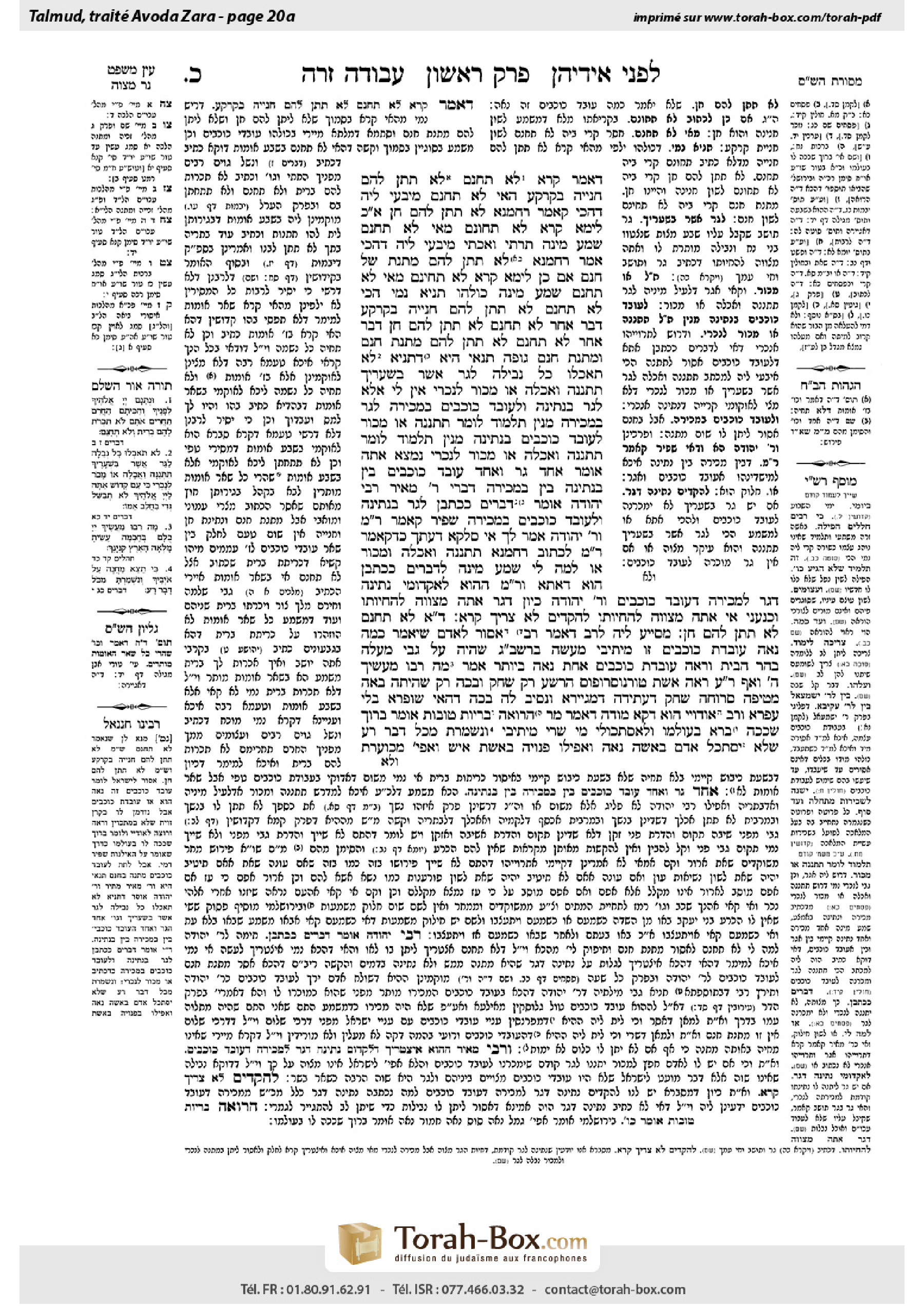
Avodah Zarah 20a: Talmud study for Daf Yomi
Study the Talmud for Daf Yomi with scanned pages, Hebrew text, English translations from Sefaria and AI-generated French translations.
Passage selection and English or AI-generated French translation are available where the scan has annotations. Daf Study is independent of Torah-Box and Sefaria.
Browse Avodah Zarah · עבודה זרה · All tractatesAvodah Zarah 20a text and translations
This page of Avodah Zarah includes the Aramaic text, an English translation and an AI-generated French translation, alongside the scan above.
עבודה זרה כ׳ א · Aramaic and Hebrew text
דְּאָמַר קְרָא: ״לֹא תְחׇנֵּם״, לֹא תִּתֵּן לָהֶם חֲנָיָיה בַּקַּרְקַע. הַאי ״לָא תְחׇנֵּם״ מִיבְּעֵי לֵיהּ, דְּהָכִי קָאָמַר רַחֲמָנָא: לֹא תִּתֵּן לָהֶם חֵן.
אִם כֵּן, לֵימָא קְרָא ״לֹא תְחוּנֵּם״, מַאי ״לֹא תְחׇנֵּם״? שְׁמַע מִינַּהּ תַּרְתֵּי.
וְאַכַּתִּי מִיבְּעֵי לֵיהּ, דְּהָכִי אָמַר רַחֲמָנָא: לֹא תִּתֵּן לָהֶם מַתְּנַת (שֶׁל) חִנָּם! אִם כֵּן, לֵימָא קְרָא ״לֹא תְחִינֵּם״, מַאי ״לֹא תְחׇנֵּם״? שְׁמַע מִינַּהּ כּוּלְּהוּ.
תַּנְיָא נָמֵי הָכִי: ״לֹא תְחׇנֵּם״ — לֹא תִּתֵּן לָהֶם חֲנָיָיה בַּקַּרְקַע, דָּבָר אַחֵר: ״לֹא תְחׇנֵּם״ — לֹא תִּתֵּן לָהֶם חֵן, דָּבָר אַחֵר: ״לֹא תְחׇנֵּם״ — לֹא תִּתֵּן לָהֶם מַתְּנַת חִנָּם.
וּמַתְּנַת חִנָּם גּוּפַהּ תַּנָּאֵי הִיא, דְּתַנְיָא: ״לֹא תֹאכְלוּ כׇּל נְבֵלָה לַגֵּר אֲשֶׁר בִּשְׁעָרֶיךָ תִּתְּנֶנָּה וַאֲכָלָהּ אוֹ מָכֹר לְנׇכְרִי״, אֵין לִי אֶלָּא לְגֵר בִּנְתִינָה וּלְגוֹי בִּמְכִירָה, לְגֵר בִּמְכִירָה מִנַּיִן? תַּלְמוּד לוֹמַר: ״תִּתְּנֶנָּה... אוֹ מָכֹר״.
לְגוֹי בִּנְתִינָה מִנַּיִן? תַּלְמוּד לוֹמַר: ״תִּתְּנֶנָּה וַאֲכָלָהּ אוֹ מָכֹר לְנׇכְרִי״, נִמְצָא אַתָּה אוֹמֵר: אֶחָד גֵּר וְאֶחָד גּוֹי בֵּין בִּנְתִינָה בֵּין בִּמְכִירָה, דִּבְרֵי רַבִּי מֵאִיר. רַבִּי יְהוּדָה אוֹמֵר: דְּבָרִים כִּכְתָבָן, לְגֵר בִּנְתִינָה, וּלְגוֹי בִּמְכִירָה.
שַׁפִּיר קָאָמַר רַבִּי מֵאִיר, וְרַבִּי יְהוּדָה אָמַר לָךְ: אִי סָלְקָא דַעְתָּךְ כִּדְקָאָמַר רַבִּי מֵאִיר, לִכְתּוֹב רַחֲמָנָא ״תִּתְּנֶנָּה וַאֲכָלָהּ ומָכֹר״, ״אוֹ״ לְמָה לִי? שְׁמַע מִינַּהּ לִדְבָרִים כִּכְתָבָן הוּא דַּאֲתָא.
וְרַבִּי מֵאִיר? הָהוּא לְאַקְדּוֹמֵי נְתִינָה דְּגֵר לִמְכִירָה דְּגוֹי. וְרַבִּי יְהוּדָה: כֵּיוָן דְּגֵר אַתָּה מְצוֶּּוה לְהַחְיוֹתוֹ, וְגוֹי אִי אַתָּה מְצוֶּּוה לְהַחֲיוֹתוֹ — לְהַקְדִּים לָא צְרִיךְ קְרָא.
דָּבָר אַחֵר: ״לֹא תְחׇנֵּם״ — לֹא תִּתֵּן לָהֶם חֵן. מְסַיַּיע לֵיהּ לְרַב, דְּאָמַר רַב: אָסוּר לָאָדָם שֶׁיֹּאמַר ״כַּמָּה נָאָה גּוֹיָה זוֹ״.
מֵיתִיבִי: מַעֲשֶׂה בְּרַבָּן שִׁמְעוֹן בֶּן גַּמְלִיאֵל שֶׁהָיָה עַל גַּבֵּי מַעֲלָה בְּהַר הַבַּיִת, וְרָאָה גּוֹיָה אַחַת נָאָה בְּיוֹתֵר, אָמַר: ״מַה רַבּוּ מַעֲשֶׂיךָ ה׳״. וְאַף רַבִּי עֲקִיבָא רָאָה אֵשֶׁת טוֹרָנוּסְרוּפוּס הָרָשָׁע, רָק, שָׂחַק וּבָכָה. רָק — שֶׁהָיְתָה בָּאָה מִטִּיפָּה סְרוּחָה, שָׂחַק — דַּעֲתִידָה דְּמִגַּיְירָא וְנָסֵיב לַהּ, בָּכָה — דְּהַאי שׁוּפְרָא בָּלֵי עַפְרָא.
וְרַב, אוֹדוֹיֵי הוּא דְּקָא מוֹדֵה, דְּאָמַר מָר: הָרוֹאֶה בְּרִיּוֹת טוֹבוֹת אוֹמֵר ״בָּרוּךְ שֶׁכָּכָה בָּרָא בְּעוֹלָמוֹ״.
וּלְאִסְתַּכּוֹלֵי מִי שְׁרֵי? מֵיתִיבִי: ״וְנִשְׁמַרְתָּ מִכֹּל דָּבָר רָע״ — שֶׁלֹּא יִסְתַּכֵּל אָדָם בְּאִשָּׁה נָאָה וַאֲפִילּוּ פְּנוּיָה, בְּאֵשֶׁת אִישׁ וַאֲפִילּוּ מְכוֹעֶרֶת,
Avodah Zarah 20a · English translation
The source is that the verse states: “You should not show them mercy [lo teḥonnem]” (Deuteronomy 7:2), which is understood as meaning: You should not give them a chance to encamp [ḥanayah] in, i.e., to acquire land in, Eretz Yisrael. The Gemara asks: This phrase: “You should not show them mercy”; isn’t it necessary to teach that this is what the Merciful one is saying: You should not give them favor [ḥen] by praising them?
The Gemara answers: If that were so, let the verse say: Lo teḥunnem, with the letter vav, as then it would be evident that this is a form of the root ḥet, vav, nun, which means favor. What is the reason that the verse instead states: Lo teḥonnem, without the letter vav? Conclude two conclusions from it, that one may not praise them and also that one may not allow them to acquire land.
The Gemara asks: But still, isn’t the phrase “You should not show them mercy” necessary to teach the halakha that this is what the Merciful One states: You should not give them an undeserved [ḥinnam] gift? The Gemara answers: If that were so, let the verse say: Lo teḥinnem. What is the reason that it is spelled without the letter yud, as: Lo teḥonnem? Learn from it all of these three halakhot.
This is also taught in a baraita: “You should not show them mercy”; this teaches that you should not give them a chance to encamp in the land of Eretz Yisrael. Another matter: “You should not show them mercy”; this indicates that you should not give them favor. Another matter: “You should not show them mercy”; this teaches that you should not give them an undeserved gift.
The Gemara notes: And this issue of an undeserved gift to a gentile is itself a dispute between tanna’im. As it is taught in a baraita: “You shall not eat of any unslaughtered animal carcass; you may give it to the resident alien who is within your gates, that he may eat it; or you may sell it to a foreigner; for you are a sacred people to the Lord your God” (Deuteronomy 14:21). I have derived only that it is permitted to a resident alien through giving and to a gentile through selling. From where do I derive that it is permitted to transfer an unslaughtered animal to a resident alien through selling? The verse states: “You may give it…or you may sell it,” meaning that one has the option to do either of these.
The baraita continues: From where is it derived that it is permitted to a gentile through giving and one is not required to sell it to him? The verse states: “You may give it…that he may eat it; or you may sell it to a foreigner.” Therefore, you may say that he may transfer it to both a resident alien and a gentile, both through giving and through selling. This is the statement of Rabbi Meir. Rabbi Yehuda says: These matters are to be understood as they are written; one may transfer an unslaughtered animal carcass to a resident alien only through giving, and to a gentile only through selling, as it is prohibited to give an undeserved gift to a gentile.
The Gemara comments: Rabbi Meir is saying well, as the verse indicates that either method is acceptable. The Gemara explains: And Rabbi Yehuda could have said to you: If it enters your mind to understand the verse in accordance with that which Rabbi Meir says, then let the Merciful One write: You may give it to the resident alien who is within your gates that he may eat it, and also you may sell it to a foreigner. Why do I need the word “or” between these two options? Learn from it that it comes to teach that the matters are to be understood as they are written.
The Gemara asks: And how does Rabbi Meir explain the wording of the verse? The Gemara answers: That word, “or,” teaches that one should give precedence to giving to a resident alien over selling to a gentile. And Rabbi Yehuda holds that since you are commanded to sustain a resident alien, as it is stated: “And he shall live with you” (Leviticus 25:35), and you are not commanded to sustain a gentile, there is no need for a verse to teach that one should give precedence to a resident alien.
§ It is taught in the baraita cited earlier: Another matter: “You should not show them favor”; this teaches that you should not give them favor by praising them. The Gemara notes that this supports the opinion of Rav. As Rav says: It is prohibited for a person to say: How beautiful is this gentile woman!
The Gemara raises an objection from a baraita: There was an incident involving Rabban Shimon ben Gamliel, who was on a step on the Temple mount, and he saw a certain gentile woman who was exceptionally beautiful and said: “How great are Your works, O Lord!” (Psalms 104:24). And Rabbi Akiva too, when he saw the wife of the wicked Turnus Rufus he spat, laughed, and cried. He spat, as she was created from a putrid drop; he laughed, as he foresaw that she was destined to convert and he would marry her; he cried, as this beauty would ultimately be consumed by dirt.
And how would Rav explain the incident involving Rabban Shimon ben Gamliel, who praised the beauty of a gentile? The Gemara answers: Rabban Shimon ben Gamliel was giving thanks to God for creating such beautiful people rather than praising the gentile herself. As the Master said: One who sees beautiful or otherwise outstanding creatures recites: Blessed be He, Who has created such in His world.
But is it permitted to gaze upon a woman? The Gemara raises an objection from a baraita. The verse states: “And you shall keep yourself from every evil thing” (Deuteronomy 23:10); this teaches that a person should not gaze upon a beautiful woman, even if she is unmarried; and a person should not gaze upon a married woman, even if she is ugly;
Avodah Zarah 20a · Traduction française (IA)
La source est que la versette dit : « Tu ne leur montreras pas de miséricorde [lo teḥonnem] » (Deutéronome 7:2), ce qui signifie : Tu ne leur donneras pas l'occasion de s'installer [ḥanayah], c'est-à-dire d'acquérir une terre en Eretz Yisrael. La Guemara pose la question : Cette expression « Tu ne leur montreras pas de miséricorde » ; n'est-ce pas nécessaire de l'enseigner comme étant ce que dit le Miséricordieux : Tu ne leur donnes pas de faveur [ḥen] en les louant ?
La Guemara répond : Si c'était ainsi, la versette dirait : Lo teḥunnem avec la lettre vav, ce qui serait évident que c'est une forme du racine ḥet, vav, nun, qui signifie faveur. Pourquoi la versette dit-elle : Lo teḥonnem sans la lettre vav ? Concluez-en deux conclusions : on ne doit pas les louer et on ne doit pas leur permettre d'acquérir une terre.
La Guemara pose la question : Mais encore, n'est-ce pas nécessaire que l'expression « Tu ne leur montreras pas de miséricorde » enseigne la halakha que c'est ce que dit le Miséricordieux : Tu ne leur donnes pas un cadeau injuste [ḥinnam] ? La Guemara répond : Si c'était ainsi, la versette dirait : Lo teḥinnem. Pourquoi est-elle écrite sans la lettre yud, c'est-à-dire : Lo teḥonnem ? Apprenez-en les trois halakhot.
Cela est également enseigné dans une baraïta : « Tu ne leur montreras pas de miséricorde » ; cela enseigne que tu ne dois pas leur permettre de s'installer en la terre d'Eretz Yisrael. Une autre question : « Tu ne leur montreras pas de miséricorde » ; cela indique que tu ne dois pas leur donner de faveur. Une autre question : « Tu ne leur montreras pas de miséricorde » ; cela enseigne que tu ne dois pas leur donner un cadeau injuste.
La Guemara note : Et cette question du cadeau injuste à un non-Juif est elle-même un débat entre les tannaïm. Comme il est enseigné dans une baraïta : « Tu ne mangeras pas de carcasse de bête non sacrifiée ; tu peux la donner à l'étranger qui habite dans tes portes, qu'il l'eat ; ou tu peux la vendre à un étranger ; car tu es un peuple saint pour l'Éternel, ton Dieu » (Deutéronome 14:21). J'ai déduit seulement que c'est permis à l'étranger par la donation et à un non-Juif par la vente. D'où déduit-on que c'est permis de transférer une carcasse non sacrifiée à un étranger par la vente ? La versette dit : « Tu peux la donner… ou tu peux la vendre », ce qui signifie que l'on a le choix entre ces deux options.
La baraïta continue : D'où déduit-on que c'est permis à un non-Juif par la donation et qu'on n'est pas tenu de le vendre ? La versette dit : « Tu peux la donner… qu'il l'eat ; ou tu peux la vendre à un étranger ». Ainsi, on peut dire qu'on peut transférer cela à un étranger et à un non-Juif, à la fois par la donation et par la vente. C'est l'opinion de Rabbi Meir. Rabbi Yehuda dit : Ces choses doivent être comprises comme elles sont écrites ; on peut transférer une carcasse non sacrifiée à un étranger uniquement par la donation, et à un non-Juif uniquement par la vente, car il est interdit de donner un cadeau injuste à un non-Juif.
La Guemara commente : Rabbi Meir dit bien, car la versette indique que l'une ou l'autre méthode est acceptable. La Guemara explique : Et Rabbi Yehuda aurait pu dire : Si vous avez l'idée de comprendre la versette selon ce que dit Rabbi Meir, alors que l'Éternel écrive : Tu peux la donner à l'étranger qui habite dans tes portes qu'il l'eat, et aussi tu peux la vendre à un étranger. Pourquoi ai-je besoin du mot « ou » entre ces deux options ? Apprenez-en que cela vient enseigner que ces choses doivent être comprises comme elles sont écrites.
La Guemara pose la question : Et comment Rabbi Meir explique-t-il le wording de la versette ? La Guemara répond : Ce mot « ou » enseigne qu'on doit accorder la priorité à la donation à un étranger plutôt que la vente à un non-Juif. Et Rabbi Yehuda dit que puisque vous êtes commandés à sustenter un étranger, comme il est dit : « Et il habitera avec toi » (Lévitique 25:35), et que vous n'êtes pas commandés à sustenter un non-Juif, il n'y a pas besoin d'une versette pour enseigner qu'on doit accorder la priorité à un étranger.
§ Il est enseigné dans la baraïta citée plus haut : Une autre question : « Tu ne leur montreras pas de faveur » ; cela enseigne que tu ne dois pas leur donner de faveur en les louant. La Guemara note que cela soutient l'opinion de Rav. Comme Rav dit : Il est interdit à une personne de dire : Quelle beauté cette femme païenne !
La Guemara soulève un objet d'une baraïta : Il y avait un incident concernant Rabban Shimon ben Gamliel, qui était sur une marche du mont du Temple, et il vit une certaine femme païenne qui était extrêmement belle et dit : « Quel est la grandeur de tes œuvres, ô Éternel ! » (Psaumes 104:24). Et Rabbi Akiva aussi, lorsqu'il vit la femme du méchant Turnus Rufus, cracha, rit et pleura. Il cracha, car elle était créée d'une goutte pourrie ; il rit, car il voyait qu'elle était destinée à se convertir et qu'il allait l'épouser ; il pleura, car cette beauté serait finalement consumée par la boue.
Et comment Rav explique-t-il l'incident concernant Rabban Shimon ben Gamliel, qui a loué la beauté d'un païen ? La Guemara répond : Rabban Shimon ben Gamliel rendait grâce à Dieu pour avoir créé de tels êtres beaux plutôt que de louer le païen lui-même. Comme le Maître a dit : Celui qui voit des créatures belles ou autrement remarquables récite : Béni soit Il, Qui a créé cela dans Son monde.
Mais est-il permis de regarder une femme ? La Guemara soulève une objection tirée d'une baraïta. La versette dit : « Et tu t'abstiendras de toute chose mauvaise » (Deutéronome 23:10) ; cela enseigne qu'une personne ne doit pas regarder une femme belle, même si elle est vierge ; et une personne ne doit pas regarder une femme mariée, même si elle est laide ;
Traduction française générée par IA à partir de l’édition anglaise de Sefaria. Vérifie toujours un passage avec le texte source.
Text from Sefaria: William Davidson Edition - Vocalized Aramaic (CC BY NC); William Davidson Edition - English (CC BY NC).