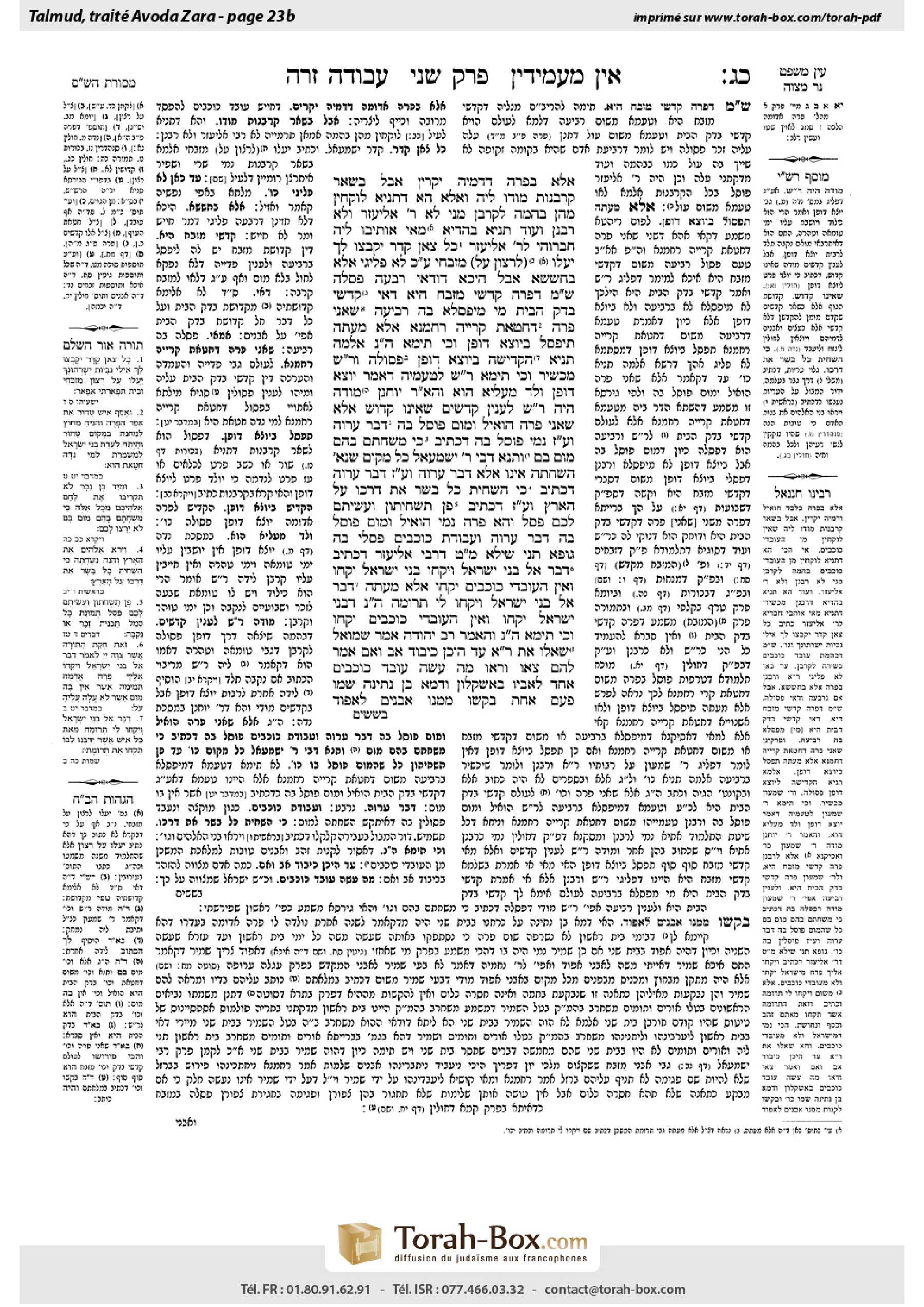
Avodah Zarah 23b: Talmud study for Daf Yomi
Study the Talmud for Daf Yomi with scanned pages, Hebrew text, English translations from Sefaria and AI-generated French translations.
Passage selection and English or AI-generated French translation are available where the scan has annotations. Daf Study is independent of Torah-Box and Sefaria.
Browse Avodah Zarah · עבודה זרה · All tractatesAvodah Zarah 23b text and translations
This page of Avodah Zarah includes the Aramaic text, an English translation and an AI-generated French translation, alongside the scan above.
עבודה זרה כ״ג ב · Aramaic and Hebrew text
אֶלָּא בְּפָרָה, דְּדָמֶיהָ יְקָרִין, אֲבָל בִּשְׁאָר קׇרְבְּנוֹת מוֹדוּ לֵיהּ!
וְאֶלָּא הָא דְּתַנְיָא: לוֹקְחִין מֵהֶן בְּהֵמָה לְקׇרְבָּן, מַנִּי? לָא רַבִּי אֱלִיעֶזֶר וְלָא רַבָּנַן!
וְעוֹד, תַּנְיָא בְּהֶדְיָא: מַאי אוֹתִיבוּ לֵיהּ חַבְרוֹהִי לְרַבִּי אֱלִיעֶזֶר? ״כׇּל צֹאן קֵדָר יִקָּבְצוּ לָךְ... יַעֲלוּ לְרָצוֹן עַל מִזְבְּחִי״.
עַד כָּאן לָא פְּלִיגִי אֶלָּא בַּחֲשָׁשָׁא, אֲבָל הֵיכָא דְּוַדַּאי רַבְעַהּ — פַּסְלַהּ; שְׁמַע מִינַּהּ דְּפָרָה קׇדְשֵׁי מִזְבֵּחַ הִיא, דְּאִי קׇדְשֵׁי בֶּדֶק הַבַּיִת — מִי מַיפְסְלָא בַּהּ רְבִיעָה?!
שָׁאנֵי פָּרָה, דְּחַטָּאת קַרְיַיהּ רַחֲמָנָא.
אֶלָּא מֵעַתָּה, תִּיפָּסֵל בְּיוֹצֵא דּוֹפֶן! וְכִי תֵּימָא הָכִי נָמֵי, אַלְּמָה תַּנְיָא: הִקְדִּישָׁהּ בְּיוֹצֵא דּוֹפֶן — פְּסוּלָה, וְרַבִּי שִׁמְעוֹן מַכְשִׁיר?
וְכִי תֵּימָא, רַבִּי שִׁמְעוֹן לְטַעְמֵיהּ, דְּאָמַר: יוֹצֵא דּוֹפֶן וָלָד מְעַלְּיָא הוּא, וְהָאָמַר רַבִּי יוֹחָנָן: מוֹדֶה הָיָה רַבִּי שִׁמְעוֹן לְעִנְיַן קָדָשִׁים שֶׁאֵינוֹ קָדוֹשׁ!
אֶלָּא שָׁאנֵי פָּרָה, הוֹאִיל וּמוּם פּוֹסֵל בָּהּ — דְּבַר עֶרְוָה וַעֲבוֹדָה זָרָה נָמֵי פּוֹסֵל בָּהּ, דִּכְתִיב: ״כִּי מׇשְׁחָתָם בָּהֶם מוּם בָּם״, וְתָנָא דְּבֵי רַבִּי יִשְׁמָעֵאל: כָּל מָקוֹם שֶׁנֶּאֱמַר הַשְׁחָתָה — אֵינוֹ אֶלָּא דְּבַר עֶרְוָה וַעֲבוֹדָה זָרָה.
דְּבַר עֶרְוָה, דִּכְתִיב: ״כִּי הִשְׁחִית כׇּל בָּשָׂר אֶת דַּרְכּוֹ עַל הָאָרֶץ״, וַעֲבוֹדָה זָרָה, דִּכְתִיב: ״פֶּן תַּשְׁחִתוּן וַעֲשִׂיתֶם לָכֶם פֶּסֶל״; וְהָא פָּרָה נָמֵי, הוֹאִיל וּמוּם פּוֹסֵל בָּהּ, דְּבַר עֶרְוָה וַעֲבוֹדָה זָרָה פָּסְלִי בַּהּ.
גּוּפָא, תָּנֵי שֵׁילָא: מַאי טַעְמָא דְּרַבִּי אֱלִיעֶזֶר? דִּכְתִיב: ״דַּבֵּר אֶל בְּנֵי יִשְׂרָאֵל וְיִקְחוּ״, בְּנֵי יִשְׂרָאֵל יִקְחוּ, וְאֵין הַגּוֹיִם יִקְחוּ. אֶלָּא מֵעַתָּה: ״דַּבֵּר אֶל בְּנֵי יִשְׂרָאֵל וְיִקְחוּ לִי תְּרוּמָה״, הָכִי נָמֵי דִּבְנֵי יִשְׂרָאֵל יִקְחוּ, וְאֵין הַגּוֹיִם יִקְחוּ?
וְכִי תֵּימָא: הָכִי נָמֵי, וְהָאָמַר רַב יְהוּדָה אָמַר שְׁמוּאֵל: שָׁאֲלוּ אֶת רַבִּי אֱלִיעֶזֶר: עַד הֵיכָן כִּיבּוּד אָב וָאֵם? אָמַר לָהֶם: צְאוּ וּרְאוּ מָה עָשָׂה גּוֹי אֶחָד לְאָבִיו בְּאַשְׁקְלוֹן, וְדָמָא בֶּן נְתִינָה שְׁמוֹ. פַּעַם אַחַת בִּקְּשׁוּ מִמֶּנּוּ אֲבָנִים לָאֵפוֹד
Avodah Zarah 23b · English translation
only with regard to the red heifer, as its price is exorbitant, and the Rabbis maintain that the gentile would not risk forfeiting the profit for a temporary benefit. But with regard to the rest of the offerings, which are not exceptionally valuable, they concede to Rabbi Eliezer that animals purchased from gentiles may not be used for these offerings.
The Gemara rejects this possibility: But what about that which is taught in the Tosefta, cited earlier: One may purchase an animal from gentiles for use as an offering; in accordance with whose opinion was this taught? It is not the opinion of Rabbi Eliezer nor that of the Rabbis.
And furthermore, it is explicitly taught in a baraita: What did Rabbi Eliezer’s colleagues respond to him with regard to his ruling that an animal purchased from gentiles may not be used as an offering? They quoted a verse: “All flocks of Kedar shall be gathered together unto you, the rams of Nebaioth shall minister unto you; they shall come up with acceptance upon My altar” (Isaiah 60:7). Since the Rabbis learn from this verse that animals intended for use in all types of offerings may be purchased from gentiles, there is no reason to assume that they concede to Rabbi Eliezer. Consequently, Rabbi Pedat’s opinion that the mishna is in accordance with the opinion of Rabbi Eliezer, while the baraita is in accordance with the opinion of the Rabbis, remains uncontroverted.
§ The Gemara continues to discuss the halakhot of the red heifer. Rabbi Eliezer and the Rabbis disagree only with regard to a case where there is merely a concern that a person engaged in bestiality with the animal. But in a situation where the gentile certainly engaged in bestiality with it, all agree that he has disqualified it as an offering. The Gemara comments: Learn from it that the red heifer is classified as consecrated for the altar, as if it were classified as consecrated for Temple maintenance, does the fact that a person engaged in bestiality with it serve to disqualify it? Items consecrated for the maintenance of the Temple, which are not sacrificed upon the altar, are not rendered unfit by this act.
The Gemara rejects this conclusion: Although it is classified as consecrated for Temple maintenance, the purification offering of the red heifer is different, as the Merciful One labels it with the term for a sin-offering. Accordingly, the red heifer is subject to the same halakhot as a sin-offering, which means it is disqualified if it is the object of bestiality.
The Gemara counters: If that is so, then the red heifer should be disqualified if it was born by caesarean section, as this is the halakha concerning all other sin-offerings. The Gemara adds: And if you would say that indeed, that is so, then why is it taught in a baraita: If one consecrated a red heifer despite the fact that it was born by caesarean section, it is disqualified for use as a red heifer, and Rabbi Shimon deems the heifer fit for use in purification. If, as indicated by the verse, the halakhot of a sin-offering apply to the red heifer, how can Rabbi Shimon deem this animal fit?
The Gemara adds: And if you would say that Rabbi Shimon conforms to his standard line of reasoning, as he says (see Nidda 40a): A baby born by caesarean section is considered a full-fledged offspring and is no different from a baby born in a regular manner, that is difficult: But doesn’t Rabbi Yoḥanan say that Rabbi Shimon would concede with regard to sacrificial animals that an animal born by caesarian section is not consecrated? If so, even Rabbi Shimon should agree that the heifer is disqualified.
The Gemara explains: Rather, the red heifer is different: Since a blemish disqualifies it, a matter of licentiousness and a matter of idol worship also disqualify it, as it is written: “Neither from the hand of a foreigner shall you offer the bread of your God of any of these, because their corruption is in them, there is a blemish in them” (Leviticus 22:25). This verse indicates that corruption is considered a blemish, and the school of Rabbi Yishmael taught: Anywhere that the term corruption is stated, it is a reference to nothing other than a matter of licentiousness and idol worship.
The Gemara supports this claim: Corruption is a reference to a matter of licentiousness, as it is written with regard to the generation of the flood: “And God saw the earth, and, behold, it was corrupt; for all flesh had corrupted their way upon the earth” (Genesis 6:12). And corruption also is a reference to idol worship, as it is written: “Lest you deal corruptly, and make you a graven image” (Deuteronomy 4:16). And consequently, with regard to the red heifer also, since a blemish disqualifies it, a matter of licentiousness and idol worship likewise disqualify it.
§ Earlier, Sheila provided a rationale for Rabbi Eliezer’s ruling that a red heifer may not be purchased from gentiles. The Gemara examines the matter itself. Sheila teaches in a baraita: What is the reasoning of Rabbi Eliezer? It is as it is written: “Speak unto the children of Israel that they take to you a red heifer” (Numbers 19:2). This indicates that the children of Israel take the red heifer, but gentiles do not take the red heifer. The Gemara asks: If that is so, then when the verse states with regard to the donations for the Tabernacle: “Speak unto the children of Israel, that they take for Me an offering” (Exodus 25:2), so too one can claim that only the children of Israel take an offering for God, but gentiles do not take an offering, and that no items for the Temple service may be purchased from gentiles.
And if you would say that indeed, that is so, this cannot be correct. But doesn’t Rav Yehuda say that Shmuel says: The Sages asked Rabbi Eliezer: To what extent must one exert himself to fulfill the mitzva of honoring one’s father and mother? Rabbi Eliezer said to them: Go and see what a certain gentile did for his father in Ashkelon, and his name is Dama ben Netina. Once, the Sages sought to purchase precious stones from him for the ephod of the High Priest
Avodah Zarah 23b · Traduction française (IA)
seulement concernant la vache rouge, car son prix est exorbitant, et les Rabbins affirment que le Gentil ne risquerait pas de perdre un profit pour un bénéfice temporaire. Mais concernant les autres offrandes, qui ne sont pas particulièrement précieuses, ils reconnaissent à Rabbi Eliezer que les animaux achetés auprès des Gentils ne peuvent être utilisés pour ces offrandes.
La Guemara rejette cette possibilité : mais que dit-on alors de ce qui est enseigné dans la Tosefta, citée plus haut : on peut acheter un animal auprès des Gentils pour l'utiliser comme offrande ; selon quel avis a-t-on enseigné cela ? Ce n'est pas l'avis de Rabbi Eliezer ni celui des Rabbins.
Et de plus, il est explicitement enseigné dans une baraïta : quel a été la réponse des collègues de Rabbi Eliezer à son avis selon lequel un animal acheté auprès des Gentils ne peut être utilisé comme offrande ? Ils ont cité un verset : « Toutes les troupeaux de Kedar seront rassemblés vers toi, les béliers de Nebaïoth te serviront, ils monteront avec acceptation sur mon autel » (Isaïe 60:7). Les Rabbins apprennent de ce verset que les animaux destinés à être utilisés dans toutes sortes d'offrandes peuvent être achetés auprès des Gentils, donc il n'y a pas de raison de penser qu'ils reconnaissent à Rabbi Eliezer. Ainsi, l'avis de Rabbi Pedat selon lequel la mitsva est selon l'avis de Rabbi Eliezer, tandis que la baraïta est selon l'avis des Rabbins, reste incontesté.
§ La Guemara continue à discuter des halakhot de la vache rouge. Rabbi Eliezer et les Rabbins ne s'entendent qu'en cas de crainte qu'une personne ait eu des relations avec l'animal. Mais dans un cas où le Gentil a certainement eu des relations avec l'animal, tous s'accordent à dire qu'il est disqualifié comme offrande. La Guemara commente : apprenez-en que la vache rouge est considérée comme consacrée pour l'autel, comme si elle était considérée comme consacrée pour la maintenance du Temple, est-ce que l'acte de bestialité avec elle suffit à la rendre inutilisable ? Les objets consacrés pour la maintenance du Temple, qui ne sont pas sacrifiés sur l'autel, ne sont pas rendus inutilisables par cet acte.
La Guemara rejette cette conclusion : bien qu'elle soit considérée comme consacrée pour la maintenance du Temple, la purification de la vache rouge est différente, car l'Éternel la désigne avec le terme d'offrande expiatoire. Ainsi, la vache rouge est soumise aux mêmes halakhot qu'une offrande expiatoire, ce qui signifie qu'elle est disqualifiée si elle a été l'objet de bestialité.
La Guemara réplique : si c'est ainsi, alors la vache rouge devrait être disqualifiée si elle a été née par césarienne, car c'est la halakha concernant toutes les autres offrandes expiatoires. La Guemara ajoute : et si vous dites que c'est effectivement ainsi, alors pourquoi est-il enseigné dans une baraïta : si l'on a consacré une vache rouge malgré le fait qu'elle ait été née par césarienne, elle est disqualifiée pour l'usage de purification, et Rabbi Shimon considère que la vache est propre à l'usage. Si, comme indiqué par le verset, les halakhot d'une offrande expiatoire s'appliquent à la vache rouge, comment Rabbi Shimon peut-il considérer cet animal comme propre ?
La Guemara ajoute : et si vous dites que Rabbi Shimon suit sa ligne de raisonnement habituelle, comme il dit (voir Nidda 40a) : un bébé né par césarienne est considéré comme un enfant complet et n'est pas différent d'un bébé né normalement, cela est difficile : mais ne dit pas Rabbi Yoḥanan que Rabbi Shimon reconnaîtrait, concernant les animaux sacrés, que celui né par césarienne n'est pas consacré ? Si c'est le cas, même Rabbi Shimon devrait reconnaître que la vache est disqualifiée.
La Guemara explique : plutôt, la vache rouge est différente : puisque un défaut la disqualifie, une question de luxure et une question d'idolâtrie la disqualifient également, comme il est écrit : « Ni de la main d'un étranger ne devra-t-on offrir le pain de ton Dieu, de tout cela, car leur corruption est en eux, il y a un défaut en eux » (Lévitique 22:25). Ce verset indique que la corruption est considérée comme un défaut, et l'école de Rabbi Yishmael enseignait : partout où le terme corruption est utilisé, il s'agit uniquement d'une question de luxure et d'idolâtrie.
La Guemara soutient cette affirmation : la corruption fait référence à une question de luxure, comme il est écrit concernant la génération de la Déluge : « Et Dieu vit la terre, et voilà qu'elle était corrompue ; car toute chair avait corrompu leur voie sur la terre » (Genèse 6:12). Et la corruption fait également référence à l'idolâtrie, comme il est écrit : « De peur que tu agisses de manière corrompue, et que tu fasses un image gravée » (Deutéronome 4:16). Et par conséquent, concernant la vache rouge également, puisque un défaut la disqualifie, une question de luxure et d'idolâtrie la disqualifient également.
§ Plus tôt, Sheila a donné une justification pour l'avis de Rabbi Eliezer selon lequel la vache rouge ne peut être achetée auprès des Gentils. La Guemara examine la question elle-même. Sheila enseigne dans une baraïta : quelle est la raison de Rabbi Eliezer ? C'est comme il est écrit : « Parle aux enfants d'Israël, qu'ils prennent pour vous une vache rouge » (Nombres 19:2). Cela indique que les enfants d'Israël prennent la vache rouge, mais les Gentils ne prennent pas la vache rouge. La Guemara demande : si c'est ainsi, alors lorsque le verset dit concernant les dons pour le Tabernacle : « Parle aux enfants d'Israël, qu'ils prennent pour Moi une offrande » (Exode 25:2), on pourrait aussi affirmer que seul l'Israélite prend une offrande pour Dieu, mais les Gentils ne prennent pas une offrande, et que aucun objet pour le service du Temple ne peut être acheté auprès des Gentils.
Et si vous dites que c'est effectivement ainsi, cela ne peut pas être correct. Mais ne dit pas Rav Yehuda que Shmuel dit : les Sages ont interrogé Rabbi Eliezer : jusqu'à quel point doit-on se donner de la peine pour remplir la mitsva d'honorer ses parents ? Rabbi Eliezer a dit à eux : allez voir ce que fit un Gentil pour son père à Ashkelon, et son nom est Dama ben Netina. Une fois, les Sages ont cherché à acheter des pierres précieuses chez lui pour l'éphod du Grand Prêtre.
Traduction française générée par IA à partir de l’édition anglaise de Sefaria. Vérifie toujours un passage avec le texte source.
Text from Sefaria: William Davidson Edition - Vocalized Aramaic (CC BY NC); William Davidson Edition - English (CC BY NC).