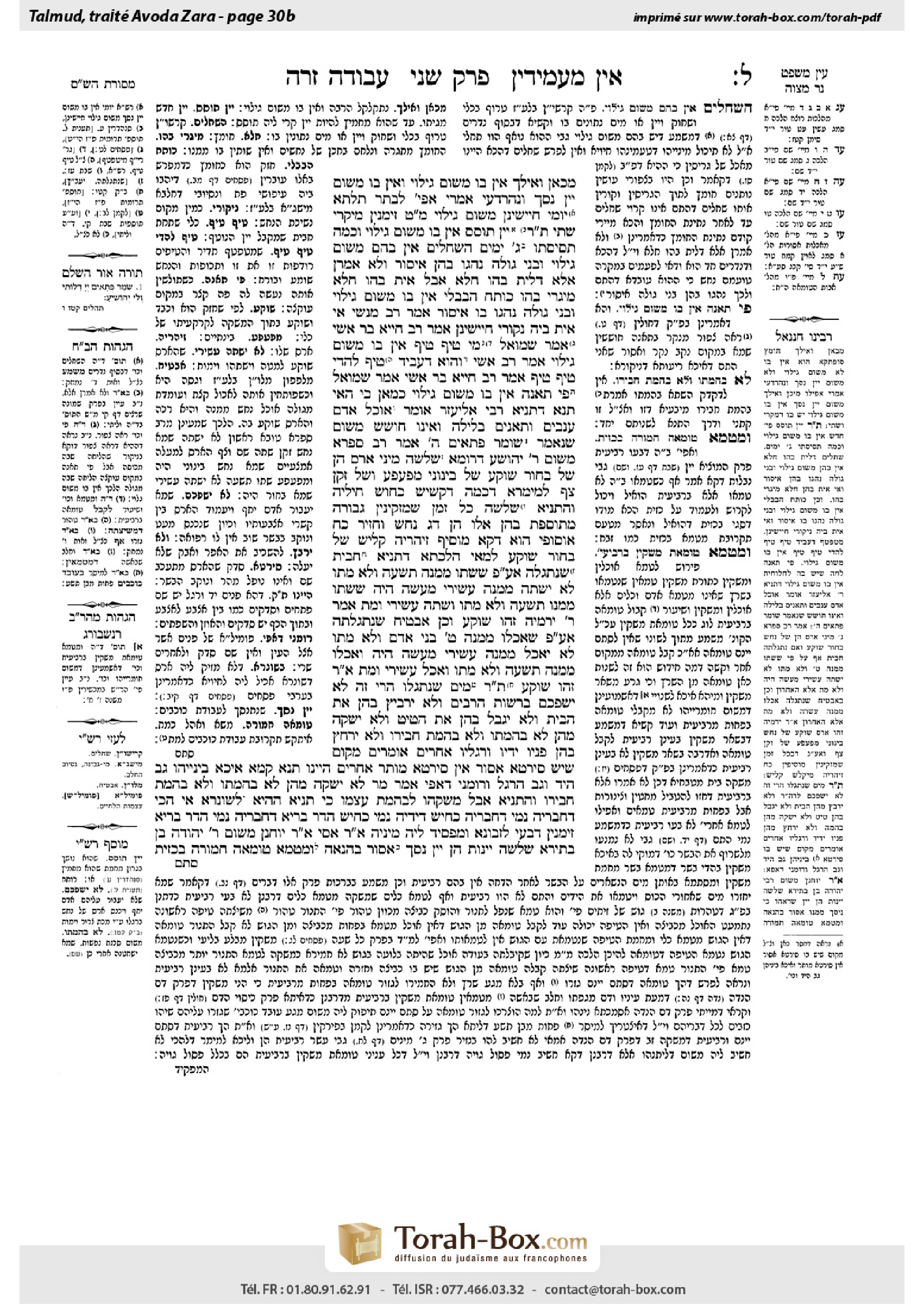
Avodah Zarah 30b: Talmud study for Daf Yomi
Study the Talmud for Daf Yomi with scanned pages, Hebrew text, English translations from Sefaria and AI-generated French translations.
Passage selection and English or AI-generated French translation are available where the scan has annotations. Daf Study is independent of Torah-Box and Sefaria.
Browse Avodah Zarah · עבודה זרה · All tractatesAvodah Zarah 30b text and translations
This page of Avodah Zarah includes the Aramaic text, an English translation and an AI-generated French translation, alongside the scan above.
עבודה זרה ל׳ ב · Aramaic and Hebrew text
מִכָּאן וְאֵילָךְ — אֵין בּוֹ מִשּׁוּם גִּילּוּי, וְאֵין בּוֹ מִשּׁוּם יֵין נֶסֶךְ. וּנְהַרְדָּעֵי אָמְרִי: אֲפִילּוּ לְבָתַר תְּלָתָא יוֹמֵי חָיְישִׁינַן מִשּׁוּם גִּילּוּי. מַאי טַעְמָא? זִימְנִין מִיקְּרֵי שָׁתֵי.
תָּנוּ רַבָּנַן: יַיִן תּוֹסֵס אֵין בּוֹ מִשּׁוּם גִּילּוּי, וְכַמָּה תְּסִיסָתוֹ? שְׁלֹשָׁה יָמִים. הַשַּׁחֲלַיִם אֵין בָּהֶם מִשּׁוּם גִּילּוּי, וּבְנֵי גוֹלָה נָהֲגוּ בָּהֶן אִיסּוּר. וְלָא אֲמַרַן אֶלָּא דְּלֵית בְּהוּ חַלָּא, אֲבָל אִית בְּהוּ חַלָּא — מִיגָּרֵי בְּהוּ.
כּוּתָּח הַבַּבְלִי אֵין בּוֹ מִשּׁוּם גִּילּוּי, וּבְנֵי גוֹלָה נָהֲגוּ בּוֹ אִיסּוּר. אָמַר רַב מְנַשֵּׁי: אִי אִית בֵּיהּ נִקּוּרֵי — חָיְישִׁינַן. אָמַר רַב חִיָּיא בַּר אָשֵׁי אָמַר שְׁמוּאֵל: מֵי טִיף טִיף אֵין בּוֹ מִשּׁוּם גִּילּוּי. אָמַר רַב אָשֵׁי: וְהוּא דְּעָבֵיד טִיף לַהֲדֵי טִיף טִיף.
אָמַר רַב חִיָּיא בַּר אָשֵׁי אָמַר שְׁמוּאֵל: פִּי תְאֵנָה אֵין בּוֹ מִשּׁוּם גִּילּוּי. כְּמַאן? כִּי הַאי תַּנָּא, דְּתַנְיָא: רַבִּי אֱלִיעֶזֶר אוֹמֵר: אוֹכֵל אָדָם עֲנָבִים וּתְאֵנִים בַּלַּיְלָה וְאֵינוֹ חוֹשֵׁשׁ, מִשּׁוּם שֶׁנֶּאֱמַר: ״שֹׁמֵר פְּתָאִים ה׳״.
אָמַר רַב סָפְרָא מִשּׁוּם רַבִּי יְהוֹשֻׁעַ דָּרוֹמָא: שְׁלֹשָׁה מִינֵי אֶרֶס הֵן, שֶׁל בָּחוּר — שׁוֹקֵעַ, שֶׁל בֵּינוֹנִי — מְפַעְפֵּעַ, וְשֶׁל זָקֵן — צָף. לְמֵימְרָא דִּכְמָה דְּקַשִּׁישׁ כְּחִישׁ חֵילֵיהּ? וְהָתַנְיָא: שְׁלֹשָׁה כׇּל זְמַן שֶׁמַּזְקִינִין גְּבוּרָה מִתּוֹסֶפֶת בָּהֶן, אֵלּוּ הֵן: דָּג, נָחָשׁ, וַחֲזִיר! כֹּחַ אוֹסוֹפֵי הוּא דְּקָא מוֹסֵיף, זִיהֲרֵיהּ קְלִישׁ.
שֶׁל בָּחוּר שׁוֹקֵעַ, לְמַאי הִלְכְתָא? דְּתַנְיָא: חָבִית (שנתגלה) [שֶׁנִּתְגַּלְּתָה], אַף עַל פִּי שֶׁשָּׁתוּ מִמֶּנָּה תִּשְׁעָה וְלֹא מֵתוּ — לֹא יִשְׁתֶּה מִמֶּנָּה עֲשִׂירִי. מַעֲשֶׂה הָיָה שֶׁשָּׁתוּ מִמֶּנּוּ תִּשְׁעָה וְלֹא מֵתוּ, וְשָׁתָה עֲשִׂירִי וָמֵת. אָמַר רַבִּי יִרְמְיָה: זֶהוּ שׁוֹקֵעַ.
וְכֵן אֲבַטִּיחַ שֶׁנִּתְגַּלְּתָה, אַף עַל פִּי שֶׁאָכְלוּ מִמֶּנָּה תִּשְׁעָה בְּנֵי אָדָם וְלֹא מֵתוּ, לֹא יֹאכַל מִמֶּנָּה עֲשִׂירִי. מַעֲשֶׂה הָיָה וְאָכְלוּ מִמֶּנָּה תִּשְׁעָה וְלֹא מֵתוּ, וְאָכַל עֲשִׂירִי וָמֵת. אָמַר רַבִּי: זֶהוּ שׁוֹקֵעַ.
תָּנוּ רַבָּנַן: מַיִם שֶׁנִּתְגַּלּוּ — הֲרֵי זֶה לֹא יִשְׁפְּכֵם בִּרְשׁוּת הָרַבִּים, וְלֹא יְרַבֵּיץ בָּהֶן אֶת הַבַּיִת, וְלֹא יְגַבֵּל בָּהֶן אֶת הַטִּיט, וְלֹא יַשְׁקֶה מֵהֶן לֹא בְּהֶמְתּוֹ וְלֹא בֶּהֱמַת חֲבֵירוֹ, וְלֹא יִרְחַץ בָּהֶן פָּנָיו יָדָיו וְרַגְלָיו. אֲחֵרִים אוֹמְרִים: מָקוֹם שֶׁיֵּשׁ סִירְטָא — אָסוּר, אֵין סִירְטָא — מוּתָּר.
אֲחֵרִים הַיְינוּ תַּנָּא קַמָּא! אִיכָּא בֵּינַיְיהוּ גַּב הַיָּד וְגַב הָרֶגֶל וְרוּמָּנֵי דְּאַפֵּי.
אָמַר מָר: לֹא יַשְׁקֶה מֵהֶן לֹא בְּהֶמְתּוֹ וְלֹא בֶּהֱמַת חֲבֵירוֹ. וְהָתַנְיָא: אֲבָל מַשְׁקֵהוּ לְבֶהֱמַת עַצְמוֹ! כִּי תַּנְיָא הָהִיא — לְשׁוּנָּרָא. אִי הָכִי, דְּחַבְרֵיהּ נָמֵי? דְּחַבְרֵיהּ כָּחֵישׁ. דִּידֵיהּ נָמֵי כָּחֵישׁ? הָדַר בָּרֵיא. דְּחַבְרֵיהּ נָמֵי הָדַר בָּרֵיא! זִימְנִין דְּבָעֵי לְזַבּוֹנֵהּ, וּמַפְסֵיד לֵיהּ מִינֵּיהּ.
אָמַר רַבִּי אַסִּי אָמַר רַבִּי יוֹחָנָן מִשּׁוּם רַבִּי יְהוּדָה בֶּן בְּתֵירָא: שְׁלֹשָׁה יֵינוֹת הֵן — יֵין נֶסֶךְ אָסוּר בַּהֲנָאָה, וּמְטַמֵּא טוּמְאָה חֲמוּרָה בִּכְזַיִת.
Avodah Zarah 30b · English translation
From this point forward, it is not subject to the halakha of exposure and is not subject to the prohibition of wine used for a libation. And the Sages of Neharde’a say: Even after three days, we are concerned with regard to exposure. What is the reason? It is because at times it occurs that a snake drinks even sour wine.
§ The Gemara discusses the halakha of exposure with regard to various foods and beverages. The Sages taught: Wine that is still fermenting is not subject to the halakha of exposure. And how long is its fermentation process? It is three days. Cress-based dishes are not subject to the halakha of exposure, but the residents of the Diaspora are accustomed to treating them as prohibited if they were left exposed. And we said this only in a case where the dishes do not contain vinegar; but if they do contain vinegar, the vinegar repels the snakes, and in such a situation even the inhabitants of the Diaspora do not treat them as prohibited.
The Gemara continues: Babylonian kutaḥ, a popular dip, is not subject to the halakha of exposure, but the residents of the Diaspora are accustomed to treating it as prohibited. Rav Menashei said: If the kutaḥ has indentations in it, we are concerned that they are from a snake’s fangs, and it is therefore prohibited. Rav Ḥiyya bar Ashi says that Shmuel says: Dripping water is not subject to the halakha of exposure while it is being collected. Rav Ashi said: And that is the halakha only in a case where the dripping occurs one drop immediately after another drop, i.e., continuously, as the snake will not drink from it in that circumstance.
Rav Ḥiyya bar Ashi says that Shmuel says: The mouth of a fig is not subject to the halakha of exposure. In accordance with whose opinion is this stated? It is stated in accordance with the opinion of this tanna, as it is taught in a baraita that Rabbi Eliezer said: A person may eat grapes and figs at night, and he need not have cause for concern, as it is stated: “The Lord preserves the simple” (Psalms 116:6). This verse teaches that one need not fear that harm might befall him when he engages in commonplace activities.
Rav Safra says in the name of Rabbi Yehoshua Deroma: There are three kinds of snake venom: Venom of a young snake, which sinks to the bottom when it is deposited in liquid; venom of a snake of intermediate age, i.e., a snake that is no longer young, which is suspended in the liquid; and venom of an old snake, which floats at the top. The Gemara asks: Is this to say that as a snake ages, the strength of its venom becomes weaker? But isn’t it taught in a baraita that three creatures become stronger as they age, and they are: A fish, a snake, and a pig? The Gemara answers: It is physically that a snake strengthens, but the potency of its venom diminishes.
The Gemara asks: With regard to what halakha was it stated that the venom of a young snake sinks? The Gemara explains: As it is taught in a baraita: With regard to a barrel that was uncovered, even though nine people drank from it and did not die, the tenth should not drink from it, as the venom may have sunk to the bottom of the barrel. The Gemara relates that there was an incident in which nine people drank from an exposed barrel and did not die, and a tenth subsequently drank from it and died. Rabbi Yirmeya says: This is an example of venom that sinks.
And similarly, with regard to a melon that was exposed, even though nine people ate from it and did not die, the tenth should not eat from it. Again, there was an incident in which nine people ate from a melon and did not die, and the tenth ate from it and died. Rabbi Yehuda HaNasi says: This is an example of venom that sinks.
The Sages taught: With regard to water that was exposed, one may not pour it out in the public thoroughfare, nor settle dust with it by sprinkling it in the house, nor mix clay with it, nor give it to drink to his animal or the animal of another, nor wash his face, hands, or feet with it. Others say: If the part that one is washing is an area of the body that has a crevice in it, it is prohibited to wash it with exposed water, as the venom may seep through the crevice; if the body part does not have a crevice, it is permitted.
The Gemara raises a difficulty: The opinion introduced with the phrase: Others say, is identical to the opinion of the first tanna of the baraita. Both hold that one may not wash his face, hands, and feet with exposed water, as these body parts have crevices in them. The Gemara explains: There is a difference between them with regard to the back of the hand and the back of the foot, and the upper part of the face, i.e., the area of the cheekbones. According to the opinion introduced with the phrase: Others say, it is permitted to wash those parts of the body, as they are free of crevices. According to the first tanna it is prohibited, as they are part of the face, hands, and feet.
The Master said above concerning exposed water: Nor give it to drink to his animal or the animal of another. The Gemara asks: But isn’t it taught in a baraita: But one may give exposed water to his own animal to drink? The Gemara answers: When that baraita is taught, it is referring to a cat, as cats are less susceptible to snake venom. The Gemara challenges: If that is so, let him also give the water to the cat of another. The Gemara explains: The venom weakens the cat of another. The Gemara challenges: But doesn’t the venom also weaken his own cat? The Gemara explains: It will later recover. The Gemara challenges: The cat of another will also recover later. The Gemara explains: Although both will eventually recover, there are times that the owner wishes to sell the cat and loses potential profit from the cat’s current weakness.
Rabbi Asi says that Rabbi Yoḥanan says in the name of Rabbi Yehuda ben Beteira: There are three kinds of prohibited wines: It is prohibited to derive benefit from wine used for a libation, and the wine imparts severe ritual impurity when it has the volume of an olive-bulk.
Avodah Zarah 30b · Traduction française (IA)
À partir de ce moment, il n'est plus soumis à la halakha de l'exposition et n'est plus soumis à l'interdiction du vin utilisé pour un libation. Et les Sages de Neharde’a disent : Même après trois jours, nous nous en préoccupons. Quelle est la raison ? C'est parce qu'il arrive parfois qu'un serpent boive même du vin acide.
§ La Guemara discute de la halakha de l'exposition en ce qui concerne divers aliments et boissons. Les Sages enseignent : Le vin qui continue de fermenter n'est pas soumis à la halakha de l'exposition. Et combien dure ce processus de fermentation ? Trois jours. Les plats à base de cresson ne sont pas soumis à la halakha de l'exposition, mais les habitants de la Diaspora sont habitués à les considérer comme interdits s'ils ont été laissés exposés. Et nous avons dit cela uniquement dans le cas où ces plats ne contiennent pas de vinaigre ; mais si ils en contiennent, le vinaigre repousse les serpents, et dans ce cas même les habitants de la Diaspora ne les considèrent pas comme interdits.
La Guemara continue : Le kutaḥ babylonien, un dip populaire, n'est pas soumis à la halakha de l'exposition, mais les habitants de la Diaspora sont habitués à le considérer comme interdit. Rav Menashei dit : Si le kutaḥ présente des dépressions, nous craignons qu'elles proviennent des dents d'un serpent, et il est donc interdit. Rav Ḥiyya bar Ashi dit que Shmuel dit : L'eau qui coule n'est pas soumise à la halakha de l'exposition pendant qu'elle est collectée. Rav Ashi dit : Et c'est ainsi que la halakha est uniquement dans le cas où l'eau coule d'une goutte à l'autre, c'est-à-dire de manière continue, car le serpent ne boira pas dans ce cas.
Rav Ḥiyya bar Ashi dit que Shmuel dit : La bouche d'une figue n'est pas soumise à la halakha de l'exposition. Selon quel avis est-ce dit ? C'est selon l'avis de ce tanna, car il est enseigné dans une baraïta que Rabbi Eliezer dit : On peut manger des raisins et des figues la nuit, et il n'a pas besoin de s'inquiéter, car il est dit : « L'Éternel protège le simple » (Psaumes 116:6). Cette verset enseigne que l'on n'a pas à craindre que quelque mal puisse arriver lorsqu'on engage en activités courantes.
Rav Safra dit au nom de Rabbi Yehoshua Deroma : Il existe trois types de venin de serpent : le venin d'un serpent jeune, qui s'accumule en bas lorsqu'il est déposé dans un liquide ; le venin d'un serpent de milieu d'âge, c'est-à-dire un serpent qui n'est plus jeune, qui flotte dans le liquide ; et le venin d'un serpent âgé, qui flotte en haut. La Guemara pose la question : Est-ce que cela signifie que, à mesure qu'un serpent vieillit, la puissance de son venin devient plus faible ? Mais n'est-il pas enseigné dans une baraïta que trois créatures deviennent plus fortes avec l'âge, et ce sont : un poisson, un serpent et un porc ? La Guemara répond : Physiquement, un serpent s'affermit, mais la puissance de son venin diminue.
La Guemara pose la question : À propos de quelle halakha a-t-on dit que le venin d'un serpent jeune s'accumule en bas ? La Guemara explique : Comme il est enseigné dans une baraïta : À propos d'un tonneau qui a été exposé, même si neuf personnes y ont bu et n'ont pas mouru, la dixième ne devrait pas y boire, car le venin pourrait s'être accumulé en bas du tonneau. La Guemara rapporte qu'il y avait un incident où neuf personnes avaient bu d'un tonneau exposé et n'avaient pas mouru, et la dixième avait ensuite bu et était morte. Rabbi Yirmeya dit : C'est un exemple de venin qui s'accumule en bas.
Et de même, à propos d'un melon exposé, même si neuf personnes y ont mangé et n'ont pas mouru, la dixième ne devrait pas y manger. À nouveau, il y avait un incident où neuf personnes avaient mangé d'un melon et n'avaient pas mouru, et la dixième avait mangé et était morte. Rabbi Yehuda HaNasi dit : C'est un exemple de venin qui s'accumule en bas.
Les Sages enseignent : À propos de l'eau exposée, on ne doit pas jeter cette eau dans les rues publiques, ni utiliser cette eau pour pulvériser de la poussière dans la maison, ni mélanger de la terre avec cette eau, ni donner à boire à son animal ou à l'animal d'autrui, ni se laver le visage, les mains ou les pieds avec cette eau. D'autres disent : Si la partie à laver est une partie du corps qui a une rainure, il est interdit de laver cette partie avec de l'eau exposée, car le venin pourrait s'infiltrer par la rainure ; si la partie du corps n'a pas de rainure, cela est permis.
La Guemara soulève une difficulté : L'avis introduit avec la phrase : D'autres disent, est identique à l'avis du premier tanna de la baraïta. Les deux considèrent que l'on ne doit pas se laver le visage, les mains et les pieds avec de l'eau exposée, car ces parties du corps ont des rainures. La Guemara explique : Il y a une différence entre eux concernant le dos de la main et du pied, et la partie supérieure du visage, c'est-à-dire la zone des pommettes. Selon l'avis introduit avec la phrase : D'autres disent, il est permis de laver ces parties du corps, car elles n'ont pas de rainures. Selon le premier tanna, il est interdit, car elles font partie du visage, des mains et des pieds.
Le Maître a dit ci-dessus concernant l'eau exposée : Ne donnez pas à boire à son animal ou à l'animal d'autrui. La Guemara pose la question : Mais n'est-il pas enseigné dans une baraïta : On peut donner de l'eau exposée à son propre animal à boire ? La Guemara répond : Lorsque cette baraïta est enseignée, elle fait référence à un chat, car les chats sont moins sensibles au venin de serpent. La Guemara conteste : Si c'est ainsi, il devrait aussi donner de l'eau au chat d'autrui. La Guemara explique : Le venin affaiblit le chat d'autrui. La Guemara conteste : Mais le venin affaiblit aussi son propre chat ? La Guemara explique : Il se remetra plus tard. La Guemara conteste : Le chat d'autrui se remetra aussi plus tard. La Guemara explique : Bien que les deux se remettent finalement, il y a des moments où l'owner souhaite vendre le chat et perd un profit potentiel à cause de la faiblesse actuelle du chat.
Rabbi Asi dit que Rabbi Yoḥanan dit au nom de Rabbi Yehuda ben Beteira : Il existe trois types de vins interdits : il est interdit d'en tirer un bénéfice à partir du vin utilisé pour un libation, et le vin transmet une impureté rituelle sévère lorsqu'il a le volume d'une olivette.
Traduction française générée par IA à partir de l’édition anglaise de Sefaria. Vérifie toujours un passage avec le texte source.
Text from Sefaria: William Davidson Edition - Vocalized Aramaic (CC BY NC); William Davidson Edition - English (CC BY NC).