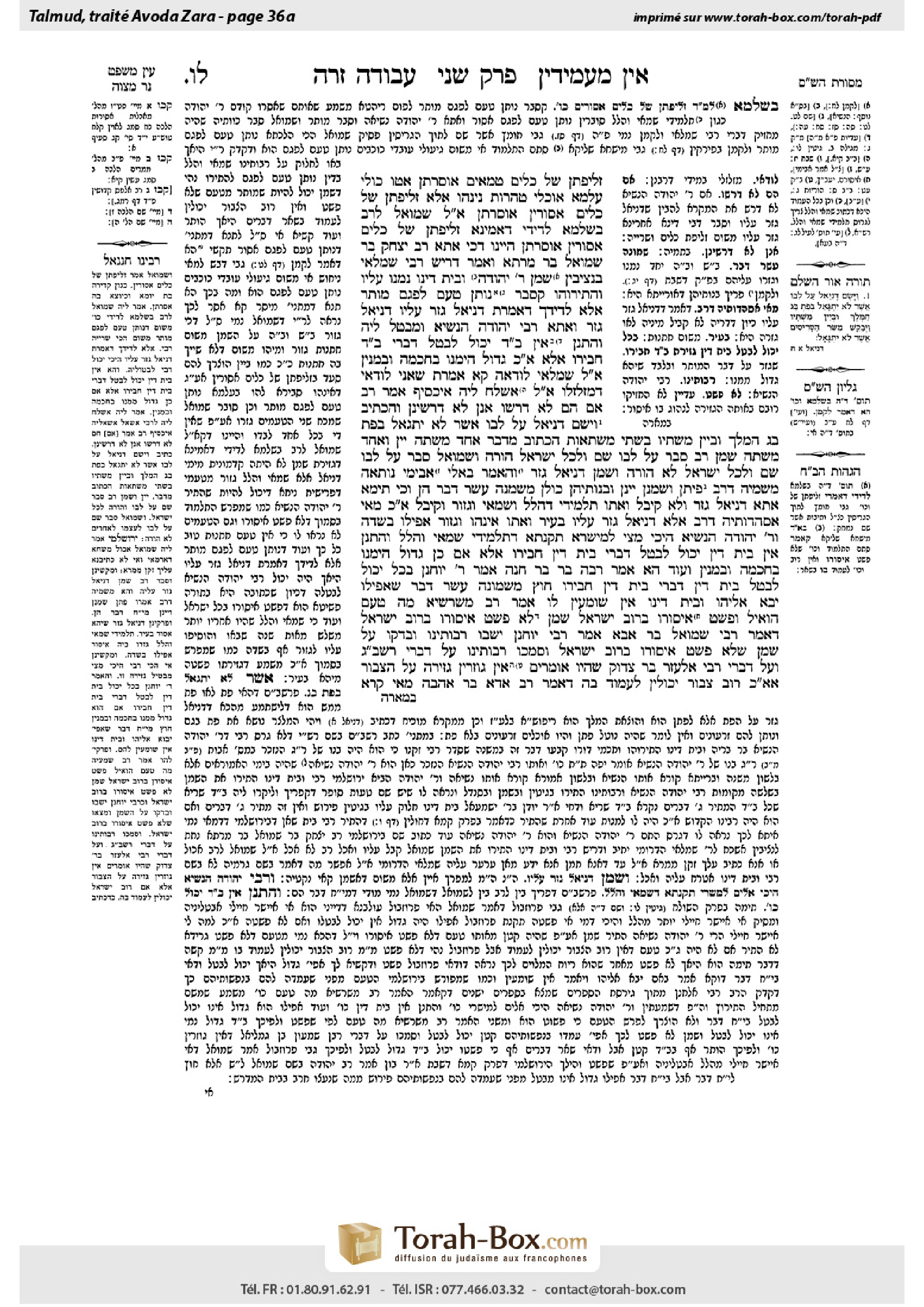
Avodah Zarah 36a: Talmud study for Daf Yomi
Study the Talmud for Daf Yomi with scanned pages, Hebrew text, English translations from Sefaria and AI-generated French translations.
Passage selection and English or AI-generated French translation are available where the scan has annotations. Daf Study is independent of Torah-Box and Sefaria.
Browse Avodah Zarah · עבודה זרה · All tractatesAvodah Zarah 36a text and translations
This page of Avodah Zarah includes the Aramaic text, an English translation and an AI-generated French translation, alongside the scan above.
עבודה זרה ל״ו א · Aramaic and Hebrew text
זְלִיפָתָן שֶׁל כֵּלִים טְמֵאִים אוֹסַרְתָּן. אַטּוּ כּוּלֵּי עָלְמָא אוֹכְלֵי טְהָרוֹת נִינְהוּ? אֶלָּא, זְלִיפָתָן שֶׁל כֵּלִים אֲסוּרִין אוֹסַרְתָּן.
אֲמַר לֵיהּ שְׁמוּאֵל לְרַב: בִּשְׁלָמָא לְדִידִי דְּאָמֵינָא זְלִיפָתָן שֶׁל כֵּלִים אֲסוּרִין אוֹסַרְתָּן, הַיְינוּ דְּכִי אֲתָא רַב יִצְחָק בַּר שְׁמוּאֵל בַּר מָרְתָא וְאָמַר: דָּרֵישׁ רַבִּי שִׂמְלַאי בִּנְצִיבִין: שֶׁמֶן, רַבִּי יְהוּדָה וּבֵית דִּינוֹ נִמְנוּ עָלָיו וְהִתִּירוּהוּ.
קָסָבַר: נוֹתֵן טַעַם לִפְגָם — מוּתָּר.
אֶלָּא לְדִידָךְ דְּאָמְרַתְּ דָּנִיאֵל גָּזַר עָלָיו, דָּנִיאֵל גְּזַר וַאֲתָא רַבִּי יְהוּדָה הַנָּשִׂיא וּמְבַטֵּל לֵיהּ? וְהָתְנַן: אֵין בֵּית דִּין יָכוֹל לְבַטֵּל דִּבְרֵי בֵּית דִּין חֲבֵירוֹ, אֶלָּא אִם כֵּן גָּדוֹל הֵימֶנּוּ בְּחָכְמָה וּבְמִנְיָן!
אֲמַר לֵיהּ שִׂמְלַאי לוּדָּאָה קָא אָמְרַתְּ? שָׁאנֵי לוּדָּאֵי דִּמְזַלְזְלוּ. אֲמַר לֵיהּ: אֶשְׁלַח לֵיהּ? אִיכְּסִיף.
אָמַר רַב: אִם הֵם לֹא דָּרְשׁוּ, אֲנַן לָא דָּרְשִׁינַן? וְהָכְתִיב: ״וַיָּשֶׂם דָּנִיֵּאל עַל לִבּוֹ אֲשֶׁר לֹא יִתְגָּאַל בְּפַת בַּג הַמֶּלֶךְ וּבְיֵין מִשְׁתָּיו״ — בִּשְׁתֵּי מִשְׁתָּאוֹת הַכָּתוּב מְדַבֵּר, אֶחָד מִשְׁתֵּה יַיִן וְאֶחָד מִשְׁתֵּה שֶׁמֶן.
רַב סָבַר: עַל לִבּוֹ שָׂם, וּלְכׇל יִשְׂרָאֵל הוֹרָה; וּשְׁמוּאֵל סָבַר: עַל לִבּוֹ שָׂם, וּלְכׇל יִשְׂרָאֵל לֹא הוֹרָה.
וְשֶׁמֶן, דָּנִיאֵל גְּזַר? וְהָאָמַר בָּאלִי אֲבִימִי נִוְתָאָה מִשְּׁמֵיהּ דְּרַב: פִּיתָּן וְשַׁמְנָן, יֵינָן וּבְנוֹתֵיהֶן, כּוּלָּן מִשְּׁמֹנָה עָשָׂר דָּבָר הֵן.
וְכִי תֵּימָא: אֲתָא דָּנִיאֵל גְּזַר וְלָא קַיבֻּל, וַאֲתוֹ תַּלְמִידֵי דְּהִלֵּל וְשַׁמַּאי וּגְזוּר וְקַיבֻּל, אִם כֵּן מַאי אַסְהָדוּתֵיהּ דְּרַב? אֶלָּא, דָּנִיאֵל גָּזַר עָלָיו בָּעִיר, וַאֲתוֹ אִינְהוּ וּגְזוּר אֲפִילּוּ בַּשָּׂדֶה.
וְרַבִּי יְהוּדָה הַנָּשִׂיא הֵיכִי מָצֵי לְמִישְׁרֵא תַּקַּנְתָּא דְּתַלְמִידֵי שַׁמַּאי וְהִלֵּל? וְהָתְנַן: אֵין בֵּית דִּין יָכוֹל לְבַטֵּל דִּבְרֵי בֵּית דִּין חֲבֵירוֹ, אֶלָּא אִם כֵּן גָּדוֹל הֵימֶנּוּ בְּחָכְמָה וּבְמִנְיָן! וְעוֹד, הָא אָמַר רַבָּה בַּר בַּר חָנָה אָמַר רַבִּי יוֹחָנָן: בַּכֹּל יָכוֹל לְבַטֵּל בֵּית דִּין דִּבְרֵי בֵּית דִּין חֲבֵירוֹ, חוּץ מִשְּׁמוֹנָה עָשָׂר דָּבָר, שֶׁאֲפִילּוּ יָבֹא אֵלִיָּהוּ וּבֵית דִּינוֹ אֵין שׁוֹמְעִין לוֹ!
אָמַר רַב מְשַׁרְשְׁיָא: מַה טַּעַם? הוֹאִיל וּפָשַׁט אִיסּוּרוֹ בְּרוֹב יִשְׂרָאֵל, שֶׁמֶן לֹא פָּשַׁט אִיסּוּרוֹ בְּרוֹב יִשְׂרָאֵל, דְּאָמַר רַבִּי שְׁמוּאֵל בַּר אַבָּא אָמַר רַבִּי יוֹחָנָן: יָשְׁבוּ רַבּוֹתֵינוּ וּבָדְקוּ עַל שֶׁמֶן שֶׁלֹּא פָּשַׁט אִיסּוּרוֹ בְּרוֹב יִשְׂרָאֵל, וְסָמְכוּ רַבּוֹתֵינוּ עַל דִּבְרֵי רַבָּן שִׁמְעוֹן בֶּן גַּמְלִיאֵל וְעַל דִּבְרֵי רַבִּי אֶלְעָזָר בַּר צָדוֹק, שֶׁהָיוּ אוֹמְרִים: אֵין גּוֹזְרִין גְּזֵירָה עַל הַצִּבּוּר אֶלָּא אִם כֵּן רוֹב צִבּוּר יְכוֹלִין לַעֲמוֹד בָּהּ, דְּאָמַר רַב אַדָּא בַּר אַהֲבָה: מַאי קְרָא?
Avodah Zarah 36a · English translation
The secretion of ritually impure vessels prohibits the oil that gentiles pour into them. The Gemara asks: Is that to say that all people are consumers of only ritually pure substances? Since it is common practice to eat ritually impure foods, why should the secretion of impure vessels render the oil prohibited? The Gemara emends Shmuel’s statement: Rather, the secretion of prohibited vessels prohibits the oil, as it absorbs the prohibited substances.
Shmuel said to Rav: Granted, according to my opinion, as I say that the secretion of prohibited vessels prohibits the oil, this is how one can understand that when Rav Yitzḥak bar Shmuel bar Marta came, he said that Rabbi Simlai taught in Netzivin: With regard to oil, Rabbi Yehuda HaNasi and his court were counted, i.e., voted, on this matter and permitted it.
Shmuel elaborates: It can be explained that Rabbi Yehuda HaNasi holds: A prohibited substance that imparts flavor to the detriment of the mixture is permitted. According to Shmuel’s explanation, the prohibition was revoked because the taste absorbed by the oil would have impaired its flavor rather than enhanced it.
But according to you, Rav, who said that Daniel decreed a prohibition upon the oil of gentiles, how can this be understood? Can it be said that Daniel decreed it, and Rabbi Yehuda HaNasi came and voided the decree? But didn’t we learn in a mishna (Eduyyot 1:5): A court cannot void the statements of another court, unless it is greater than it in wisdom and in number? According to Rav, how could Rabbi Yehuda HaNasi void a decree issued by Daniel?
Rather than answering Shmuel’s question directly, Rav first rejects his proof: Rav said to him: Was it Rabbi Simlai of Lod of whom you spoke? Residents of Lod are different, as they disparage the Sages’ decrees, and therefore Rabbi Simlai’s testimony is unreliable. Shmuel said to him: Shall I send for him? As a result, Rav became embarrassed.
Rav claimed that Rabbi Yehuda HaNasi and his court erred in permitting the oil of gentiles, which Daniel had prohibited. Rav said: If they, Rabbi Yehuda HaNasi and his court, did not expound the following verse, will we not expound it? We must certainly do so. Isn’t it written: “But Daniel purposed in his heart that he would not defile himself with the king’s food, nor with the wine which he drank [mishtav]” (Daniel 1:8)? The word mishtav is in the plural, indicating that the verse speaks of two types of drinking: One is the drinking of wine, and one is the drinking of oil. Accordingly, Daniel himself refrained from consuming oil of gentiles, as he instituted this prohibition. Why does Shmuel reject this inference, which indicates that Daniel issued this decree?
The Gemara explains that Rav maintained: Daniel placed the prohibition against consuming the oil of gentiles upon his heart, i.e., for himself, and he instructed all Jews to adhere to it as well. And Shmuel held: Daniel placed the prohibition upon his heart, but he did not instruct all Jews to accept it.
The Gemara asks: And is it correct that Daniel decreed that oil is prohibited? But doesn’t Balei say that Avimi of Nota [Nota’a] says in the name of Rav: The prohibitions of gentiles’ bread and their oil, their wine and their daughters, are all from the eighteen matters decreed in a single day in the days of the students of Shammai and Hillel. Apparently, Rav himself maintains that the prohibition was not instituted by Daniel.
The Gemara adds: And if you would say that Daniel came and decreed but the people did not accept it, and later the students of Hillel and Shammai came and decreed with regard to gentiles’ oil and the people accepted it, if that is so, what is the significance of Rav’s testimony that Daniel initially instituted the prohibition? The Gemara explains: Rather, Daniel decreed upon the oil of gentiles in the city, and the students of Shammai and Hillel came and decreed that it is prohibited even in the field.
The Gemara asks: And how could Rabbi Yehuda HaNasi permit an ordinance issued by the students of Shammai and Hillel? But didn’t we learn in a mishna that a court cannot void the statements of another court, unless it is greater than it in wisdom and in number? And furthermore, doesn’t Rabba bar bar Ḥana say that Rabbi Yoḥanan says: With regard to all issues, a court can void the statements of another court, except the eighteen matters decreed by the students of Beit Shammai, as, even if Elijah and his court were to come and rescind them, one would not listen to him.
Rav Mesharshiyya said: What is the reason that none of the eighteen decrees can be voided? Since the prohibition spread among the majority of the Jewish people, it cannot be voided. But with regard to oil, its prohibition did not spread among the majority of the Jewish people, and therefore it can be voided. As Rabbi Shmuel bar Abba says that Rabbi Yoḥanan says: Our Sages sat and inspected the matter of gentiles’ oil and determined that its prohibition had not spread among the majority of the Jewish people, and our Sages relied upon the statement of Rabban Shimon ben Gamliel and upon the statement of Rabbi Elazar bar Tzadok, who would say: The Sages issue a decree upon the community only if most of the community is able to abide by it. As Rav Adda bar Ahava said: What is the verse from which it is derived?
Avodah Zarah 36a · Traduction française (IA)
La sécrétion des vases impurs interdit l'huile que les Gentils versent dedans. La Guemara pose la question : Est-ce que cela signifie que tous les gens ne consomment que des substances rituellement pures ? Puisque c'est courant de manger des aliments impurs, pourquoi la sécrétion des vases impurs rendrait-elle l'huile interdite ? La Guemara corrige la déclaration de Shmuel : En réalité, la sécrétion des vases interdits interdit l'huile, car elle absorbe les substances interdites.
Shmuel dit à Rav : C'est certain, selon mon opinion, car je dis que la sécrétion des vases interdits interdit l'huile, c'est ainsi qu'on peut comprendre que lorsque Rav Yitzḥak bar Shmuel bar Marta est venu, il a dit que Rabbi Simlai a enseigné à Netzivin : En ce qui concerne l'huile, Rabbi Yehuda HaNasi et son tribunal ont été comptés, c'est-à-dire ont voté, sur cette question et l'ont permis.
Shmuel explique : On peut expliquer que Rabbi Yehuda HaNasi maintient que toute substance interdite qui imprime un goût à l'inconvénient de la mixture est permise. Selon l'explication de Shmuel, l'interdiction a été révoquée car le goût absorbé par l'huile aurait altéré son goût plutôt que de le renforcer.
Mais selon vous, Rav, qui disiez que Daniel a institué une interdiction sur l'huile des Gentils, comment peut-on comprendre cela ? Peut-on dire que Daniel a institué cette interdiction, et Rabbi Yehuda HaNasi est venu la révoquer ? Mais n'avons-nous pas appris dans une mitsva (Eduyyot 1:5) : Un tribunal ne peut pas révoquer les déclarations d'un autre tribunal, à moins qu'il ne soit plus grand en sagesse et en nombre ? Selon Rav, comment Rabbi Yehuda HaNasi a-t-il pu révoquer un décret émis par Daniel ?
Plutôt que de répondre directement à la question de Shmuel, Rav rejette d'abord sa preuve : Rav dit à lui : Était-ce Rabbi Simlai de Lod dont tu parles ? Les habitants de Lod sont différents, car ils méprisent les décrets des Sages, et par conséquent le témoignage de Rabbi Simlai n'est pas fiable. Shmuel dit à lui : Veux-tu que je t'envoie le chercher ? En conséquence, Rav s'est senti humilié.
Rav affirme que Rabbi Yehuda HaNasi et son tribunal se sont trompés en permettant l'huile des Gentils, que Daniel avait interdit. Rav dit : Si, eux, Rabbi Yehuda HaNasi et son tribunal, n'avaient pas expliqué la suivante verset, ne ferions-nous pas l'expliquer ? Nous devons certainement le faire. N'est-il pas écrit : « Mais Daniel avait résolu en son cœur de ne pas se salir avec la nourriture du roi, ni avec le vin qu'il buvait [mishtav] » (Daniel 1:8) ? Le mot mishtav est au pluriel, indiquant que le verset parle de deux types de boire : l'un est la boisson du vin, l'autre est la boisson de l'huile. Ainsi, Daniel lui-même s'est abstenu de consommer l'huile des Gentils, car il a institué cette interdiction. Pourquoi Shmuel rejette-t-il cette déduction, qui indique que Daniel a émis ce décret ?
La Guemara explique que Rav affirmait : Daniel a placé l'interdiction de consommer l'huile des Gentils dans son cœur, c'est-à-dire pour lui-même, et il a instruit tous les Juifs à s'y conformer également. Et Shmuel affirmait : Daniel a placé l'interdiction dans son cœur, mais il n'a pas instruit tous les Juifs à s'y conformer.
La Guemara pose la question : Et est-ce correct que Daniel ait décrété que l'huile est interdite ? Mais n'est-ce pas ce que Balei rapporte que Avimi de Nota [Nota’a] a dit en nom de Rav : Les interdits concernant le pain et l'huile des Gentils, leur vin et leurs filles, sont tous issus des dix-huit choses décrétées en un seul jour dans les jours des élèves de Shammai et Hillel. Apparemment, Rav lui-même affirmait que l'interdiction n'avait pas été instituée par Daniel.
La Guemara ajoute : Et si vous dites que Daniel est venu et a décrété mais que le peuple ne l'a pas accepté, et plus tard les élèves de Hillel et Shammai sont venus et ont décrété concernant l'huile des Gentils et le peuple l'a accepté, si c'est ainsi, quelle est l'importance du témoignage de Rav que Daniel a institué initialement l'interdiction ? La Guemara explique : En réalité, Daniel a décrété concernant l'huile des Gentils dans la ville, et les élèves de Shammai et Hillel sont venus et ont décrété qu'elle est interdite même en champ.
La Guemara pose la question : Et comment Rabbi Yehuda HaNasi a-t-il pu permettre un décret émis par les élèves de Shammai et Hillel ? Mais n'avons-nous pas appris dans une mitsna que un tribunal ne peut pas révoquer les déclarations d'un autre tribunal, à moins qu'il ne soit plus grand en sagesse et en nombre ? Et de plus, n'est-ce pas ce que Rabba bar bar Ḥana dit que Rabbi Yoḥanan dit : Concernant toutes les questions, un tribunal peut révoquer les déclarations d'un autre tribunal, sauf les dix-huit choses décrétées par les élèves de Beit Shammai, car même si Eliyahu et son tribunal venaient et révoquaient, on ne l'écouterait pas.
Rav Mesharshiya dit : Quel est le motif pour lequel aucun des dix-huit décrets ne peut être révoqué ? Parce que l'interdiction s'est répandue parmi la majorité du peuple juif, il ne peut être révoqué. Mais concernant l'huile, son interdiction n'a pas été adoptée par la majorité du peuple juif, et par conséquent elle peut être révoquée. Comme Rabbi Shmuel bar Abba dit que Rabbi Yoḥanan dit : Nos Sages ont siégé et examiné la question de l'huile des Gentils et ont déterminé que son interdiction n'avait pas été adoptée par la majorité du peuple juif, et nos Sages se sont appuyés sur la déclaration de Rabban Shimon ben Gamliel et sur la déclaration de Rabbi Elazar bar Tzadok, qui disait : Les Sages décrètent sur la communauté seulement si la majorité de la communauté peut y adhérer. Comme Rav Adda bar Ahava dit : Quel est le verset d'où cela est tiré ?
Traduction française générée par IA à partir de l’édition anglaise de Sefaria. Vérifie toujours un passage avec le texte source.
Text from Sefaria: William Davidson Edition - Vocalized Aramaic (CC BY NC); William Davidson Edition - English (CC BY NC).