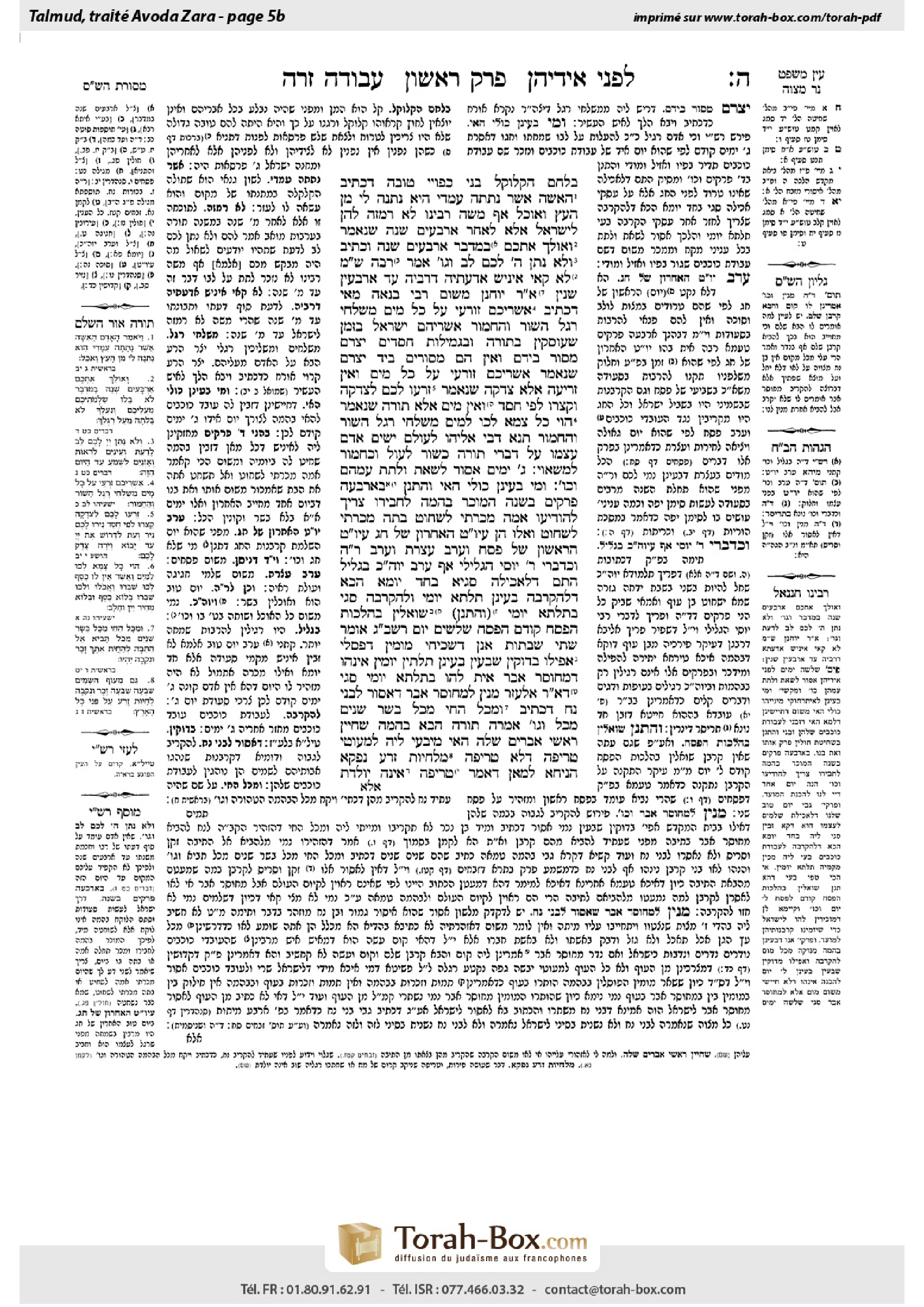
Avodah Zarah 5b: Talmud study for Daf Yomi
Study the Talmud for Daf Yomi with scanned pages, Hebrew text, English translations from Sefaria and AI-generated French translations.
Passage selection and English or AI-generated French translation are available where the scan has annotations. Daf Study is independent of Torah-Box and Sefaria.
Browse Avodah Zarah · עבודה זרה · All tractatesAvodah Zarah 5b text and translations
This page of Avodah Zarah includes the Aramaic text, an English translation and an AI-generated French translation, alongside the scan above.
עבודה זרה ה׳ ב · Aramaic and Hebrew text
בַּלֶּחֶם הַקְּלֹקֵל״. בְּנֵי כְּפוּיֵי טוֹבָה, דִּכְתִיב: ״הָאִשָּׁה אֲשֶׁר נָתַתָּה עִמָּדִי הִיא נָתְנָה לִּי מִן הָעֵץ וָאֹכֵל״.
אַף מֹשֶׁה רַבֵּינוּ לֹא רְמָזָהּ לָהֶן לְיִשְׂרָאֵל אֶלָּא לְאַחַר אַרְבָּעִים שָׁנָה, שֶׁנֶּאֱמַר: ״וָאוֹלֵךְ אֶתְכֶם בַּמִּדְבָּר אַרְבָּעִים שָׁנָה״, וּכְתִיב: ״וְלֹא נָתַן ה׳ לָכֶם לֵב וְגוֹ׳״. אָמַר רַבָּה: שְׁמַע מִינַּהּ לָא קָאֵי אִינִישׁ אַדַּעְתֵּיהּ דְּרַבֵּיהּ עַד אַרְבְּעִין שְׁנִין.
אָמַר רַבִּי יוֹחָנָן מִשּׁוּם רַבִּי בְּנָאָה, מַאי דִּכְתִיב: ״אַשְׁרֵיכֶם זֹרְעֵי עַל כׇּל מָיִם מְשַׁלְּחֵי רֶגֶל הַשּׁוֹר וְהַחֲמוֹר״? אַשְׁרֵיהֶם יִשְׂרָאֵל בִּזְמַן שֶׁעוֹסְקִין בְּתוֹרָה וּבִגְמִילוּת חֲסָדִים, יִצְרָם מָסוּר בְּיָדָם וְאֵין הֵם מְסוּרִים בְּיַד יִצְרָם, שֶׁנֶּאֱמַר: ״אַשְׁרֵיכֶם זֹרְעֵי עַל כׇּל מָיִם״, וְאֵין זְרִיעָה אֶלָּא צְדָקָה, שֶׁנֶּאֱמַר: ״זִרְעוּ לָכֶם לִצְדָקָה וְקִצְרוּ לְפִי חֶסֶד״, וְאֵין מַיִם אֶלָּא תּוֹרָה, שֶׁנֶּאֱמַר: ״הוֹי כׇּל צָמֵא לְכוּ לַמַּיִם״.
״מְשַׁלְּחֵי רֶגֶל הַשּׁוֹר וְהַחֲמוֹר״, תָּנָא דְּבֵי אֵלִיָּהוּ: לָעוֹלָם יָשִׂים אָדָם עַצְמוֹ עַל דִּבְרֵי תוֹרָה כְּשׁוֹר לְעוֹל וְכַחֲמוֹר לְמַשּׂאוֹי.
שְׁלֹשָׁה יָמִים אָסוּר לָשֵׂאת וְלָתֵת עִמָּהֶם וְכוּ׳. וּמִי בָּעִינַן כּוּלֵּי הַאי?
וְהָתְנַן: בְּאַרְבָּעָה פְּרָקִים בַּשָּׁנָה, הַמּוֹכֵר בְּהֵמָה לַחֲבֵירוֹ צָרִיךְ לְהוֹדִיעוֹ: ״אִמָּהּ מָכַרְתִּי לִשְׁחוֹט״, ״בִּתָּהּ מָכַרְתִּי לִשְׁחוֹט״.
וְאֵלּוּ הֵן: עֶרֶב יוֹם טוֹב הָאַחֲרוֹן שֶׁל חַג, עֶרֶב יוֹם טוֹב הָרִאשׁוֹן שֶׁל פֶּסַח, וְעֶרֶב עֲצֶרֶת, וְעֶרֶב רֹאשׁ הַשָּׁנָה, וּכְדִבְרֵי רַבִּי יוֹסֵי הַגְּלִילִי — אַף עֶרֶב יוֹם הַכִּפּוּרִים בַּגָּלִיל!
הָתָם דְּלַאֲכִילָה, סַגִּיא בְּחַד יוֹמָא. הָכָא דִּלְהַקְרָבָה, בָּעִינַן תְּלָתָא יוֹמֵי. וּלְהַקְרָבָה סַגִּי בִּתְלָתָא יוֹמֵי? וְהָתְנַן: שׁוֹאֲלִין בְּהִלְכוֹת הַפֶּסַח קוֹדֶם הַפֶּסַח שְׁלֹשִׁים יוֹם, רַבָּן שִׁמְעוֹן בֶּן גַּמְלִיאֵל אוֹמֵר: שְׁתֵּי שַׁבָּתוֹת.
אֲנַן דִּשְׁכִיחִי מוּמִין דְּפָסְלִי, אֲפִילּוּ בְּדוּקִּין שֶׁבָּעַיִן, בָּעִינַן תְּלָתִין יוֹמִין; אִינְהוּ, דִּמְחוּסַּר אֵבֶר אִית לְהוּ, בִּתְלָתָא יוֹמֵי סַגִּי.
דְּאָמַר רַבִּי אֶלְעָזָר: מִנַּיִן לִמְחוּסַּר אֵבֶר דְּאָסוּר לִבְנֵי נֹחַ? דִּכְתִיב: ״וּמִכׇּל הָחַי מִכׇּל בָּשָׂר שְׁנַיִם מִכֹּל וְגוֹ׳״, אָמְרָה תּוֹרָה: הָבֵא בְּהֵמָה שֶׁחַיִּין רָאשֵׁי אֵבָרִים שֶׁלָּהּ.
הַאי מִיבְּעֵי לֵיהּ לְמַעוֹטֵי טְרֵיפָה דְּלָא! טְרֵיפָה מִ״לְּחַיּוֹת זֶרַע״ נָפְקָא. הָנִיחָא לְמַאן דְּאָמַר טְרֵיפָה אֵינָהּ יוֹלֶדֶת,
Avodah Zarah 5b · English translation
this light bread” (Numbers 21:5), despite the fact it was the highest-quality food. Moses further called them children of ingrates, as it is written that after sinning and eating from the tree of knowledge, Adam said: “The woman whom You gave to be with me, she gave me of the tree, and I did eat” (Genesis 3:12). Adam complained that the woman had been given to him in order to cause him to sin, whereas in fact she had been given to him to serve as a helpmate.
Yet even Moses our teacher, who said this to the Jewish people, did not allude to the Jewish people until after forty years that they should have stated this request, as it is stated: “And I have led you forty years in the wilderness” (Deuteronomy 29:4), which shows that Moses was speaking forty years after the revelation at Sinai. And at that point it is written: “But the Lord has not given you a heart to know, and eyes to see, and ears to hear, until this day” (Deuteronomy 29:3). Rabba said: Conclude from here that a person does not understand the opinion of his teacher until after forty years, as Moses said this to the Jewish people only after forty years of learning Torah.
Rabbi Yoḥanan says in the name of Rabbi Bana’a: What is the meaning of that which is written: “Happy are you that sow beside all waters, that send forth freely the feet of the ox and the donkey” (Isaiah 32:20)? Happy are you Israel; when they, i.e., the Jewish people, engage in Torah study and in acts of kindness, their evil inclination is given over to them, and they are not given over to their evil inclination, as it is stated: “Happy are you that sow beside all waters.” And the term sowing is referring to nothing other than performing charitable deeds, as it is stated: “Sow to yourselves according to charitableness, reap according to mercy” (Hosea 10:12). And the term waters is referring to nothing other than the Torah, as it is stated: “Ho, every one that thirsts, come for water” (Isaiah 55:1).
With regard to the continuation of the verse: “That send forth freely the feet of the ox and the donkey,” one of the Sages of the school of Eliyahu taught: A person should always make himself subjugated to matters of Torah like an ox to a yoke and like a donkey to a burden.
§ After concluding its long introduction, the Gemara analyzes the mishna. The mishna taught that on the three days before the festivals of gentiles it is prohibited to engage with them in business or to lend them items. The Gemara asks: And is it the practice of a gentile to buy an animal so far in advance of his festival that it is required of Jews to refrain from selling an animal to idol worshippers for all of these days before their festivals?
But didn’t we learn in a mishna (Ḥullin 83a): On four occasions during the year one who sells an animal to another is required to inform him: I sold the mother of this animal today for the buyer to slaughter it, or: I sold the daughter of this animal today for the buyer to slaughter it. This notification is necessary so that this buyer will not slaughter the animal on the same day that its mother or its young is slaughtered, thereby violating the prohibition: “You shall not kill it and its young both in one day” (Leviticus 22:28).
The mishna continues: And those four occasions are: The eve of the last day of the festival of Sukkot, the eve of the first day of the festival of Passover, and the eve of Shavuot, and the eve of Rosh HaShana. And according to the statement of Rabbi Yosei HaGelili, the eve of Yom Kippur in the Galilee is included as well. This mishna indicates that one prepares for a festival for only one day prior to the event. Why does the mishna here prohibit sales three days prior to gentile festivals?
The Gemara answers: There, in the mishna in Ḥullin, where the animal is purchased for consumption, it is sufficient to prepare one day before the festival. Here, in the case of this mishna, where the animal is purchased for sacrifice, the gentile requires three days to ensure that the animal has no blemish. The Gemara asks: And for the purpose of sacrifice, is it sufficient to prepare merely three days in advance? But didn’t we learn in a baraita: One begins to ask about the halakhot of Passover thirty days before Passover; Rabban Shimon ben Gamliel says: One begins to inquire only two weeks before Passover. According to both opinions, far more than three days are needed in order to begin preparing for the sacrifice of an offering. One can assume that the same applies to gentiles.
The Gemara answers: We Jews, for whom blemishes that disqualify the animal are common, as even a small blemish on the cornea of the eye disqualifies it, we require thirty days to prepare for the sacrificial offerings of the festivals. By contrast, with regard to them, gentiles, they hold that the only blemish that disqualifies the animal is if it is lacking an entire limb; therefore, three days are sufficient for them to prepare for the sacrifice.
As Rabbi Elazar says: From where is it derived with regard to an animal that is lacking a limb, that it is prohibited for descendants of Noah to sacrifice it as an offering? As it is written: “And of every living thing of all flesh, two of every sort you shall bring into the ark, to keep them alive with you” (Genesis 6:19). In this verse the Torah states: Bring an animal whose extremities are alive, as some of those animals were to be used later as offerings.
The Gemara asks: Isn’t that verse required to teach that an animal with a wound that will cause it to die within twelve months [tereifa] is not fit to be sacrificed as an offering? The Gemara answers: The disqualification of a tereifa is derived from the phrase: “To keep seed alive” (Genesis 7:3), as a tereifa cannot propagate. The Gemara asks: This works out well according to the one who says that a tereifa cannot give birth. According to this opinion, the disqualification of a missing limb is derived from the phrase: “Of every living thing,” while the disqualification of a tereifa is learned from the phrase: “To keep seed alive.”
Avodah Zarah 5b · Traduction française (IA)
ce pain léger” (Nombres 21:5), malgré le fait qu'il s'agissait du meilleur aliment. Moïse a également appelé ces gens enfants d'ingrats, comme il est écrit que, après avoir péché et mangé de l'arbre de la connaissance, Adam dit : « La femme que tu as donnée pour être avec moi, elle m'a donné de l'arbre, et j'ai mangé » (Genèse 3:12). Adam se plaignait que la femme avait été donnée à lui afin de le faire pécher, alors qu'en réalité elle avait été donnée à lui pour servir de compagne.
Cependant, même Moïse notre maître, qui a dit cela au peuple juif, n'a pas fait allusion au peuple juif avant quarante ans qu'ils auraient dû formuler cette demande, comme il est dit : « Et j'ai conduit vous quarante ans dans le désert » (Deutéronome 29:4), ce qui montre que Moïse parlait quarante ans après la révélation au Sinaï. Et à ce moment-là, il est écrit : « Mais le Seigneur n'a pas donné à vous un cœur pour comprendre, et des yeux pour voir, et des oreilles pour entendre, jusqu'à ce jour » (Deutéronome 29:3). Rabba a dit : Concluez-en ici que la personne ne comprend pas l'opinion de son maître avant quarante ans, car Moïse a dit cela au peuple juif seulement après quarante ans d'étude de la Torah.
Rabbi Yoḥanan dit au nom de Rabbi Bana’a : Quelle est la signification de ce qui est écrit : « Heureux celui qui sème près de tous les eaux, qui fait marcher librement les pieds de l'âne et du bœuf » (Isaïe 32:20) ? Heureux êtes-vous, Israël ; lorsque vous, c'est-à-dire le peuple juif, étudiez la Torah et pratiquez les œuvres de bonté, votre penchant mauvais est donné à vous, et vous n'êtes pas donné à votre penchant mauvais, comme il est dit : « Heureux celui qui sème près de tous les eaux ». Et le terme « sème » désigne rien d'autre que l'acte de faire des œuvres de charité, comme il est dit : « Sèmez-vous selon la charité, récoltez selon la miséricorde » (Osée 10:12). Et le terme « eaux » désigne rien d'autre que la Torah, comme il est dit : « Hé, tout celui qui a soif, viens prendre de l'eau » (Isaïe 55:1).
Concernant la continuation de la verset : « Qui fait marcher librement les pieds de l'âne et du bœuf », l'un des Sages de l'école d'Eliyahu a enseigné : Une personne devrait toujours se soumettre aux affaires de la Torah comme un bœuf à un joug et comme un âne à un fardeau.
§ Après avoir conclu son long introduction, le Guemara analyse la mitsna. La mitsna enseigne que pendant les trois jours avant les fêtes des non-Juifs, il est interdit d'engager des affaires avec eux ou de leur prêter des objets. Le Guemara demande : Et est-ce la coutume d'un non-Juif d'acheter un animal si longtemps à l'avance de son festival qu'il est nécessaire que les Juifs s'abstiennent de vendre un animal aux adorateurs d'idoles pendant tous ces jours avant leurs fêtes ?
Mais n'avons-nous pas appris dans une mitsna (Ḥullin 83a) : Pendant quatre occasions de l'année, celui qui vend un animal à un autre doit informer celui-ci : « J'ai vendu la mère de cet animal aujourd'hui pour que l'acheteur le sacrifie », ou : « J'ai vendu la fille de cet animal aujourd'hui pour que l'acheteur le sacrifie ». Cette notification est nécessaire afin que cet acheteur ne sacrifie pas l'animal le même jour que sa mère ou son petit, en violant ainsi l'interdiction : « Tu ne tueras pas l'animal et son petit en un même jour » (Lévitique 22:28).
La mitsna continue : Et ces quatre occasions sont : la veille de la dernière journée du festival de la Tabernacle, la veille de la première journée du festival de Pessah, et la veille de Shavuot, et la veille de Rosh HaShana. Et selon l'opinion de Rabbi Yosei HaGelili, la veille de Yom Kippour dans la Galilée est également incluse. Cette mitsna indique que l'on prépare pour un festival seulement un jour avant l'événement. Pourquoi la mitsna ici interdit-elle les ventes trois jours avant les fêtes des non-Juifs ?
Le Guemara répond : Là, dans la mitsna de Ḥullin, où l'animal est acheté pour la consommation, il suffit de préparer un jour avant le festival. Ici, dans le cas de cette mitsna, où l'animal est acheté pour le sacrifice, le non-Juif a besoin de trois jours pour s'assurer que l'animal n'a pas de défaut. Le Guemara demande : Et pour le sacrifice, est-ce suffisant de se préparer seulement trois jours à l'avance ? Mais n'avons-nous pas appris dans une baraïta : On commence à demander les halakhot de Pessah trente jours avant Pessah ; Rabban Shimon ben Gamliel dit : On commence à demander seulement deux semaines avant Pessah. Selon les deux opinions, bien plus de trois jours sont nécessaires pour commencer à se préparer au sacrifice d'un offrande. On peut supposer que c'est pareil pour les non-Juifs.
Le Guemara répond : Nous Juifs, pour qui les défauts qui disqualifient l'animal sont courants, comme même une petite lésion sur la cornée de l'œil disqualifie l'animal, nous exigeons trente jours pour nous préparer aux offrandes des fêtes. En revanche, concernant eux, les non-Juifs, ils considèrent que le seul défaut qui disqualifie l'animal est s'il manque un membre entier ; donc, trois jours suffisent pour eux pour se préparer au sacrifice.
Comme Rabbi Elazar dit : D'où est-il tiré que l'animal manquant d'un membre est interdit aux descendants de Noé de le sacrifier en offrande ? Comme il est écrit : « Et de toute créature vivante de toute chair, deux de chaque espèce tu apporteras dans l'arca, afin qu'ils soient préservés avec toi » (Genèse 6:19). Dans cette verset, la Torah dit : Apporte un animal dont les extrémités sont vivantes, car certaines de ces créatures devaient être utilisées plus tard comme offrandes.
Le Guemara demande : N'est-ce pas cette verset qui doit enseigner que l'animal avec une blessure qui le fera mourir dans les douze mois [tereifa] n'est pas adapté à être sacrifié en offrande ? Le Guemara répond : La disqualification du tereifa est tirée de la phrase : « Pour préserver la semence » (Genèse 7:3), car un tereifa ne peut pas se reproduire. Le Guemara demande : Cela s'aligne bien selon celui qui dit qu'un tereifa ne peut pas donner naissance. Selon cette opinion, la disqualification d'un membre manquant est tirée de la phrase : « De toute créature vivante », tandis que la disqualification du tereifa est apprise de la phrase : « Pour préserver la semence. »
Traduction française générée par IA à partir de l’édition anglaise de Sefaria. Vérifie toujours un passage avec le texte source.
Text from Sefaria: William Davidson Edition - Vocalized Aramaic (CC BY NC); William Davidson Edition - English (CC BY NC).