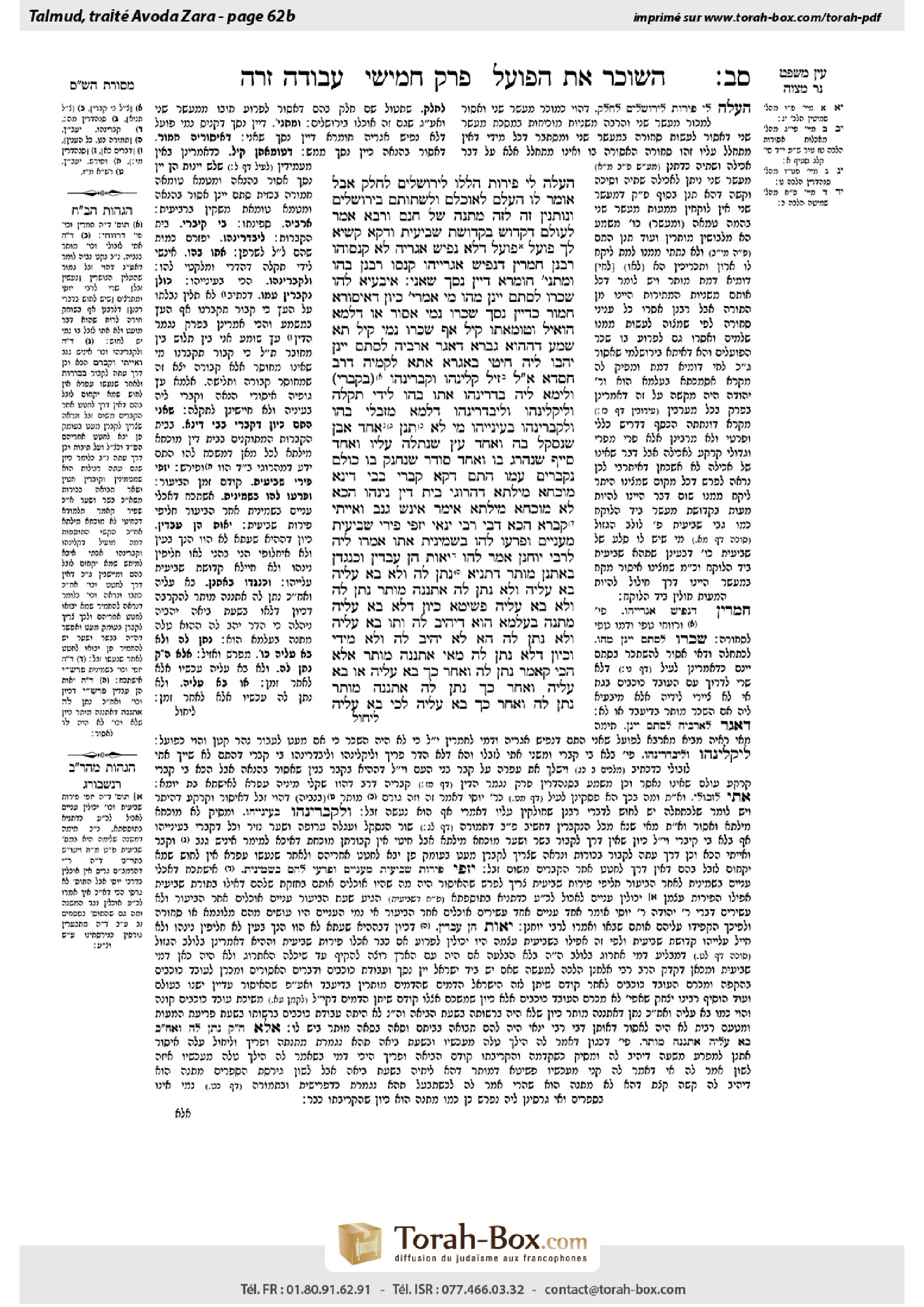
Avodah Zarah 62b: Talmud study for Daf Yomi
Study the Talmud for Daf Yomi with scanned pages, Hebrew text, English translations from Sefaria and AI-generated French translations.
Passage selection and English or AI-generated French translation are available where the scan has annotations. Daf Study is independent of Torah-Box and Sefaria.
Browse Avodah Zarah · עבודה זרה · All tractatesAvodah Zarah 62b text and translations
This page of Avodah Zarah includes the Aramaic text, an English translation and an AI-generated French translation, alongside the scan above.
עבודה זרה ס״ב ב · Aramaic and Hebrew text
״הַעֲלֵה לִי פֵּירוֹת הַלָּלוּ לִירוּשָׁלַיִם לְחַלֵּק״, אֲבָל אוֹמֵר לוֹ: ״הַעֲלֵם לְאוֹכְלָם וְלִשְׁתּוֹתָם בִּירוּשָׁלַיִם״, וְנוֹתְנִין זֶה לָזֶה מַתָּנָה שֶׁל חִנָּם.
וְרָבָא אָמַר: לְעוֹלָם דְּקָדוֹשׁ בִּקְדוּשַּׁת שְׁבִיעִית, וּדְקָא קַשְׁיָא לָךְ פּוֹעֵל — פּוֹעֵל דְּלָא נְפִישׁ אַגְרֵיהּ לָא קַנְסוּהּ רַבָּנַן, חַמָּרִין דִּנְפִישׁ אַגְרַיְיהוּ — קְנַסוּ רַבָּנַן בְּהוּ. וּמַתְנִיתִין — חוּמְרָא דְּיֵין נֶסֶךְ שָׁאנֵי.
אִיבַּעְיָא לְהוּ: שְׂכָרוֹ לִסְתָם יֵינָן, מַהוּ? מִי אָמְרִינַן: כֵּיוָן דְּאִיסּוּרָא חָמוּר כִּדְיֵין נֶסֶךְ — שְׂכָרוֹ נָמֵי אָסוּר, אוֹ דִלְמָא: הוֹאִיל וְטוּמְאָתוֹ (קיל) [קִילָא] — אַף שְׂכָרוֹ נָמֵי קִיל?
תָּא שְׁמַע: דְּהָהוּא גַּבְרָא דְּאֹגַר אַרְבֵּיהּ לִסְתָם יֵינָן, יְהַבוּ לֵיהּ חִיטֵּי בְּאַגְרָא, אֲתָא לְקַמֵּיהּ דְּרַב חִסְדָּא, אֲמַר לֵיהּ: זִיל קְלִינְהוּ וְקִבְרִינְהוּ (בקברי) [בֵּי קִבְרֵי].
וְלֵימָא לֵיהּ: בַּדְּרִינְהוּ! אָתוּ בְּהוּ לִידֵי תַּקָּלָה. וְלִיקְלִינְהוּ וְלִיבַדְּרִינְהוּ! דִּלְמָא מְזַבְּלִי בְּהוּ.
וְלִקְבְּרִינְהוּ בְּעֵינַיְיהוּ! מִי לָא תְּנַן: אֶחָד אֶבֶן שֶׁנִּסְקַל בָּהּ, וְאֶחָד עֵץ שֶׁנִּתְלָה עָלָיו, וְאֶחָד סַיִיף שֶׁנֶּהֱרַג בּוֹ, וְאֶחָד סוּדָר שֶׁנֶּחְנַק בּוֹ — כּוּלָּם נִקְבָּרִים עִמּוֹ?
הָתָם דְּקָא קָבְרִי בְּבֵי דִינָא, מוֹכְחָא מִילְּתָא דַּהֲרוּגֵי בֵּית דִּין נִינְהוּ. הָכָא לָא מוֹכְחָא מִילְּתָא, אֵימַר: אִינָשׁ גְּנַב וְאַיְיתִי קְבַר הָכָא.
דְּבֵי רַבִּי יַנַּאי יָזְפִי פֵּירֵי שְׁבִיעִית מֵעֲנִיִּים, וּפָרְעוּ לְהוּ בִּשְׁמִינִית. אֲתוֹ אֲמַרוּ לֵיהּ לְרַבִּי יוֹחָנָן, אֲמַר לְהוּ: יָאוּת הֵן עָבְדִין.
וּכְנֶגְדָּן בְּאֶתְנַן — מוּתָּר, דְּתַנְיָא: נָתַן לָהּ וְלֹא בָּא עָלֶיהָ, בָּא עָלֶיהָ וְלֹא נָתַן לָהּ — אֶתְנַנָּה מוּתָּר.
נָתַן לָהּ וְלֹא בָּא עָלֶיהָ — פְּשִׁיטָא, כֵּיוָן דְּלָא בָּא עָלֶיהָ מַתָּנָה בְּעָלְמָא הוּא דְּיָהֵיב לַהּ! וְתוּ, בָּא עָלֶיהָ וְלֹא נָתַן לָהּ — הָא לָא יָהֵיב לָהּ וְלָא מִידֵּי, וְכֵיוָן דְּלָא נָתַן לָהּ מַאי ״אֶתְנַנָּה מוּתָּר״?
אֶלָּא הָכִי קָאָמַר: נָתַן לָהּ וְאַחַר כָּךְ בָּא עָלֶיהָ, אוֹ בָּא עָלֶיהָ וְאַחַר כָּךְ נָתַן לָהּ — אֶתְנַנָּה מוּתָּר.
נָתַן לָהּ וְאַחַר כָּךְ בָּא עָלֶיהָ, לְכִי בָּא עָלֶיהָ
Avodah Zarah 62b · English translation
Bring this produce designated as second tithe to Jerusalem for me in exchange for a share of the produce, of which you may partake in Jerusalem. This is considered payment and is tantamount to conducting commerce with the tithe. But he may say to him: Bring it to Jerusalem to eat it and drink it in Jerusalem, as long as he does not specify that it is payment; and once in Jerusalem they may give one another unrequited gifts. This indicates that what may not be given as payment may be given as a gift, and therefore the donkey drivers may be compensated with Sabbatical-Year produce.
And Rava says: Actually, Rabbi Yoḥanan means that the produce with which the drivers are paid is sacred with the sanctity of Sabbatical-Year produce, and as for that which poses a difficulty for you with regard to the halakha of the laborer cited in the mishna, which states that his wage is not sacred, that difficulty can be resolved as follows: There is a distinction between a laborer, whose wage is not great, and therefore the Sages did not penalize him by decreeing that his wage is sacred, and donkey drivers, whose wages are great, and therefore the Sages penalized them. And with regard to the mishna that deems forbidden even the laborer’s wage in the case of one who produces wine designated for libation, the stringency of wine used for a libation is different, and it is treated more stringently than Sabbatical-Year produce.
§ A dilemma was raised before the Sages: If a gentile hired a Jew to work with him in the production of nondescript wine of gentiles, i.e., wine that was not used for libation, what is the halakha? Do we say that since the prohibition of deriving benefit from nondescript wine of gentiles is as stringent as the prohibition of deriving benefit from wine used for a libation, his wage is also forbidden, or perhaps should it be reasoned that since the halakha with regard to its capacity for imparting ritual impurity to one who comes into contact with it is more lenient than the halakha with regard to wine used for a libation, the halakha with regard to its wage is also more lenient?
Come and hear a resolution: It is related that there was a certain man who rented out his ship for transporting nondescript wine of gentiles, and the gentiles gave him wheat in payment. He came before Rav Ḥisda to determine the status of the wheat. Rav Ḥisda said to him: Go burn it and bury it in a graveyard. Evidently, payment for working with nondescript wine of gentiles is forbidden.
The Gemara raises an objection to the method of eradication of the wheat in Rav Ḥisda’s ruling. But let him say to the ship owner: Scatter it. The Gemara responds: If he scatters it, people might be caused a mishap by it if they find kernels of the scattered wheat and gather them for eating. The Gemara challenges: But then let him burn it and scatter it. Why should it be buried? The Gemara answers: Perhaps people will fertilize their fields with it.
The Gemara challenges: But let him bury the wheat in its unadulterated form. Didn’t we learn in a baraita with regard to the instruments used for imposing capital punishment: The stone with which a condemned person is stoned, and the tree on which his corpse is hung after his execution, and the sword with which he is killed, and the scarf with which he is strangled, all of them are buried together with him, as it is prohibited to derive benefit from them. The baraita does not require that they be burned before they are buried.
The Gemara answers: There, since they are buried in the court graveyard, the matter is clear to all that these were executed by the court, so everyone knows that using the instruments of execution is prohibited. Here, the matter is not clear to all, as one might say to himself that a person stole the wheat and brought it and buried it here, and he might thereby come to use it.
§ The Sages of the school of Rabbi Yannai borrowed Sabbatical-Year produce from the poor and repaid them in the eighth year. Others came and said this to Rabbi Yoḥanan, out of concern that by doing so they violated the prohibition against engaging in commerce with Sabbatical-Year produce. Rabbi Yoḥanan said to them: They are acting properly, as this is not considered commerce.
And in the corresponding case concerning payment to a prostitute for services rendered, it is permitted to sacrifice such an animal as an offering. Although the Torah prohibits the sacrifice of an animal used as a prostitute’s payment (see Deuteronomy 23:19), in a case similar to this one, it is permitted; as it is taught in a baraita: If the man gave the prostitute payment but did not engage in intercourse with her, or if he engaged in intercourse with her but did not give her payment, it is permitted for her payment to serve as an offering.
The Gemara discusses difficulties with the wording of the baraita: If he gave her payment but did not engage in intercourse with her, isn’t it obvious that it is permitted? Since he did not engage in intercourse with her, it is merely a gift that he has given her, and there is no reason for it to be forbidden. Why does the baraita need to state this? And furthermore, with regard to the case in the baraita where he engaged in intercourse with her but did not give her payment, he did not give her anything, and since he did not give her payment, what is the meaning of the statement that her payment is permitted?
The Gemara answers: Rather, this is what the baraita is saying: If he gave her payment and afterward, after some time elapsed, he engaged in intercourse with her, or if he engaged in intercourse with her and afterward, after some time elapsed, he gave her payment, her payment is permitted, because the payment was not given proximate to the intercourse. This is also the halakha in the case of borrowing Sabbatical-Year produce, i.e., paying for it after time has elapsed is not considered commerce.
The Gemara asks: If the baraita is referring to a case where he gave her payment and afterward engaged in intercourse with her, then when he engaged in intercourse with her,
Avodah Zarah 62b · Traduction française (IA)
Apportez ce produit désigné comme dîme secondaire à Jérusalem pour moi en échange d'une part de ce produit, dont vous pouvez vous repaître à Jérusalem. Cela est considéré comme un paiement et est équivalent à l'achat du dîme. Mais il peut dire à l'autre : Apportez-le à Jérusalem pour le manger et le boire à Jérusalem, tant qu'il ne précise pas qu'il s'agit d'un paiement ; et une fois à Jérusalem, ils peuvent se donner mutuellement des cadeaux sans contrepartie. Cela montre que ce qui ne peut pas être donné comme paiement peut être donné comme cadeau, et par conséquent, les conducteurs de bêtes peuvent être compensés par les produits de l'année sabbatique.
Et Rava dit : En réalité, Rabbi Yoḥanan veut dire que le produit avec lequel les conducteurs sont payés est sacré avec la sanctité du produit de l'année sabbatique, et quant à celui qui pose un problème pour vous concernant la halakha du travailleur cité dans la Michna, qui stipule que son salaire n'est pas sacré, ce problème peut être résolu ainsi : Il y a une distinction entre un travailleur, dont le salaire n'est pas grand, et donc les Sages n'ont pas sanctionné en décrétant que son salaire est sacré, et les conducteurs de bêtes, dont les salaires sont grands, et donc les Sages ont sanctionné. Et concernant la Michna qui considère même le salaire du travailleur comme interdit dans le cas d'un homme qui produit du vin destiné à la libation, la stricteur du vin utilisé pour une libation est différente, et il est traité plus strictement que le produit de l'année sabbatique.
§ Un dilemme a été soulevé devant les Sages : Si un non-Jeu a embauché un Juif pour travailler avec lui dans la production de vin non spécifique des non-Juifs, c'est-à-dire de vin qui n'était pas utilisé pour la libation, quelle est la halakha ? Disons-nous que puisque l'interdiction de tirer profit du vin non spécifique des non-Juifs est aussi stricte que celle du vin utilisé pour la libation, son salaire est également interdit, ou peut-être devrait-on raisonner que puisque la halakha concernant sa capacité à transmettre l'impureté rituelle à celui qui entre en contact avec lui est plus clémente que celle concernant le vin utilisé pour la libation, la halakha concernant son salaire est également plus clémente ?
Venez écouter une résolution : On raconte qu'il y avait un certain homme qui louait son bateau pour transporter du vin non spécifique des non-Juifs, et les non-Juifs lui donnaient du blé en paiement. Il s'est présenté devant Rav Ḥisda pour déterminer le statut du blé. Rav Ḥisda a dit à lui : Allez le brûler et le jeter dans un cimetière. Évidemment, le paiement pour travailler avec du vin non spécifique des non-Juifs est interdit.
La Guemara soulève une objection contre la méthode d'éradication du blé dans la décision de Rav Ḥisda. Mais disons-lui à l'homme propriétaire du bateau : Éparpillez-le. La Guemara répond : Si on l'éparpille, les gens pourraient être causés un malheur s'ils trouvent des grains du blé éparpillé et les récoltent pour manger. La Guemara conteste : Mais alors, faites-le brûler et éparpillez-le. Pourquoi devrait-il être enterré ? La Guemara répond : Peut-être que les gens le feront fertiliser leurs champs avec ça.
La Guemara conteste : Mais faites-lui enterrer le blé dans sa forme pure. N'avons-nous pas appris dans une baraïta concernant les instruments utilisés pour l'application de la peine de mort : La pierre avec laquelle on jette un condamné, et l'arbre sur lequel on accroche son corps après son exécution, et l'épée avec laquelle on le tue, et le foulard avec lequel on l'étouffe, tous sont enterrés avec lui, car il est interdit de tirer profit d'eux. La baraïta ne nécessite pas qu'ils soient brûlés avant d'être enterrés.
La Guemara répond : Là, puisqu'ils sont enterrés dans le cimetière du tribunal, la chose est claire pour tous que ces personnes ont été exécutées par le tribunal, donc tout le monde sait que l'utilisation des instruments d'exécution est interdite. Ici, la chose n'est pas claire pour tout le monde, car on pourrait dire à soi-même qu'une personne a volé le blé et l'a apporté et l'a enterré ici, et il pourrait donc en venir à l'utiliser.
§ Les Sages de l'école de Rabbi Yannai empruntaient des produits de l'année sabbatique aux pauvres et les remboursaient en huitième année. D'autres sont venus dire cela à Rabbi Yoḥanan, par crainte de violer l'interdiction de commercer avec les produits de l'année sabbatique. Rabbi Yoḥanan a dit à eux : Ils agissent correctement, car cela n'est pas considéré comme un commerce.
Et dans le cas correspondant concernant le paiement à une prostituée pour les services rendus, il est permis de sacrifier un tel animal comme offrande. Bien que la Torah interdise la sacrifice d'un animal utilisé comme paiement pour une prostituée (voir Deutéronome 23:19), dans un cas similaire à celui-ci, il est permis ; comme il est enseigné dans une baraïta : Si l'homme a donné la prostituée un paiement mais n'a pas eu d'intercourse avec elle, ou s'il a eu un interlude avec elle mais n'a pas donné un paiement, il est permis que son paiement serve d'offrande.
La Guemara discute des difficultés avec le texte de la baraïta : Si l'homme a donné un paiement mais n'a pas eu d'intercourse avec elle, n'est-ce pas évident qu'il est permis ? Puisqu'il n'a pas eu d'intercourse avec elle, c'est simplement un cadeau qu'il a donné, et il n'y a pas de raison pour qu'il soit interdit. Pourquoi la baraïta a-t-elle besoin de le mentionner ? Et de plus, concernant le cas de la baraïta où il a eu un interlude avec elle mais n'a pas donné un paiement, il n'a pas donné quelque chose, et puisqu'il n'a pas donné un paiement, quelle est la signification de l'affirmation que son paiement est permis ?
La Guemara répond : Plutôt, c'est ce que la baraïta dit : Si l'homme a donné un paiement et ensuite, après un certain temps, il a eu un interlude avec elle, ou s'il a eu un interlude avec elle et ensuite, après un certain temps, il a donné un paiement, son paiement est permis, car le paiement n'a pas été donné en même temps que l'interlude. C'est aussi la halakha dans le cas d'emprunt de produits de l'année sabbatique, c'est-à-dire que payer après un certain temps n'est pas considéré comme un commerce.
La Guemara pose la question : Si la baraïta fait référence à un cas où il lui a donné un paiement et ensuite a eu des relations sexuelles avec elle, alors lorsqu'il a eu des relations sexuelles avec elle,
Traduction française générée par IA à partir de l’édition anglaise de Sefaria. Vérifie toujours un passage avec le texte source.
Text from Sefaria: William Davidson Edition - Vocalized Aramaic (CC BY NC); William Davidson Edition - English (CC BY NC).