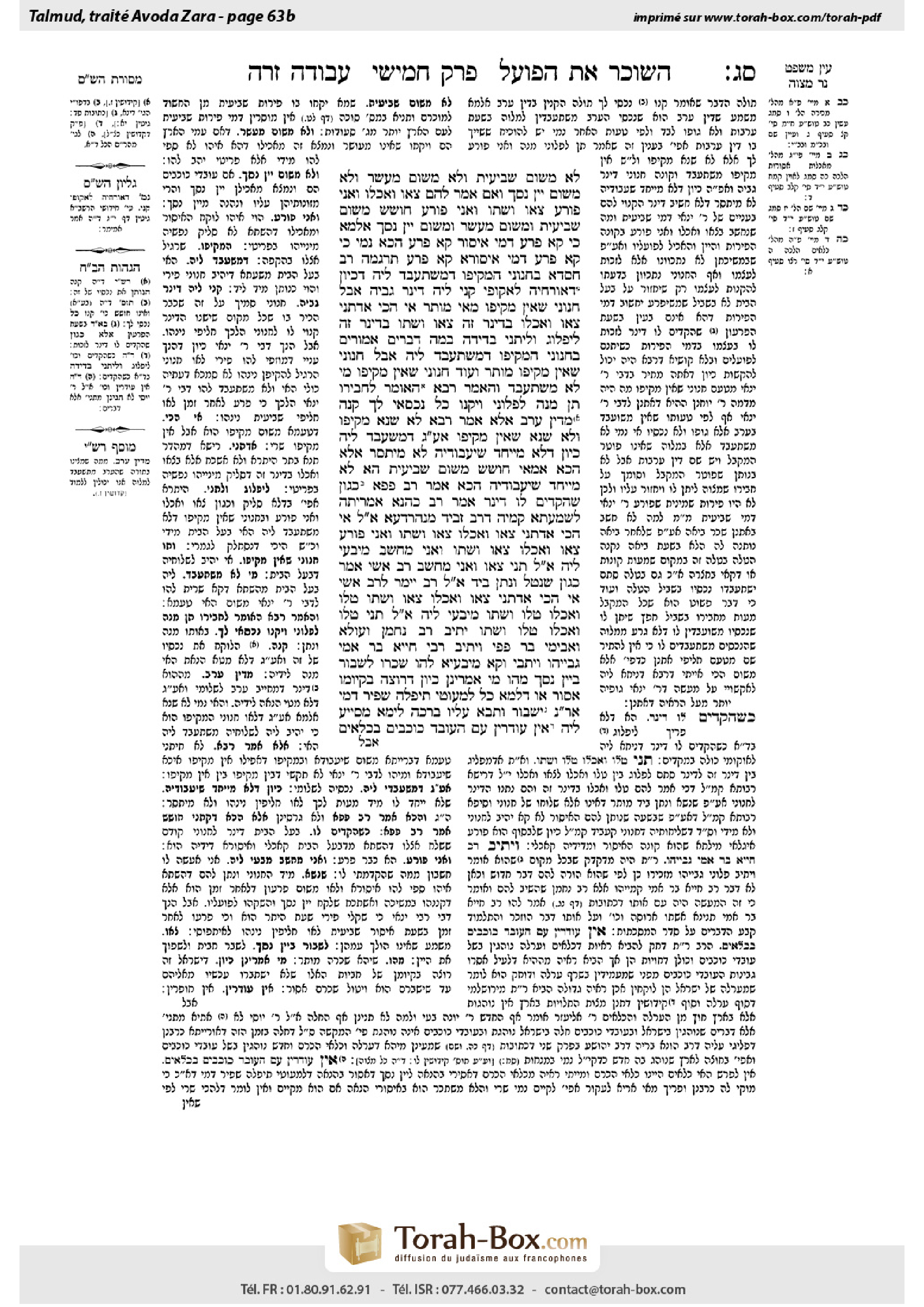
Avodah Zarah 63b: Talmud study for Daf Yomi
Study the Talmud for Daf Yomi with scanned pages, Hebrew text, English translations from Sefaria and AI-generated French translations.
Passage selection and English or AI-generated French translation are available where the scan has annotations. Daf Study is independent of Torah-Box and Sefaria.
Browse Avodah Zarah · עבודה זרה · All tractatesAvodah Zarah 63b text and translations
This page of Avodah Zarah includes the Aramaic text, an English translation and an AI-generated French translation, alongside the scan above.
עבודה זרה ס״ג ב · Aramaic and Hebrew text
לֹא מִשּׁוּם שְׁבִיעִית, וְלֹא מִשּׁוּם מַעֲשֵׂר, וְלֹא מִשּׁוּם יֵין נֶסֶךְ.
וְאִם אָמַר לָהֶם: ״צְאוּ וְאִכְלוּ וַאֲנִי פּוֹרֵעַ״, ״צְאוּ וּשְׁתוּ וַאֲנִי פּוֹרֵעַ״ — חוֹשֵׁשׁ מִשּׁוּם שְׁבִיעִית, וּמִשּׁוּם מַעֲשֵׂר, וּמִשּׁוּם יֵין נֶסֶךְ.
אַלְמָא, כִּי קָא פָרַע — דְּמֵי אִיסּוּר קָא פָרַע; הָכָא נָמֵי, כִּי קָא פָרַע — דְּמֵי אִיסּוּרָא קָא פָרַע.
תַּרְגְּמַהּ רַב חִסְדָּא בְּחֶנְוָנִי הַמַּקִּיפוֹ, דְּמִשְׁתַּעְבַּד לֵיהּ, דְּכֵיוָן דְּאוֹרְחֵיהּ לְאַקּוֹפֵי — קְנֵי לֵיהּ דִּינָר גַּבֵּיהּ.
אֲבָל חֶנְוָנִי שֶׁאֵין מַקִּיפוֹ מַאי מוּתָּר? אִי הָכִי, אַדְּתָנֵי ״צְאוּ וְאִכְלוּ בְּדִינָר זֶה״, ״צְאוּ וּשְׁתוּ בְּדִינָר זֶה״, לִיפְלוֹג וְלִיתְנֵי בְּדִידַהּ:
בַּמֶּה דְּבָרִים אֲמוּרִים? בְּחֶנְוָנִי הַמַּקִּיפוֹ, דְּמִשְׁתַּעְבַּד לֵיהּ, אֲבָל חֶנְוָנִי שֶׁאֵין מַקִּיפוֹ — מוּתָּר.
וְעוֹד: חֶנְוָנִי שֶׁאֵין מַקִּיפוֹ מִי לָא מִשְׁתַּעְבַּד? וְהָאָמַר רָבָא: הָאוֹמֵר לַחֲבֵירוֹ ״תֵּן מָנֶה לִפְלוֹנִי וְיִקָּנוּ כׇּל נְכָסַאי לָךְ״, קָנָה מִדִּין עָרֵב!
אֶלָּא אָמַר רָבָא: לָא שְׁנָא מַקִּיפוֹ, וְלָא שְׁנָא שֶׁאֵין מַקִּיפוֹ, אַף עַל גַּב דִּמְשַׁעְבַּד לֵיהּ, כֵּיוָן דְּלָא מְיַיחַד שִׁיעְבּוּדֵיהּ — לָא מִיתְּסַר.
אֶלָּא הָכָא אַמַּאי חוֹשֵׁשׁ מִשּׁוּם שְׁבִיעִית? הָא לָא מְיַיחַד שִׁיעְבּוּדֵיהּ הָכָא! אָמַר רַב פָּפָּא: כְּגוֹן שֶׁהִקְדִּים לוֹ דִּינָר.
אָמַר רַב כָּהֲנָא: אַמְרִיתַהּ לִשְׁמַעְתָּא קַמֵּיהּ דְּרַב זְבִיד מִנְּהַרְדְּעָא, אָמַר לִי: אִי הָכִי, אַדְּתָנֵי ״צְאוּ וְאִכְלוּ, צְאוּ וּשְׁתוּ, וַאֲנִי פּוֹרֵעַ״, ״צְאוּ וְאִכְלוּ, צְאוּ וּשְׁתוּ, וַאֲנִי מְחַשֵּׁב״ מִיבְּעֵי לֵיהּ! אֲמַר לֵיהּ: תְּנִי ״צְאוּ וַאֲנִי מְחַשֵּׁב״.
רַב אָשֵׁי אָמַר: כְּגוֹן שֶׁנָּטַל וְנָתַן בַּיָּד. אֲמַר לֵיהּ רַב יֵימַר לְרַב אָשֵׁי: אִי הָכִי, אַדְּתָנֵי ״צְאוּ וְאִכְלוּ, צְאוּ וּשְׁתוּ״, ״טְלוּ וְאִכְלוּ, טְלוּ וּשְׁתוּ״ מִיבְּעֵי לֵיהּ! אֲמַר לֵיהּ: תָּנֵי ״טְלוּ וְאִכְלוּ, טְלוּ וּשְׁתוּ״.
יָתֵיב רַב נַחְמָן וְעוּלָּא וַאֲבִימִי בַּר פַּפִּי, וְיָתֵיב רַבִּי חִיָּיא בַּר אַמֵּי גַּבַּיְיהוּ, וְיָתְבִי וְקָא מִיבַּעְיָא לְהוּ: שְׂכָרוֹ לִשְׁבּוֹר בְּיֵין נֶסֶךְ מַהוּ? מִי אָמְרִינַן כֵּיוָן דְּרוֹצֶה בְּקִיּוּמוֹ — אָסוּר, אוֹ דִלְמָא כֹּל לְמַעוֹטֵי תִּיפְלָה שַׁפִּיר דָּמֵי?
אָמַר רַב נַחְמָן: יִשְׁבּוֹר, וְתָבֹא עָלָיו בְּרָכָה. לֵימָא מְסַיַּיע לֵיהּ: אֵין עוֹדְרִין עִם הַגּוֹי בְּכִלְאַיִם,
Avodah Zarah 63b · English translation
neither with regard to the prohibitions concerning Sabbatical-Year produce, nor with regard to restrictions on the consumption of tithe, nor with regard to the prohibition against consumption of wine used for a libation. This is because whatever food or drink that they acquire, they acquire it of their own volition, and the employer does not bear responsibility for their actions.
But if he said to them: Go and eat and I will reimburse you, or: Go and drink and I will reimburse you, he must be concerned with regard to the possibility that his workers will transgress a prohibition with the money, whether with regard to prohibitions concerning Sabbatical-Year produce, or with regard to restrictions on the consumption of tithe, or with regard to the prohibition against consuming wine used for a libation. This is because if they acquire forbidden food or drink, it is tantamount to his acquiring these items and giving them to the laborers.
Rav Sheshet infers: Apparently, when he pays his laborers after some time has elapsed, it is considered as though he is paying money for forbidden items, even though the forbidden items no longer exist. Here too, when people borrow Sabbatical-Year produce with the intent of paying for it afterward, when one pays, he is paying for a forbidden purchase.
Rav Ḥisda interpreted this baraita with regard to a storekeeper who regularly gives credit to the employer, so that the employer incurs the debt to him at the moment the storekeeper gives the food or drink to the laborers. This is because, since it is his custom to give him credit, it is considered as though the storekeeper acquires the dinar from him at that moment. Therefore, if the laborers bought from him Sabbatical-Year produce, it is considered as though the employer paid his laborers with Sabbatical-Year produce, which is prohibited. Therefore, this case is not comparable to the case of the Sages who borrowed Sabbatical-Year produce.
The Gemara asks: But in the case of a storekeeper who does not give credit to the employer, what is the halakha? Is it permitted for the employer to send his laborers to buy food, committing to reimburse them afterward? If so, rather than the tanna teaching that if the employer says: Go and eat with this dinar, or: Go and drink with this dinar, he does need to be concerned that they will buy forbidden food, let him distinguish and teach the distinction within the case itself where he says: Go and eat and I will reimburse you.
The tanna could teach as follows: In what case is this statement said, i.e., that if the employer says: I will reimburse you, he cannot allow his laborer to buy forbidden food? It is stated with regard to the case of a storekeeper who regularly gives credit to the employer, such that the employer incurs the debt to him at the moment the storekeeper gives the food or drink to the laborers. But in the case of a storekeeper who does not give credit to the employer, it is permitted for the employer to instruct his laborers in this manner.
And furthermore, there is another difficulty with this interpretation: In the case of a storekeeper who does not give credit to the employer, does he not incur the debt to him? But doesn’t Rava say that in the case of one who says to another: Give one hundred dinars to so-and-so and all of my property will be transferred to you, he acquires it by the halakha of a guarantor? Just as a guarantor for another person’s loan renders himself liable to pay for someone else’s debt, so too, the owner of the property renders himself liable to give the property in exchange for the one hundred dinars that the acquiring party gives that so-and-so. Here too, the employer renders himself liable to pay the storekeeper when the storekeeper gives food to his laborers at his request.
Rather, Rava says: There is no difference whether the storekeeper gives him credit, and there is no difference whether he does not give him credit. Any commitment to pay causes a liability. But although he incurs a debt to him, since he does not designate specific coins as payment for his debt the employer’s conduct is not prohibited. Therefore, the Sages of the school of Rabbi Yannai acted in a permitted manner.
The Gemara asks: But here, in the baraita, why does the employer need to be concerned with regard to the prohibitions concerning Sabbatical-Year produce? He does not designate specific money as payment for his debt here. Rav Pappa said: The baraita is referring to a case where the employer first paid the storekeeper a dinar for the food he would provide to the laborers, before they actually purchased food. Therefore, the employer is considered to have acquired forbidden items and paid his laborers’ wages with them.
Rav Kahana said: I stated this halakha before Rav Zevid of Neharde’a. He said to me: If so, if the latter clause of the baraita is understood as referring to a case where the employer paid the storekeeper a dinar in advance, rather than teaching a case where the employer said to his laborers: Go and eat, go and drink, and I will reimburse you, the tanna should have taught a case where he said: Go and eat, go and drink, and I will calculate the amount that should be deducted from the dinar I gave him. Rav Kahana said to him: That is not difficult; teach the baraita as stating: Go, and I will calculate the amount that should be deducted from the dinar I gave him.
Rav Ashi said: The baraita is referring to a case where the employer took the food and drink from the storekeeper and gave it to the laborers with his own hand. Rav Yeimar said to Rav Ashi: If that is so, rather than teaching that the employer said: Go and eat, go and drink, the tanna should have taught a case where he said: Take and eat, take and drink. Rav Ashi said to him: Teach the baraita as stating: Take and eat, take and drink.
§ Rav Naḥman and Ulla and Avimi bar Pappi were sitting, and Rabbi Ḥiyya bar Ami, who was studying with them, was sitting among them, and they were sitting and a dilemma was raised before them: If one hired a person to break barrels of wine used for a libation so the wine will spill out, what is the halakha? Do we say that since he has an interest in the preservation of the barrels until he breaks them, so that he can be paid for breaking them, his wage is forbidden, or perhaps should it be reasoned that any action that one performs to reduce impropriety [tifela] is permitted, even if he is paid for the actual breaking?
Rav Naḥman said: He may break them, and let a blessing come upon him. The Gemara suggests: Let us say that a baraita supports his opinion: One may not hoe together with a gentile in a field that contains a forbidden mixture of diverse kinds,
Avodah Zarah 63b · Traduction française (IA)
Ni avec regard aux interdits relatifs aux produits de l'année sabbatique, ni avec regard aux restrictions concernant la consommation de la tithe, ni avec regard à l'interdiction de consommer le vin utilisé pour un libation. Cela est dû au fait que tout aliment ou boisson qu'ils acquièrent, ils l'acquièrent de leur propre volonté, et l'employeur ne porte pas la responsabilité de leurs actions.
Mais si il a dit à eux : Allez manger et je vous rétribuerai, ou : Allez boire et je vous rétribuerai, il doit être préoccupé par la possibilité que ses ouvriers transgressent un interdit avec l'argent, qu'il s'agisse des interdits relatifs aux produits de l'année sabbatique, ou des restrictions concernant la consommation de la tithe, ou de l'interdiction de consommer le vin utilisé pour un libation. Cela est dû au fait que si ils acquièrent un aliment ou une boisson interdite, cela équivaut à ce qu'il acquière ces objets et les donne aux ouvriers.
Rav Sheshet infère : Apparemment, lorsqu'il paie ses ouvriers après un certain temps, cela est considéré comme s'il payait de l'argent pour des choses interdites, même si ces choses interdites n'existent plus. De même, lorsqu'on emprunte des produits de l'année sabbatique avec l'intention de les payer plus tard, lorsqu'on paie, on paie pour une acquisition interdite.
Rav Ḥisda interprète ce baraïta concernant un marchand qui accorde régulièrement un crédit à l'employeur, de sorte que l'employeur contracte la dette en même temps que le marchand donne les aliments ou boissons aux ouvriers. Cela est dû au fait que, puisque c'est sa coutume de lui accorder un crédit, cela est considéré comme si le marchand acquiert le dinar de lui à ce moment-là. Ainsi, si les ouvriers achètent des produits de l'année sabbatique, cela est considéré comme si l'employeur paie ses ouvriers avec des produits de l'année sabbatique, ce qui est interdit. Ainsi, ce cas n'est pas comparable à celui des Sages qui ont emprunté des produits de l'année sabbatique.
La Guemara pose la question : Mais dans le cas d'un marchand qui ne donne pas de crédit à l'employeur, quelle est la halakha ? Est-il permis à l'employeur d'envoyer ses ouvriers acheter de la nourriture, en s'engageant à les rétribuer plus tard ? Si oui, plutôt que le tanna ait enseigné que si l'employeur dit : Allez manger avec ce dinar, ou : Allez boire avec ce dinar, il doit être préoccupé par le fait qu'ils achètent un aliment interdit, il devrait distinguer et enseigner la distinction au sein même du cas où il dit : Allez manger et je vous rétribuerai.
Le tanna pourrait enseigner comme suit : Dans quel cas cette déclaration est-elle dite, c'est-à-dire que si l'employeur dit : Je vais vous rétribuer, il ne peut pas permettre à son ouvrier d'acheter un aliment interdit ? C'est dit concernant le cas d'un marchand qui accorde régulièrement un crédit à l'employeur, de sorte que l'employeur contracte la dette en même temps que le marchand donne les aliments ou boissons aux ouvriers. Mais dans le cas d'un marchand qui ne donne pas de crédit à l'employeur, il est permis à l'employeur d'instruire ses ouvriers ainsi.
Et de plus, il y a une difficulté supplémentaire avec cette interprétation : Dans le cas d'un marchand qui ne donne pas de crédit à l'employeur, n'incarne-t-il pas la dette à lui ? Mais n'a-t-il pas dit Rava que dans le cas où l'on dit à un autre : Donne cent dinars à tel et tout mon bien sera transféré à toi, il l'acquiert par la halakha du garant ? Comme un garant pour un prêt d'un autre rend lui-même responsable de payer la dette de quelqu'un d'autre, de même, le propriétaire des biens rend lui-même responsable de donner les biens en échange des cent dinars que l'acquéreur donne à tel. De même, l'employeur rend lui-même responsable de payer le marchand lorsqu'il donne de la nourriture à ses ouvriers à sa demande.
Plutôt, Rava dit : Il n'y a pas de différence que le marchand lui donne un crédit ou non. Tout engagement à payer cause une responsabilité. Mais bien qu'il incarne une dette à lui, puisqu'il ne désigne pas de pièces spécifiques comme paiement pour sa dette, le comportement de l'employeur n'est pas interdit. Ainsi, les Sages de la maison de Rabbi Yannai ont agi de manière permise.
La Guemara pose la question : Mais ici, dans le baraïta, pourquoi l'employeur doit-il être préoccupé concernant les interdits relatifs aux produits de l'année sabbatique ? Il ne désigne pas de monnaie spécifique comme paiement pour sa dette ici. Rav Pappa dit : Le baraïta fait référence à un cas où l'employeur a d'abord payé au marchand un dinar pour la nourriture qu'il fournirait aux ouvriers, avant qu'ils n'achètent effectivement de la nourriture. Ainsi, l'employeur est considéré comme ayant acquis des choses interdites et avoir payé les salaires de ses ouvriers avec ces choses.
Rav Kahana dit : J'ai exposé cette halakha devant Rav Zevid de Neharde’a. Il m'a répondu : Si c'est ainsi, si la clause finale du baraïta est interprétée comme faisant référence à un cas où l'employeur a versé à l'acheteur un dinar à l'avance, plutôt que d'enseigner un cas où l'employeur a dit à ses ouvriers : Allez manger, allez boire, et je vous rétribuerai, le tanna devrait avoir enseigné un cas où il a dit : Allez manger, allez boire, et je calculerai la somme à déduire du dinar que j'ai donné à lui. Rav Kahana a répondu à lui : Ce n'est pas difficile ; enseigne le baraïta comme disant : Allez, et je calculerai la somme à déduire du dinar que j'ai donné à lui.
Rav Ashi dit : Le baraïta fait référence à un cas où l'employeur a pris la nourriture et la boisson du marchand et les a données aux ouvriers avec sa propre main. Rav Yeimar a dit à Rav Ashi : Si c'est ainsi, plutôt que d'enseigner que l'employeur a dit : Allez manger, allez boire, le tanna devrait avoir enseigné un cas où il a dit : Prends et mange, prends et bois. Rav Ashi a répondu à lui : Enseigne le baraïta comme disant : Prends et mange, prends et bois.
§ Rav Naḥman et Ulla et Avimi bar Pappi étaient assis, et Rabbi Ḥiyya bar Ami, qui étudiait avec eux, était assis parmi eux, et ils étaient assis et un dilemme leur fut posé : Si l'on engage une personne pour briser des barriques de vin utilisées pour une offrande libatoire afin que le vin s'écoule, quelle est la halakha ? Disons-nous que puisque l'intéressé a un intérêt à la préservation des barriques jusqu'à ce qu'il les brise, afin qu'il puisse être récompensé pour avoir brisé, son salaire est interdit, ou peut-être devons-nous raisonner que toute action que l'on entreprend pour réduire l'immoralité [tifela] est permise, même si l'on est récompensé pour l'acte réel de brisage ?
Rav Naḥman dit : Il peut les briser, et qu'une bénédiction lui vienne. La Guemara suggère : Disons qu'une baraïta soutient son opinion : On ne doit pas labourer avec un non-juif dans un champ contenant un mélange interdit de diverses espèces,
Traduction française générée par IA à partir de l’édition anglaise de Sefaria. Vérifie toujours un passage avec le texte source.
Text from Sefaria: William Davidson Edition - Vocalized Aramaic (CC BY NC); William Davidson Edition - English (CC BY NC).