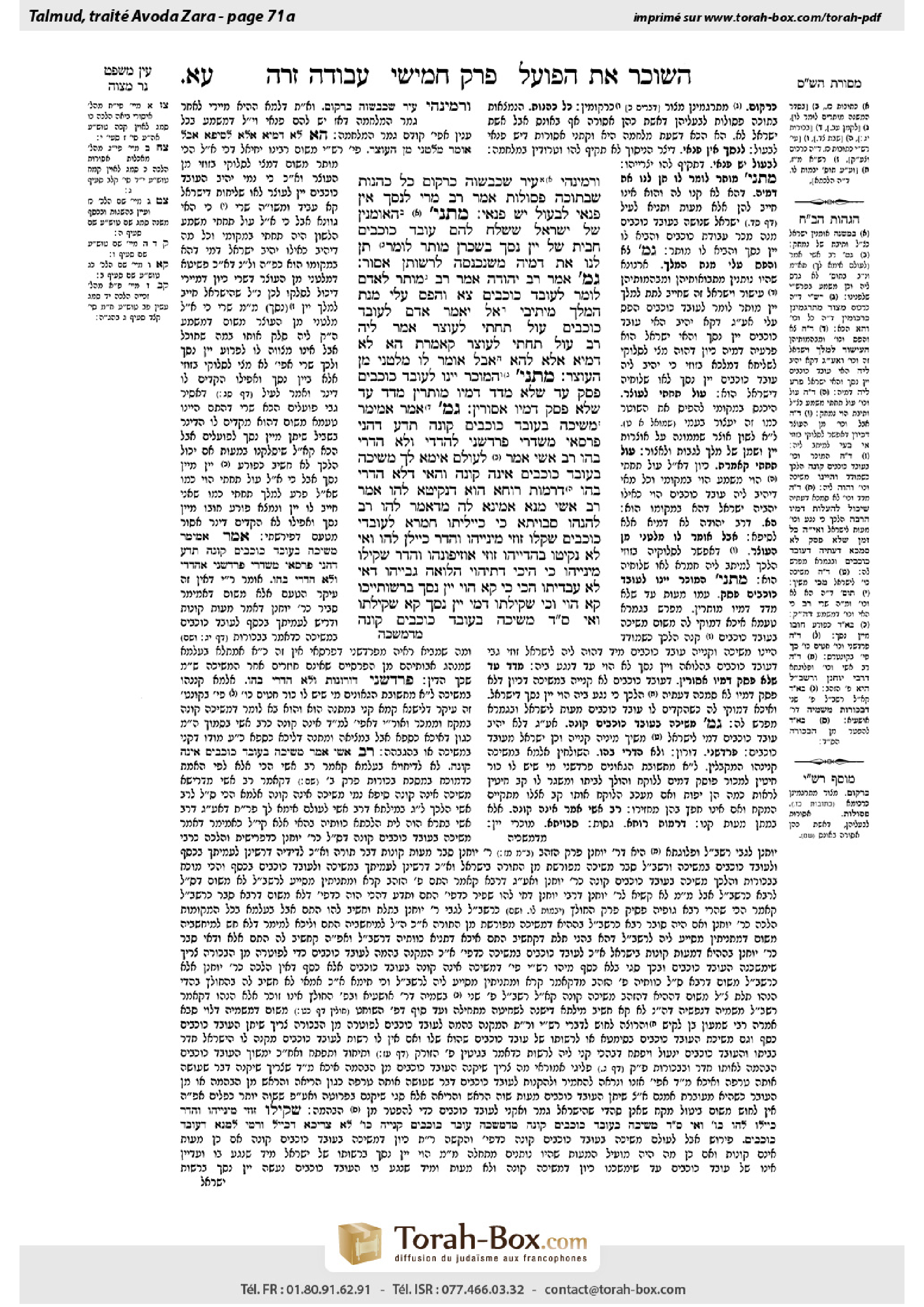
Avodah Zarah 71a: Talmud study for Daf Yomi
Study the Talmud for Daf Yomi with scanned pages, Hebrew text, English translations from Sefaria and AI-generated French translations.
Passage selection and English or AI-generated French translation are available where the scan has annotations. Daf Study is independent of Torah-Box and Sefaria.
Browse Avodah Zarah · עבודה זרה · All tractatesAvodah Zarah 71a text and translations
This page of Avodah Zarah includes the Aramaic text, an English translation and an AI-generated French translation, alongside the scan above.
עבודה זרה ע״א א · Aramaic and Hebrew text
גְּמָ׳ וּרְמִינְהִי: עִיר שֶׁכְּבָשׁוּהָ כַּרְקוֹם — כׇּל כֹּהֲנוֹת שֶׁבְּתוֹכָהּ פְּסוּלוֹת! אָמַר רַב מָרִי: לְנַסֵּךְ אֵין פְּנַאי, לִבְעוֹל יֵשׁ פְּנַאי.
מַתְנִי׳ הָאוּמָּנִין שֶׁל יִשְׂרָאֵל שֶׁשָּׁלַח לָהֶם נׇכְרִי חָבִית שֶׁל יֵין נֶסֶךְ בִּשְׂכָרָן — מוּתָּר לוֹמַר: ״תֵּן לָנוּ אֶת דָּמֶיהָ״, מִשֶּׁנִּכְנְסָה לִרְשׁוּתָן — אָסוּר.
גְּמָ׳ אָמַר רַב יְהוּדָה אָמַר רַב: מוּתָּר לָאָדָם לוֹמַר לְגוֹי: ״צֵא וְהָפֵס עָלַי מְנָת הַמֶּלֶךְ״.
מֵיתִיבִי: אַל יֹאמַר אָדָם לְגוֹי ״עוּל תַּחְתַּי לָעוֹצֵר״. אֲמַר לֵיהּ רַב: ״עוּל תַּחְתַּי לָעוֹצֵר״ קָאָמְרַתְּ? הָא לָא דָּמְיָא אֶלָּא לְהָא, אֲבָל אוֹמֵר לוֹ ״מַלְּטֵנִי מִן הָעוֹצֵר״.
מַתְנִי׳ הַמּוֹכֵר יֵינוֹ לְנׇכְרִי, פָּסַק עַד שֶׁלֹּא מָדַד — דָּמָיו מוּתָּרִין, מָדַד עַד שֶׁלֹּא פָּסַק — דָּמָיו אֲסוּרִין.
גְּמָ׳ אָמַר אַמֵּימָר: מְשִׁיכָה בְּגוֹי קוֹנָה, תִּדַּע, דְּהָנֵי פָּרְסָאֵי מְשַׁדְּרִי פַּרְדָּשְׁנֵי לַהֲדָדֵי וְלָא הָדְרִי בְּהוּ. רַב אָשֵׁי אָמַר: לְעוֹלָם אֵימָא לָךְ, מְשִׁיכָה בְּגוֹי אֵינָהּ קוֹנָה, וְהַאי דְּלָא הָדְרִי בְּהוּ — דְּרָמוּת רוּחָא הוּא דִּנְקִיטָא לְהוּ.
אָמַר רַב אָשֵׁי: מְנָא אָמֵינָא לַהּ? מִדְּאָמַר לְהוּ רַב לְהָנְהוּ סָבוֹיָתָא: כִּי כָיְילִיתוּ חַמְרָא לְגוֹיִם, שִׁקְלוּ זוּזֵי מִינַּיְיהוּ וַהֲדַר (כָּיְילָן) [כַּיְילוּ] לְהוּ, וְאִי לָא נְקִיטוּ בַּהֲדַיְיהוּ זוּזֵי, אוֹזִיפוּנְהוּ וַהֲדַר שְׁקִילוּ מִינַּיְיהוּ, כִּי הֵיכִי דְּתִיהְוֵי הַלְוָאָה גַּבַּיְיהוּ, דְּאִי לָא עָבְדִיתוּ הָכִי, כִּי קָא הָוֵי יֵין נֶסֶךְ — בִּרְשׁוּתַיְיכוּ קָא הָוֵי, וְכִי שָׁקְילִתוּ דְּמֵי יֵין נֶסֶךְ קָא שָׁקְילִתוּ. וְאִי סָלְקָא דַעְתָּךְ מְשִׁיכָה בְּגוֹי קוֹנָה
Avodah Zarah 71a · English translation
GEMARA: And the Gemara raises a contradiction to the assumption that soldiers during wartime do not have time to commit transgressions from that which is taught in another mishna (Ketubot 27a): With regard to a city that was conquered by an army laying siege, all the women married to priests located in the city are unfit and forbidden to their husbands, due to the concern that they were raped. Rav Mari resolved the contradiction and said: They do not have time to pour wine for libations, as their passion for idolatry is not pressing at that time, but they have time to engage in intercourse, because their lust is great even during wartime.
MISHNA: With regard to Jewish craftsmen to whom a gentile sent a barrel of wine used for a libation in lieu of their wage, it is permitted for them to say to him: Give us its monetary value instead. But once it has entered into their possession, it is prohibited for them to say so, as that would be tantamount to selling the wine to the gentile and deriving benefit from it.
GEMARA: Rav Yehuda says that Rav says: It is permitted for a person to say to a gentile: Go and placate the collectors of the governmental tax on wine for me, and I will reimburse you subsequently, even if he pays the tax with wine used for a libation.
One of the Sages raised an objection from a baraita: A person may not say to a gentile: Go in my stead to the commissary [la’otzer] to pay the wine tax for me, if he pays it in wine used for a libation. Rav said to him: You say that the case I am referring to is similar to one who says to a gentile: Go in my stead to the commissary? In that case, since he says: In my stead, whatever the gentile gives the commissary is considered as though the Jew gave it himself. This case that I am referring to is comparable only to that which is taught in the baraita: But the Jew may say to a gentile: Save me from the commissary.
MISHNA: In the case of a Jew who sells his wine to a gentile, if he fixed a price before he measured the wine into the gentile’s vessel, deriving benefit from the money paid for the wine is permitted. It is not tantamount to selling wine used for a libation, as the gentile purchased the wine before it became forbidden, and the money already belonged to the Jew. But if the Jew measured the wine into the gentile’s vessel, thereby rendering it forbidden, before he fixed a price, the money paid for the wine is forbidden.
GEMARA: Ameimar says: The legal act of acquiring an object by pulling it applies to a gentile. Know that it is so, as those Persians send gifts [pardashnei] to one another and do not retract them, which shows that they acquire one from another by pulling the object alone, even without paying for it. Rav Ashi says: Actually, I will say to you that pulling an object does not acquire it in a transaction involving a gentile, and the fact that they do not retract their gifts is not due to the halakhot of acquisition but because they are taken over by haughtiness, and they consider it shameful to retract a gift.
Rav Ashi said: From where do I say that acquisition by pulling does not apply to gentiles? It is from that which Rav said to certain wine shopkeepers: When you measure wine for gentiles, take the dinars from them and then measure the wine for them. And if they do not have dinars with them readily available, lend them dinars and then take those dinars back from them, so that it will be a loan provided to them that they are repaying. As if you do not do so, when it becomes wine used for a libation it becomes so in your possession, and when you take the money it will be payment for wine used for a libation that you are taking. Rav Ashi concludes his proof for his opinion: And if it enters your mind that pulling an object acquires it in a transaction involving a gentile,
Avodah Zarah 71a · Traduction française (IA)
GUEMARA : Et la Guemara soulève une contradiction avec l'hypothèse selon laquelle les soldats en temps de guerre n'ont pas le temps de commettre des transgressions, comme cela est enseigné dans une autre mitsva (Ketubot 27a) : Concernant une ville conquise par un armée en siège, toutes les femmes mariées à des prêtres présentes dans la ville sont inaptes et interdites à leurs époux, en raison de la crainte qu'elles aient été violées. Rav Mari a résolu la contradiction et a dit : Ils n'ont pas le temps de verser du vin pour des libations, car leur passion pour l'idolâtrie n'est pas pressante à ce moment-là, mais ils ont le temps d'engager des relations sexuelles, car leur désir est grand même en temps de guerre.
MITSVA : Concernant les artisans juifs à qui un gentil a envoyé une barrique de vin utilisée pour des libations à la place de leur salaire, il est permis qu'ils lui disent : Donne-nous sa valeur monétaire à la place. Mais une fois que le vin est entré en leur possession, il est interdit qu'ils disent cela, car cela équivaudrait à vendre le vin au gentil et à en tirer un bénéfice.
GUEMARA : Rav Yéhuda dit que Rav dit : Il est permis à une personne de dire à un gentil : Va et apaise les collecteurs de l'impôt sur le vin à ma place, et je te rétribuerai ultérieurement, même s'il paie l'impôt avec du vin utilisé pour des libations.
Un des Sages a soulevé une objection tirée d'une baraïta : Une personne ne peut pas dire à un gentil : Va à ma place au bureau [la’otzer] pour payer l'impôt sur le vin à ma place, si il le paie avec du vin utilisé pour des libations. Rav a dit à celui-ci : Tu dis que le cas que je fais référence est comparable à celui qui dit à un gentil : Va à ma place au bureau ? Dans ce cas, puisque il dit : À ma place, tout ce que le gentil donne au bureau est considéré comme si le Juif l'avait donné lui-même. Ce cas que je fais référence est comparable uniquement à celui qui est enseigné dans la baraïta : Mais le Juif peut dire à un gentil : Sauve-moi du bureau.
MICHNA : Dans le cas d'un Juif qui vend son vin à un gentil, si il a fixé un prix avant de mesurer le vin dans le récipient du gentil, il est permis de tirer un bénéfice du prix payé pour le vin. Cela n'équivaut pas à vendre du vin utilisé pour des libations, car le gentil a acheté le vin avant qu'il ne devienne interdit, et l'argent appartenait déjà au Juif. Mais si le Juif a mesuré le vin dans le récipient du gentil, rendant ainsi le vin interdit, avant de fixer un prix, l'argent payé pour le vin est interdit.
GUEMARA : Ameimar dit : L'acte juridique d'acquérir un objet par le simple fait de le tirer s'applique à un gentil. Sache que c'est ainsi, car les Perses envoient des cadeaux [pardashnei] les uns aux autres et ne les retirent pas, ce qui montre qu'ils acquièrent l'un de l'autre par le simple fait de tirer l'objet, même sans payer. Rav Ashi dit : En réalité, je dirai à toi que tirer un objet ne permet pas d'acquérir en transaction avec un gentil, et le fait qu'ils ne retirent pas leurs cadeaux n'est pas dû aux halakhot de l'acquisition, mais à cause de leur arrogance, et ils considèrent que retirer un cadeau est honteux.
Rav Ashi a dit : D'où dis-je que l'acquisition par le simple fait de tirer ne s'applique pas aux gentils ? C'est à partir de ce que Rav a dit à certains vendeurs de vin : Lorsque vous mesurez du vin pour les gentils, prenez les dinars d'eux et mesurez ensuite le vin pour eux. Et si ils n'ont pas les dinars disponibles, prêtez-leur des dinars et reprenez-les ensuite, de sorte que ce soit un prêt qu'ils remboursent. Comme si vous ne le faisiez pas, lorsque cela devient du vin utilisé pour des libations, cela devient ainsi en votre possession, et lorsque vous prenez l'argent, cela sera un paiement pour du vin utilisé pour des libations que vous prenez. Rav Ashi conclut sa preuve pour son opinion : Et si cela entre en votre pensée que tirer un objet acquiert en transaction avec un gentil,
Traduction française générée par IA à partir de l’édition anglaise de Sefaria. Vérifie toujours un passage avec le texte source.
Text from Sefaria: William Davidson Edition - Vocalized Aramaic (CC BY NC); William Davidson Edition - English (CC BY NC).