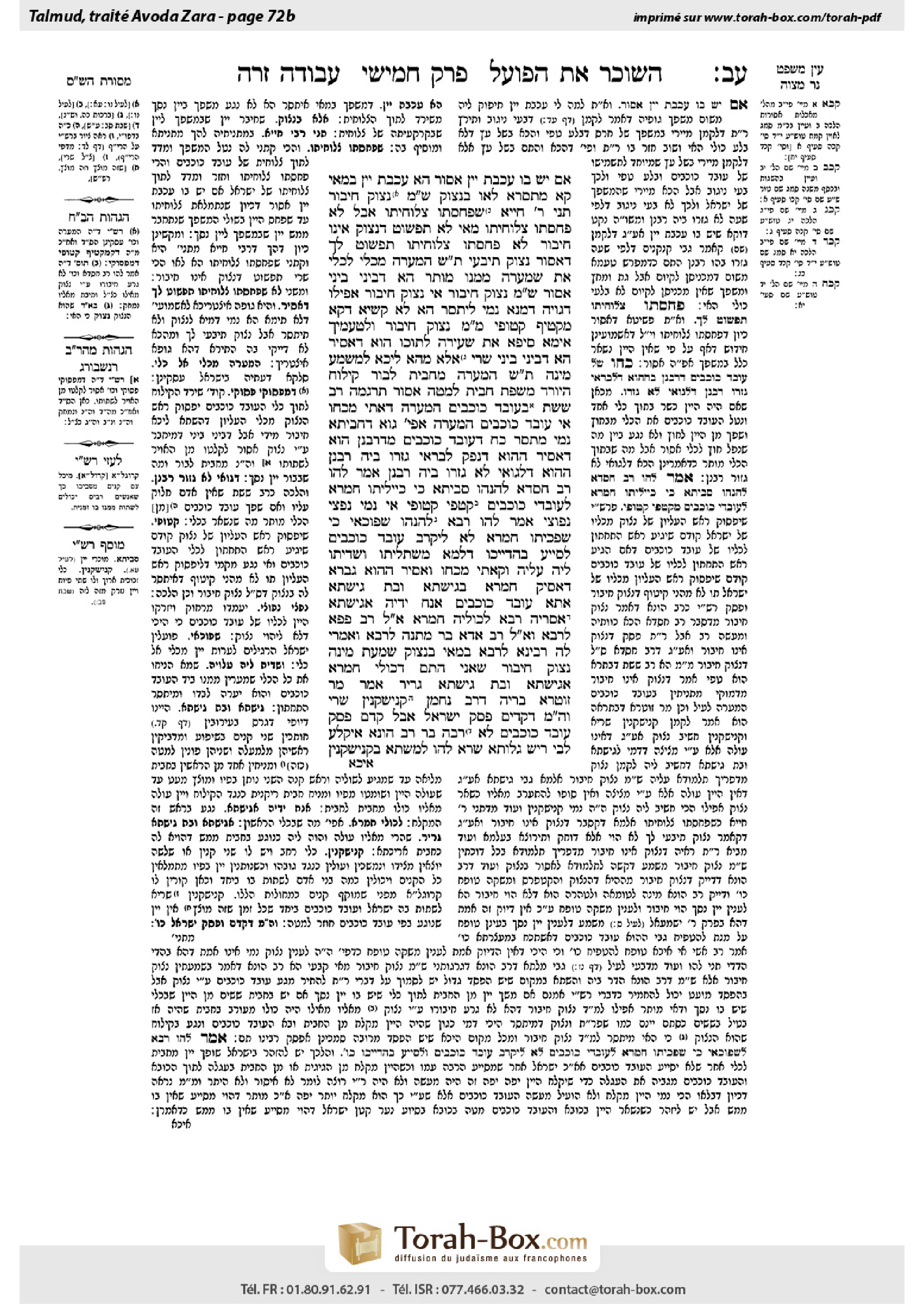
Avodah Zarah 72b: Talmud study for Daf Yomi
Study the Talmud for Daf Yomi with scanned pages, Hebrew text, English translations from Sefaria and AI-generated French translations.
Passage selection and English or AI-generated French translation are available where the scan has annotations. Daf Study is independent of Torah-Box and Sefaria.
Browse Avodah Zarah · עבודה זרה · All tractatesAvodah Zarah 72b text and translations
This page of Avodah Zarah includes the Aramaic text, an English translation and an AI-generated French translation, alongside the scan above.
עבודה זרה ע״ב ב · Aramaic and Hebrew text
אִם יֵשׁ בּוֹ עַכֶּבֶת יַיִן — אָסוּר. הָא עַכֶּבֶת יַיִן בְּמַאי קָא מִתַּסְרָא? לָאו בְּנִצּוֹק? שְׁמַע מִינַּהּ: נִצּוֹק חִיבּוּר.
תָּנֵי רַבִּי חִיָּיא: שֶׁפְּחָסַתּוּ צְלוֹחִיתוֹ, אֲבָל לֹא פְּחָסַתּוּ צְלוֹחִיתוֹ — מַאי? לָא, תִּפְשׁוֹט דְּנִצּוֹק אֵינוֹ חִיבּוּר! לָא, פְּחָסַתּוּ צְלוֹחִיתוֹ — תִּפְשׁוֹט לָךְ דְּאָסוּר, נִצּוֹק — תִּיבְּעֵי.
תָּא שְׁמַע: הַמְעָרֶה מִכְּלִי לִכְלִי, אֶת שֶׁמְּעָרֶה מִמֶּנּוּ — מוּתָּר, הָא דְּבֵינֵי בֵּינֵי — אָסוּר. שְׁמַע מִינַּהּ: נִצּוֹק חִיבּוּר.
אִי נִצּוֹק חִיבּוּר, אֲפִילּוּ דְּגַוֵּיהּ דְּמָנָא נָמֵי לִיתְּסַר! הָא לָא קַשְׁיָא, דְּקָא מְקַטֵּיף קַטּוֹפֵי. מִכׇּל מָקוֹם, נִצּוֹק חִיבּוּר!
וּלְטַעְמָיךְ, אֵימָא סֵיפָא: אֶת שֶׁעֵירָה לְתוֹכוֹ הוּא דַּאֲסִיר, הָא דְּבֵינֵי בֵּינֵי שְׁרֵי! אֶלָּא, מֵהָא לֵיכָּא לְמִשְׁמַע מִינַּהּ.
תָּא שְׁמַע: הַמְעָרֶה מֵחָבִית לַבּוֹר, קִילּוּחַ הַיּוֹרֵד מִשְּׂפַת חָבִית לְמַטָּה — אָסוּר! תַּרְגְּמַהּ רַב שֵׁשֶׁת: בְּגוֹי הַמְעָרֶה, דְּאָתֵי מִכֹּחוֹ.
אִי גּוֹי הַמְעָרֶה, אֲפִילּוּ גַּוָּא דְּחָבִיתָא נָמֵי מִתְּסַר! כֹּחַ דְּגוֹי מִדְּרַבָּנַן הוּא דַּאֲסִיר, הַהוּא דִּנְפַק לְבָרַאי — גְּזַרוּ בֵּיהּ רַבָּנַן, הַהוּא דִּלְגַוַּאי — לָא גְּזַרוּ בֵּיהּ רַבָּנַן.
אֲמַר לְהוּ רַב חִסְדָּא לְהָנְהוּ סָבֹיָתָא: כִּי כָיְילִיתוּ חַמְרָא לְגוֹיִם — (קָטְפִי) [קַטִּיפוּ] קַטּוֹפֵי, אִי נָמֵי (נָפְצִי) [נַפִּיצוּ] נַפּוֹצֵי. אֲמַר לְהוּ רָבָא לְהָנְהוּ שָׁפוֹכָאֵי: כִּי שָׁפְכִיתוּ חַמְרָא — לָא לִיקְרַב גּוֹי לְסַיַּיע בַּהֲדַיְיכוּ, דִּלְמָא מִשְׁתְּלִיתוּ וְשָׁדֵיתוּ לֵיהּ עֲלֵיהּ, וְקָאָתֵי מִכֹּחוֹ וַאֲסִיר.
הָהוּא גַּבְרָא דְּאַסֵּיק חַמְרָא בְּגִישְׁתָּא וּבַת גִּישְׁתָּא, אֲתָא גּוֹי אַנַּח יְדֵיהּ אַגִּישְׁתָּא, אַסְרֵיהּ רָבָא לְכוּלֵּיהּ חַמְרָא.
אֲמַר לֵיהּ רַב פָּפָּא לְרָבָא, וְאָמְרִי לַהּ רַב אַדָּא בַּר מַתְנָה לְרָבָא, וְאָמְרִי לַהּ רָבִינָא לְרָבָא: בְּמַאי? בְּנִצּוֹק. שָׁמְעַתְּ מִינַּהּ נִצּוֹק חִיבּוּר? שָׁאנֵי הָתָם, דְּכוּלֵּי חַמְרָא אַגִּישְׁתָּא וּבַת גִּישְׁתָּא גְּרִיר.
אָמַר מָר זוּטְרָא בְּרֵיהּ דְּרַב נַחְמָן: קְנִישְׁקְנִין שְׁרֵי, וְהָנֵי מִילֵּי דִּקְדֵים פְּסַק יִשְׂרָאֵל, אֲבָל קְדֵם פְּסַק גּוֹי — לָא. רַבָּה בַּר רַב הוּנָא אִיקְּלַע לְבֵי רֵישׁ גָּלוּתָא, שְׁרָא לְהוּ לְמִשְׁתֵּא בִּקְנִישְׁקְנִין.
Avodah Zarah 72b · English translation
if there is a remnant of wine left in the funnel, it is rendered forbidden. In what manner is this remnant of wine rendered forbidden? Is it not by the stream of wine going down from the funnel into the gentile’s vessel, thereby connecting the gentile’s vessel and the funnel and rendering the wine in the funnel forbidden? Conclude from it that a stream constitutes a connection.
Rabbi Ḥiyya teaches that the mishna is referring to a situation where the wine in the gentile’s jug rose and reached the funnel. The Gemara infers: But in a case where the wine in the jug did not rise and reach the funnel, what is the halakha? It is not forbidden. Therefore, resolve the dilemma and conclude that a stream is not a connection. The Gemara rejects this inference: No, Rabbi Ḥiyya means to say that in a case where the wine in the jug rose and reached the funnel you can resolve the dilemma and conclude that it is forbidden, but with regard to a stream the dilemma remains unresolved.
The Gemara suggests: Come and hear a proof from the second topic discussed in the mishna: In the case of one who pours wine from one vessel into another vessel, the wine left in the vessel from which he poured is permitted. The Gemara infers: But the stream of wine between the two vessels is forbidden. Conclude from it that a stream constitutes a connection.
The Gemara raises an objection to this proof: If a stream constitutes a connection, even the wine inside the vessel being poured from should also be forbidden. The Gemara responds to this objection: This is not difficult. It is the case where the one pouring the wine interrupts the flow, so the reason the wine in the vessel being poured from is permitted is that the stream is interrupted; but in any case, a stream is considered a connection.
The Gemara rejects the proof: According to your reasoning, say that there is an inference from the latter clause of the mishna: It is the wine in the vessel into which he poured that is forbidden due to the forbidden remnant of wine in the funnel, but by inference, the stream of wine between the two vessels is permitted, contrary to the conclusion from the previous clause. Rather, no inference is to be learned from this mishna.
The Gemara suggests: Come and hear another proof from a baraita: In the case of one who pours wine from a barrel into a wine cistern containing forbidden wine, the stream of wine coming from the rim of the barrel downward is rendered forbidden. Evidently, a stream constitutes a connection. Rav Sheshet interpreted this baraita as referring to a gentile pouring the wine from the barrel into the cistern, and the wine streaming out of the barrel is rendered forbidden because it came from the gentile’s force, i.e., the stream was powered by the gentile’s action. If a gentile moves wine, the wine is forbidden, even if the gentile did not touch it. The stream is not rendered forbidden by virtue of its connection to the wine in the cistern.
The Gemara raises an objection to this interpretation: If the reference is to a gentile who pours the wine, even the wine inside the barrel is rendered forbidden, because the gentile is also powering the movement of the barrel itself. The Gemara responds to this objection: The halakha that a gentile’s force renders wine forbidden is by rabbinic law. With regard to the wine that is poured out of the barrel, the Sages decreed that it is forbidden; but with regard to the wine that remains inside the barrel, the Sages did not decree that it is forbidden.
The Gemara relates accounts of how the Sages ruled concerning this matter: Rav Ḥisda said to certain wine retailers: When you measure wine for gentiles, pour with interruptions, rather than in a smooth steady stream, or toss it out in a single action that does not create a steady stream. Rava said to certain wine pourers: When you pour wine, do not let a gentile approach to help you, lest you let your guard down and rest the vessel in the gentile’s hands, and the wine will emerge due to his force and will be rendered forbidden.
The Gemara relates: There was an incident involving a certain man who siphoned wine from a barrel with a large tube and a small tube. A gentile came and rested his hand upon the large tube. Rava deemed the entire quantity of wine forbidden, including the wine that was still in the barrel.
Rav Pappa said to Rava, and some say it was Rav Adda bar Mattana who said this to Rava, and some say it was Ravina who said this to Rava: By what mechanism was the wine rendered forbidden? Was it by the stream of wine that went through the large tube, which was rendered forbidden by the contact of the gentile, and the rest of the barrel was rendered forbidden by the connection with that stream? Should one conclude from this ruling that a stream constitutes a connection? Rava rejects this inference: It is different there, as all of the wine in the barrel is drawn toward the large tube and the small tube, and so it is as though the gentile had touched all of the wine in the barrel.
Mar Zutra, son of Rav Naḥman, says: For a Jew and a gentile to drink simultaneously from a vessel with tubes for several people to drink from [kenishkanin] is permitted. And this statement applies only in a case where the Jew stops drinking first, before the gentile; but if the gentile stops drinking first, it does not apply and the wine is forbidden, as wine from the gentile’s mouth returns to the vessel and renders all of the wine forbidden. Rabba bar Rav Huna happened to come to the house of the Exilarch, and he permitted them to drink from a kenishkanin together with gentiles.
Avodah Zarah 72b · Traduction française (IA)
Si du vin reste dans le tuyau, il devient interdit. De quelle manière ce reste de vin devient-il interdit ? N'est-ce pas par le courant de vin descendant du tuyau vers le récipient du non-Juif, ce qui relie le récipient du non-Juif et le tuyau, rendant ainsi le vin dans le tuyau interdit ? Concluez-en que le courant constitue une connexion.
Rabbi Ḥiyya enseigne que la mitsna fait référence à un cas où le vin dans le récipient du non-Juif montait et atteignait le tuyau. La Guemara infère : Mais dans un cas où le vin dans le récipient ne montait pas et n'atteignait pas le tuyau, quelle est la halakha ? Il n'est pas interdit. Ainsi, résolvez ce dilemme et concluez que le courant n'est pas une connexion. La Guemara rejette cette inférence : Non, Rabbi Ḥiyya veut dire que dans un cas où le vin dans le récipient montait et atteignait le tuyau, vous pouvez résoudre ce dilemme et conclure qu'il est interdit, mais concernant un courant, ce dilemme reste sans résolution.
La Guemara suggère : Venez écouter une preuve à partir du deuxième sujet discuté dans la mitsna : Dans le cas d'une personne qui verse du vin d'un récipient dans un autre récipient, le vin restant dans le récipient d'où il a versé est permis. La Guemara infère : Mais le courant de vin entre les deux récipients est interdit. Concluez-en que le courant constitue une connexion.
La Guemara soulève une objection à cette preuve : Si un courant constitue une connexion, même le vin contenu dans le récipient d'où on verse devrait être interdit. La Guemara répond à cette objection : Ce n'est pas difficile. C'est le cas où la personne qui verse le vin interrompt le courant, donc la raison pour laquelle le vin dans le récipient d'où on verse est permis est que le courant est interrompu ; mais en tout cas, un courant est considéré comme une connexion.
La Guemara rejette cette preuve : Selon votre raisonnement, dites qu'on peut tirer une inférence à partir de la dernière partie de la mitsna : C'est le vin contenu dans le récipient dans lequel on a versé qui est interdit en raison du reste interdit de vin dans le tuyau, mais par l'inférence, le courant de vin entre les deux récipients est permis, contrairement à la conclusion de la première partie. Plutôt, il n'y a pas d'inférence à tirer de cette mitsna.
La Guemara suggère : Venez écouter une autre preuve à partir d'une baraïta : Dans le cas d'une personne qui verse du vin d'une barrique dans un citerne contenant du vin interdit, le courant de vin descendant du bord de la barrique est rendu interdit. Évidemment, un courant constitue une connexion. Rav Sheshet a interprété cette baraïta comme faisant référence à un non-Juif qui verse le vin de la barrique dans le citerne, et le vin s'écoulant de la barrique est rendu interdit parce qu'il provient de la force du non-Juif, c'est-à-dire que le courant était alimenté par l'action du non-Juif. Si un non-Juif déplace du vin, le vin est interdit, même si le non-Juif n'a pas touché le vin. Le courant n'est pas rendu interdit en raison de sa connexion avec le vin du citerne.
La Guemara soulève une objection à cette interprétation : Si la référence est à un non-Juif qui verse le vin, même le vin à l'intérieur de la barrique est rendu interdit, car le non-Juif alimente également le mouvement de la barrique elle-même. La Guemara répond à cette objection : La halakha selon laquelle la force du non-Juif rend le vin interdit est d'origine rabbinique. Concernant le vin qui est versé de la barrique, les Sages ont décrété qu'il est interdit ; mais concernant le vin qui reste à l'intérieur de la barrique, les Sages n'ont pas décrété qu'il est interdit.
La Guemara rapporte des récits sur la manière dont les Sages ont rendu des décisions à ce sujet : Rav Ḥisda dit à certains vendeurs de vin : Lorsque vous mesurez du vin pour les non-Juifs, versez-le avec des interruptions, plutôt que dans un courant continu, ou jetez-le hors de la manière d'une seule action qui ne crée pas un courant continu. Rava dit à certains vendeurs de vin : Lorsque vous versez du vin, ne laissez pas un non-Juif s'approcher pour vous aider, de peur que vous ne vous relâchiez et que vous ne reposiez le récipient dans les mains du non-Juif, et que le vin s'écoule en raison de sa force et devienne interdit.
La Guemara rapporte : Il y avait un incident concernant un certain homme qui pompait du vin d'une barrique avec un grand tuyau et un petit tuyau. Un non-Juif est venu et a posé sa main sur le grand tuyau. Rava a considéré que toute la quantité de vin était interdite, y compris le vin restant dans la barrique.
Rav Pappa a dit à Rava, et certains disent que c'était Rav Adda bar Mattana qui a dit cela à Rava, et certains disent que c'était Ravina qui a dit cela à Rava : Par quel mécanisme le vin est-il devenu interdit ? Était-ce par le courant de vin passant par le grand tuyau, qui est devenu interdit en raison du contact du non-Juif, et le reste de la barrique est devenu interdit par la connexion avec ce courant ? Devrait-on conclure de cette décision que le courant constitue une connexion ? Rava rejette cette inférence : C'est différent là, car tout le vin de la barrique est tiré vers le grand tuyau et le petit tuyau, et donc cela ressemble à ce que le non-Juif ait touché tout le vin de la barrique.
Mar Zutra, fils de Rav Naḥman, dit : Pour qu'un Juif et un non-Juif boivent simultanément d'un récipient avec des tuyaux pour plusieurs personnes à boire [kenishkanin], c'est permis. Et cette déclaration s'applique uniquement dans le cas où le Juif arrête d'abord de boire, avant le non-Juif ; mais si le non-Juif arrête d'abord de boire, cela ne s'applique pas et le vin est interdit, car le vin provenant de la bouche du non-Juif retourne dans le récipient et rend tout le vin interdit. Rabba bar Rav Huna est venu chez le prince exilé, et il a permis de boire ensemble avec des non-Juifs à partir d'un kenishkanin.
Traduction française générée par IA à partir de l’édition anglaise de Sefaria. Vérifie toujours un passage avec le texte source.
Text from Sefaria: William Davidson Edition - Vocalized Aramaic (CC BY NC); William Davidson Edition - English (CC BY NC).