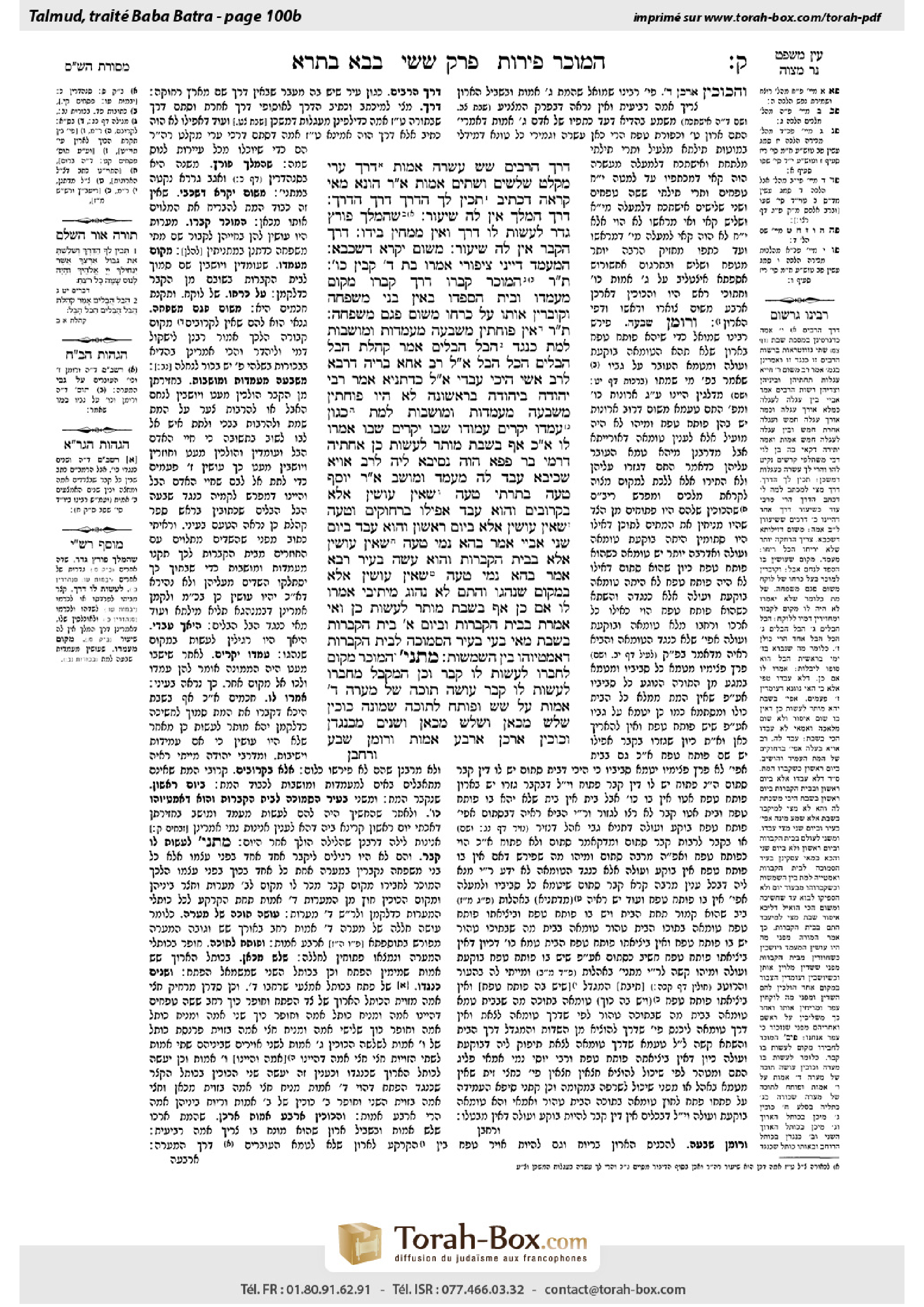
Bava Batra 100b: Talmud study for Daf Yomi
Study the Talmud for Daf Yomi with scanned pages, Hebrew text, English translations from Sefaria and AI-generated French translations.
Passage selection and English or AI-generated French translation are available where the scan has annotations. Daf Study is independent of Torah-Box and Sefaria.
Browse Bava Batra · בבא בתרא · All tractatesBava Batra 100b text and translations
This page of Bava Batra includes the Aramaic text, an English translation and an AI-generated French translation, alongside the scan above.
בבא בתרא ק׳ ב · Aramaic and Hebrew text
דֶּרֶךְ הָרַבִּים – שֵׁשׁ עֶשְׂרֵה אַמּוֹת. דֶּרֶךְ עָרֵי מִקְלָט – שְׁלֹשִׁים וּשְׁתַּיִם אַמּוֹת. אָמַר רַב הוּנָא: מַאי קְרָאָה? דִּכְתִיב: ״תָּכִין לְךָ הַדֶּרֶךְ״ – ״דֶּרֶךְ–הַדֶּרֶךְ״.
דֶּרֶךְ הַמֶּלֶךְ אֵין לָהּ שִׁיעוּר. שֶׁהַמֶּלֶךְ פּוֹרֵץ גָּדֵר לַעֲשׂוֹת לוֹ דֶּרֶךְ, וְאֵין מְמַחִין בְּיָדוֹ.
דֶּרֶךְ הַקֶּבֶר אֵין לָהּ שִׁיעוּר. מִשּׁוּם יְקָרָא דְשָׁכְבָא.
הַמַּעֲמָד – דַּיָּינֵי צִיפּוֹרִי אָמְרוּ: בֵּת אַרְבַּע קַבִּין כּוּ׳. תָּנוּ רַבָּנַן: הַמּוֹכֵר קִבְרוֹ, דֶּרֶךְ קִבְרוֹ, מְקוֹם מַעֲמָדוֹ וּבֵית הֶסְפֵּדוֹ – בָּאִין בְּנֵי מִשְׁפָּחָה וְקוֹבְרִין אוֹתוֹ עַל כׇּרְחוֹ, מִשּׁוּם פְּגַם מִשְׁפָּחָה.
תָּנוּ רַבָּנַן: אֵין פּוֹחֲתִין מִשִּׁבְעָה מַעֲמָדוֹת וּמוֹשָׁבוֹת לְמֵת, כְּנֶגֶד ״הֲבֵל הֲבָלִים אָמַר קֹהֶלֶת, הֲבֵל הֲבָלִים הַכֹּל הָבֶל״.
אֲמַר לֵיהּ רַב אַחָא בְּרֵיהּ דְּרָבָא לְרַב אָשֵׁי: הֵיכִי עָבְדִי? אֲמַר לֵיהּ: כִּדְתַנְיָא, אָמַר רַבִּי יְהוּדָה: בִּיהוּדָה, בָּרִאשׁוֹנָה לֹא הָיוּ פּוֹחֲתִין מִשִּׁבְעָה מַעֲמָדוֹת וּמוֹשָׁבוֹת לְמֵת, כְּגוֹן: ״עִמְדוּ יְקָרִים עֲמוֹדוּ״; ״שְׁבוּ יְקָרִים שֵׁבוּ״. אָמְרוּ לוֹ: אִם כֵּן, אַף בְּשַׁבָּת מוּתָּר לַעֲשׂוֹת כֵּן.
אֲחָתֵיהּ דְּרָמֵי בַּר פָּפָּא הֲוָה נְסִיבָא לֵיהּ לְרַב אַוְיָא. שְׁכִיבָא, עֲבַד לַהּ מַעֲמָד וּמוֹשָׁב. אָמַר רַב יוֹסֵף: טְעָה בְּתַרְתֵּי; טְעָה – שֶׁאֵין עוֹשִׂין אֶלָּא בִּקְרוֹבִים, וְהוּא עֲבַד אֲפִילּוּ בִּרְחוֹקִים; וּטְעָה – שֶׁאֵין עוֹשִׂין אֶלָּא בְּיוֹם רִאשׁוֹן, וְהוּא עֲבַד בְּיוֹם שֵׁנִי.
אַבָּיֵי אָמַר: בְּהָא נָמֵי טְעָה – שֶׁאֵין עוֹשִׂין אֶלָּא בְּבֵית הַקְּבָרוֹת, וְהוּא עָשָׂה בָּעִיר. רָבָא אָמַר: בְּהָא נָמֵי טְעָה – שֶׁאֵין עוֹשִׂין אֶלָּא בִּמְקוֹם שֶׁנָּהֲגוּ, וְהָתָם לָא נְהוּג.
מֵיתִיבִי, אָמְרוּ לוֹ: אִם כֵּן, אַף בְּשַׁבָּת מוּתָּר לַעֲשׂוֹת כֵּן. וְאִי אָמְרַתְּ בְּבֵית הַקְּבָרוֹת וּבְיוֹם רִאשׁוֹן, בֵּית הַקְּבָרוֹת בְּשַׁבָּת מַאי בָּעֵי? בְּעִיר הַסְּמוּכָה לְבֵית הַקְּבָרוֹת, דְּאַמְטְיוּהוּ בֵּין הַשְּׁמָשׁוֹת.
מַתְנִי׳ הַמּוֹכֵר מָקוֹם לַחֲבֵרוֹ לַעֲשׂוֹת לוֹ קֶבֶר, וְכֵן הַמְקַבֵּל מֵחֲבֵרוֹ לַעֲשׂוֹת לוֹ קֶבֶר – עוֹשֶׂה תּוֹכָהּ שֶׁל מְעָרָה אַרְבַּע אַמּוֹת עַל שֵׁשׁ. וּפוֹתֵחַ לְתוֹכָהּ שְׁמוֹנָה כּוּכִין – שָׁלֹשׁ מִכָּאן וְשָׁלֹשׁ מִכָּאן, וּשְׁנַיִם מִכְּנֶגְדָּן. וְכוּכִין – אׇרְכָּן אַרְבַּע אַמּוֹת, וְרוּמָן שֶׁבַע,
Bava Batra 100b · English translation
The standard width of a public thoroughfare is sixteen cubits. A road leading to one of the cities of refuge must be at least thirty-two cubits wide. Rav Huna said: What is the verse from which this is derived? As it is written with regard to the cities of refuge: “You shall prepare for yourself the way, and divide the borders of your land that the Lord, your God, caused you to inherit, into three parts, so that every manslayer may flee there” (Deuteronomy 19:3). Instead of simply stating: A way, the verse states: “The way,” to indicate that the road must be twice as wide as a standard public thoroughfare.
The mishna teaches: A king’s thoroughfare has no maximum measure. The Gemara explains: This is because the halakha is that a king may breach the fence of an individual in order to create a thoroughfare for himself, and none may protest his actions.
The mishna teaches: The path for those accompanying a deceased person to a grave has no maximum measure. The Gemara explains: This is due to the honor of the deceased.
§ The mishna teaches: With regard to the practice of standing and comforting the mourners following a funeral, the judges of Tzippori said that the standard requisite size is the area required for sowing four kav of seed. The Sages taught in a baraita: With regard to a family burial plot, even if one of the family sells the land designated for his own grave to another, or sells the path that will be used by the burial procession to his grave, or sells the place that will be used for standing and comforting his mourners, or sells the site that will be used for his eulogy, his family members may come and bury him in his grave even against the will of the buyer, due to the need to avoid a family flaw, i.e., harm to the family name that would arise if one of the family members was not buried with the rest of his family.
The Sages taught in a baraita: On their return from the burial, the mourners would stop after traveling a short distance and would sit to bewail the loss of the deceased. They would then stand and continue journeying for a short while and then repeat the procedure. The mourners perform no fewer than seven standings and sittings in honor of the deceased. These seven correspond to the seven references to “vanity” in the verse: “Vanity of vanities, says Kohelet; vanity of vanities, all is vanity” (Ecclesiastes 1:2), counting the plural term “vanities” as two references.
Rav Aḥa, son of Rava, said to Rav Ashi: How do they perform this ceremony? Rav Ashi said to him that it is done as it is taught in a baraita: Rabbi Yehuda said that in Judea, initially they would perform no fewer than seven standings and sittings in honor of the deceased. One of the procession would make a statement such as: Stand, dear friends, stand, after which the mourners would continue on their journey to their home, and then he would say: Sit down, dear friends, sit down, at which point they would sit. The Rabbis said to him: If so, that this is all that the practice entails, then it should be permitted to do so even on Shabbat, since there is no explicit eulogy or mourning, whereas the custom is not to do so.
The Gemara relates: The sister of Rami bar Pappa was married to Rav Avya. When she died Rav Avya performed the practice of standing and sitting for her. Rav Yosef said: He erred in two matters. He erred, as the ceremony is to be performed only with the participation of close family members, and he performed it even with a distant relative. And he erred again, as mourners should perform this ceremony only on the first day of mourning, the day of the burial, and he performed it on the second day.
Abaye said: He also erred in this, as mourners should perform the ceremony only in the cemetery, but he performed it in the city. Rava said: He also erred in this, as mourners should perform it only in a locale where people are accustomed do so, but there, where he performed it, it was not the custom to do so.
The Gemara raises an objection to the claims of Rav Yosef and Abaye from the baraita cited above: The Rabbis said to him: If so, that this is all that the practice entails, then it should be permitted to do so even on Shabbat. The Gemara explains the objection: And if you say, as Abaye did, that the ceremony should be performed only in the cemetery, or, as Rav Yosef did, on the first day, then how could it occur that the ceremony would be performed on Shabbat; what would anyone want to be doing in a cemetery on Shabbat, when it is prohibited to perform a burial? The Gemara explains: It could happen in a city that is close to the cemetery, and this is a case where they brought the deceased for burial at twilight just before Shabbat began, so that the return journey took place on Shabbat itself.
MISHNA: There is the case of one who sells a plot of land to another in order for him to construct for himself an underground catacomb, and similarly the case of a contractor who receives a plot of land from another under a commission to construct for him a catacomb. If the size of the catacomb was not specified, then he should make the inside of each burial chamber four cubits wide by six cubits long and open up into the chamber, by digging into its walls, eight burial niches [kukhin] in which the coffins will rest. Three niches should be opened up from the wall here, along the length of the chamber, and three from there, along the other side, and two niches from the wall facing the entrance. And these niches should be formed so that their length is four cubits and their height is seven handbreadths,
Bava Batra 100b · Traduction française (IA)
La largeur standard d'une voie publique est de seize coudées. Une route menant à l'une des villes de refuge doit avoir au moins trente-deux coudées de largeur. Rav Huna a dit : De quelle verset cette dérivation est-elle tirée ? Il est écrit concernant les villes de refuge : « Vous préparerez pour vous-même la voie, et vous diviserez les limites de votre terre que l'Éternel, votre Dieu, vous a donnée en héritage, en trois parties, afin que tout meurtrier puisse y fuir » (Dix-neuf, trois). Au lieu de simplement dire : une voie, le verset dit : « la voie », pour indiquer que la route doit être deux fois plus large qu'une voie publique standard.
La mitsva enseigne : Une voie royale n'a pas de mesure maximale. La Guemara explique : Cela est dû au fait que la halakha est que le roi peut briser le mur d'un individu afin de créer une voie pour lui-même, et personne ne peut protester contre ses actions.
La mitsva enseigne : Le chemin pour ceux qui accompagnent un mort jusqu'à sa tombe n'a pas de mesure maximale. La Guemara explique : Cela est dû à l'honneur du défunt.
§ La mitsva enseigne : Concernant la pratique de se tenir et de consoler les veuves après un enterrement, les juges de Tzippori ont dit que la taille standard requise est l'espace nécessaire pour semer quatre kav de grain. Les Sages ont enseigné dans une baraïta : Concernant un cimetière familial, même si l'un des membres de la famille vend la terre désignée pour sa propre tombe à un autre, ou vend le chemin utilisé par la procession d'enterrement pour sa tombe, ou vend la place utilisée pour se tenir et consoler ses veuves, ou vend le site utilisé pour son panégyrique, ses membres de famille peuvent venir le faire enterrer dans sa tombe même contre la volonté de l'acheteur, en raison du besoin d'éviter une faute familiale, c'est-à-dire un préjudice au nom de la famille qui pourrait résulter si l'un des membres de la famille n'était pas enterré avec les autres membres de sa famille.
Les Sages ont enseigné dans une baraïta : Après leur retour de l'enterrement, les veuves s'arrêtaient après avoir parcouru une courte distance et s'assoyaient pour pleurer la perte du défunt. Elles se levaient ensuite et continuaient leur chemin pendant une courte durée, puis répétaient la procédure. Les veuves effectuent au moins sept séances de levée et de repos en l'honneur du défunt. Ces sept correspondent aux sept mentions de « vanité » dans le verset : « Vanité des vanités, dit Kohelet ; vanité des vanités, tout est vanité » (Ecclésiaste 1:2), en comptant le terme pluriel « vanités » comme deux mentions.
Rav Aḥa, fils de Rava, a dit à Rav Ashi : Comment cette cérémonie est-elle effectuée ? Rav Ashi a dit à lui que cela est fait comme il est enseigné dans une baraïta : Rabbi Yehuda a dit que dans la Judée, initialement ils effectuaient au moins sept fois le lever et le repos en l'honneur du défunt. L'un des membres de la procession faisait une déclaration telle que : « Levez-vous, chers amis, levez-vous », après quoi les veuves continuaient leur chemin vers leur maison, et puis il disait : « Asseyez-vous, chers amis, asseyez-vous », à ce moment-là ils s'assoyaient. Les Rabbins lui dirent : Si c'est tout ce que cette pratique implique, alors il devrait être permis de le faire même le sabbat, car il n'y a pas de louange explicite ou de deuil, alors que la coutume n'est pas de le faire.
La Guemara rapporte : La sœur de Rami bar Pappa était mariée à Rav Avya. Lorsqu'elle est décédée, Rav Avya a effectué la pratique de se lever et s'asseoir pour elle. Rav Yosef a dit : Il s'est trompé sur deux points. Il s'est trompé, car la cérémonie doit être effectuée uniquement avec la participation des membres de la famille proches, et il l'a effectuée même avec un parent éloigné. Et il s'est trompé à nouveau, car les veuves doivent effectuer cette cérémonie uniquement le premier jour du deuil, le jour de l'enterrement, et il l'a effectuée le deuxième jour.
Abaye a dit : Il s'est également trompé sur ce point, car les veuves doivent effectuer la cérémonie uniquement dans le cimetière, mais il l'a effectuée en ville. Rava a dit : Il s'est également trompé sur ce point, car les veuves doivent effectuer la cérémonie uniquement dans un lieu où les gens sont habitués à le faire, mais là où il l'a effectuée, ce n'était pas la coutume de le faire.
La Guemara soulève une objection contre les affirmations de Rav Yosef et d'Abaye à partir de la baraïta citée ci-dessus : Les Rabbins lui dirent : Si c'est tout ce que cette pratique implique, alors il devrait être permis de le faire même le sabbat. La Guemara explique cette objection : Et si vous dites, comme Abaye l'a fait, que la cérémonie doit être effectuée uniquement dans le cimetière, ou, comme Rav Yosef l'a dit, le premier jour, alors comment pourrait-il arriver que la cérémonie soit effectuée le sabbat ; que voudrait-on faire dans un cimetière le sabbat, lorsque l'enterrement est interdit ? La Guemara explique : Il pourrait arriver dans une ville proche du cimetière, et c'est un cas où le défunt a été amené pour l'enterrement à la tombée de la nuit juste avant que le sabbat ne commence, de sorte que le retour s'est effectué pendant le sabbat lui-même.
MICHNA : Il y a le cas d'une personne qui vend un terrain à un autre afin qu'il construise pour lui-même une crypte souterraine, et de même le cas d'un entrepreneur qui reçoit un terrain d'un autre sous commission afin de construire pour lui une crypte souterraine. Si la taille de la crypte n'était pas spécifiée, alors il devrait faire la taille de chaque chambre funéraire intérieure de quatre coudées de largeur par six coudées de longueur et ouvrir en direction de la chambre, en creusant dans ses murs, huit niches [kukhin] dans lesquelles les cercueils reposent. Trois niches devraient être ouvertes depuis le mur ici, le long de la longueur de la chambre, et trois depuis là, le long de l'autre côté, et deux niches depuis le mur face à l'entrée. Et ces niches devraient être formées de sorte que leur longueur soit de quatre coudées et leur hauteur de sept paumes,
Traduction française générée par IA à partir de l’édition anglaise de Sefaria. Vérifie toujours un passage avec le texte source.
Text from Sefaria: William Davidson Edition - Vocalized Aramaic (CC BY NC); William Davidson Edition - English (CC BY NC).