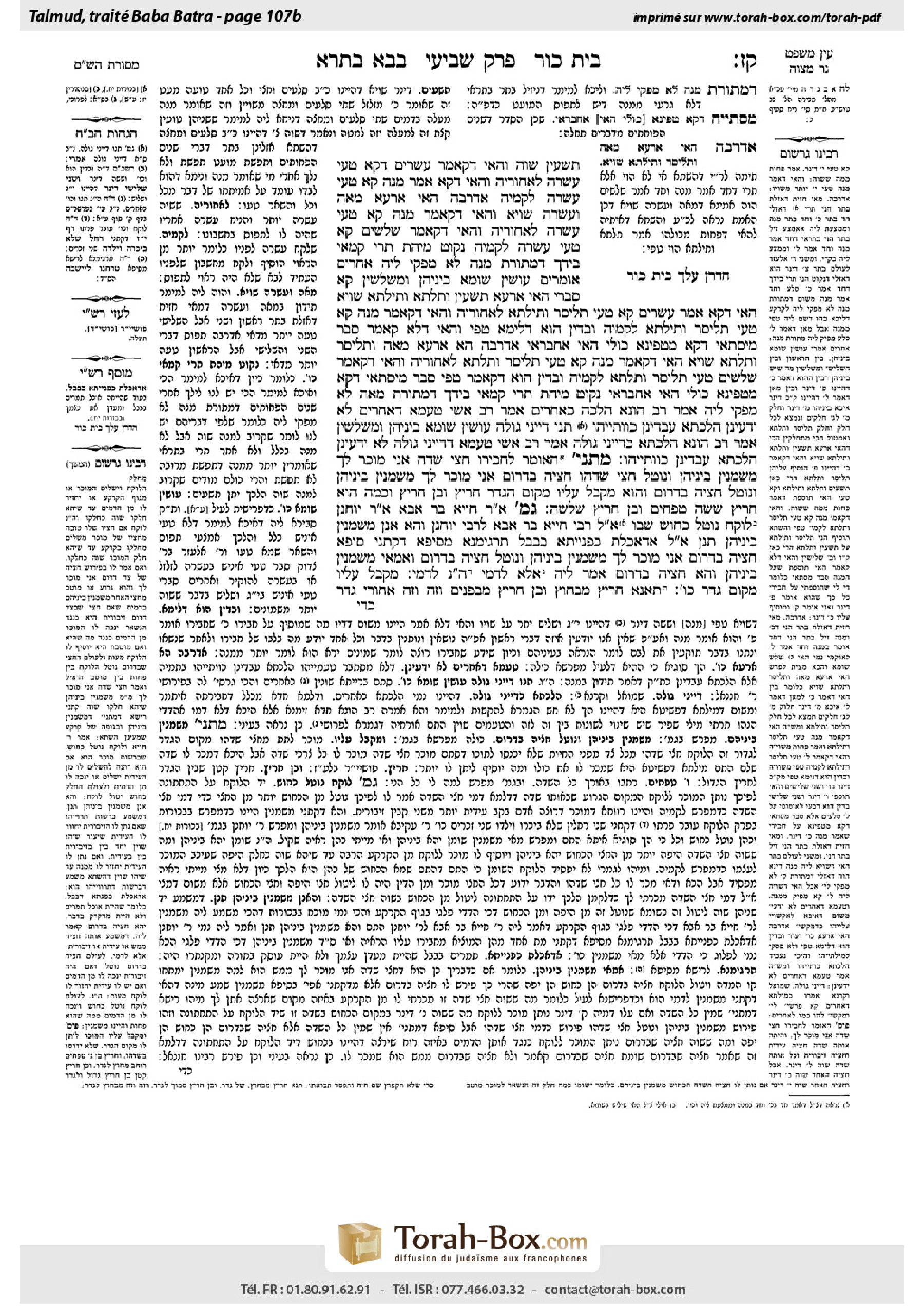
Bava Batra 107b: Talmud study for Daf Yomi
Study the Talmud for Daf Yomi with scanned pages, Hebrew text, English translations from Sefaria and AI-generated French translations.
Passage selection and English or AI-generated French translation are available where the scan has annotations. Daf Study is independent of Torah-Box and Sefaria.
Browse Bava Batra · בבא בתרא · All tractatesBava Batra 107b text and translations
This page of Bava Batra includes the Aramaic text, an English translation and an AI-generated French translation, alongside the scan above.
בבא בתרא ק״ז ב · Aramaic and Hebrew text
תִּשְׁעִין שָׁוְיָא; וְהַאי דְּקָאָמַר עֶשְׂרִים, דְּקָא טָעֵי עַשְׂרָה לַאֲחוֹרֵיהּ; וְהַאי דְּקָא אָמַר מָנֶה, קָא טָעֵי עַשְׂרָה לְקַמֵּיהּ.
אַדְּרַבָּה! הַאי אַרְעָא מְאָה וְעַשְׂרָה שָׁוְיָא; וְהַאי דְּקָאָמַר מָנֶה – קָא טָעֵי עַשְׂרָה לַאֲחוֹרֵיהּ, וְהַאי דְּקָאָמַר שְׁלֹשִׁים – קָא טָעֵי עַשְׂרָה לְקַמֵּיהּ! נְקוֹט מִיהַת תְּרֵי קַמָּאֵי בִּידָךְ, דְּמִתּוֹרַת מָנֶה לָא מַפְּקִי לֵיהּ.
אֲחֵרִים אוֹמְרִים: עוֹשִׂין שׁוּמָא בֵּינֵיהֶן, וּמְשַׁלְּשִׁין – קָא סָבְרִי: הַאי אַרְעָא – תִּשְׁעִין וּתְלָתָא וְתִילְתָּא שָׁוְיָא; הַאי דְּקָא אָמַר עֶשְׂרִים – קָא טָעֵי תְּלֵיסַר וְתִילְתָּא לַאֲחוֹרֵיהּ, וְהַאי דְּקָאָמַר מָנֶה – קָא טָעֵי תְּלֵיסַר וְתִילְתָּא לְקַמֵּיהּ; וּבְדִין הוּא דְּלֵימָא טְפֵי, וְהַאי דְּלָא קָאָמַר, סָבַר: מִיסָּתַאי דְּקָא מְטַפֵּינָא כּוּלֵּי הַאי אַחַבְרַאי.
אַדְּרַבָּה, הָא אַרְעָא – מְאָה וּתְלֵיסַר וּתְלָתָא שָׁוְיָא; הַאי דְּקָאָמַר מָנֶה – קָא טָעֵי תְּלֵיסַר וּתְלָתָא לַאֲחוֹרֵיהּ, וְהַאי דְּקָאָמַר שְׁלֹשִׁים – טָעֵי תְּלֵיסַר וּתְלָתָא לְקַמֵּיהּ; וּבְדִין הוּא דְּקָאָמַר טְפֵי, סָבַר: מִיסָּתַאי דְּקָא מְטַפֵּינָא כּוּלֵּי הַאי אַחַבְרַאי! נְקוֹט מִיהַת תְּרֵי קַמָּאֵי בִּידָךְ, דְּמִתּוֹרַת מְאָה לָא מַפְּקִי לֵיהּ.
אָמַר רַב הוּנָא: הֲלָכָה כַּאֲחֵרִים. אָמַר רַב אָשֵׁי: טַעְמָא דַּאֲחֵרִים לָא יָדְעִינַן, הִלְכְתָא עָבְדִינַן כְּווֹתַיְיהוּ?! תָּנוּ דַּיָּינֵי גוֹלָה: עוֹשִׂין שׁוּמָא בֵּינֵיהֶן, וּמְשַׁלְּשִׁין. אָמַר רַב הוּנָא: הִלְכְתָא כְּדַיָּינֵי גוֹלָה. אָמַר רַב אָשֵׁי: טַעְמָא דְּדַיָּינֵי גוֹלָה לָא יָדְעִינַן, הִלְכְתָא עָבְדִינַן כְּווֹתַיְיהוּ?!
מַתְנִי׳ הָאוֹמֵר לַחֲבֵירוֹ: ״חֲצִי שָׂדֶה אֲנִי מוֹכֵר לָךְ״ – מְשַׁמְּנִין בֵּינֵיהֶן, וְנוֹטֵל חֲצִי שָׂדֵהוּ. ״חֶצְיָהּ בַּדָּרוֹם אֲנִי מוֹכֵר לָךְ״ – מְשַׁמְּנִין בֵּינֵיהֶן, וְנוֹטֵל חֶצְיָהּ בַּדָּרוֹם. וְהוּא מְקַבֵּל עָלָיו מְקוֹם הַגָּדֵר, חָרִיץ וּבֶן חָרִיץ. וְכַמָּה הוּא חָרִיץ? שִׁשָּׁה טְפָחִים. וּבֶן חָרִיץ – שְׁלֹשָׁה.
גְּמָ׳ אָמַר רַבִּי חִיָּיא בַּר אַבָּא אָמַר רַבִּי יוֹחָנָן: לוֹקֵחַ נוֹטֵל כָּחוּשׁ שֶׁבּוֹ. אָמַר לֵיהּ רַבִּי חִיָּיא בַּר אַבָּא לְרַבִּי יוֹחָנָן: וְהָא אֲנַן ״מְשַׁמְּנִין בֵּינֵיהֶן״ תְּנַן! אָמַר לֵיהּ: אַדַּאֲכַלְתְּ כַּפְנְיָיתָא בְּבָבֶל – תַּרְגֵּימְנָא מִסֵּיפָא,
דְּקָתָנֵי סֵיפָא: ״חֶצְיָהּ בַּדָּרוֹם אֲנִי מוֹכֵר לָךְ״ – מְשַׁמְּנִין בֵּינֵיהֶן וְנוֹטֵל חֶצְיָהּ בַּדָּרוֹם. וְאַמַּאי מְשַׁמְּנִין בֵּינֵיהֶן? וְהָא ״חֶצְיָהּ בַּדָּרוֹם״ אָמַר לֵיהּ! אֶלָּא לִדְמֵי; הָכָא נָמֵי לִדְמֵי.
מְקַבֵּל עָלָיו מְקוֹם גָּדֵר כּוּ׳. תָּאנָא: חָרִיץ מִבַּחוּץ, וּבֶן חָרִיץ מִבִּפְנִים. וְזֶה וָזֶה אֲחוֹרֵי גָדֵר,
Bava Batra 107b · English translation
is in fact worth ninety dinars, and the one who says it is worth twenty sela, which is equivalent to eighty dinars errs with an assessment that is ten dinars behind, i.e., too low, and the one who says it is worth one hundred dinars errs with an assessment that is ten dinars ahead, i.e., too high. Therefore, the average of these two assessments is followed.
The Gemara raises a difficulty: On the contrary, say that this land is in fact worth one hundred and ten dinars, and the one who says it is worth one hundred dinars errs with an assessment that is ten dinars behind, and the one who says it is worth thirty sela, which is equivalent to one hundred and twenty dinars, errs with an assessment that is ten dinars ahead. If so, the average of these two assessments, one hundred and ten dinars, should be followed. The Gemara replies: In any event, grasp the first two assessments in your hand, as neither of them takes the assessment beyond the sum of one hundred dinars.
The baraita teaches that Aḥerim say that an appraisal is performed of the sum between the two most extreme assessments and then divided by three. This sum is then added to the lowest assessment. The Gemara explains this opinion: Aḥerim hold that this land is in fact worth ninety-three and one-third dinars. The one who says it is worth twenty sela, the equivalent of eighty dinars, errs with an assessment that is thirteen dinars and one-third behind, and the one who says it is worth one hundred dinars errs with an assessment that is thirteen dinars and one-third ahead. By right, that assessor should have said more, i.e., quoted a higher sum, since according to this calculation, he should have said it is worth one hundred and six and two-thirds dinars. And the reason that he did not do so is that he thinks as follows: It is enough that I add this much above and beyond the assessment of my colleague who says it is worth eighty dinars. Therefore, he lowers the sum of his assessment to one hundred dinars.
The Gemara raises a difficulty: On the contrary, say that this land is in fact worth one hundred and thirteen dinars and one-third, and the one who says it is worth one hundred dinars errs with an assessment that is thirteen dinars and one-third behind, and the one who says it is worth thirty sela, which is equal to one hundred and twenty dinars, errs with an assessment that is thirteen dinars and one-third ahead. By right, he should have said more, i.e., quoted a higher sum, since according to this calculation, he should have said it is worth one hundred and twenty-six dinars and two-thirds. And the reason he did not do so is that he thinks as follows: It is enough that I add this much above and beyond the assessment of my colleague who says it is worth one hundred dinars. The Gemara answers: In any event, grasp the first two assessments in your hand, as neither of them take the assessment beyond the sum of one hundred dinars.
Rav Huna said: The halakha is in accordance with the opinion of Aḥerim, who say that the sum of the difference between the two most extreme assessments is calculated and then divided by three, and this sum is then added to the lowest assessment. Rav Ashi said: We do not even understand the reason of Aḥerim; shall we then establish the halakha in accordance with their opinion? The judges of the Diaspora taught a baraita that accords with the opinion of Aḥerim in the previously cited baraita: An appraisal is performed to determine the sum of the difference between the two most extreme assessments and then that sum is divided by three and added to the lowest assessment. Rav Huna said: The halakha is in accordance with the judges of the Diaspora. Rav Ashi said: We do not even understand the reasoning of the judges of the Diaspora; shall we then establish the halakha in accordance with their opinion?
MISHNA: If one says to another: I am selling you half a field, without specifying which half he is selling, an assessment is made of the field, which is then divided between them, and the buyer takes half of the seller’s field. If the seller says: I am selling you the half that is on the southern side of the field, an assessment is made of the northern and the southern sides of the field, which is then divided between them, and he takes the half on the southern side. And he accepts upon himself to provide the space for the fence between the two halves of the field out of his own property. He also accepts to provide out of his own property the space for the larger ditch and the smaller ditch, which are meant to keep animals out of the field. And how wide is the larger ditch? Six handbreadths. And how wide is the smaller ditch? Three handbreadths.
GEMARA: Rabbi Ḥiyya bar Abba says that Rabbi Yoḥanan says: When one sells half of his field to another person, the buyer takes the leaner part of the field, the part that is of lower quality. Rabbi Ḥiyya bar Abba said to Rabbi Yoḥanan: But didn’t we learn in the mishna that in such a case an assessment is made of the field, which is then divided between them, which indicates that the buyer and the seller are given similar parcels of land? How then can you say that the buyer takes the leaner part? Rabbi Yoḥanan said to him in a sarcastic manner: While you were eating dates in Babylonia and neglecting your studies, we explained the matter based on the latter clause of the mishna, which proves that my understanding is correct.
As the latter clause teaches: If the seller says: I am selling you the half that is on the southern side of the field, an assessment is made of the northern and the southern sides of the field, which is then divided between them, and he takes the half on the southern side. If taken literally, this passage gives rise to a difficulty: Why is an assessment made of the northern and the southern sides of the field, which is then divided between them? In any case, didn’t he say to him that he is selling him the southern half? Let the seller give the buyer the southern half of the field. Why is an assessment necessary? Rather, it must be that the matter is more complicated than it seems, and the mishna is referring to money. That is to say, the buyer takes the southern half, but the seller must reimburse him with money for the difference in value between the two halves of the field. Here too, in the first case, the mishna is referring to money: The buyer takes the leaner half, but the seller must reimburse him with money for the difference in value between the two halves of the field.
§ The mishna teaches that the buyer accepts upon himself to provide out of his own property the space for the fence between the two halves of the field and for the larger and smaller ditches. A Sage taught in a baraita: The larger ditch is dug on the outside, while the smaller ditch is dug on the inside, closer to the field. Both this and that are dug behind the fence,
Bava Batra 107b · Traduction française (IA)
Ce terrain est en fait valable à quatre-vingt-dix drachmes, et celui qui dit qu'il vaut vingt sela, ce qui équivaut à soixante-quinze drachmes, s'écarte d'une estimation de dix drachmes, c'est-à-dire trop basse, et celui qui dit qu'il vaut cent drachmes s'écarte d'une estimation de dix drachmes, c'est-à-dire trop haute. Ainsi, on suit la moyenne de ces deux estimations.
La Guemara soulève un doute : Au contraire, disons que ce terrain est en fait valable à cent dix drachmes, et celui qui dit qu'il vaut cent drachmes s'écarte d'une estimation de dix drachmes, c'est-à-dire trop basse, et celui qui dit qu'il vaut trente sela, ce qui équivaut à cent vingt drachmes, s'écarte d'une estimation de dix drachmes, c'est-à-dire trop haute. Si tel est le cas, la moyenne de ces deux estimations, cent dix drachmes, devrait être suivie. La Guemara répond : En tout cas, tenez les deux premières estimations dans vos mains, car aucune d'entre elles ne fait dépasser l'estimation au-delà de cent drachmes.
La baraïta enseigne que les Aḥerim disent qu'une estimation est faite de la somme entre les deux estimations les plus extrêmes, puis divisée par trois. Cette somme est ensuite ajoutée à l'estimation la plus basse. La Guemara explique cette opinion : les Aḥerim pensent que ce terrain est en fait valable à quatre-vingt-treize et un tiers de drachmes. Celui qui dit qu'il vaut vingt sela, c'est-à-dire soixante-dix drachmes, s'écarte d'une estimation de treize drachmes et un tiers, et celui qui dit qu'il vaut cent drachmes s'écarte d'une estimation de treize drachmes et un tiers. Par droit, cet estimateur aurait dû dire plus, c'est-à-dire indiquer une somme plus élevée, car selon ce calcul, il aurait dû dire qu'il vaut cent six et deux tiers de drachmes. Et la raison pour laquelle il n'a pas fait ainsi est qu'il pense comme suit : Il suffit que j'ajoute cette quantité au-delà de l'estimation de mon collègue qui dit qu'il vaut soixante-dix drachmes. Ainsi, il réduit la somme de son estimation à cent drachmes.
La Guemara soulève un doute : Au contraire, disons que ce terrain est en fait valable à cent treize drachmes et un tiers, et celui qui dit qu'il vaut cent drachmes s'écarte d'une estimation de treize drachmes et un tiers, et celui qui dit qu'il vaut trente sela, c'est-à-dire cent vingt drachmes, s'écarte d'une estimation de treize drachmes et un tiers. Par droit, il aurait dû dire plus, c'est-à-dire indiquer une somme plus élevée, car selon ce calcul, il aurait dû dire qu'il vaut cent vingt-six drachmes et deux tiers. Et la raison pour laquelle il n'a pas fait ainsi est qu'il pense comme suit : Il suffit que j'ajoute cette quantité au-delà de l'estimation de mon collègue qui dit qu'il vaut cent drachmes. La Guemara répond : En tout cas, tenez les deux premières estimations dans vos mains, car aucune d'entre elles ne fait dépasser l'estimation au-delà de cent drachmes.
Rav Huna a dit : La halakha suit l'opinion des Aḥerim, qui disent que la somme de la différence entre les deux estimations les plus extrêmes est calculée, puis divisée par trois, et cette somme est ensuite ajoutée à l'estimation la plus basse. Rav Ashi a dit : Nous ne comprenons même pas la raison des Aḥerim ; devons-nous alors établir la halakha selon leur opinion ? Les juges de la Diaspora ont enseigné une baraïta qui correspond à l'opinion des Aḥerim dans la baraïta précédemment citée : Une estimation est faite pour déterminer la somme de la différence entre les deux estimations les plus extrêmes, puis cette somme est divisée par trois et ajoutée à l'estimation la plus basse. Rav Huna a dit : La halakha suit l'opinion des juges de la Diaspora. Rav Ashi a dit : Nous ne comprenons même pas la raison des juges de la Diaspora ; devons-nous alors établir la halakha selon leur opinion ?
MICHNA : Si l'un dit à l'autre : Je vends à toi la moitié d'un champ, sans préciser laquelle des deux moitiés il vend, une estimation est faite du champ, puis elle est divisée entre eux, et l'acheteur prend la moitié du champ du vendeur. Si le vendeur dit : Je vends à toi la moitié qui est au sud du champ, une estimation est faite de la partie nord et de la partie sud du champ, puis elle est divisée entre eux, et il prend la moitié au sud. Il accepte également de fournir, à partir de sa propre propriété, l'espace pour le grand fossé et le petit fossé, qui sont destinés à empêcher les animaux de pénétrer dans le champ. Et combien mesure le grand fossé ? Six paumes. Et combien mesure le petit fossé ? Trois paumes.
GUEMARA : Rabbi Ḥiyya bar Abba dit que Rabbi Yoḥanan dit : Lorsqu'on vend la moitié de son champ à une autre personne, l'acheteur prend la partie la moins bonne du champ, celle de moindre qualité. Rabbi Ḥiyya bar Abba dit à Rabbi Yoḥanan : Mais n'avons-nous pas appris dans la mishna que dans un tel cas une estimation est faite du champ, puis elle est divisée entre eux, ce qui indique que l'acheteur et le vendeur reçoivent des parcelles de terre similaires ? Comment alors peux-tu dire que l'acheteur prend la partie la moins bonne ? Rabbi Yoḥanan répond à lui d'une manière sarcastique : Tandis que tu mangeais des dattes en Mésopotamie et négligeais tes études, nous avons expliqué la question sur la base de la dernière partie de la mishna, ce qui prouve que mon interprétation est correcte.
Comme le montre la clause suivante : Si le vendeur dit : Je vends à toi la moitié qui est sur le côté sud du champ, on évalue alors les côtés nord et sud du champ, ce qui est ensuite divisé entre eux, et il prend la moitié du côté sud. Si l'on prend ce passage littéralement, il se présente un problème : pourquoi évalue-t-on les côtés nord et sud du champ, ce qui est ensuite divisé entre eux ? En tout cas, n'a-t-il pas dit au vendeur qu'il lui vend la moitié sud ? Que le vendeur donne à l'acheteur la moitié sud du champ. Pourquoi une évaluation est-elle nécessaire ? Plutôt, il faut comprendre que la situation est plus complexe qu'elle n'y paraît, et que la mitsva fait référence à l'argent. C'est-à-dire, l'acheteur prend la moitié sud, mais le vendeur doit lui rembourser l'écart de valeur entre les deux moitiés du champ. De même, dans le premier cas, la mitsva fait référence à l'argent : l'acheteur prend la moitié la moins valorisée, mais le vendeur doit lui rembourser l'écart de valeur entre les deux moitiés du champ.
§ La mitsva enseigne que l'acheteur s'engage à fournir, à partir de ses propres biens, l'espace pour le mur entre les deux moitiés du champ ainsi que pour les canaux plus grand et plus petit. Un Sage a enseigné dans une baraïta : le canal plus grand est creusé à l'extérieur, tandis que le canal plus petit est creusé à l'intérieur, plus proche du champ. Les deux canaux sont creusés derrière le mur,
Traduction française générée par IA à partir de l’édition anglaise de Sefaria. Vérifie toujours un passage avec le texte source.
Text from Sefaria: William Davidson Edition - Vocalized Aramaic (CC BY NC); William Davidson Edition - English (CC BY NC).