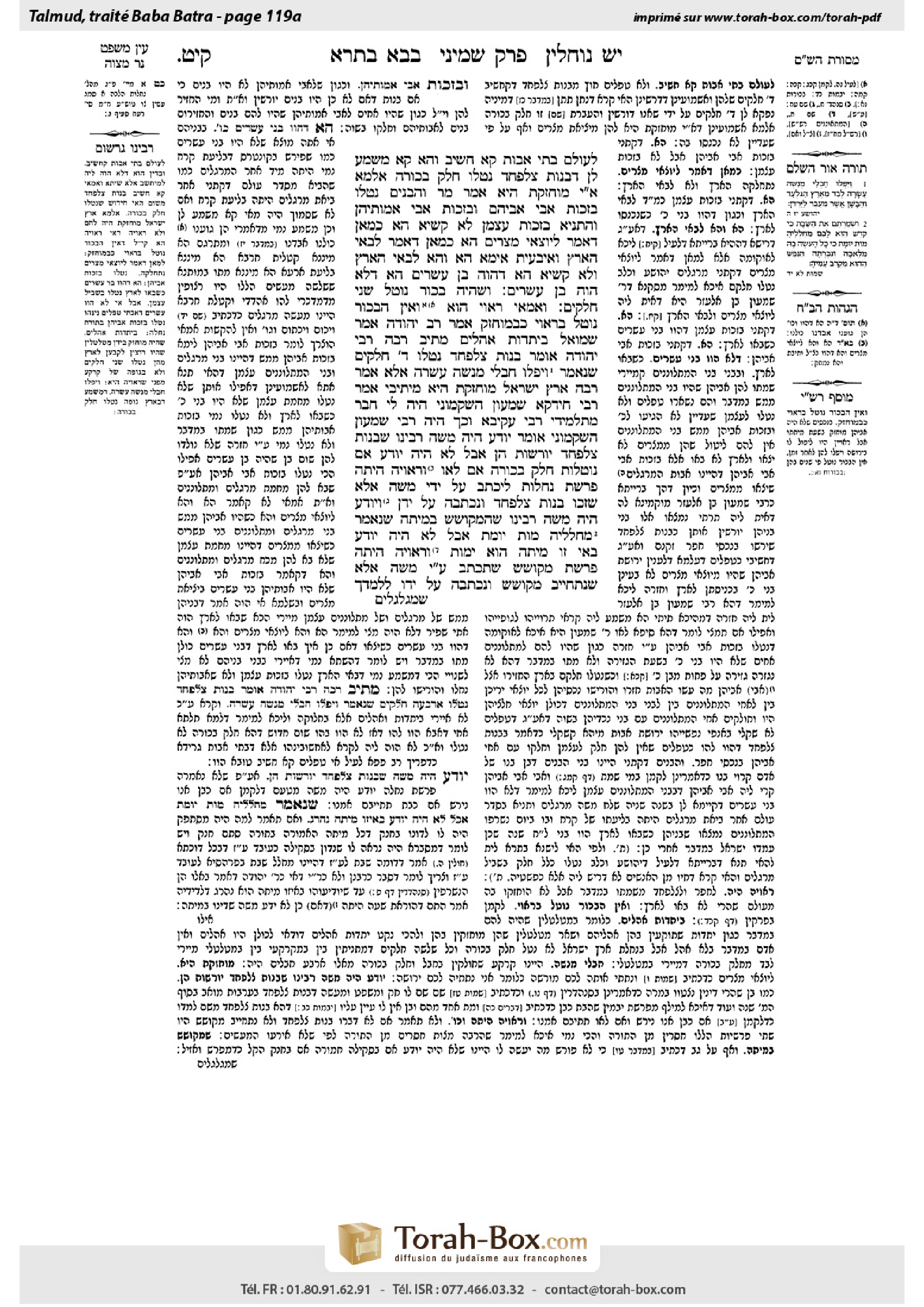
Bava Batra 119a: Talmud study for Daf Yomi
Study the Talmud for Daf Yomi with scanned pages, Hebrew text, English translations from Sefaria and AI-generated French translations.
Passage selection and English or AI-generated French translation are available where the scan has annotations. Daf Study is independent of Torah-Box and Sefaria.
Browse Bava Batra · בבא בתרא · All tractatesBava Batra 119a text and translations
This page of Bava Batra includes the Aramaic text, an English translation and an AI-generated French translation, alongside the scan above.
בבא בתרא קי״ט א · Aramaic and Hebrew text
לְעוֹלָם בָּתֵּי אָבוֹת קָא חָשֵׁיב, וְהָא קָא מַשְׁמַע לַן – דִּבְנוֹת צְלָפְחָד נָטְלוּ חֵלֶק בְּכוֹרָה; אַלְמָא אֶרֶץ יִשְׂרָאֵל מוּחְזֶקֶת הִיא.
אָמַר מָר: וְהַבָּנִים נָטְלוּ בִּזְכוּת אֲבִי אֲבִיהֶם, וּבִזְכוּת אֲבִי אִמּוֹתֵיהֶן. וְהָתַנְיָא: בִּזְכוּת עַצְמָן! לָא קַשְׁיָא; הָא כְּמַאן דְּאָמַר לְיוֹצְאֵי מִצְרַיִם, הָא כְּמַאן דְּאָמַר לְבָאֵי הָאָרֶץ.
וְאִיבָּעֵית אֵימָא: הָא וְהָא לְבָאֵי הָאָרֶץ, וְלָא קַשְׁיָא; הָא דַּהֲוָה בֶּן עֶשְׂרִים. הָא דְּלָא הֲוָה בֶּן עֶשְׂרִים.
וְשֶׁהָיָה בְּכוֹר נוֹטֵל שְׁנֵי חֲלָקִים. וְאַמַּאי? רָאוּי הוּא, וְאֵין הַבְּכוֹר נוֹטֵל בָּרָאוּי כִּבְמוּחְזָק! אָמַר רַב יְהוּדָה אָמַר שְׁמוּאֵל: בְּיִתְדוֹת אֹהָלִים.
מֵתִיב רַבָּה, רַבִּי יְהוּדָה אוֹמֵר: בְּנוֹת צְלָפְחָד נָטְלוּ אַרְבָּעָה חֲלָקִים, שֶׁנֶּאֱמַר: ״וַיִּפְּלוּ חַבְלֵי מְנַשֶּׁה עֲשָׂרָה״! אֶלָּא אָמַר רַבָּה: אֶרֶץ יִשְׂרָאֵל מוּחְזֶקֶת הִיא.
מֵיתִיבִי, אָמַר רַבִּי חִידְקָא: שִׁמְעוֹן הַשִּׁקְמוֹנִי הָיָה לִי חָבֵר מִתַּלְמִידֵי רַבִּי עֲקִיבָא, וְכָךְ הָיָה רַבִּי שִׁמְעוֹן הַשִּׁקְמוֹנִי אוֹמֵר: יוֹדֵעַ הָיָה מֹשֶׁה רַבֵּינוּ שֶׁבְּנוֹת צְלָפְחָד יוֹרְשׁוֹת הֵן, אֲבָל לֹא הָיָה יוֹדֵעַ אִם נוֹטְלוֹת חֵלֶק בְּכוֹרָה אִם לָאו;
וּרְאוּיָה הָיְתָה פָּרָשַׁת נַחֲלוֹת לִיכָּתֵב עַל יְדֵי מֹשֶׁה, אֶלָּא שֶׁזָּכוּ בְּנוֹת צְלָפְחָד וְנִכְתְּבָה עַל יָדָן.
וְיוֹדֵעַ הָיָה מֹשֶׁה רַבֵּינוּ שֶׁהַמְקוֹשֵׁשׁ בְּמִיתָה – שֶׁנֶּאֱמַר: ״מְחַלְּלֶיהָ מוֹת יוּמָת״, אֲבָל לֹא הָיָה יוֹדֵעַ בְּאֵי זוֹ מִיתָה הוּא יָמוּת; וּרְאוּיָהּ הָיְתָה פָּרָשַׁת מְקוֹשֵׁשׁ שֶׁתִּכָּתֵב עַל יְדֵי מֹשֶׁה, אֶלָּא שֶׁנִּתְחַיֵּיב מְקוֹשֵׁשׁ וְנִכְתְּבָה עַל יָדוֹ. לְלַמֶּדְךָ,
Bava Batra 119a · English translation
The Gemara answers: Actually, the verse is counting fathers’ houses. And by also counting the inheritance of Zelophehad’s daughters, the verse teaches us this: That the daughters of Zelophehad took the portion of the firstborn due their father. Evidently, Eretz Yisrael is considered already in possession of one who was entitled to his portion of the land, even before the land was assigned. Although a firstborn son does not take a double portion of the property due to his deceased father as he does the property his father possessed, it is considered that Hepher possessed the portion that would eventually be assigned to him, and that Zelophehad was entitled to a double portion.
§ The Gemara continues its discussion of the baraita. The Master says: And the sons of the spies and of the protesters took portions of the land in the merit of their paternal grandfathers and in the merit of their maternal grandfathers if those grandfathers were among those who left Egypt. The Gemara asks: But isn’t it taught in a baraita (Tosefta 7:10): The sons of the spies and of the protesters took portions in their own merit? The Gemara answers: This is not difficult: This baraita, which states they took portions in the merit of their grandfathers, is written in accordance with the opinion of the one who says that Eretz Yisrael was divided among those who left Egypt; and that baraita, which states that they took portions in their own merit, is written in accordance with the opinion of the one who says that Eretz Yisrael was divided among those who entered Eretz Yisrael.
The Gemara suggests another answer. And if you wish, say instead: This baraita and that baraita are written in accordance with the opinion that asserts that Eretz Yisrael was divided among those who entered Eretz Yisrael, and it is not difficult: This baraita is discussing one who was twenty years old when the Jewish people entered Eretz Yisrael, and therefore he took a portion in his own merit, and that baraita is discussing one who was not twenty years old.
§ The mishna teaches: And Zelophehad took an additional portion that he received from Hepher, because he was a firstborn, and a firstborn takes two portions of inheritance from his father. The Gemara asks: But why was he entitled to the double portion of the firstborn? His portion of land is property merely due to Hepher, as Hepher never actually possessed the land, and the halakha is that a firstborn does not take a double portion of property due to the deceased as he does of property the deceased possessed. Rav Yehuda says that Shmuel says: This clause of the mishna is stated with regard to tent pegs and other assorted movable property that Hepher possessed.
Rabba raises an objection from a baraita: Rabbi Yehuda says: The daughters of Zelophehad took four parts, as it is stated: “And ten parts fell to Manasseh” (Joshua 17:5). Clearly, this is referring to portions of land, and not simply movable property. Rather, Rabba says: Eretz Yisrael is considered already in possession of one who was entitled to his portion of inheritance land, even before the land was assigned.
The Gemara raises an objection from a baraita. Rabbi Ḥideka said: Shimon HaShikmoni was my colleague among the students of Rabbi Akiva, and so would Rabbi Shimon HaShikmoni say: Even before turning to God for guidance, Moses our teacher knew that the daughters of Zelophehad were inheritors and that they were entitled to their father’s portion, as well as his share in Hepher’s portion. But he did not know if they were entitled to take a portion of the firstborn of Hepher’s portion or not.
Rabbi Ḥideka continues citing Rabbi Shimon HaShikmoni: And the Torah portion concerning the laws of inheritances was fit to have been written through God initiating a commandment to Moses, without mentioning Zelophehad’s daughters. But by demonstrating their desire for land in Eretz Yisrael the daughters of Zelophehad merited that the portion was written through a response to them.
Rabbi Ḥideka continues citing Rabbi Shimon HaShikmoni: And Moses our teacher similarly knew that the wood gatherer, who gathered wood on Shabbat (see Numbers 15:32–36), was to be punished by death, as it is stated: “Every one that profanes it shall be put to death” (Exodus 31:14), but he did not know by which death penalty the wood gatherer must die. And the Torah portion concerning the punishment of the wood gatherer was fit to have been written through God initiating a commandment to Moses, to teach which form of court-imposed capital punishment is administered to one who violates Shabbat. But the wood gatherer was found guilty, and the portion was written through the incident involving him. This is to teach you
Bava Batra 119a · Traduction française (IA)
Le Guemara répond : En réalité, la versette compte les maisons des pères. Et en comptant aussi la part de Zelophehad, les filles, la versette nous enseigne cela : que les filles de Zelophehad ont pris la part du premier-né due à leur père. Évidemment, Eretz Yisrael est considérée comme déjà possédée par celui qui avait le droit à sa part de terre, même avant que la terre ne soit assignée. Bien que le premier-né ne prenne pas une double part de la propriété en raison de la mort de son père, comme il le fait pour la propriété que possédait son père, on considère que Hepher possédait la part qui serait finalement assignée à lui, et que Zelophehad avait le droit à une double part.
§ Le Guemara continue sa discussion sur la baraïta. Le Maître dit : Et les fils des espions et des récalcitrants ont pris des portions de terre en mérite de leurs grands-pères paternels et en mérite de leurs grands-pères maternels si ceux-ci étaient parmi ceux qui sont sortis d'Égypte. Le Guemara demande : Mais n'est-ce pas enseigné dans une baraïta (Tosefta 7:10) : Les fils des espions et des récalcitrants ont pris des portions en leur propre mérite ? Le Guemara répond : Ce n'est pas difficile : cette baraïta, qui dit qu'ils ont pris des portions en mérite de leurs grands-pères, est écrite selon l'opinion de celui qui dit que Eretz Yisrael a été divisée parmi ceux qui sont sortis d'Égypte ; et cette baraïta, qui dit qu'ils ont pris des portions en leur propre mérite, est écrite selon l'opinion de celui qui dit que Eretz Yisrael a été divisée parmi ceux qui sont entrés en Eretz Yisrael.
Le Guemara suggère une autre réponse. Et si l'on veut, dis plutôt : cette baraïta et celle-ci sont écrites selon l'opinion qui affirme que Eretz Yisrael a été divisée parmi ceux qui sont entrés en Eretz Yisrael, et ce n'est pas difficile : cette baraïta parle d'une personne qui avait vingt ans lors de l'entrée du peuple juif en Eretz Yisrael, et donc il a pris une portion en son propre mérite, et celle-ci parle d'une personne qui n'avait pas vingt ans.
§ La mishna enseigne : Et Zelophehad a pris une portion supplémentaire qu'il a reçue de Hepher, car il était un premier-né, et un premier-né prend deux portions de succession de son père. Le Guemara demande : Mais pourquoi avait-il le droit à la double portion du premier-né ? Sa portion de terre est une propriété simplement en raison de Hepher, car Hepher n'a jamais réellement possédé la terre, et la halakha est que le premier-né ne prend pas une double portion de propriété en raison de la mort du défunt, comme il le fait pour la propriété que possédait le défunt. Rav Yehuda dit que Shmuel dit : Cette clause de la mishna est formulée concernant les piquets de tentes et autres biens mobiliers que possédait Hepher.
Rabba éleve un objet à partir d'une baraïta : Rabbi Yehuda dit : Les filles de Zelophehad ont pris quatre parts, comme il est dit : « Et dix parts tombèrent à Manasseh » (Josué 17:5). Évidemment, cela fait référence aux portions de terre, et non simplement aux biens mobiliers. Plutôt, Rabba dit : Eretz Yisrael est considérée comme déjà possédée par celui qui avait le droit à sa portion de terre héréditaire, même avant que la terre ne soit assignée.
Le Guemara soulève une objection tirée d'une baraïta. Rabbi Ḥideka dit : Shimon HaShikmoni était mon collègue parmi les élèves de Rabbi Akiva, et donc Rabbi Shimon HaShikmoni disait : Même avant de se tourner vers Dieu pour la guidance, notre maître Moïse savait que les filles de Zelophehad étaient des héritières et qu'elles avaient le droit à leur part de leur père, ainsi que leur part dans la portion de Hepher. Mais il ne savait pas si elles avaient le droit de prendre une portion du premier-né de la portion de Hepher.
Rabbi Ḥideka continue de citer Rabbi Shimon HaShikmoni : Et la portion de la Torah concernant les lois des héritages aurait pu être écrite par Dieu donnant un commandement à Moïse, sans mentionner les filles de Zelophehad. Mais en démontrant leur désir de terre en Eretz Yisrael, les filles de Zelophehad ont mérité que la portion soit écrite en réponse à leur demande.
Rabbi Ḥideka continue de citer Rabbi Shimon HaShikmoni : Et notre maître Moïse savait également que le récolteur de bois, qui a récolté du bois le sabbat (voir Nombres 15:32–36), devait être puni par la mort, comme il est dit : « Tout celui qui profane cela sera mis à mort » (Exode 31:14), mais il ne savait pas par quelle forme de peine capitale le récolteur de bois devait mourir. Et la portion de la Torah concernant la punition du récolteur de bois aurait pu être écrite par Dieu donnant un commandement à Moïse, pour enseigner quelle forme de peine capitale imposée par le tribunal est administrée à celui qui viole le sabbat. Mais le récolteur de bois a été trouvé coupable, et la portion a été écrite à partir de l'incident concernant lui. Cela est pour t'apprendre
Traduction française générée par IA à partir de l’édition anglaise de Sefaria. Vérifie toujours un passage avec le texte source.
Text from Sefaria: William Davidson Edition - Vocalized Aramaic (CC BY NC); William Davidson Edition - English (CC BY NC).