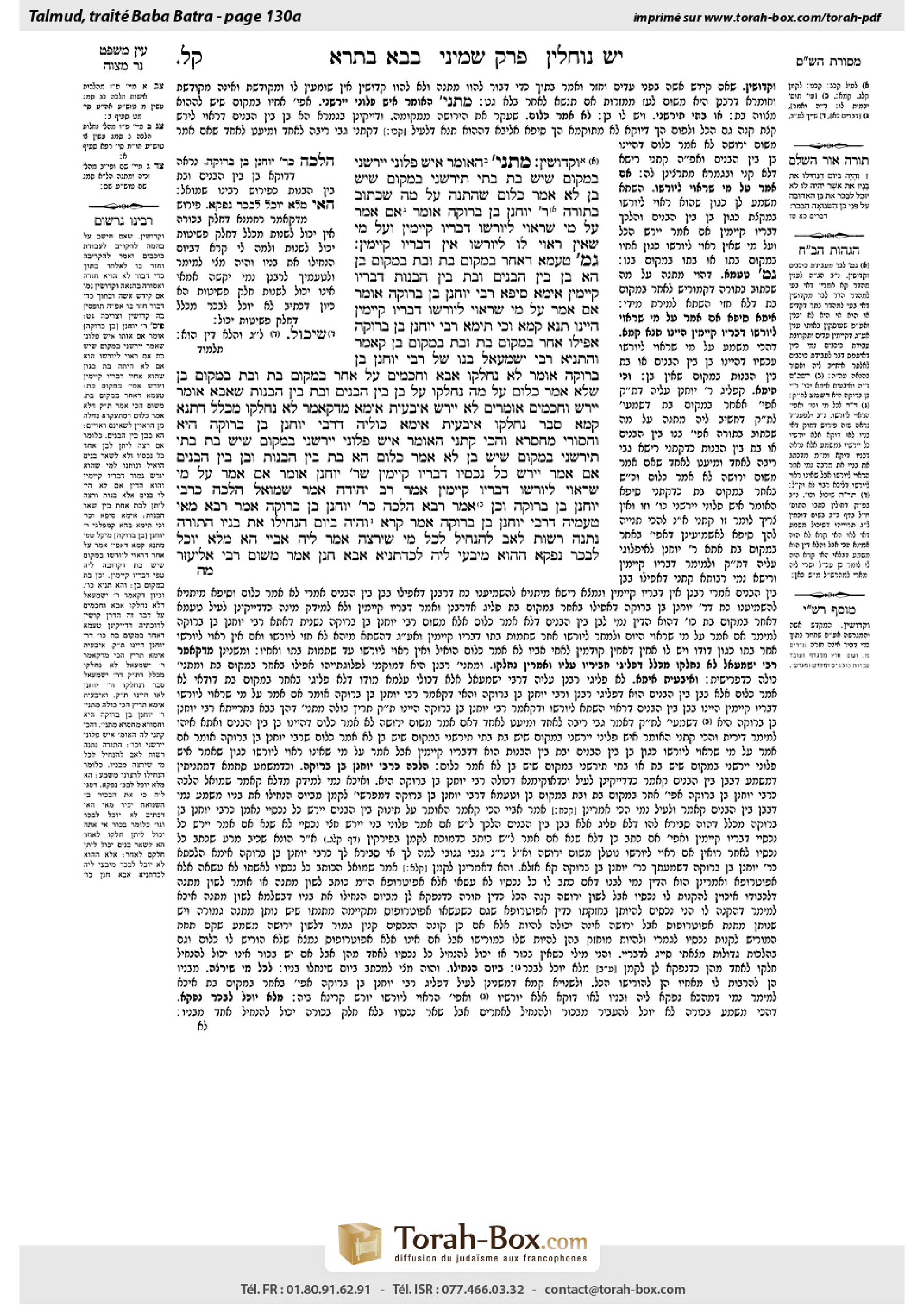
Bava Batra 130a: Talmud study for Daf Yomi
Study the Talmud for Daf Yomi with scanned pages, Hebrew text, English translations from Sefaria and AI-generated French translations.
Passage selection and English or AI-generated French translation are available where the scan has annotations. Daf Study is independent of Torah-Box and Sefaria.
Browse Bava Batra · בבא בתרא · All tractatesBava Batra 130a text and translations
This page of Bava Batra includes the Aramaic text, an English translation and an AI-generated French translation, alongside the scan above.
בבא בתרא ק״ל א · Aramaic and Hebrew text
וְקִדּוּשִׁין.
מַתְנִי׳ הָאוֹמֵר ״אִישׁ פְּלוֹנִי יִירָשֵׁנִי״ בִּמְקוֹם שֶׁיֵּשׁ בַּת; ״בִּתִּי תִּירָשֵׁנִי״ בִּמְקוֹם שֶׁיֵּשׁ בֵּן – לֹא אָמַר כְּלוּם, שֶׁהִתְנָה עַל מַה שֶּׁכָּתוּב בַּתּוֹרָה. רַבִּי יוֹחָנָן בֶּן בְּרוֹקָה אוֹמֵר: אִם אָמַר עַל מִי שֶׁרָאוּי לְיוֹרְשׁוֹ – דְּבָרָיו קַיָּימִין; וְעַל מִי שֶׁאֵין רָאוּי לוֹ לְיוֹרְשׁוֹ – אֵין דְּבָרָיו קַיָּימִין.
גְּמָ׳ טַעְמָא דְּאַחֵר בִּמְקוֹם בַּת, וּבַת בִּמְקוֹם בֵּן; הָא בֵּן בֵּין הַבָּנִים, וּבַת בֵּין הַבָּנוֹת – דְּבָרָיו קַיָּימִין. אֵימָא סֵיפָא, רַבִּי יוֹחָנָן בֶּן בְּרוֹקָה אוֹמֵר: אִם אָמַר עַל מִי שֶׁרָאוּי לְיוֹרְשׁוֹ – דְּבָרָיו קַיָּימִין. הַיְינוּ תַּנָּא קַמָּא!
וְכִי תֵּימָא רַבִּי יוֹחָנָן בֶּן בְּרוֹקָה – אֲפִילּוּ אַחֵר בִּמְקוֹם בַּת וּבַת בִּמְקוֹם בֵּן קָאָמַר; וְהָתַנְיָא, רַבִּי יִשְׁמָעֵאל בְּנוֹ שֶׁל רַבִּי יוֹחָנָן בֶּן בְּרוֹקָה אוֹמֵר: לֹא נֶחְלְקוּ אַבָּא וַחֲכָמִים עַל אַחֵר בִּמְקוֹם בַּת וּבַת בִּמְקוֹם בֵּן, שֶׁלֹּא אָמַר כְּלוּם;
עַל מָה נֶחְלְקוּ – עַל בֵּן בֵּין הַבָּנִים, וּבַת בֵּין הַבָּנוֹת; שֶׁאַבָּא אוֹמֵר: יִירַשׁ, וַחֲכָמִים אוֹמְרִים: לֹא יִירַשׁ!
אִיבָּעֵית אֵימָא: מִדְּקָאָמַר ״לֹא נֶחְלְקוּ״ – מִכְּלָל דְּתַנָּא קַמָּא סָבַר: נֶחְלְקוּ.
אִיבָּעֵית אֵימָא: כּוּלֵּיהּ דְּרַבִּי יוֹחָנָן בֶּן בְּרוֹקָה הִיא, וְחַסּוֹרֵי מְחַסְּרָא וְהָכִי קָתָנֵי: הָאוֹמֵר ״אִישׁ פְּלוֹנִי יִירָשֵׁנִי״ בִּמְקוֹם שֶׁיֵּשׁ בַּת; ״בִּתִּי תִּירָשֵׁנִי״ בִּמְקוֹם שֶׁיֵּשׁ בֵּן – לֹא אָמַר כְּלוּם. הָא בַּת בֵּין הַבָּנוֹת וּבֵן בֵּין הַבָּנִים – אִם אָמַר ״יִירַשׁ כׇּל נְכָסָיו״, דְּבָרָיו קַיָּימִין; שֶׁרַבִּי יוֹחָנָן אוֹמֵר: אִם אָמַר עַל מִי שֶׁרָאוּי לְיוֹרְשׁוֹ – דְּבָרָיו קַיָּימִין.
אָמַר רַב יְהוּדָה אָמַר שְׁמוּאֵל: הֲלָכָה כְּרַבִּי יוֹחָנָן בֶּן בְּרוֹקָה. וְכֵן אָמַר רָבָא: הֲלָכָה כְּרַבִּי יוֹחָנָן בֶּן בְּרוֹקָה.
אָמַר רָבָא: מַאי טַעְמֵיהּ דְּרַבִּי יוֹחָנָן בֶּן בְּרוֹקָה? אָמַר קְרָא: ״וְהָיָה בְּיוֹם הַנְחִילוֹ אֶת בָּנָיו״ – הַתּוֹרָה נָתְנָה רְשׁוּת לָאָב לְהַנְחִיל לְכׇל מִי שֶׁיִּרְצֶה.
אֲמַר לֵיהּ אַבָּיֵי: הָא – מִ״לֹּא יוּכַל לְבַכֵּר״ נָפְקָא!
הַהוּא מִיבְּעֵי לֵיהּ לְכִדְתַנְיָא, אַבָּא חָנָן אָמַר מִשּׁוּם רַבִּי אֱלִיעֶזֶר:
Bava Batra 130a · English translation
and betrothal, as if a man betroths a woman and retracts the betrothal within the time required for speaking, his retraction is not effective.
MISHNA: In a case of one who says: So-and-so will inherit from me, in a case where there is a daughter, or: My daughter will inherit from me, in a case where there is a son, he has said nothing, as he has stipulated counter to that which is written in the Torah concerning the order of inheritance. Rabbi Yoḥanan ben Beroka says: If he said this about one fit to inherit from him, his statement stands, but if it was about one for whom it was not fit to inherit from him, his statement does not stand.
GEMARA: The Gemara infers from the mishna that the reason the first tanna rules that his bequeathal is invalid is that he bequeathed his estate to another in a case where he had a daughter, or to his daughter where he had a son, but if he bequeathed his entire estate to one son among his other sons, or to one daughter among his other daughters, his statement stands. The Gemara questions this inference: Say the latter clause of the mishna: Rabbi Yoḥanan ben Beroka says that if he said this about one fit to inherit from him, his statement stands. This is identical to the opinion of the first tanna. What information does this statement of Rabbi Yoḥanan ben Beroka add? With regard to what case do they disagree?
The Gemara continues: And if you would say that Rabbi Yoḥanan ben Beroka is saying that one’s statement stands even in a case where he bequeathed his estate to another where he had a daughter or to a daughter where he had a son, as although he bequeathed it to one who is not currently his heir, the beneficiary would be fit to inherit from him if the current heirs die, and this would be contrary to the opinion of the first tanna, this is difficult. And isn’t it taught in a baraita (Tosefta 7:18) that Rabbi Yishmael, son of Rabbi Yoḥanan ben Beroka, says: My father and the Rabbis did not disagree about a case where one bequeathed his estate to another where he had a daughter or to a daughter where he had a son; in a case such as this, my father concedes that he has said nothing.
Rabbi Yishmael continues: With regard to what case do they disagree? They disagree with regard to a case where he bequeathed his entire estate to one son among his other sons, or to one daughter among his other daughters, as my father says that the son or daughter inherits the entire estate, and the Rabbis say that he does not inherit it.
The Gemara explains: If you wish, say that from the fact that Rabbi Yishmael is saying that they did not disagree about a case where one bequeathed his estate to another where he had a daughter or to a daughter where he had a son, by inference, the first tanna of that baraita, to whom he was responding, holds that they did disagree in this case.
And if you wish, say instead that the entire mishna is stating the opinion of Rabbi Yoḥanan ben Beroka, and the mishna is incomplete, and this is what it is teaching: With regard to one who says: So-and-so will inherit from me, in a case where there is a daughter, or: My daughter will inherit from me, in a case where there is a son, he has said nothing, but if he bequeathed his property to one son among his other sons, or one daughter among his other daughters, then if he said that the son or daughter will inherit all his property, his statement stands, as Rabbi Yoḥanan ben Beroka says: If he said this about one fit to inherit him, that he should inherit all of his property, his statement stands.
§ As for the halakhic ruling, Rav Yehuda says that Shmuel says: The halakha is in accordance with the opinion of Rabbi Yoḥanan ben Beroka. And Rava says as well that the halakha is in accordance with the opinion of Rabbi Yoḥanan ben Beroka.
Rava said: What is the reason for the opinion of Rabbi Yoḥanan ben Beroka? The verse states: “Then it shall be, in the day that he causes his sons to inherit” (Deuteronomy 21:16), which is interpreted to mean that the Torah gave the father permission to bequeath his estate to whomever he wishes among his sons.
Abaye said to him: Isn’t this halakha derived from the continuation of the verse: “He may not make the son of the beloved the firstborn, before the son of the hated, who is the firstborn”? From the prohibition against depriving the firstborn of his double portion it can be inferred that one can change the apportionment of the inheritance of his other sons.
The Gemara answers: That clause in the verse is necessary for that which is taught in a baraita: Abba Ḥanan says in the name of Rabbi Eliezer:
Bava Batra 130a · Traduction française (IA)
et l'union de mariage, comme si un homme donnait en mariage une femme et rétractait ce mariage dans le délai requis pour parler, sa rétractation n'est pas efficace.
MICHNA : Dans un cas où l'on dit : « Cet homme héritera de moi », dans un cas où il y a une fille, ou : « Ma fille héritera de moi », dans un cas où il y a un fils, il n'a dit rien, car il a stipulé contrairement à ce qui est écrit dans la Torah concernant l'ordre de l'héritage. Rabbi Yoḥanan ben Beroka dit : Si l'on a dit cela à l'égard d'une personne digne d'hériter, sa déclaration est valable, mais si c'était à l'égard d'une personne pour laquelle il n'était pas digne d'hériter, sa déclaration n'est pas valable.
GUEMARA : La Guemara déduit de la mishna que la raison pour laquelle le premier tanna considère que la donation est invalide est que l'on a donné son patrimoine à un autre dans un cas où il avait une fille, ou à sa fille dans un cas où il avait un fils, mais si l'on a donné son patrimoine entier à un fils parmi ses autres fils, ou à une fille parmi ses autres filles, sa déclaration est valable. La Guemara questionne cette déduction : Dites la dernière partie de la mishna : Rabbi Yoḥanan ben Beroka dit que si l'on a dit cela à l'égard d'une personne digne d'hériter, sa déclaration est valable. Cela est identique à l'opinion du premier tanna. Quelle information cette déclaration de Rabbi Yoḥanan ben Beroka apporte-t-elle ? À propos de quel cas s'agit-il qu'ils débattent ?
La Guemara continue : Et si l'on disait que Rabbi Yoḥanan ben Beroka dit que la déclaration est valable même dans un cas où l'on a donné son patrimoine à un autre où il avait une fille ou à une fille où il avait un fils, car bien que l'on ait donné à quelqu'un qui n'est pas actuellement héritier, le bénéficiaire serait digne d'hériter s'il décédait les héritiers actuels, et cela serait contraire à l'opinion du premier tanna, cela est difficile. Et n'est-il pas enseigné dans une baraïta (Tosefta 7:18) que Rabbi Yishmael, fils de Rabbi Yoḥanan ben Beroka, dit : Mon père et les Rabbins n'ont pas débattu concernant un cas où l'on a donné son patrimoine à un autre où il avait une fille ou à une fille où il avait un fils ; dans un cas tel que celui-ci, mon père reconnaît qu'il n'a dit rien.
Rabbi Yishmael continue : À propos de quel cas s'agit-il qu'ils débattent ? Ils débattent concernant un cas où l'on a légué son patrimoine entier à un fils parmi ses autres fils, ou à une fille parmi ses autres filles, car mon père dit que le fils ou la fille hérite du patrimoine entier, et les Rabbins disent qu'il ne l'hérite pas.
La Guemara explique : Si l'on veut, disons que d'après le fait que Rabbi Yishmael dit qu'ils n'ont pas débattu concernant un cas où l'on a légué son patrimoine à un autre où il avait une fille ou à une fille où il avait un fils, par déduction, le premier tanna de cette baraïta, à qui il répondait, tenait que cela était un cas où ils débattaient.
Et si l'on veut, disons plutôt que l'ensemble de la mishna exprime l'opinion de Rabbi Yoḥanan ben Beroka, et que la mishna est incomplète, et c'est ce qu'elle enseigne : Concernant une personne qui dit : « Cet homme héritera de moi », dans un cas où il y a une fille, ou : « Ma fille héritera de moi », dans un cas où il y a un fils, il n'a dit rien, mais si l'on a donné son patrimoine à un fils parmi ses autres fils, ou à une fille parmi ses autres filles, alors si l'on a dit que le fils ou la fille héritera de tout son patrimoine, sa déclaration est valable, car Rabbi Yoḥanan ben Beroka dit : Si l'on a dit cela à l'égard d'une personne digne d'hériter, qu'il hérite de tout son patrimoine, sa déclaration est valable.
§ En ce qui concerne la décision halakhique, Rav Yehuda dit que Shmuel dit : La halakha suit l'opinion de Rabbi Yoḥanan ben Beroka. Et Rava dit également que la halakha suit l'opinion de Rabbi Yoḥanan ben Beroka.
Rava dit : Quelle est la raison de l'opinion de Rabbi Yoḥanan ben Beroka ? La Torah dit : « Et il sera, le jour où il fera hériter ses fils » (Lévitique 21:16), ce qui est interprété pour signifier que la Torah a donné au père le droit de donner son patrimoine à celui qu'il souhaite parmi ses fils.
Abaye dit à lui : N'est-ce pas cette halakha tirée de la continuation du verset : « Il ne doit pas rendre le fils aimé premier-né avant le fils détesté, qui est le premier-né » ? De l'interdiction de dérober la double portion du premier-né, on peut déduire qu'on peut changer la répartition de l'héritage de ses autres fils.
La Guemara répond : Cette clause du verset est nécessaire pour ce qui est enseigné dans une baraïta : Abba Ḥanan dit en nom de Rabbi Eliezer :
Traduction française générée par IA à partir de l’édition anglaise de Sefaria. Vérifie toujours un passage avec le texte source.
Text from Sefaria: William Davidson Edition - Vocalized Aramaic (CC BY NC); William Davidson Edition - English (CC BY NC).