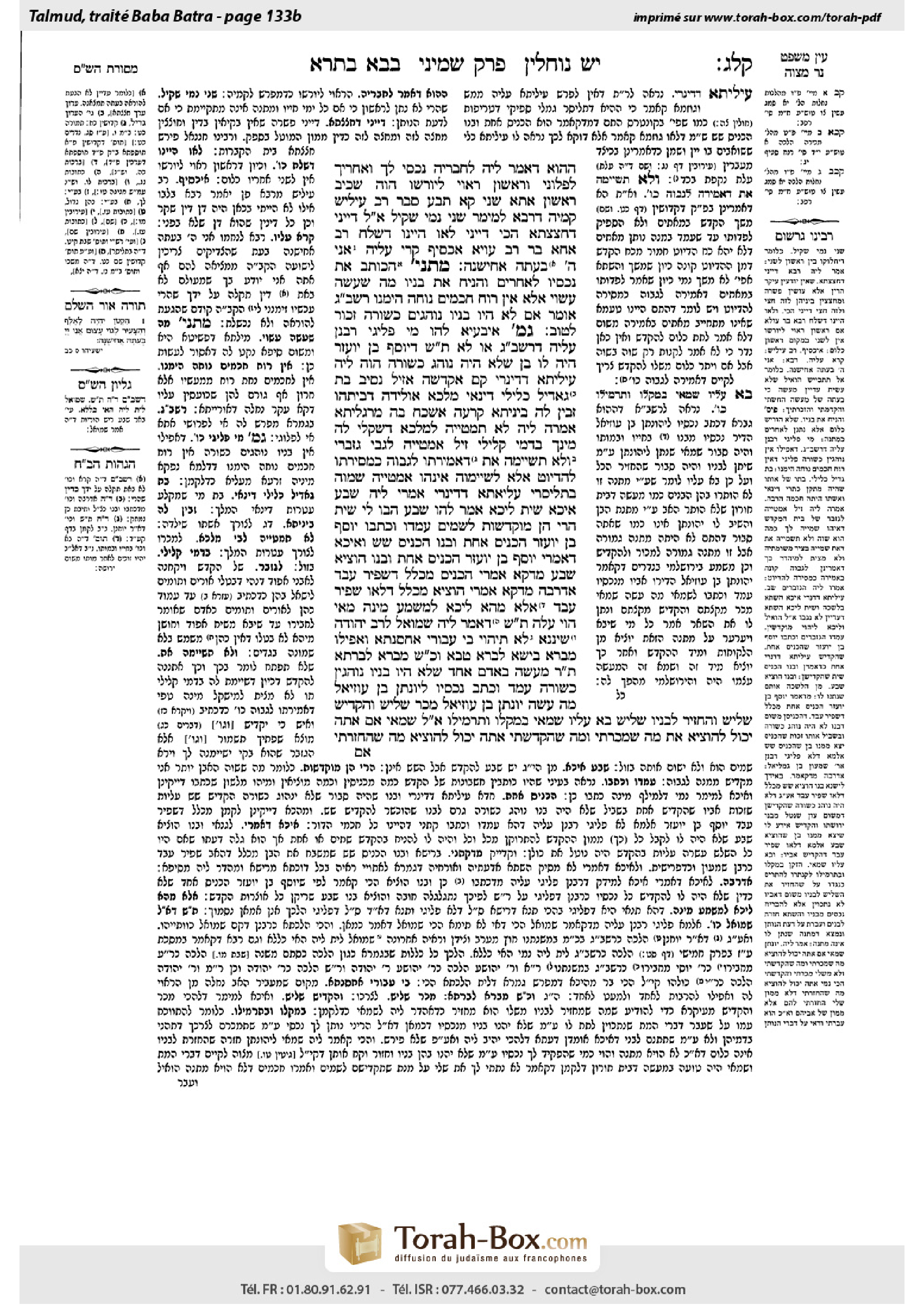
Bava Batra 133b: Talmud study for Daf Yomi
Study the Talmud for Daf Yomi with scanned pages, Hebrew text, English translations from Sefaria and AI-generated French translations.
Passage selection and English or AI-generated French translation are available where the scan has annotations. Daf Study is independent of Torah-Box and Sefaria.
Browse Bava Batra · בבא בתרא · All tractatesBava Batra 133b text and translations
This page of Bava Batra includes the Aramaic text, an English translation and an AI-generated French translation, alongside the scan above.
בבא בתרא קל״ג ב · Aramaic and Hebrew text
הָהוּא דַּאֲמַר לֵיהּ לְחַבְרֵיהּ: ״נְכָסַי לְךָ, וְאַחֲרֶיךָ לִפְלוֹנִי״, וְרִאשׁוֹן רָאוּי לְיוֹרְשׁוֹ הֲוָה. שָׁכֵיב רִאשׁוֹן, אֲתָא שֵׁנִי קָא תָבַע.
סְבַר רַב עִילִישׁ קַמֵּיהּ דְּרָבָא לְמֵימַר: שֵׁנִי נָמֵי שָׁקֵיל. אֲמַר לֵיהּ: דַּיָּינֵי דַחֲצַצְתָּא הָכִי דָּיְינִי! לָאו הַיְינוּ דִּשְׁלַח רַב אַחָא בַּר רַב עַוְיָא?
אִכְּסִיף. קָרֵי עֲלֵיהּ ״אֲנִי ה׳ בְּעִתָּהּ אֲחִישֶׁנָּה״.
מַתְנִי׳ הַכּוֹתֵב אֶת נְכָסָיו לַאֲחֵרִים וְהִנִּיחַ אֶת בָּנָיו – מַה שֶּׁעָשָׂה עָשׂוּי, אֶלָּא אֵין רוּחַ חֲכָמִים נוֹחָה הֵימֶנּוּ. רַבָּן שִׁמְעוֹן בֶּן גַּמְלִיאֵל אוֹמֵר: אִם לֹא הָיוּ בָּנָיו נוֹהֲגִים כַּשּׁוּרָה – זָכוּר לַטּוֹב.
גְּמָ׳ אִיבַּעְיָא לְהוּ: מִי פְּלִיגִי רַבָּנַן עֲלֵיהּ דְּרַבָּן שִׁמְעוֹן בֶּן גַּמְלִיאֵל, אוֹ לָא?
תָּא שְׁמַע: דְּיוֹסֵף בֶּן יוֹעֶזֶר הָיָה לוֹ בֵּן שֶׁלֹּא הָיָה נוֹהֵג כַּשּׁוּרָה. הֲוָה לֵיהּ עִילִּיתָא דְּדִינָרֵי, קָם אַקְדְּשַׁהּ. אֲזַל נְסֵיב בַּת גָּאדֵיל כְּלִילֵי דְּיַנַּאי מַלְכָּא. אוֹלִידָה דְּבֵיתְהוּ, זַבֵּין לַהּ בִּינִיתָא. קַרְעַהּ, אַשְׁכַּח בָּהּ מַרְגָּלִיתָא.
אֲמַרָה לֵיהּ: לָא תַּמְטְיַיהּ לְמַלְכָּא, דְּשָׁקְלִי לַהּ מִינָּךְ בִּדְמֵי קַלִּילֵי; זִיל אַמְטְיַיהּ לְגַבֵּי גִּזְבָּרֵי. וְלָא תְּשַׁיְּימַהּ אַתְּ, דַּאֲמִירָתוֹ לְגָבוֹהַּ כִּמְסִירָתוֹ לְהֶדְיוֹט, אֶלָּא לְשַׁיְּימוּהָ אִינְהוּ.
אַמְטְיַיהּ, שָׁמוּהָ בִּתְלֵיסְרֵי עִלִּיָּאתָא דְּדִינָרֵי. אָמְרִי לֵיהּ: שְׁבַע אִיכָּא, שֵׁית לֵיכָּא. אֲמַר לְהוּ: שְׁבַע הַבוּ לִי, שֵׁית הֲרֵי הֵן מוּקְדָּשׁוֹת לַשָּׁמַיִם.
עָמְדוּ וְכָתְבוּ: יוֹסֵף בֶּן יוֹעֶזֶר הִכְנִיס אַחַת, וּבְנוֹ הִכְנִיס שֵׁשׁ. וְאִיכָּא דְּאָמְרִי: יוֹסֵף בֶּן יוֹעֶזֶר הִכְנִיס אַחַת, וּבְנוֹ הוֹצִיא שֶׁבַע.
מִדְּקָא אָמְרִי ״הִכְנִיס״, מִכְּלָל דְּשַׁפִּיר עֲבַד! אַדְּרַבָּה, מִדְּקָא אָמְרִי ״הוֹצִיא״, מִכְּלָל דְּלָאו שַׁפִּיר עֲבַד! אֶלָּא מֵהָא לֵיכָּא לְמִשְׁמַע מִינַּהּ.
מַאי הָוֵי עֲלַהּ? תָּא שְׁמַע, דַּאֲמַר לֵיהּ שְׁמוּאֵל לְרַב יְהוּדָה: שִׁינָּנָא, לָא תְּיהַוֵּי בֵּי עַבּוֹרֵי אַחְסָנְתָּא; וַאֲפִילּוּ מִבְּרָא בִּישָׁא לִבְרָא טָבָא, וְכׇל שֶׁכֵּן מִבְּרָא לְבַרְתָּא.
תָּנוּ רַבָּנַן: מַעֲשֶׂה בְּאָדָם אֶחָד שֶׁלֹּא הָיוּ בָּנָיו נוֹהֲגִין כַּשּׁוּרָה, עָמַד וְכָתַב נְכָסָיו לְיוֹנָתָן בֶּן עוּזִּיאֵל. מָה עָשָׂה יוֹנָתָן בֶּן עוּזִּיאֵל? מָכַר שְׁלִישׁ, וְהִקְדִּישׁ שְׁלִישׁ, וְהֶחֱזִיר לְבָנָיו שְׁלִישׁ.
בָּא עָלָיו שַׁמַּאי בְּמַקְלוֹ וְתַרְמִילוֹ. אָמַר לוֹ: שַׁמַּאי, אִם אַתָּה יָכוֹל לְהוֹצִיא אֶת מַה שֶּׁמָּכַרְתִּי וּמַה שֶּׁהִקְדַּשְׁתִּי – אַתָּה יָכוֹל לְהוֹצִיא מַה שֶּׁהֶחְזַרְתִּי,
Bava Batra 133b · English translation
There was a certain person who said to another: My property is given to you, and after you, to so-and-so, and the first one was fit to inherit from him. After the first died, the second came and claimed the property.
Rav Ilish, who was in the presence of Rava, thought to say that the second also takes a share of the property; he divides it with the heirs of the first. Rava said to him: Judges of compromise, who as a matter of course divide disputed property between the parties, rule in this manner. But isn’t this identical to the case concerning which Rav Aḥa bar Rav Avya sent a ruling that the second receives nothing?
Rav Ilish was embarrassed by his mistake. To comfort him, Rav read the following verse about him: “I, the Lord, will hasten it in its time” (Isaiah 60:22), as if to say: It was due to Divine Providence that I was here to correct you before your mistaken ruling was implemented.
MISHNA: With regard to one who wrote a document granting his property to others as a gift and left his sons with nothing, what he did is done, i.e., it takes effect; but the Sages are displeased with him. Rabban Shimon ben Gamliel says: If he did so because his sons were not acting properly, he is remembered positively.
GEMARA: A dilemma was raised before the Sages: Do the Rabbis disagree with Rabban Shimon ben Gamliel, maintaining that depriving one’s children of their inheritance is inappropriate in any event, or not?
The Gemara suggests: Come and hear, as Yosef ben Yo’ezer had a son who was not acting properly. Yosef ben Yo’ezer had a vessel [illiyyata] full of dinars, and he arose and consecrated it to the Temple treasury, depriving his son of his inheritance. His son went and married the daughter of King Yannai’s crown weaver. After the son’s wife gave birth, he bought her a fish [binita]. He tore its stomach open and found a pearl in it. He decided to sell it.
His wife said to him: Do not bring it to the treasury of the king to sell it, as they will take it from you for an insignificant sum of money. Rather, go bring it to the Temple treasurers. And do not appraise it yourself, as declaration to the Most High is equivalent to transfer to an ordinary person, and if you offer to sell it for an amount less than its worth, you will not be able to change your mind. Rather, let them appraise it.
He brought it to the Temple treasury, and they appraised it as having the value of thirteen vessels [illiyyata] full of dinars. The treasurers said to him: There are seven illiyyata of dinars at our disposal to pay you for the pearl, but there are not an additional six. He said to the treasurers: Give me the seven in exchange for the pearl, and as for the additional six that you owe me, they are hereby consecrated to Heaven.
The treasurers arose and wrote: Yosef ben Yo’ezer bestowed one illiyyata to the Temple treasury, and his son bestowed six. And there are those who say that they wrote: Yosef ben Yo’ezer bestowed one illiyyata to the Temple treasury, and his son removed seven, which he received for the pearl.
The Gemara infers: From the fact that they said approvingly that Yosef ben Yo’ezer’s son bestowed six, by inference, he acted well when he left him out of his inheritance. The Gemara responds: On the contrary; from the fact that according to the second account, they said disparagingly that he removed seven, by inference, Yosef ben Yo’ezer did not act well when he left him out of his inheritance, as he caused money to be removed from the Temple treasury. Rather, no inference is to be learned from this story with regard to the dilemma as to whether the Rabbis agree with the opinion of Rabban Shimon ben Gamliel, as the two accounts contradict each other on this matter.
The Gemara asks: What halakhic conclusion was reached about this matter? Come and hear, as Shmuel said to Rav Yehuda: Shinnana, do not be in a house where inheritance is transferred away from its rightful heir, even if it is transferred from a wicked son to a good son, and all the more so if it is transferred from a son to a daughter. Evidently, the Rabbis hold that inheritance should not be transferred in any case.
§ The Sages taught: There was an incident involving one man whose children did not act properly. He arose and wrote a document transferring all his property to Yonatan ben Uzziel, one of the Sages, as a gift. What did Yonatan ben Uzziel do? He sold a third of the property for his needs, and consecrated a third of the property, and returned the remaining third to the man’s children.
Shammai came to Yonatan ben Uzziel with his staff and traveling bag to protest his giving part of the property to the man’s children against the deceased’s wishes. Yonatan ben Uzziel said to him: Shammai, if you can repossess the property that I sold from the purchasers and the property that I consecrated from the Temple treasury, you can repossess what I returned to the man’s children as well;
Bava Batra 133b · Traduction française (IA)
Il y avait un certain homme qui dit à un autre : Mon bien est donné à toi, et après toi, à tel et tel, et le premier était digne d'hériter de lui. Après la mort du premier, le second vint et réclama le bien.
Rav Ilish, qui était en présence de Rava, avait l'intention de dire que le second prend aussi une part du bien ; il le partage avec les héritiers du premier. Rava dit à lui : Les juges de compromis, qui divisent naturellement les biens en litige entre les parties, rendent leur décision ainsi. Mais n'est-ce pas identique au cas concernant lequel Rav Aḥa bar Rav Avya avait envoyé un avis selon lequel le second ne recevait rien ?
Rav Ilish fut embarrassé par son erreur. Pour le consoler, Rav cita le verset suivant à son sujet : « Je, l'Éternel, accélérerai cela à son temps » (Yachout 60:22), comme si on disait : C'est grâce à la Providence divine que je suis ici pour te corriger avant que ta décision erronée ne soit mise en œuvre.
MICHNA : Concernant celui qui a rédigé un document transférant son bien à d'autres comme don et a laissé ses fils sans rien, ce qu'il a fait est accompli, c'est-à-dire cela prend effet ; mais les Sages sont mécontents de lui. Rabban Shimon ben Gamliel dit : Si c'est parce que ses fils ne s'occupaient pas convenablement, il est souvenir positif.
GUEMARA : Un dilemme a été soulevé devant les Sages : Les Rabbins sont-ils en désaccord avec Rabban Shimon ben Gamliel, affirmant que dérober l'héritage à ses enfants est inapproprié en tout cas, ou non ?
La Guemara suggère : Viens écouter, comme Yosef ben Yo’ezer avait un fils qui ne s'occupait pas convenablement. Yosef ben Yo’ezer avait un récipient [illiyyata] plein de dinars, et il se leva et le consacra au trésor du Temple, en privant son fils de son héritage. Son fils alla épouser la fille du tisseur de couronne du roi Yannai. Après que la femme du fils eut donné naissance, il acheta un poisson [binita]. Il ouvrit son ventre et trouva un perle dedans. Il décida de le vendre.
Sa femme lui dit : N'apporte pas cela au trésor du roi pour le vendre, car ils te le prendront pour une somme insignifiante d'argent. Au contraire, va apporter-le aux trésoriers du Temple. Et ne t'apprécie pas toi-même, car la déclaration envers le Très Haut est équivalente à un transfert à un homme ordinaire, et si tu offres de vendre pour une somme inférieure à sa valeur, tu ne pourras pas changer d'avis. Au contraire, laisse-leur l'apprécier.
Il apporta la perle au trésor du Temple, et ils l'apprécierent comme ayant la valeur de treize récipients [illiyyata] pleins de dinars. Les trésoriers lui dirent : Nous avons sept illiyyata de dinars à notre disposition pour te payer pour la perle, mais nous n'avons pas six de plus. Il dit aux trésoriers : Donnez-moi les sept en échange de la perle, et quant aux six supplémentaires que vous me devez, ils sont désormais consacrés à Dieu.
Les trésoriers se levèrent et écrivirent : Yosef ben Yo’ezer a donné un illiyyata au trésor du Temple, et son fils a donné six. Et il y a ceux qui disent qu'ils écrivirent : Yosef ben Yo’ezer a donné un illiyyata au trésor du Temple, et son fils a retiré sept, qu'il avait reçus pour la perle.
La Guemara infère : Du fait qu'ils dirent favorablement que le fils de Yosef ben Yo’ezer avait donné six, on en déduit qu'il agissait bien en ne l'ayant pas inclus dans son héritage. La Guemara répond : Au contraire ; du fait que selon le second récit, ils dirent de manière dédaigneuse qu'il avait retiré sept, on en déduit qu'il n'agissait pas bien en ne l'ayant pas inclus dans son héritage, car cela a causé un retrait d'argent du trésor du Temple. En réalité, aucune déduction ne peut être tirée de cette histoire concernant le dilemme relatif à l'accord des Rabbins avec l'opinion de Rabban Shimon ben Gamliel, car les deux récits s'opposent sur ce point.
La Guemara demande : Quelle conclusion halakhique a-t-on tirée de cette affaire ? Viens écouter, comme Shmuel a dit à Rav Yehuda : Shinnana, ne sois pas dans une maison où l'héritage est transféré loin de son héritier légitime, même si c'est transféré d'un fils malveillant à un fils bon, et encore plus si c'est transféré d'un fils à une fille. Évidemment, les Rabbins pensent que l'héritage ne doit pas être transféré en aucun cas.
§ Les Sages enseignèrent : Il y avait un incident concernant un homme dont les enfants ne s'occupaient pas convenablement. Il se leva et écrivit un document transférant toute sa propriété à Yonatan ben Uzziel, l'un des Sages, comme don. Qu'est-ce que Yonatan ben Uzziel a fait ? Il a vendu un tiers de la propriété pour ses besoins, a consacré un tiers de la propriété et a rendu le tiers restant aux enfants de l'homme.
Shammai vint à Yonatan ben Uzziel avec sa canne et son sac de voyage pour protester contre son acte de donner une part de la propriété aux enfants de l'homme contre la volonté du défunt. Yonatan ben Uzziel lui dit : Shammai, si tu peux récupérer la propriété que j'ai vendue aux acheteurs et la propriété que j'ai consacrée au trésor du Temple, tu pourras également récupérer ce que j'ai rendu aux enfants de l'homme ;
Traduction française générée par IA à partir de l’édition anglaise de Sefaria. Vérifie toujours un passage avec le texte source.
Text from Sefaria: William Davidson Edition - Vocalized Aramaic (CC BY NC); William Davidson Edition - English (CC BY NC).