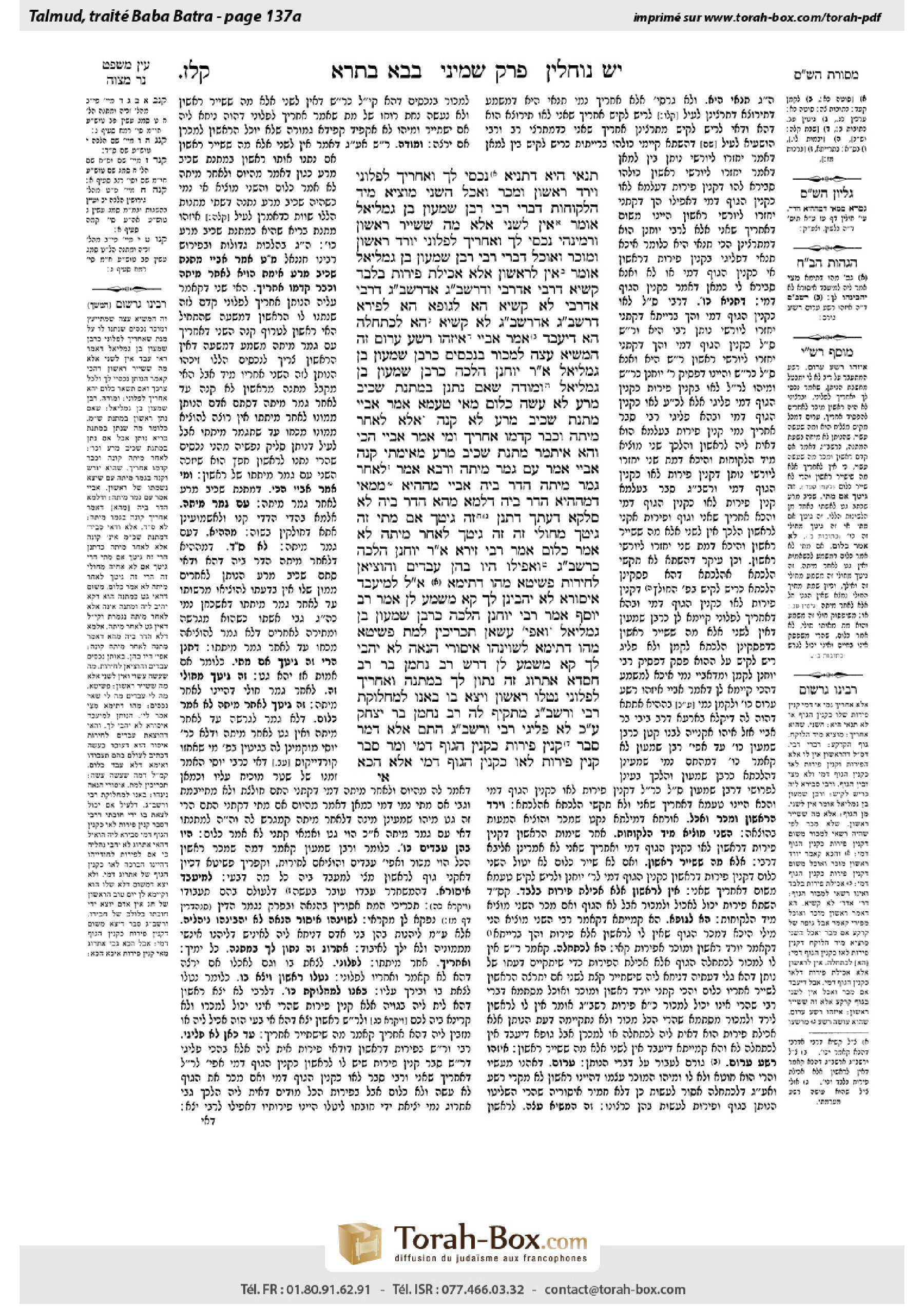
Bava Batra 137a: Talmud study for Daf Yomi
Study the Talmud for Daf Yomi with scanned pages, Hebrew text, English translations from Sefaria and AI-generated French translations.
Passage selection and English or AI-generated French translation are available where the scan has annotations. Daf Study is independent of Torah-Box and Sefaria.
Browse Bava Batra · בבא בתרא · All tractatesBava Batra 137a text and translations
This page of Bava Batra includes the Aramaic text, an English translation and an AI-generated French translation, alongside the scan above.
בבא בתרא קל״ז א · Aramaic and Hebrew text
תַּנָּאֵי הִיא. דְּתַנְיָא: ״נְכָסַי לְךָ וְאַחֲרֶיךָ לִפְלוֹנִי״, וְיָרַד רִאשׁוֹן וּמָכַר וְאָכַל – הַשֵּׁנִי מוֹצִיא מִיַּד הַלָּקוֹחוֹת, דִּבְרֵי רַבִּי. רַבָּן שִׁמְעוֹן בֶּן גַּמְלִיאֵל אוֹמֵר: אֵין לַשֵּׁנִי אֶלָּא מַה שֶּׁשִּׁיֵּיר רִאשׁוֹן.
וּרְמִינְהִי: ״נְכָסַי לְךָ וְאַחֲרֶיךָ לִפְלוֹנִי״ – יוֹרֵד רִאשׁוֹן וּמוֹכֵר וְאוֹכֵל, דִּבְרֵי רַבִּי. רַבָּן שִׁמְעוֹן בֶּן גַּמְלִיאֵל אוֹמֵר: אֵין לָרִאשׁוֹן אֶלָּא אֲכִילַת פֵּירוֹת בִּלְבַד.
קַשְׁיָא דְּרַבִּי אַדְּרַבִּי, וּדְרַבָּן שִׁמְעוֹן בֶּן גַּמְלִיאֵל אַדְּרַבָּן שִׁמְעוֹן בֶּן גַּמְלִיאֵל!
דְּרַבִּי אַדְּרַבִּי לָא קַשְׁיָא – הָא לְגוּפָא, הָא לְפֵירָא. דְּרַבָּן שִׁמְעוֹן בֶּן גַּמְלִיאֵל אַדְּרַבָּן שִׁמְעוֹן בֶּן גַּמְלִיאֵל לָא קַשְׁיָא – הָא לְכַתְּחִלָּה, הָא דִּיעֲבַד.
אָמַר אַבָּיֵי: אֵיזֶהוּ רָשָׁע עָרוּם? זֶה הַמַּשִּׂיא עֵצָה לִמְכּוֹר בִּנְכָסִים כְּרַבָּן שִׁמְעוֹן בֶּן גַּמְלִיאֵל.
אָמַר רַבִּי יוֹחָנָן: הֲלָכָה כְּרַבָּן שִׁמְעוֹן בֶּן גַּמְלִיאֵל. וּמוֹדֶה, שֶׁאִם נְתָנָן בְּמַתְּנַת שְׁכִיב מְרַע – לֹא עָשָׂה כְּלוּם.
מַאי טַעְמָא? אָמַר אַבָּיֵי: מַתְּנַת שְׁכִיב מְרַע לֹא קָנָה אֶלָּא לְאַחַר מִיתָה, וּכְבָר קְדָמוֹ ״אַחֲרֶיךָ״.
וּמִי אָמַר אַבָּיֵי הָכִי? וְהָא אִיתְּמַר: מַתְּנַת שְׁכִיב מְרַע, מֵאֵימָתַי קָנָה? אַבָּיֵי אָמַר: עִם גְּמַר מִיתָה, וְרָבָא אָמַר: לְאַחַר גְּמַר מִיתָה!
הָדַר בֵּיהּ אַבָּיֵי מֵהַהִיא. מִמַּאי דְּמֵהַהִיא הֲדַר בֵּיהּ? דִּלְמָא מֵהָא הֲדַר בֵּיהּ!
לָא סָלְקָא דַּעְתָּךְ, דִּתְנַן: ״זֶה גִּיטֵּךְ אִם מַתִּי״; ״זֶה גִּיטֵּךְ מֵחוֹלִי זֶה״; ״זֶה גִּיטֵּךְ לְאַחַר מִיתָה״ – לֹא אָמַר כְּלוּם.
אָמַר רַבִּי זֵירָא אָמַר רַבִּי יוֹחָנָן: הֲלָכָה כְּרַבָּן שִׁמְעוֹן בֶּן גַּמְלִיאֵל, וַאֲפִילּוּ הָיוּ בָּהֶן עֲבָדִים וְהוֹצִיאָן לְחֵירוּת.
פְּשִׁיטָא! מַהוּ דְּתֵימָא, אֲמַר לֵיהּ: לְמֶיעְבַּד אִיסּוּרָא לָא יָהֲבִינַן לָךְ; קָא מַשְׁמַע לַן.
אָמַר רַב יוֹסֵף אָמַר רַבִּי יוֹחָנָן: הֲלָכָה כְּרַבָּן שִׁמְעוֹן בֶּן גַּמְלִיאֵל, וַאֲפִילּוּ עֲשָׂאָן תַּכְרִיכִין לְמֵת. פְּשִׁיטָא! מַהוּ דְּתֵימָא: לְשַׁוּוֹיִנְהוּ אִיסּוּרֵי הֲנָאָה לָא יְהַבִי לָךְ; קָא מַשְׁמַע לַן.
דָּרַשׁ רַב נַחְמָן בַּר רַב חִסְדָּא: ״אֶתְרוֹג זֶה נָתוּן לְךָ בְּמַתָּנָה, וְאַחֲרֶיךָ לִפְלוֹנִי״, נְטָלוֹ רִאשׁוֹן וְיָצָא בּוֹ – בָּאנוּ לְמַחְלוֹקֶת רַבִּי וְרַבָּן שִׁמְעוֹן בֶּן גַּמְלִיאֵל.
מַתְקֵיף לַהּ רַב נַחְמָן בַּר יִצְחָק: עַד כָּאן לָא פְּלִיגִי רַבִּי וְרַבָּן שִׁמְעוֹן בֶּן גַּמְלִיאֵל הָתָם, אֶלָּא דְּמָר סָבַר: קִנְיַן פֵּירוֹת כְּקִנְיַן הַגּוּף דָּמֵי, וּמָר סָבַר: קִנְיַן פֵּירוֹת לָאו כְּקִנְיַן הַגּוּף דָּמֵי. אֶלָּא הָכָא,
Bava Batra 137a · English translation
The Gemara answers: The halakha in this case is a dispute between tanna’im; as it is taught in a baraita: With regard to one who said: My property is given to you, and after you, to so-and-so, and the first recipient entered the property and sold it and consumed the profits, the second recipient repossesses the property from the purchasers, as the property belongs to him after the death of the first recipient; this is the statement of Rabbi Yehuda HaNasi. Rabban Shimon ben Gamliel says: The second recipient receives only that which the first beneficiary left, since his sale is valid.
And the Gemara raises a contradiction from another baraita (Tosefta 8:4): If one says: My property is given to you, and after you, to so-and-so, the first one may enter the property and sell it and consume the profits; this is the statement of Rabbi Yehuda HaNasi. Rabban Shimon ben Gamliel says: The first one has only the right of consumption of the produce.
This statement of Rabbi Yehuda HaNasi is difficult as it is contradicted by the other statement of Rabbi Yehuda HaNasi, and this statement of Rabban Shimon ben Gamliel is difficult as it is contradicted by the other statement of Rabban Shimon ben Gamliel. Their opinions in the latter baraita seem to be the opposite of those in the former baraita.
The Gemara answers: The apparent contradiction between one statement of Rabbi Yehuda HaNasi and the other statement of Rabbi Yehuda HaNasi is not difficult; this ruling that the first one cannot sell it is referring to the property itself, and that ruling that he can sell it is referring to the produce. The apparent contradiction between one statement of Rabban Shimon ben Gamliel and the other statement of Rabban Shimon ben Gamliel is not difficult either; this statement, that the first has only the right to consume the produce, is referring to his rights ab initio, whereas that statement, that if he sold the property the second one gets nothing, is referring to the halakha after the fact.
Abaye says: Who is a cunning wicked person? This is one who provides advice to sell property in accordance with the ruling of Rabban Shimon ben Gamliel. Although Rabban Shimon ben Gamliel holds that the sale is valid, he does not permit one to do so ab initio, as that would deprive the second designated recipient of the property. Therefore, one who advises the first recipient to do so is considered a cunning wicked person.
Rabbi Yoḥanan says: The halakha is in accordance with the opinion of Rabban Shimon ben Gamliel; but Rabban Shimon ben Gamliel concedes that if the first recipient gave the property to another as the gift of a person on his deathbed, in which case no formal act of acquisition is required, he has done nothing; the second recipient can repossess the property from the one to whom it was given.
What is the reason? Abaye says: The recipient of the gift of a person on his deathbed acquires it only after the person’s death, and in this case, the acquisition of the recipient resulting from the statement of: After you, i.e., the second designated recipient, has already preceded the acquisition of the first one.
The Gemara asks: But did Abaye actually say this, that the gift of a person on his deathbed takes effect only after his death? But wasn’t it stated in an amoraic dispute concerning the matter: From when does the recipient of the gift of a person on his deathbed acquire it? Abaye says: With the completion of death, i.e., at the moment he dies; and Rava says: After the completion of death.
The Gemara answers: Abaye retracted that latter statement. The Gemara asks: From where is it known that he retracted that statement? Perhaps he retracted this, i.e., the statement that the recipient acquires it only after the person’s death, and his conclusion is that he acquires it at the moment of his death.
The Gemara answers: That possibility should not enter your mind, as we learned in a mishna (Gittin 72b): If a man on his deathbed says to his wife: This is your bill of divorce if I die, or: This is your bill of divorce if I die from this illness, or: This is your bill of divorce after I die, he has said nothing. The divorce does not take effect after his death. Evidently, when one gives instructions on his deathbed, his intention is for them to be effective after he dies.
Rabbi Zeira says that Rabbi Yoḥanan says: The halakha is in accordance with the opinion of Rabban Shimon ben Gamliel that if the first recipient sells the property, the sale is valid, and this is the halakha even if there were Canaanite slaves included in the property and the first recipient emancipated them.
The Gemara asks: Isn’t that obvious? The Gemara answers: Lest you say that the giver would have said to him: I did not give you my Canaanite slaves to transgress a prohibition, as it is prohibited to emancipate Canaanite slaves, Rabbi Yoḥanan teaches us that he has the legal right to do so.
Rav Yosef says that Rabbi Yoḥanan says: The halakha is in accordance with the opinion of Rabban Shimon ben Gamliel even if he made the gift into shrouds for a corpse. The Gemara asks: Isn’t that obvious? The Gemara answers: Lest you say that the giver would have said to him: I did not give you my possessions to render them into items from which deriving benefit is prohibited, but rather so that you may use and enjoy them, and Rabbi Yoḥanan teaches us that he may do so.
§ Rav Naḥman bar Rav Ḥisda taught: If one said to another: This etrog is given to you as a gift, and after you die, to so-and-so, and the first recipient then took it and fulfilled his obligation of taking the four species on the first day of Sukkot with it, when one is obligated to take species that belong to him, in this case, we have arrived at the dispute between Rabbi Yehuda HaNasi and Rabban Shimon ben Gamliel as to the nature of the ownership of the first recipient. According to Rabbi Yehuda HaNasi’s opinion that he cannot sell the etrog, it is not considered entirely his, and he does not fulfill his obligation by taking it. According to the opinion of Rabban Shimon ben Gamliel, who holds that he can sell it, he fulfills his obligation.
Rav Naḥman bar Yitzḥak objects to this statement, reasoning that Rabbi Yehuda HaNasi and Rabban Shimon ben Gamliel disagree only there, in the case of: After you, with regard to the nature of the recipient’s ownership; as one Sage, Rabban Shimon ben Gamliel, holds that ownership of the rights to use an item and the profits it engenders is considered like ownership of the item itself, and the other Sage, Rabbi Yehuda HaNasi, holds that ownership of the rights to use an item and the profits it engenders is not considered like ownership of the item itself. But here, with regard to the etrog,
Bava Batra 137a · Traduction française (IA)
Le Guemara répond : La halakha dans ce cas est un débat entre les tannaïm ; car il est enseigné dans une baraïta : Concernant celui qui dit : Mon bien est donné à toi, et après toi, à tel et tel, et le premier bénéficiaire entre dans le bien et le vend, et consomme les profits, le second bénéficiaire récupère le bien auprès des acheteurs, car le bien appartient à lui après la mort du premier bénéficiaire ; c'est la déclaration de Rabbi Yéhuda Hanassi. Rabban Shimon ben Gamliel dit : Le second bénéficiaire reçoit seulement ce que le premier bénéficiaire a laissé, car sa vente est valide.
Et le Guemara soulève une contradiction à partir d'une autre baraïta (Tosefta 8:4) : Si l'on dit : Mon bien est donné à toi, et après toi, à tel et tel, le premier peut entrer dans le bien et le vendre et consommer les profits ; c'est la déclaration de Rabbi Yéhuda Hanassi. Rabban Shimon ben Gamliel dit : Le premier a seulement le droit de consommer les produits.
Cette déclaration de Rabbi Yéhuda Hanassi est difficile, car elle est contredite par une autre déclaration de Rabbi Yéhuda Hanassi, et cette déclaration de Rabban Shimon ben Gamliel est difficile, car elle est contredite par une autre déclaration de Rabban Shimon ben Gamliel. Leurs opinions dans la baraïta suivante semblent être l'opposé de celles dans la baraïta précédente.
Le Guemara répond : La contradiction apparente entre une déclaration de Rabbi Yéhuda Hanassi et l'autre déclaration de Rabbi Yéhuda Hanassi n'est pas difficile ; cette décision selon laquelle le premier ne peut pas le vendre fait référence au bien lui-même, et cette décision selon laquelle il peut le vendre fait référence aux produits. La contradiction apparente entre une déclaration de Rabban Shimon ben Gamliel et l'autre déclaration de Rabban Shimon ben Gamliel n'est pas difficile non plus ; cette déclaration, selon laquelle le premier a seulement le droit de consommer les produits, fait référence à ses droits initialement, tandis que cette déclaration, selon laquelle s'il a vendu le bien le second n'obtient rien, fait référence à la halakha après coup.
Abaye dit : Qui est un homme malveillant rusé ? C'est celui qui conseille de vendre un bien conformément à la décision de Rabban Shimon ben Gamliel. Bien que Rabban Shimon ben Gamliel considère que la vente est valide, il ne permet pas de la faire initialement, car cela dépriverait du bien le second bénéficiaire désigné. Ainsi, celui qui conseille au premier bénéficiaire de le faire est considéré comme un homme malveillant rusé.
Rabbi Yoḥanan dit : La halakha suit l'opinion de Rabban Shimon ben Gamliel ; mais Rabban Shimon ben Gamliel reconnaît que si le premier bénéficiaire a donné le bien à un autre comme don d'une personne sur son lit de mort, dans le cas où aucun acte formel d'acquisition n'est requis, il a fait rien ; le second bénéficiaire peut récupérer le bien auprès de celui à qui il a été donné.
Quelle est la raison ? Abaye dit : Le bénéficiaire du don d'une personne sur son lit de mort acquiert le bien seulement après la mort de la personne, et dans ce cas, l'acquisition du bénéficiaire résultant de la déclaration : Après toi, c'est-à-dire le second bénéficiaire désigné, a déjà précédé l'acquisition du premier.
Le Guemara pose la question : Mais Abaye a-t-il vraiment dit cela, que le don d'une personne sur son lit de mort prend effet seulement après sa mort ? Mais n'était-il pas dit dans un débat entre les amoraim concernant cette question : À partir de quand l'acquéreur du don d'une personne sur son lit de mort acquiert-il le bien ? Abaye dit : À la fin de la mort, c'est-à-dire au moment où il meurt ; et Rava dit : Après la fin de la mort.
Le Guemara répond : Abaye a rétracté cette déclaration ultérieure. Le Guemara pose la question : D'où sait-on qu'il a rétracté cette déclaration ? Peut-être qu'il a rétracté cela, c'est-à-dire la déclaration selon laquelle l'acquéreur acquiert le bien seulement après la mort de la personne, et sa conclusion est qu'il acquiert le bien au moment de sa mort.
Le Guemara répond : Cette possibilité ne devrait pas entrer dans votre esprit, car nous avons appris dans une mitsva (Gittin 72b) : Si un homme sur son lit de mort dit à sa femme : C'est ton divorce si je meurs, ou : C'est ton divorce si je meurs de cette maladie, ou : C'est ton divorce après que je meure, il a dit rien. Le divorce ne prend effet après sa mort. Évidemment, lorsqu'on donne des instructions sur son lit de mort, son intention est que celles-ci soient efficaces après sa mort.
Rabbi Zéira dit que Rabbi Yoḥanan dit : La halakha suit l'opinion de Rabban Shimon ben Gamliel que si le premier bénéficiaire vend le bien, la vente est valide, et c'est la halakha même si des esclaves cananéens étaient inclus dans le bien et que le premier bénéficiaire les a libérés.
Le Guemara pose la question : N'est-ce pas évident ? Le Guemara répond : Pour éviter que vous disiez que le donneur aurait dit au premier bénéficiaire : Je ne t'ai pas donné mes esclaves cananéens pour transgresser une interdiction, car il est interdit de libérer des esclaves cananéens, Rabbi Yoḥanan nous enseigne que le premier bénéficiaire a le droit légal de le faire.
Rav Yosef dit que Rabbi Yoḥanan dit : La halakha suit l'opinion de Rabban Shimon ben Gamliel même s'il a fait le don pour des linceuls d'un cadavre. Le Guemara pose la question : N'est-ce pas évident ? Le Guemara répond : Pour éviter que vous disiez que le donneur aurait dit au bénéficiaire : Je ne t'ai pas donné mes biens pour les rendre en objets dont l'usage est interdit, mais plutôt afin que tu les uses et en profites, et Rabbi Yoḥanan nous enseigne que cela est permis.
§ Rav Naḥman bar Rav Ḥisda enseigna : Si l'on dit à un autre : Cet etrog est donné à toi en cadeau, et après que tu aies disparu, à tel et tel, et que le premier destinataire l'ait pris et rempli ainsi son obligation de prendre les quatre espèces le premier jour du Tabernacle avec, lorsqu'on est tenu de prendre des espèces qui lui appartiennent, dans ce cas, nous sommes tombés dans le débat entre Rabbi Yehuda HaNasi et Rabban Shimon ben Gamliel sur la nature de la propriété du premier destinataire. Selon l'opinion de Rabbi Yehuda HaNasi, qui considère qu'il ne peut pas vendre l'etrog, il n'est pas considéré comme entièrement à lui, et il ne remplit pas son obligation en le prenant. Selon l'opinion de Rabban Shimon ben Gamliel, qui considère qu'il peut le vendre, il remplit son obligation.
Rav Naḥman bar Yitzḥak s'oppose à cette déclaration, en raisonnant que Rabbi Yehuda HaNasi et Rabban Shimon ben Gamliel ne s'opposent qu'à ce cas précis, concernant la nature de la propriété du destinataire ; l'un des Sages, Rabban Shimon ben Gamliel, considère que la propriété des droits d'utilisation d'un objet et des profits qu'il génère est considérée comme la propriété de l'objet lui-même, et l'autre Sage, Rabbi Yehuda HaNasi, considère que la propriété des droits d'utilisation d'un objet et des profits qu'il génère n'est pas considérée comme la propriété de l'objet lui-même. Mais ici, concernant l'etrog,
Traduction française générée par IA à partir de l’édition anglaise de Sefaria. Vérifie toujours un passage avec le texte source.
Text from Sefaria: William Davidson Edition - Vocalized Aramaic (CC BY NC); William Davidson Edition - English (CC BY NC).