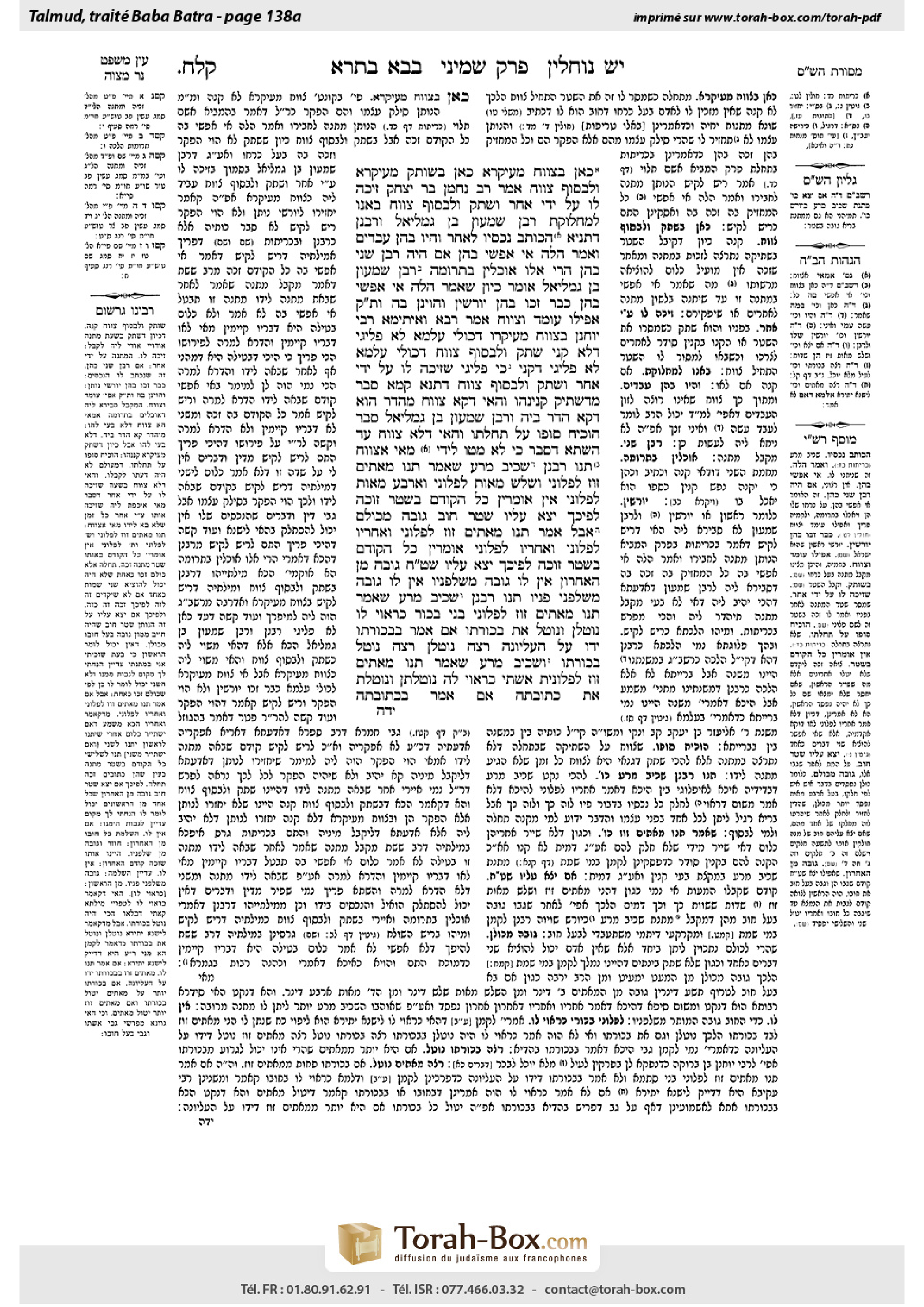
Bava Batra 138a: Talmud study for Daf Yomi
Study the Talmud for Daf Yomi with scanned pages, Hebrew text, English translations from Sefaria and AI-generated French translations.
Passage selection and English or AI-generated French translation are available where the scan has annotations. Daf Study is independent of Torah-Box and Sefaria.
Browse Bava Batra · בבא בתרא · All tractatesBava Batra 138a text and translations
This page of Bava Batra includes the Aramaic text, an English translation and an AI-generated French translation, alongside the scan above.
בבא בתרא קל״ח א · Aramaic and Hebrew text
כָּאן בְּצוֹוֵחַ מֵעִיקָּרָא, כָּאן בְּשׁוֹתֵק מֵעִיקָּרָא וּלְבַסּוֹף צוֹוֵחַ.
אָמַר רַב נַחְמָן בַּר יִצְחָק: זִיכָּה לוֹ עַל יְדֵי אַחֵר, וְשָׁתַק וּלְבַסּוֹף צָוַוח – בָּאנוּ לְמַחְלוֹקֶת רַבָּן שִׁמְעוֹן בֶּן גַּמְלִיאֵל וְרַבָּנַן,
דְּתַנְיָא: הַכּוֹתֵב נְכָסָיו לְאַחֵר, וְהָיוּ בָּהֶן עֲבָדִים, וְאָמַר הַלָּה: ״אִי אֶפְשִׁי בָּהֶן״; אִם הָיָה רַבָּן שֵׁנִי כֹּהֵן – הֲרֵי אֵלּוּ אוֹכְלִין בִּתְרוּמָה. רַבָּן שִׁמְעוֹן בֶּן גַּמְלִיאֵל אוֹמֵר: כֵּיוָן שֶׁאָמַר הַלָּה: ״אִי אֶפְשִׁי בָּהֶן״ – כְּבָר זָכוּ בָּהֶן יוֹרְשִׁין.
וְהָוֵינַן בַּהּ: וְתַנָּא קַמָּא – אֲפִילּוּ עוֹמֵד וְצוֹוֵחַ?!
אָמַר רָבָא, וְאִיתֵּימָא רַבִּי יוֹחָנָן: בְּצוֹוֵחַ מֵעִיקָּרוֹ – דְּכוּלֵּי עָלְמָא לָא פְּלִיגִי דְּלָא קָנֵי. שָׁתַק וּלְבַסּוֹף צָוַוח – דְּכוּלֵּי עָלְמָא לָא פְּלִיגִי דְּקָנֵי.
כִּי פְּלִיגִי – שֶׁזִּיכָּה לוֹ עַל יְדֵי אַחֵר וְשָׁתַק, וּלְבַסּוֹף צָוַוח; דְּתַנָּא קַמָּא סָבַר: מִדִּשְׁתֵיק – קְנִינְהוּ; וְהַאי דְּקָא צָוַוח – מִהְדָּר הוּא דְּקָא הָדַר בֵּיהּ.
וְרַבָּן שִׁמְעוֹן בֶּן גַּמְלִיאֵל סָבַר: הוֹכִיחַ סוֹפוֹ עַל תְּחִלָּתוֹ; וְהַאי דְּלָא צָוַוח עַד הַשְׁתָּא – דְּסָבַר: כִּי לָא מָטוּ לִידִי, מַאי אֶצְוַוח.
תָּנוּ רַבָּנַן, שְׁכִיב מְרַע שֶׁאָמַר: ״תְּנוּ מָאתַיִם זוּז לִפְלוֹנִי, וּשְׁלֹשׁ מֵאוֹת לִפְלוֹנִי, וְאַרְבַּע מֵאוֹת לִפְלוֹנִי״ – אֵין אוֹמְרִין: כׇּל הַקּוֹדֵם בִּשְׁטָר, זוֹכֶה. לְפִיכָךְ, יָצָא עָלָיו שְׁטַר חוֹב – גּוֹבֶה מִכּוּלָּם.
אֲבָל אָמַר: ״תְּנוּ מָאתַיִם זוּז לִפְלוֹנִי, וְאַחֲרָיו לִפְלוֹנִי, וְאַחֲרָיו לִפְלוֹנִי״ – אוֹמְרִין: כׇּל הַקּוֹדֵם בַּשְּׁטָר, זוֹכֶה. לְפִיכָךְ, יָצָא עָלָיו שְׁטַר חוֹב – גּוֹבֶה מִן הָאַחֲרוֹן. אֵין לוֹ – גּוֹבֶה מִשֶּׁלְּפָנָיו. אֵין לוֹ – גּוֹבֶה מִשֶּׁלִּפְנֵי פָנָיו.
תָּנוּ רַבָּנַן, שְׁכִיב מְרַע שֶׁאָמַר: ״תְּנוּ מָאתַיִם זוּז לִפְלוֹנִי בְּנִי בְּכוֹר, כָּרָאוּי לוֹ״ – נוֹטְלָן, וְנוֹטֵל אֶת בְּכוֹרָתוֹ. אִם אָמַר: ״בִּבְכוֹרָתוֹ״ – יָדוֹ עַל הָעֶלְיוֹנָה; רָצָה – נוֹטְלָן, רָצָה – נוֹטֵל בְּכוֹרָתוֹ.
וּשְׁכִיב מְרַע שֶׁאָמַר: ״תְּנוּ מָאתַיִם זוּז לִפְלוֹנִית אִשְׁתִּי, כָּרָאוּי לָהּ״ – נוֹטַלְתָּן, וְנוֹטֶלֶת אֶת כְּתוּבָּתָהּ. אִם אָמַר ״בִּכְתוּבָּתָהּ״ –
Bava Batra 138a · English translation
Here, in Rabbi Yoḥanan’s statement, it is a case where he is shouting in protest at the outset. As soon as he is given the deed of gift he states that he does not want it. In this case, he does not receive the property. There, in Shmuel’s statement, it is a case where he is initially silent when he receives the deed of gift, and is ultimately shouting in protest that he does not want it. In this case he acquires the gift before he protests, so it is his.
Rav Naḥman bar Yitzḥak says that if the owner transfers ownership of the property to him through another person, who performs an act of acquisition for this other party in his presence, and he was initially silent, i.e., when the act of acquisition is performed, but ultimately shouted in protest when the property is actually given to him, we have arrived at the dispute between Rabban Shimon ben Gamliel and the Rabbis.
This is as it is taught in a baraita (Tosefta 8:1): If one wrote a document granting his property to another, and there were slaves among his property, and the other person said: I do not want them, if their second master, i.e., the recipient, was a priest, they partake of teruma, the portion of the produce designated for the priest, as his protest is ignored. Rabban Shimon ben Gamliel says: Once the other person said: I do not want them, the giver or his heirs have already acquired them, and they are the slaves’ owners.
And we discussed the baraita: And does the first tanna hold that he acquires them even if he is standing and shouting in protest that he does not want them? That is not reasonable.
Rava says, and some say it was Rabbi Yoḥanan who says: In a case where he is shouting in protest at the outset, when he is given the gift, everyone agrees that he did not acquire them. In a case where he was silent at the time and ultimately shouted in protest, everyone agrees that he acquired them.
When they disagree it is in a case when he transfers ownership to him through another person, and the recipient was there and was silent, and ultimately, when he actually receives the slaves, he shouted in protest. As the first tanna holds that once he was initially silent, he acquired them, and the fact that he is shouting indicates that he is retracting his initial acceptance of the gift. His acquisition cannot be canceled in this manner. If he does not want to own the slaves, he can sell them, give them away, or emancipate them.
And Rabban Shimon ben Gamliel holds that his ultimate actions prove the nature of his initial intent; he never intended to acquire the slaves. And the reason that he did not shout in protest until now is that he reasoned: As long as they did not enter my possession, to what end will I shout?
§ The Sages taught (Tosefta 9:6): If a person on his deathbed said: Give two hundred dinars to so-and-so, and three hundred to so-and-so, and four hundred to so-and-so, in this case one does not say that whoever appears first in the deed acquires his money first. Therefore, if a promissory note emerged against the one who gave the gifts, and it becomes clear that the money given was pledged to a creditor, then the creditor collects from all of them.
But if a person on his deathbed said: Give two hundred dinars to so-and-so, and after him, to so-and-so, and after him, to so-and-so, then one says: Anyone who appears first in the deed gains. Therefore, if a promissory note emerged against the giver, the creditor first collects from the last one of the recipients. If he does not have enough to repay the debt, he collects from the previous recipient. If he does not have enough to repay the debt, he collects from the recipient listed before the previous recipient.
The Sages taught in a baraita: If there was a person on his deathbed who said: Give two hundred dinars to so-and-so, my firstborn son, as is appropriate for him, the firstborn takes the two hundred dinars and takes his portion as a firstborn as well. If he said: Give my firstborn son two hundred dinars for his portion as a firstborn, he does not receive both, but he has the advantage; if he wants, he takes the two hundred dinars, and if he wants, he takes his portion as a firstborn.
The baraita continues: And similarly, if there was a person on his deathbed who said: Give two hundred dinars to so-and-so, my wife, as is appropriate for her, she takes the two hundred dinars and takes payment of her marriage contract as well. If he said: Give her two hundred dinars as payment for her marriage contract,
Bava Batra 138a · Traduction française (IA)
Ici, dans l'affirmation du Rabbi Yoḥanan, il s'agit d'un cas où il crie en protestation dès le début. Dès qu'il est donné le document de don, il déclare qu'il ne veut pas. Dans ce cas, il ne reçoit pas la propriété. Là, dans l'affirmation de Shmuel, il s'agit d'un cas où il est silencieux lorsqu'il reçoit le document de don, et finit par crier en protestation qu'il ne veut pas. Dans ce cas, il acquiert le don avant de protester, donc c'est à lui.
Rav Naḥman bar Yitzḥak dit que si l'propriétaire transfère la propriété à lui via une autre personne, qui effectue un acte d'acquisition pour ce tiers devant lui, et s'il était initialement silencieux, c'est-à-dire lors de l'acte d'acquisition, mais finit par crier en protestation lorsqu'on lui donne effectivement la propriété, nous arrivons au débat entre Rabban Shimon ben Gamliel et les Sages.
C'est comme il est enseigné dans une baraïta (Tosefta 8:1) : Si l'on a écrit un document transférant sa propriété à un autre, et qu'il y avait des esclaves parmi sa propriété, et que la personne disait : Je ne veux pas les avoir, si leur deuxième maître, c'est-à-dire le destinataire, était un prêtre, ils partagent la terouma, la part des produits réservée au prêtre, comme sa protestation est ignorée. Rabban Shimon ben Gamliel dit : Dès que la personne disait : Je ne veux pas les avoir, le donneur ou ses héritiers ont déjà acquis les esclaves, et ils sont les maîtres des esclaves.
Et nous avons discuté de la baraïta : Et le premier tanna maintient-il qu'il les acquiert même s'il est debout et crie en protestation qu'il ne veut pas ? Cela n'est pas raisonnable.
Rava dit, et certains disent que c'était Rabbi Yoḥanan qui a dit : Dans un cas où il crie en protestation dès le début, lorsqu'il est donné le don, tout le monde convient qu'il n'a pas acquis. Dans un case où il était silencieux à l'époque et finit par crier en protestation, tout le monde convient qu'il les a acquis.
Quand ils divergent, c'est dans un cas où il transfère la propriété à travers une autre personne, et le destinataire était là et était silencieux, et finalement, lorsqu'il reçoit effectivement les esclaves, il crie en protestation. Comme le premier tanna maintient que dès qu'il était initialement silencieux, il les a acquis, et le fait qu'il crie indique qu'il rétracte son acceptation initiale du don. Son acquisition ne peut pas être annulée ainsi. Si il ne veut pas posséder les esclaves, il peut les vendre, les donner ou les libérer.
Et Rabban Shimon ben Gamliel affirme que ses actions ultérieures démontrent la nature de son intention initiale ; il n'avait pas l'intention d'acquérir les esclaves. Et la raison pour laquelle il n'a pas crié en protestation jusqu'à présent est qu'il raisonnait : tant qu'ils n'ont pas entré dans ma possession, à quel titre crierais-je ?
§ Les Sages ont enseigné (Tosefta 9:6) : Si un homme sur son lit de mort dit : Donne deux cents dinars à tel et tel, et trois cents à tel et tel, et quatre cents à tel et tel, dans ce cas, on ne dit pas que celui qui apparaît d'abord dans le document acquiert d'abord son argent. Donc, si un billet de créance est apparu contre celui qui a donné les dons, et il est clair que l'argent donné a été mis à la disposition d'un créancier, alors le créancier récupère de tous.
Mais si un homme sur son lit de mort dit : Donne deux cents dinars à tel et tel, et après lui, à tel et tel, et après lui, à tel et tel, alors on dit : celui qui apparaît d'abord dans le document a priorité. Donc, si un billet de créance est apparu contre le donneur, le créancier récupère d'abord du dernier des destinataires. Si il n'a pas assez pour rembourser la dette, il récupère du précédent destinataire. Si il n'a pas assez pour rembourser la dette, il récupère du destinataire mentionné avant le précédent.
Les Sages ont enseigné dans une baraïta : Si un homme sur son lit de mort a dit : Donne deux cents dinars à tel et tel, mon premier fils, comme il convient à lui, le premier fils prend les deux cents dinars et reçoit sa part comme premier fils. Si il a dit : Donne à mon premier fils deux cents dinars pour sa part comme premier fils, il ne reçoit pas les deux, mais il a l'avantage ; s'il veut, il prend les deux cents dinars, et s'il veut, il prend sa part comme premier fils.
La baraïta continue : De même, si un homme sur son lit de mort a dit : Donne deux cents dinars à tel et tel, mon épouse, comme il convient à elle, elle prend les deux cents dinars et reçoit le paiement de son mariage. Si il a dit : Donne-lui deux cents dinars comme paiement de son mariage,
Traduction française générée par IA à partir de l’édition anglaise de Sefaria. Vérifie toujours un passage avec le texte source.
Text from Sefaria: William Davidson Edition - Vocalized Aramaic (CC BY NC); William Davidson Edition - English (CC BY NC).