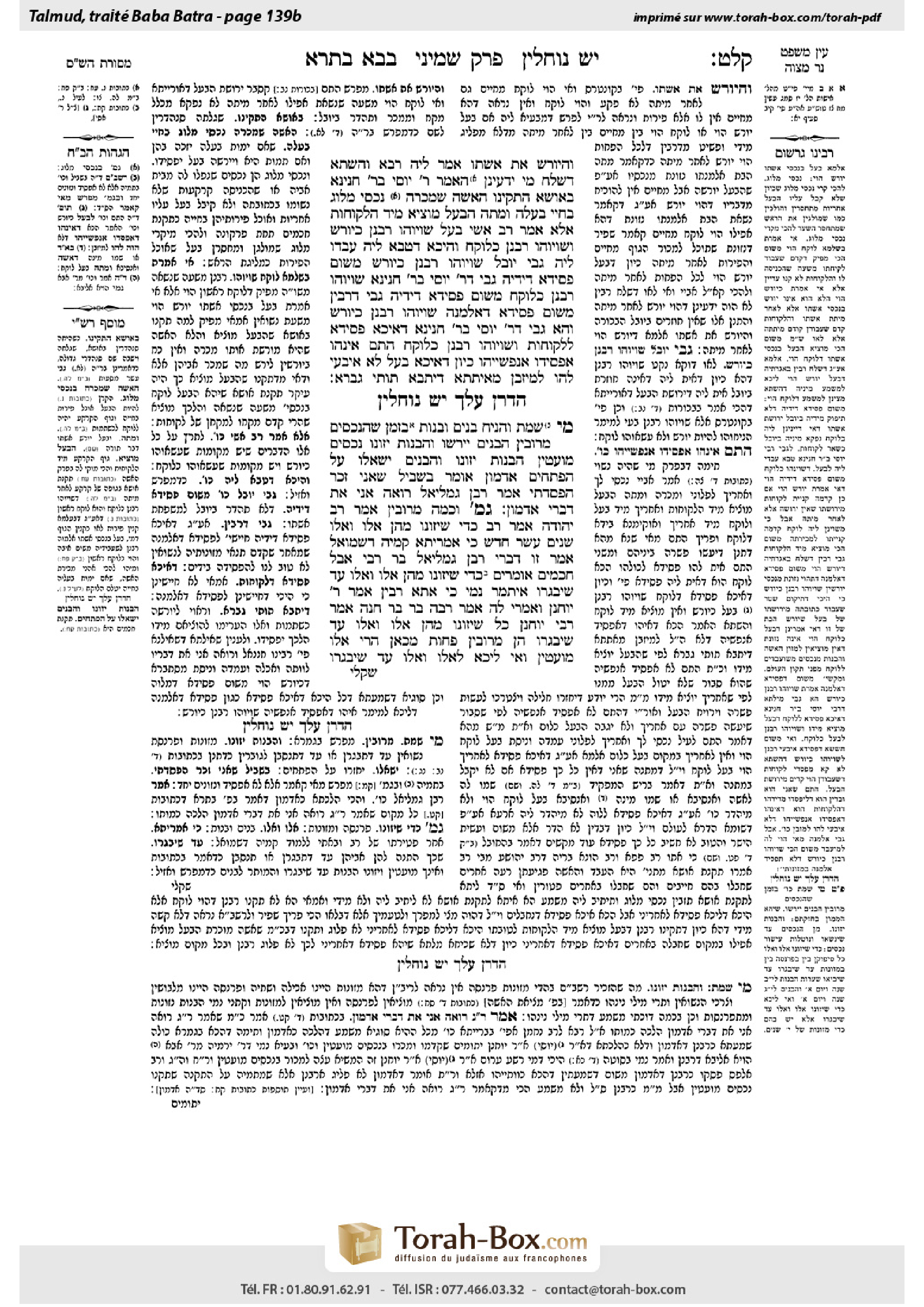
Bava Batra 139b: Talmud study for Daf Yomi
Study the Talmud for Daf Yomi with scanned pages, Hebrew text, English translations from Sefaria and AI-generated French translations.
Passage selection and English or AI-generated French translation are available where the scan has annotations. Daf Study is independent of Torah-Box and Sefaria.
Browse Bava Batra · בבא בתרא · All tractatesBava Batra 139b text and translations
This page of Bava Batra includes the Aramaic text, an English translation and an AI-generated French translation, alongside the scan above.
בבא בתרא קל״ט ב · Aramaic and Hebrew text
וְהַיּוֹרֵשׁ אֶת אִשְׁתּוֹ!
אֲמַר לֵיהּ רָבָא: וְהַשְׁתָּא דִּשְׁלַח, מִי יָדְעִינַן?! הָאָמַר רַבִּי יוֹסֵי בְּרַבִּי חֲנִינָא: בְּאוּשָׁא הִתְקִינוּ, הָאִשָּׁה שֶׁמָּכְרָה נִכְסֵי מְלוֹג בְּחַיֵּי בַּעְלָהּ, וּמֵתָה – הַבַּעַל מוֹצִיא מִיַּד הַלָּקוֹחוֹת.
אֶלָּא אָמַר רַב אָשֵׁי: בַּעַל – שַׁוְּיוּהוּ רַבָּנַן כְּיוֹרֵשׁ, וְשַׁוְּיוּהוּ רַבָּנַן כְּלוֹקֵחַ, וְהֵיכָא דְּטָבָא לֵיהּ עֲבַדוּ לֵיהּ; גַּבֵּי יוֹבֵל – שַׁוְּיוּהוּ רַבָּנַן כְּיוֹרֵשׁ, מִשּׁוּם פְּסֵידָא דִידֵיהּ. גַּבֵּי דְּרַבִּי יוֹסֵי בְּרַבִּי חֲנִינָא – שַׁוְּיוּהוּ רַבָּנַן כְּלוֹקֵחַ, מִשּׁוּם פְּסֵידָא דִידֵיהּ. גַּבֵּי דְּרָבִין – מִשּׁוּם פְּסֵידָא דְּאַלְמָנָה, שַׁוְּיוּהוּ רַבָּנַן כְּיוֹרֵשׁ.
וְהָא גַּבֵּי דְּרַבִּי יוֹסֵי בְּרַבִּי חֲנִינָא, דְּאִיכָּא פְּסֵידָא לְלָקוֹחוֹת, וְשַׁוְּיוּהוּ רַבָּנַן כְּלוֹקֵחַ!
הָתָם, אִינְהוּ אַפְסִידוּ אַנַּפְשַׁיְיהוּ – כֵּיוָן דְּאִיכָּא בַּעַל, לָא אִיבְּעִי לְהוּ לְמִיזְבַּן מֵאִיתְּתָא דְּיָתְבָא תּוּתֵי גַּבְרָא.
הֲדַרַן עֲלָךְ יֵשׁ נוֹחֲלִין
מִי שֶׁמֵּת וְהִנִּיחַ בָּנִים וּבָנוֹת; בִּזְמַן שֶׁהַנְּכָסִים מְרוּבִּין – הַבָּנִים יִירְשׁוּ, וְהַבָּנוֹת יִזּוֹנוּ. נְכָסִים מוּעָטִין – הַבָּנוֹת יִזּוֹנוּ, וְהַבָּנִים יִשְׁאֲלוּ עַל הַפְּתָחִים. אַדְמוֹן אוֹמֵר: בִּשְׁבִיל שֶׁאֲנִי זָכָר, הִפְסַדְתִּי?! אָמַר רַבָּן גַּמְלִיאֵל: רוֹאֶה אֲנִי אֶת דִּבְרֵי אַדְמוֹן.
גְּמָ׳ וְכַמָּה מְרוּבִּין? אָמַר רַב יְהוּדָה אָמַר רַב: כְּדֵי שֶׁיִּזּוֹנוּ מֵהֶן אֵלּוּ וָאֵלּוּ שְׁנֵים עָשָׂר חֹדֶשׁ. כִּי אַמְרִיתָא קַמֵּיהּ דִּשְׁמוּאֵל, אָמַר: זוֹ דִּבְרֵי רַבָּן גַּמְלִיאֵל בַּר רַבִּי, אֲבָל חֲכָמִים אוֹמְרִים: כְּדֵי שֶׁיִּזּוֹנוּ מֵהֶן אֵלּוּ וָאֵלּוּ עַד שֶׁיִּבְגְּרוּ.
אִיתְּמַר נָמֵי: כִּי אֲתָא רָבִין אָמַר רַבִּי יוֹחָנָן, וְאָמְרִי לַהּ אָמַר רַבָּה בַּר בַּר חָנָה אָמַר רַבִּי יוֹחָנָן: כֹּל שֶׁיִּזּוֹנוּ מֵהֶן אֵלּוּ וָאֵלּוּ עַד שֶׁיִּבְגְּרוּ – הֵן מְרוּבִּין; פָּחוֹת מִכָּאן – הֲרֵי אֵלּוּ מוּעָטִין.
וְאִי לֵיכָּא לְאֵלּוּ וָאֵלּוּ עַד שֶׁיִּבְגְּרוּ,
Bava Batra 139b · English translation
and one who inherits the property of his wife after her death, i.e., the property is not returned to her family. Evidently, the husband does not have the status of a purchaser, as a purchaser must return the property to its original owner in the Jubilee Year.
Rava said to him: And now that Ravin sent the letter, do we in fact know that the husband has the status of an heir? Doesn’t Rabbi Yosei, son of Rabbi Ḥanina, say: In Usha they instituted an ordinance that in the case of a woman who sold her usufruct property, i.e., property that she alone owns and her husband benefits only from the profits, in her husband’s lifetime and then died, the husband repossesses it from the purchasers? Apparently the husband’s status is that of a purchaser, as a purchaser can appropriate his purchase from a later purchaser, whereas an heir does not inherit property that the person sold before he died.
Rather, Rav Ashi says that the Sages equated the husband with an heir, and the Sages equated him with a purchaser. And they deemed him as whichever is better for him, based on the circumstances of the case. With regard to the Jubilee Year, the Sages equated him with an heir, due to his potential loss were he to be equated with a purchaser, as he would be obligated to return the property to his wife’s heirs. With regard to the case of Rabbi Yosei, son of Rabbi Ḥanina, where the wife sold the property, the Sages equated him with a purchaser, due to his potential loss were he to be equated with an heir. With regard to Ravin’s halakha, concerning the sustenance of the husband’s father-in-law’s widow, due to the potential loss of the widow, the Sages equated him with an heir.
The Gemara asks: But with regard to the case of Rabbi Yosei, son of Rabbi Ḥanina, there is a loss to the purchasers, from whom the husband appropriates the property, and nevertheless, the Sages equated him with a purchaser.
The Gemara answers: There, the purchasers caused their own loss. Since they knew that there is a husband, they should not have purchased property from a wife living under the authority of her husband, removing it from the husband and his heirs.
MISHNA: In the case of one who died and left behind both sons and daughters, when the estate is large the sons inherit the estate and the daughters are provided with sustenance from it according to the stipulations of the deceased’s marriage contract with their mother. With regard to a small estate, which is insufficient to provide for both the sons and the daughters, the daughters are provided with sustenance. And if the sons, who receive in this case neither inheritance nor sustenance, have no other means with which to support themselves, they go and request charity at the doors. Admon says, rhetorically: I lost out just because I am male? Rather, he holds that the sons also receive sustenance. Rabban Gamliel said: I see as correct the statement of Admon.
GEMARA: The Gemara asks: And how large must the estate be in order for the sons to inherit it? Rav Yehuda says that Rav says: Large enough to provide sustenance from it for both these, the sons, and those, the daughters, for twelve months. Rav Yehuda continues: When I said this ruling before Shmuel, he said: That is the statement of Rabban Gamliel bar Rabbi Yehuda HaNasi. But the Rabbis say: The estate must be large enough to provide sustenance from it for both these and those until the time that the daughters reach their majority, at age twelve and six months, as indicated in the marriage contract.
This was also stated by other amora’im: When Ravin came from Eretz Yisrael, he said that Rabbi Yoḥanan says, and some say it was Rabba bar bar Ḥana who says that Rabbi Yoḥanan says: Any estate that is large enough to provide sustenance from it for both these and those until the time that the daughters reach their majority is a large estate; less than that, this is a small estate.
The Gemara asks: And if there is not enough to provide for these and those until the daughters reach their majority,
Bava Batra 139b · Traduction française (IA)
et celui qui hérite des biens de sa femme après sa mort, c'est-à-dire que les biens ne sont pas restitués à sa famille. Évidemment, le mari n'a pas le statut d'un acheteur, car un acheteur doit restituer les biens à leur propriétaire originel lors de l'année sabbatique.
Rava dit à lui : Et maintenant que Rabin a envoyé la lettre, savons-nous en effet que le mari a le statut d'héritier ? N'est-ce pas Rabbi Yosei, fils de Rabbi Ḥanina, qui dit : À Usha, ils ont institué une ordonnance selon laquelle, dans le cas d'une femme qui vend son droit de jouissance, c'est-à-dire des biens qu'elle possède seule et dont son mari bénéficie uniquement des profits, pendant sa vie et ensuite meurt, le mari récupère les biens auprès des acheteurs ? Apparemment, le statut du mari est celui d'un acheteur, car un acheteur peut s'approprier son achat d'un acheteur ultérieur, tandis qu'un héritier ne hérite pas de biens vendus par la personne avant sa mort.
Plutôt, Rav Ashi dit que les Sages ont équivalé le mari à un héritier, et les Sages ont équivalé lui à un acheteur. Et ils ont jugé qu'il soit celui qui est le plus avantageux pour lui, selon les circonstances du cas. En ce qui concerne l'année sabbatique, les Sages ont équivalé lui à un héritier, en raison de son potentiel de perte s'il était équivalé à un acheteur, car il serait tenu de restituer les biens à ses héritiers. En ce qui concerne le cas de Rabbi Yosei, fils de Rabbi Ḥanina, où la femme a vendu les biens, les Sages ont équivalé lui à un acheteur, en raison de son potentiel de perte s'il était équivalé à un héritier. En ce qui concerne la halakha de Rabin, concernant la subsistance de la veuve du père du mari, en raison du potentiel de perte de la veuve, les Sages ont équivalé lui à un héritier.
La Guemara pose la question : Mais en ce qui concerne le cas de Rabbi Yosei, fils de Rabbi Ḥanina, il y a une perte pour les acheteurs, auprès desquels le mari s'approprie les biens, et pourtant, les Sages l'ont équivalé à un acheteur.
La Guemara répond : Là, les acheteurs ont causé leur propre perte. Puisqu'ils savaient qu'il y avait un mari, ils ne devraient pas avoir acheté des biens d'une femme sous la tutelle de son mari, en les retirant du mari et de ses héritiers.
MICHNA : Dans le cas d'une personne décédée laissant derrière elle des fils et des filles, lorsque l'actif est important, les fils héritent de l'actif et les filles sont fournies en subsistance à partir de celui-ci selon les stipulations du contrat de mariage de la décédée avec leur mère. En ce qui concerne un actif modeste, insuffisant pour subvenir aux besoins des fils et des filles, les filles sont fournies en subsistance. Et si les fils, qui n'ont ni héritage ni subsistance, n'ont aucun autre moyen de subsistance, ils vont demander de l'aide aux portes. Admon dit, rhétoriquement : J'ai perdu juste parce que je suis un homme ? Plutôt, il affirme que les fils reçoivent également de la subsistance. Rabban Gamliel a dit : Je vois que la déclaration d'Admon est correcte.
GUEMARA : La Guemara pose la question : Et de quelle taille doit être l'actif pour que les fils héritent de celui-ci ? Rav Yehuda dit que Rav dit : Assez important pour fournir une subsistance à la fois aux fils et aux filles pendant douze mois. Rav Yehuda continue : Lorsque j'ai dit cette décision à Shmuel, il a dit : C'est la déclaration de Rabban Gamliel bar Rabbi Yehuda HaNasi. Mais les Rabbins disent : L'actif doit être suffisamment important pour fournir une subsistance à la fois aux fils et aux filles jusqu'au moment où les filles atteignent leur majorité, à l'âge de douze et demi ans, comme indiqué dans le contrat de mariage.
Cela a également été dit par d'autres amoraïm : Lorsque Ravin est venu d'Éretz Yisrael, il a dit que Rabbi Yoḥanan dit, et certains disent que c'était Rabba bar bar Ḥana qui dit que Rabbi Yoḥanan dit : Tout actif suffisamment important pour fournir une subsistance à la fois aux fils et aux filles jusqu'au moment où les filles atteignent leur majorité est un actif important ; moins que cela, c'est un actif modeste.
La Guemara pose la question : Et si il n'y a pas assez pour subvenir aux besoins de ces et de ceux jusqu'à ce que les filles atteignent leur majorité,
Traduction française générée par IA à partir de l’édition anglaise de Sefaria. Vérifie toujours un passage avec le texte source.
Text from Sefaria: William Davidson Edition - Vocalized Aramaic (CC BY NC); William Davidson Edition - English (CC BY NC).