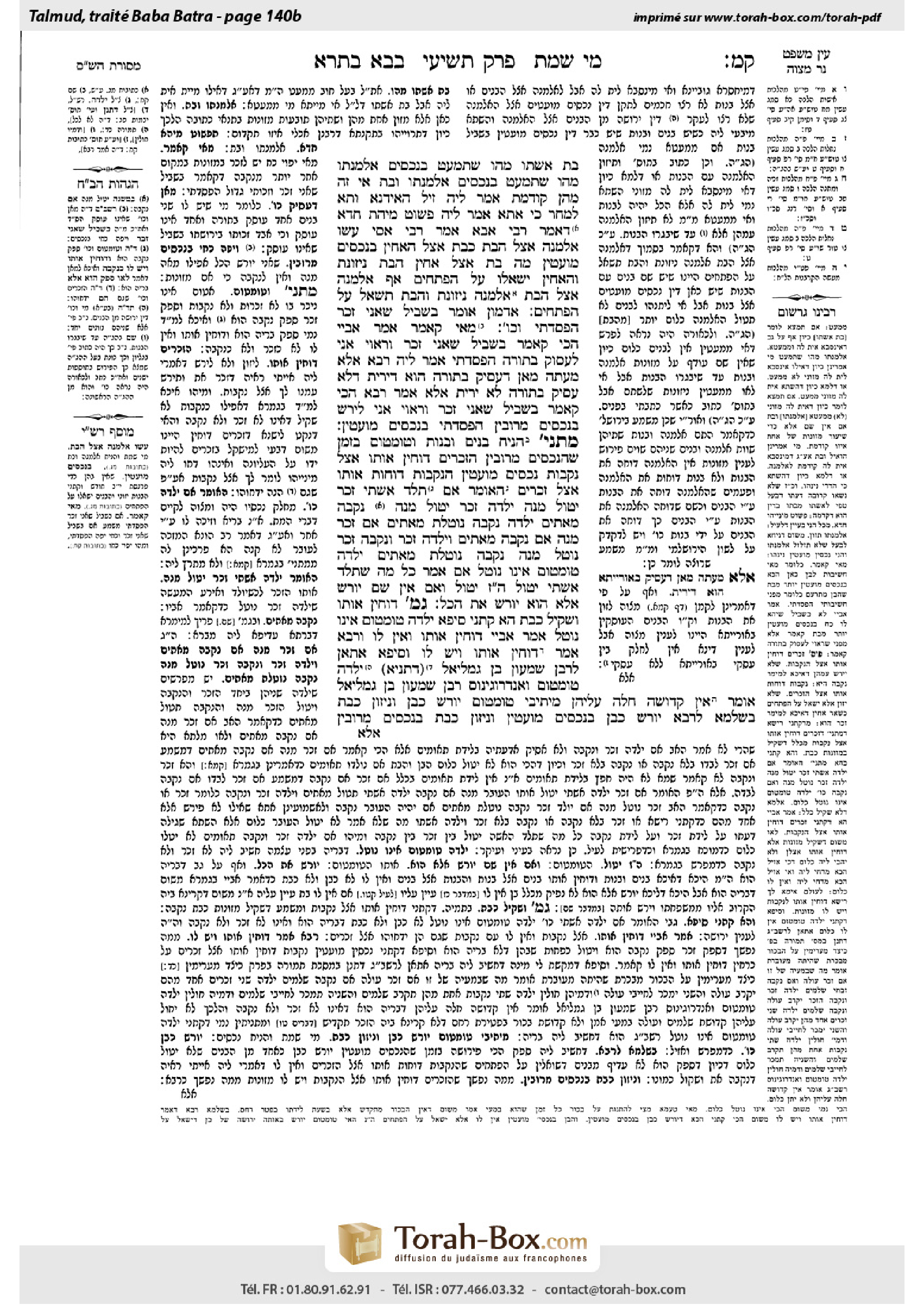
Bava Batra 140b: Talmud study for Daf Yomi
Study the Talmud for Daf Yomi with scanned pages, Hebrew text, English translations from Sefaria and AI-generated French translations.
Passage selection and English or AI-generated French translation are available where the scan has annotations. Daf Study is independent of Torah-Box and Sefaria.
Browse Bava Batra · בבא בתרא · All tractatesBava Batra 140b text and translations
This page of Bava Batra includes the Aramaic text, an English translation and an AI-generated French translation, alongside the scan above.
בבא בתרא ק״מ ב · Aramaic and Hebrew text
בַּת אִשְׁתּוֹ, מַהוּ שֶׁתְּמַעֵט בַּנְּכָסִים? אַלְמְנָתוֹ, מַהוּ שֶׁתְּמַעֵט בַּנְּכָסִים? אַלְמְנָתוֹ וּבַת – אֵי זֶה מֵהֶן קוֹדֶמֶת?
אֲמַר לֵיהּ: זִיל הָאִידָּנָא וְתָא לִמְחַר. כִּי אֲתָא, אֲמַר לֵיהּ: פְּשׁוֹט מִיהַת חֲדָא, דְּאָמַר רַבִּי אַבָּא אָמַר רַבִּי אַסִּי: עָשׂוּ אַלְמָנָה אֵצֶל הַבַּת – כַּבַּת אֵצֶל הָאַחִין בִּנְכָסִים מוּעָטִין; מָה בַּת אֵצֶל אַחִין – הַבַּת נִיזּוֹנֶת, וְהָאַחִין יִשְׁאֲלוּ עַל הַפְּתָחִים; אַף אַלְמָנָה אֵצֶל הַבַּת – אַלְמָנָה נִיזּוֹנֶת, וְהַבַּת תִּשְׁאַל עַל הַפְּתָחִים.
אַדְמוֹן אוֹמֵר: בִּשְׁבִיל שֶׁאֲנִי זָכָר, הִפְסַדְתִּי? וְכוּ׳. מַאי קָאָמַר? אָמַר אַבָּיֵי, הָכִי קָאָמַר: בִּשְׁבִיל שֶׁאֲנִי זָכָר, וְרָאוּי אֲנִי לַעֲסוֹק בַּתּוֹרָה, הִפְסַדְתִּי? אָמַר לֵיהּ רָבָא: אֶלָּא מֵעַתָּה, מַאן דְּעָסֵיק בַּתּוֹרָה הוּא דְּיָרֵית, דְּלָא עָסֵיק בַּתּוֹרָה לָא יְרֵית? אֶלָּא אָמַר רָבָא, הָכִי קָאָמַר: בִּשְׁבִיל שֶׁאֲנִי זָכָר, וְרָאוּי אֲנִי לִירַשׁ בִּנְכָסִים מְרוּבִּין, הִפְסַדְתִּי בִּנְכָסִים מוּעָטִין?
מַתְנִי׳ הִנִּיחַ בָּנִים וּבָנוֹת, וְטוּמְטוּם; בִּזְמַן שֶׁהַנְּכָסִים מְרוּבִּין – הַזְּכָרִים דּוֹחִין אוֹתוֹ אֵצֶל נְקֵבוֹת. נְכָסִים מוּעָטִין – הַנְּקֵבוֹת דּוֹחוֹת אוֹתוֹ אֵצֶל זְכָרִים.
הָאוֹמֵר ״אִם תֵּלֵד אִשְׁתִּי זָכָר – יִטּוֹל מָנֶה״, יָלְדָה זָכָר – יִטּוֹל מָנֶה. ״נְקֵבָה – מָאתַיִם״, יָלְדָה נְקֵבָה – נוֹטֶלֶת מָאתַיִם.
״אִם זָכָר – מָנֶה, אִם נְקֵבָה – מָאתַיִם״, וְיָלְדָה זָכָר וּנְקֵבָה – זָכָר נוֹטֵל מָנֶה, נְקֵבָה נוֹטֶלֶת מָאתַיִם. יָלְדָה טוּמְטוּם – אֵינוֹ נוֹטֵל. אִם אָמַר: ״כֹּל מַה שֶּׁתֵּלֵד אִשְׁתִּי, יִטּוֹל״ – הֲרֵי זֶה יִטּוֹל. וְאִם אֵין שָׁם יוֹרֵשׁ אֶלָּא הוּא – יוֹרֵשׁ אֶת הַכֹּל.
גְּמָ׳ דּוֹחִין אוֹתוֹ – וְשָׁקֵיל כְּבַת? הָא קָתָנֵי סֵיפָא: יָלְדָה טוּמְטוּם – אֵינוֹ נוֹטֵל! אָמַר אַבָּיֵי: דּוֹחִין אוֹתוֹ – וְאֵין לוֹ.
וְרָבָא אָמַר: דּוֹחִין אוֹתוֹ – וְיֵשׁ לוֹ, וְסֵיפָא אֲתָאן לְרַבָּן שִׁמְעוֹן בֶּן גַּמְלִיאֵל – דְּתַנְיָא: יָלְדָה טוּמְטוּם וְאַנְדְּרוֹגִינוֹס – רַבָּן שִׁמְעוֹן בֶּן גַּמְלִיאֵל אוֹמֵר: אֵין קְדוּשָּׁה חָלָה עֲלֵיהֶן.
מֵיתִיבִי: טוּמְטוּם יוֹרֵשׁ כְּבֵן, וְנִיזּוֹן כְּבַת. בִּשְׁלָמָא לְרָבָא, יוֹרֵשׁ כְּבֵן – בִּנְכָסִים מוּעָטִין, וְנִיזּוֹן כְּבַת – בִּנְכָסִים מְרוּבִּין.
Bava Batra 140b · English translation
What is the halakha with regard to sustenance the deceased pledged to give the daughter of his wife from a previous marriage? Does it reduce the value of the estate? What is the halakha with regard to the sustenance to which his widow is entitled? Does it reduce the value of the estate? Furthermore, with regard to his widow and daughter, which of them takes precedence if the estate is insufficient to provide sustenance for both?
Rabbi Abbahu said to Rabbi Yirmeya: Go now and come back tomorrow. When he came back, Rabbi Abbahu said to him: Resolve at least one of your questions, as Rabbi Abba says that Rabbi Asi says: The Sages established the status of the widow in relation to the daughter as equivalent to the status of the daughter in relation to the brothers in the case of a small estate. Just as in the case of a daughter in relation to her brothers, the daughter is sustained and the brothers go and request charity at the doors, so too in the case of a widow in relation to the daughter, the widow is sustained and the daughter goes and requests charity at the doors.
§ The mishna teaches: Admon says, rhetorically: I lost out just because I am male? Rather, he holds that the sons also receive sustenance. The Gemara asks: What is he saying? Abaye said that this is what he is saying: Because I am male, and I am fit to engage in the study of the Torah, I lost out and must go begging instead of studying the Torah? Rava said to him: If that is so, should one conclude that it is only one who engages in the study of the Torah who inherits, whereas one who does not engage in the study of the Torah does not inherit? Rather, Rava said that this is what Admon is saying: Because I am male, and I am fit to inherit in the case of a large estate, should I lose my inheritance entirely in the case of a small estate?
MISHNA: With regard to one who left behind sons and daughters and a tumtum, whose halakhic status as male or female is indeterminate, the halakha is as follows: When the estate is large the males direct the tumtum to the females and exclude him from the inheritance, claiming that perhaps the tumtum is female. When the estate is small, the females direct the tumtum to the males and exclude him from receiving sustenance, claiming that perhaps the tumtum is male.
With regard to one who says: If my wife gives birth to a male the offspring shall receive a gift of one hundred dinars, if she in fact gave birth to a male, the offspring receives one hundred dinars. If he says: If my wife gives birth to a female the offspring shall receive a gift of two hundred dinars, if she in fact gave birth to a female, the offspring receives two hundred dinars.
If he says: If my wife gives birth to a male the offspring shall receive a gift of one hundred dinars and if she gives birth to a female the offspring shall receive a gift of two hundred dinars, and in fact she gave birth to both a male and a female, the male offspring receives one hundred dinars and the female offspring receives two hundred dinars. If she gave birth to a tumtum, the tumtum does not receive anything. If he said: Whatever offspring my wife gives birth to shall receive a gift of a certain sum, and she gave birth to a tumtum, the tumtum receives it. And if there is no heir other than the tumtum, the tumtum inherits all of the estate.
GEMARA: The mishna states that the males direct the tumtum to the females. The Gemara asks: Does this mean that they direct him, and he takes sustenance like a daughter? Isn’t it taught in the latter clause of the mishna that if one said that either his male or female child will receive a certain sum once his wife gives birth, and she gave birth to a tumtum, the tumtum does not receive anything? This indicates that the tumtum does not have the rights of a female. Abaye says: The mishna means that they direct him to the females, but he has no rights to sustenance.
And Rava says: They direct him to the females and he has a right to sustenance. And with regard to the latter clause of the mishna, which grants the tumtum nothing at all, there we arrive at the opinion of Rabban Shimon ben Gamliel, as it is taught in a mishna (Temura 24b): If one consecrates a firstborn animal while it is still a fetus, stating that if it is male it shall be a burnt-offering and if it is female it shall be a peace-offering, and the mother gave birth to a tumtum or a hermaphrodite [androginos], Rabban Shimon ben Gamliel says: It is not imbued with sanctity, as it is neither male nor female. So too, in the case discussed in the mishna here, Rabban Shimon ben Gamliel maintains that the tumtum receives nothing, as he is considered to be a distinct entity of indeterminate sex, neither male nor female.
The Gemara raises an objection from a baraita: A tumtum inherits as a son and is sustained as a daughter. Granted, according to Rava, the baraita can be explained to mean that the clause: Inherits as a son, is in the case of a small estate, as the daughters direct the tumtum to the sons, and just as there is no inheritance for the sons, there is none for the tumtum either. And the clause: And is sustained as a daughter, is in the case of a large estate, as the sons direct the tumtum to the daughters, and the tumtum receives sustenance along with them.
Bava Batra 140b · Traduction française (IA)
Quelle est la halakha concernant la subsistance que le défunt avait promis à la fille de sa femme d'un précédent mariage ? Cela réduit-il la valeur du patrimoine ? Quelle est la halakha concernant la subsistance à laquelle sa veuve est dûe ? Cela réduit-il la valeur du patrimoine ? De plus, concernant sa veuve et sa fille, laquelle a la priorité si le patrimoine n'est pas suffisant pour subvenir aux besoins des deux ?
Rabbi Abbahu dit à Rabbi Yirmeya : Va maintenant et reviens demain. Lorsqu'il revint, Rabbi Abbahu dit à lui : Résous au moins une de tes questions, car Rabbi Abba dit que Rabbi Asi dit : Les Sages ont établi le statut de la veuve par rapport à la fille comme équivalent au statut de la fille par rapport à ses frères dans le cas d'un petit patrimoine. Tout comme, dans le cas de la fille par rapport à ses frères, la fille est subventionnée et les frères vont demander de l'aide aux portes, de même, dans le cas de la veuve par rapport à la fille, la veuve est subventionnée et la fille va demander de l'aide aux portes.
§ La mitsna enseigne : Admon dit, rhétoriquement : J'ai perdu parce que je suis un homme ? Plutôt, il maintient que les fils aussi reçoivent de la subsistance. La Guemara demande : De quoi parle-t-il ? Abaye dit que c'est ce qu'il dit : Parce que je suis un homme, et que je suis digne d'étudier la Torah, j'ai perdu et dois mendier au lieu d'étudier la Torah ? Rava dit à lui : Si c'est ainsi, devrait-on conclure que seul celui qui étudie la Torah hérite, tandis que celui qui n'étudie pas la Torah n'hérite pas ? Plutôt, Rava dit que c'est ce que Admon dit : Parce que je suis un homme, et que je suis digne d'hériter dans le cas d'un grand patrimoine, devrais-je perdre mon héritage entier dans le cas d'un petit patrimoine ?
§ La mitsna enseigne : Concernant celui qui a laissé derrière lui des fils et des filles et un tumtum, dont le statut halakhique de mâle ou de femelle est indéterminé, la halakha est la suivante : Lorsque le patrimoine est grand, les mâles dirigent le tumtum vers les femelles et l'excluent de l'héritage, affirmant qu'il pourrait être femelle. Lorsque le patrimoine est petit, les femelles dirigent le tumtum vers les mâles et l'excluent de la subsistance, affirmant qu'il pourrait être mâle.
Concernant celui qui dit : Si ma femme donne naissance à un mâle, l'offspring recevra un cadeau de cent dinars, si elle a effectivement donné naissance à un mâle, l'offspring reçoit cent dinars. Si celui-ci dit : Si ma femme donne naissance à une femelle, l'offspring recevra un cadeau de deux cents dinars, si elle a effectivement donné naissance à une femelle, l'offspring reçoit deux cents dinars.
Si celui-ci dit : Si ma femme donne naissance à un mâle, l'offspring recevra un cadeau de cent dinars et si elle donne naissance à une femelle, l'offspring recevra un cadeau de deux cents dinars, et qu'elle a effectivement donné naissance à un mâle et à une femelle, l'offspring mâle reçoit cent dinars et l'offspring femelle reçoit deux cents dinars. Si elle a donné naissance à un tumtum, le tumtum ne reçoit rien. Si celui-ci dit : Quel que soit l'offspring que ma femme donnera naissance, il recevra un cadeau d'une certaine somme, et qu'elle a donné naissance à un tumtum, le tumtum reçoit cette somme. Et si celui-ci n'y a pas d'héritier autre que le tumtum, le tumtum hérite tout le patrimoine.
GUEMARA : La mitsna indique que les mâles dirigent le tumtum vers les femelles. La Guemara pose la question : Cela signifie-t-il qu'ils le dirigent et qu'il reçoit la subsistance comme une fille ? N'est-ce pas enseigné dans la dernière clause de la mitsna que si l'on dit que soit son fils mâle soit son fille femelle recevra une certaine somme une fois que sa femme donnera naissance, et qu'elle a donné naissance à un tumtum, le tumtum ne reçoit rien ? Cela montre que le tumtum n'a pas les droits d'une fille. Abaye dit : La mitsna signifie que les mâles dirigent le tumtum vers les femelles, mais il n'a pas le droit à la subsistance.
Et Rava dit : Ils dirigent le tumtum vers les femelles et il a le droit à la subsistance. Et concernant la dernière clause de la mitsna, qui accorde rien du tout au tumtum, nous arrivons à l'opinion de Rabban Shimon ben Gamliel, comme il est enseigné dans une mitsna (Temura 24b) : Si l'on consacre un premier-né d'animal alors qu'il est encore un fœtus, en disant que s'il est mâle il sera un holocauste et s'il est femelle il sera un sacrifice de paix, et la mère a donné naissance à un tumtum ou à un androgyne [androginos], Rabban Shimon ben Gamliel dit : Il n'est pas sanctifié, car il n'est ni mâle ni femelle. De même, dans le cas discuté dans la mitsna ici, Rabban Shimon ben Gamliel maintient que le tumtum reçoit rien, car il est considéré comme une entité distincte de sexe indéterminé, ni mâle ni femelle.
La Guemara soulève un objet d'une baraïta : Le tumtum hérite comme un fils et est nourri comme une fille. En effet, selon Rava, la baraïta peut être expliquée comme signifiant que la clause : Hérite comme un fils, est dans le cas d'un petit patrimoine, car les filles dirigent le tumtum vers les fils, et tout comme il n'y a pas d'héritage pour les fils, il n'y en a pas non plus pour le tumtum. Et la clause : Et est nourri comme une fille, est dans le cas d'un grand patrimoine, car les fils dirigent le tumtum vers les filles, et le tumtum reçoit la subsistance avec elles.
Traduction française générée par IA à partir de l’édition anglaise de Sefaria. Vérifie toujours un passage avec le texte source.
Text from Sefaria: William Davidson Edition - Vocalized Aramaic (CC BY NC); William Davidson Edition - English (CC BY NC).