Bava Batra 143b: Talmud study for Daf Yomi
Study the Talmud for Daf Yomi with scanned pages, Hebrew text, English translations from Sefaria and AI-generated French translations.
Passage selection and English or AI-generated French translation are available where the scan has annotations. Daf Study is independent of Torah-Box and Sefaria.
Browse Bava Batra · בבא בתרא · All tractatesBava Batra 143b text and translations
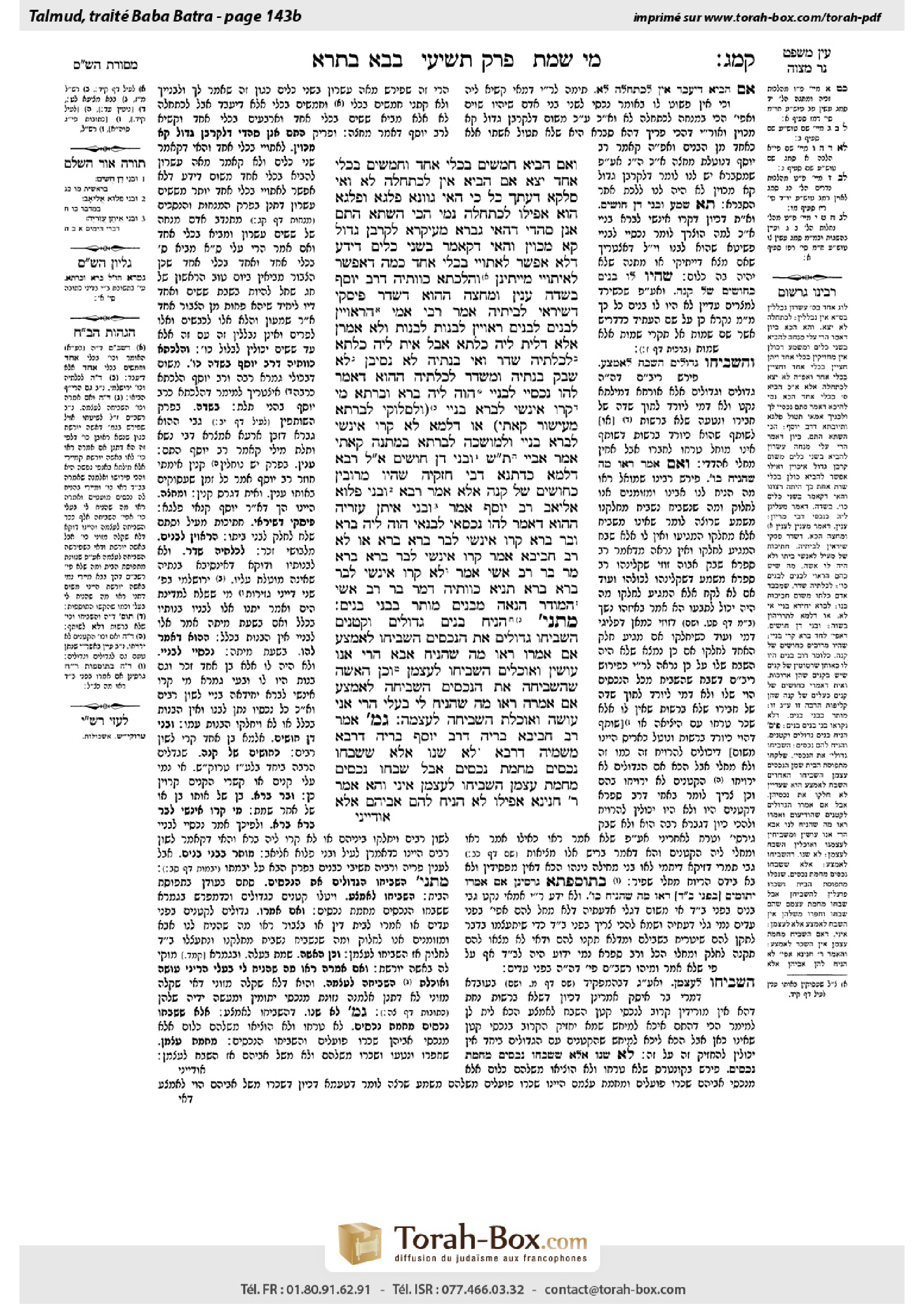
This page of Bava Batra includes the Aramaic text, an English translation and an AI-generated French translation, alongside the scan above.
בבא בתרא קמ״ג ב · Aramaic and Hebrew text
וְאִם הֵבִיא חֲמִשִּׁים בִּכְלִי אֶחָד וַחֲמִשִּׁים בִּכְלִי אֶחָד – יָצָא. אִם הֵבִיא אִין – לְכַתְּחִלָּה לָא; וְאִי סָלְקָא דַּעְתָּךְ כׇּל כִּי הַאי גַוְונָא פַּלְגָא וּפַלְגָא הוּא, אֲפִילּוּ לְכַתְּחִלָּה נָמֵי!
הָכִי הַשְׁתָּא?! הָתָם, אֲנַן סָהֲדִי דְּהַאי גַּבְרָא מֵעִיקָּרָא – לְקׇרְבָּן גָּדוֹל קָא מְכַוֵּין, וְהַאי דְּקָאָמַר בִּשְׁנֵי כֵלִים – דְּיָדַע דְּלָא אֶפְשָׁר לְאֵתוֹיֵי בִּכְלִי אֶחָד; כַּמָּה דְּאֶפְשָׁר לְאֵיתוֹיֵי מַיְיתִינַן.
וְהִלְכְתָא כְּווֹתֵיהּ דְּרַב יוֹסֵף בְּשָׂדֶה, עִנְיָן וּמֶחֱצָה.
הָהוּא דְּשַׁדַּר פִּיסְקֵי דְשִׁירָאֵי לְבֵיתֵיהּ. אָמַר רַבִּי אַמֵּי: הָרְאוּיִין לְבָנִים – לַבָּנִים, רְאוּיִין לְבָנוֹת – לַבָּנוֹת. וְלָא אֲמַרַן אֶלָּא דְּלֵית לֵיהּ כַּלָּתָא, אֲבָל אִית לֵיהּ כַּלָּתָא – לְכַלָּתֵיהּ שַׁדַּר. וְאִי בְּנָתֵיהּ לָא נְסִיבָן – לָא שָׁבַק בְּנָתֵיהּ וּמְשַׁדַּר לְכַלָּתֵיהּ.
הַהוּא דַּאֲמַר לְהוּ: ״נִכְסַיי לִבְנַיי״. הֲוָה לֵיהּ בְּרָא וּבְרַתָּא. מִי קָרוּ אִינָשֵׁי לִבְרָא ״בְּנַיי״ – וּלְסַלּוֹקֵי לִבְרַתָּא מֵעִישּׂוּר קָאָתֵי; אוֹ דִלְמָא, לָא קָרוּ אִינָשֵׁי לִבְרָא ״בְּנַיי״ – וּלְמוֹשְׁכָהּ לְבַרְתָּא בְּמַתָּנָה קָאָתֵי?
אָמַר אַבָּיֵי, תָּא שְׁמַע: ״וּבְנֵי דָּן – חֻשִׁים״. אֲמַר לֵיהּ רָבָא, דִּלְמָא כִּדְתָנָא דְּבֵי חִזְקִיָּה: שֶׁהָיוּ מְרוּבִּין כְּחוּשִׁים שֶׁל קָנֶה! אֶלָּא אָמַר רָבָא: ״וּבְנֵי פַלּוּא – אֱלִיאָב״. רַב יוֹסֵף אָמַר: ״וּבְנֵי אֵיתָן – עֲזַרְיָה״.
הַהוּא דַּאֲמַר לְהוּ: ״נִכְסַאי לִבְנַאי״. הֲוָה לֵיהּ בְּרָא, וּבַר בְּרָא. קָרוּ אִינָשֵׁי לְבַר בְּרָא ״בְּרָא״, אוֹ לָא? רַב חֲבִיבָא אֲמַר: קָרוּ אִינָשֵׁי לְבַר בְּרָא ״בְּרָא״, מָר בַּר רַב אָשֵׁי אָמַר: לָא קָרוּ אִינָשֵׁי לְבַר בְּרָא ״בְּרָא״. תַּנְיָא כְּווֹתֵיהּ דְּמָר בַּר רַב אָשֵׁי: הַמּוּדָּר הֲנָאָה מִבָּנִים – מוּתָּר בִּבְנֵי בָנִים.
מַתְנִי׳ הִנִּיחַ בָּנִים גְּדוֹלִים וּקְטַנִּים; הִשְׁבִּיחוּ גְּדוֹלִים אֶת הַנְּכָסִים – הִשְׁבִּיחוּ לָאֶמְצַע. אִם אָמְרוּ: ״רְאוּ מַה שֶּׁהִנִּיחַ אַבָּא, הֲרֵי אָנוּ עוֹשִׂין וְאוֹכְלִים״ – הִשְׁבִּיחוּ לְעַצְמָן. וְכֵן הָאִשָּׁה שֶׁהִשְׁבִּיחָה אֶת הַנְּכָסִים – הִשְׁבִּיחָה לָאֶמְצַע. אִם אָמְרָה: ״רְאוּ מַה שֶּׁהִנִּיחַ לִי בַּעְלִי, הֲרֵי אֲנִי עוֹשָׂה וְאוֹכֶלֶת״ – הִשְׁבִּיחָה לְעַצְמָהּ.
גְּמָ׳ אָמַר רַב חֲבִיבָא בְּרֵיהּ דְּרַב יוֹסֵף בְּרֵיהּ דְּרָבָא, מִשְּׁמֵיהּ דְּרָבָא: לֹא שָׁנוּ אֶלָּא שֶׁשָּׁבְחוּ נְכָסִים מֵחֲמַת נְכָסִים, אֲבָל שָׁבְחוּ נְכָסִים מֵחֲמַת עַצְמָן – הִשְׁבִּיחוּ לְעַצְמָן.
אִינִי?! וְהָא אָמַר רַבִּי חֲנִינָא: אֲפִילּוּ לֹא הִנִּיחַ לָהֶם אֲבִיהֶם אֶלָּא
Bava Batra 143b · English translation
And if he brought fifty-tenths in one vessel and fifty in one vessel, he fulfilled his obligation. One can infer from the baraita that after the fact, if he had brought fifty-tenths in each vessel, yes, he fulfilled his obligation, but he may not do so ab initio. And if it should enter your mind to say that every case like this is divided half and half, it should be permitted to divide the meal-offering into equal halves even ab initio.
The Gemara dismisses Rabbi Zeira’s objection: How can these cases be compared? There, in the case of the meal-offering, it is clear to us that this person initially intended to bring a large offering, and the reason that he said he will bring the offering in two vessels was that he knew that it is not possible to bring the entire offering in a single vessel. Therefore, we bring, in a single vessel, as much as it is possible to bring, which is sixty-tenths. In any other case it is possible that the division should be into two equal portions.
The Gemara concludes: And the halakha is in accordance with the opinion of Rav Yosef in three matters where he disagreed with Rabba: In the matter of dividing a field between brothers (see 12b); in the matter of whether certain actions are limited by the court session or by the topic of discussion in the court (see 114a); and in the matter of half, i.e., this matter, whether an unspecified division into two parts is divided into two equal halves.
§ The Gemara cites additional incidents concerning a gift whose method of division was not specified: There was a certain man who sent swaths of silk to his home as a gift. Rabbi Ami says that in such a case, those swaths that are suitable for the sons’ garments are given to the sons, and those that are suitable for the daughters’ garments are given to the daughters. The Gemara comments: We said this only when he does not have daughters-in-law, but if he has daughters-in-law, it is presumed that he sent it for his daughters-in-law. And if his daughters are not married, it is presumed that he does not forsake his daughters and send to his daughters-in-law, so the silk is given to his daughters.
There was a certain man who said to those surrounding him: I leave my property to my sons [levanai], and he had only a son and a daughter. The question was raised: Do people call a single son in the plural: My sons, and in his will he came to remove his daughter even from the tenth of his property that would rightfully be her dowry? Or perhaps people do not call a single son: My sons, and he came to include his daughter in the gift?
Abaye said: Come and hear a proof that one does refer to a single son using the plural term sons, as it is written: “And the sons of Dan: Hushim” (Genesis 46:23). Rava said to Abaye: Perhaps this verse should be understood as the school of Ḥizkiyya taught, that Hushim is not the name of Dan’s son but that they, Dan’s sons, were as numerous as the groups [ḥushim] of reeds. Rather, Rava said: One can prove this usage of the term sons in the verse: “And the sons of Pallu: Eliab” (Numbers 26:8). Rav Yosef said: This can be proven from another verse: “And the sons of Ethan: Azariah” (I Chronicles 2:8).
There was a certain man who said to those surrounding him: I leave my property to my sons, and he had a son and a grandson, i.e., his son’s son. The question was raised: Do people call a grandson a son, or do they not? Rav Ḥaviva said: People call a grandson a son. Mar bar Rav Ashi said: People do not call a grandson a son. The Gemara comments: It is taught in a baraita in accordance with the opinion of Mar bar Rav Ashi: With regard to one prohibited by a vow from deriving benefit from a certain person’s sons, it is permitted for him to derive benefit from the sons of that person’s sons, as they are not included in the term sons.
MISHNA: In the case of one who died and left behind adult and minor sons, if the adult sons enhanced the property, they enhanced it so that the profit goes to the middle, i.e., it is distributed among all the heirs. If the adult sons said from the outset: See that which our father left behind; we are going to engage in business with our share of the property and profit from it, then they enhanced the property for themselves. And similarly, with regard to a wife who enhanced the property of her deceased husband, she enhanced it so that the profit goes to the middle, i.e., it is divided between her and the heirs. If she said: See that which my husband left me; I am going to engage in business with my share and profit from it, then she enhanced the property for herself.
GEMARA: Rav Ḥaviva, son of Rav Yosef, son of Rava, says in the name of Rava: They taught this halakha only with regard to where the property was enhanced on account of the property, i.e., the heirs invested money from the common inheritance in order to enhance the property, and their input was only in the management of its investment. But if the property was enhanced on their account, i.e., on account of the efforts or expenditure of the adult sons, the halakha is that they enhanced it for themselves.
The Gemara asks: Is that so? But doesn’t Rabbi Ḥanina say: Even if their father left them nothing but
Bava Batra 143b · Traduction française (IA)
Et s'il avait apporté cinquante dixièmes dans un seul vase et cinquante dans un autre vase, il avait accompli son obligation. On peut en déduire de la baraïta que, postérieurement, s'il avait apporté cinquante dixièmes dans chaque vase, oui, il avait accompli son obligation, mais il ne pouvait pas le faire dès le début. Et si cela vous vient à l'esprit de dire que chaque cas de ce genre est divisé à parts égales, il devrait être permis de diviser l'offrande de table en deux parts égales même dès le début.
La Guemara rejette l'objection de Rabbi Zéira : Comment peuvent ces cas être comparés ? Là, dans le cas de l'offrande de table, nous savons clairement que cette personne avait initialement l'intention d'apporter une grande offrande, et la raison pour laquelle il a dit qu'il apporterait l'offrande dans deux vases est qu'il savait que ce n'était pas possible d'apporter l'offrande complète dans un seul vase. Par conséquent, nous apportons dans un seul vase autant qu'il est possible d'apporter, soit soixante dixièmes. Dans tout autre cas, il est possible que la division soit faite en deux parts égales.
La Guemara conclut : Et la halakha suit l'opinion de Rav Yosef dans trois matières où il s'est désaccordé avec Rabba : dans la matière de la division d'un champ entre des frères (voir 12b) ; dans la matière de savoir si certaines actions sont limitées par la session du tribunal ou par le sujet discuté dans le tribunal (voir 114a) ; et dans la matière de la moitié, c'est-à-dire cette matière, savoir si une division indéterminée en deux parties est divisée en deux parts égales.
§ La Guemara cite d'autres incidents concernant un don dont la méthode de division n'était pas spécifiée : Il y avait un certain homme qui avait envoyé des tissus de soie à sa maison en tant que don. Rabbi Ami dit que dans ce cas, ceux des tissus qui sont adaptés aux vêtements des fils sont donnés aux fils, et ceux qui sont adaptés aux vêtements des filles sont donnés aux filles. La Guemara commente : Nous avons dit cela seulement lorsqu'il n'avait pas de filles-marries, mais si il avait des filles-marries, on suppose qu'il les a envoyés pour ses filles-marries. Et si ses filles n'étaient pas mariées, on suppose qu'il ne négligeait pas ses filles pour envoyer à ses filles-marries, donc la soie est donnée à ses filles.
Il y avait un certain homme qui disait à ceux qui l'entouraient : Je laisse ma propriété à mes fils [levanai], et il avait seulement un fils et une fille. La question fut posée : Les gens appellent-ils un seul fils au pluriel : Mes fils, et dans son testament il a voulu exclure sa fille même de la dixième de sa propriété qui lui revenait légalement en dot ? Ou peut-être les gens ne disent pas un seul fils : Mes fils, et il a voulu inclure sa fille dans le don ?
Abaye dit : Viens écouter une preuve que l'on fait référence à un seul fils avec le terme pluriel fils, comme il est écrit : « Et les fils de Dan : Hushim » (Genèse 46:23). Rava dit à Abaye : Peut-être cette versette devrait être comprise selon l'enseignement de la maison de Chizkiya, que Hushim n'est pas le nom du fils de Dan mais qu'ils, les fils de Dan, étaient aussi nombreux que les groupes [ḥushim] de roseaux. Plutôt, Rava dit : On peut prouver l'usage du terme fils dans cette versette : « Et les fils de Pallu : Eliab » (Nombres 26:8). Rav Yosef dit : Cela peut être prouvé à partir d'une autre versette : « Et les fils d'Ethan : Azariah » (I Rois 2:8).
Il y avait un certain homme qui disait à ceux qui l'entouraient : Je laisse ma propriété à mes fils, et il avait un fils et un petit-fils, c'est-à-dire le fils de son fils. La question fut posée : Les gens appellent-ils un petit-fils un fils, ou pas ? Rav Chaviva dit : Les gens appellent un petit-fils un fils. Mar bar Rav Ashi dit : Les gens ne appellent pas un petit-fils un fils. La Guemara commente : Il est enseigné dans une baraïta selon l'opinion de Mar bar Rav Ashi : En ce qui concerne une personne interdite par un serment de tirer profit des fils d'un certain homme, il est permis de tirer profit des fils des fils de cette personne, car ils ne sont pas inclus dans le terme fils.
MICHNA : Dans le cas d'une personne décédée laissant derrière elle des fils adultes et mineurs, si les fils adultes ont amélioré la propriété, ils l'ont améliorée de sorte que le profit va au milieu, c'est-à-dire qu'il est distribué à tous les héritiers. Si les fils adultes ont dit dès le début : Voyez ce que notre père a laissé derrière lui ; nous allons entreprendre des affaires avec notre part de la propriété et en tirer profit, alors ils ont amélioré la propriété pour eux-mêmes. De même, concernant une épouse qui a amélioré la propriété de son mari décédé, elle l'a améliorée de sorte que le profit va au milieu, c'est-à-dire qu'il est divisé entre elle et les héritiers. Si elle a dit : Voyez ce que mon mari m'a laissé ; je vais entreprendre des affaires avec ma part et en tirer profit, alors elle a amélioré la propriété pour elle-même.
GUEMARA : Rav Chaviva, fils de Rav Yosef, fils de Rava, dit en nom de Rava : Ils ont enseigné cette halakha seulement dans le cas où la propriété a été améliorée en raison de la propriété, c'est-à-dire que les héritiers ont investi de l'argent de l'héritage commun pour améliorer la propriété, et leur contribution était seulement dans la gestion de l'investissement. Mais si la propriété a été améliorée en leur nom, c'est-à-dire en raison des efforts ou dépenses des fils adultes, la halakha est que l'amélioration a été faite pour eux-mêmes.
La Guemara pose la question : Est-ce ainsi ? Mais ne dit pas Rabbi Hanina : Même si leur père leur a laissé rien de plus que
Traduction française générée par IA à partir de l’édition anglaise de Sefaria. Vérifie toujours un passage avec le texte source.
Text from Sefaria: William Davidson Edition - Vocalized Aramaic (CC BY NC); William Davidson Edition - English (CC BY NC).