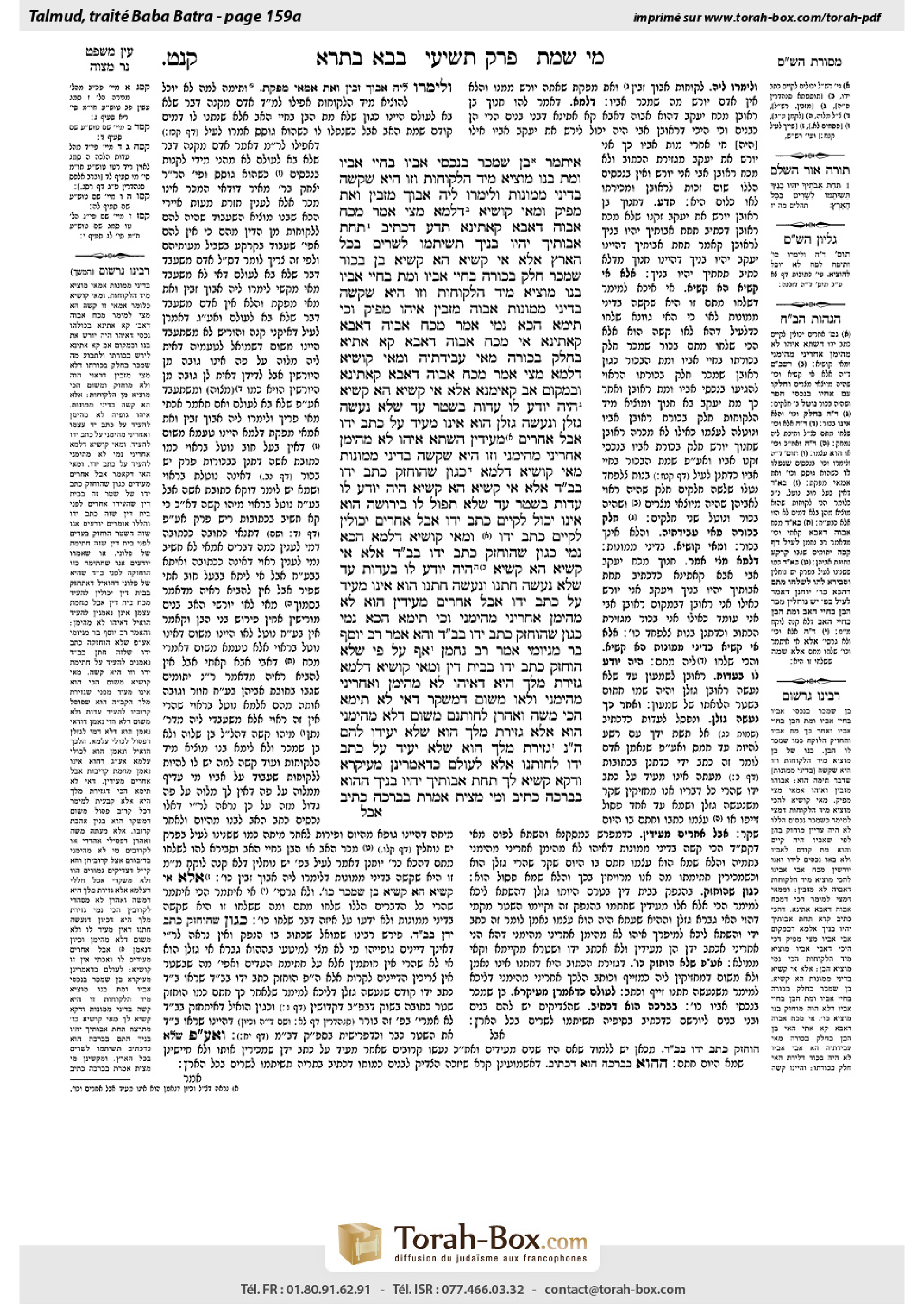
Bava Batra 159a: Talmud study for Daf Yomi
Study the Talmud for Daf Yomi with scanned pages, Hebrew text, English translations from Sefaria and AI-generated French translations.
Passage selection and English or AI-generated French translation are available where the scan has annotations. Daf Study is independent of Torah-Box and Sefaria.
Browse Bava Batra · בבא בתרא · All tractatesBava Batra 159a text and translations
This page of Bava Batra includes the Aramaic text, an English translation and an AI-generated French translation, alongside the scan above.
בבא בתרא קנ״ט א · Aramaic and Hebrew text
אִיתְּמַר: בֵּן שֶׁמָּכַר בְּנִכְסֵי אָבִיו בְּחַיֵּי אָבִיו, וָמֵת – בְּנוֹ מוֹצִיא מִיַּד הַלָּקוֹחוֹת. וְזוֹ הִיא שֶׁקָּשָׁה בְּדִינֵי מָמוֹנוֹת – וְלֵימְרוּ לֵיהּ: אֲבוּךְ מְזַבֵּין, וְאַתְּ מַפֵּיק?!
וּמַאי קוּשְׁיָא? דִּלְמָא מָצֵי אָמַר: מִכֹּחַ אֲבוּהּ דְּאַבָּא קָאָתֵינָא – תִּדַּע, דִּכְתִיב: ״תַּחַת אֲבֹתֶיךָ יִהְיוּ בָנֶיךָ, תְּשִׁיתֵמוֹ לְשָׂרִים בְּכׇל הָאָרֶץ״!
אֶלָּא אִי קַשְׁיָא, הָא קַשְׁיָא – בֵּן בְּכוֹר שֶׁמָּכַר חֵלֶק בְּכוֹרָה בְּחַיֵּי אָבִיו, וָמֵת בְּחַיֵּי אָבִיו – בְּנוֹ מוֹצִיא מִיַּד הַלָּקוֹחוֹת. וְזוֹ הִיא שֶׁקָּשָׁה בְּדִינֵי מָמוֹנוֹת – אֲבוּהּ מְזַבֵּין, אִיהוּ מַפֵּיק?! וְכִי תֵּימָא, הָכָא נָמֵי אָמַר: מִכֹּחַ אֲבוּהּ דְּאַבָּא קָאָתֵינָא; אִי מִכֹּחַ אֲבוּהּ דְּאַבָּא קָא אָתְיָא, בְּחֵלֶק בְּכוֹרָה מַאי עֲבִידְתֵּיהּ?
וּמַאי קוּשְׁיָא? דִּלְמָא מָצֵי אֲמַר: מִכֹּחַ אֲבוּהּ דְּאַבָּא קָאָתֵינָא – וּבִמְקוֹם אָב קָאֵימְנָא!
אֶלָּא אִי קַשְׁיָא, הָא קַשְׁיָא – הָיָה יוֹדֵעַ לוֹ עֵדוּת בִּשְׁטָר עַד שֶׁלֹּא נַעֲשָׂה גַּזְלָן, וְנַעֲשָׂה גַּזְלָן – הוּא אֵינוֹ מֵעִיד עַל כְּתַב יָדוֹ, אֲבָל אֲחֵרִים מְעִידִין. הַשְׁתָּא אִיהוּ לָא מְהֵימַן, אַחְרִינֵי מְהֵימְנִי?! וְזוֹ הִיא שֶׁקָּשָׁה בְּדִינֵי מָמוֹנוֹת.
מַאי קוּשְׁיָא? דִּלְמָא כְּגוֹן שֶׁהוּחְזַק כְּתַב יָדוֹ בְּבֵית דִּין!
אֶלָּא אִי קַשְׁיָא, הָא קַשְׁיָא – הָיָה יוֹדֵעַ לוֹ עֵדוּת בִּשְׁטָר עַד שֶׁלֹּא תִּפּוֹל לוֹ בִּירוּשָּׁה; הוּא אֵינוֹ יָכוֹל לְקַיֵּים כְּתַב יָדוֹ, אֲבָל אֲחֵרִים יְכוֹלִין לְקַיֵּים כְּתַב יָדוֹ. וּמַאי קוּשְׁיָא? דִּלְמָא הָכָא נָמֵי, כְּגוֹן שֶׁהוּחְזַק כְּתַב יָדוֹ בְּבֵית דִּין!
אֶלָּא אִי קַשְׁיָא, הָא קַשְׁיָא – הָיָה יוֹדֵעַ לוֹ בְּעֵדוּת עַד שֶׁלֹּא נַעֲשָׂה חֲתָנוֹ, וְנַעֲשָׂה חֲתָנוֹ – הוּא אֵינוֹ מֵעִיד עַל כְּתַב יָדוֹ, אֲבָל אֲחֵרִים מְעִידִין. הוּא לָא מְהֵימַן, אַחְרִינֵי מְהֵימְנִי?!
וְכִי תֵּימָא הָכָא נָמֵי – כְּגוֹן שֶׁהוּחְזַק כְּתַב יָדוֹ בְּבֵית דִּין, וְהָא אָמַר רַב יוֹסֵף בַּר מִנְיוֹמֵי אָמַר רַב נַחְמָן: אַף עַל פִּי שֶׁלֹּא הוּחְזַק כְּתַב יָדוֹ בְּבֵית דִּין!
וּמַאי קוּשְׁיָא? דִּלְמָא גְּזֵירַת מֶלֶךְ הִיא, דְּאִיהוּ לָא מְהֵימַן, וְאַחְרִינֵי מְהֵימְנִי – וְלָאו מִשּׁוּם דִּמְשַׁקַּר! דְּאִי לָא תֵּימָא הָכִי, מֹשֶׁה וְאַהֲרֹן לְחוֹתְנָם – מִשּׁוּם דְּלָא מְהֵימְנִי הוּא?! אֶלָּא גְּזֵירַת מֶלֶךְ הוּא שֶׁלֹּא יָעִידוּ לָהֶם, הָכָא נָמֵי – גְּזֵירַת מֶלֶךְ הוּא שֶׁלֹּא יָעִיד עַל כְּתַב יָדוֹ לְחוֹתְנוֹ!
אֶלָּא לְעוֹלָם כִּדְאָמְרִינַן מֵעִיקָּרָא, וּדְקָא קַשְׁיָא לָךְ ״תַּחַת אֲבֹתֶיךָ יִהְיוּ בָנֶיךָ״ – הָהוּא בִּבְרָכָה כְּתִיב.
וּמִי מָצֵית אָמְרַתְּ בִּבְרָכָה כְּתִיב –
Bava Batra 159a · English translation
that it was stated: With regard to a son who sold some of his father’s property during his father’s lifetime, and the son died, the son’s son repossesses the property from the buyers. And this is a difficult halakha with regard to monetary law, as the buyers can say to the son’s son: Does your father sell the property to us and you repossess it?
The Gemara asks: And what is the difficulty? Perhaps he can say: I come to repossess the property on the basis of the right of my father’s father to the property, as I inherit directly from him. Know that this is so, as it is written: “In the place of your fathers shall be your sons; you shall make them into princes throughout the land” (Psalms 45:17). The phrase “In the place of your fathers shall be your sons” indicates that a grandson inherits from his grandfather directly, and he does not inherit through his father.
Rather, if there is a halakha with regard to monetary law that poses a difficulty, this is the difficult halakha: With regard to a firstborn son who sold, during his father’s lifetime, the portion of the firstborn that he was set to inherit, and he died in his father’s lifetime, his son can repossess the portion of the firstborn from the buyers. And this is a difficult halakha with regard to monetary law, as his father sells the property and he repossesses it. And if you would say: Here too, he says: I come to repossess the property on the basis of the right of my father’s father to the property, this is not a valid claim, as, if he comes to repossess the property on the basis of the right of his father’s father, what is the relevance of the portion of the firstborn, since he is not his grandfather’s firstborn?
The Gemara rejects this: And what is the difficulty? Perhaps he can say: I come to repossess the property on the basis of the right of my father’s father to the property, and yet I receive the portion of the firstborn, as I stand in my father’s stead.
Rather, if there is a halakha with regard to monetary law that poses a difficulty, this is the difficult halakha: One knew testimony supporting another, and his testimony was written in a document before he became a robber, and then he became a robber and was disqualified from bearing witness. In this case, he may not testify as to the legitimacy of his handwriting. But others may testify that it is his handwriting on the document. The difficulty is that now that his testimony is not deemed credible, although he knows of the matter with certainty, is it logical that others are deemed credible and his signature is ratified according to their testimony? And this is a difficult halakha with regard to monetary law.
The Gemara rejects this: What is the difficulty? Perhaps this halakha is referring to a case where the signature was already presumed by the court to be his handwriting before he was disqualified, and the witnesses testify merely that the document was already ratified.
Rather, if there is a halakha with regard to monetary law that poses a difficulty, this is the difficult halakha: One knew testimony supporting another concerning the latter’s ownership of a plot of land, and his testimony was written in a document before the land came into the witness’s possession as an inheritance, which caused the witness to become an interested party. In this case, the witness may not ratify his handwriting. But others may ratify his handwriting. The Gemara rejects this: And what is the difficulty? Perhaps here too, the halakha is referring to a case where the signature was already presumed by the court to be his handwriting before he became an interested party, and the witnesses testify merely that the document was already ratified.
Rather, if there is a halakha with regard to monetary law that poses a difficulty, this is the difficult halakha: One knew testimony with regard to another, and his testimony was written in a document before he became that person’s son-in-law, and then he became his son-in-law. In this case, the son-in-law may not testify as to his handwriting, since one cannot bear witness for his relative. But others may testify that it is his handwriting. Is it logical that his testimony is not deemed credible, yet others are deemed credible and may ratify his signature?
And if you would say: Here too, the halakha is referring to a case where the signature was already presumed by the court to be his handwriting before he became a relative, this is difficult. But doesn’t Rav Yosef bar Minyumi say that Rav Naḥman says: Others may testify as to the validity of his handwriting even though the signature was not previously presumed by the court to be his handwriting?
The Gemara rejects this: And what is the difficulty? Perhaps it is the King’s edict, i.e., a divine decree, that the testimony of a son-in-law is not deemed credible, and yet the testimony of others is deemed credible, and the reason he is disqualified is not that he is suspected of lying. This must be so, as if you do not say so, why are Moses and Aaron disqualified from bearing witness for their father-in-law? Could this be because their testimony is not deemed credible? Rather, it is the King’s edict that even Moses and Aaron shall not bear witness for their relatives. Here too, it is the King’s edict that a son-in-law shall not testify as to the validity of his handwriting for his father-in-law.
Rather, the difficulty is actually as we said initially, with regard to the halakha that if a son sold some of his father’s property and then died, the son’s son repossesses the property from the buyers. And with regard to the verse that posed a difficulty for you: “In the place of your fathers shall be your sons” (Psalms 45:17), which apparently indicates that a grandson inherits from his grandfather directly, this is not difficult. That verse is written as a blessing. The verse does not indicate the halakhic status of the grandson’s inheritance, and the reason he can repossess the property is still difficult.
The Gemara asks: But can you say that the verse is written as a blessing,
Bava Batra 159a · Traduction française (IA)
il a été dit : concernant un fils qui a vendu une partie de la propriété de son père pendant la vie de ce dernier, et que le fils est décédé, le fils du fils récupère la propriété auprès des acheteurs. Et c'est une halakha difficile concernant la loi monétaire, car les acheteurs peuvent dire au fils du fils : Votre père a vendu cette propriété à nous et vous récupérez-vous elle ?
La Guemara demande : Et quelle est la difficulté ? Peut-être qu'il peut dire : Je viens récupérer la propriété sur la base du droit de mon grand-père à la propriété, car je hérite directement de lui. Savez-vous que c'est ainsi, car il est écrit : « Dans le lieu de vos pères sera votre fils ; vous ferez de lui des princes dans la terre » (Psaumes 45:17). La phrase « Dans le lieu de vos pères sera votre fils » indique que le petit-fils hérite directement de son grand-père, et non par l'intermédiaire de son père.
Au contraire, si une halakha concernant la loi monétaire pose une difficulté, c'est cette halakha difficile : concernant un fils aîné qui, pendant la vie de son père, a vendu la part du premier-né qu'il devait hériter, et que ce fils est décédé pendant la vie de son père, son fils peut récupérer la part du premier-né auprès des acheteurs. Et c'est une halakha difficile concernant la loi monétaire, car son père vend la propriété et il la récupère. Et si vous dites : ici aussi, il dit : Je viens récupérer la propriété sur la base du droit de mon grand-père à la propriété, cela n'est pas une revendication valable, car, s'il vient récupérer la propriété sur la base du droit de son grand-père, à quoi bon la part du premier-né, puisque ce n'est pas le premier-né de son grand-père ?
La Guemara rejette cela : Et quelle est la difficulté ? Peut-être qu'il peut dire : Je viens récupérer la propriété sur la base du droit de mon grand-père à la propriété, et pourtant je bénéficie de la part du premier-né, car je suis à la place de mon père.
Au contraire, si une halakha concernant la loi monétaire pose une difficulté, c'est cette halakha difficile : l'un des témoins connait l'autre, et son témoignage était écrit dans un document avant qu'il ne devienne un voleur, puis il devint un voleur et fut disqualifié pour témoigner. Dans ce cas, il ne peut pas témoigner sur la validité de sa signature. Mais d'autres peuvent témoigner qu'il s'agit de sa signature sur le document. La difficulté est que maintenant que son témoignage n'est pas considéré comme crédible, bien qu'il connaisse la chose avec certitude, est-il logique que d'autres soient considérés comme crédibles et que sa signature soit validée selon leur témoignage ? Et c'est une halakha difficile concernant la loi monétaire.
La Guemara rejette cela : Et quelle est la difficulté ? Peut-être que cette halakha fait référence à un cas où la signature était déjà considérée par le tribunal comme étant sa signature avant qu'il ne soit disqualifié, et les témoins témoignent simplement que le document était déjà validé.
Au contraire, si une halakha concernant la loi monétaire pose une difficulté, c'est cette halakha difficile : l'un des témoins connaissait l'autre concernant la propriété d'une parcelle de terre de l'autre, et son témoignage était écrit dans un document avant que la terre ne vienne à son possession comme héritage, ce qui a rendu le témoin une partie intéressée. Dans ce cas, le témoin ne peut pas valider sa signature. Mais d'autres peuvent valider sa signature. La Guemara rejette cela : Et quelle est la difficulté ? Peut-être que dans ce cas aussi, la halakha fait référence à un cas où la signature était déjà considérée par le tribunal comme étant sa signature avant qu'il ne devienne une partie intéressée, et les témoins témoignent simplement que le document était déjà validé.
Au contraire, si une halakha concernant la loi monétaire pose une difficulté, c'est cette halakha difficile : l'un des témoins connaissait l'autre, et son témoignage était écrit dans un document avant qu'il ne devienne le gendre de cette personne, puis il devint son gendre. Dans ce cas, le gendre ne peut pas témoigner sur sa signature, car on ne peut pas témoigner pour un parent. Mais d'autres peuvent témoigner qu'il s'agit de sa signature. Est-il logique que son témoignage ne soit pas considéré comme crédible, alors que d'autres sont considérés comme crédibles et peuvent valider sa signature ?
Et si vous dites : ici aussi, la halakha fait référence à un cas où la signature était déjà considérée par le tribunal comme étant sa signature avant qu'il ne devienne un parent, cela est difficile. Mais ne dit pas Rav Yosef bar Minyumi que Rav Naḥman dit : d'autres peuvent témoigner sur la validité de sa signature même si la signature n'était pas présumée par le tribunal être sa signature auparavant ?
La Guemara rejette cela : Et quelle est la difficulté ? Peut-être que c'est l'édit du Roi, c'est-à-dire un décret divin, que le témoignage du gendre n'est pas considéré comme crédible, et pourtant le témoignage d'autres est considéré comme crédible, et la raison pour laquelle il est disqualifié n'est pas qu'on le soupçonne de mentir. Cela doit être ainsi, car si vous ne dites pas cela, pourquoi Moïse et Aaron sont-ils disqualifiés pour témoigner pour leur beau-père ? Pourrait-ce être à cause de leur témoignage n'étant pas considéré comme crédible ? Au contraire, c'est l'édit du Roi que même Moïse et Aaron ne peuvent pas témoigner pour leurs parents. Ici aussi, c'est l'édit du Roi que le gendre ne doit pas témoigner sur la validité de sa signature pour son beau-père.
Au contraire, la difficulté est effectivement celle que nous avons dite initialement, concernant la halakha que si un fils vend une partie de la propriété de son père et meurt ensuite, le fils du fils récupère la propriété auprès des acheteurs. Et concernant la verset qui posait une difficulté pour vous : « Dans le lieu de vos pères sera votre fils » (Psaumes 45:17), qui semble indiquer que le petit-fils hérite directement de son grand-père, cela n'est pas difficile. Ce verset est écrit comme une bénédiction. Le verset ne indique pas le statut halakhique de l'héritage du petit-fils, et la raison pour laquelle il peut récupérer la propriété reste difficile.
La Guemara pose la question : Mais pouvez-vous dire que la versette est écrite comme une bénédiction,
Traduction française générée par IA à partir de l’édition anglaise de Sefaria. Vérifie toujours un passage avec le texte source.
Text from Sefaria: William Davidson Edition - Vocalized Aramaic (CC BY NC); William Davidson Edition - English (CC BY NC).