Bava Batra 167a: Talmud study for Daf Yomi
Study the Talmud for Daf Yomi with scanned pages, Hebrew text, English translations from Sefaria and AI-generated French translations.
Passage selection and English or AI-generated French translation are available where the scan has annotations. Daf Study is independent of Torah-Box and Sefaria.
Browse Bava Batra · בבא בתרא · All tractatesBava Batra 167a text and translations
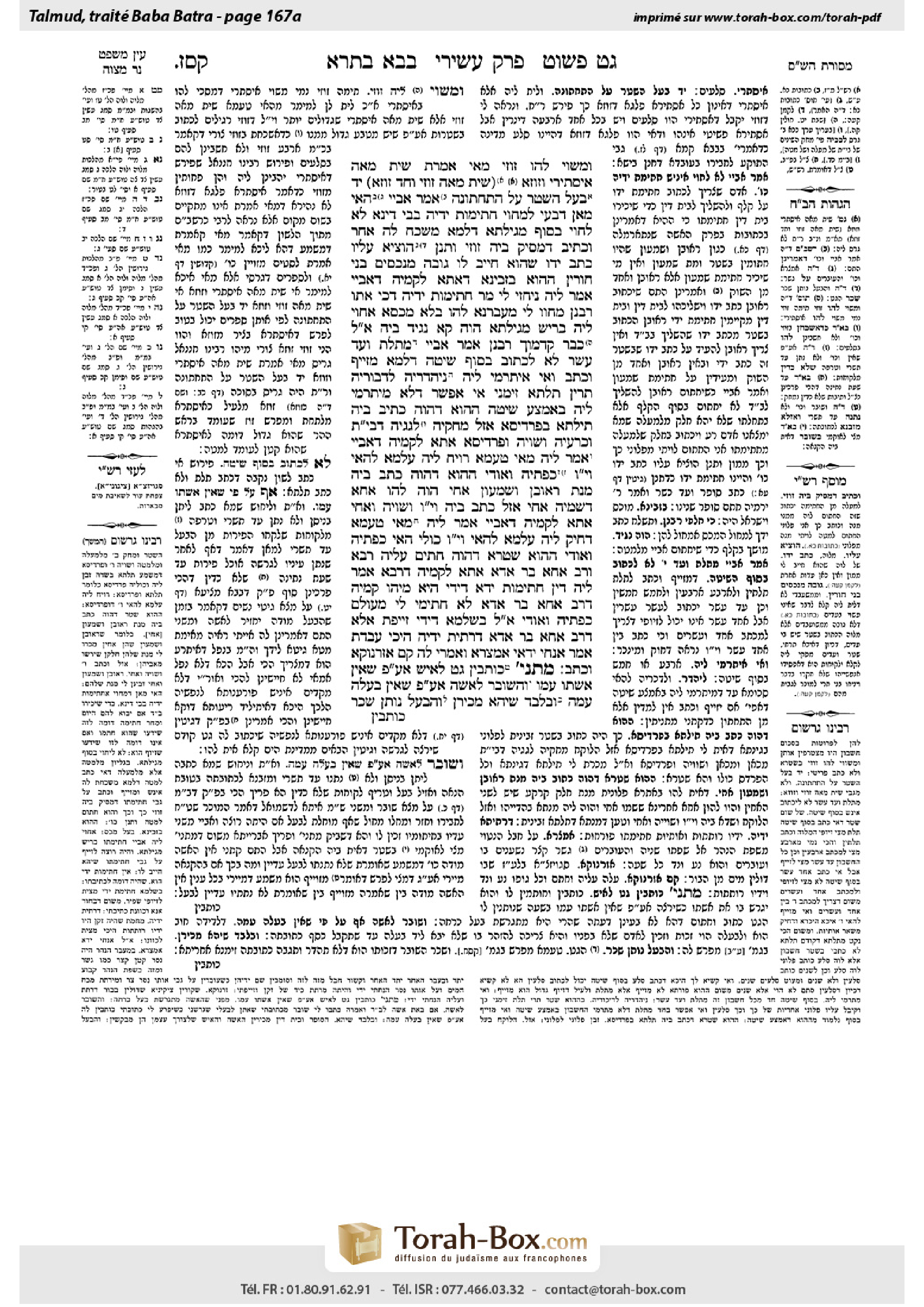
This page of Bava Batra includes the Aramaic text, an English translation and an AI-generated French translation, alongside the scan above.
בבא בתרא קס״ז א · Aramaic and Hebrew text
וּמְשַׁוֵּי לְהוּ זוּזִי; מַאי אָמְרַתְּ – שֵׁית מְאָה אִיסְתֵּירֵי וְזוּזָא, שֵׁית מְאָה זוּזֵי וְחַד זוּזָא? יַד בַּעַל הַשְּׁטָר עַל הַתַּחְתּוֹנָה.
אָמַר אַבָּיֵי: הַאי מַאן דְּבָעֵי לְמַחְוֵי חֲתִימוּת יְדֵיהּ בְּבֵי דִינָא, לָא לַחְוֵי בְּסוֹף מְגִילְּתָא; דִּלְמָא מַשְׁכַּח לַהּ אַחֵר וְכָתֵיב דְּמַסֵּיק בֵּיהּ זוּזִי, וּתְנַן: הוֹצִיא עָלָיו כְּתַב יָדוֹ שֶׁהוּא חַיָּיב לוֹ – גּוֹבֶה מִנְּכָסִים בְּנֵי חוֹרִין.
הָהוּא בַּזְבָּינָא דַּאֲתָא לְקַמֵּיהּ דְּאַבָּיֵי, אֲמַר לֵיהּ: נַיחְזֵי לִי מָר חֲתִימוּת יְדֵיהּ, דְּכִי אָתוּ רַבָּנַן מַחְווּ לִי, מְעַבַּרְנָא לְהוּ בְּלָא מִכְסָא. אַחְוִי לֵיהּ בְּרֵישׁ מְגִילְּתָא. הֲוָה קָא נָגֵיד בֵּיהּ, אֲמַר לֵיהּ: כְּבָר קַדְמוּךָ רַבָּנַן.
אָמַר אַבָּיֵי: מִתְּלָת וְעַד עֲשַׂר – לָא לִכְתּוֹב בְּסוֹף שִׁיטָה, דִּלְמָא מְזַיֵּיף וְכָתֵב. וְאִי אִיתְרְמִי לֵיהּ, נַיהְדְּרֵיהּ לְדִבּוּרֵיהּ תְּרֵין תְּלָתָא זִימְנֵי, אִי אֶפְשָׁר דְּלָא מִיתְרְמֵי לֵיהּ בְּאֶמְצַע שִׁיטָה.
הָהוּא דַּהֲוָה כְּתִיב בֵּיהּ: ״תִּילְתָּא בְּפַרְדֵּיסָא״. אֲזַל מַחְקֵיהּ לְגַגֵּיהּ דְּבֵית וְכַרְעֵיהּ, וְשַׁוְּיֵהּ ״וּפַרְדֵּיסָא״, אֲתָא לְקַמֵּיהּ דְּאַבָּיֵי, אֲמַר לֵיהּ: מַאי טַעְמָא רְוִיחַ לֵיהּ עָלְמָא לְהַאי וָיו? כַּפְתֵיהּ וְאוֹדִי.
הָהוּא דַּהֲוָה כְּתִב בֵּיהּ: ״מְנָת רְאוּבֵן וְשִׁמְעוֹן אַחֵי״. הֲוָה לְהוּ אַחָא דִּשְׁמֵיהּ ״אַחַי״, אֲזַל כְּתַב בֵּיהּ וָיו, וְשַׁוְּיֵהּ ״וְאַחַי״. אֲתָא לְקַמֵּיהּ דְּאַבָּיֵי, אֲמַר לֵיהּ: מַאי טַעְמָא דְּחִיק לֵיהּ עָלְמָא לְהַאי וָיו כּוּלֵּי הַאי? כַּפְתֵיהּ וְאוֹדִי.
הָהוּא שְׁטָרָא דַּהֲוָה חֲתִים עֲלֵיהּ רָבָא וְרַב אַחָא בַּר אַדָּא. אֲתָא לְקַמֵּיהּ דְּרָבָא, אֲמַר לֵיהּ: דֵּין חֲתִימוּת יְדָא דִּידִי הִיא, מִיהוּ קַמֵּיהּ דְּרַב אַחָא בַּר אַדָּא לָא חֲתִימִי לִי מֵעוֹלָם! כַּפְתֵיהּ וְאוֹדִי. אֲמַר לֵיהּ: בִּשְׁלָמָא דִּידִי – זַיֵּיפְתְּ, אֶלָּא דְּרַב אַחָא בַּר אַדָּא, דְּרָתֵית יְדֵיהּ – הֵיכִי עֲבַדְתְּ? אָמַר: אַנַּחִי יְדַאי אַמִּצְרָא. וְאָמְרִי לַהּ: קָם אַזַּרְנוּקָא וּכְתַב.
מַתְנִי׳ כּוֹתְבִין גֵּט לָאִישׁ – אַף עַל פִּי שֶׁאֵין אִשְׁתּוֹ עִמּוֹ, וְהַשּׁוֹבָר לָאִשָּׁה – אַף עַל פִּי שֶׁאֵין בַּעְלָהּ עִמָּהּ; וּבִלְבַד שֶׁיְּהֵא מַכִּירָן. וְהַבַּעַל נוֹתֵן שָׂכָר.
Bava Batra 167a · English translation
and change them into a smaller number of dinars. Therefore, what can you say? The highest and lowest remaining possibilities are: Six hundred istira and a dinar, and six hundred dinars and one more dinar. The guiding principle is that the holder of the document is at a disadvantage, and the lesser of these two values is assumed.
§ Abaye said: With regard to this one who needs to show his signature in court for the purpose of corroborating his signature on a document, he should not show it by writing it at the end of the parchment, lest another, unscrupulous, person find the parchment and write above the signature that the signatory owes him money. And such a document would be valid, as we learned in a mishna (175b): If one presents to a debtor a document in the handwriting of the debtor stating that he owes money to him, but without witnesses signed on the document, the creditor can collect only from unsold property, i.e., property that is currently in the possession of the debtor.
The Gemara relates: There was a certain Jewish tax collector who came before Abaye and said to him: Let the Master show me his signature on a piece of paper to keep in my records, as when rabbis come to me and show me a note with your signature on it, attesting to the fact that they are Torah scholars, I let them pass without paying the tax. Abaye showed him his signature at the top of the parchment, though the unscrupulous tax collector kept pulling the parchment away from Abaye so that the signature would be at the bottom. Abaye noticed this and said to him: The Sages have already anticipated people such as you and advised that one should never write his signature at the bottom of a paper.
§ Abaye said: When writing a promissory note, one should not write any number from three until ten at the end of a line, lest someone commit forgery and write an extension to the number, since it is at the end of the line. In Hebrew and Aramaic, the words for the numbers three through nine can be changed to thirty through ninety, respectively, by appending to them the suffix in, written with the letters yod and nun. Ten can be changed to twenty in a similar manner. And if by chance it occurs for him that these numbers fall out at the end of a line, he should repeat his words two or three times, stating and restating the agreement in question, as it is impossible that the number will not eventually occur for him in the middle of a line. When there is a contradiction, it is the final mention of the amount that is authoritative, as the mishna teaches.
The Gemara relates: There was a certain bill of sale in which it was written that the item sold was: In my garden, one-third of the orchard. The purchaser went and erased the roof and the foot of the beit of the term: Of the orchard [befardeisa], and thereby changed the prefix beit into a vav, yielding: In my garden one-third, and the orchard [ufardeisa], indicating that the sale included one-third of the garden in addition to all of the orchard. The document came before Abaye, who said to the purchaser: What is the reason that there is so much space around this vav? Since the letter vav is narrower than the letter beit, a larger space between letters emerged as compared to the spacing of letters in the rest of the document. Abaye bound the purchaser, i.e., he subjected him to physical coercion, and he admitted to the forgery.
The Gemara relates: There was a certain bill of sale in which it was written that the item being sold was: The portions of Reuven and Shimon, brothers [aḥei]. Reuven and Shimon happened to have a brother whose name was Aḥai, which, when writing without vowels, is spelled identically to aḥei. The purchaser went and wrote a conjunctive vav in the document before the word aḥei, and changed the wording into: The portions of Reuven and Shimon and Aḥai. The document came before Abaye, who said to the purchaser: What is the reason that it is so crowded around this vav? By inserting the extra vav, a smaller space between letters emerged as compared to the spacing of letters in the rest of the document. Abaye bound the purchaser, i.e., he subjected him to physical coercion, and he admitted the forgery.
The Gemara relates: There was a certain document upon which the signatures of Rava and Rav Aḥa bar Adda were signed. The one holding the document came before Rava, who said to him: This is my signature, but I never signed any document before Rav Aḥa bar Adda. Rava bound the holder of the document, i.e., he subjected him to physical coercion, and he admitted the forgery. Rava said to him: Granted, you were able to forge my signature, but how did you perform a forgery of Rav Aḥa bar Adda’s signature, since his hands shake and as a result his signature is distinctive? The man said: I placed my hands on the rope of a narrow footbridge [amitzra], and was thereby able to duplicate Rav Aḥa’s signature. And some say that the forgery was accomplished when the forger stood upon a wobbly water skin [azarnuka] and wrote the signature.
MISHNA: A scribe may write a bill of divorce for a man who requests one, even if his wife is not with him to give her consent when he presents his request, as there is no possibility that he will misuse the document. And a scribe may write a receipt for a woman upon her request, attesting to the payment of her marriage contract, even if her husband is not with her to give his consent. This is true provided that the scribe recognizes the parties requesting the document, to prevent misrepresentation. And for both documents, the husband gives the scribe his wages.
Bava Batra 167a · Traduction française (IA)
et les changer en un nombre réduit de dinars. Ainsi, que pouvez-vous dire ? Les possibilités restantes les plus élevées et les plus basses sont : six cents istira et un dinar, et six cent dinars et un dinar supplémentaire. Le principe fondamental est que celui qui détient le document est désavantagé, et la valeur moindre de ces deux est supposée.
§ Abaye a dit : En ce qui concerne celui qui doit montrer sa signature en justice afin de corroborer sa signature sur un document, il ne doit pas la montrer en la rédigeant à la fin du parchemin, de peur qu'une autre personne malveillante ne trouve le parchemin et n'écrive au-dessus de la signature que le signataire lui doit de l'argent. Et un tel document serait valide, car nous avons appris dans une mitsva (175b) : Si l'on présente à un débiteur un document rédigé à sa main indiquant qu'il doit de l'argent à l'individu, sans témoins signant sur le document, le créancier ne peut récupérer que des biens non vendus, c'est-à-dire des biens actuellement en possession du débiteur.
La Guemara rapporte : Il y avait un certain percepteur juif qui s'est présenté devant Abaye et lui a dit : Faites-moi voir votre signature sur un morceau de papier pour que je puisse la garder dans mes dossiers, car lorsque des rabbins viennent me montrer une note avec votre signature sur laquelle ils attestent qu'ils sont des savants de la Torah, je les laisse passer sans payer l'impôt. Abaye a montré sa signature au sommet du parchemin, bien que le percepteur malveillant continuât à tirer le parchemin hors de la main d'Abaye afin que la signature soit en bas. Abaye a remarqué cela et lui a dit : Les Sages ont déjà anticipé des personnes comme vous et ont conseillé que l'on ne doive jamais écrire sa signature en bas d'un papier.
§ Abaye a dit : Lors de la rédaction d'une promesse de paiement, on ne doit pas écrire un chiffre compris entre trois et dix à la fin d'une ligne, de peur qu'une personne malveillante ne commette un faux-blanc et n'ajoute une extension au chiffre, car c'est à la fin de la ligne. En hébreu et en araméen, les mots désignant les chiffres de trois à neuf peuvent être transformés en trente à quatre-vingt en ajoutant à ces mots le suffixe in, écrit avec les lettres yod et nun. Le dix peut être transformé en vingt de manière similaire. Et si par hasard ces chiffres tombent à la fin d'une ligne, il devrait répéter ses mots deux ou trois fois, réaffirmant ainsi l'accord en question, car il est impossible que le chiffre ne tombe pas un jour au milieu d'une ligne. Lorsqu'il y a une contradiction, c'est la dernière mention de la somme qui est retenue, comme le mitsva l'enseigne.
La Guemara rapporte : Il y avait un certain acte de vente dans lequel il était écrit que l'objet vendu était : Dans mon jardin, un tiers de l'orchard. L'acheteur est allé et a effacé le toit et le pied du mot : De l'orchard [befardeisa], et a ainsi transformé la lettre beit en une vav, ce qui donnait : Dans mon jardin un tiers, et l'orchard [ufardeisa], indiquant que la vente comprenait un tiers du jardin en plus de tout l'orchard. Le document est venu devant Abaye, qui a dit à l'acheteur : Quel est le motif que tant d'espace est autour de cette vav ? Puisque la lettre vav est plus étroite que la lettre beit, un espace plus grand entre les lettres s'est formé par rapport à l'espacement des lettres dans le reste du document. Abaye a lié l'acheteur, c'est-à-dire qu'il l'a soumis à une coercition physique, et il a admis la falsification.
La Guemara rapporte : Il y avait un certain acte de vente dans lequel il était écrit que l'objet vendu était : Les parts de Réouven et de Shimon, frères [aḥei]. Réouven et Shimon avaient un frère dont le nom était Aḥai, qui, lorsqu'il est écrit sans points, est orthographié de la même manière que aḥei. L'acheteur est allé et a ajouté une vav conjonctive dans le document avant le mot aḥei, et a changé le texte en : Les parts de Réouven et de Shimon et Aḥai. Le document est venu devant Abaye, qui a dit à l'acheteur : Quel est le motif que tant d'espace est autour de cette vav ? En insérant la vav supplémentaire, un espace plus petit entre les lettres s'est formé par rapport à l'espacement des lettres dans le reste du document. Abaye a lié l'acheteur, c'est-à-dire qu'il l'a soumis à une coercition physique, et il a admis la falsification.
La Guemara rapporte : Il y avait un certain document sur lequel les signatures de Rava et de Rav Aḥa bar Adda étaient apposées. La personne qui détournait le document s'est présentée devant Rava, qui lui a dit : C'est ma signature, mais je n'ai jamais signé aucun document avant Rav Aḥa bar Adda. Rava a lié la personne qui détournait le document, c'est-à-dire qu'il l'a soumise à une coercition physique, et il a admis la falsification. Rava a dit à cette personne : Bien sûr, vous avez pu falsifier ma signature, mais comment avez-vous pu falsifier la signature de Rav Aḥa bar Adda, puisque ses mains tremblent et que sa signature est distinctive ? La personne a dit : J'ai posé mes mains sur la corde d'un petit pont étroit [amitzra], et j'ai ainsi pu reproduire la signature de Rav Aḥa. Et certains disent que la falsification a été accomplie lorsque le fauteur de la fausse monnaie se tenait sur une peau d'eau instable [azarnuka] et a écrit la signature.
MICHNA : Un scribe peut rédiger un acte de divorce pour un homme qui en demande un, même si sa femme n'est pas avec lui pour donner son consentement lorsqu'il présente sa demande, car il n'y a pas de possibilité qu'il abuse du document. Et un scribe peut rédiger un reçu pour une femme sur sa demande, attestant du paiement de son contrat de mariage, même si son mari n'est pas avec elle pour donner son consentement. Cela est vrai à condition que le scribe reconnaisse les parties demandant le document afin d'éviter la falsification. Et pour les deux documents, le mari paie le salaire du scribe.
Traduction française générée par IA à partir de l’édition anglaise de Sefaria. Vérifie toujours un passage avec le texte source.
Text from Sefaria: William Davidson Edition - Vocalized Aramaic (CC BY NC); William Davidson Edition - English (CC BY NC).