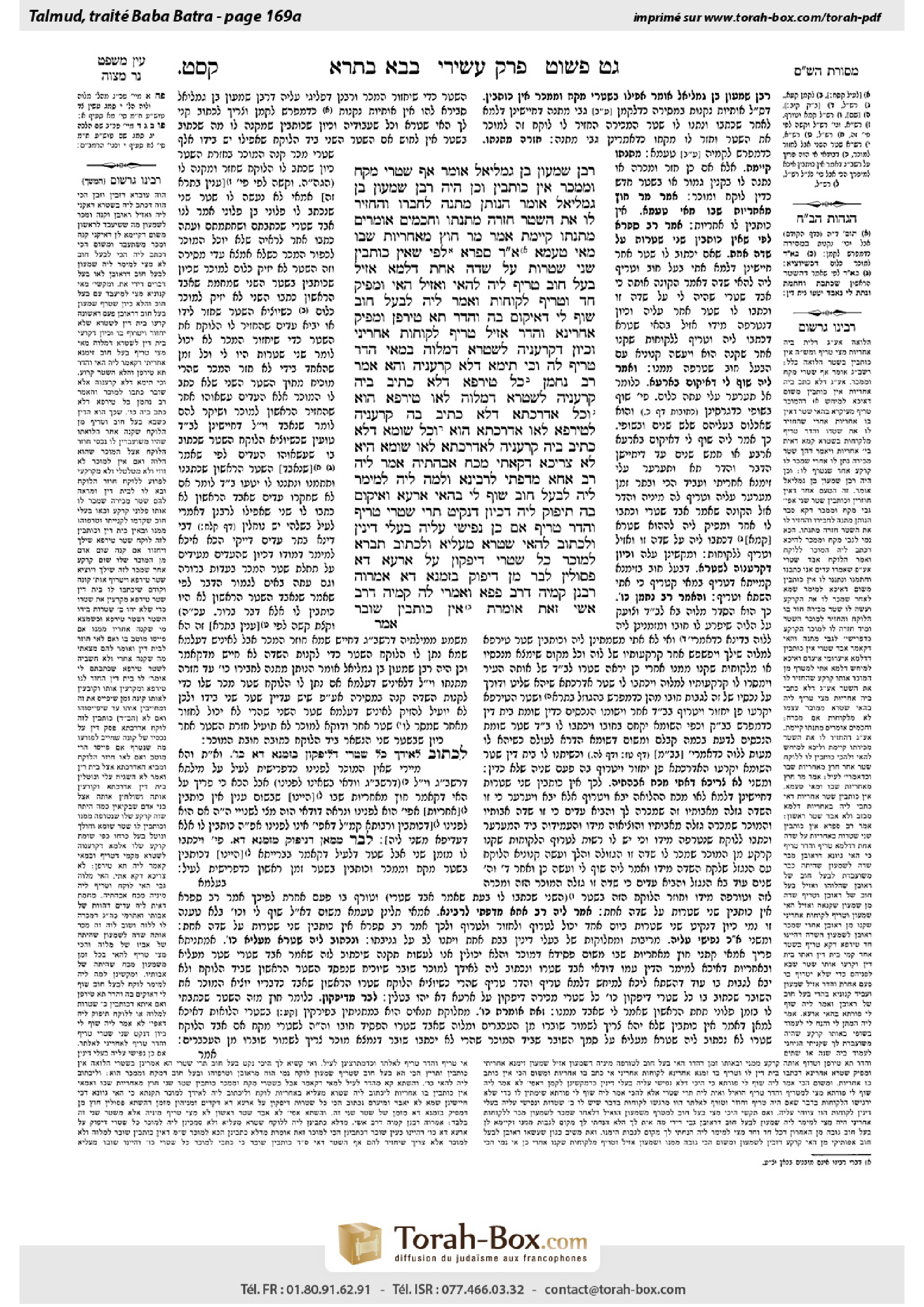
Bava Batra 169a: Talmud study for Daf Yomi
Study the Talmud for Daf Yomi with scanned pages, Hebrew text, English translations from Sefaria and AI-generated French translations.
Passage selection and English or AI-generated French translation are available where the scan has annotations. Daf Study is independent of Torah-Box and Sefaria.
Browse Bava Batra · בבא בתרא · All tractatesBava Batra 169a text and translations
This page of Bava Batra includes the Aramaic text, an English translation and an AI-generated French translation, alongside the scan above.
בבא בתרא קס״ט א · Aramaic and Hebrew text
רַבָּן שִׁמְעוֹן בֶּן גַּמְלִיאֵל אוֹמֵר: אַף שִׁטְרֵי מִקָּח וּמִמְכָּר אֵין כּוֹתְבִין. וְכֵן הָיָה רַבָּן שִׁמְעוֹן בֶּן גַּמְלִיאֵל אוֹמֵר: הַנּוֹתֵן מַתָּנָה לַחֲבֵרוֹ, וְהֶחְזִיר לוֹ אֶת הַשְּׁטָר – חָזְרָה מַתְּנָתוֹ. וַחֲכָמִים אוֹמְרִים: מַתְּנָתוֹ קַיֶּימֶת.
אָמַר מָר: חוּץ מֵאַחְרָיוּת שֶׁבּוֹ. מַאי טַעְמָא?
אָמַר רַב סָפְרָא: לְפִי שֶׁאֵין כּוֹתְבִין שְׁנֵי שְׁטָרוֹת עַל שָׂדֶה אַחַת; דִּלְמָא אָזֵיל בַּעַל חוֹב טָרֵיף לֵיהּ לְהַאי, וְאָזֵיל הַאי וּמַפֵּיק חַד – וְטָרֵיף לָקוֹחוֹת, וְאָמַר לֵיהּ לְבַעַל חוֹב: ״שׁוּף לִי דְּאֵיקוּם בַּהּ, וַהֲדַר תָּא טִירְפַן״. וּמַפֵּיק אַחֲרִינָא, וַהֲדַר אָזֵיל טָרֵיף לָקוֹחוֹת אַחֲרִינֵי.
וְכֵיוָן דִּקְרַעְנֵיהּ לִשְׁטָרָא דְמַלְוֶה, בְּמַאי הָדַר טָרֵיף לַהּ?
וְכִי תֵּימָא דְּלָא קְרַעְנֵיהּ, וְהָא אָמַר רַב נַחְמָן: כֹּל טִירְפָא דְּלָא כְּתִיב בֵּיהּ: ״קְרַעְנֵיהּ לִשְׁטָרָא דְמַלְוֶה״ – לָאו טִירְפָא הוּא. וְכׇל אַדְרַכְתָּא דְּלָא כְּתִיב בַּהּ: ״קְרַעְנֵיהּ לְטִירְפָא״ – לָאו אַדְרַכְתָּא הִוא. וְכׇל שׁוּמָא דְּלָא כְּתִיב בַּיהּ: ״קְרַעְנֵיהּ לְאַדְרַכְתָּא״ – לָאו שׁוּמָא הִיא.
לָא צְרִיכָא, דְּקָאָתֵי מִכֹּחַ אֲבָהָתֵיהּ.
אֲמַר לֵיהּ רַב אַחָא מִדִּפְתִּי לְרָבִינָא: וּלְמָה לֵיהּ לְמֵימַר לֵיהּ לְבַעַל חוֹב: ״שׁוּף לִי בְּהַאי אַרְעָא וְאֵיקוּם בַּהּ״? תִּיפּוֹק לֵיהּ דְּכֵיוָן דְּנָקֵיט תְּרֵי שְׁטָרֵי – טָרֵיף וַהֲדַר טָרֵיף!
אִם כֵּן, נְפִישִׁי עֲלֵיהּ בַּעֲלֵי דִינִין.
וְלִכְתּוֹב לְהַאי שְׁטָרָא מְעַלְּיָא, וְלִכְתּוֹב תְּבָרָא לְמוֹכֵר: ״כֹּל שְׁטָרֵי דְּיִפְּקוּן עַל אַרְעָא דָּא – פְּסוּלִין, לְבַר מִן דְּיִפּוֹק בְּזִמְנָא דָּא״!
אַמְרוּהָ רַבָּנַן קַמֵּיהּ דְּרַב פָּפָּא, וְאָמְרִי לַהּ קַמֵּיהּ דְּרַב אָשֵׁי: זֹאת אוֹמֶרֶת, אֵין כּוֹתְבִין שׁוֹבָר.
Bava Batra 169a · English translation
The baraita continues: Rabban Shimon ben Gamliel says: The court may not write a replacement document even for deeds of buying and selling land. And Rabban Shimon ben Gamliel says as well: With regard to one who gives a gift of land to another, and the recipient returned the deed to him, his gift of land returns to him as well. But the Rabbis say: His gift of land remains in the possession of the recipient.
The Gemara analyzes the baraita: The Master says in the baraita: With regard to deeds of buying and selling land, the court may write a replacement document, excluding the guarantee that was in the first document. What is the reason that the guarantee may not be written?
Rav Safra says: It is because the court may not write two deeds of sale for the same sale of one field, lest a creditor of the seller go and repossess the field sold to this purchaser, and that purchaser go and take out one deed, and in accordance with the guarantee clause of the sale, repossess land from other purchasers who purchased land from the same seller at a later date, and say to the creditor: Remain quiet [shof ] about this matter for a few years, while I become established in the property I repossessed. And then, come and claim your loan again, and then you will repossess this property from me. And then, after it is taken from him a second time, the purchaser will then take out the other document of sale, the replacement that the court had written for him, and then go and repossess land from other purchasers who purchased land from the same seller. In short, a replacement document with a guarantee will enable double collection on that guarantee.
The Gemara asks with regard to Rav Safra’s scenario: How would it be possible for this to occur? But once the creditor repossessed the land the first time as payment of the debt, we, the court, tore the promissory note of the seller’s creditor; with what document could the creditor repossess the purchaser’s land again?
And if you would say that we did not tear the creditor’s promissory note in the course of the first collection, that cannot be. But doesn’t Rav Naḥman say that any document of authorization to repossess liened property from its purchaser in which it is not written: We have torn the creditor’s promissory note, is not a valid document of authorization to repossess liened property; and any document of authorization used to seize a debtor’s property in which it is not written: We have torn the creditor’s document of authorization to repossess liened property, is not a valid document of authorization; and any document of appraisal of an article’s value in which it is not written: We have torn the creditor’s document of authorization, is not a valid document of appraisal.
The Gemara answers: No, it is necessary to explain Rav Safra’s case as follows: The concern is not that a creditor will repossess the field, but that someone will come to repossess it based on his claim to the land as the property of his ancestors. That is, he proved that the field had belonged to his ancestors, and by extension belongs to himself as their heir, and the one who sold the field was in fact a thief. It was for this reason that he repossessed the field from the purchaser, and the concern is that the purchaser will seek reimbursement, as stipulated in the guarantee, from other property sold subsequently by the seller. If the purchaser has two deeds of sale with guarantees, he can collect payment twice.
The Gemara presents another question pertaining to Rav Safra’s case. Rav Aḥa of Difti said to Ravina: And why did Rav Safra have to include in his case that the purchaser will say to the creditor: Remain quiet about this matter for a few years while I become established in this land I repossessed, and then come and claim your loan again? Why did he devise a case in which the seller’s creditor collects payment twice? Let the problem derive from the fact that since the purchaser holds two deeds he will be able to repossess land based on his guarantee once and then repossess land again, even if the creditor does not collect his debt twice.
Ravina answered: If so, if the purchaser attempts to repossess land twice based on a single repossession of the creditor, he will have too many litigants to deal with at once, and his dishonest dealings will be discovered.
The Gemara asks further: But let the court write a proper bill of sale, one that includes a guarantee, for this purchaser, and then let the court write a receipt for the seller, stating: All documents that are issued with regard to the purchase of this field are not valid, except for the one issued on this date, referring to the replacement document written by the court. This will prevent double collection, as if the purchaser attempts to collect on his guarantee with a second document, the seller will foil this attempt by showing this receipt.
The Rabbis said before Rav Pappa in response to this question, and some say it was said before Rav Ashi: Is that to say that the tanna of the baraita holds that in general the court does not write a receipt in such cases?
Bava Batra 169a · Traduction française (IA)
La baraïta continue : Rabban Shimon ben Gamliel dit : Le tribunal ne peut pas écrire un document de remplacement même pour les actes de vente et d'achat de terres. Et Rabban Shimon ben Gamliel dit aussi : En ce qui concerne celui qui donne une donation de terre à un autre, et que le destinataire lui rend l'acte, la donation de terre revient aussi à lui. Mais les Rabbins disent : Sa donation de terre demeure en possession du destinataire.
La Guemara analyse la baraïta : Le Maître dit dans la baraïta : En ce qui concerne les actes de vente et d'achat de terres, le tribunal peut écrire un document de remplacement, en excluant la garantie qui était dans le premier document. Quelle est la raison pour laquelle la garantie ne peut pas être écrite ?
Rav Safra dit : C'est parce que le tribunal ne peut pas écrire deux actes de vente pour la même vente d'un seul champ, de peur qu'un créancier du vendeur aille et réclame la terre vendue à ce acheteur, et que cet acheteur aille et sorte un acte, et selon la clause de garantie de la vente, réclame la terre d'autres acheteurs qui ont acheté de la terre du même vendeur à une date ultérieure, et dise au créancier : Taisez-vous [shof] sur cette affaire pendant quelques années, pendant que je m'établis dans la propriété que j'ai réclamée. Et ensuite, viens et revendique à nouveau ton prêt, et ensuite tu réclames cette propriété de moi. Et ensuite, après qu'il ait été pris une deuxième fois, l'acheteur sortira alors l'autre document de vente, le remplacement que le tribunal avait écrit pour lui, et ira et réclamera la terre d'autres acheteurs qui ont acheté de la terre du même vendeur. En bref, un document de remplacement avec une garantie permettrait une collecte double sur cette garantie.
La Guemara pose une question concernant la situation de Rav Safra : Comment cela pourrait-il arriver ? Mais une fois que le créancier a réclamé la terre la première fois comme paiement de la dette, nous, le tribunal, avons déchiré le billet de créance du créancier du vendeur ; avec quel document le créancier pourrait-il réclamer à nouveau la terre de l'acheteur ?
Et si vous dites que nous n'avons pas déchiré le billet de créance du créancier lors de la première collecte, cela ne peut pas être. Mais ne dit pas Rav Naḥman que tout document d'autorisation à réclamer une propriété liée à son acheteur dans lequel il n'est pas écrit : Nous avons déchiré le billet de créance du créancier, n'est pas un document d'autorisation valide à réclamer une propriété liée ; et tout document d'autorisation utilisé pour saisir la propriété d'un débiteur dans lequel il n'est pas écrit : Nous avons déchiré le document d'autorisation du créancier à réclamer une propriété liée, n'est pas un document d'autorisation valide ; et tout document d'appréciation de la valeur d'un objet dans lequel il n'est pas écrit : Nous avons déchiré le document d'autorisation du créancier, n'est pas un document d'appréciation valide.
La Guemara répond : Non, il faut expliquer la situation de Rav Safra comme suit : La préoccupation n'est pas que le créancier réclame la terre, mais que quelqu'un vienne à réclamer la terre en se basant sur sa revendication de la terre comme propriété de ses ancêtres. C'est-à-dire qu'il a prouvé que la terre appartenait à ses ancêtres, et par conséquent lui-même en tant qu'héritier, et que celui qui a vendu la terre était en fait un voleur. C'est pour cette raison qu'il a réclamé la terre de l'acheteur, et la préoccupation est que l'acheteur puisse demander un réemboursement, selon la garantie, d'autres biens vendus ultérieurement par le vendeur. Si l'acheteur possède deux actes de vente avec des garanties, il peut collecter le paiement deux fois.
La Guemara présente une autre question concernant la situation de Rav Safra. Rav Aḥa de Difti dit à Ravina : Et pourquoi Rav Safra a-t-il dû inclure dans son cas que l'acheteur dira au créancier : Taisez-vous sur cette affaire pendant quelques années pendant que je m'établis dans cette terre que j'ai réclamée, et ensuite viens et revendique à nouveau ton prêt ? Pourquoi a-t-il conçu un cas où le créancier du vendeur récupère le paiement deux fois ? Que la problématique découle du fait que puisque l'acheteur détient deux actes, il pourra réclamer la terre une fois et puis à nouveau, même si le créancier ne récupère pas son dette deux fois.
Ravina répondit : Si c'est ainsi, si l'acheteur tente de réclamer la terre deux fois sur une seule réclamation du créancier, il aura trop de parties à traiter en même temps, et ses manœuvres malhonnêtes seront découvertes.
La Guemara pose une question supplémentaire : Mais que le tribunal écrive un bon de vente correct, celui qui inclut une garantie, pour cet acheteur, et que le tribunal écrive un reçu au vendeur, indiquant : Tous les documents émis concernant l'achat de ce champ ne sont pas valides, sauf celui émis à cette date, faisant référence au document de remplacement écrit par le tribunal. Cela empêcherait la collecte double, car si l'acheteur tente de collecter sur sa garantie avec un deuxième document, le vendeur pourrait foirer cette tentative en montrant ce reçu.
Les Rabbins dirent devant Rav Pappa en réponse à cette question, et certains disent qu'il s'agissait de Rav Ashi : Est-ce que cela signifie que le tanna de la baraïta considère que, en général, le tribunal ne rédige pas un reçu dans de tels cas ?
Traduction française générée par IA à partir de l’édition anglaise de Sefaria. Vérifie toujours un passage avec le texte source.
Text from Sefaria: William Davidson Edition - Vocalized Aramaic (CC BY NC); William Davidson Edition - English (CC BY NC).