Bava Batra 32b: Talmud study for Daf Yomi
Study the Talmud for Daf Yomi with scanned pages, Hebrew text, English translations from Sefaria and AI-generated French translations.
Passage selection and English or AI-generated French translation are available where the scan has annotations. Daf Study is independent of Torah-Box and Sefaria.
Browse Bava Batra · בבא בתרא · All tractatesBava Batra 32b text and translations
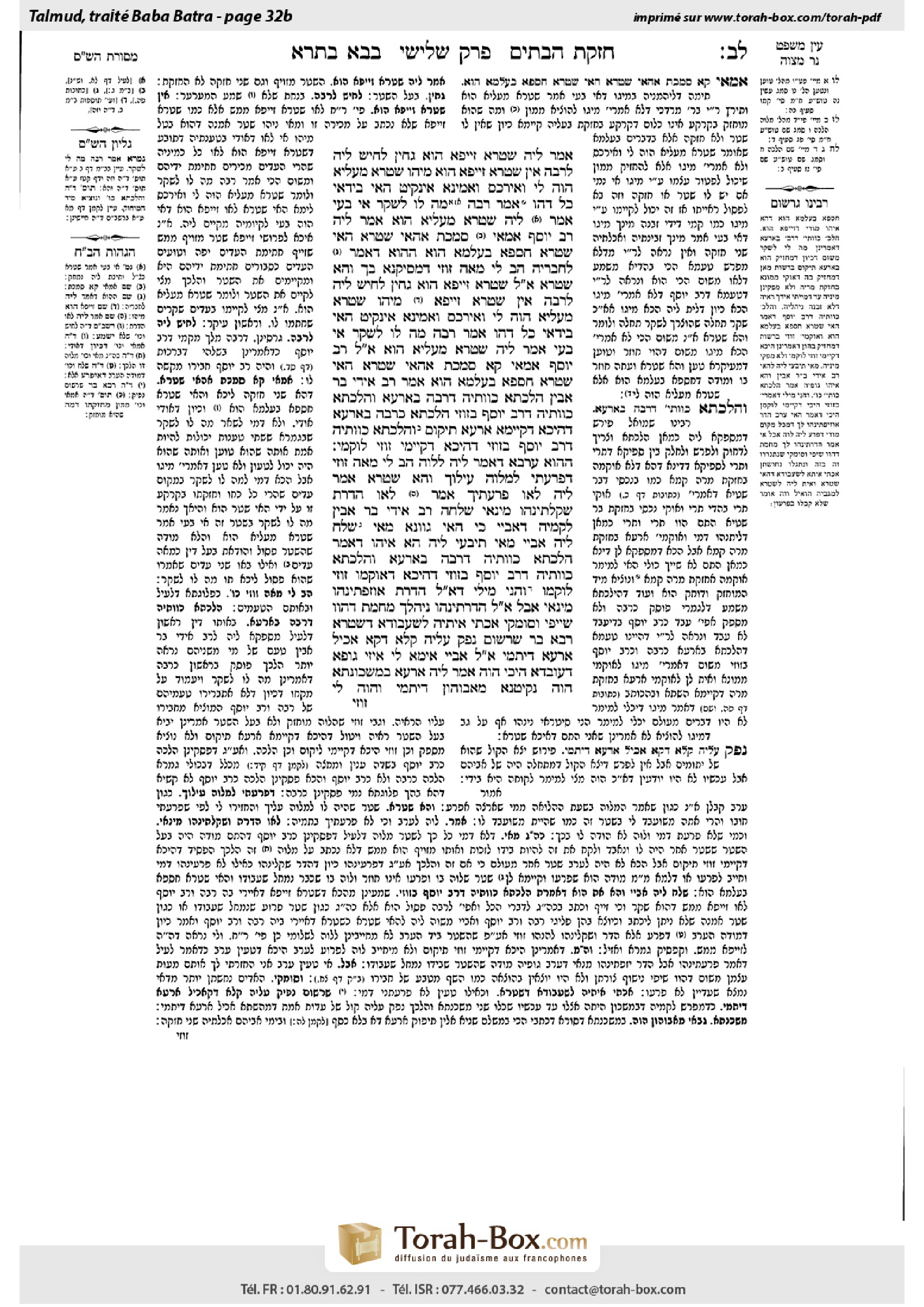
This page of Bava Batra includes the Aramaic text, an English translation and an AI-generated French translation, alongside the scan above.
בבא בתרא ל״ב ב · Aramaic and Hebrew text
אֲמַר לֵיהּ: שְׁטָרָא זַיְיפָא הוּא! גְּחֵין לְחֵישׁ לֵיהּ לְרַבָּה: אִין, שְׁטָרָא זַיְיפָא הוּא; מִיהוּ שְׁטָרָא מְעַלְּיָא הֲוָה לִי, וְאִירְכַס, וְאָמֵינָא: אֶינְקֹיט הַאי בִּידַאי כָּל דְּהוּ.
אָמַר רַבָּה: מָה לוֹ לְשַׁקֵּר? אִי בָּעֵי, אָמַר לֵיהּ: שְׁטָרָא מְעַלְּיָא הוּא. אֲמַר לֵיהּ רַב יוֹסֵף: אַמַּאי סָמְכַתְּ – אַהַאי שְׁטָרָא; הַאי שְׁטָרָא חַסְפָּא בְּעָלְמָא הוּא.
הַהוּא דְּאָמַר לְחַבְרֵיהּ: הַב לִי מְאָה זוּזִי דְּמַסֵּיקְנָא בָּךְ, וְהָא שְׁטָרָא. אֲמַר לֵיהּ: שְׁטָרָא זַיְיפָא הוּא. גְּחֵין לְחֵישׁ לֵיהּ לְרָבָא: אִין, שְׁטָרָא זַיְיפָא; מִיהוּ שְׁטָרָא מְעַלְּיָא הֲוָה לִי, וְאִירְכַס, וְאָמֵינָא: אֶינְקוֹט הַאי בִּידַאי כָּל דְּהוּ.
אָמַר רַבָּה: מָה לוֹ לְשַׁקֵּר? אִי בָּעֵי, אָמַר לֵיהּ: שְׁטָרָא מְעַלְּיָא הוּא. אֲמַר לֵיהּ רַב יוֹסֵף: אַמַּאי קָא סָמְכַתְּ – אַהַאי שְׁטָרָא; הַאי שְׁטָרָא חַסְפָּא בְּעָלְמָא הוּא.
אָמַר רַב אִידִי בַּר אָבִין: הִלְכְתָא כְּווֹתֵיהּ דְּרַבָּה בְּאַרְעָא, וְהִלְכְתָא כְּווֹתֵיהּ דְּרַב יוֹסֵף בְּזוּזֵי. הִלְכְתָא כְּרַבָּה בְּאַרְעָא – דְּהֵיכָא דְּקָיְימָא אַרְעָא, תֵּיקוּם. וְהִלְכְתָא כְּווֹתֵיהּ דְּרַב יוֹסֵף בְּזוּזֵי – דְּהֵיכָא דְּקָיְימִי זוּזֵי, לוֹקְמוּ.
הָהוּא עָרְבָא דַּאֲמַר לֵיהּ לְלֹוֶה: הַב לִי מְאָה זוּזִי דִּפְרַעְתִּי לְמַלְוֶה עִילָּוָךְ, וְהָא שְׁטָרָא. אֲמַר לֵיהּ: לָאו פְּרַעְתָּיךְ? אֲמַר: לָאו הֲדַרְתְּ שְׁקַלְתִּינְהוּ מִינַּאי?
שַׁלְחַהּ רַב אִידִי בַּר אָבִין לְקַמֵּיהּ דְּאַבָּיֵי: כִּי הַאי גַוְונָא מַאי? שְׁלַח לֵיהּ אַבָּיֵי: מַאי תִּיבְּעֵי לֵיהּ? הָא אִיהוּ דְּאָמַר: הִלְכְתָא כְּווֹתֵיהּ דְּרַבָּה בְּאַרְעָא, וְהִלְכְתָא כְּווֹתֵיהּ דְּרַב יוֹסֵף בְּזוּזֵי – דְּהֵיכָא דְּאוֹקְמוּ זוּזֵי, לוֹקְמוּ!
וְהָנֵי מִילֵּי, דְּאָמַר לֵיהּ: הֲדַרְתְּ אוֹזִפְתִּינְהוּ מִינַּאי. אֲבָל אֲמַר לֵיהּ: הַדַּרְתִּינְהוּ נִיהֲלָךְ מֵחֲמַת דַּהֲווֹ שַׁיְיפִי וְסוּמָּקֵי – אַכַּתִּי אִיתֵיהּ לְשִׁעְבּוּדָא דִשְׁטָרָא.
רָבָא בַּר שַׁרְשׁוּם נָפֵק עֲלֵיהּ קָלָא דְּקָא אָכֵיל אַרְעָא דְיַתְמֵי. אֲמַר לֵיהּ אַבָּיֵי: אֵימָא לִי אִיזִי, גּוּפָא דְעוֹבָדָא הֵיכִי הֲוָה? אֲמַר לֵיהּ: אַרְעָא בְּמַשְׁכַּנְתָּא הֲוָה נָקֵיטְנָא מֵאֲבוּהוֹן דְּיַתְמֵי; וַהֲוָה לִי
Bava Batra 32b · English translation
The first said to him in response: It is a forged bill of sale. The possessor leaned over and whispered to Rabba: Yes, it is a forged bill. But I had a proper bill of sale and it was lost, and I said to myself: I will hold this bill of sale in my possession, such as it is.
Rabba said: Why would he lie and state this claim? If he wants to lie, he can say to him that it is a proper bill of sale, and he would have been deemed credible and awarded the field. Rav Yosef said to Rabba: In the final analysis, on what are you relying to award him the land? On this bill of sale? This admittedly forged bill is merely a worthless shard, and cannot be used in court as evidence.
The Gemara relates a similar incident: There was a certain person who said to another: Give me one hundred dinars that I am attempting to collect from you, and this is the promissory note that attests to the debt. The latter said to him in response: It is a forged promissory note. The first person leaned over and whispered to Rava: Yes, it is a forged promissory note. But I had a proper promissory note and it was lost, and I said to myself: I will hold this promissory note in my possession, such as it is.
Rabba said: Why would he lie and state this claim? If he wants to lie, he can say to him that it is a proper promissory note, and he will be deemed credible and awarded the money. Rav Yosef said to Rabba: In the final analysis, on what are you relying to award him the money? On this promissory note? This document is merely a shard, and cannot be used in court as evidence.
The Gemara notes the final ruling in these two cases. Rav Idi bar Avin said: The halakha is in accordance with the opinion of Rabba with regard to land, and the possessor is awarded the land, and the halakha is in accordance with the opinion of Rav Yosef with regard to money, and the one demanding payment is not awarded the money. He explains: The halakha is in accordance with the opinion of Rabba with regard to land, as the court rules that the land should remain where it is, i.e., with the possessor. And the halakha is in accordance with the opinion of Rav Yosef with regard to money, as the court rules that the money should remain where it is, i.e., in the possession of the purported debtor.
The Gemara relates: There was a certain guarantor who said to a debtor: Give me one hundred dinars for the money that I repaid the creditor on your behalf, and this is the document that I received from him when I repaid your debt. The debtor said to the guarantor: Is it not so that I repaid you? The guarantor said to the debtor: Yes, you did, but is it not so that you later took the money from me again?
Rav Idi bar Avin sent the following question before Abaye: What is the halakha in a case like this? Abaye sent him the following response: What does he, i.e., Rav Idi bar Avin, ask? Isn’t he the one who said: The halakha is in accordance with the opinion of Rabba with regard to land, and the halakha is in accordance with the opinion of Rav Yosef with regard to money, as the court rules that the money should remain where it is? Based on his own ruling, the money should remain with the debtor.
The Gemara notes: And this matter applies only in a case where the guarantor says to the debtor: You later borrowed the money from me after you had repaid me. But if the guarantor said to the debtor: I returned to you the money that you had repaid me because of the fact that the coins were worn out or overly reddish, i.e., discolored, and would not be easily accepted as currency, then the lien of the document is still in effect. The debt to the guarantor had not actually been repaid, and the document is still in effect. In that case, the guarantor collects from the debtor.
The Gemara relates: A rumor emerged concerning Rava bar Sharshom that he was profiting from land belonging to orphans. Abaye said to him: Tell me, my friend, concerning the incident itself, how is it that this rumor was generated? Rava bar Sharshom said to him: I was holding on to the land as collateral from the father of the orphans, and I had
Bava Batra 32b · Traduction française (IA)
Le premier lui répondit : C'est un faux contrat de vente. Le possesseur s'inclina et murmura à Rabba : Oui, c'est un faux contrat. Mais j'avais un contrat de vente légitime et il s'est perdu, et je me suis dit : Je vais garder ce contrat de vente tel qu'il est.
Rabba dit : Pourquoi ment-il et affirme-t-il cette revendication ? S'il veut mentir, il pourrait dire à l'autre que c'est un contrat de vente légitime, et il serait considéré comme crédible et reçu le champ. Rav Yosef dit à Rabba : En fin de compte, sur quel fondement comptez-vous pour accorder la terre ? Sur ce contrat de vente ? Ce contrat de vente, qui est clairement faux, n'est qu'un fragment inutile, et ne peut être utilisé en cour comme preuve.
La Guemara rapporte un incident similaire : Il y avait un certain homme qui dit à un autre : Donnez-moi cent dinars que je cherche à récupérer chez vous, et voici la promesse de paiement qui atteste cette dette. L'autre lui répondit : C'est une promesse de paiement falsifiée. Le premier homme s'inclina et murmura à Rava : Oui, c'est une promesse de paiement falsifiée. Mais j'avais une promesse de paiement légitime et elle s'est perdue, et je me suis dit : Je vais garder cette promesse de paiement tel qu'elle est.
Rabba dit : Pourquoi ment-il et affirme-t-il cette revendication ? S'il veut mentir, il pourrait dire à l'autre que c'est un titre de créance valide, et il serait considéré comme crédible et reçu l'argent. Rav Yosef dit à Rabba : En fin de compte, sur quel fondement comptez-vous pour accorder l'argent ? Sur ce titre de créance ? Ce document n'est qu'un fragment, et ne peut être utilisé en cour comme preuve.
La Guemara note la décision finale dans ces deux cas. Rav Idi bar Avin dit : La halakha suit l'opinion de Rabba concernant la terre, et le possesseur est récompensé avec la terre, et la halakha suit l'opinion de Rav Yosef concernant l'argent, et celui qui exige le paiement n'est pas récompensé avec l'argent. Il explique : La halakha suit l'opinion de Rabba concernant la terre, car la cour décide que la terre reste là où elle est, c'est-à-dire avec le possesseur. Et la halakha suit l'opinion de Rav Yosef concernant l'argent, car la cour décide que l'argent reste là où il est, c'est-à-dire en possession du débiteur prétendu.
La Guemara rapporte : Il y avait un certain caution qui dit à un débiteur : Donnez-moi cent dinars pour l'argent que j'ai remis au créancier à votre place, et voici le document que j'ai reçu de lui lors de votre remboursement. Le débiteur dit au caution : N'est-ce pas que vous avez remboursé ? Le caution dit au débiteur : Oui, vous l'avez fait, mais n'est-ce pas que vous avez ensuite repris l'argent auprès de moi ?
Rav Idi bar Avin envoya la question suivante à Abaye : Quelle est la halakha dans un cas comme celui-ci ? Abaye envoya la réponse suivante : Qu'est-ce que lui, c'est-à-dire Rav Idi bar Avin, demande ? N'est-ce pas celui qui a dit : La halakha suit l'opinion de Rabba concernant la terre, et la halakha suit l'opinion de Rav Yosef concernant l'argent, car la cour décide que l'argent reste là où il est ? Selon sa propre décision, l'argent doit rester avec le débiteur.
La Guemara note : Et cette affaire s'applique uniquement dans le cas où le caution dit au débiteur : Vous avez ensuite emprunté l'argent auprès de moi après avoir remboursé. Mais si le caution dit au débiteur : J'ai rendu l'argent que vous aviez remboursé auprès de moi en raison du fait que les pièces étaient abîmées ou trop rousses, c'est-à-dire discrètes, et ne seraient pas facilement acceptées comme monnaie, alors le lien du document est encore en vigueur. La dette envers le caution n'a pas été effectivement remboursée, et le document est encore en vigueur. Dans ce cas, le caution récupère auprès du débiteur.
La Guemara rapporte : Une rumeur émergea concernant Rava bar Sharshom qu'il profitait d'une terre appartenant aux orphelins. Abaye dit à lui : Dis-moi, mon ami, concernant l'incident lui-même, comment est-ce que cette rumeur s'est générée ? Rava bar Sharshom dit à lui : J'étais en possession de la terre en tant que garantie du père des orphelins, et j'avais
Traduction française générée par IA à partir de l’édition anglaise de Sefaria. Vérifie toujours un passage avec le texte source.
Text from Sefaria: William Davidson Edition - Vocalized Aramaic (CC BY NC); William Davidson Edition - English (CC BY NC).