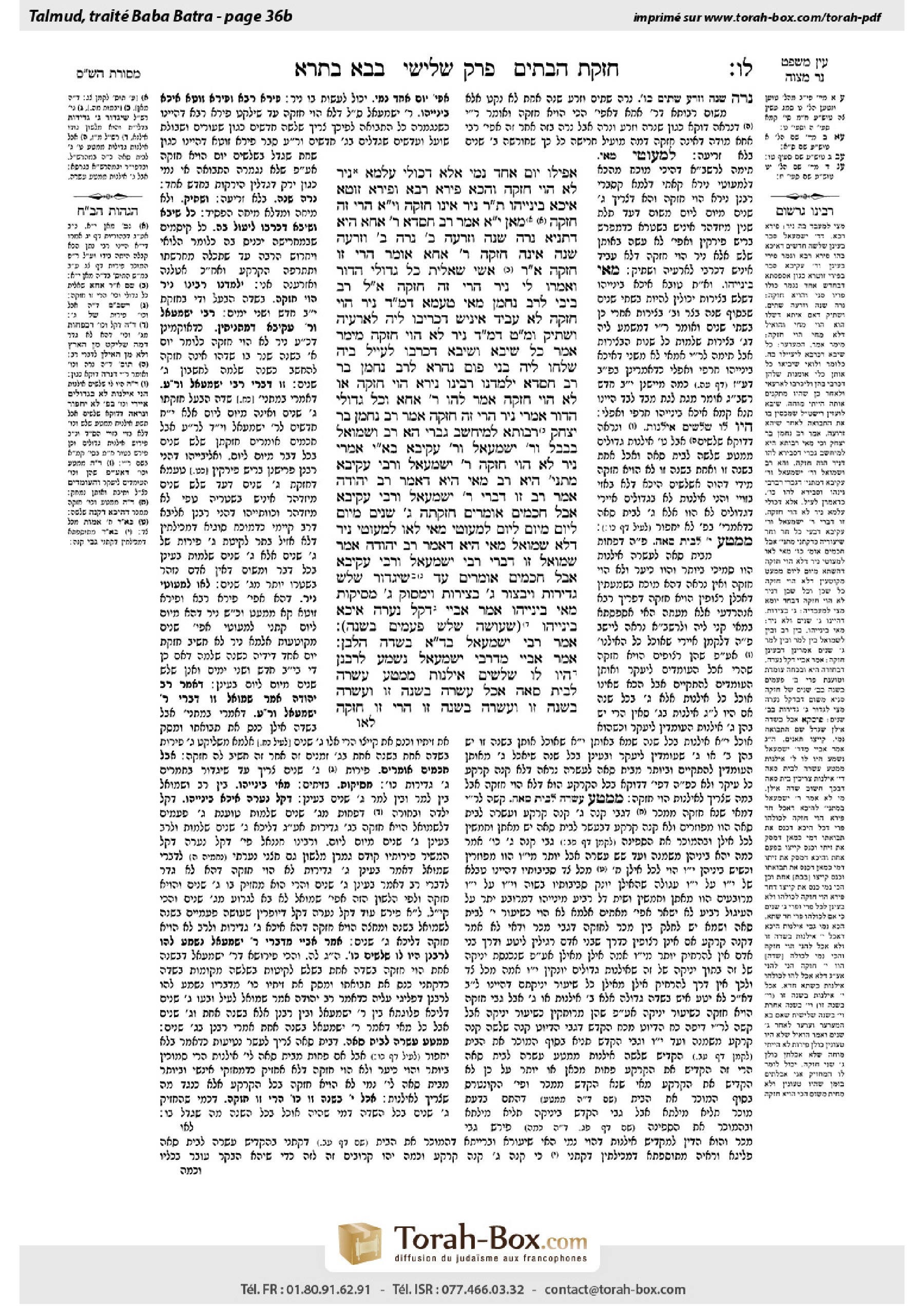
Bava Batra 36b: Talmud study for Daf Yomi
Study the Talmud for Daf Yomi with scanned pages, Hebrew text, English translations from Sefaria and AI-generated French translations.
Passage selection and English or AI-generated French translation are available where the scan has annotations. Daf Study is independent of Torah-Box and Sefaria.
Browse Bava Batra · בבא בתרא · All tractatesBava Batra 36b text and translations
This page of Bava Batra includes the Aramaic text, an English translation and an AI-generated French translation, alongside the scan above.
בבא בתרא ל״ו ב · Aramaic and Hebrew text
אֲפִילּוּ יוֹם אֶחָד נָמֵי! אֶלָּא דְּכוּלֵּי עָלְמָא – נִיר לָא הָוֵי חֲזָקָה; וְהָכָא – פֵּירָא רַבָּא וּפֵירָא זוּטָא אִיכָּא בֵּינַיְיהוּ.
תָּנוּ רַבָּנַן: נִיר – אֵינוֹ חֲזָקָה. וְיֵשׁ אוֹמְרִים: הֲרֵי זֶה חֲזָקָה. מַאן ״יֵשׁ אוֹמְרִים״? אָמַר רַב חִסְדָּא: רַבִּי אַחָא הִיא – דְּתַנְיָא: נָרָהּ שָׁנָה, וּזְרָעָהּ שְׁתַּיִם, נָרָהּ שְׁתַּיִם, וּזְרָעָהּ שָׁנָה – אֵינָהּ חֲזָקָה. רַבִּי אַחָא אוֹמֵר: הֲרֵי זוֹ חֲזָקָה.
אָמַר רַב אָשֵׁי: שְׁאֵלִית כׇּל גְּדוֹלֵי הַדּוֹר, וְאָמְרוּ לִי: נִיר – הֲרֵי זֶה חֲזָקָה. אֲמַר לֵיהּ רַב בִּיבִי לְרַב נַחְמָן: מַאי טַעְמָא דְּמַאן דְּאָמַר: נִיר הָוֵי חֲזָקָה? לָא עֲבִיד אִינִישׁ דְּכָרְיבוּ לֵיהּ לְאַרְעֵיהּ – וְשָׁתֵיק. וּמַאי טַעְמָא דְּמַאן דְּאָמַר: נִיר לָא הָוֵי חֲזָקָה? מֵימָר אָמַר: כֹּל שִׁיבָּא וְשִׁיבָּא דִּכְרָבָא, לְעַיֵּיל בֵּיהּ.
שְׁלַחוּ לֵיהּ בְּנֵי פּוּם נַהֲרָא לְרַב נַחְמָן בַּר רַב חִסְדָּא: יְלַמְּדֵנוּ רַבֵּינוּ, נִירָא – הָוֵי חֲזָקָה, אוֹ לָא הָוֵי חֲזָקָה? אֲמַר לְהוּ, רַבִּי אַחָא וְכׇל גְּדוֹלֵי הַדּוֹר אָמְרִי: נִיר – הֲרֵי זֶה חֲזָקָה.
אָמַר רַב נַחְמָן בַּר יִצְחָק: רְבוּתָא לְמִיחְשַׁב גַּבְרֵי?! הָא רַב וּשְׁמוּאֵל בְּבָבֶל, וְרַבִּי יִשְׁמָעֵאל וְרַבִּי עֲקִיבָא בְּאֶרֶץ יִשְׂרָאֵל, אָמְרִי: נִיר לָא הָוֵי חֲזָקָה!
רַבִּי יִשְׁמָעֵאל וְרַבִּי עֲקִיבָא – מַתְנִיתִין הִיא; רַב – מַאי הִיא? דְּאָמַר רַב יְהוּדָה אָמַר רַב: זוֹ דִּבְרֵי רַבִּי יִשְׁמָעֵאל וְרַבִּי עֲקִיבָא, אֲבָל חֲכָמִים אוֹמְרִים: חֶזְקָתָהּ שָׁלֹשׁ שָׁנִים מִיּוֹם לְיוֹם. ״מִיּוֹם לְיוֹם״ לְמַעוֹטֵי מַאי? לָאו לְמַעוֹטֵי נִיר – דְּלָא?
שְׁמוּאֵל – מַאי הִיא? דְּאָמַר רַב יְהוּדָה אָמַר שְׁמוּאֵל: זוֹ דִּבְרֵי רַבִּי יִשְׁמָעֵאל וְרַבִּי עֲקִיבָא, אֲבָל חֲכָמִים אוֹמְרִים: עַד שֶׁיִּגְדּוֹר שָׁלֹשׁ גְּדֵירוֹת, וְיִבְצוֹר שָׁלֹשׁ בְּצִירוֹת, וְיִמְסוֹק שָׁלֹשׁ מְסִיקוֹת. מַאי בֵּינַיְיהוּ? אָמַר אַבָּיֵי: דֶּקֶל נַעֲרָה אִיכָּא בֵּינַיְיהוּ – שֶׁעוֹשֶׂה שָׁלֹשׁ פְּעָמִים בְּשָׁנָה.
אָמַר רַבִּי יִשְׁמָעֵאל: בַּמֶּה דְּבָרִים אֲמוּרִים – בִּשְׂדֵה הַלָּבָן. אָמַר אַבָּיֵי: מִדְּרַבִּי יִשְׁמָעֵאל נִשְׁמַע לְרַבָּנַן, הָיוּ לוֹ שְׁלֹשִׁים אִילָנוֹת – מִמַּטַּע עֲשָׂרָה לְבֵית סְאָה; אָכַל עֲשָׂרָה בְּשָׁנָה זוֹ, וַעֲשָׂרָה בְּשָׁנָה זוֹ, וַעֲשָׂרָה בְּשָׁנָה זוֹ – הֲרֵי זוֹ חֲזָקָה.
Bava Batra 36b · English translation
Even if he plowed the land for one day in the first and third years respectively, it should be sufficient to establish the presumption of ownership. Rather, everyone agrees that plowing is not sufficient to establish the presumption of ownership, and here the difference between their opinions is whether in order to establish the presumption of ownership one needs to possess the land long enough to grow major produce, which requires three months to grow, or only minor produce, which requires one month.
The Sages taught in a baraita: Plowing is not sufficient to establish the presumption of ownership. And there are those who say: This is sufficient to establish the presumption of ownership. Whose opinion is it that the baraita refers to as: There are those who say? Rav Ḥisda said: It is the opinion of Rabbi Aḥa, as it is taught in a baraita: If the possessor plowed the field for a year and sowed it for two years, or if he plowed it for two years and sowed it for a year, it is not sufficient to establish the presumption of ownership. Rabbi Aḥa says: This is sufficient to establish the presumption of ownership, which indicates that he holds that plowing establishes the presumption of ownership.
Rav Ashi said: I asked all of the great men of the generation about this, and they said to me: With regard to plowing, this is sufficient to establish the presumption of ownership. Rav Beivai said to Rav Naḥman: What is the reason of the one who says that plowing is sufficient to establish the presumption of ownership? Rav Naḥman answered: A person is not apt to have his land plowed by someone else and remain silent. Rav Beivai asked: And what is the reason of the one who says that plowing is not sufficient to establish the presumption of ownership? Rav Naḥman answered: The owner says to himself: Let each and every clump [shibba] of earth enter the plow. That is to say, the owner is amenable to having someone else plow the land for him, and then he will sow and harvest.
The residents of Pum Nahara sent a question to Rav Naḥman bar Rav Ḥisda. Our teacher, instruct us: Is plowing sufficient to establish the presumption of ownership, or is it not sufficient to establish the presumption of ownership? Rav Naḥman bar Rav Ḥisda said to them: Rabbi Aḥa and all of the great men of the generation say: With regard to plowing, this is sufficient to establish the presumption of ownership.
Rav Naḥman bar Yitzḥak said: Is it a novelty to enumerate great men who maintain an opinion without taking into account that of others? But what of Rav and Shmuel in Babylonia, and Rabbi Yishmael and Rabbi Akiva in Eretz Yisrael, who say: Plowing is not sufficient to establish the presumption of ownership?
The Gemara presents the sources for ascribing to these Sages the opinion that plowing does not establish the presumption of ownership. The basis for ascribing it to Rabbi Yishmael and Rabbi Akiva is the mishna, as the Gemara explained above. What is the basis for ascribing this opinion to Rav? As Rav Yehuda says that Rav says: This ruling that either a month or three months is sufficient use for the first and third years is the statement of Rabbi Yishmael and Rabbi Akiva, but the Rabbis, whose opinion is accepted, say: With regard to a field, its presumption of ownership is established by three years, from day to day. The phrase: From day to day, serves to exclude what? Does it not serve to exclude plowing, which does not establish the presumption of ownership?
What is the basis for ascribing this opinion to Shmuel? As Rav Yehuda says that Shmuel says: This ruling that either a month or three months is sufficient use for the first and third years is the statement of Rabbi Yishmael and Rabbi Akiva, but the Rabbis, whose opinion is accepted, say: He does not establish the presumption of ownership until he harvests three date crops, or harvests three grape crops, or harvests three olive crops. This indicates that Shmuel holds that plowing does not establish the presumption of ownership. What is the difference between the opinions of Rav and Shmuel? Abaye said: The difference between their opinions is whether three harvests of a young [na’ara] date tree, which produces a crop three times in one year, establishes the presumption of ownership.
§ The mishna teaches that Rabbi Yishmael said: In what case is this statement, that eighteen months are required to establish the presumption of ownership of a non-irrigated field, said? With regard to a white field, i.e., a grain field. But with regard to an orchard, harvesting three different crops suffices. Abaye said: From the opinion of Rabbi Yishmael we infer the proper understanding of a detail of the opinion of the Rabbis who disagree with him, and hold that three years of harvesting one crop is required to establish the presumption of ownership even with regard to an orchard: If one had thirty trees of one type in a field, and they were planted with a density of ten trees per each area required for sowing one se’a of seed [beit se’a], and one consumed the produce of ten trees in this first year, and of another ten trees in this second year, and of another ten trees in this third year, this is sufficient to establish the presumption of ownership.
Bava Batra 36b · Traduction française (IA)
Même s'il a labouré la terre un jour dans la première et la troisième année respectivement, cela suffirait à établir la présomption de propriété. Cependant, tout le monde convient que le labourage seul ne suffit pas à établir la présomption de propriété, et ici la différence d'opinions réside dans le fait de savoir si, pour établir la présomption de propriété, il faut posséder la terre suffisamment longtemps pour produire des récoltes importantes, ce qui nécessite trois mois, ou seulement des récoltes modestes, ce qui nécessite un mois.
Les Sages ont enseigné dans une baraïta : Le labourage seul ne suffit pas à établir la présomption de propriété. Et il y a ceux qui disent : cela suffit à établir la présomption de propriété. De quel avis est-ce que la baraïta fait référence : ceux qui disent ? Rav Ḥisda a dit : C'est l'avis de Rabbi Aḥa, comme il est enseigné dans une baraïta : Si le possesseur a labouré le champ pendant un an et l'a semé pendant deux ans, ou s'il a labouré pendant deux ans et l'a semé pendant un an, cela ne suffit pas à établir la présomption de propriété. Rabbi Aḥa dit : cela suffit à établir la présomption de propriété, ce qui indique qu'il considère que le labourage établit la présomption de propriété.
Rav Ashi a dit : J'ai interrogé tous les grands hommes de la génération à ce sujet, et ils m'ont répondu : concernant le labourage, cela suffit à établir la présomption d'appartenance. Rav Beivai a dit à Rav Naḥman : Quel est le motif de celui qui dit que le labourage suffit à établir la présomption d'appartenance ? Rav Naḥman a répondu : Une personne n'est pas enclin à avoir son champ labouré par quelqu'un d'autre et rester muette. Rav Beivai a demandé : Et quel est le motif de celui qui dit que le labourage ne suffit pas à établir la présomption d'appartenance ? Rav Naḥman a répondu : L'owner se dit à lui-même : Que chaque amas [shibba] de terre entre dans la charrue. C'est-à-dire que l'owner est enclin à ce que quelqu'un d'autre labour le champ pour lui, puis il semera et récoltera.
Les habitants de Pum Nahara ont envoyé une question à Rav Naḥman bar Rav Ḥisda. Notre maître, instruisez-nous : Le labourage suffit-il à établir la présomption d'appartenance, ou non ? Rav Naḥman bar Rav Ḥisda a dit à eux : Rabbi Aḥa et tous les grands hommes de la génération disent : concernant le labourage, cela suffit à établir la présomption d'appartenance.
Rav Naḥman bar Yitzḥak a dit : Est-ce une nouveauté de citer des grands hommes qui maintiennent un avis sans prendre en compte celui des autres ? Mais que dire de Rav et Shmuel en Babylone, et de Rabbi Yishmael et Rabbi Akiva en Eretz Yisrael, qui disent : Le labourage ne suffit pas à établir la présomption d'appartenance ?
La Guemara présente les sources pour attribuer à ces Sages l'avis selon lequel le labourage ne suffit pas à établir la présomption d'ownership. La base pour attribuer cela à Rabbi Yishmael et Rabbi Akiva est la mitsna, comme la Guemara l'a expliqué ci-dessus. Quelle est la base pour attribuer cet avis à Rav ? Comme Rav Yehuda dit que Rav dit : Cette décision selon laquelle un mois ou trois mois suffisent pour l'usage dans la première et la troisième année est l'avis de Rabbi Yishmael et Rabbi Akiva, mais les Rabbins, dont l'avis est accepté, disent : Concernant un champ, la présomption d'ownership est établie après trois ans, jour après jour. La phrase : jour après jour, sert à exclure quoi ? N'est-ce pas pour exclure le labourage, qui ne suffit pas à établir la présomption d'ownership ?
Quelle est la base pour attribuer cet avis à Shmuel ? Comme Rav Yehuda dit que Shmuel dit : Cette décision selon laquelle un mois ou trois mois suffisent pour l'usage dans la première et la troisième année est l'avis de Rabbi Yishmael et Rabbi Akiva, mais les Rabbins, dont l'avis est accepté, disent : Il ne suffit pas à établir la présomption d'ownership jusqu'à ce qu'il récolte trois récoltes de dattes, ou trois récoltes de raisins, ou trois récoltes d'olives. Cela indique que Shmuel considère que le labourage ne suffit pas à établir la présomption d'ownership. Quelle est la différence entre les avis de Rav et de Shmuel ? Abaye a dit : La différence entre leurs avis réside dans le fait de savoir si trois récoltes d'une jeune [na’ara] arbre à dattes, qui produit une récolte trois fois par an, suffisent à établir la présomption d'ownership.
§ La mitsna enseigne que Rabbi Yishmael a dit : Dans quel cas cette déclaration, selon laquelle dix-huit mois sont nécessaires pour établir la présomption d'ownership d'un champ non arrosé, est-elle dite ? Concernant un champ blanc, c'est-à-dire un champ de céréales. Mais concernant un verger, la récolte de trois récoltes différentes suffit. Abaye a dit : D'après l'avis de Rabbi Yishmael, nous déduisons la bonne compréhension d'un détail de l'avis des Rabbins qui s'opposent à lui et qui considèrent que trois ans de récolte d'une seule culture sont nécessaires pour établir la présomption d'ownership même concernant un verger : Si on avait trente arbres d'un type dans un champ, et qu'ils étaient plantés avec une densité de dix arbres par chaque surface nécessaire pour semer une se'a de grain [beit se’a], et si on avait consommé la récolte de dix arbres dans cette première année, et de dix autres arbres dans cette deuxième année, et de dix autres arbres dans cette troisième année, cela suffirait à établir la présomption d'ownership.
Traduction française générée par IA à partir de l’édition anglaise de Sefaria. Vérifie toujours un passage avec le texte source.
Text from Sefaria: William Davidson Edition - Vocalized Aramaic (CC BY NC); William Davidson Edition - English (CC BY NC).