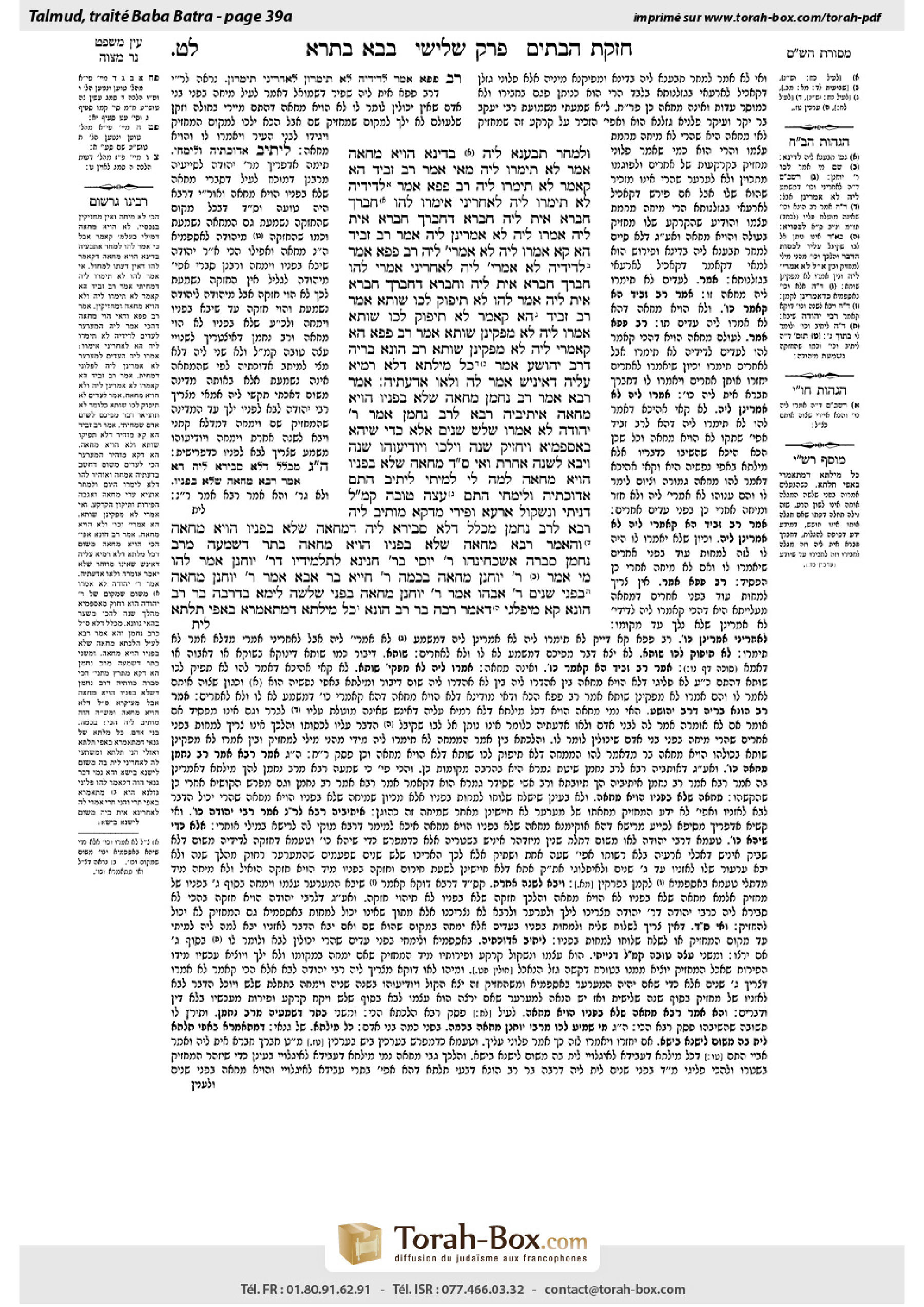
Bava Batra 39a: Talmud study for Daf Yomi
Study the Talmud for Daf Yomi with scanned pages, Hebrew text, English translations from Sefaria and AI-generated French translations.
Passage selection and English or AI-generated French translation are available where the scan has annotations. Daf Study is independent of Torah-Box and Sefaria.
Browse Bava Batra · בבא בתרא · All tractatesBava Batra 39a text and translations
This page of Bava Batra includes the Aramaic text, an English translation and an AI-generated French translation, alongside the scan above.
בבא בתרא ל״ט א · Aramaic and Hebrew text
וְלִמְחַר תָּבַעְנָא לֵיהּ בְּדִינָא״ – הָוְיָא מֶחָאָה.
אָמַר ״לָא תֵּימְרוּ לֵיהּ״, מַאי? אָמַר רַב זְבִיד: הָא קָאָמַר ״לָא תֵּימְרוּ לֵיהּ״! רַב פָּפָּא אָמַר: לְדִידֵיהּ לָא תֵּימְרוּ לֵיהּ, לְאַחֲרִינֵי אֵימַרוּ לְהוּ – חַבְרָךְ חַבְרָא אִית לֵיהּ, חַבְרָא דְחַבְרָךְ חַבְרָא אִית לֵיהּ.
אֲמַרוּ לֵיהּ: ״לָא אָמְרִינַן לֵיהּ״ – אָמַר רַב זְבִיד: הָא קָא אֲמַרוּ לֵיהּ ״לָא אָמְרִינַן לֵיהּ״! רַב פָּפָּא אָמַר: לְדִידֵיהּ לָא אָמְרִינַן לֵיהּ, לְאַחֲרִינֵי אָמְרִי לְהוּ – חַבְרָךְ חַבְרָא אִית לֵיהּ, וְחַבְרָא דְחַבְרָךְ חַבְרָא אִית לֵיהּ.
אֲמַר לְהוּ: ״לָא תִּיפּוֹק לְכוּ שׁוּתָא״ – אָמַר רַב זְבִיד: הָא קָאָמַר ״לָא תִּיפּוֹק לְכוּ שׁוּתָא״! אֲמַרוּ לֵיהּ: ״לָא מַפְּקִינַן שׁוּתָא״ – אָמַר רַב פָּפָּא: הָא קָאָמְרִי לֵיהּ ״לָא מַפְּקִינַן שׁוּתָא״! רַב הוּנָא בְּרֵיהּ דְּרַב יְהוֹשֻׁעַ אָמַר: כֹּל מִילְּתָא דְלָא רַמְיָא עֲלֵיהּ דְּאִינִישׁ, אָמַר לַהּ וְלָאו אַדַּעְתֵּיהּ.
אָמַר רָבָא אָמַר רַב נַחְמָן: מֶחָאָה שֶׁלֹּא בְּפָנָיו הָוְיָא מֶחָאָה. אֵיתִיבֵיהּ רָבָא לְרַב נַחְמָן – אָמַר רַבִּי יְהוּדָה: לֹא אָמְרוּ שָׁלֹשׁ שָׁנִים, אֶלָּא כְּדֵי שֶׁיְּהֵא בְּאַסְפַּמְיָא וְיַחְזִיק שָׁנָה, וְיֵלְכוּ וְיוֹדִיעוּהוּ שָׁנָה, וְיָבֹא לְשָׁנָה אַחֶרֶת. וְאִי סָלְקָא דַעְתָּךְ מֶחָאָה שֶׁלֹּא בְּפָנָיו הָוְיָא מֶחָאָה, לְמָה לִי לְמֵיתֵי? לִיתֵּיב הָתָם אַדּוּכְתֵּיהּ, וְלִימַחֵי! הָתָם עֵצָה טוֹבָה קָא מַשְׁמַע לַן, דְּנֵיתֵי וְנִשְׁקוֹל אַרְעָא וּפֵירֵי.
מִדְּקָא מוֹתֵיב לֵיהּ רָבָא לְרַב נַחְמָן – מִכְּלָל דְּלָא סְבִירָא לֵיהּ דְּמֶחָאָה שֶׁלֹּא בְּפָנָיו הָוְיָא מֶחָאָה; וְהָאָמַר רָבָא: מֶחָאָה שֶׁלֹּא בְּפָנָיו הָוְיָא מֶחָאָה! בָּתַר דְּשַׁמְעַהּ מֵרַב נַחְמָן, סַבְרַהּ.
אַשְׁכְּחִינְהוּ רַבִּי יוֹסֵי בְּרַבִּי חֲנִינָא לְתַלְמִידָיו דְּרַבִּי יוֹחָנָן, אֲמַר לְהוּ: מִי אָמַר רַבִּי יוֹחָנָן מֶחָאָה – בְּכַמָּה? רַבִּי חִיָּיא בַּר אַבָּא אָמַר רַבִּי יוֹחָנָן: מֶחָאָה בִּפְנֵי שְׁנַיִם. רַבִּי אֲבָהוּ אָמַר רַבִּי יוֹחָנָן: מֶחָאָה בִּפְנֵי שְׁלֹשָׁה.
לֵימָא בִּדְרַבָּה בַּר רַב הוּנָא קָא מִיפַּלְגִי – דְּאָמַר רַבָּה בַּר רַב הוּנָא: כֹּל מִילְּתָא דְּמִתְאַמְרָא בְּאַפֵּי תְּלָתָא,
Bava Batra 39a · English translation
and tomorrow, i.e., in the future, I will bring a claim against him in court, it is a valid protest.
If the one lodging a protest also said: Do not tell the possessor of the protest, what is the halakha? Rav Zevid said: It is not a valid protest, because isn’t he saying: Do not tell him? Therefore, word of the protest will not reach the possessor and it is meaningless. Rav Pappa disagreed and said that the owner merely meant: Do not tell him personally, but they, i.e. the witnesses, should tell others. In that case, word of the protest will reach the possessor, since your friend has a friend whom he tells about the protest, and your friend’s friend has a friend whom he tells about the protest; therefore, it is a valid protest.
If the witnesses before whom the owner lodged the protest said to him: We are not going to tell the possessor about your protest, what is the halakha? Rav Zevid said: It is not a valid protest, and he has to lodge a protest before other witnesses, as are they not saying to him: We are not going to tell him about your protest? Rav Pappa disagreed and said that they merely meant: We are not going to tell him personally, but we are going to tell others. In that case, word of the protest will reach the possessor, since your friend has a friend whom he tells about the protest, and your friend’s friend has a friend whom he tells about the protest; therefore, it is a valid protest.
If the one lodging the protest also said to them: A word [shuta] should not emerge from you about this, what is the halakha? Rav Zevid said: It is not a valid protest, as isn’t he saying to them: A word should not emerge from you? Similarly, if the people before whom he protested said to him: We will not have a word emerge from us, Rav Pappa said: It is not a valid protest, as aren’t they saying to him: We will not have a word emerge from us? Rav Huna, the son of Rav Yehoshua, disagreed and said: It is a valid protest, because with regard to any matter that is not actually incumbent on a person to keep secret, it is likely that he will say it to others unawares, and therefore the presumption is that word will reach the possessor.
§ Rava says that Rav Naḥman says: A protest that is lodged not in the presence of the possessor is a valid protest. Rava raised an objection to what Rav Naḥman said from the mishna: Rabbi Yehuda says: The Sages said that establishing the presumption of ownership requires three years only in order that if the owner will be in Spain and another possesses his field for a year, people will go and inform the owner by the end of the next year, and the owner will come back in the following year and take the possessor to court. And if it enters your mind that a protest that is lodged not in his presence is a valid protest, why do I need the owner to come? Let him remain there in his place and protest. The Gemara answers: There, Rabbi Yehuda wishes to teach us good advice, that he should come and collect the land and its produce.
The Gemara asks: From the fact that Rava raised an objection to Rav Naḥman, it may be inferred that he does not hold that a protest that is lodged not in his presence is a valid protest. But doesn’t Rava say: A protest that is lodged not in his presence is a valid protest? The Gemara answers: He held that conclusion only after he heard this halakha from Rav Naḥman.
§ The Gemara relates: Rabbi Yosei, son of Rabbi Ḥanina, encountered the students of Rabbi Yoḥanan and said to them: Did Rabbi Yoḥanan say in the presence of how many people a protest must be lodged? Rabbi Ḥiyya bar Abba says that Rabbi Yoḥanan says: A protest must be lodged in the presence of two people. Rabbi Abbahu said that Rabbi Yoḥanan said: A protest must be lodged in the presence of three people.
The Gemara suggests: Shall we say that they disagree with regard to the halakha of Rabba bar Rav Huna? As Rabba bar Rav Huna says: Any matter that is said in the presence of three people
Bava Batra 39a · Traduction française (IA)
et demain, c'est-à-dire dans le futur, je porterai une action en justice contre lui, c'est une protestation valide.
Si celui qui formule la protestation a également dit : Ne dis pas au propriétaire de la protestation, quelle est la halakha ? Rav Zevid a dit : Ce n'est pas une protestation valide, car n'est-ce pas ce qu'il dit : Ne dis pas à lui ? Ainsi, le mot de la protestation ne parviendra pas au propriétaire et c'est inutile. Rav Pappa a contesté et a dit que le propriétaire n'entendait simplement pas : Ne dis pas à lui personnellement, mais que les témoins, c'est-à-dire les autres, devraient le dire à d'autres. Dans ce cas, le mot de la protestation parviendra au propriétaire, car votre ami a un ami qu'il informe de la protestation, et votre ami de votre ami a un ami qu'il informe de la protestation ; donc, c'est une protestation valide.
Si les témoins devant lesquels l'owner a formulé la protestation ont dit à lui : Nous ne ferons pas savoir au propriétaire votre protestation, quelle est la halakha ? Rav Zevid a dit : Ce n'est pas une protestation valide, et il doit formuler la protestation devant d'autres témoins, car n'est-ce pas ce qu'ils disent à lui : Nous ne ferons pas savoir à lui votre protestation ? Rav Pappa a contesté et a dit que simplement ils entendaient : Nous ne ferons pas savoir à lui personnellement, mais nous ferons savoir à d'autres. Dans ce cas, le mot de la protestation parviendra au propriétaire, car votre ami a un ami qu'il informe de la protestation, et votre ami de votre ami a un ami qu'il informe de la protestation ; donc, c'est une protestation valide.
Si celui qui formule la protestation a également dit aux témoins : Un mot [shuta] ne doit pas en émerger à propos de cela, quelle est la halakha ? Rav Zevid a dit : Ce n'est pas une protestation valide, car n'est-ce pas ce qu'il dit aux témoins : Un mot ne doit pas en émerger ? De même, si les personnes devant lesquelles il a formulé la protestation ont dit à lui : Nous ne ferons pas émerger un mot de nous, Rav Pappa a dit : Ce n'est pas une protestation valide, car n'est-ce pas ce qu'ils disent à lui : Nous ne ferons pas émerger un mot de nous ? Rav Huna, fils de Rav Yéhoshua, a contesté et a dit : C'est une protestation valide, car concernant toute affaire qui n'est pas réellement incumbent de la personne de la garder secrète, il est probable qu'il la dira à d'autres sans le vouloir, et donc la présomption est que le mot parviendra au propriétaire.
§ Rava dit que Rav Naḥman dit : Une protestation formulée en l'absence du propriétaire est une protestation valide. Rava a soulevé un objet contre ce que Rav Naḥman a dit à partir de la mitsna : Rabbi Yéhuda dit : Les Sages disent que l'établissement de la présomption d'ownership nécessite trois ans seulement afin que si l'propriétaire sera en Espagne et un autre possède son champ pendant un an, les gens iront l'informer à la fin de l'année suivante, et l'propriétaire reviendra l'année suivante et portera l'possesseur en justice. Et si cela entre en votre pensée que une protestation formulée en son absence est une protestation valide, pourquoi ai-je besoin que l'propriétaire vienne ? Laissez-le rester là et formulez la protestation. La Guemara répond : Là, Rabbi Yéhuda veut nous enseigner un bon conseil, qu'il vienne et récupère la terre et ses produits.
La Guemara pose la question : À partir du fait que Rava a soulevé un objet contre Rav Naḥman, on peut en déduire qu'il ne considère pas que une protestation formulée en son absence est une protestation valide. Mais n'est-ce pas que Rava dit : Une protestation formulée en son absence est une protestation valide ? La Guemara répond : Il tenait cette conclusion seulement après avoir entendu cette halakha de Rav Naḥman.
§ La Guemara rapporte : Rabbi Yosei, fils de Rabbi Ḥanina, a rencontré les étudiants de Rabbi Yoḥanan et leur a dit : A-t-il dit Rabbi Yoḥanan en présence de combien de personnes une protestation doit être formulée ? Rabbi Ḥiyya bar Abba dit que Rabbi Yoḥanan a dit : Une protestation doit être formulée en présence de deux personnes. Rabbi Abbahu a dit que Rabbi Yoḥanan a dit : Une protestation doit être formulée en présence de trois personnes.
La Guemara suggère : Devons-nous dire qu'ils s'opposent à la halakha de Rabba bar Rav Huna ? Car Rabba bar Rav Huna dit : Toute affaire dite en présence de trois personnes
Traduction française générée par IA à partir de l’édition anglaise de Sefaria. Vérifie toujours un passage avec le texte source.
Text from Sefaria: William Davidson Edition - Vocalized Aramaic (CC BY NC); William Davidson Edition - English (CC BY NC).