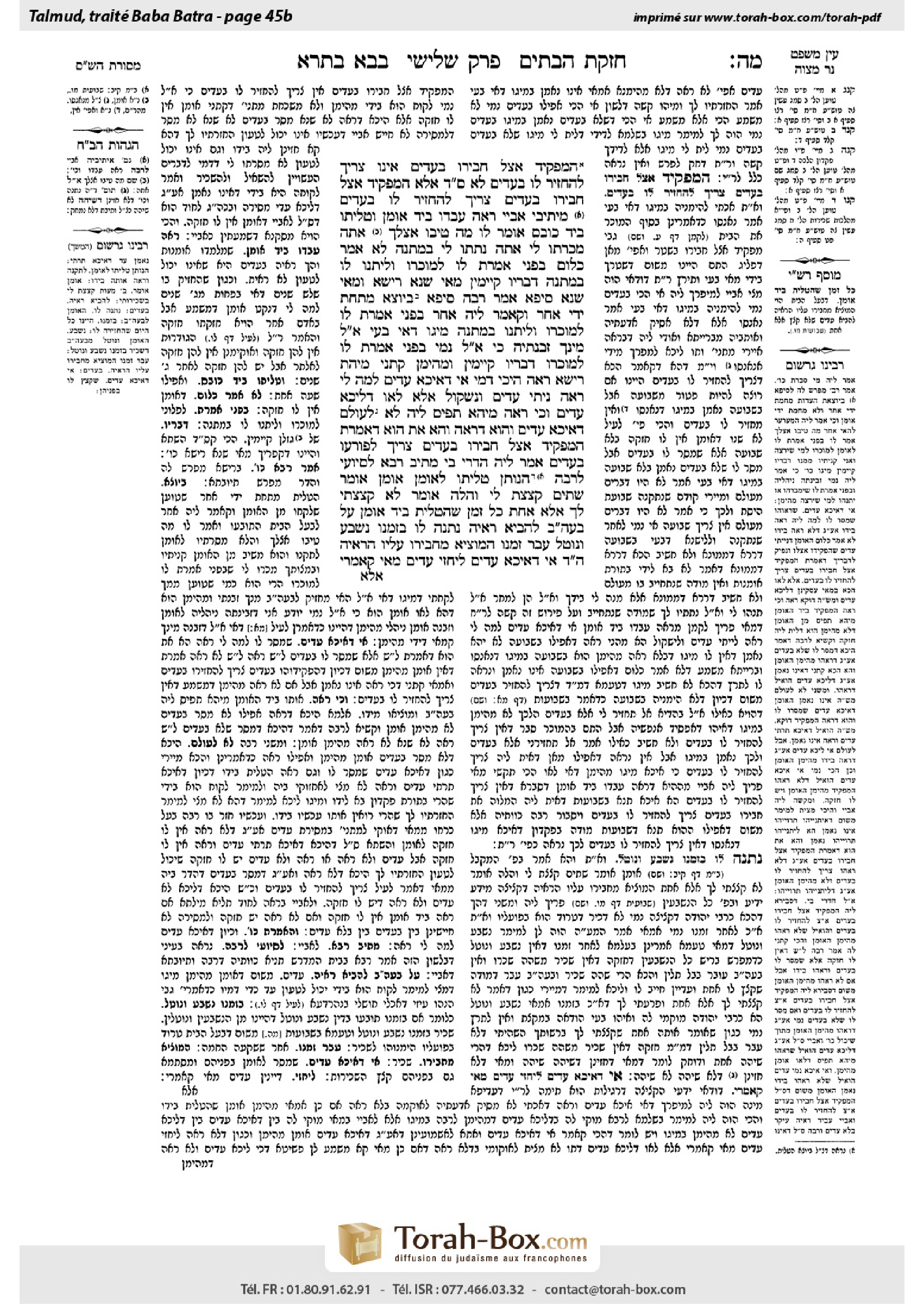
Bava Batra 45b: Talmud study for Daf Yomi
Study the Talmud for Daf Yomi with scanned pages, Hebrew text, English translations from Sefaria and AI-generated French translations.
Passage selection and English or AI-generated French translation are available where the scan has annotations. Daf Study is independent of Torah-Box and Sefaria.
Browse Bava Batra · בבא בתרא · All tractatesBava Batra 45b text and translations
This page of Bava Batra includes the Aramaic text, an English translation and an AI-generated French translation, alongside the scan above.
בבא בתרא מ״ה ב · Aramaic and Hebrew text
הַמַּפְקִיד אֵצֶל חֲבֵירוֹ בְּעֵדִים – אֵינוֹ צָרִיךְ לְהַחְזִיר לוֹ בְּעֵדִים? לָא סָלְקָא דַּעְתָּךְ – אֶלָּא הַמַּפְקִיד אֵצֶל חֲבֵירוֹ בְּעֵדִים, צָרִיךְ לְהַחֲזִיר לוֹ בְּעֵדִים.
מֵיתִיבִי אַבָּיֵי: רָאָה עַבְדּוֹ בְּיַד אוּמָּן, וְטַלִּיתוֹ בְּיַד כּוֹבֵס, אָמַר לוֹ: ״מַה טִּיבוֹ אֶצְלְךָ?״ ״אַתָּה מְכַרְתּוֹ לִי״, ״אַתָּה נְתַתּוֹ לִי בְּמַתָּנָה״ – לֹא אָמַר כְּלוּם. ״בְּפָנַי אָמַרְתָּ לוֹ לְמוֹכְרו וְלִיתְּנוֹ לוֹ בְּמַתָּנָה״ – דְּבָרָיו קַיָּימִין.
מַאי שְׁנָא רֵישָׁא וּמַאי שְׁנָא סֵיפָא?
אָמַר רַבָּה: סֵיפָא – בְּיוֹצֵא מִתַּחַת יְדֵי אַחֵר, וְקָאָמַר לֵיהּ אַחֵר: בְּפָנַי אָמַרְתָּ לוֹ לְמוֹכְרוֹ וְלִיתְּנוֹ בְּמַתָּנָה. מִיגּוֹ דְּאִי בָּעֵי אָמַר לֵיהּ: ״מִינָּךְ זְבַנְתֵּיהּ״, כִּי אָמַר לֵיהּ נָמֵי: ״בְּפָנַי אָמַרְתָּ לוֹ לְמוֹכְרוֹ״ – דְּבָרָיו קַיָּימִין, וּמְהֵימַן.
קָתָנֵי מִיהַת רֵישָׁא: ״רָאָה״. הֵיכִי דָמֵי? אִי דְּאִיכָּא עֵדִים – לְמָה לִי רָאָה? נַיְתֵי עֵדִים וְנִשְׁקוֹל! אֶלָּא לָאו דְּלֵיכָּא עֵדִים? וְכִי רָאָה מִיהָא תָּפֵיס לֵיהּ!
לָא, לְעוֹלָם דְּאִיכָּא עֵדִים; וְהוּא דְּרָאָה.
וְהָא אַתְּ הוּא דְּאָמְרַתְּ: הַמַּפְקִיד אֵצֶל חֲבֵירוֹ בְּעֵדִים, צָרִיךְ לְפוֹרְעוֹ בְּעֵדִים! אֲמַר לֵיהּ: הֲדַרִי בִּי.
מֵתִיב רָבָא לְסַיּוֹעֵי לְרַבָּה: הַנּוֹתֵן טַלִּיתוֹ לְאוּמָּן, אוּמָּן אוֹמֵר: שְׁתַּיִם קָצַצְתָּ לִי, וְהַלָּה אוֹמֵר: לֹא קָצַצְתִּי לְךָ אֶלָּא אַחַת. כׇּל זְמַן שֶׁהַטַּלִּית בְּיַד אוּמָּן – עַל בַּעַל הַבַּיִת לְהָבִיא רְאָיָה. נְתָנָהּ לוֹ – בִּזְמַנּוֹ, נִשְׁבָּע וְנוֹטֵל. עָבַר זְמַנּוֹ, הַמּוֹצִיא מֵחֲבֵירוֹ עָלָיו הָרְאָיָה.
הֵיכִי דָמֵי? אִי דְּאִיכָּא עֵדִים, לִיחְזֵי עֵדִים מַאי קָאָמְרִי!
Bava Batra 45b · English translation
in the case of one who deposits an item with another in the presence of witnesses the recipient need not return it to him in the presence of witnesses? If that were to be so, the craftsman could claim that he had returned it to the owner, even though there are no witnesses. That possibility should not enter your mind. Rather, in the case of one who deposits an item with another in the presence of witnesses, the recipient must return it to him in the presence of witnesses. Therefore, the craftsman could not have claimed that he returned it to the owner.
Abaye raises an objection to Rabba’s ruling from a baraita (Tosefta 2:6): There is a case where one saw his slave in the possession of a craftsman, or his cloak in the possession of a launderer, and says to him: What is the nature of its presence in your possession? If the craftsman or launderer replied: You sold me the slave or cloak, or: You gave the slave or cloak to me as a gift, he has not said anything, and must return it, since a craftsman does not establish the presumption of ownership. But if the craftsman or launderer replied: You said in my presence to someone else to sell the slave or cloak to him or to give the slave or cloak to him, i.e., to sell or give the slave or cloak to the craftsman or launderer himself, as a gift, then his statement is valid.
Before Abaya raises his objection, he first clarifies the ruling of the baraita. What is different in the first clause that the craftsman is not deemed credible and what is different in the latter clause that he is?
Rabba said: The latter clause is stated with regard to a case where the slave or cloak emerges from the possession of another, and not from the possession of the craftsman, and this other person is saying to the owner: You said in my presence to the craftsman to sell the slave or cloak or to give the slave or cloak to me as gift. This person is deemed credible despite acknowledging that he received it from the craftsman, since if he had wanted to, he could have said to the owner of the item: I purchased the slave or cloak from you. As this third party is not a craftsman, he is able to establish the presumption of ownership through possession and would be deemed credible. Therefore, when he says to him as well: You said to him in my presence to sell the slave or cloak, his statement is valid, and he is also deemed credible.
After having clarified the ruling of the baraita, Abaye presents his objection: In any event, the first clause of the baraita teaches that the case where a craftsman is not deemed credible is where the owner saw the slave or cloak in the possession of the craftsman. What are the circumstances? If it is referring to where there are witnesses to the fact that the owner gave the slave or cloak to the craftsman for training or cleaning, respectively, why do I need for the owner to have seen them in the craftsman’s possession? Let the owner simply bring witnesses and take back his slave or cloak. Rather, is it not referring to a case where there are no witnesses, and nevertheless, when the owner saw the slave or cloak in the craftsman’s possession, he may seize the slave or cloak in any case? This contradicts Rabba’s statement that the decisive factor is whether the transfer took place in the presence of witnesses.
Rabba answers this objection: No, that is not the case of the baraita. Actually, it is referring to a case where there are witnesses, and nevertheless, that is the halakha, that he may seize the slave or cloak only where he saw it currently in the possession of the craftsman. But if there are no witnesses that it is currently in his possession, he would be deemed credible if he were to claim that he purchased the slave or cloak from the owner, as he could have claimed that he returned the slave or cloak.
Abaye asked him: But you are the one who said: In the case of one who deposits an item with another in the presence of witnesses, the recipient must return it to him in the presence of witnesses. Therefore, if it was given to the craftsman in the presence of witnesses, he would not have the ability to make a more advantageous claim [miggo] that he returned it. Rabba said to Abaye: I retracted that opinion and hold that he may return it even when not in the presence of witnesses.
Rava raises an objection from a baraita to support the opinion of Rabba: With regard to one who gives his cloak to a craftsman, and then the craftsman says: You fixed two dinars as my payment, and that one, the owner, says: I fixed only one dinar as your payment, then, so long as it is so that the cloak is in the possession of the craftsman, it is incumbent upon the owner to bring proof that the fee was one dinar. If the craftsman gave the cloak back to him, then there are two scenarios: If the claim is lodged in its proper time, i.e., on the day of the cloak’s return, then the craftsman takes an oath and receives the two dinars. But if its proper time passed, then the burden of proof rests upon the claimant, and the craftsman would need to bring proof that the fee was two dinars.
Rava continues with an analysis of this baraita: What are the circumstances of the case discussed in this baraita? If it is a case where there are witnesses who saw the transfer of the item, let us see what the witnesses say about the fee, as they presumably heard the details of the arrangement.
Bava Batra 45b · Traduction française (IA)
Dans le cas d'une personne qui dépose un objet chez une autre en présence de témoins, le destinataire doit le lui rendre en présence de témoins. Ainsi, le menuisier ne pourrait pas prétendre avoir rendu l'objet à l'propriétaire. Cette possibilité ne doit pas entrer en considération. Si c'était le cas, le menuisier pourrait affirmer qu'il avait rendu l'objet à l'propriétaire, même s'il n'y a pas de témoins. En revanche, dans le cas d'une personne qui dépose un objet chez une autre en présence de témoins, le destinataire doit le lui rendre en présence de témoins. Ainsi, le menuisier ne pourrait pas prétendre avoir rendu l'objet à l'propriétaire.
Abaye soulève un objection contre la décision de Rabba, tirée d'une baraïta (Tosefta 2:6) : Il y a un cas où une personne a vu son serviteur chez un menuisier, ou son manteau chez un blanchisseur, et dit à celui-ci : Quelle est la nature de sa possession chez toi ? Si le menuisier ou le blanchisseur répond : Tu m'as vendu le serviteur ou le manteau, ou : Tu m'as donné le serviteur ou le manteau en cadeau, il n'a pas dit grand-chose, et doit le rendre, car un menuisier ne peut pas établir la présomption de propriété. Mais si le menuisier ou le blanchisseur répond : Tu as dit devant moi à quelqu'un d'autre de vendre le serviteur ou le manteau à lui, ou de lui donner le serviteur ou le manteau en cadeau, c'est-à-dire de vendre ou de donner le serviteur ou le manteau au menuisier ou au blanchisseur lui-même en cadeau, alors son déclaration est valable.
Avant que Abaye ne soulève son objection, il clarifie d'abord la décision de la baraïta. Qu'est-ce qui diffère dans la première partie que le menuisier n'est pas considéré comme crédible, et qu'est-ce qui diffère dans la seconde partie que le menuisier l'est ?
Rabba dit : La seconde partie est formulée dans le cas où le serviteur ou le manteau sort de la possession d'une autre personne, et non de la possession du menuisier, et cette autre personne dit à l'owner : Tu as dit devant moi au menuisier de vendre le serviteur ou le manteau, ou de me donner le serviteur ou le manteau en cadeau. Cette personne est considérée comme crédible malgré le fait qu'elle l'ait reçu du menuisier, car s'il avait voulu, elle aurait pu dire à l'owner : J'ai acheté le serviteur ou le manteau de toi. Comme ce tiers n'est pas un menuisier, il peut établir la présomption de propriété par possession et est considéré comme crédible. Ainsi, lorsqu'elle dit également : Tu as dit devant lui de vendre le serviteur ou le manteau, sa déclaration est valable, et elle est également considérée comme crédible.
Après avoir clarifié la décision de la baraïta, Abaye présente son objection : En tout cas, la première partie de la baraïta enseigne que le cas où le menuisier n'est pas considéré comme crédible est celui où l'owner a vu le serviteur ou le manteau en possession du menuisier. Quelles sont les circonstances ? Si cela fait référence à un cas où il y a des témoins du fait que l'owner a donné le serviteur ou le manteau au menuisier pour l'entretien ou la blanchisserie, pourquoi a-t-il besoin de voir le serviteur ou le manteau en possession du menuisier ? L'owner pourrait simplement apporter des témoins et récupérer son serviteur ou son manteau. Plutôt, n'est-ce pas un cas où il n'y a pas de témoins, et pourtant, lorsque l'owner a vu le serviteur ou le manteau en possession du menuisier, il peut s'emparer du serviteur ou du manteau à tout moment ? Cela contredit la déclaration de Rabba selon laquelle le facteur décisif est la présence de témoins lors de la transmission.
Rabba répond à cette objection : Non, ce n'est pas le cas de la baraïta. En réalité, il s'agit d'un cas où il y a des témoins, et pourtant, c'est la halakha, qu'il puisse s'emparer du serviteur ou du manteau uniquement lorsqu'il l'a vu actuellement en possession du menuisier. Mais s'il n'y a pas de témoins qu'il est actuellement en possession de lui, il serait considéré comme crédible s'il affirmait avoir acheté le serviteur ou le manteau de l'owner, car il aurait pu affirmer avoir rendu le serviteur ou le manteau.
Abaye demande à Rabba : Mais tu es celui qui a dit : Dans le cas d'une personne qui dépose un objet chez une autre en présence de témoins, le destinataire doit le lui rendre en présence de témoins. Ainsi, si l'objet a été donné au menuisier en présence de témoins, il n'aurait pas la capacité de présenter une revendication plus avantageuse [miggo] qu'il l'a rendu. Rabba dit à Abaye : J'ai rétracté cette opinion et je considère qu'il peut le rendre même sans témoins.
Rava soulève une objection tirée d'une baraïta pour soutenir l'opinion de Rabba : En ce qui concerne une personne qui donne son manteau à un menuisier, et ensuite le menuisier dit : Tu as fixé deux drachmes comme mon salaire, et celui-ci, l'owner, dit : J'ai fixé seulement un drachme comme ton salaire, alors, tant que le manteau est en possession du menuisier, il incombe à l'owner de fournir une preuve que le salaire était un drachme. Si le menuisier rend le manteau à l'owner, alors il y a deux scénarios : Si la réclamation est portée à temps, c'est-à-dire le jour de la restitution du manteau, alors le menuisier prend un serment et reçoit les deux drachmes. Mais si le temps opportun est passé, alors la charge de la preuve incombe au réclamant, et le menuisier devrait fournir une preuve que le salaire était deux drachmes.
Rava continue son analyse de cette baraïta : Quelles sont les circonstances du cas discuté dans cette baraïta ? Si c'est un cas où il y a des témoins qui ont vu la transmission de l'objet, voyons ce que disent les témoins concernant le prix, car ils ont probablement entendu les détails de l'accord.
Traduction française générée par IA à partir de l’édition anglaise de Sefaria. Vérifie toujours un passage avec le texte source.
Text from Sefaria: William Davidson Edition - Vocalized Aramaic (CC BY NC); William Davidson Edition - English (CC BY NC).