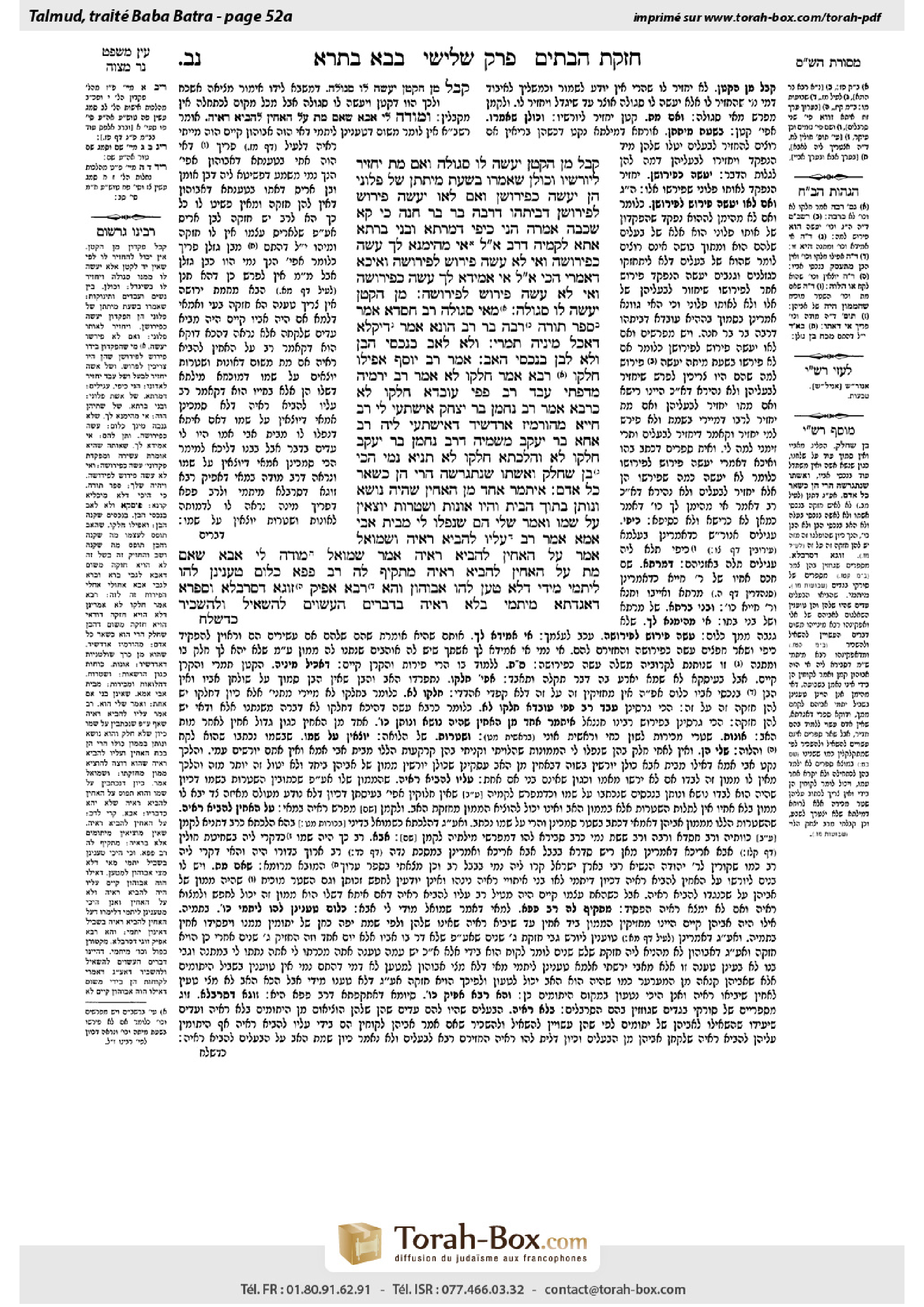
Bava Batra 52a: Talmud study for Daf Yomi
Study the Talmud for Daf Yomi with scanned pages, Hebrew text, English translations from Sefaria and AI-generated French translations.
Passage selection and English or AI-generated French translation are available where the scan has annotations. Daf Study is independent of Torah-Box and Sefaria.
Browse Bava Batra · בבא בתרא · All tractatesBava Batra 52a text and translations
This page of Bava Batra includes the Aramaic text, an English translation and an AI-generated French translation, alongside the scan above.
בבא בתרא נ״ב א · Aramaic and Hebrew text
קִבֵּל מִן הַקָּטָן – יַעֲשֶׂה לוֹ סְגוּלָּה, וְאִם מֵת – יַחֲזִיר לְיוֹרְשָׁיו.
וְכוּלָּן שֶׁאָמְרוּ בִּשְׁעַת מִיתָתָן: ״שֶׁל פְּלוֹנִי הֵן״, יַעֲשֶׂה כְּפֵירוּשָׁן. וְאִם לָאו, יַעֲשֶׂה פֵּירוּשׁ לְפֵירוּשָׁן.
דְּבֵיתְהוּ דְּרַבָּה בַּר בַּר חָנָה, כִּי קָא שָׁכְבָה, אֲמַרָה: ״הָנֵי כֵּיפֵי, דְּמָרְתָא וּבְנֵי בְרַתָּא״. אֲתָא לְקַמֵּיהּ דְּרַב, אֲמַר לֵיהּ: אִי מְהֵימְנָא לָךְ – עֲשֵׂה כְּפֵירוּשָׁהּ, וְאִי לָא – עֲשֵׂה פֵּירוּשׁ לְפֵירוּשָׁהּ.
וְאִיכָּא דְּאָמְרִי, הָכִי אֲמַר לֵיהּ: אִי אֲמִידָא לָךְ, עֲשֵׂה כְּפֵירוּשָׁהּ, וְאִי לָא – עֲשֵׂה פֵּירוּשׁ לְפֵירוּשָׁהּ.
מִן הַקָּטָן – יַעֲשֶׂה לוֹ סְגוּלָּה. מַאי ״סְגוּלָּה״? רַב חִסְדָּא אָמַר: סֵפֶר תּוֹרָה. רַבָּה בַּר רַב הוּנָא אָמַר: דִּיקְלָא דְּאָכֵל מִינֵּיהּ תַּמְרֵי.
וְלֹא לָאָב בְּנִכְסֵי הַבֵּן, וְלֹא לַבֵּן בְּנִכְסֵי הָאָב. אָמַר רַב יוֹסֵף: אֲפִילּוּ חָלְקוּ. רָבָא אָמַר: חָלְקוּ – לֹא.
אָמַר רַב יִרְמְיָה מִדִּפְתִּי: עֲבַד רַב פַּפִּי עוֹבָדָא ״חָלְקוּ – לֹא״, כְּרָבָא. אָמַר רַב נַחְמָן בַּר יִצְחָק, אִישְׁתַּעִי לִי רַב חִיָּיא מֵהוֹרְמִיז אַרְדְּשִׁיר, דְּאִישְׁתַּעִי לֵיהּ רַב אַחָא בַּר יַעֲקֹב, מִשְּׁמֵיהּ דְּרַב נַחְמָן בַּר יַעֲקֹב: חָלְקוּ לֹא. וְהִלְכְתָא: חָלְקוּ לֹא. תַּנְיָא נָמֵי הָכִי: בֵּן שֶׁחָלַק, וְאִשְׁתּוֹ שֶׁנִּתְגָּרְשָׁה – הֲרֵי הֵן כִּשְׁאָר כׇּל אָדָם.
אִיתְּמַר: אֶחָד מִן הָאַחִין שֶׁהָיָה נוֹשֵׂא וְנוֹתֵן בְּתוֹךְ הַבַּיִת, וְהָיוּ אוֹנוֹת וּשְׁטָרוֹת יוֹצְאִין עַל שְׁמוֹ, וְאָמַר: שֶׁלִּי הֵם, שֶׁנָּפְלוּ לִי מִבֵּית אֲבִי אִמָּא – אָמַר רַב: עָלָיו לְהָבִיא רְאָיָה. וּשְׁמוּאֵל אָמַר: עַל הָאַחִין לְהָבִיא רְאָיָה. אָמַר שְׁמוּאֵל: מוֹדֶה לִי אַבָּא, שֶׁאִם מֵת – עַל הָאַחִין לְהָבִיא רְאָיָה.
מַתְקֵיף לַהּ רַב פָּפָּא: כְּלוּם טָעֲנִינַן לְהוּ לְיַתְמֵי, מִידֵּי דְּלָא טְעַן לְהוּ אֲבוּהוֹן? וְהָא רָבָא אַפֵּיק זוּגָא דְסַרְבָּלָא וְסִפְרָא דְאַגָּדְתָּא מִיַּתְמֵי, בְּלֹא רְאָיָה, בִּדְבָרִים הָעֲשׂוּיִם לְהַשְׁאִיל וּלְהַשְׂכִּיר –
Bava Batra 52a · English translation
If one accepted a deposit from a minor, he cannot return it to him, as a minor is unable to properly safeguard the item. Instead, he must make a safe investment [segulla] for him, and if the minor dies, he must return it to his heirs.
And with regard to all these people, who said at the time of their death that the deposited item belongs to so-and-so, the bailee should act as they had explained, and if their explanation was not credible, the bailee should form an explanation of their explanation, i.e., ignore what they said.
The Gemara relates: When the wife of Rabba bar bar Ḥana was dying she said: These rings that are in my possession belong to Marta and the sons of her daughter. Rabba bar bar Ḥana came before Rav to ask what he should do. Rav said to him: If she is credible in your eyes, act as she had explained, and if not, form an explanation of her explanation, i.e., ignore what she said, and as her heir, keep them for yourself.
And there are those who say that this is what Rav said to him: If you assess that it is likely that the rings were deposited with her, act as she had explained, and if not, form an explanation of her explanation.
The baraita stated that if the bailee took a deposit from a minor, he must make a safe investment for him. The Gemara asks: What is meant by a safe investment? Rav Ḥisda says: The bailee should purchase a Torah scroll for the minor. Rabba bar Rav Huna says: He should purchase a date palm, from which the minor will consume dates.
§ The mishna teaches: And a father does not have the ability to establish the presumption of ownership with regard to a son’s property, and a son does not have the ability to establish the presumption of ownership with regard to a father’s property. Rav Yosef says: Even if they separated and the son is no longer dependent on his father, the presumption of ownership still cannot be established by a father or son with regard to the other’s property. Rava says: If they separated, that is not the halakha, and the presumption of ownership can be established.
Rav Yirmeya of Difti said: Rav Pappi performed an action and ruled that if they separated, that is not the halakha, in accordance with the opinion of Rava. Rav Naḥman bar Yitzḥak said that Rav Ḥiyya, from the city of Hurmiz Ardeshid, told me that Rav Aḥa bar Yaakov told him in the name of Rav Naḥman bar Yaakov: If they separated, that is not the halakha. The Gemara notes: And this is the halakha: If they separated, that is not the halakha, and the presumption of ownership can be established. This is also taught in a baraita: A son who separated himself from his father’s finances and a wife who became divorced are like all other people with regard to establishing the presumption of ownership.
§ It was stated: There was a case of one of the brothers in a family who was engaging in commerce in the house, managing the family finances after the death of their father, and there were bills of sale [onot] and other documents circulating with his name appearing as the owner of the property and as a lender, and that brother said: The money and property are mine, as they fell to me as an inheritance from the house of the father of my mother, who is not the mother of the other brothers, Rav says: It is upon him to bring proof of ownership; otherwise the property is divided equally among the brothers. And Shmuel says: It is upon the brothers to bring proof that the money or property belonged to their common father and consequently now belongs to all of them. Shmuel says: Abba, i.e., Rav, concedes to me that if that brother dies, it is upon the brothers to bring proof in order to collect money from the deceased brother’s heirs.
Rav Pappa objects to Shmuel’s addendum: Do we claim on behalf of orphans anything that their father could not claim for them? But didn’t Rava remove a pair of scissors used for cutting garments and a book of aggada from orphans without requiring the prior owner who had asked the orphans to return these items to bring proof of ownership, and he would rule the same in the case of all items with regard to which it is common for them to be lent, and the one in possession has no presumption of ownership?
Bava Batra 52a · Traduction française (IA)
Si quelqu'un a reçu un dépôt d'un mineur, il ne peut pas le rendre à ce dernier, car un mineur n'est pas en mesure de garder correctement l'objet. Il doit plutôt faire un investissement sûr [segulla] pour lui, et si le mineur meurt, il doit rendre l'objet à ses héritiers.
Et concernant tous ces gens qui, à l'époque de leur mort, ont dit que l'objet déposé appartient à tel ou tel, le dépositaire doit agir comme ils l'avaient expliqué, et si leur explication n'était pas crédible, le dépositaire doit former une explication de leur explication, c'est-à-dire ignorer ce qu'ils avaient dit.
La Guemara rapporte : Lorsque la femme de Rabba bar bar Ḥana était mourante, elle a dit : Ces anneaux que j'ai en possession appartiennent à Marta et aux fils de sa fille. Rabba bar bar Ḥana est venu devant Rav pour demander ce qu'il devait faire. Rav a dit à lui : Si elle est crédible à tes yeux, agis comme elle l'avait expliqué, et si ce n'est pas le cas, forme une explication de son explication, c'est-à-dire ignore ce qu'elle a dit, et comme son héritier, garde-les pour toi-même.
Et il y a ceux qui disent que c'est ce que Rav a dit à lui : Si tu juges qu'il est probable que les anneaux aient été déposés chez elle, agis comme elle l'avait expliqué, et si ce n'est pas le cas, forme une explication de son explication.
La baraïta a déclaré que si le dépositaire a reçu un dépôt d'un mineur, il doit investir de manière sécurisée pour lui. La Guemara pose la question : De quoi s'agit-il par un investissement sécurisé ? Rav Ḥisda dit : Le dépositaire doit acheter un livre de la Torah pour le mineur. Rabba bar Rav Huna dit : Il doit acheter un palmier, duquel le mineur pourra manger des figues.
§ La mitsna enseigne : Et un père n'a pas la capacité d'établir la présomption d'appartenance concernant la propriété de son fils, et un fils n'a pas la capacité d'établir la présomption d'appartenance concernant la propriété de son père. Rav Yosef dit : Même s'ils se sont séparés et que le fils n'est plus dépendant de son père, la présomption d'appartenance ne peut pas être établie par un père ou un fils concernant la propriété de l'autre. Rava dit : Si ils se sont séparés, ce n'est pas la halakha, et la présomption d'appartenance peut être établie.
Rav Yirmeya de Difti a dit : Rav Pappi a accompli une action et a rendu un jugement selon lequel si ils se sont séparés, ce n'est pas la halakha, conformément à l'opinion de Rava. Rav Naḥman bar Yitzḥak a dit que Rav Ḥiyya, de la ville de Hurmiz Ardeshid, m'a dit qu'il avait entendu Rav Aḥa bar Yaakov dire en nom de Rav Naḥman bar Yaakov : Si ils se sont séparés, ce n'est pas la halakha. La Guemara note : Et c'est la halakha : Si ils se sont séparés, ce n'est pas la halakha, et la présomption d'appartenance peut être établie. C'est également enseigné dans une baraïta : Un fils qui s'est séparé de ses finances paternelles et une femme divorcée sont comme tous les autres concernant l'établissement de la présomption d'appartenance.
§ Il a été dit : Il y avait un cas d'un des frères d'une famille qui faisait du commerce dans la maison, gérant les finances familiales après la mort de leur père, et il y avait des actes de vente [onot] et d'autres documents circulant sous son nom apparaissant comme propriétaire de la propriété et comme prêteur, et ce frère a dit : L'argent et la propriété sont à moi, car ils m'ont été transmis comme héritage de la maison du père de ma mère, qui n'est pas la mère des autres frères. Rav dit : Il lui incombe de présenter une preuve d'appartenance ; autrement la propriété est divisée équitablement entre les frères. Et Shmuel dit : Il incombe aux frères de présenter une preuve que l'argent ou la propriété appartenaient à leur père commun et qu'ils appartiennent donc à tous. Shmuel dit : Abba, c'est-à-dire Rav, reconnaît que si ce frère meurt, il incombe aux frères de présenter une preuve afin de récupérer de l'argent auprès des héritiers du frère décédé.
Rav Pappa s'oppose à l'addendum de Shmuel : Est-ce que nous revendiquons à l'encontre des orphelins quelque chose que leur père ne pouvait pas revendiquer à leur nom ? Mais n'a-t-il pas été dit que Rava a retiré un ciseau utilisé pour couper les vêtements et un livre d'aggada des orphelins sans exiger que l'ancien propriétaire, qui avait demandé aux orphelins de rendre ces objets, apporte une preuve d'appartenance, et il a jugé de la même manière dans le cas de tous les objets concernant lesquels il est courant qu'ils soient prêtés, et que celui qui les détient n'a pas de présomption d'appartenance ?
Traduction française générée par IA à partir de l’édition anglaise de Sefaria. Vérifie toujours un passage avec le texte source.
Text from Sefaria: William Davidson Edition - Vocalized Aramaic (CC BY NC); William Davidson Edition - English (CC BY NC).