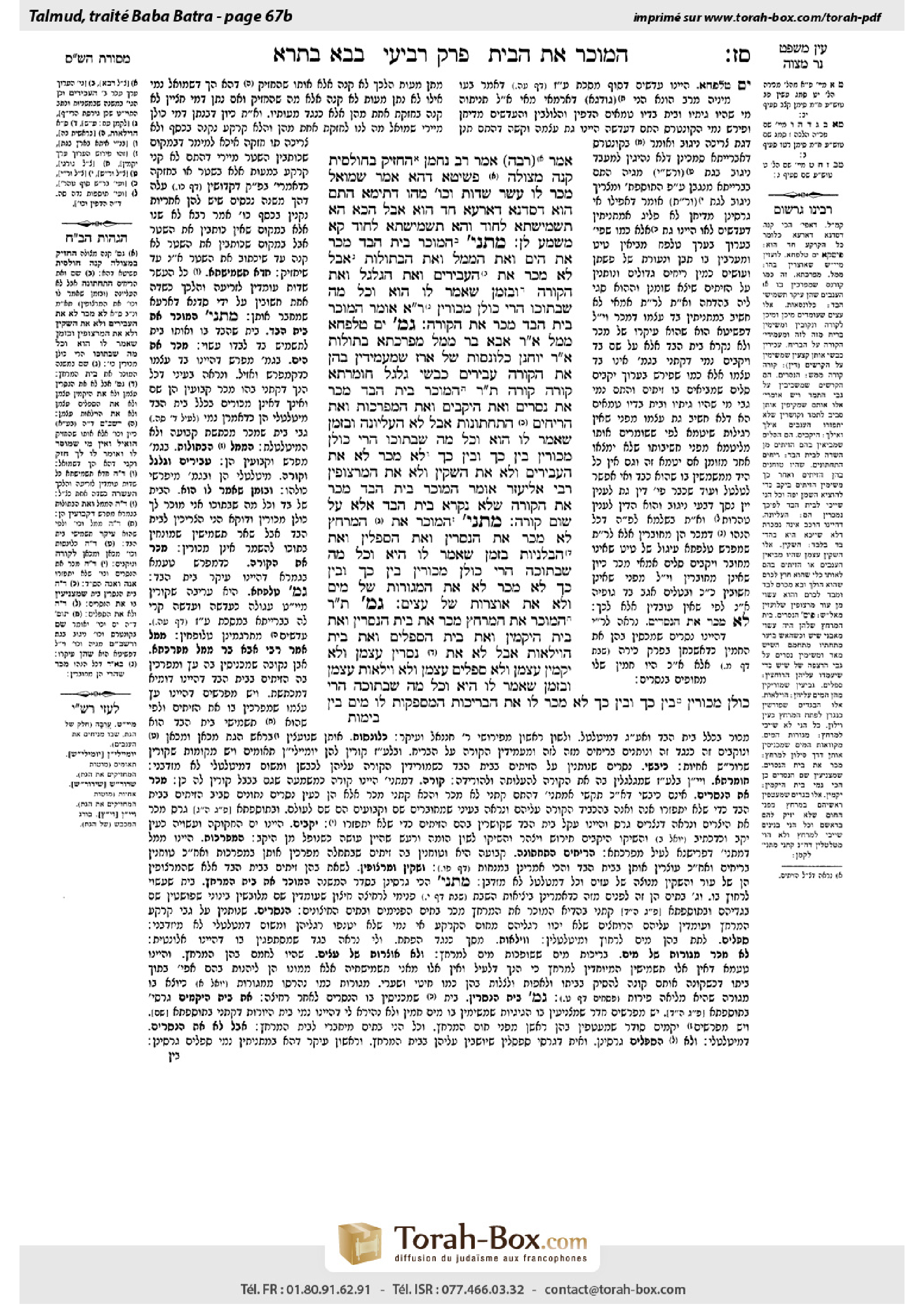
Bava Batra 67b: Talmud study for Daf Yomi
Study the Talmud for Daf Yomi with scanned pages, Hebrew text, English translations from Sefaria and AI-generated French translations.
Passage selection and English or AI-generated French translation are available where the scan has annotations. Daf Study is independent of Torah-Box and Sefaria.
Browse Bava Batra · בבא בתרא · All tractatesBava Batra 67b text and translations
This page of Bava Batra includes the Aramaic text, an English translation and an AI-generated French translation, alongside the scan above.
בבא בתרא ס״ז ב · Aramaic and Hebrew text
אָמַר רַבָּה אָמַר רַב נַחְמָן: הֶחְזִיק בַּחוֹלְסִית – קָנָה מְצוּלָה. פְּשִׁיטָא – דְּהָא אָמַר שְׁמוּאֵל: מָכַר לוֹ עֶשֶׂר שָׂדוֹת וְכוּ׳! מַהוּ דְּתֵימָא: הָתָם הוּא דְּסַדָּנָא דְאַרְעָא חַד הוּא, אֲבָל הָכָא – הָא תַּשְׁמִישְׁתָּא לְחוֹד, וְהָא תַּשְׁמִישְׁתָּא לְחוֹד; קָא מַשְׁמַע לַן.
מַתְנִי׳ הַמּוֹכֵר בֵּית הַבַּד – מָכַר אֶת הַיָּם וְאֶת הַמֶּמֶל וְאֶת הַבְּתוּלוֹת, אֲבָל לֹא מָכַר אֶת הָעֲבִירִים וְאֶת הַגַּלְגַּל וְאֶת הַקּוֹרָה. וּבִזְמַן שֶׁאָמַר לוֹ: ״הוּא וְכׇל מַה שֶּׁבְּתוֹכוֹ״ – הֲרֵי כּוּלָּן מְכוּרִין. רַבִּי אֱלִיעֶזֶר אוֹמֵר: הַמּוֹכֵר בֵּית הַבַּד – מָכַר אֶת הַקּוֹרָה.
גְּמָ׳ ״יָם״ – טְלָפְחָא. ״מֶמֶל״ – אָמַר רַבִּי אַבָּא בַּר מֶמֶל: מַפְרַכְתָּא. ״בְּתוּלוֹת״ – אָמַר רַבִּי יוֹחָנָן: כְּלוֹנְסוֹת שֶׁל אֶרֶז, שֶׁמַּעֲמִידִין בָּהֶן אֶת הַקּוֹרָה. ״עֲבִירִים״ – כִּבְשֵׁי. ״גַּלְגַּל״ – חוּמַרְתָּא. ״קוֹרָה״ – קוֹרָה.
תָּנוּ רַבָּנַן: הַמּוֹכֵר בֵּית הַבַּד – מָכַר אֶת [הַ]נְּסָרִים, וְאֶת הַיְּקָבִים, וְאֶת הַמַּפְרֵכוֹת, וְאֶת הָרֵיחַיִם הַתַּחְתּוֹנוֹת – אֲבָל לֹא הָעֶלְיוֹנָה. וּבִזְמַן שֶׁאָמַר לוֹ: ״הוּא וְכׇל מַה שֶּׁבְּתוֹכוֹ״ – הֲרֵי כּוּלָּן מְכוּרִין. בֵּין כָּךְ וּבֵין כָּךְ – לֹא מָכַר לֹא אֶת הָעֲבִירִים, וְלֹא אֶת הַשַּׂקִּין, וְלֹא אֶת הַמַּרְצוּפִין.
רַבִּי אֱלִיעֶזֶר אוֹמֵר: הַמּוֹכֵר בֵּית הַבַּד – מָכַר אֶת הַקּוֹרָה, שֶׁלֹּא נִקְרָא בֵּית הַבַּד אֶלָּא עַל שׁוּם קוֹרָה.
מַתְנִי׳ הַמּוֹכֵר אֶת הַמֶּרְחָץ – לֹא מָכַר אֶת הַנְּסָרִין, וְאֶת הַסְּפָלִין, וְאֶת הַבֵּלָנִיּוֹת. בִּזְמַן שֶׁאָמַר לוֹ: ״הִיא וְכׇל מַה שֶּׁבְּתוֹכָהּ״ – הֲרֵי כּוּלָּן מְכוּרִין. בֵּין כָּךְ וּבֵין כָּךְ – לֹא מָכַר לֹא אֶת הַמְּגוּרוֹת שֶׁל מַיִם, וְלֹא אֶת אוֹצָרוֹת שֶׁל עֵצִים.
גְּמָ׳ תָּנוּ רַבָּנַן: הַמּוֹכֵר אֶת הַמֶּרְחָץ – מָכַר אֶת בֵּית הַנְּסָרִין, וְאֶת בֵּית הַיְּקָמִין, וְאֶת בֵּית הַסְּפָלִים, וְאֶת בֵּית הַוִּילָאוֹת; אֲבָל לֹא אֶת נְסָרִין עַצְמָן, וְלֹא יְקָמִין עַצְמָן, וְלֹא סְפָלִים עַצְמָן, וְלֹא וִילָאוֹת עַצְמָן. וּבִזְמַן שֶׁאָמַר לוֹ: ״הִיא וְכׇל מַה שֶּׁבְּתוֹכָהּ״ – הֲרֵי כּוּלָּן מְכוּרִין. בֵּין כָּךְ וּבֵין כָּךְ, לֹא מָכַר לוֹ אֶת הַבְּרֵיכוֹת הַמְסַפְּקוֹת לוֹ מַיִם – בֵּין
Bava Batra 67b · English translation
Rabba actually said that Rav Naḥman said: If one sold another a sand field and a pond, and the buyer took possession of the sand field, he has also acquired the pond. The Gemara asks: This is obvious, as Shmuel says: If one sold ten fields to another in ten different regions, once he takes possession of one of them, he has acquired them all. The Gemara explains why Rav Naḥman’s statement was nevertheless necessary: It is necessary lest you say that there, in the case of the ten fields, the land is all located in one geographic block with a single use, and therefore all the fields are acquired together. But here, in the case of the sand field and the pond, this, the sand field, has a distinct use, and that, the pond, has a distinct use, and therefore taking possession of one of them should not effect acquisition of the other. Therefore, Rav Naḥman teaches us that if the buyer took possession of the sand field, he has acquired the pond as well.
MISHNA: One who sells an olive press without specifying what is included in the sale has sold with it the yam and the memel and the betulot, the immovable elements of the olive press. But he has not sold with it the avirim and the galgal and the kora, the movable utensils of the olive press. When the seller says to the buyer: I am selling you it and everything that is in it, all these components are sold along with the olive press, even the movable utensils. Rabbi Eliezer says: One who sells an olive press has sold the kora as well, as it is the most fundamental element of the olive press.
GEMARA: The Gemara explains the terms used in the mishna. The yam is the lentil, the round stationary container into which the olives are placed before being crushed. As for the memel, Rabbi Abba bar Memel said: This is the crusher, the utensil used to pound and crush the olives. As for the betulot, Rabbi Yoḥanan said: These are the cedar posts [klonsot] that support the beam of the olive press. The avirim are the pressers, wooden boards that are placed on top of the crushed olives, and upon which the beam is lowered in order to press the olives. The galgal is the ḥumrata, a round stone that is placed on the beam to weigh it down. The kora is the heavy wooden beam used to press down upon the olives and thereby extract the oil.
The Sages taught in a baraita (Tosefta, 3:2): One who sells an olive press without specifying what is included in the sale has sold with it the boards that are fixed in place to hold the olives; and the vats for collecting the oil, and the crushers, used to pound and crush the olives before pressing them, and the lower millstone, i.e., the stationary millstone base; but not the upper millstone. But when the seller says to the buyer: I am selling you it and everything that is in it, all these components are sold. Both in this case, where he executes the sale without specification, and in that case, where he adds the phrase that he is selling everything that is in the olive press, he has not sold the wooden boards that are placed on top of the crushed olives when they are being pressed, nor has he sold the sacks, nor has he sold the leather bags for carrying the olives, as these are all movable goods that are not specifically part of the olive press.
Rabbi Eliezer says: One who sells an olive press has sold the heavy wooden beam used to press down upon the olives, as it is called an olive press [beit habad] only due to this beam, the most essential part of the press, and this beam is otherwise known as a bad.
MISHNA: One who sells a bathhouse without specifying what is included in the sale has not sold with it the boards that are placed on the floor, nor has he sold the basins or the curtains [habilaniyot]. When the seller says to the buyer: I am selling you it and everything that is in it, all these components are sold along with the bathhouse. Both in this case, where he executes the sale without specification, and in that case, where he adds the phrase that he is selling everything that is in the bathhouse, he has not sold the tanks of water, nor has he sold the storerooms for wood, as an explicit sales agreement is required for these matters.
GEMARA: The Sages taught in a baraita (Tosefta, 3:3): One who sells a bathhouse without specifying what is included in the sale has sold with it the storeroom for the boards, and the storeroom for the implements called yekamin, and the storeroom for the basins, and the storeroom for the curtains [vilaot], but he has not sold the boards themselves, nor the yekamin themselves, nor the basins themselves, nor the curtains themselves. When the seller says to the buyer: I am selling you it and everything that is in it, all these components are sold along with the bathhouse. Both in this case, where he executes the sale without specification, and in that case, where he adds the phrase that he is selling everything that is in the bathhouse, he has not sold him the pools that supply him with water, whether
Bava Batra 67b · Traduction française (IA)
Rabba a dit effectivement que Rav Naḥman a dit : Si l'on vend à un autre un champ de sable et un étang, et que l'acheteur prend possession du champ de sable, il a aussi acquis l'étang. La Guemara pose la question : Cela est évident, car Shmuel dit : Si l'on vend dix champs à un autre dans dix régions différentes, une fois qu'il prend possession d'un d'entre eux, il a acquis tous les autres. La Guemara explique pourquoi l'affirmation de Rav Naḥman était tout de même nécessaire : il est nécessaire afin de ne pas dire que, dans le cas des dix champs, le terrain est situé dans un seul bloc géographique et a une seule utilisation, et donc tous les champs sont acquis ensemble. Mais ici, dans le cas du champ de sable et de l'étang, ce dernier a une utilisation distincte, et celui-ci a une utilisation distincte, et donc prendre possession d'un d'entre eux ne devrait pas entraîner l'acquisition de l'autre. Ainsi, Rav Naḥman nous enseigne que si l'acheteur prend possession du champ de sable, il a aussi acquis l'étang.
MICHNA : Celui qui vend une presse d'olives sans préciser ce qui est inclus dans la vente a vendu avec elle le yam, le memel et les betulot, les éléments immobiles de la presse d'olives. Mais il n'a pas vendu avec elle les avirim, le galgal et le kora, les ustensiles mobiles de la presse d'olives. Lorsque le vendeur dit à l'acheteur : Je te vends cela et tout ce qui est dedans, tous ces composants sont vendus avec la presse d'olives, même les ustensiles mobiles. Rabbi Eliezer dit : Celui qui vend une presse d'olives a vendu le kora également, car c'est l'élément le plus fondamental de la presse d'olives.
GUEMARA : La Guemara explique les termes utilisés dans la mitsna. Le yam est la lentille, le récipient rond fixe dans lequel on place les olives avant de les écraser. En ce qui concerne le memel, Rabbi Abba bar Memel a dit : C'est le pilon, l'ustensile utilisé pour écraser et pilonner les olives. En ce qui concerne les betulot, Rabbi Yoḥanan a dit : Ce sont les poteaux en cèdre [klonsot] qui soutiennent la poutre de la presse d'olives. Les avirim sont les presses, des planches en bois placées sur les olives écrasées, et sur lesquelles la poutre est abaissée afin d'écraser les olives. Le galgal est la ḥumrata, une pierre ronde placée sur la poutre afin de la faire descendre. Le kora est la poutre lourde en bois utilisée pour appuyer sur les olives afin d'en extraire l'huile.
Les Sages ont enseigné dans une baraïta (Tosefta, 3:2) : Celui qui vend une presse d'olives sans préciser ce qui est inclus dans la vente a vendu avec elle les planches fixes qui tiennent les olives, les cuves pour recueillir l'huile, les pilons utilisés pour écraser et pilonner les olives avant de les presser, et la meule inférieure, c'est-à-dire la base de la meule fixe ; mais pas la meule supérieure. Mais lorsque le vendeur dit à l'acheteur : Je te vends cela et tout ce qui est dedans, tous ces composants sont vendus. Cependant, dans ce cas, où la vente est effectuée sans précision, et dans celui où l'on ajoute la phrase que l'on vend tout ce qui est dans la presse d'olives, il n'a pas vendu les planches placées sur les olives écrasées lors de la pression, ni les sacs, ni les sacs en cuir pour transporter les olives, car ces derniers sont tous des biens mobiles qui ne font pas partie spécifiquement de la presse d'olives.
Rabbi Eliezer dit : Celui qui vend une presse d'olives a vendu la poutre lourde en bois utilisée pour appuyer sur les olives, car elle est appelée une presse d'olives [beit habad] uniquement en raison de cette poutre, l'élément le plus essentiel de la presse, et cette poutre est autrement connue sous le nom de bad.
MICHNA : Celui qui vend une salle de bain sans préciser ce qui est inclus dans la vente n'a pas vendu avec elle les planches placées sur le sol, ni les bassins ni les rideaux [habilaniyot]. Lorsque le vendeur dit à l'acheteur : Je te vends cela et tout ce qui est dedans, tous ces composants sont vendus avec la salle de bain. Dans ce cas, où la vente est effectuée sans précision, et dans celui où l'on ajoute la phrase que l'on vend tout ce qui est dans la salle de bain, il n'a pas vendu les réservoirs d'eau, ni les greniers pour le bois, car un accord de vente explicite est requis pour ces matières.
GUEMARA : Les Sages ont enseigné dans une baraïta (Tosefta, 3:3) : Celui qui vend une salle de bain sans préciser ce qui est inclus dans la vente a vendu avec elle le grenier pour les planches, le grenier pour les ustensiles appelés yekamin, le grenier pour les bassins, et le grenier pour les rideaux [vilaot], mais il n'a pas vendu les planches elles-mêmes, ni les yekamin eux-mêmes, ni les bassins eux-mêmes, ni les rideaux eux-mêmes. Lorsque le vendeur dit à l'acheteur : Je te vends cela et tout ce qui est dedans, tous ces composants sont vendus avec la salle de bain. Dans ce cas, où la vente est effectuée sans précision, et dans celui où l'on ajoute la phrase que l'on vend tout ce qui est dans la salle de bain, il n'a pas vendu les bassins qui fournissent l'eau, qu'ils soient
Traduction française générée par IA à partir de l’édition anglaise de Sefaria. Vérifie toujours un passage avec le texte source.
Text from Sefaria: William Davidson Edition - Vocalized Aramaic (CC BY NC); William Davidson Edition - English (CC BY NC).