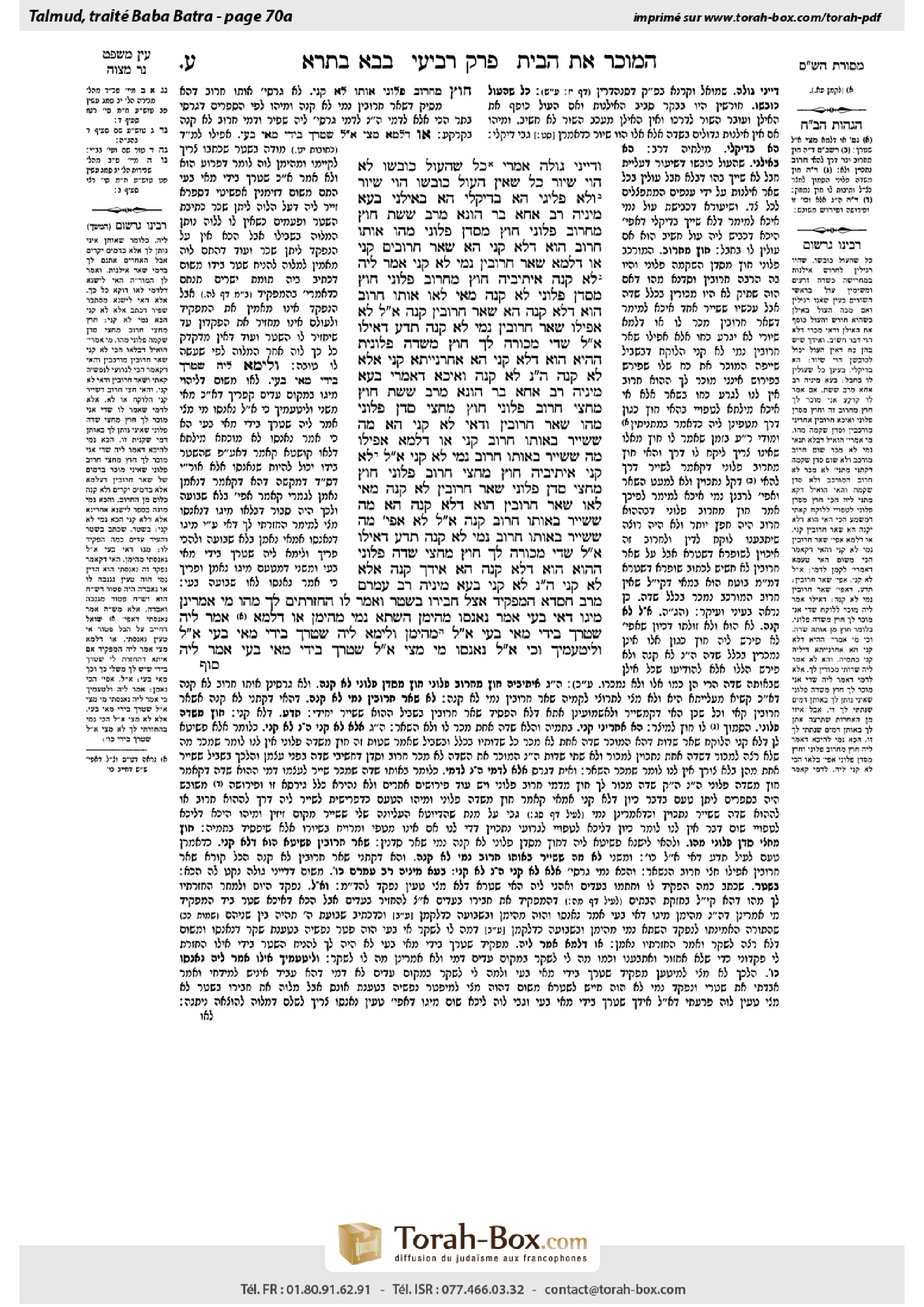
Bava Batra 70a: Talmud study for Daf Yomi
Study the Talmud for Daf Yomi with scanned pages, Hebrew text, English translations from Sefaria and AI-generated French translations.
Passage selection and English or AI-generated French translation are available where the scan has annotations. Daf Study is independent of Torah-Box and Sefaria.
Browse Bava Batra · בבא בתרא · All tractatesBava Batra 70a text and translations
This page of Bava Batra includes the Aramaic text, an English translation and an AI-generated French translation, alongside the scan above.
בבא בתרא ע׳ א · Aramaic and Hebrew text
וְדַיָּינֵי גוֹלָה אָמְרִי: כֹּל שֶׁהָעוֹל כּוֹבְשׁוֹ – לָא הָוֵי שִׁיּוּר, כֹּל שֶׁאֵין הָעוֹל כּוֹבְשׁוֹ – הָוֵי שִׁיּוּר. וְלָא פְּלִיגִי – הָא בְּדִיקְלֵי, הָא בְּאִילָנֵי.
בְּעָא מִינֵּיהּ רַב אַחָא בַּר הוּנָא מֵרַב שֵׁשֶׁת: ״חוּץ מֵחָרוּב פְּלוֹנִי״, ״חוּץ מִסַּדָּן פְּלוֹנִי״, מַהוּ? אוֹתוֹ חָרוּב הוּא דְּלָא קָנֵי, הָא שְׁאָר חָרוּבִים קָנֵי; אוֹ דִלְמָא, שְׁאָר חָרוּבִין נָמֵי לָא קָנֵי? אֲמַר לֵיהּ: לֹא קָנָה.
אֵיתִיבֵיהּ: ״חוּץ מֵחָרוּב פְּלוֹנִי״, ״חוּץ מִסַּדָּן פְּלוֹנִי״ – לֹא קָנָה! מַאי, לָאו אוֹתוֹ חָרוּב הוּא דְּלֹא קָנָה, הָא שְׁאָר חָרוּבִין קָנָה?
אֲמַר לֵיהּ: לָא; אֲפִילּוּ שְׁאָר חָרוּבִין נָמֵי לֹא קָנָה. תֵּדַע – דְּאִילּוּ אֲמַר לֵיהּ: ״שָׂדִי מְכוּרָה לָךְ חוּץ מִשָּׂדֶה פְּלוֹנִית״ – הָהִיא הוּא דְּלָא קָנֵי, הָא אַחְרָנְיָיתָא קָנֵי?! אֶלָּא לָא קָנָה; הָכָא נָמֵי, לֹא קָנָה.
וְאִיכָּא דְּאָמְרִי: בְּעָא מִינֵּיהּ רַב אַחָא בַּר הוּנָא מֵרַב שֵׁשֶׁת: ״חוּץ מֵחֲצִי חָרוּב פְּלוֹנִי״, ״חוּץ מֵחֲצִי סַדָּן פְּלוֹנִי״, מַהוּ? שְׁאָר חָרוּבִין וַדַּאי לָא קָנֵי, הָא מַה שֶּׁשִּׁיֵּיר בְּאוֹתוֹ חָרוּב – קָנֵי; אוֹ דִלְמָא, אֲפִילּוּ מַה שֶּׁשִּׁיֵּיר בְּאוֹתוֹ חָרוּב נָמֵי לָא קָנֵי? אָמַר לֵיהּ: לָא קָנֵי.
אֵיתִיבֵיהּ: ״חוּץ מֵחֲצִי חָרוּב פְּלוֹנִי״, ״חוּץ מֵחֲצִי סַדָּן פְּלוֹנִי״ – שְׁאָר חָרוּבִין לֹא קָנָה. מַאי, לָאו שְׁאָר חָרוּבִין הוּא דְּלָא קָנָה, הָא מַה שֶּׁשִּׁיֵּיר בְּאוֹתוֹ חָרוּב – קָנָה?
אֲמַר לֵיהּ: לָא; אֲפִילּוּ מַה שֶּׁשִּׁיֵּיר בְּאוֹתוֹ חָרוּב נָמֵי לֹא קָנָה. תֵּדַע, דְּאִילּוּ אֲמַר לֵיהּ: ״שָׂדִי מְכוּרָה לָךְ חוּץ מֵחֲצִי שָׂדֶה פְּלוֹנִי״ – הָהוּא הוּא דְּלָא קָנָה, הָא אִידַּךְ קָנָה?! אֶלָּא לָא קָנֵי; הָכָא נָמֵי – לָא קָנֵי.
בְּעָא מִינֵּיהּ רַב עַמְרָם מֵרַב חִסְדָּא: הַמַּפְקִיד אֵצֶל חֲבֵירוֹ בִּשְׁטָר, וְאָמַר לוֹ: ״הֶחְזַרְתִּים לָךְ״, מַהוּ? מִי אָמְרִינַן: מִיגּוֹ דְּאִי בָּעֵי אָמַר ״נֶאֶנְסוּ״ – מְהֵימַן, הַשְׁתָּא נָמֵי מְהֵימַן; אוֹ דִלְמָא, אָמַר לֵיהּ: ״שְׁטָרָךְ בִּידִי מַאי בָּעֵי״? אֲמַר לֵיהּ: מְהֵימַן.
וְלֵימָא לֵיהּ: ״שְׁטָרָךְ בִּידִי מַאי בָּעֵי״! אֲמַר לֵיהּ: וְלִיטַעְמָיךְ, וְכִי אֲמַר לֵיהּ ״נֶאֶנְסוּ״ – מִי מָצֵי אָמַר לֵיהּ: ״שְׁטָרָךְ בִּידִי מַאי בָּעֵי״?! אֲמַר לֵיהּ:
Bava Batra 70a · English translation
But the judges of the exile, Shmuel and Karna, say: Any tree that is bent back by the yoke of oxen as the animals plow the ground under the tree, and in this way the tree does not impede the plowing, is not retained by the seller, as it is not a significant tree. Any tree that is not bent back by the yoke of the oxen is retained by the seller and not included in the sale. The Gemara comments: And these amora’im do not disagree with regard to the halakha: That which Rav said, that the only trees that the seller retains for himself and excludes from the sale are those that must be climbed by means of a rope, was said with regard to palm trees, while that which the judges of the exile said, that the only trees that are retained are those that are not bent back by the yoke of the oxen, was said with regard to other types of trees.
§ The Gemara cites a discussion related to the mishna’s ruling that a grafted carob tree and a sycamore trunk are not included in the sale of the field: Rav Aḥa bar Huna raised a dilemma before Rav Sheshet: If one selling a field said to the buyer: I am selling you the entire field except for such and such grafted carob tree, or except for such and such sycamore trunk, and there were other grafted carob trees or sycamore trunks in the field, what is the halakha? The Gemara explains the two sides of the question: Does the seller mean to say that it is this carob tree that the buyer does not acquire, but he does acquire the other carob trees, or perhaps he means that he also does not acquire the rest of the carob trees? Rav Sheshet said to him in response: The buyer does not acquire any of them.
Rav Aḥa raised an objection to Rav Sheshet from a baraita that states: If the seller said to the buyer: I am selling you this field except for such and such carob tree, or except for such and such sycamore trunk, the buyer does not acquire it. What, is it not that it is this carob tree that he does not acquire, but he does acquire the other carob trees?
Rav Sheshet said to him: No, what this means is that he does not acquire even the other carob trees. Know that this is correct, as if a person selling a field said to the buyer: My field is sold to you except for such and such field that is adjacent to it, would you say that it is only that adjacent field that he does not acquire, but he acquires all the other fields owned by the seller? This is clearly not the case, as the seller explicitly stated that he is selling a certain field, not all of his fields. Rather, everyone would agree that the buyer does not acquire the other fields. Therefore, here too, the buyer does not acquire the other carob trees.
And there are those who say that the discussion took place as follows: Rav Aḥa bar Huna raised a dilemma before Rav Sheshet: If one selling a field said to the buyer: I am selling you the entire field except for half of such and such carob tree, or except for half of such and such sycamore trunk, what is the halakha? The Gemara explains the two sides of the question: Do we say that the buyer certainly does not acquire the other carob trees, but he does acquire what remains from that carob tree that was mentioned, that is, the half of the carob tree that the seller did not specifically retain for himself? Or perhaps he does not acquire even what remains from that carob tree? Rav Sheshet said to him: Even what remains from that carob tree the buyer does not acquire.
Rav Aḥa raised an objection to Rav Sheshet from a baraita that states: If the seller said to the buyer: I am selling you the entire field except for half of such and such carob tree, or except for half of such and such sycamore trunk, the buyer does not acquire the other carob trees. What, is it not that it is the other carob trees that he does not acquire, but what remains of that carob tree he does acquire?
Rav Sheshet said to him: No, what this means is that he does not acquire even what remains of that carob tree. Know that this is correct, as if a person selling a field said to the buyer: My field is sold to you except for half of such and such field that is adjacent to it, would you say that it is only that half of the field that he does not acquire, but he acquires the other half of the field? This is clearly not the case, as the seller explicitly stated that he is selling a certain field and nothing else. Rather, everyone would agree that the buyer does not acquire the other half of the field. Therefore, here too, the buyer does not acquire what remains of the carob tree.
§ Rav Amram raised a dilemma before Rav Ḥisda: If one deposits certain items with another and receives a document signed by witnesses testifying that he deposited these items with this individual, and the bailee later says to him: I returned the items to you, but the document is still in the hands of the depositor, what is the halakha? Do we say that since if the bailee wanted to lie he could have said that the items were taken from him under circumstances beyond his control, and he would have been deemed credible; therefore now too, when he claims that he returned the items, he is deemed credible as well? Or perhaps, the one who deposited the items can say to him: If you returned the items, what is your document doing in my possession? Upon return of the deposit, you should have retrieved the document. Rav Ḥisda said to him: The bailee is deemed credible.
Rav Amram asked: But let the depositor say to the bailee: If you returned the items, what is your document doing in my possession? Rav Ḥisda said to him: And according to your reasoning, if the bailee had said to him that the items were taken from him under circumstances beyond his control, would he be able to say to him: What is your document doing in my possession? Since this claim could not have been stated had the bailee stated the alternative claim, it can also not be stated when the bailee claims that the items were returned. Rav Amram said to him:
Bava Batra 70a · Traduction française (IA)
Mais les juges de l’exil, Shmuel et Karna, disent : tout arbre qui est courbé par le joug des bœufs, comme les bêtes labourent la terre sous l’arbre, et ainsi l’arbre ne gêne pas le labour, n’est pas conservé par le vendeur, car il ne s’agit pas d’un arbre important. Tout arbre qui n’est pas courbé par le joug des bœufs est conservé par le vendeur et n’est pas inclus dans la vente. La Guemara commente : ces amora’im ne s’opposent pas sur la halakha : ce que Rav a dit, que seuls les arbres que le vendeur conserve pour lui-même et exclut de la vente sont ceux qui doivent être grimpés avec une corde, a été dit en référence aux palmiers, tandis que ce que les juges de l’exil ont dit, que seuls les arbres conservés sont ceux qui ne sont pas courbés par le joug des bœufs, a été dit en référence à d’autres types d’arbres.
§ La Guemara cite une discussion liée à la décision de la mitsna selon laquelle un arbre de carob greffé et un tronc de saule ne sont pas inclus dans la vente du champ : Rav Aḥa bar Huna a soulevé un dilemme devant Rav Sheshet : si l’on vend un champ et dit à l’acheteur : je vends tout le champ sauf tel arbre de carob greffé ou tel tronc de saule, et qu’il y avait d’autres arbres de carob greffés ou troncs de saules dans le champ, quelle est la halakha ? La Guemara explique les deux côtés de la question : le vendeur veut-il dire que c’est cet arbre de carob que l’acheteur ne possède pas, mais qu’il possède les autres arbres de carob, ou bien veut-il dire qu’il ne possède pas non plus les autres arbres de carob ? Rav Sheshet a répondu à lui : l’acheteur ne possède aucun d’entre eux.
Rav Aḥa a soulevé un doute contre Rav Sheshet à partir d’une baraïta qui stipule : si le vendeur dit à l’acheteur : je vends ce champ sauf tel arbre de carob ou tel tronc de saule, l’acheteur ne possède pas ce champ. Qu’est-ce que cela signifie, n’est-ce pas que c’est cet arbre de carob qu’il ne possède pas, mais qu’il possède les autres arbres de carob ?
Rav Sheshet a dit à lui : Non, cela signifie qu’il ne possède même pas les autres arbres de carob. Sachez que cela est correct, car si une personne vend un champ et dit à l’acheteur : mon champ est vendu à vous sauf tel champ adjacent, diriez-vous que c’est seulement ce champ adjacent qu’il ne possède pas, mais qu’il possède tous les autres champs appartenant au vendeur ? Cela n’est clairement pas le cas, car le vendeur a explicitement dit qu’il vend un certain champ, pas tous ses champs. En effet, tout le monde serait d’accord pour dire que l’acheteur ne possède pas les autres champs. Par conséquent, ici aussi, l’acheteur ne possède pas les autres arbres de carob.
Et il y a ceux qui disent que la discussion s’est déroulée comme suit : Rav Aḥa bar Huna a soulevé un dilemme devant Rav Sheshet : si l’on vend un champ et dit à l’acheteur : je vends tout le champ sauf la moitié de tel arbre de carob ou la moitié de tel tronc de saule, quelle est la halakha ? La Guemara explique les deux côtés de la question : disons-nous que l’acheteur ne possède certainement pas les autres arbres de carob, mais qu’il possède ce qui reste de cet arbre de carob mentionné, c’est-à-dire la moitié de l’arbre de carob que le vendeur n’a pas spécifiquement conservé pour lui-même ? Ou bien disons-nous qu’il ne possède même pas ce qui reste de cet arbre de carob ? Rav Sheshet a dit à lui : même ce qui reste de cet arbre de carob, l’acheteur ne le possède pas.
Rav Aḥa a soulevé une objection contre Rav Sheshet à partir d’une baraïta qui stipule : si le vendeur dit à l’acheteur : je vends tout le champ sauf la moitié de tel arbre de carob ou la moitié de tel tronc de saule, l’acheteur ne possède pas les autres arbres de carob. Qu’est-ce que cela signifie, n’est-ce pas que c’est les autres arbres de carob qu’il ne possède pas, mais ce qui reste de cet arbre de carob qu’il possède ?
Rav Sheshet a dit à lui : Non, cela signifie qu’il ne possède même pas ce qui reste de cet arbre de carob. Sachez que cela est correct, car si une personne vend un champ et dit à l’acheteur : mon champ est vendu à vous sauf la moitié de tel champ adjacent, diriez-vous que c’est seulement cette moitié du champ qu’il ne possède pas, mais qu’il possède l’autre moitié du champ ? Cela n’est clairement pas le cas, car le vendeur a explicitement dit qu’il vend un certain champ et rien d’autre. En effet, tout le monde serait d’accord pour dire que l’acheteur ne possède pas l’autre moitié du champ. Par conséquent, ici aussi, l’acheteur ne possède pas ce qui reste de l’arbre de carob.
§ Rav Amram a soulevé un dilemme devant Rav Ḥisda : si l’on dépose certains objets chez un autre et reçoit un document signé par des témoins attestant qu’il a déposé ces objets chez cette personne, et que le dépositaire dit ensuite à l’expéditeur : j’ai rendu les objets à vous, mais le document est toujours entre vos mains, quelle est la halakha ? Disons-nous que puisque si le dépositaire voulait mentir, il aurait pu dire que les objets ont été pris de lui dans des circonstances au-delà de son contrôle, et il serait alors considéré comme crédible ; donc maintenant aussi, quand il affirme avoir rendu les objets, il est considéré comme crédible ? Ou bien, le déposant peut dire au dépositaire : si vous avez rendu les objets, pourquoi votre document est-il entre mes mains ? À la restitution du dépôt, vous deviez récupérer le document. Rav Ḥisda a dit à lui : le dépositaire est considéré comme crédible.
Rav Amram a demandé : mais laissez le déposant dire au dépositaire : si vous avez rendu les objets, pourquoi votre document est-il entre mes mains ? Rav Ḥisda a dit à lui : et selon votre raisonnement, si le dépositaire avait dit au déposant que les objets avaient été pris de lui dans des circonstances au-delà de son contrôle, pourrait-il dire au déposant : pourquoi votre document est-il entre mes mains ? Puisque cette affirmation ne pouvait pas être faite si le dépositaire avait avancé l’autre revendication, elle ne peut pas non plus être faite quand le dépositaire affirme avoir rendu les objets. Rav Amram a dit à lui :
Traduction française générée par IA à partir de l’édition anglaise de Sefaria. Vérifie toujours un passage avec le texte source.
Text from Sefaria: William Davidson Edition - Vocalized Aramaic (CC BY NC); William Davidson Edition - English (CC BY NC).